 The term contraception refers to the process of avoiding
pregnancy while engaging in sexual intercourse.
 The main aim of contraception is family planning.
 Mostly used to prevent overpopulation and STD’s.
 Also recommended in women suffering from heart diseases
 Contraceptives methods in females:-
 Spacing methods
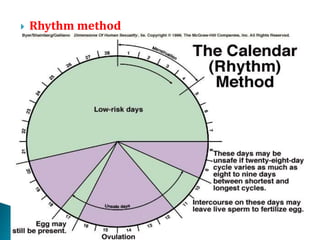
◦ Rhythm method
◦ Barrier method
◦ Chemical methods
◦ IUCDS
 Terminal methods
◦ Surgical methods
 Tubectomy
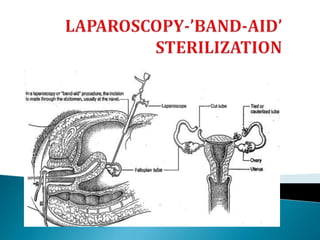
 Laparoscopic occlusion
◦ Medical termination of pregnancy
 Dilatation and Curettage
 Vaccum aspiration
 Administration of prostaglandins
 Rhythm method
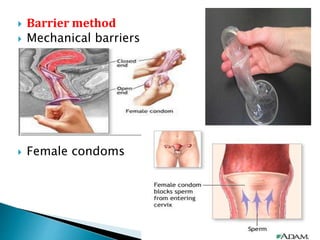
 Barrier method
 Mechanical barriers
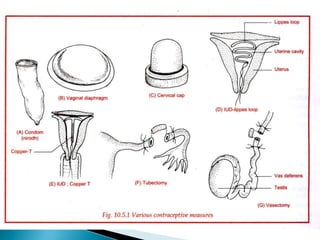
 Female condoms
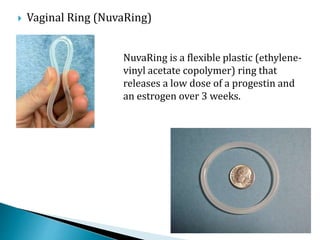
 Vaginal Ring (NuvaRing)
NuvaRing is a flexible plastic (ethylene-
vinyl acetate copolymer) ring that
releases a low dose of a progestin and
an estrogen over 3 weeks.
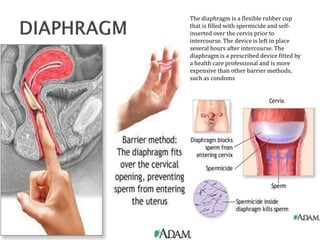
The diaphragm is a flexible rubber cup
that is filled with spermicide and self-
inserted over the cervix prior to
intercourse. The device is left in place
several hours after intercourse. The
diaphragm is a prescribed device fitted by
a health care professional and is more
expensive than other barrier methods,
such as condoms
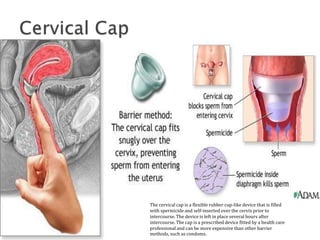
The cervical cap is a flexible rubber cup-like device that is filled
with spermicide and self-inserted over the cervix prior to
intercourse. The device is left in place several hours after
intercourse. The cap is a prescribed device fitted by a health care
professional and can be more expensive than other barrier
methods, such as condoms.
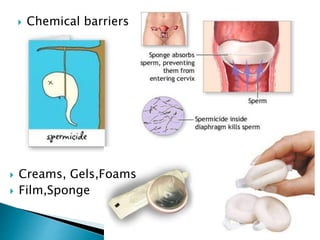
 Chemical barriers
 Creams, Gels,Foams
 Film,Sponge
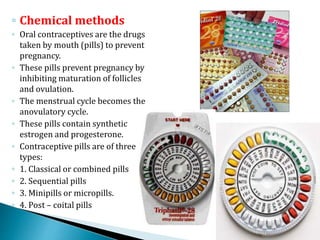
◦ Chemical methods
◦ Oral contraceptives are the drugs
taken by mouth (pills) to prevent
pregnancy.
◦ These pills prevent pregnancy by
inhibiting maturation of follicles
and ovulation.
◦ The menstrual cycle becomes the
anovulatory cycle.
◦ These pills contain synthetic
estrogen and progesterone.
◦ Contraceptive pills are of three
types:
◦ 1. Classical or combined pills
◦ 2. Sequential pills
◦ 3. Minipills or micropills.
◦ 4. Post – coital pills
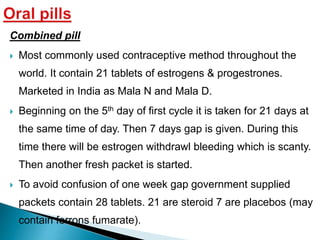
Combined pill
 Most commonly used contraceptive method throughout the
world. It contain 21 tablets of estrogens & progestrones.
Marketed in India as Mala N and Mala D.
 Beginning on the 5th day of first cycle it is taken for 21 days at
the same time of day. Then 7 days gap is given. During this
time there will be estrogen withdrawl bleeding which is scanty.
Then another fresh packet is started.
 To avoid confusion of one week gap government supplied
packets contain 28 tablets. 21 are steroid 7 are placebos (may
contain ferrons fumarate).
 Risk of excess mortality due to cardiovascular causes
(CAD, strokes, thrombo embolism).
 Increase in the incidence of endometrial and breast
cancers.
 Liver disorders, lactational problems.
 Breast tenderness, weight gain, headache and
bleeding disorders.
Benefcial effects:
 Include protection from benign breast diseases, ovarian
cysts, iron deficiency anemias, pelvic inflammatory
disease, ectopic pregnancy, ovarian cancers.
 Prescribed in older women in whom combined pills are
contra indicated due to cardiovascular disorders.
Postcoital contraception (Morning after
pill)
 With in 72 hours After a unprotected intercourse women
takes 2 tablets of combined oral pills immediately,
followed by another 2 tablets after 12 hours.
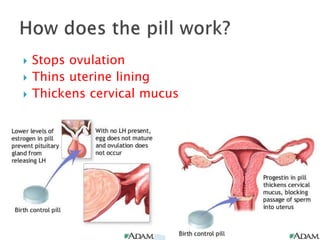
 Stops ovulation
 Thins uterine lining
 Thickens cervical mucus
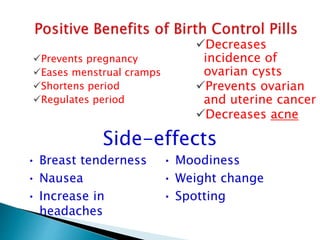
Prevents pregnancy
Eases menstrual cramps
Shortens period
Regulates period
Decreases
incidence of
ovarian cysts
Prevents ovarian
and uterine cancer
Decreases acne
• Breast tenderness
• Nausea
• Increase in
headaches
• Moodiness
• Weight change
• Spotting
Side-effects
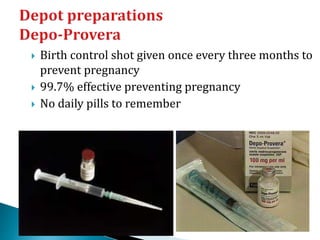
 Birth control shot given once every three months to
prevent pregnancy
 99.7% effective preventing pregnancy
 No daily pills to remember
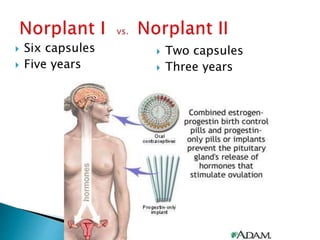
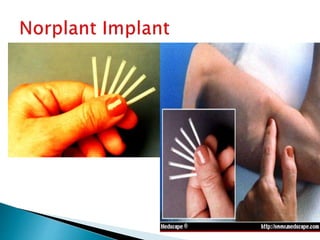
 Six capsules
 Five years
 Two capsules
 Three years
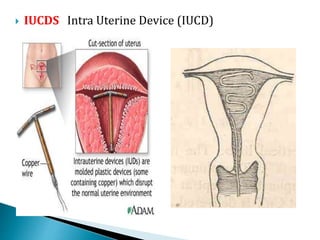
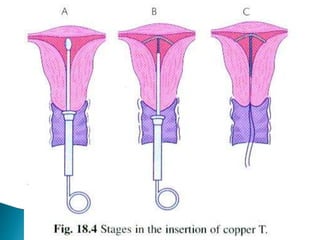
 IUCDS Intra Uterine Device (IUCD)
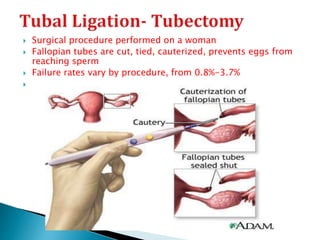
 Surgical procedure performed on a woman
 Fallopian tubes are cut, tied, cauterized, prevents eggs from
reaching sperm
 Failure rates vary by procedure, from 0.8%-3.7%

 Contraceptives methods in males:-
 Spacing methods
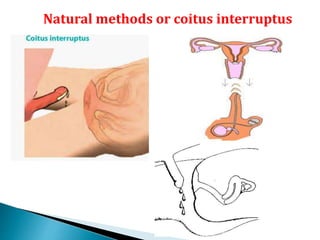
◦ Natural methods or coitus interruptus
◦ Barrier method
◦ Chemical methods
 Terminal methods
◦ Surgical methods
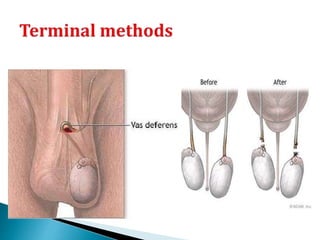
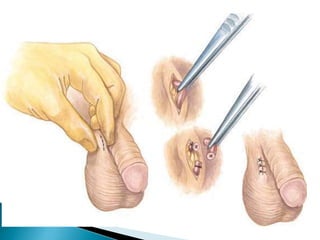
 Vasectomy
 No scalpel vas occlusion
◦ Miscellaneous methods
 Hot bath
 Tight fitted dresses
Natural methods or coitus interruptus
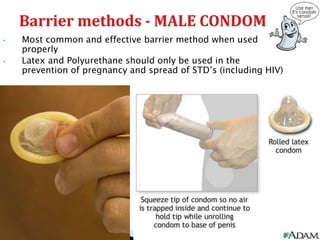
• Most common and effective barrier method when used
properly
• Latex and Polyurethane should only be used in the
prevention of pregnancy and spread of STD’s (including HIV)
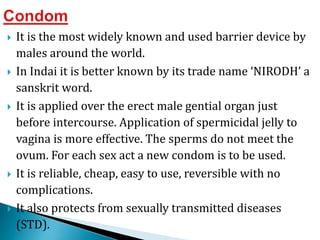
 It is the most widely known and used barrier device by
males around the world.
 In Indai it is better known by its trade name ‘NIRODH’ a
sanskrit word.
 It is applied over the erect male gential organ just
before intercourse. Application of spermicidal jelly to
vagina is more effective. The sperms do not meet the
ovum. For each sex act a new condom is to be used.
 It is reliable, cheap, easy to use, reversible with no
complications.
 It also protects from sexually transmitted diseases
(STD).
Thank you

Contraception - Overview

  • 2.
     The termcontraception refers to the process of avoiding pregnancy while engaging in sexual intercourse.  The main aim of contraception is family planning.  Mostly used to prevent overpopulation and STD’s.  Also recommended in women suffering from heart diseases
  • 3.
     Contraceptives methodsin females:-  Spacing methods ◦ Rhythm method ◦ Barrier method ◦ Chemical methods ◦ IUCDS  Terminal methods ◦ Surgical methods  Tubectomy  Laparoscopic occlusion ◦ Medical termination of pregnancy  Dilatation and Curettage  Vaccum aspiration  Administration of prostaglandins
  • 4.
  • 5.
     Barrier method Mechanical barriers  Female condoms
  • 6.
     Vaginal Ring(NuvaRing) NuvaRing is a flexible plastic (ethylene- vinyl acetate copolymer) ring that releases a low dose of a progestin and an estrogen over 3 weeks.
  • 7.
    The diaphragm isa flexible rubber cup that is filled with spermicide and self- inserted over the cervix prior to intercourse. The device is left in place several hours after intercourse. The diaphragm is a prescribed device fitted by a health care professional and is more expensive than other barrier methods, such as condoms
  • 8.
    The cervical capis a flexible rubber cup-like device that is filled with spermicide and self-inserted over the cervix prior to intercourse. The device is left in place several hours after intercourse. The cap is a prescribed device fitted by a health care professional and can be more expensive than other barrier methods, such as condoms.
  • 9.
     Chemical barriers Creams, Gels,Foams  Film,Sponge
  • 10.
    ◦ Chemical methods ◦Oral contraceptives are the drugs taken by mouth (pills) to prevent pregnancy. ◦ These pills prevent pregnancy by inhibiting maturation of follicles and ovulation. ◦ The menstrual cycle becomes the anovulatory cycle. ◦ These pills contain synthetic estrogen and progesterone. ◦ Contraceptive pills are of three types: ◦ 1. Classical or combined pills ◦ 2. Sequential pills ◦ 3. Minipills or micropills. ◦ 4. Post – coital pills
  • 11.
    Combined pill  Mostcommonly used contraceptive method throughout the world. It contain 21 tablets of estrogens & progestrones. Marketed in India as Mala N and Mala D.  Beginning on the 5th day of first cycle it is taken for 21 days at the same time of day. Then 7 days gap is given. During this time there will be estrogen withdrawl bleeding which is scanty. Then another fresh packet is started.  To avoid confusion of one week gap government supplied packets contain 28 tablets. 21 are steroid 7 are placebos (may contain ferrons fumarate).
  • 12.
     Risk ofexcess mortality due to cardiovascular causes (CAD, strokes, thrombo embolism).  Increase in the incidence of endometrial and breast cancers.  Liver disorders, lactational problems.  Breast tenderness, weight gain, headache and bleeding disorders. Benefcial effects:  Include protection from benign breast diseases, ovarian cysts, iron deficiency anemias, pelvic inflammatory disease, ectopic pregnancy, ovarian cancers.
  • 13.
     Prescribed inolder women in whom combined pills are contra indicated due to cardiovascular disorders. Postcoital contraception (Morning after pill)  With in 72 hours After a unprotected intercourse women takes 2 tablets of combined oral pills immediately, followed by another 2 tablets after 12 hours.
  • 14.
     Stops ovulation Thins uterine lining  Thickens cervical mucus
  • 15.
    Prevents pregnancy Eases menstrualcramps Shortens period Regulates period Decreases incidence of ovarian cysts Prevents ovarian and uterine cancer Decreases acne • Breast tenderness • Nausea • Increase in headaches • Moodiness • Weight change • Spotting Side-effects
  • 16.
     Birth controlshot given once every three months to prevent pregnancy  99.7% effective preventing pregnancy  No daily pills to remember
  • 18.
     Six capsules Five years  Two capsules  Three years
  • 20.
     IUCDS IntraUterine Device (IUCD)
  • 22.
     Surgical procedureperformed on a woman  Fallopian tubes are cut, tied, cauterized, prevents eggs from reaching sperm  Failure rates vary by procedure, from 0.8%-3.7% 
  • 24.
     Contraceptives methodsin males:-  Spacing methods ◦ Natural methods or coitus interruptus ◦ Barrier method ◦ Chemical methods  Terminal methods ◦ Surgical methods  Vasectomy  No scalpel vas occlusion ◦ Miscellaneous methods  Hot bath  Tight fitted dresses
  • 25.
    Natural methods orcoitus interruptus
  • 26.
    • Most commonand effective barrier method when used properly • Latex and Polyurethane should only be used in the prevention of pregnancy and spread of STD’s (including HIV)
  • 27.
     It isthe most widely known and used barrier device by males around the world.  In Indai it is better known by its trade name ‘NIRODH’ a sanskrit word.  It is applied over the erect male gential organ just before intercourse. Application of spermicidal jelly to vagina is more effective. The sperms do not meet the ovum. For each sex act a new condom is to be used.  It is reliable, cheap, easy to use, reversible with no complications.  It also protects from sexually transmitted diseases (STD).
  • 32.