
Clinical Examination of Cardio – Vascular
system
(or)
Clinical examination of chest for Heart
Chiranjeevi Kumar
AIIMS - Bhopal
Cardiac Exam
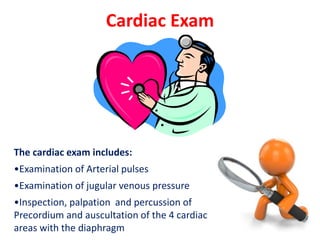
The cardiac exam includes:
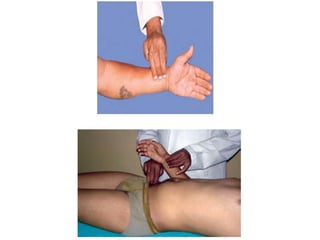
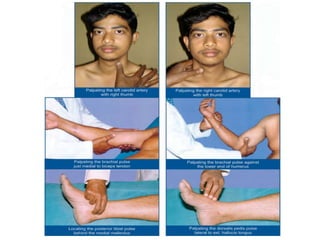
•Examination of Arterial pulses
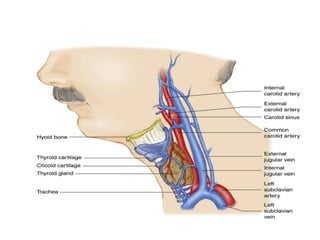
•Examination of jugular venous pressure
•Inspection, palpation and percussion of
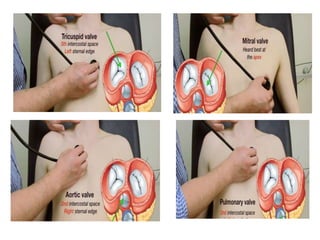
Precordium and auscultation of the 4 cardiac
areas with the diaphragm
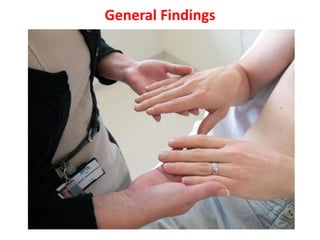
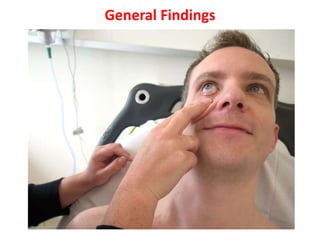
General Findings
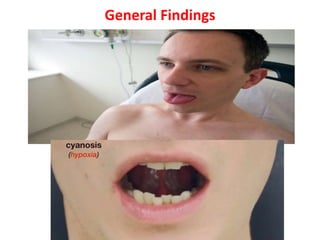
General Findings
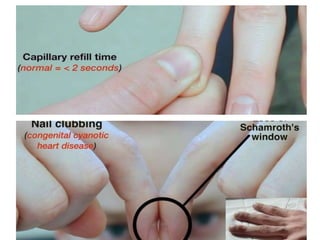
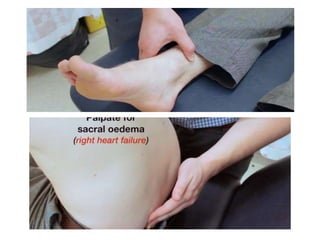
General Findings
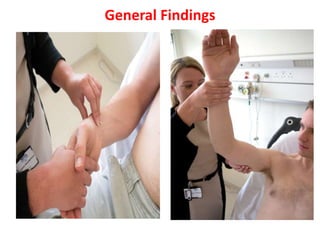
General Findings
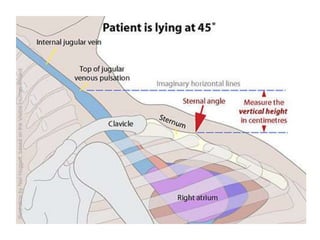
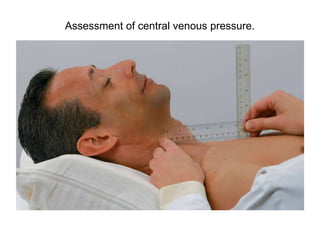
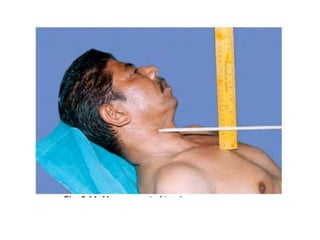
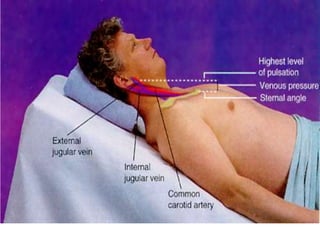
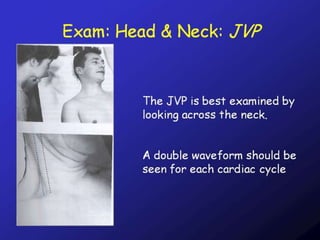
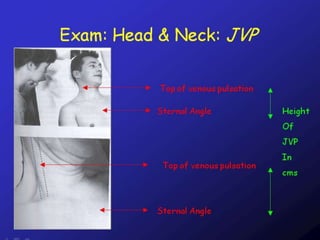
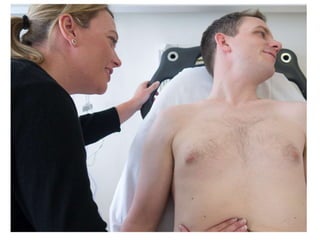
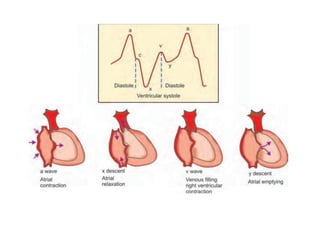
Assessment of central venous pressure.
• Top line – level of the higest visible point of
distention
• Bottom line – level of the sternal angle
• Measure: the vertical distance between the
sternal angle and the highest level of jugular
distention
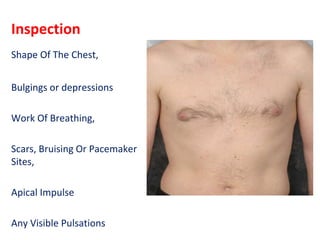
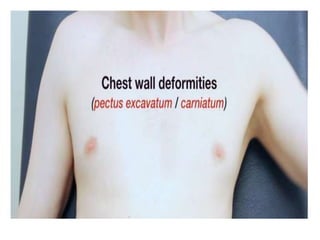
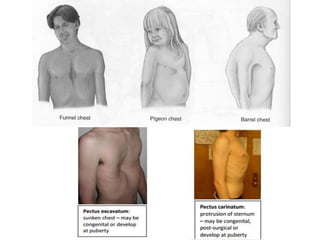
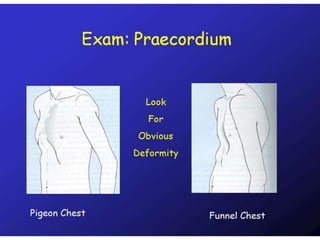
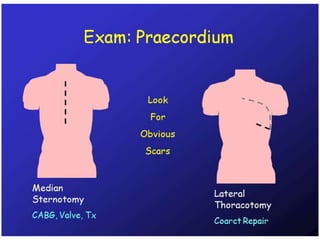
Inspection
Shape Of The Chest,
Bulgings or depressions
Work Of Breathing,
Scars, Bruising Or Pacemaker
Sites,
Apical Impulse
Any Visible Pulsations
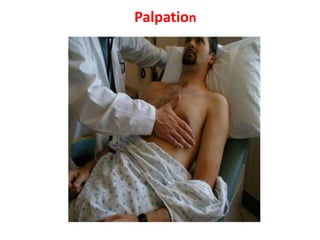
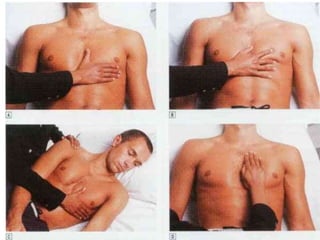
Palpation
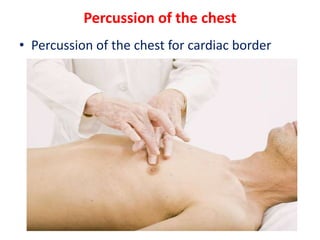
Percussion of the chest
• Percussion of the chest for cardiac border
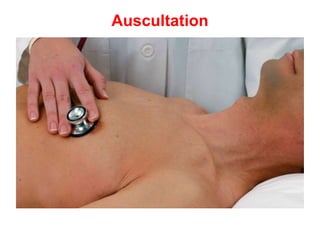
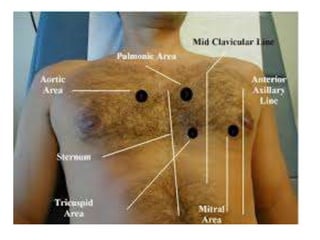
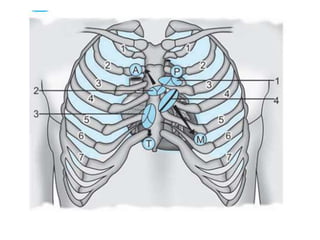
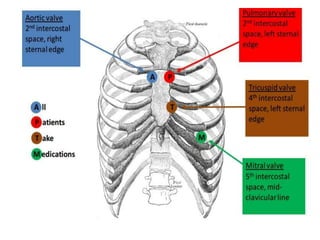
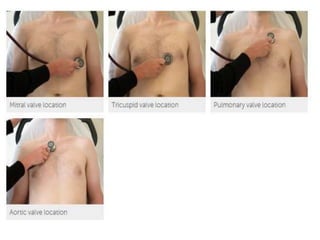
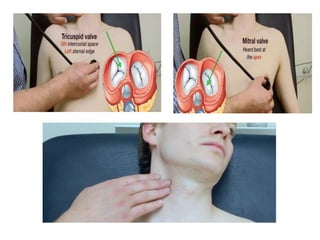
Auscultation
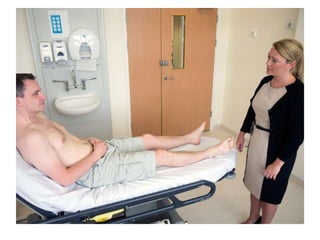
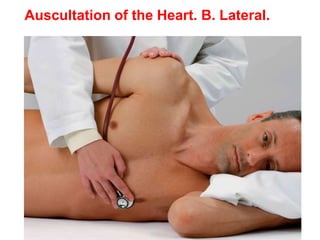
Auscultation of the Heart. B. Lateral.
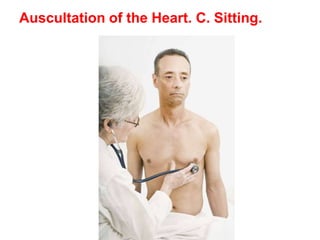
Auscultation of the Heart. C. Sitting.
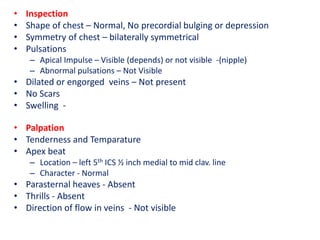
• Inspection
• Shape of chest – Normal, No precordial bulging or depression
• Symmetry of chest – bilaterally symmetrical
• Pulsations
– Apical Impulse – Visible (depends) or not visible -(nipple)
– Abnormal pulsations – Not Visible
• Dilated or engorged veins – Not present
• No Scars
• Swelling -
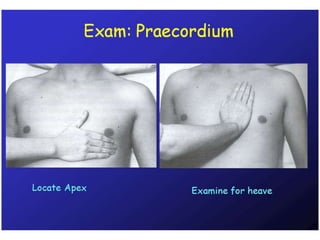
• Palpation
• Tenderness and Temparature
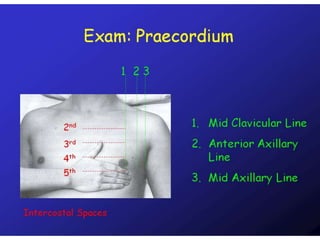
• Apex beat
– Location – left 5th ICS ½ inch medial to mid clav. line
– Character - Normal
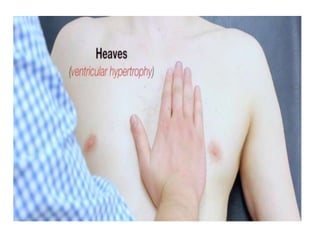
• Parasternal heaves - Absent
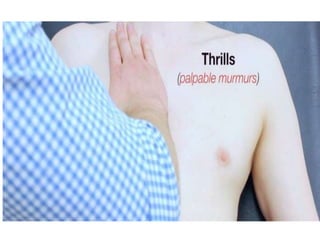
• Thrills - Absent
• Direction of flow in veins - Not visible
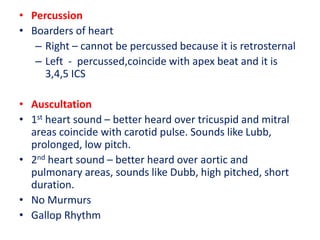
• Percussion
• Boarders of heart
– Right – cannot be percussed because it is retrosternal
– Left - percussed,coincide with apex beat and it is
3,4,5 ICS
• Auscultation
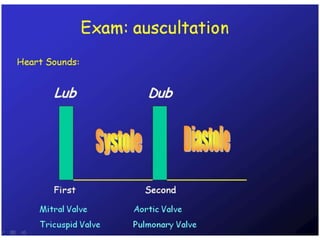
• 1st heart sound – better heard over tricuspid and mitral
areas coincide with carotid pulse. Sounds like Lubb,
prolonged, low pitch.
• 2nd heart sound – better heard over aortic and
pulmonary areas, sounds like Dubb, high pitched, short
duration.
• No Murmurs
• Gallop Rhythm
Thank You

Heart examination

  • 1.
    Clinical Examination ofCardio – Vascular system (or) Clinical examination of chest for Heart Chiranjeevi Kumar AIIMS - Bhopal
  • 2.
    Cardiac Exam The cardiacexam includes: •Examination of Arterial pulses •Examination of jugular venous pressure •Inspection, palpation and percussion of Precordium and auscultation of the 4 cardiac areas with the diaphragm
  • 4.
  • 5.
  • 6.
  • 8.
  • 14.
    Assessment of centralvenous pressure.
  • 16.
    • Top line– level of the higest visible point of distention • Bottom line – level of the sternal angle • Measure: the vertical distance between the sternal angle and the highest level of jugular distention
  • 23.
    Inspection Shape Of TheChest, Bulgings or depressions Work Of Breathing, Scars, Bruising Or Pacemaker Sites, Apical Impulse Any Visible Pulsations
  • 30.
  • 36.
    Percussion of thechest • Percussion of the chest for cardiac border
  • 37.
  • 43.
    Auscultation of theHeart. B. Lateral.
  • 44.
    Auscultation of theHeart. C. Sitting.
  • 47.
    • Inspection • Shapeof chest – Normal, No precordial bulging or depression • Symmetry of chest – bilaterally symmetrical • Pulsations – Apical Impulse – Visible (depends) or not visible -(nipple) – Abnormal pulsations – Not Visible • Dilated or engorged veins – Not present • No Scars • Swelling - • Palpation • Tenderness and Temparature • Apex beat – Location – left 5th ICS ½ inch medial to mid clav. line – Character - Normal • Parasternal heaves - Absent • Thrills - Absent • Direction of flow in veins - Not visible
  • 48.
    • Percussion • Boardersof heart – Right – cannot be percussed because it is retrosternal – Left - percussed,coincide with apex beat and it is 3,4,5 ICS • Auscultation • 1st heart sound – better heard over tricuspid and mitral areas coincide with carotid pulse. Sounds like Lubb, prolonged, low pitch. • 2nd heart sound – better heard over aortic and pulmonary areas, sounds like Dubb, high pitched, short duration. • No Murmurs • Gallop Rhythm
  • 49.