
Content in the Process of
Curriculum Development
Criteria of Contents
• Analysis the needs of the students
• addressed in the syllabus and the way to address
in the syllabus
• students used this knowledge in their future
careers and lives
• skills will help students to prepare them for using
this knowledge in their careers
Cont.
• Course structure and methods best
prepare for the students with knowledge,
values, and skills that lead to them to be
successful in their futures
• the “big ideas” or the “primary concepts”
that the students need to understand
(the priorities and weight decided in the
syllabus/course design)
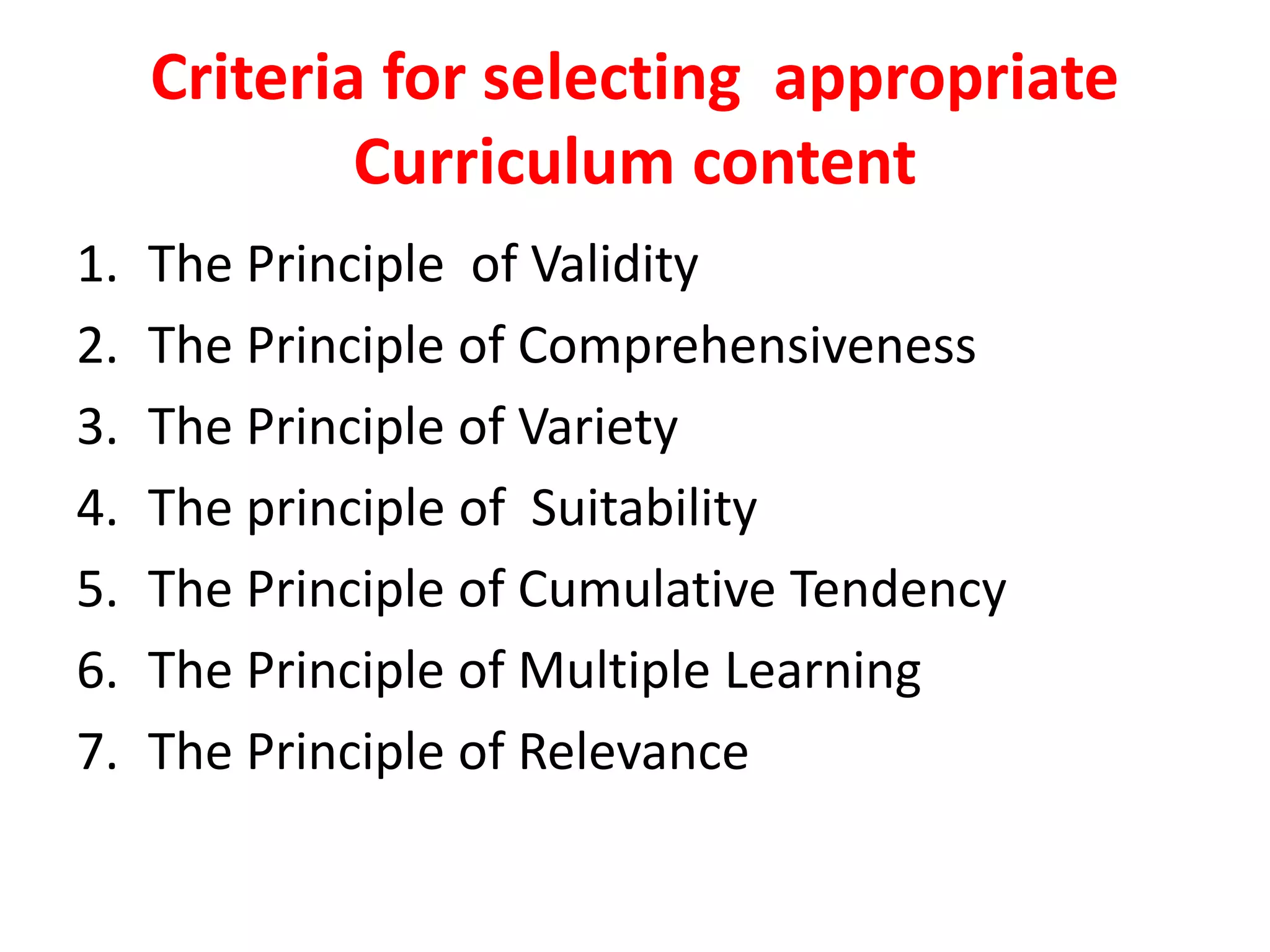
Criteria for selecting appropriate
Curriculum content
Selecting curriculum content is an important
exercise.It cannot be done haphazardly.
However, the important point to is that the
curriculum objectives determine the basic
criteria for selection
Criteria for selecting appropriate
Curriculum content
1. The Principle of Validity
2. The Principle of Comprehensiveness
3. The Principle of Variety
4. The principle of Suitability
5. The Principle of Cumulative Tendency
6. The Principle of Multiple Learning
7. The Principle of Relevance
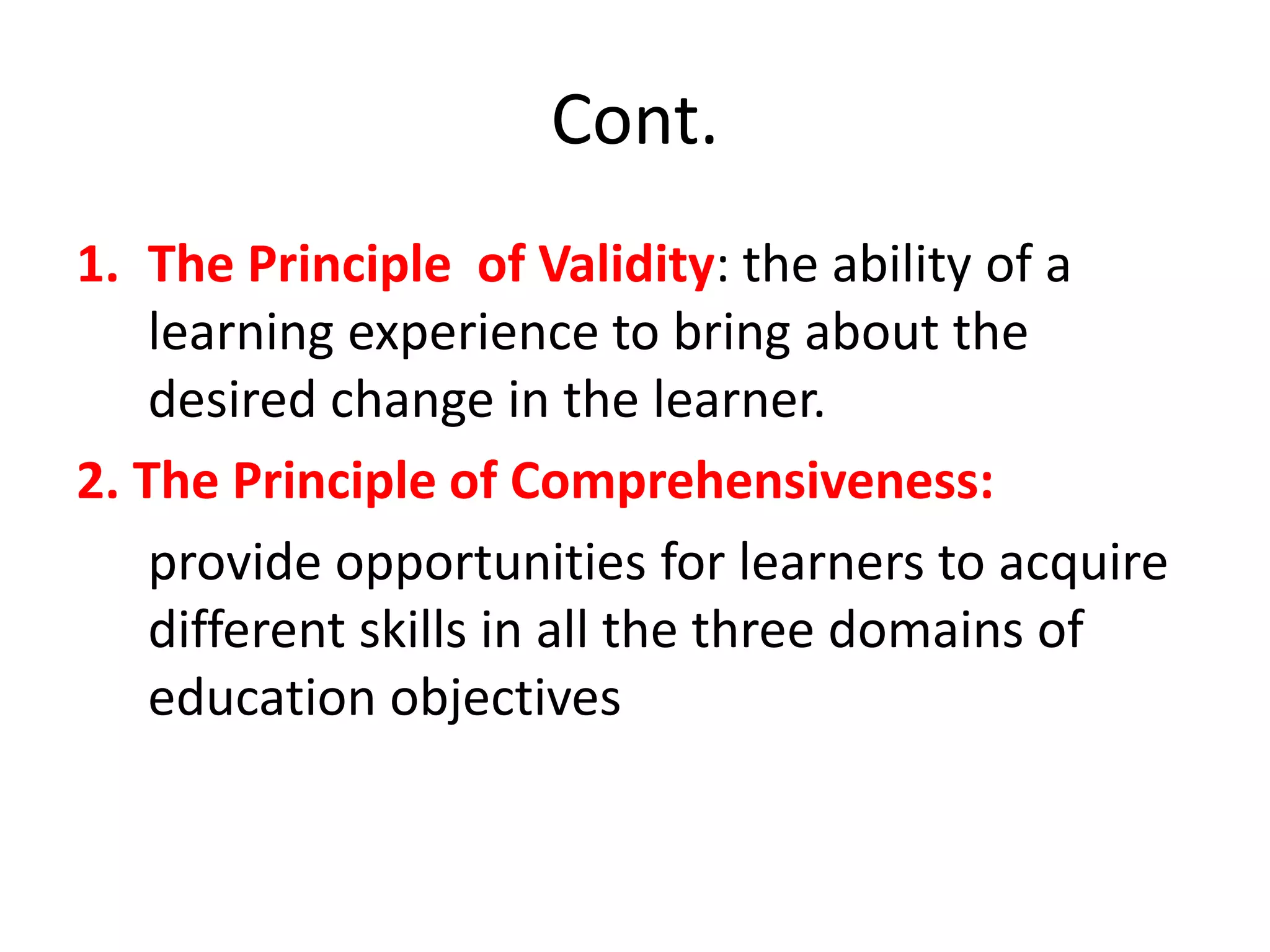
Cont.
1. The Principle of Validity: the ability of a
learning experience to bring about the
desired change in the learner.
2. The Principle of Comprehensiveness:
provide opportunities for learners to acquire
different skills in all the three domains of
education objectives
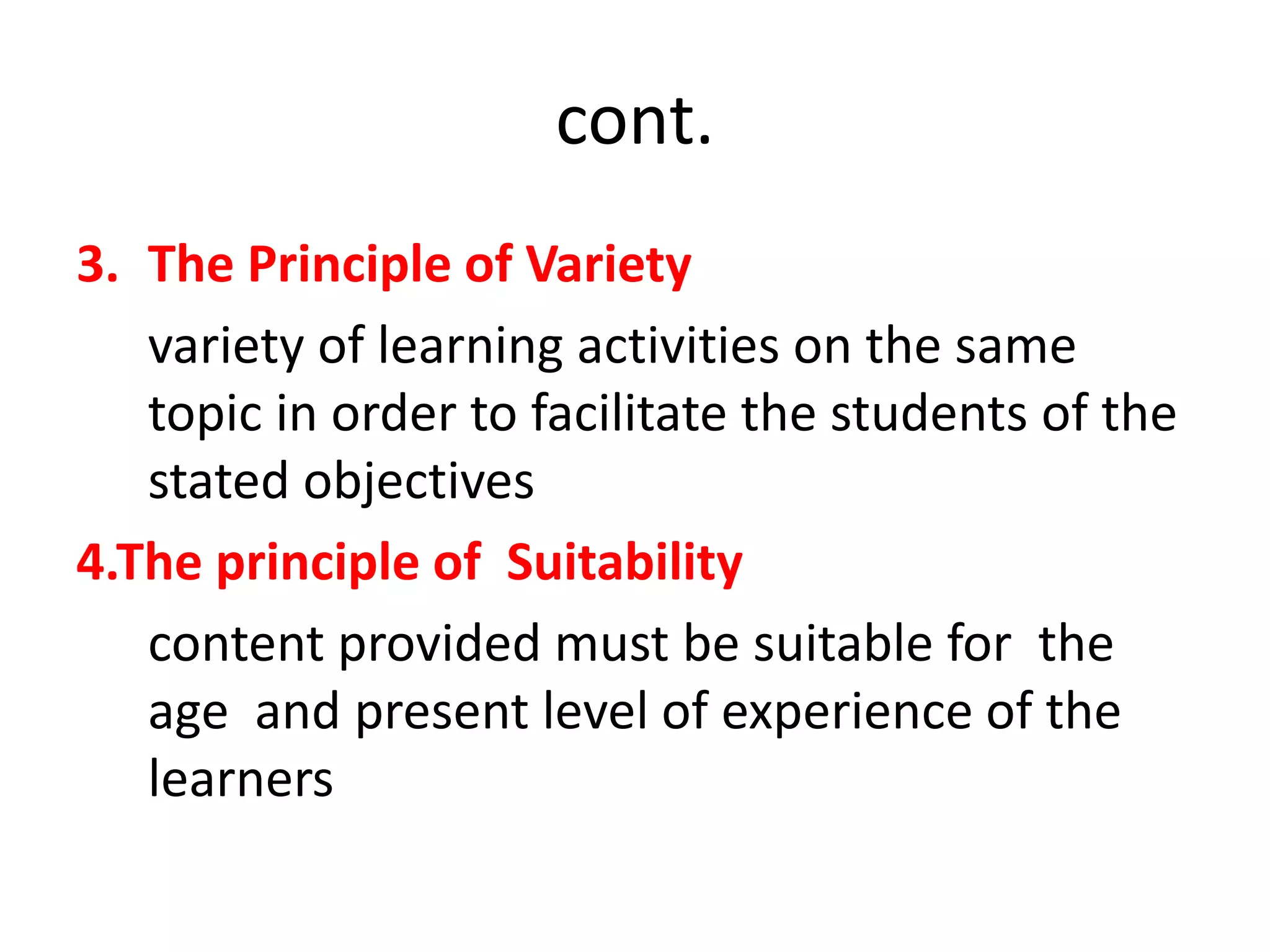
cont.
3. The Principle of Variety
variety of learning activities on the same
topic in order to facilitate the students of the
stated objectives
4.The principle of Suitability
content provided must be suitable for the
age and present level of experience of the
learners
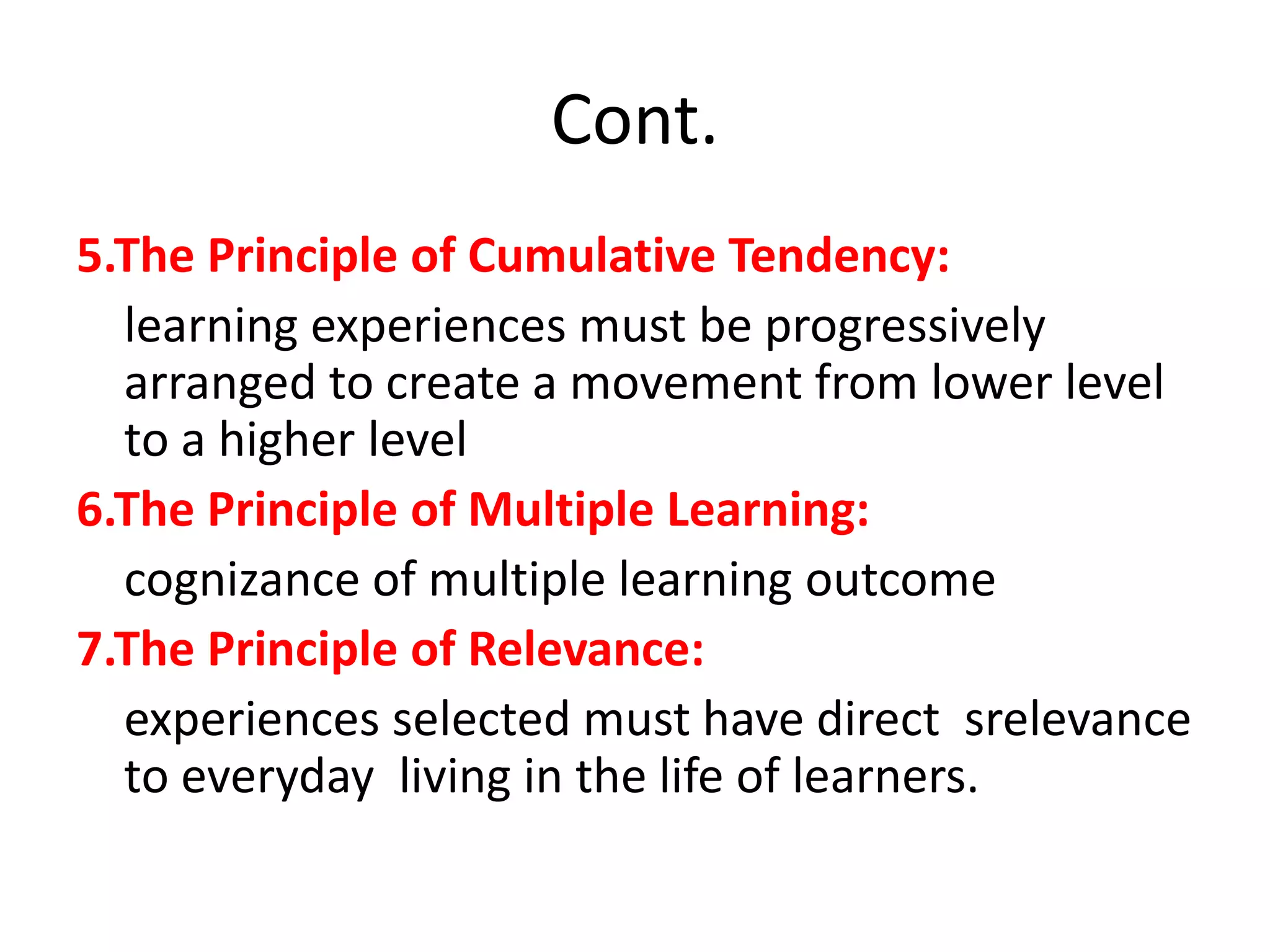
Cont.
5.The Principle of Cumulative Tendency:
learning experiences must be progressively
arranged to create a movement from lower level
to a higher level
6.The Principle of Multiple Learning:
cognizance of multiple learning outcome
7.The Principle of Relevance:
experiences selected must have direct srelevance
to everyday living in the life of learners.
Other Important Criteria for Selecting
Subject Matter
Validity: why and what would be
taught ?
Utility:Is the content useful?
Interest:Is the content interest?
Learn ability: students be able to learn
this content?
Method to distribute of content
Content should preserve and protect
both in
1. the logic of the subject matter and
2. the psychological sequence of the
learning experience.
Thanks

Content for in the process of curriculum development

  • 1.
    Content in theProcess of Curriculum Development
  • 2.
    Criteria of Contents •Analysis the needs of the students • addressed in the syllabus and the way to address in the syllabus • students used this knowledge in their future careers and lives • skills will help students to prepare them for using this knowledge in their careers
  • 3.
    Cont. • Course structureand methods best prepare for the students with knowledge, values, and skills that lead to them to be successful in their futures • the “big ideas” or the “primary concepts” that the students need to understand (the priorities and weight decided in the syllabus/course design)
  • 4.
    Criteria for selectingappropriate Curriculum content Selecting curriculum content is an important exercise.It cannot be done haphazardly. However, the important point to is that the curriculum objectives determine the basic criteria for selection
  • 5.
    Criteria for selectingappropriate Curriculum content 1. The Principle of Validity 2. The Principle of Comprehensiveness 3. The Principle of Variety 4. The principle of Suitability 5. The Principle of Cumulative Tendency 6. The Principle of Multiple Learning 7. The Principle of Relevance
  • 6.
    Cont. 1. The Principleof Validity: the ability of a learning experience to bring about the desired change in the learner. 2. The Principle of Comprehensiveness: provide opportunities for learners to acquire different skills in all the three domains of education objectives
  • 7.
    cont. 3. The Principleof Variety variety of learning activities on the same topic in order to facilitate the students of the stated objectives 4.The principle of Suitability content provided must be suitable for the age and present level of experience of the learners
  • 8.
    Cont. 5.The Principle ofCumulative Tendency: learning experiences must be progressively arranged to create a movement from lower level to a higher level 6.The Principle of Multiple Learning: cognizance of multiple learning outcome 7.The Principle of Relevance: experiences selected must have direct srelevance to everyday living in the life of learners.
  • 9.
    Other Important Criteriafor Selecting Subject Matter Validity: why and what would be taught ? Utility:Is the content useful? Interest:Is the content interest? Learn ability: students be able to learn this content?
  • 10.
    Method to distributeof content Content should preserve and protect both in 1. the logic of the subject matter and 2. the psychological sequence of the learning experience.
  • 11.