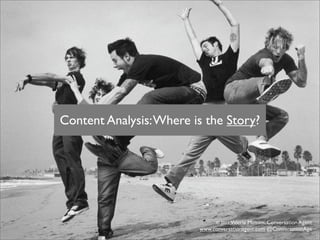


Content Analysis: Where is the Story?


                               © 2011 Valeria
                                           Maltoni, Conversation Agent
                         www.conversationagent.com @ConversationAge
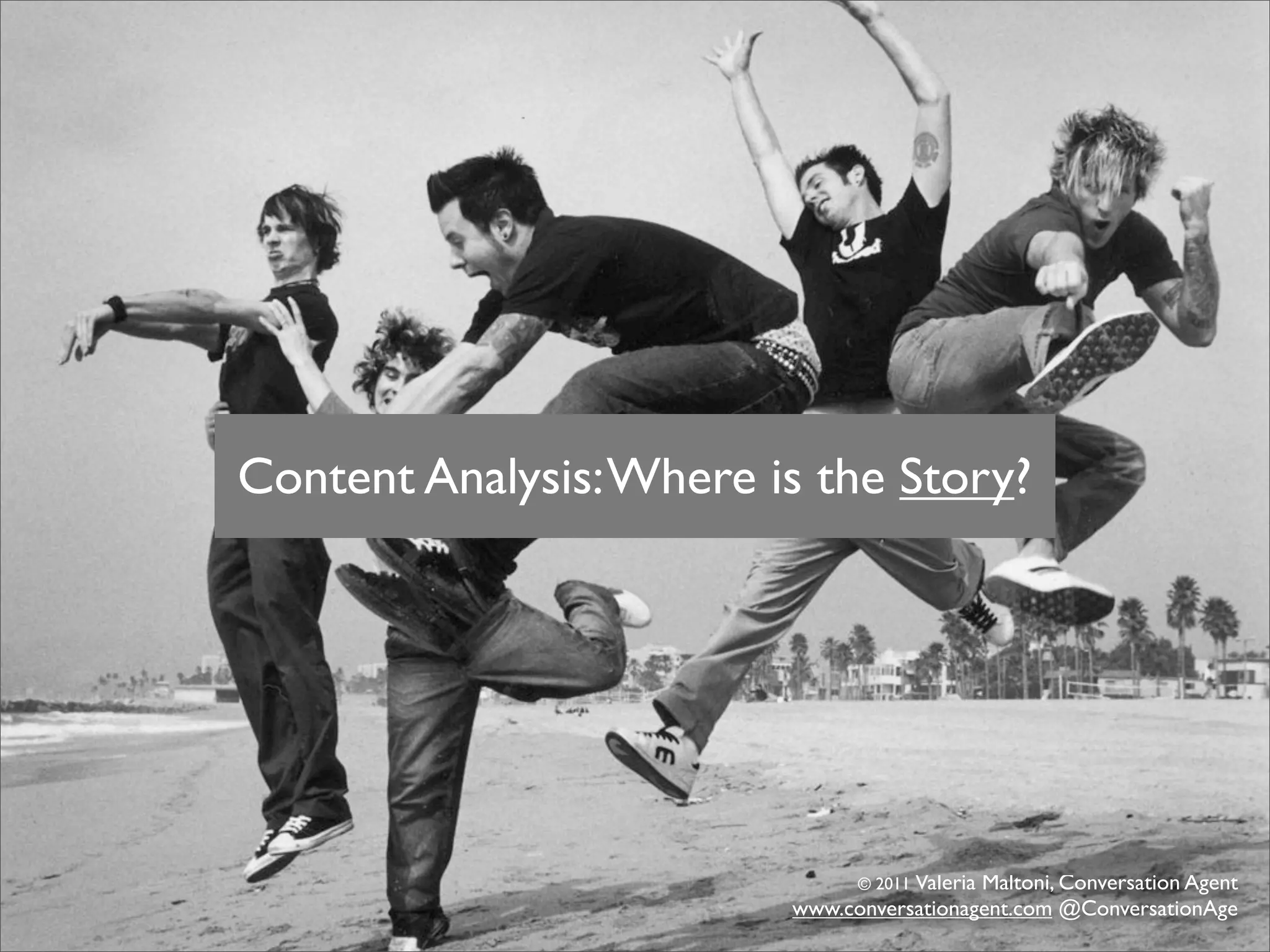
ON AL
       P ERS
IT’S


                       WHY
“
Large companies are
somewhat like me — once
they get used to a certain
behavior, they develop a
certain culture and a set
of procedures, processes
and a work environment   “
that defines them and
their future.
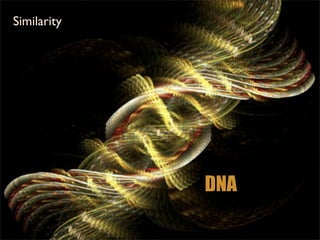
Similarity


             DNA
“
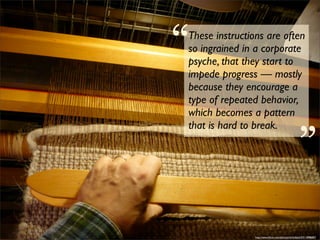
These instructions are often
so ingrained in a corporate
psyche, that they start to
impede progress — mostly
because they encourage a
type of repeated behavior,                        “
which becomes a pattern
that is hard to break.


                http://www.flickr.com/photos/mrdubyah/5311898687/
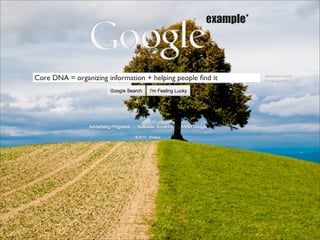
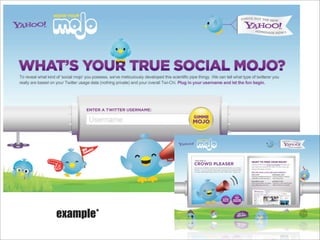
example*


Core DNA = organizing information + helping people find it
“
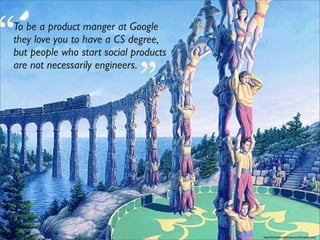
To be a product manger at Google
                             “
they love you to have a CS degree,
but people who start social products
are not necessarily engineers.


                                       http://www.sapergalleries.com/Gonsalves.html
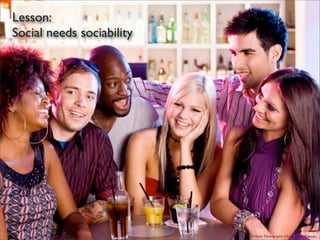
Lesson:
Social needs sociability


                           by Effinity Photography • Surrey, BC, Canada
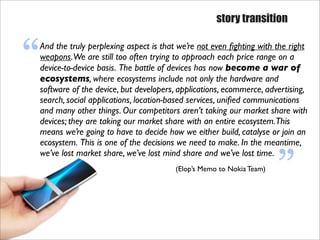
story transition


“
And the truly perplexing aspect is that we’re not even fighting with the right
weapons. We are still too often trying to approach each price range on a
device-to-device basis. The battle of devices has now become a war of
ecosystems, where ecosystems include not only the hardware and
software of the device, but developers, applications, ecommerce, advertising,
search, social applications, location-based services, unified communications
and many other things. Our competitors aren’t taking our market share with
devices; they are taking our market share with an entire ecosystem.This
                                                                     “
means we’re going to have to decide how we either build, catalyse or join an
ecosystem. This is one of the decisions we need to make. In the meantime,
we’ve lost market share, we’ve lost mind share and we’ve lost time.
                                       (Elop’s Memo to Nokia Team)
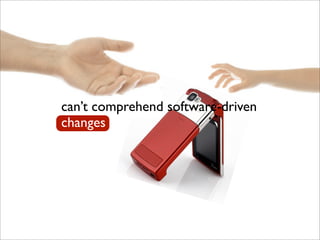
can’t comprehend software-driven
changes
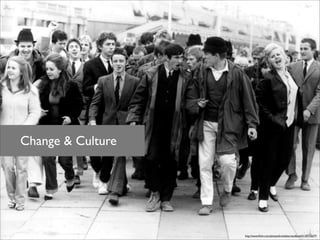
Change & Culture


                   http://www.flickr.com/photos/brizzlebornandbred/5130733677/
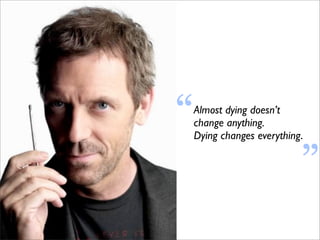
“   Almost dying doesn’t
    change anything.        “
    Dying changes everything.
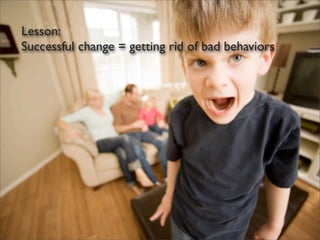
Lesson:
Successful change = getting rid of bad behaviors
how we make decisions
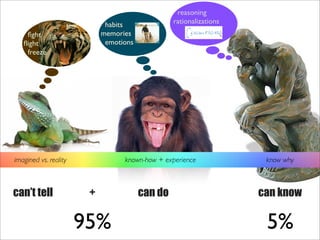
reasoning
                             habits              rationalizations
    fight                    memories
   flight                     emotions
    freeze


imagined vs. reality              known-how + experience             know why


can’t tell              +               can do                      can know

                       95%                                           5%
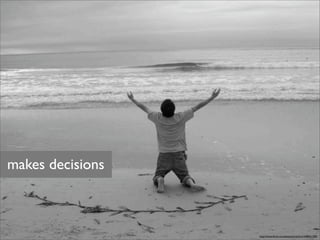
makes decisions


                  http://www.flickr.com/photos/mischiru/348551209/
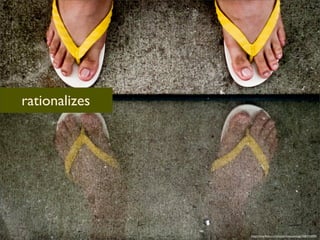
rationalizes


               http://www.flickr.com/photos/instantvantage/5082024009/
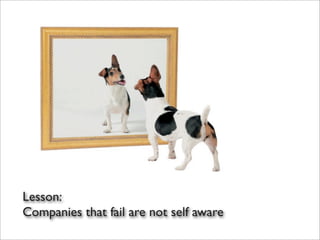
Lesson:
Companies that fail are not self aware
http://www.flickr.com/photos/lauren-dautel/5394439420/
Joy
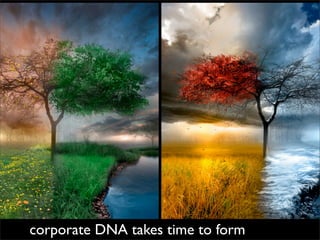
corporate DNA takes time to form
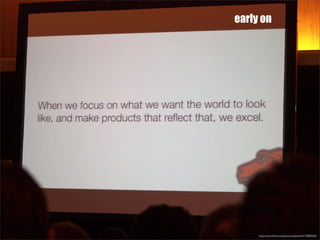
early on


     http://www.flickr.com/photos/johnath/4179884405/
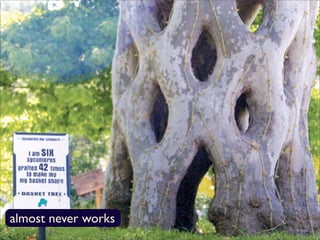
how internal systems are built
almost never works
example*
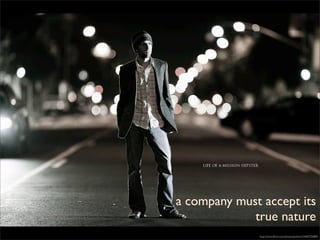
a company must accept its
             true nature
              http://www.flickr.com/photos/polvero/3405752889/
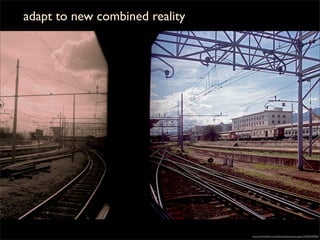
adapt to new combined reality


                                http://www.flickr.com/photos/lorenzocuppini/2265235956/
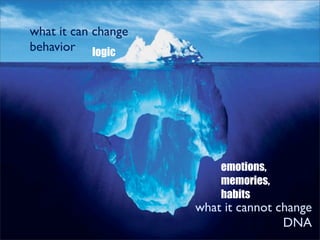
what it can change
behavior logic


                         emotions,
                         memories,
                         habits
                     what it cannot change
                                     DNA
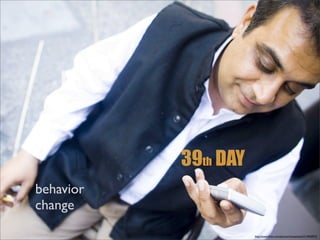
39th DAY
behavior
change
                      http://www.flickr.com/photos/thomashawk/219950975/
© 2011 Valeria
                                                   Maltoni, Conversation Agent
                                 www.conversationagent.com @ConversationAge


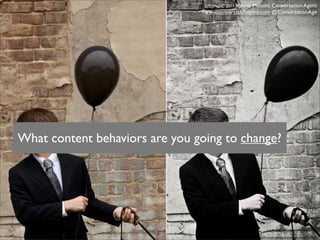
What content behaviors are you going to change?


                                                    http://www.flickr.com/photos/brandoncwarren/4172990687/

Content Analysis: Where is the Story

  • 1.
    Content Analysis: Whereis the Story? © 2011 Valeria Maltoni, Conversation Agent www.conversationagent.com @ConversationAge
  • 2.
    ON AL P ERS IT’S WHY
  • 3.
    “ Large companies are somewhatlike me — once they get used to a certain behavior, they develop a certain culture and a set of procedures, processes and a work environment “ that defines them and their future.
  • 4.
  • 5.
    “ These instructions areoften so ingrained in a corporate psyche, that they start to impede progress — mostly because they encourage a type of repeated behavior, “ which becomes a pattern that is hard to break. http://www.flickr.com/photos/mrdubyah/5311898687/
  • 6.
    example* Core DNA =organizing information + helping people find it
  • 7.
    “ To be aproduct manger at Google “ they love you to have a CS degree, but people who start social products are not necessarily engineers. http://www.sapergalleries.com/Gonsalves.html
  • 8.
    Lesson: Social needs sociability by Effinity Photography • Surrey, BC, Canada
  • 9.
    story transition “ And thetruly perplexing aspect is that we’re not even fighting with the right weapons. We are still too often trying to approach each price range on a device-to-device basis. The battle of devices has now become a war of ecosystems, where ecosystems include not only the hardware and software of the device, but developers, applications, ecommerce, advertising, search, social applications, location-based services, unified communications and many other things. Our competitors aren’t taking our market share with devices; they are taking our market share with an entire ecosystem.This “ means we’re going to have to decide how we either build, catalyse or join an ecosystem. This is one of the decisions we need to make. In the meantime, we’ve lost market share, we’ve lost mind share and we’ve lost time. (Elop’s Memo to Nokia Team)
  • 10.
  • 11.
    Change & Culture http://www.flickr.com/photos/brizzlebornandbred/5130733677/
  • 12.
    Almost dying doesn’t change anything. “ Dying changes everything.
  • 13.
    Lesson: Successful change =getting rid of bad behaviors
  • 14.
    how we makedecisions
  • 15.
    reasoning habits rationalizations fight memories flight emotions freeze imagined vs. reality known-how + experience know why can’t tell + can do can know 95% 5%
  • 16.
    makes decisions http://www.flickr.com/photos/mischiru/348551209/
  • 17.
    rationalizes http://www.flickr.com/photos/instantvantage/5082024009/
  • 18.
    Lesson: Companies that failare not self aware
  • 19.
  • 21.
  • 22.
    corporate DNA takestime to form
  • 23.
    early on http://www.flickr.com/photos/johnath/4179884405/
  • 24.
  • 25.
  • 26.
  • 27.
    a company mustaccept its true nature http://www.flickr.com/photos/polvero/3405752889/
  • 28.
    adapt to newcombined reality http://www.flickr.com/photos/lorenzocuppini/2265235956/
  • 29.
    what it canchange behavior logic emotions, memories, habits what it cannot change DNA
  • 30.
    39th DAY behavior change http://www.flickr.com/photos/thomashawk/219950975/
  • 31.
    © 2011 Valeria Maltoni, Conversation Agent www.conversationagent.com @ConversationAge What content behaviors are you going to change? http://www.flickr.com/photos/brandoncwarren/4172990687/