A presentation on consumer behaviour


             Presented by:
           Vandana Chandra
                 MBA
            IVth Semester
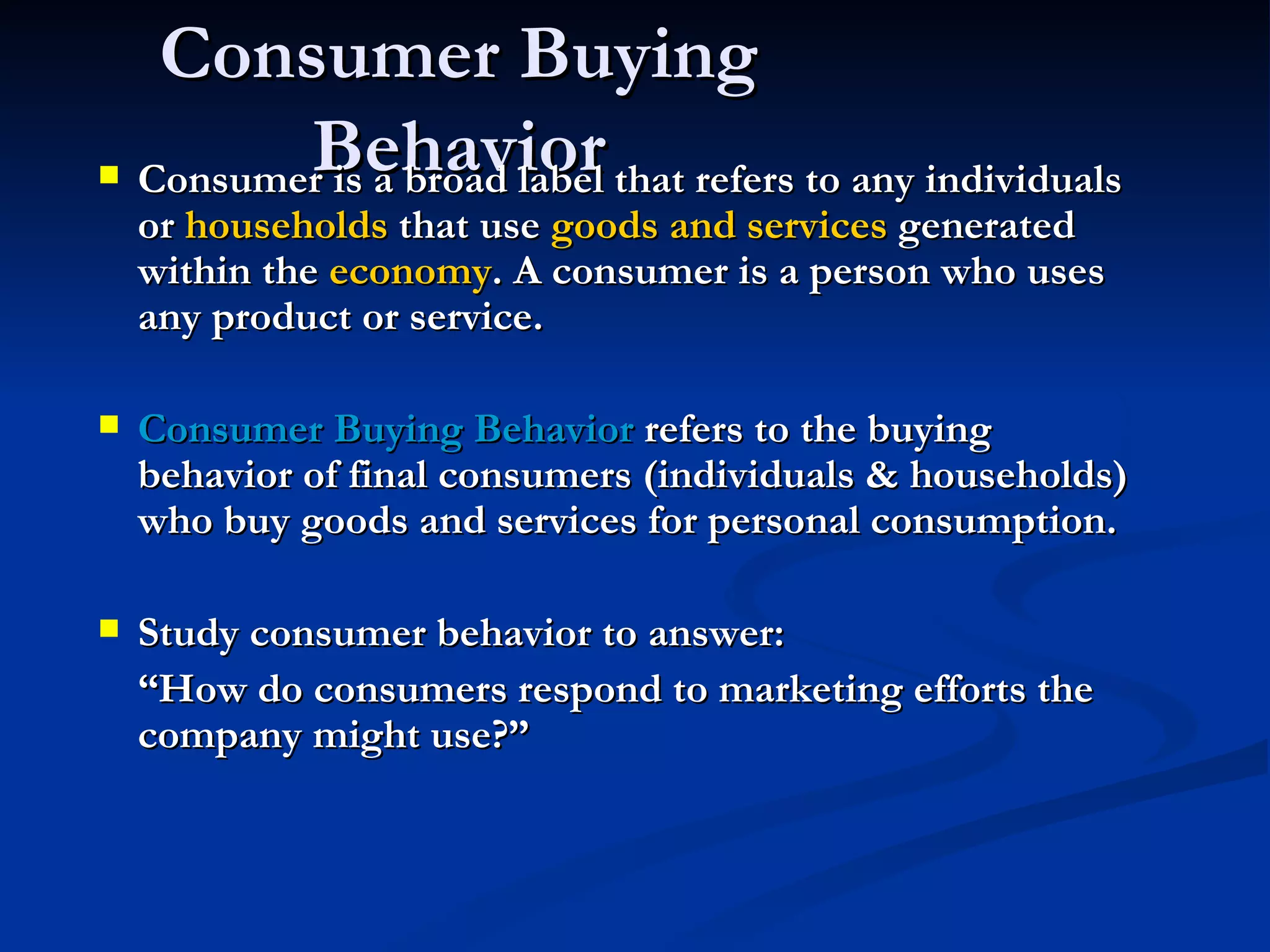
Consumer Buying

           Behavior
    Consumer is a broad label that refers to any individuals
    or households that use goods and services generated
    within the economy. A consumer is a person who uses
    any product or service.

   Consumer Buying Behavior refers to the buying
    behavior of final consumers (individuals & households)
    who buy goods and services for personal consumption.

   Study consumer behavior to answer:
    “How do consumers respond to marketing efforts the
    company might use?”
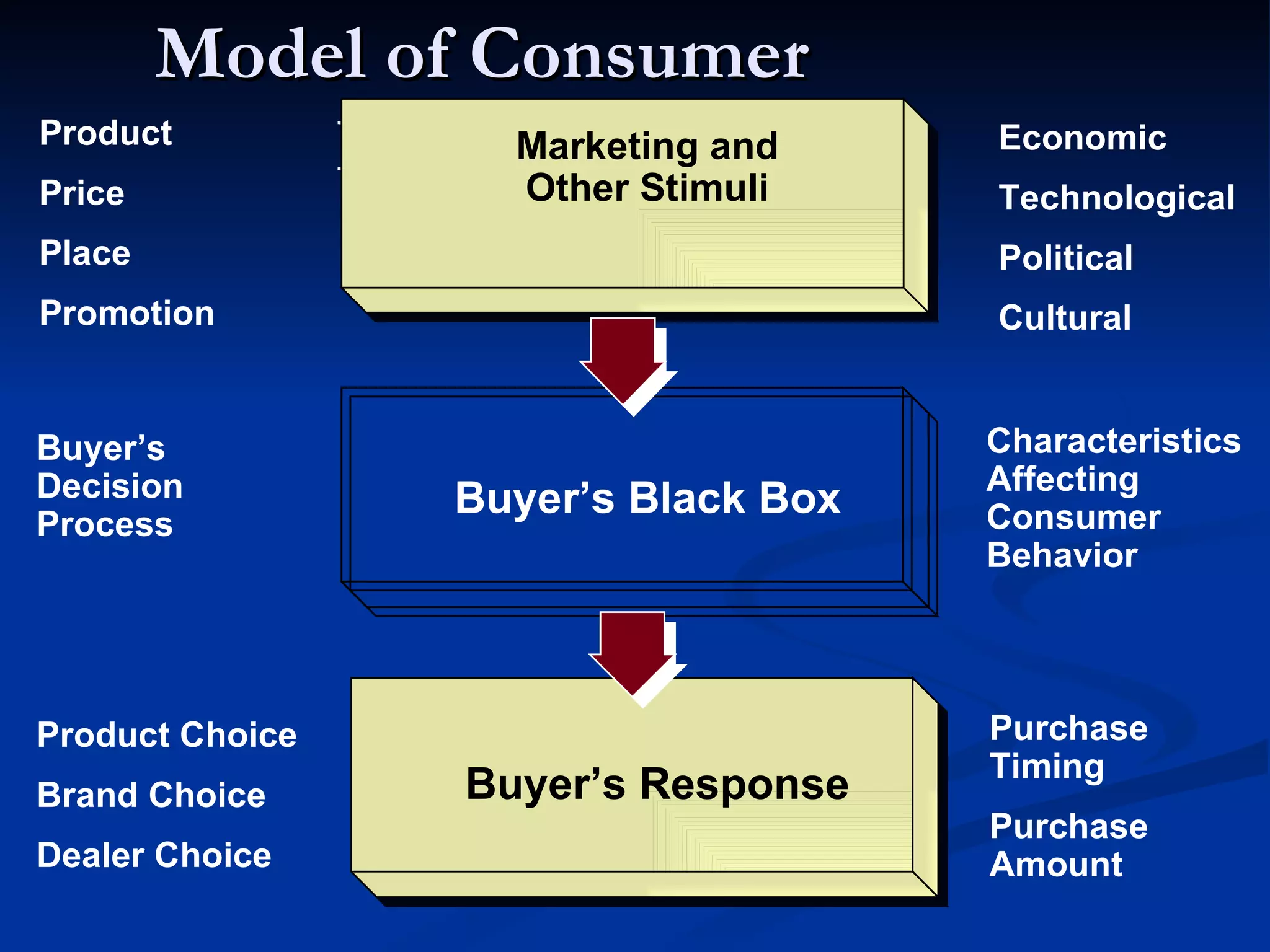
Model of Consumer
Product
Price
          Behavior Stimuli
                Marketing and
                Other
                                     Economic
                                     Technological
Place                                Political
Promotion                            Cultural


Buyer’s                              Characteristics
Decision                             Affecting
                 Buyer’s Black Box   Consumer
Process
                                     Behavior


Product Choice                       Purchase
                                     Timing
Brand Choice     Buyer’s Response
                                     Purchase
Dealer Choice                        Amount
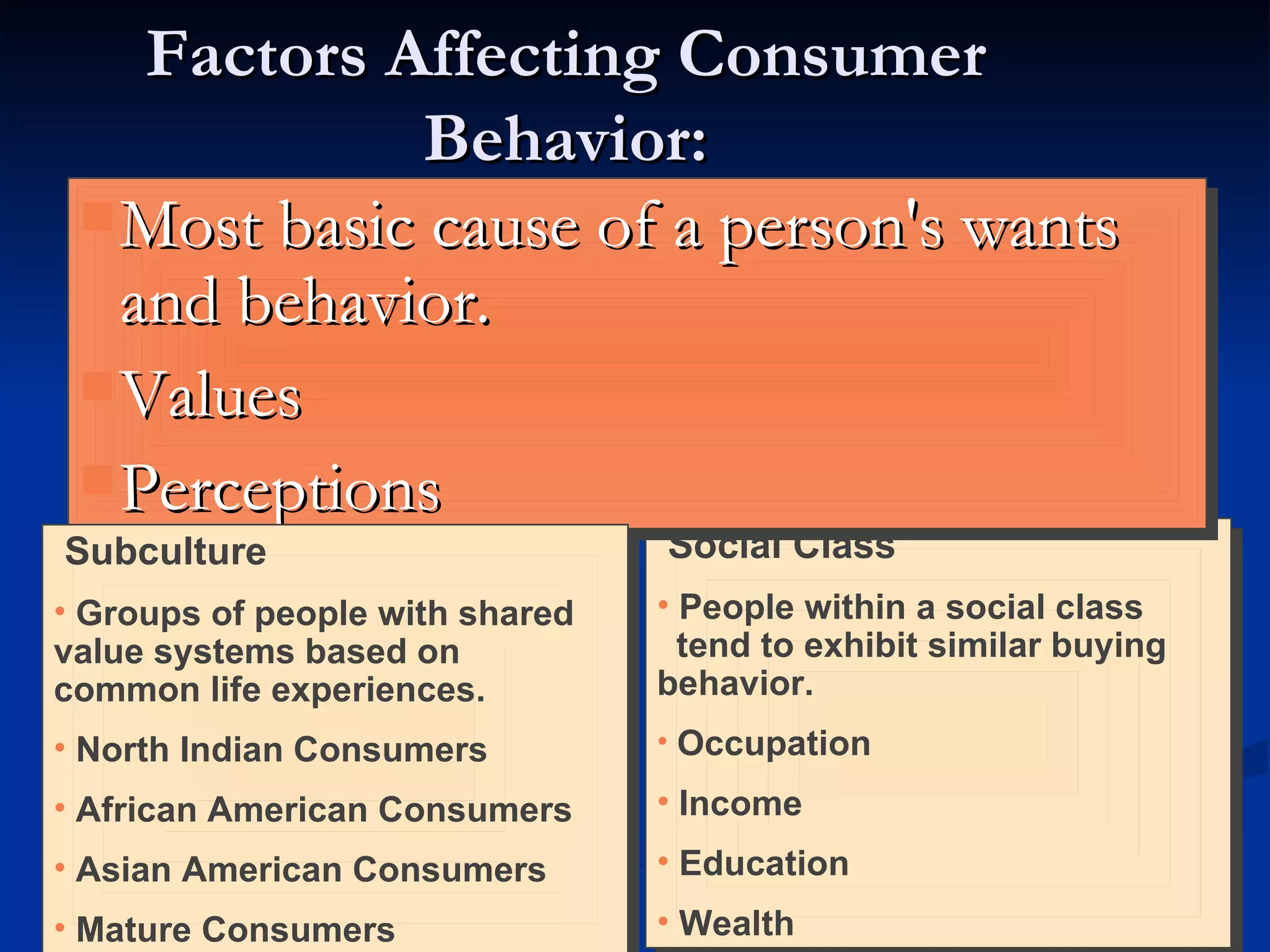
Factors Affecting Consumer
              Behavior:
               Culture
  Most basic cause of a person's wants
   and behavior.
  Values
  Perceptions
Subculture                       Social Class
• Groups of people with shared   • People within a social class
value systems based on             tend to exhibit similar buying
common life experiences.         behavior.
• North Indian Consumers         • Occupation

• African American Consumers     • Income
• Asian American Consumers       • Education
• Mature Consumers               • Wealth
Factors Affecting Consumer
                 Behavior:
      Groups       Social
      Membership
•


      Reference
•


      Family
       Husband, wife, kids       Social Factors
• •


       Influencer, buyer, user


          Roles and Status
Factors Affecting Consumer
           Behavior:
           Personal
          Personal Influences

Age and Family Life Cycle
                                               Occupation
         Stage


   Economic Situation                   Personality & Self-Concept


                 Lifestyle Identification

        Activities                              Opinions


                            Interests
Factors Affecting Consumer Behavior:
Psychological

                 Motivation


 Beliefs and   Psychological
                  Factors       Perception
  Attitudes


                  Learning
Maslow’s Hierarchy of
      NeedsSelf
            Actualization
         (Self-development )

           Esteem Needs
        ( self-esteem, status)
           Social Needs
      (sense of belonging, love)

           Safety Needs
        (security, protection)

       Physiological Needs
           (hunger, thirst)
Types of Buying
      Decisions
                    High            Low
                Involvement     Involvement
Significant
differences      Complex          Variety-
   between        Buying          Seeking
     brands      Behavior         Behavior
        Few
differences     Dissonance-       Habitual
   between    Reducing Buying      Buying
     brands
                 Behavior         Behavior
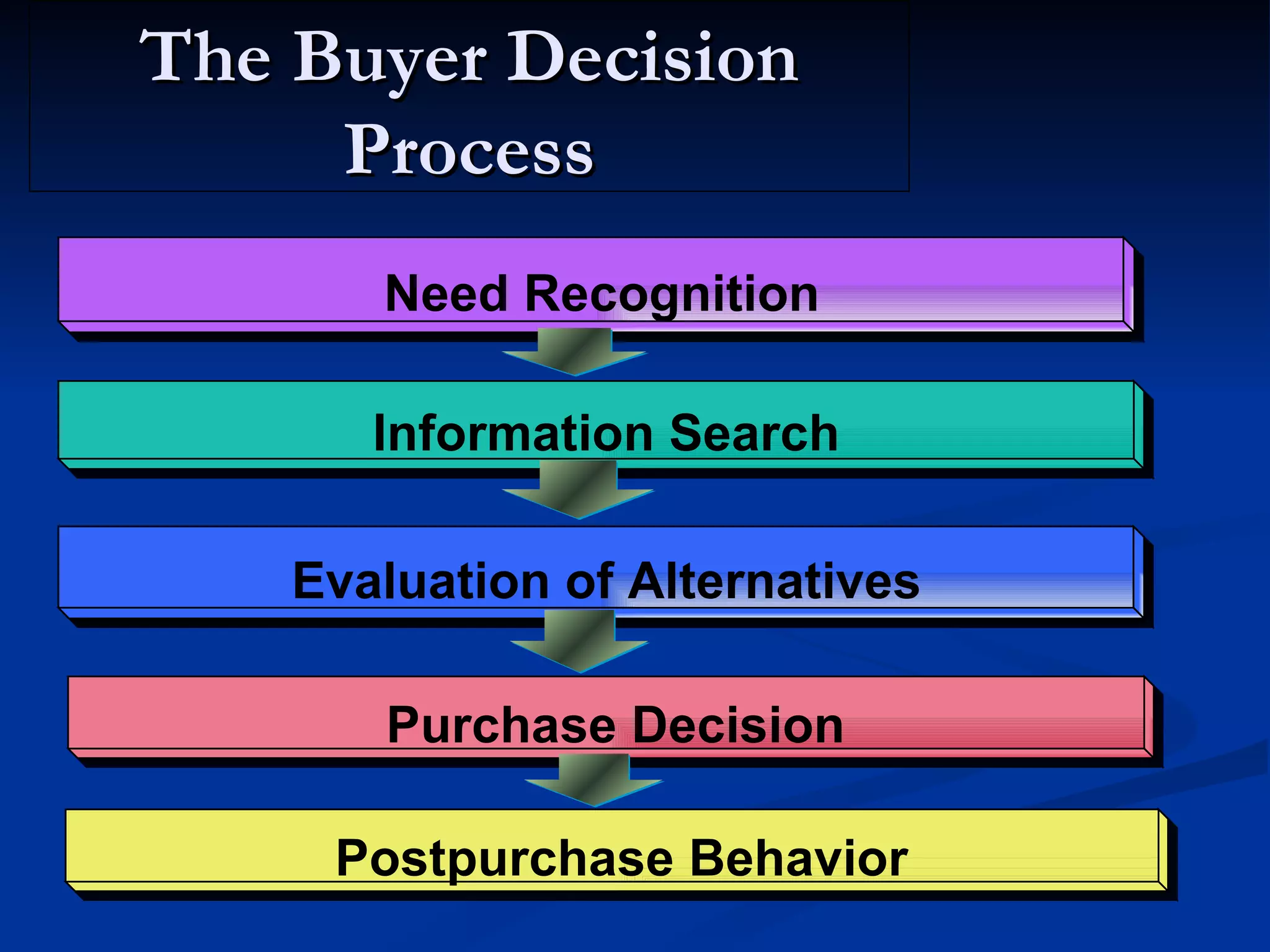
The Buyer Decision
     Process
       Need Recognition

       Information Search

    Evaluation of Alternatives

       Purchase Decision

     Postpurchase Behavior
DECISION MAKING PROCESSES


EXTERNAL INFLUENCES        Experiences and Acquisitions      SITUATIONS
         Culture
                                                                Problem
       Subculture
                                                               Recognition
     Demographics
      Social Status
                                                               Information
    Reference Groups
                                                                  Search
         Family
   Marketing Activities
                          SELF-CONCEPT                    Alternative Evaluation
                                             Desires
                                and                           and Selection
                            LIFESTYLE        Needs
INTERNAL INFLUENCES                                          Outlet Selection
      Perception                                              and Purchases
       Learning
       Memory                                                 Post-purchase
       Motives                                                  Processes
      Personality
                                                             SITUATIONS
       Emotions            Experiences and Acquisitions
       Attitudes
 Information search (step:2)
     Need recognition
                                    Personal Sources
      (step:1)                      Commercial Sources
     Difference between an          Public Sources
      actual state and a desired    Experiential Sources
      state
                                      Evaluation of alternatives
     It is affected by 2              (step:3)
      factors:                        Product attributes
5.    Internal Stimuli                Degree of importance
6.    External Stimuli                Brand beliefs
                                      Total product satisfaction
                                      Evaluation procedures
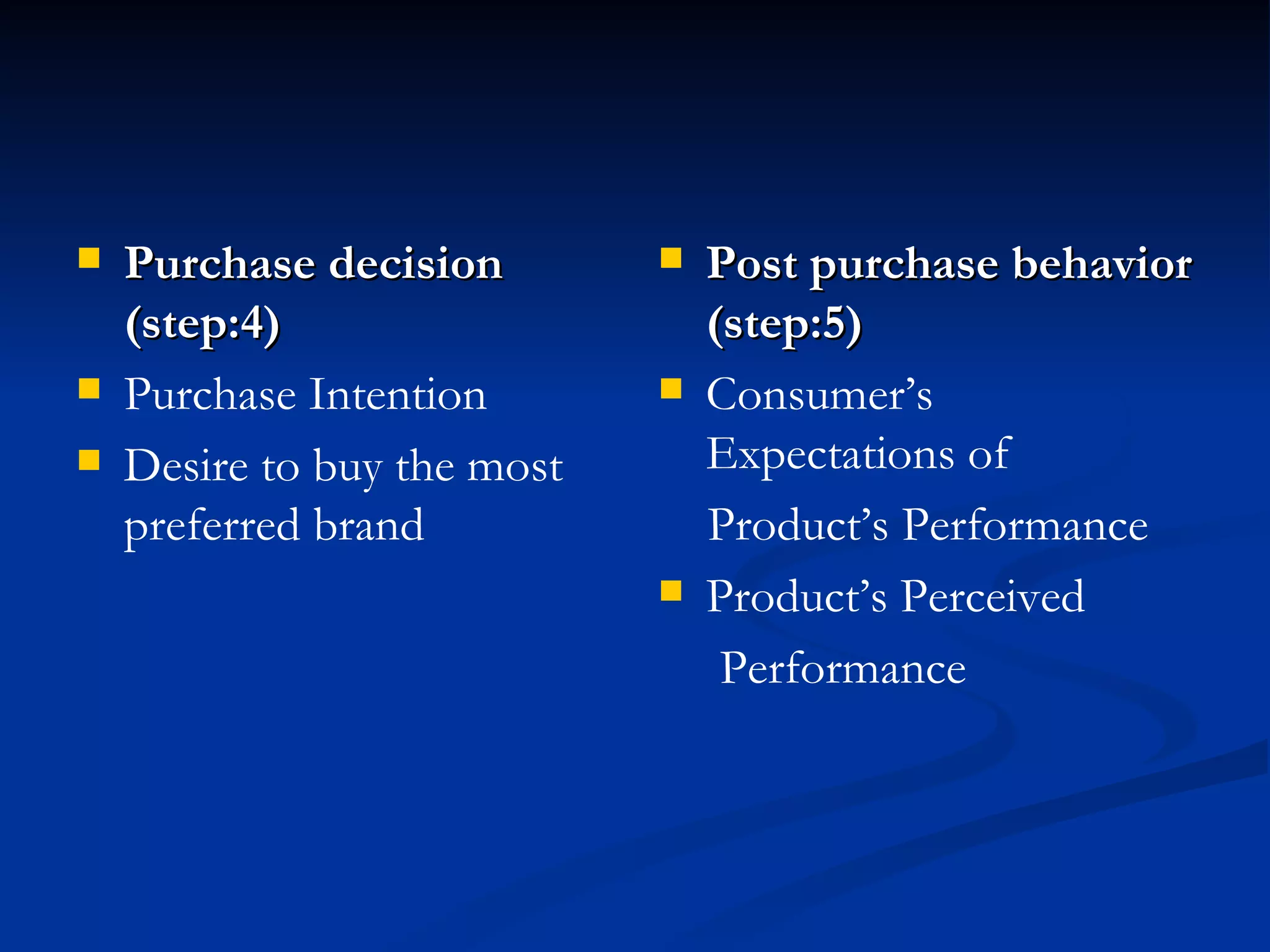
   Purchase decision           Post purchase behavior
    (step:4)                     (step:5)
   Purchase Intention          Consumer’s
   Desire to buy the most       Expectations of
    preferred brand              Product’s Performance
                                Product’s Perceived
                                  Performance
consumer behaviour

consumer behaviour

  • 1.
    A presentation onconsumer behaviour Presented by: Vandana Chandra MBA IVth Semester
  • 2.
    Consumer Buying  Behavior Consumer is a broad label that refers to any individuals or households that use goods and services generated within the economy. A consumer is a person who uses any product or service.  Consumer Buying Behavior refers to the buying behavior of final consumers (individuals & households) who buy goods and services for personal consumption.  Study consumer behavior to answer: “How do consumers respond to marketing efforts the company might use?”
  • 3.
    Model of Consumer Product Price Behavior Stimuli Marketing and Other Economic Technological Place Political Promotion Cultural Buyer’s Characteristics Decision Affecting Buyer’s Black Box Consumer Process Behavior Product Choice Purchase Timing Brand Choice Buyer’s Response Purchase Dealer Choice Amount
  • 4.
    Factors Affecting Consumer Behavior: Culture  Most basic cause of a person's wants and behavior.  Values  Perceptions Subculture Social Class • Groups of people with shared • People within a social class value systems based on tend to exhibit similar buying common life experiences. behavior. • North Indian Consumers • Occupation • African American Consumers • Income • Asian American Consumers • Education • Mature Consumers • Wealth
  • 5.
    Factors Affecting Consumer Behavior: Groups Social Membership • Reference • Family Husband, wife, kids Social Factors • • Influencer, buyer, user Roles and Status
  • 6.
    Factors Affecting Consumer Behavior: Personal Personal Influences Age and Family Life Cycle Occupation Stage Economic Situation Personality & Self-Concept Lifestyle Identification Activities Opinions Interests
  • 7.
    Factors Affecting ConsumerBehavior: Psychological Motivation Beliefs and Psychological Factors Perception Attitudes Learning
  • 8.
    Maslow’s Hierarchy of NeedsSelf Actualization (Self-development ) Esteem Needs ( self-esteem, status) Social Needs (sense of belonging, love) Safety Needs (security, protection) Physiological Needs (hunger, thirst)
  • 9.
    Types of Buying Decisions High Low Involvement Involvement Significant differences Complex Variety- between Buying Seeking brands Behavior Behavior Few differences Dissonance- Habitual between Reducing Buying Buying brands Behavior Behavior
  • 10.
    The Buyer Decision Process Need Recognition Information Search Evaluation of Alternatives Purchase Decision Postpurchase Behavior
  • 11.
    DECISION MAKING PROCESSES EXTERNALINFLUENCES Experiences and Acquisitions SITUATIONS Culture Problem Subculture Recognition Demographics Social Status Information Reference Groups Search Family Marketing Activities SELF-CONCEPT Alternative Evaluation Desires and and Selection LIFESTYLE Needs INTERNAL INFLUENCES Outlet Selection Perception and Purchases Learning Memory Post-purchase Motives Processes Personality SITUATIONS Emotions Experiences and Acquisitions Attitudes
  • 12.
     Information search(step:2)  Need recognition  Personal Sources (step:1)  Commercial Sources Difference between an  Public Sources actual state and a desired  Experiential Sources state  Evaluation of alternatives  It is affected by 2 (step:3) factors:  Product attributes 5. Internal Stimuli  Degree of importance 6. External Stimuli  Brand beliefs  Total product satisfaction  Evaluation procedures
  • 13.
    Purchase decision  Post purchase behavior (step:4) (step:5)  Purchase Intention  Consumer’s  Desire to buy the most Expectations of preferred brand Product’s Performance  Product’s Perceived Performance