Constructivist Approach of
Learning Mathematics
K.THIYAGU,
Assistant Professor, Department of Education, Central University of Kerala
Students need to construct their own understanding of each
mathematical concept, so that the primary role of teaching is not to
lecture, explain, or otherwise attempt to 'transfer' mathematical
knowledge, but to create situations for students that will foster their
making the necessary mental constructions.
Goals of Constructivism
First, students should develop their mathematical structures
that are more complex, abstract, and powerful than the ones
they currently possess so that gradually they will be able to
solve a wide variety of meaningful problems.
Goals of Constructivism
Second, Students should become autonomous and self-
motivated in their mathematical activity.
Students’ should believe that mathematics is a way of thinking and
thinking is the only way to solve mathematical problems. Their
believe will be change so that they do not "get" mathematical
knowledge from their teacher so much as from their own
explorations, thinking, and participation in discussions.
Also another important goal of the constructivist
approach in mathematics is assessment, measurement
and evaluation what should be a natural part of the
learning process rather than an activity completed at the
end of the learning process.
Goals of Constructivism
Five Steps for
Constructing New
Knowledge
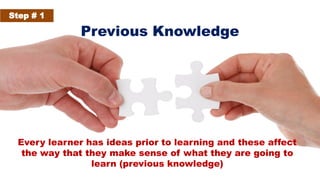
Previous Knowledge
Every learner has ideas prior to learning and these affect
the way that they make sense of what they are going to
learn (previous knowledge)
Step # 1
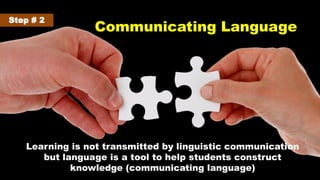
Communicating Language
Learning is not transmitted by linguistic communication
but language is a tool to help students construct
knowledge (communicating language)
Step # 2
Active Participation
Learning is a participatory process
(Active Participation)
Step # 3
Accepted Views
Individual constructions should fit with the
accepted views of communities of practice
(accepted views)
Step # 4
Knowledge Construction
Knowledge is personally
constructed from new
experiences
(Knowledge Construction)
Step # 5
Interactive Teaching Approach
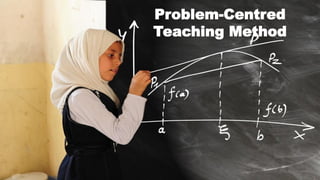
Problem-Centred
Teaching Method
Group Work Approach,
Discovery or
Investigative approach,
Individual Teaching Approach
Role of the Teacher
• Serve in the role of friends, mentors, coaches and
facilitators;
• Negotiating the details of what is to be taught;
• Valuing the learners' ideas and their autonomy;
• Finding appropriate challenging problems and learning
activities;
• Emphasizing cooperation in learning.
• Encouraging communication as a form of social
interaction;
• Trying to find what is going on
inside the heads of learners
rather than relying on their overt
and often superficial responses;
• Helping the students make
connections by linking
• Accepting the notion that
learning is skill developmental
Role of the Teacher
Conclusion
Constructivist theories
are about 'how one
comes to know'.
Today’s constructing
knowledge is
tomorrows prior
knowledge to
construct another
knowledge
Licensed under
Thank You
Jai Bharat!

Constructivist approach of learning mathematics thiyagu

  • 1.
    Constructivist Approach of LearningMathematics K.THIYAGU, Assistant Professor, Department of Education, Central University of Kerala
  • 2.
    Students need toconstruct their own understanding of each mathematical concept, so that the primary role of teaching is not to lecture, explain, or otherwise attempt to 'transfer' mathematical knowledge, but to create situations for students that will foster their making the necessary mental constructions.
  • 3.
    Goals of Constructivism First,students should develop their mathematical structures that are more complex, abstract, and powerful than the ones they currently possess so that gradually they will be able to solve a wide variety of meaningful problems.
  • 4.
    Goals of Constructivism Second,Students should become autonomous and self- motivated in their mathematical activity. Students’ should believe that mathematics is a way of thinking and thinking is the only way to solve mathematical problems. Their believe will be change so that they do not "get" mathematical knowledge from their teacher so much as from their own explorations, thinking, and participation in discussions.
  • 5.
    Also another importantgoal of the constructivist approach in mathematics is assessment, measurement and evaluation what should be a natural part of the learning process rather than an activity completed at the end of the learning process. Goals of Constructivism
  • 6.
  • 7.
    Previous Knowledge Every learnerhas ideas prior to learning and these affect the way that they make sense of what they are going to learn (previous knowledge) Step # 1
  • 8.
    Communicating Language Learning isnot transmitted by linguistic communication but language is a tool to help students construct knowledge (communicating language) Step # 2
  • 9.
    Active Participation Learning isa participatory process (Active Participation) Step # 3
  • 10.
    Accepted Views Individual constructionsshould fit with the accepted views of communities of practice (accepted views) Step # 4
  • 11.
    Knowledge Construction Knowledge ispersonally constructed from new experiences (Knowledge Construction) Step # 5
  • 13.
  • 14.
  • 15.
    Group Work Approach, Discoveryor Investigative approach, Individual Teaching Approach
  • 16.
    Role of theTeacher • Serve in the role of friends, mentors, coaches and facilitators; • Negotiating the details of what is to be taught; • Valuing the learners' ideas and their autonomy; • Finding appropriate challenging problems and learning activities; • Emphasizing cooperation in learning. • Encouraging communication as a form of social interaction;
  • 17.
    • Trying tofind what is going on inside the heads of learners rather than relying on their overt and often superficial responses; • Helping the students make connections by linking • Accepting the notion that learning is skill developmental Role of the Teacher
  • 18.
    Conclusion Constructivist theories are about'how one comes to know'. Today’s constructing knowledge is tomorrows prior knowledge to construct another knowledge
  • 19.