Downloaded 112 times
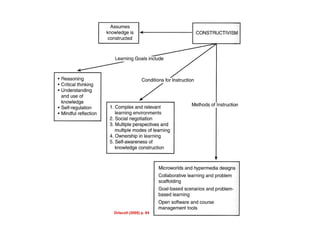
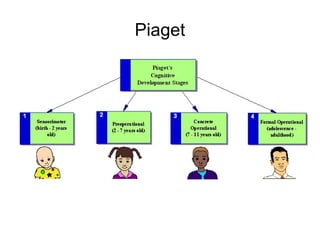
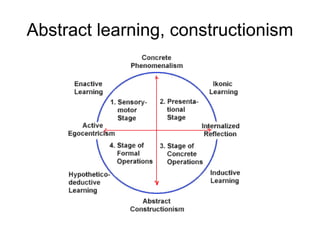
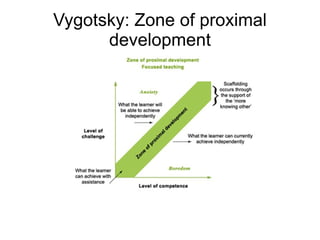
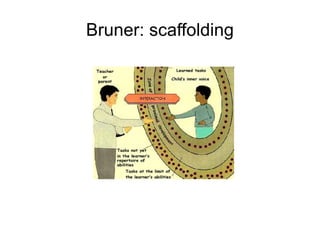
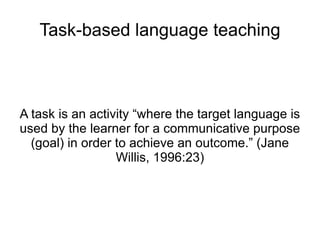
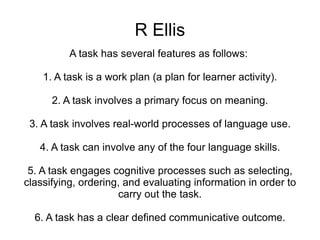
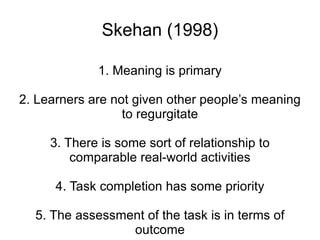

The document discusses constructivism according to Piaget, Vygotsky, and Bruner and introduces task-based language teaching. It defines a task as an activity where the target language is used by the learner for a communicative purpose to achieve an outcome. It lists several key features of a task, including that it involves using language for real-world processes, engages cognitive skills, and has a clear communicative outcome. It also summarizes Skehan's view that tasks focus on meaning, do not require regurgitating others' meanings, relate to real-world activities, prioritize task completion, and assess based on outcome. The document questions in what sense task-based language teaching can be considered a constructivist


