CONSTRUCTIVISM
CONSTRUCTIVISM
This method regards the learners as
the core of the learning process. He
is at the center of the educational
stage.
Exponents of constructivism aver that
knowledge cannot be passed on from
one person to another, like teacher to
learner.
CONSTRUCTIVISM
New learning is compared to
prior learning.
Learning is constructed
knowledge.
CONSTRUCTIVISM
It is constructed by the learner
himself through his interpretation of
particular information like giving
meaning to an odd noise in a solemn
ceremony.
In constructivism, teacher builds knowledge,
taking into consideration what prior the student
has acquired. Slowly, he gives cues,
penetrating questions, and then sets activities
where student insights can be challenged.
CONSTRUCTIVISM
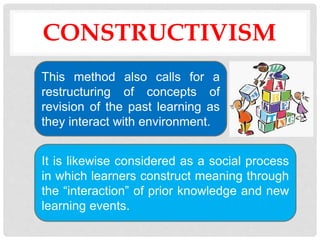
This method also calls for a
restructuring of concepts of
revision of the past learning as
they interact with environment.
It is likewise considered as a social process
in which learners construct meaning through
the “interaction” of prior knowledge and new
learning events.
CONSTRUCTIVISM
Teacher assumes the role of a facilitator and
provides a relevant experience from which
meanings can be drawn.
Activities engaged in are
interesting venues for stimulating
dialogues which provide ample
participation to all the members of
the group.
CONSTRUCTIVISM
Construct own knowledge
through experiences.
Teaching is about providing activities for students to
generate their own understanding.

Constructivism

  • 1.
  • 2.
    CONSTRUCTIVISM This method regardsthe learners as the core of the learning process. He is at the center of the educational stage. Exponents of constructivism aver that knowledge cannot be passed on from one person to another, like teacher to learner.
  • 3.
    CONSTRUCTIVISM New learning iscompared to prior learning. Learning is constructed knowledge.
  • 4.
    CONSTRUCTIVISM It is constructedby the learner himself through his interpretation of particular information like giving meaning to an odd noise in a solemn ceremony. In constructivism, teacher builds knowledge, taking into consideration what prior the student has acquired. Slowly, he gives cues, penetrating questions, and then sets activities where student insights can be challenged.
  • 5.
    CONSTRUCTIVISM This method alsocalls for a restructuring of concepts of revision of the past learning as they interact with environment. It is likewise considered as a social process in which learners construct meaning through the “interaction” of prior knowledge and new learning events.
  • 6.
    CONSTRUCTIVISM Teacher assumes therole of a facilitator and provides a relevant experience from which meanings can be drawn. Activities engaged in are interesting venues for stimulating dialogues which provide ample participation to all the members of the group.
  • 7.
    CONSTRUCTIVISM Construct own knowledge throughexperiences. Teaching is about providing activities for students to generate their own understanding.