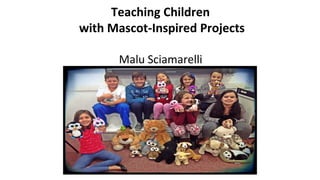
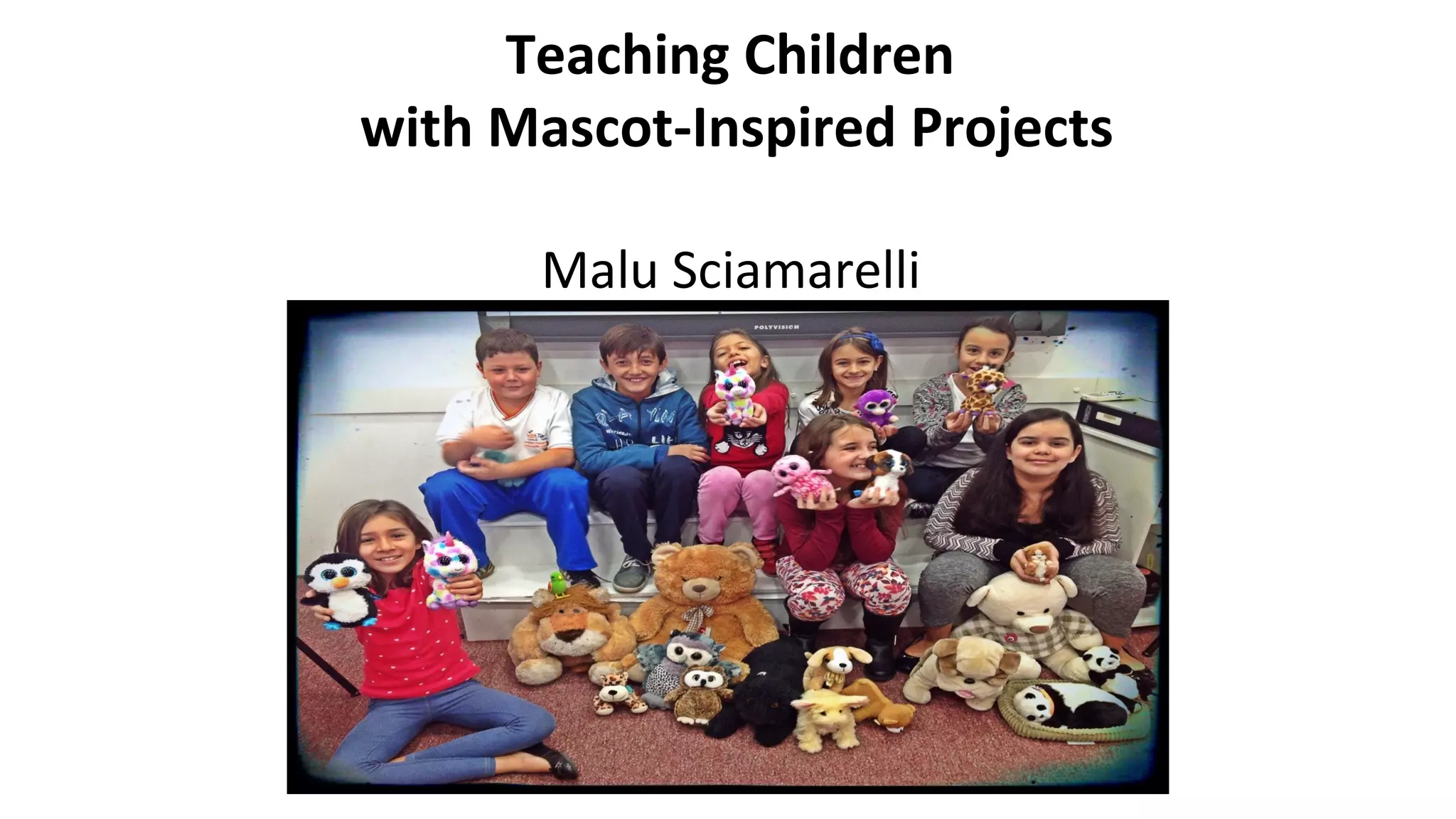
Teaching Children
with Mascot-Inspired Projects
Malu Sciamarelli
The benefits of project-based learning:
• Thematically organised materials are easier to remember and learn
• The presentation of coherent and meaningful information leads to deeper
processing and better learning
• There is a relationship between the student motivation and interest, and a
student’s ability to process challenging materials, recall information and
elaborate answers
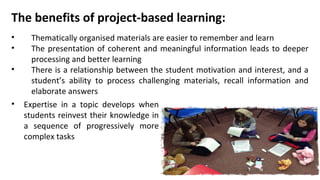
• Expertise in a topic develops when
students reinvest their knowledge in
a sequence of progressively more
complex tasks
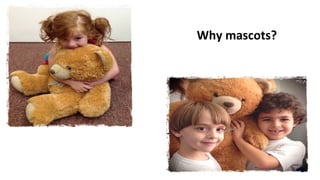
Why mascots?
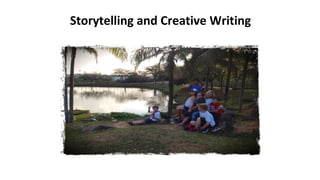
Storytelling and Creative Writing
Procedure:
• Mascot: name
• Senses:
1. Sight
2. Hearing
3. Touch
4. Taste
5. Smell
• Sit in a nice spot: help them write stories/poems based on their
experience, using the mascots
• Back in the classroom: name one thing they discovered using the five
senses
• Tell the stories/poems out loud using the mascots
• Document them in a poster in the classroom or a blog
Examples:
The flowers of my garden
Shine brighter than the sun.
Brownie plays with us
And we have so much fun.
(Ana Luiza, 9 years old)
On the other side of the world
The sun shines brighter than here
Dubi and all his friends
Smile for everyone to see.
(Giulia, 7 years old)
The sun is shining
And I am shining too
But why is Snow
So sad and blue?
(Maria Fernanda, 8 years old)
Brownie, Dubi and Snow
Are laughing and laughing.
They are rolling on the ground
And everyone is coming round!
(Chiara, 8 years old)
If you are feeling blue
Vanilla’s flowers
Will come to you
And give you superpowers!
(Lorena, 8 years old)
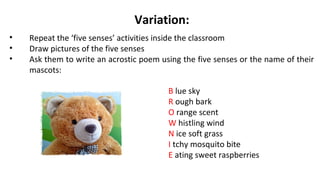
Variation:
• Repeat the ‘five senses’ activities inside the classroom
• Draw pictures of the five senses
• Ask them to write an acrostic poem using the five senses or the name of their
mascots:
B lue sky
R ough bark
O range scent
W histling wind
N ice soft grass
I tchy mosquito bite
E ating sweet raspberries
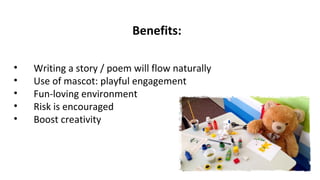
Benefits:
• Writing a story / poem will flow naturally
• Use of mascot: playful engagement
• Fun-loving environment
• Risk is encouraged
• Boost creativity
Conclusion
Projects:
•Reach all students
•Get them engaged
•Ownership of their learning
•Lifelong learners
•Critical thinking and problem solving skills
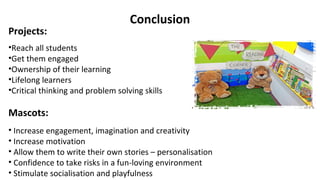
Mascots:
• Increase engagement, imagination and creativity
• Increase motivation
• Allow them to write their own stories – personalisation
• Confidence to take risks in a fun-loving environment
• Stimulate socialisation and playfulness
Thank you!
Email: malusciamarelli@gmail.com
Website: www.malusciamarelli.weebly.com
The C Group: http://thecreativitygroup.weebly.com
Creativity Book – British Council:
http://www.teachingenglish.org.uk/article/creativity-english-language-classroom

Teaching Children with Mascot-Inspired Projects

  • 1.
    Teaching Children with Mascot-InspiredProjects Malu Sciamarelli
  • 2.
    The benefits ofproject-based learning: • Thematically organised materials are easier to remember and learn • The presentation of coherent and meaningful information leads to deeper processing and better learning • There is a relationship between the student motivation and interest, and a student’s ability to process challenging materials, recall information and elaborate answers • Expertise in a topic develops when students reinvest their knowledge in a sequence of progressively more complex tasks
  • 3.
  • 4.
  • 5.
    Procedure: • Mascot: name •Senses: 1. Sight 2. Hearing 3. Touch 4. Taste 5. Smell • Sit in a nice spot: help them write stories/poems based on their experience, using the mascots • Back in the classroom: name one thing they discovered using the five senses • Tell the stories/poems out loud using the mascots • Document them in a poster in the classroom or a blog
  • 6.
    Examples: The flowers ofmy garden Shine brighter than the sun. Brownie plays with us And we have so much fun. (Ana Luiza, 9 years old) On the other side of the world The sun shines brighter than here Dubi and all his friends Smile for everyone to see. (Giulia, 7 years old) The sun is shining And I am shining too But why is Snow So sad and blue? (Maria Fernanda, 8 years old) Brownie, Dubi and Snow Are laughing and laughing. They are rolling on the ground And everyone is coming round! (Chiara, 8 years old) If you are feeling blue Vanilla’s flowers Will come to you And give you superpowers! (Lorena, 8 years old)
  • 8.
    Variation: • Repeat the‘five senses’ activities inside the classroom • Draw pictures of the five senses • Ask them to write an acrostic poem using the five senses or the name of their mascots: B lue sky R ough bark O range scent W histling wind N ice soft grass I tchy mosquito bite E ating sweet raspberries
  • 9.
    Benefits: • Writing astory / poem will flow naturally • Use of mascot: playful engagement • Fun-loving environment • Risk is encouraged • Boost creativity
  • 10.
    Conclusion Projects: •Reach all students •Getthem engaged •Ownership of their learning •Lifelong learners •Critical thinking and problem solving skills Mascots: • Increase engagement, imagination and creativity • Increase motivation • Allow them to write their own stories – personalisation • Confidence to take risks in a fun-loving environment • Stimulate socialisation and playfulness
  • 11.
    Thank you! Email: malusciamarelli@gmail.com Website:www.malusciamarelli.weebly.com The C Group: http://thecreativitygroup.weebly.com Creativity Book – British Council: http://www.teachingenglish.org.uk/article/creativity-english-language-classroom