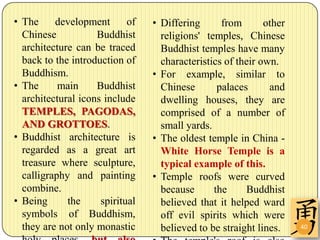
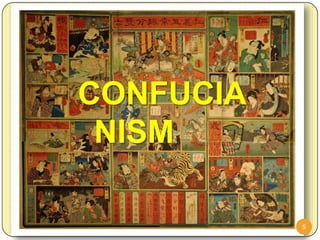
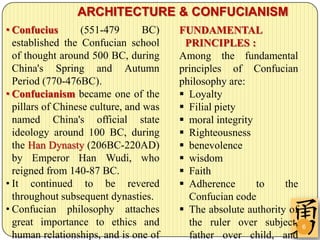
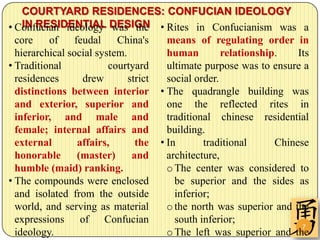
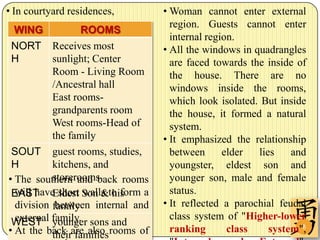
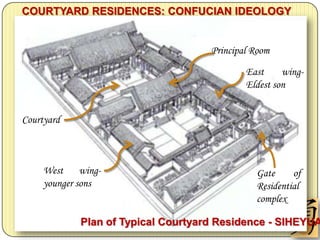
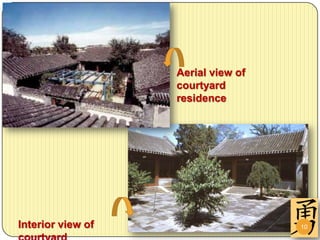
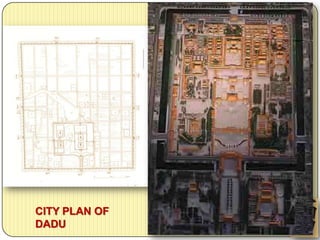
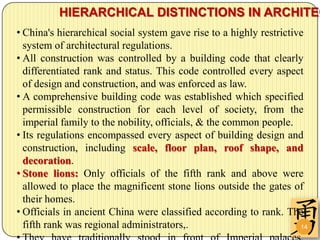
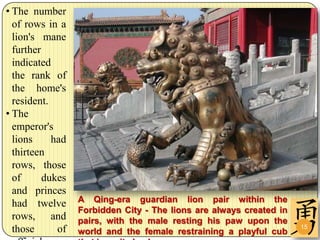
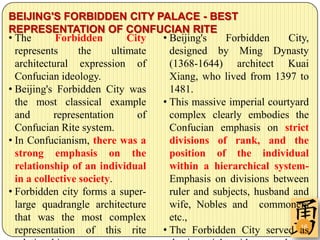
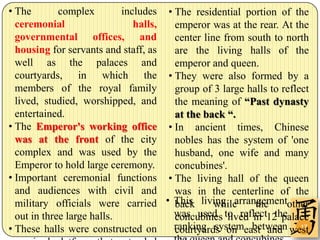
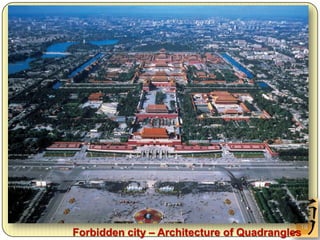
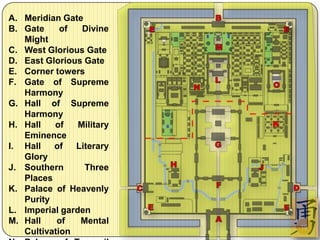
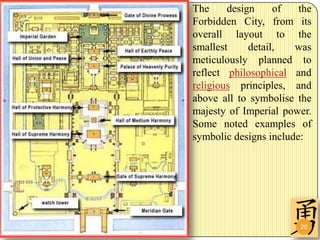
Traditional Chinese architecture was heavily influenced by Confucianism and emphasized hierarchical relationships and social order. Courtyard residences were designed according to Confucian principles, with rooms arranged by status and gender. City planning followed Confucian codes, laying cities on a square grid and differentiating buildings by rank through size and decorative details. The Forbidden City best represents these Confucian influences through its emphasis on the emperor's authority and distinction of interior and exterior spaces.
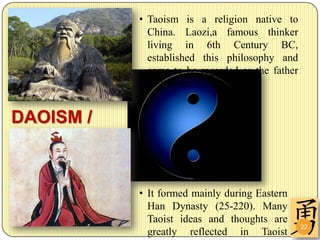
![DAOISM
MAJOR DAOIST PRINCIPLES THE DAO (TAO)
1. Dao [Tao] is the first-cause To escape the “social,
of the political, & cultural traps”
universe. It is a force that of life, one must escape by:
flows through all life. 1. Rejecting formal
2.A believer’s goal is to knowledge and
become one with Dao ; one learning.
with nature. 2. Relying on the senses
3.Wu wei - Let nature take its and instincts.
course. 3. Discovering the nature
- The art of doing and
nothing. “rhythm” of the
- Go with the flow! universe.
4.Man is unhappy because he 4. Ignoring political and
Nature-worshiping and ghost-worshiping, popular in ancient
lives according to man- social laws.
Chinese laws, customs, &a social and cultural basis to the
made society, contributed 23
formation of Taoism.](https://image.slidesharecdn.com/confudaobuddhism-120404001722-phpapp01/85/Confu-dao-buddhism-23-320.jpg)