
IndonesianArchitecture:
 Reflectsthe diversityof cultural,historical andgeographicinfluencesthatshapedIndonesia.
External forces(invaders,colonizers,missionaries,merchants,etc.)broughtcultural changes
that influencedthe architecture styles.
 Most significantforeigninfluence wasIndian.Chinese,ArabandEuropeaninfluencesplayeda
role as well.
 Rumahadat
o Traditional housesbuiltinanyof the vernaculararchitecture stylesinIndonesia
o Earliesthomeswere communal timberlonghousesonstilts,withsteepslopingroofsand
heavygables.
 Normfor traditional housesisapost-bean-lintel structural systemthattake the
loadstraightto the ground.Walls,made of eitherbambooor woodare non-
loadbearing.
 Mortis,tenonjointsandwoodenpegsare usedto holdthe structure together,
insteadof nails.
 Natural materialssuchas timber,bamboo,thatchandfiberare usedto buildthe
structure.
o Designisforthe country’shotand wetmonsoonclimate.
 Stiltsare usedinmost rumah adat,exceptinJavaandBali.Elevationoff the
groundallowsforbreeze andforsafetyfromflood.Alsoallowshousestobe
builtonriversand wetlandmargins.
 Sharplyinclinedroofsallowsforheavyrainstosheetoff
 Large, overhangingeaveskeepwateroutof the house andprovide shade inthe
heat.
o Numberof Rumah adatare decreasingdue toconcernoverunhygienicdesignsand
expensivesnessdue tothe amountof laborrequiredtobuildsuchhouses.
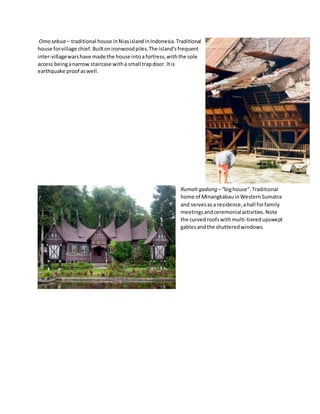
Omo sebua – traditional house inNiasislandinIndonesia.Traditional
house forvillage chief.Builtonironwoodpiles.The island’sfrequent
inter-villagewarshave made the house intoafortress,withthe sole
access beinganarrow staircase witha small trapdoor. Itis
earthquake proof aswell.
Rumah gadang –“bighouse”.Traditional
home of MinangkabauinWesternSumatra
and servesasa residence,ahall forfamily
meetingsandceremonialactivities.Note
the curvedroofswithmulti-tieredupswept
gablesandthe shutteredwindows.
 Religiousarchitecture
o WidespreadinIndonesia,butmost
significantarchitecturewasdevelopedin
Java
o Religioussyncretismcanbe seeninthe
designof the religiousstructure
 Indonesiahasalongtraditionof
religioussyncretism
 Religioussyncretismisthe
blendingof twobelief systems
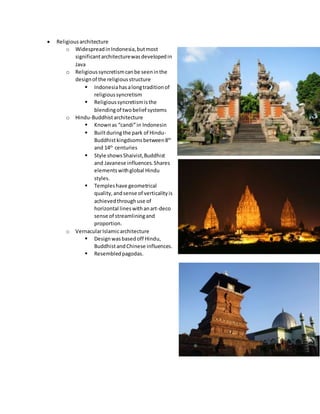
o Hindu-Buddhistarchitecture
 Knownas “candi”in Indonesin
 Builtduringthe park of Hindu-
Buddhistkingdsomsbetween8th
and 14th
centuries
 Style showsShaivist,Buddhist
and Javanese influences.Shares
elementswithglobal Hindu
styles.
 Templeshave geometrical
quality,andsense of verticalityis
achievedthroughuse of
horizontal lineswithanart-deco
sense of streamliningand
proportion.
o VernacularIslamicarchitecture
 Designwasbasedoff Hindu,
BuddhistandChinese influences.
 Resembledpagodas.
Indonesian architecture

Indonesian architecture

  • 1.
    IndonesianArchitecture:  Reflectsthe diversityofcultural,historical andgeographicinfluencesthatshapedIndonesia. External forces(invaders,colonizers,missionaries,merchants,etc.)broughtcultural changes that influencedthe architecture styles.  Most significantforeigninfluence wasIndian.Chinese,ArabandEuropeaninfluencesplayeda role as well.  Rumahadat o Traditional housesbuiltinanyof the vernaculararchitecture stylesinIndonesia o Earliesthomeswere communal timberlonghousesonstilts,withsteepslopingroofsand heavygables.  Normfor traditional housesisapost-bean-lintel structural systemthattake the loadstraightto the ground.Walls,made of eitherbambooor woodare non- loadbearing.  Mortis,tenonjointsandwoodenpegsare usedto holdthe structure together, insteadof nails.  Natural materialssuchas timber,bamboo,thatchandfiberare usedto buildthe structure. o Designisforthe country’shotand wetmonsoonclimate.  Stiltsare usedinmost rumah adat,exceptinJavaandBali.Elevationoff the groundallowsforbreeze andforsafetyfromflood.Alsoallowshousestobe builtonriversand wetlandmargins.  Sharplyinclinedroofsallowsforheavyrainstosheetoff  Large, overhangingeaveskeepwateroutof the house andprovide shade inthe heat. o Numberof Rumah adatare decreasingdue toconcernoverunhygienicdesignsand expensivesnessdue tothe amountof laborrequiredtobuildsuchhouses.
  • 2.
    Omo sebua –traditional house inNiasislandinIndonesia.Traditional house forvillage chief.Builtonironwoodpiles.The island’sfrequent inter-villagewarshave made the house intoafortress,withthe sole access beinganarrow staircase witha small trapdoor. Itis earthquake proof aswell. Rumah gadang –“bighouse”.Traditional home of MinangkabauinWesternSumatra and servesasa residence,ahall forfamily meetingsandceremonialactivities.Note the curvedroofswithmulti-tieredupswept gablesandthe shutteredwindows.
  • 3.
     Religiousarchitecture o WidespreadinIndonesia,butmost significantarchitecturewasdevelopedin Java oReligioussyncretismcanbe seeninthe designof the religiousstructure  Indonesiahasalongtraditionof religioussyncretism  Religioussyncretismisthe blendingof twobelief systems o Hindu-Buddhistarchitecture  Knownas “candi”in Indonesin  Builtduringthe park of Hindu- Buddhistkingdsomsbetween8th and 14th centuries  Style showsShaivist,Buddhist and Javanese influences.Shares elementswithglobal Hindu styles.  Templeshave geometrical quality,andsense of verticalityis achievedthroughuse of horizontal lineswithanart-deco sense of streamliningand proportion. o VernacularIslamicarchitecture  Designwasbasedoff Hindu, BuddhistandChinese influences.  Resembledpagodas.