Conflicts in the
Organization
Conflicts
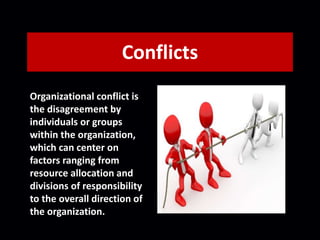
Organizational conflict is
the disagreement by
individuals or groups
within the organization,
which can center on
factors ranging from
resource allocation and
divisions of responsibility
to the overall direction of
the organization.
Traditional View
Human Relations
View
The Interactionist
View
DIFFERENT VIE
Traditional View  all forms of conflict holds negative effects
 Communications isn’t good enough
Human Relations View  inevitable outcome of any organization
 may benefit a group’s performance
The Interactionist View
 encourages certain types of conflict
 that managers with the organization
should maintain a level of controlled conflict
Functional conflicts and dysfunctional conflicts
Functional conflict
supports the goals of a
group and its presence
within the organization
actually improves
performance.
Dysfunctional conflict
by comparison, acts as a
barrier to the
performance of the
group and frustrates the
objectives of the
organization
CT PROCESS
Communication
Structure
Personal Variables
• insufficient exchange of information, and noise
• semantic difficulties arise
• size and specialization act
• jurisdictional ambiguities increase intergroup fighting
• diversity of goals among groups
• individual value systems
Emotional involvement in a conflict creating
anxiety, tenseness, frustration, or hostility.
Felt Conflict
Awareness by one or more parties of the
existence of conditions that create
opportunities for conflict to arise.
Perceived Conflict
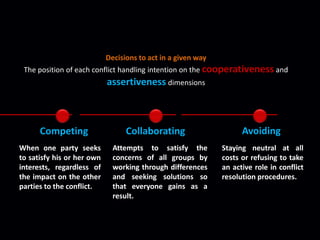
Decisions to act in a given way
The position of each conflict handling intention on the cooperativeness and
assertiveness dimensions
Competing
When one party seeks
to satisfy his or her own
interests, regardless of
the impact on the other
parties to the conflict.
Collaborating
Attempts to satisfy the
concerns of all groups by
working through differences
and seeking solutions so
that everyone gains as a
result.
Avoiding
Staying neutral at all
costs or refusing to take
an active role in conflict
resolution procedures.
STAGE III:
INTENTIONS
Accommodating
The willingness of one
party in a conflict to place
the opponent’s interests
above his or her own.
Compromising
partial satisfaction of all
groups through exchange
and sacrifice, settling for
acceptable rather than
optimal resolution
The behavior stage includes
the statements, actions,
a reactions made by the
conflicting parties.
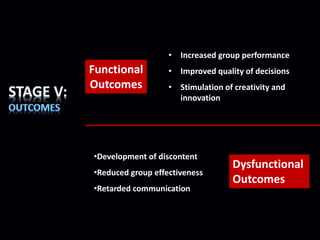
Functional
Outcomes
Dysfunctional
Outcomes
• Increased group performance
• Improved quality of decisions
• Stimulation of creativity and
innovation
•Development of discontent
•Reduced group effectiveness
•Retarded communication
Recommendations
1
2
3
4
Organizations should make adequate room for decision making
For proper running and optimum productivity, staff welfare should
be taken into consideration
To avoid rumor mongering organizations should evolve a proper
system of information dissemination to all
Participatory, rather than autocratic style of management, should
be encouraged by organizations
THANK YOU

Conflicts in the organization

  • 1.
  • 2.
    Conflicts Organizational conflict is thedisagreement by individuals or groups within the organization, which can center on factors ranging from resource allocation and divisions of responsibility to the overall direction of the organization.
  • 3.
    Traditional View Human Relations View TheInteractionist View DIFFERENT VIE
  • 4.
    Traditional View all forms of conflict holds negative effects  Communications isn’t good enough Human Relations View  inevitable outcome of any organization  may benefit a group’s performance The Interactionist View  encourages certain types of conflict  that managers with the organization should maintain a level of controlled conflict
  • 5.
    Functional conflicts anddysfunctional conflicts Functional conflict supports the goals of a group and its presence within the organization actually improves performance. Dysfunctional conflict by comparison, acts as a barrier to the performance of the group and frustrates the objectives of the organization
  • 6.
  • 7.
    Communication Structure Personal Variables • insufficientexchange of information, and noise • semantic difficulties arise • size and specialization act • jurisdictional ambiguities increase intergroup fighting • diversity of goals among groups • individual value systems
  • 8.
    Emotional involvement ina conflict creating anxiety, tenseness, frustration, or hostility. Felt Conflict Awareness by one or more parties of the existence of conditions that create opportunities for conflict to arise. Perceived Conflict
  • 9.
    Decisions to actin a given way The position of each conflict handling intention on the cooperativeness and assertiveness dimensions Competing When one party seeks to satisfy his or her own interests, regardless of the impact on the other parties to the conflict. Collaborating Attempts to satisfy the concerns of all groups by working through differences and seeking solutions so that everyone gains as a result. Avoiding Staying neutral at all costs or refusing to take an active role in conflict resolution procedures.
  • 10.
    STAGE III: INTENTIONS Accommodating The willingnessof one party in a conflict to place the opponent’s interests above his or her own. Compromising partial satisfaction of all groups through exchange and sacrifice, settling for acceptable rather than optimal resolution
  • 11.
    The behavior stageincludes the statements, actions, a reactions made by the conflicting parties.
  • 12.
    Functional Outcomes Dysfunctional Outcomes • Increased groupperformance • Improved quality of decisions • Stimulation of creativity and innovation •Development of discontent •Reduced group effectiveness •Retarded communication
  • 13.
    Recommendations 1 2 3 4 Organizations should makeadequate room for decision making For proper running and optimum productivity, staff welfare should be taken into consideration To avoid rumor mongering organizations should evolve a proper system of information dissemination to all Participatory, rather than autocratic style of management, should be encouraged by organizations
  • 14.