As you use your hard drive, it can develop bad sectors. 
Bad sectors slow down hard disk performance and 
sometimes make data writing (such as file saving) 
difficult, or even impossible. The Error Checking utility 
scans the hard drive for bad sectors, and scans for 
file system errors to see whether certain files or 
folders are misplaced. 
 Click My Computer > right-click the hard disk you 
want to search for bad sectors, and then 
click Properties > click the Tools tab > Click 
the Check Disk dialog box (called Error-checking in 
Windows 7) >select the Scan for and attempt 
recovery of bad sectors check box, > then 
click Start. 
 If bad sectors are found, choose to fix them.
 Click Start > All Programs> 
Accessories> System Tools > then 
click Disk Cleanup. 
 Choose the files that you want to delete. 
 and then click OK. 
When prompted to confirm that you want 
to delete the specified files, click Yes
 Click Start> All 
Programs> Accessories> System 
Tools> click Disk Defragmenter. 
 In the Disk Defragmenter dialog box, 
click the drives that you want to 
defragment, and then click 
the Analyze button. After the disk is 
analyzed, a dialog box appears, letting 
you know whether you should 
defragment the analyzed drives. 
(Continued
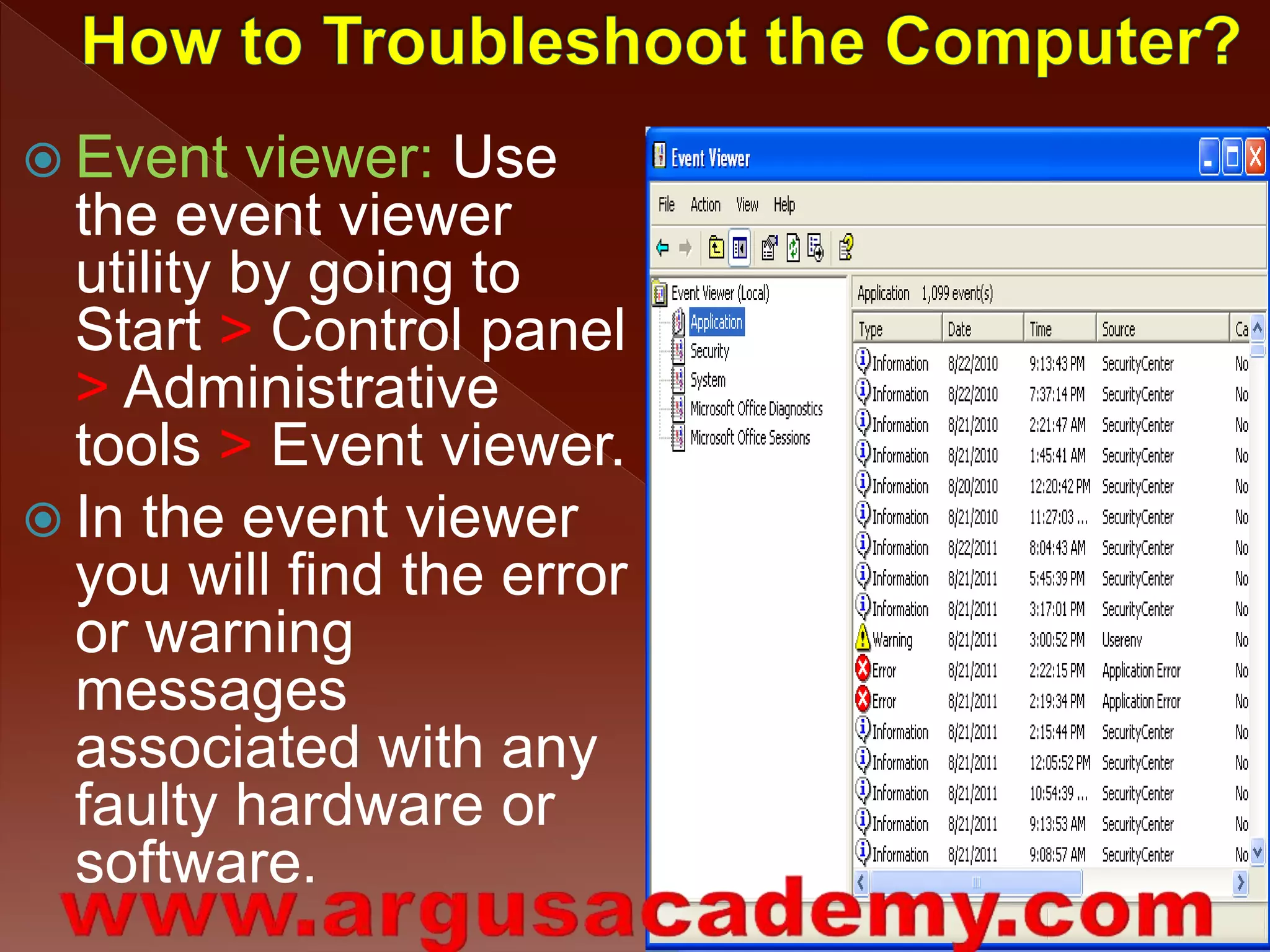
 Event viewer: Use 
the event viewer 
utility by going to 
Start > Control panel 
> Administrative 
tools > Event viewer. 
 In the event viewer 
you will find the error 
or warning 
messages 
associated with any 
faulty hardware or 
software.
 Shutdown Unnecessary programs: By using this 
path Start > Run > Msconfig > Startup, you can 
close all unwanted programs at the Windows 
startup and this will automatically increase the 
windows loading time and speed of the computer 
will also be increased. 
 Increase RAM: By increasing the RAM in your 
system you can get exceptional fast speed of your 
computer.
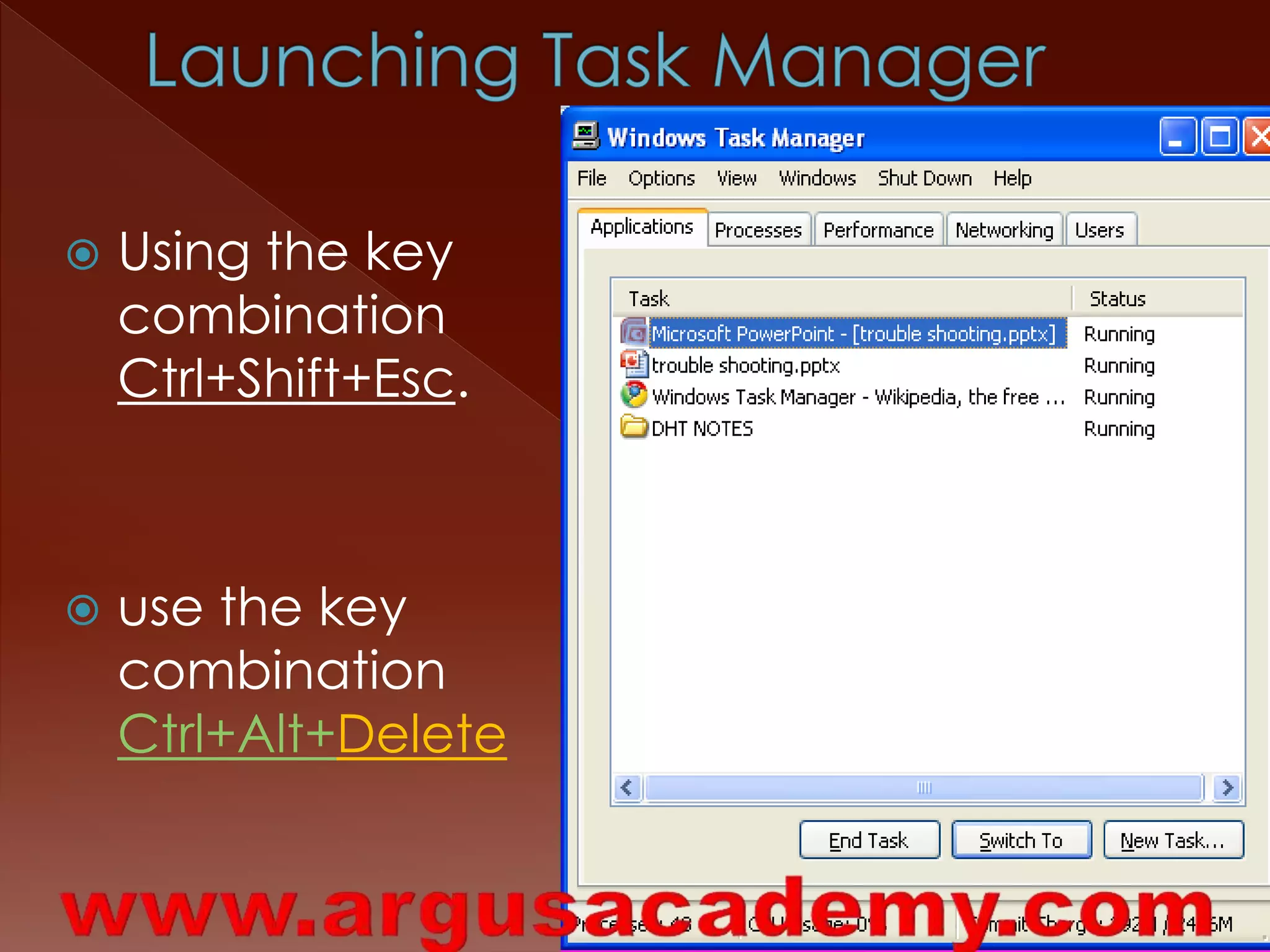
 Using the key 
combination 
Ctrl+Shift+Esc. 
 use the key 
combination 
Ctrl+Alt+Delete
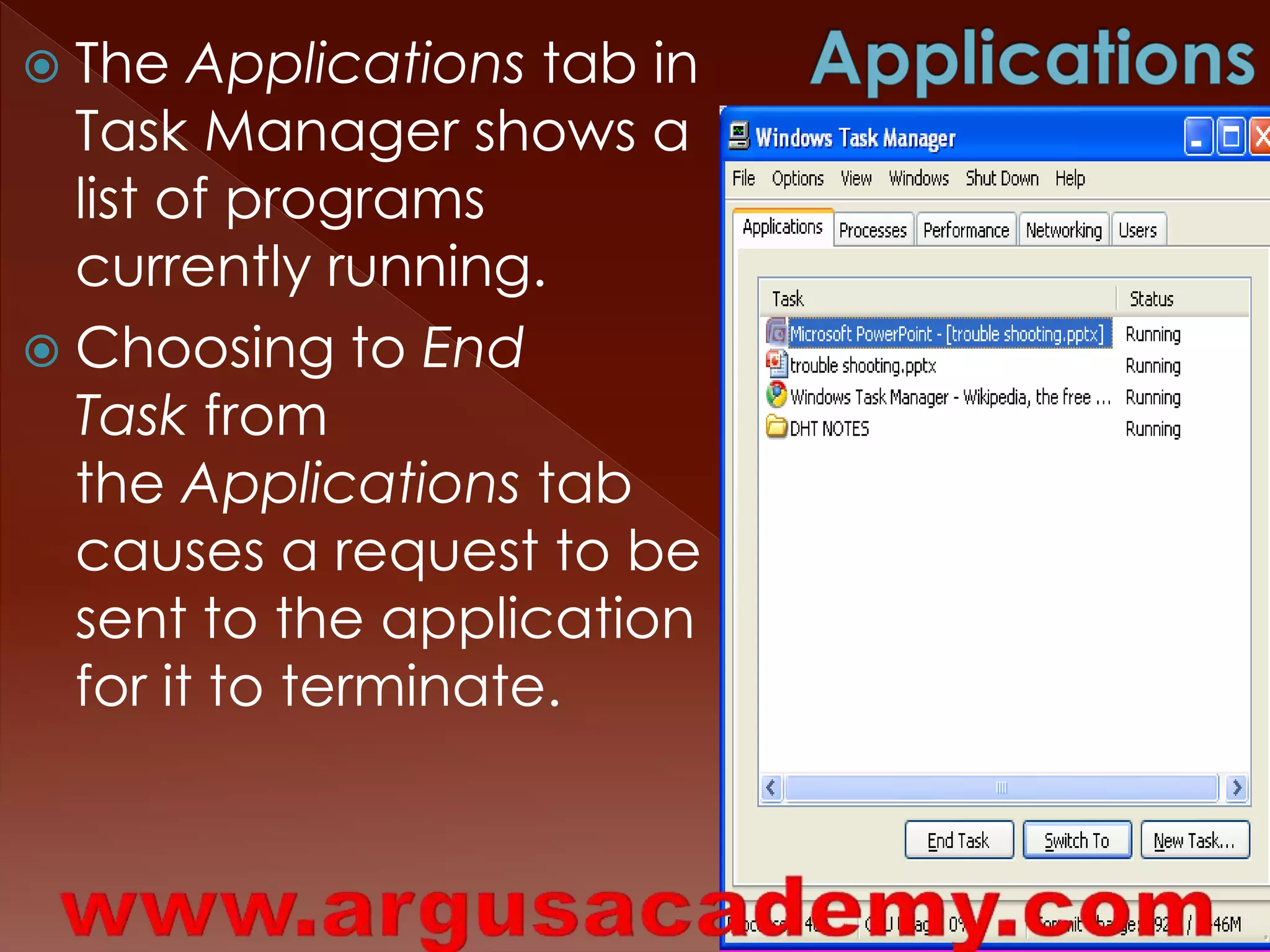
 The Applications tab in 
Task Manager shows a 
list of programs 
currently running. 
 Choosing to End 
Task from 
the Applications tab 
causes a request to be 
sent to the application 
for it to terminate.
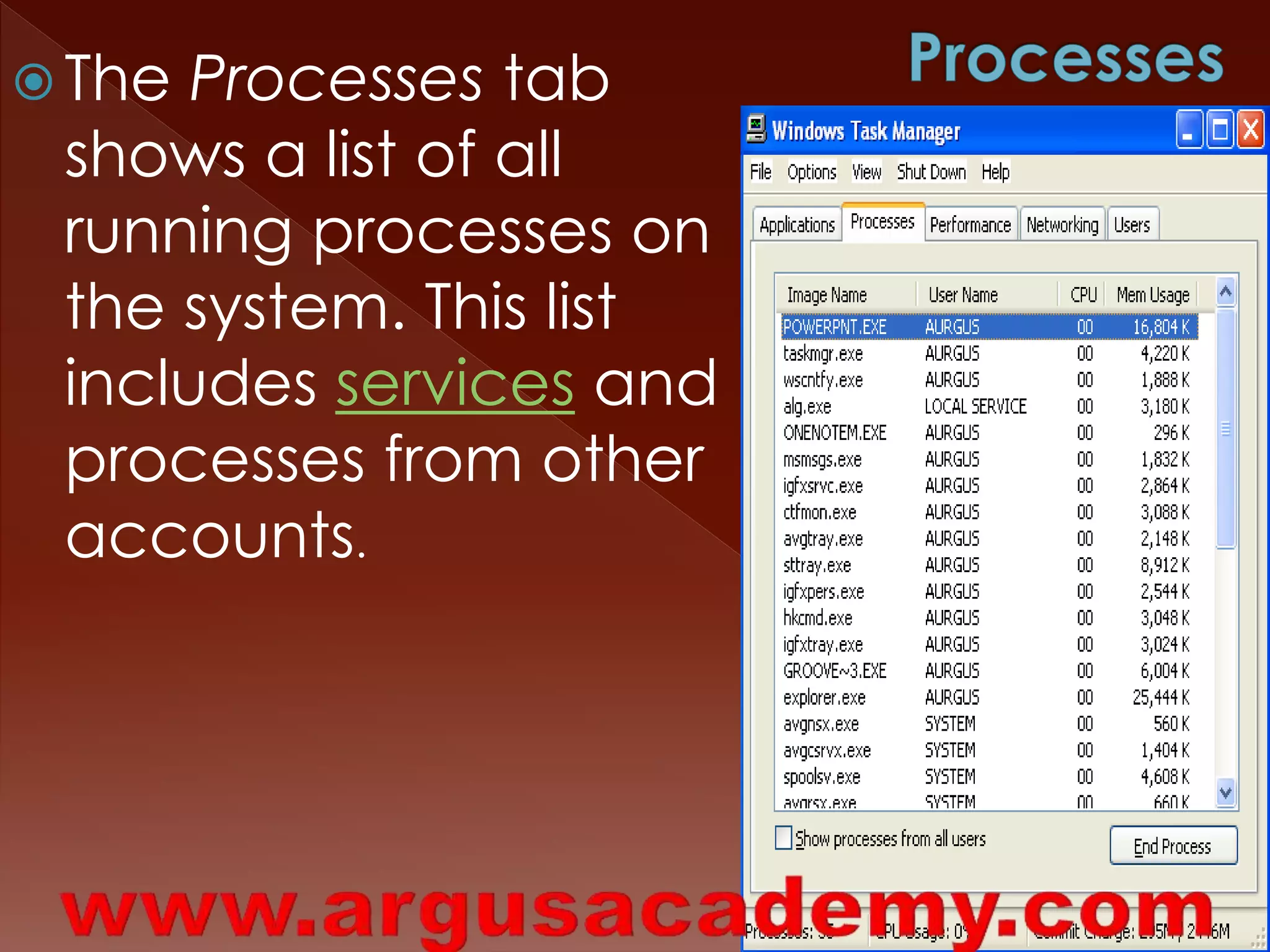
The Processes tab 
shows a list of all 
running processes on 
the system. This list 
includes services and 
processes from other 
accounts.
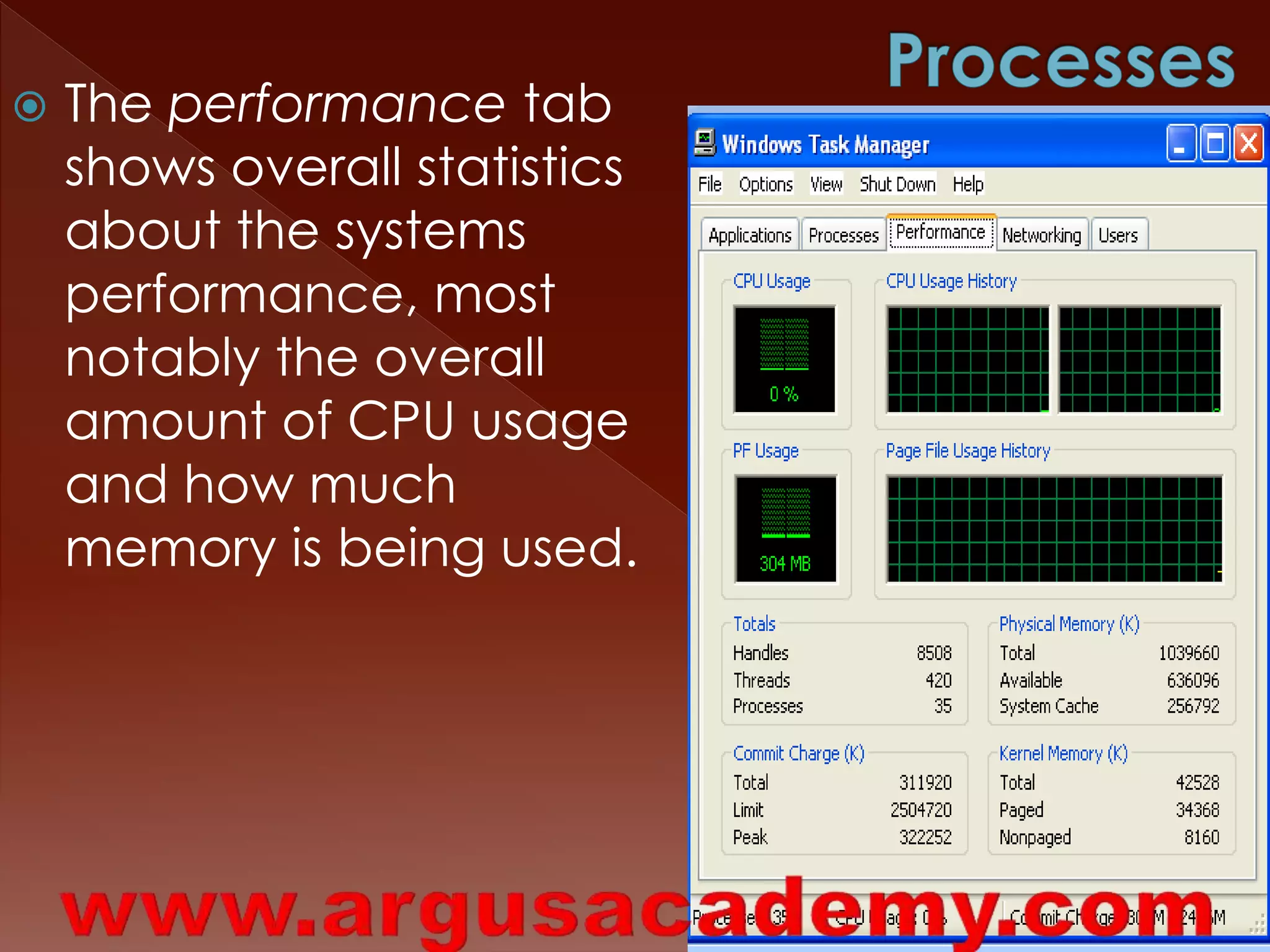
 The performance tab 
shows overall statistics 
about the systems 
performance, most 
notably the overall 
amount of CPU usage 
and how much 
memory is being used.
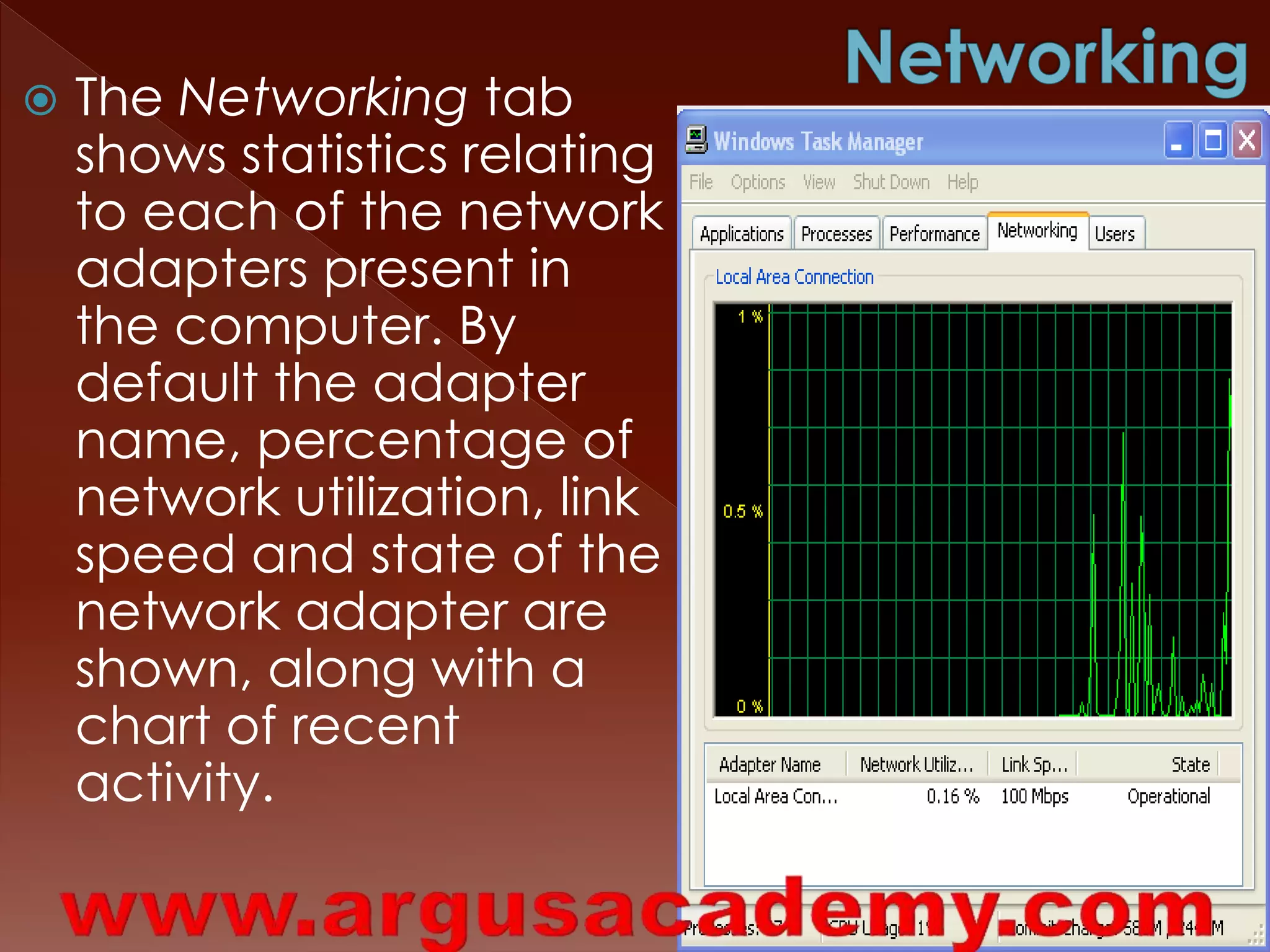
 The Networking tab 
shows statistics relating 
to each of the network 
adapters present in 
the computer. By 
default the adapter 
name, percentage of 
network utilization, link 
speed and state of the 
network adapter are 
shown, along with a 
chart of recent 
activity.
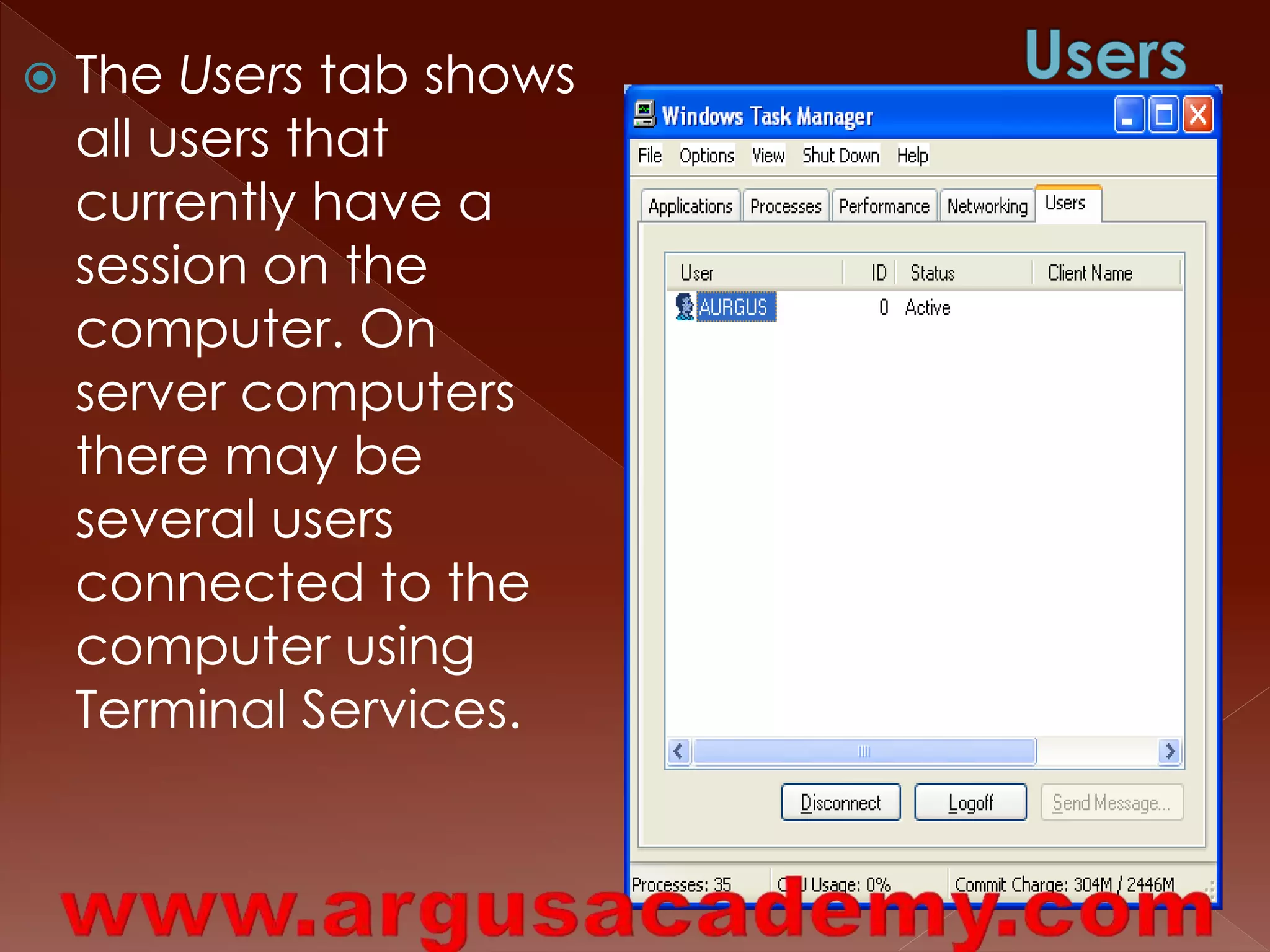
 The Users tab shows 
all users that 
currently have a 
session on the 
computer. On 
server computers 
there may be 
several users 
connected to the 
computer using 
Terminal Services.
 Before starting, shut down your PC and restart 
it. When your PC has completely restarted, 
close any programs that run automatically. 
 Hit Ctrl-Alt-Del and choose your Task List. End 
Task on everything that appears EXCEPT 
Explorer and Systray. Make sure nothing is 
listed in the Applications tab. Go to the 
Processes tab and End Task on any items you 
recognize, such as RealPlayer, Reminders, 
etc.
 Delete trashy hard drive files (commonly 
referred to as temp files). 
 Hit Start> Search> Files or Folders 
 In the Named box, type: *.tmp,~*.*,*.chk 
 When it has completed searching, hit 
Ctrl+A to select all of the files that appear, 
and hit your delete key
 Delete Windows temp files. 
 Hit Start-Run and type %temp% and hit 
enter. 
 Hit Ctrl+A on the keyboard to select 
everything in that folder and hit your 
delete key.
 Delete temporary Internet files. 
 Open Internet Explorer and hit Tools> 
Internet Options. 
 Click on the Delete files button.
 System Restore helps you restore your computer's 
system files to an earlier point in time. It's a way to 
undo system changes to your computer without 
affecting your personal files, such as e-mail, 
documents, or photos. 
 Sometimes, the installation of a program or a 
driver can cause an unexpected change to your 
computer or cause Windows to behave 
unpredictably. Usually, uninstalling the program 
or driver corrects the problem. If uninstalling does 
not fix the problem, you can try restoring your 
computer's system to an earlier date when 
everything worked correctly.
Open System Restore by clicking 
the Start button > clicking All 
Programs > clicking Accessories > 
clicking System Tools > clicking 
System Restore.

COMPUTER Trouble shooting

  • 1.
    As you useyour hard drive, it can develop bad sectors. Bad sectors slow down hard disk performance and sometimes make data writing (such as file saving) difficult, or even impossible. The Error Checking utility scans the hard drive for bad sectors, and scans for file system errors to see whether certain files or folders are misplaced.  Click My Computer > right-click the hard disk you want to search for bad sectors, and then click Properties > click the Tools tab > Click the Check Disk dialog box (called Error-checking in Windows 7) >select the Scan for and attempt recovery of bad sectors check box, > then click Start.  If bad sectors are found, choose to fix them.
  • 2.
     Click Start> All Programs> Accessories> System Tools > then click Disk Cleanup.  Choose the files that you want to delete.  and then click OK. When prompted to confirm that you want to delete the specified files, click Yes
  • 3.
     Click Start>All Programs> Accessories> System Tools> click Disk Defragmenter.  In the Disk Defragmenter dialog box, click the drives that you want to defragment, and then click the Analyze button. After the disk is analyzed, a dialog box appears, letting you know whether you should defragment the analyzed drives. (Continued
  • 4.
     Event viewer:Use the event viewer utility by going to Start > Control panel > Administrative tools > Event viewer.  In the event viewer you will find the error or warning messages associated with any faulty hardware or software.
  • 5.
     Shutdown Unnecessaryprograms: By using this path Start > Run > Msconfig > Startup, you can close all unwanted programs at the Windows startup and this will automatically increase the windows loading time and speed of the computer will also be increased.  Increase RAM: By increasing the RAM in your system you can get exceptional fast speed of your computer.
  • 6.
     Using thekey combination Ctrl+Shift+Esc.  use the key combination Ctrl+Alt+Delete
  • 7.
     The Applicationstab in Task Manager shows a list of programs currently running.  Choosing to End Task from the Applications tab causes a request to be sent to the application for it to terminate.
  • 8.
    The Processes tab shows a list of all running processes on the system. This list includes services and processes from other accounts.
  • 9.
     The performancetab shows overall statistics about the systems performance, most notably the overall amount of CPU usage and how much memory is being used.
  • 10.
     The Networkingtab shows statistics relating to each of the network adapters present in the computer. By default the adapter name, percentage of network utilization, link speed and state of the network adapter are shown, along with a chart of recent activity.
  • 11.
     The Userstab shows all users that currently have a session on the computer. On server computers there may be several users connected to the computer using Terminal Services.
  • 12.
     Before starting,shut down your PC and restart it. When your PC has completely restarted, close any programs that run automatically.  Hit Ctrl-Alt-Del and choose your Task List. End Task on everything that appears EXCEPT Explorer and Systray. Make sure nothing is listed in the Applications tab. Go to the Processes tab and End Task on any items you recognize, such as RealPlayer, Reminders, etc.
  • 13.
     Delete trashyhard drive files (commonly referred to as temp files).  Hit Start> Search> Files or Folders  In the Named box, type: *.tmp,~*.*,*.chk  When it has completed searching, hit Ctrl+A to select all of the files that appear, and hit your delete key
  • 14.
     Delete Windowstemp files.  Hit Start-Run and type %temp% and hit enter.  Hit Ctrl+A on the keyboard to select everything in that folder and hit your delete key.
  • 15.
     Delete temporaryInternet files.  Open Internet Explorer and hit Tools> Internet Options.  Click on the Delete files button.
  • 16.
     System Restorehelps you restore your computer's system files to an earlier point in time. It's a way to undo system changes to your computer without affecting your personal files, such as e-mail, documents, or photos.  Sometimes, the installation of a program or a driver can cause an unexpected change to your computer or cause Windows to behave unpredictably. Usually, uninstalling the program or driver corrects the problem. If uninstalling does not fix the problem, you can try restoring your computer's system to an earlier date when everything worked correctly.
  • 17.
    Open System Restoreby clicking the Start button > clicking All Programs > clicking Accessories > clicking System Tools > clicking System Restore.