Computer Skills
Vocabulary
Know how to communicate about technology
User interface
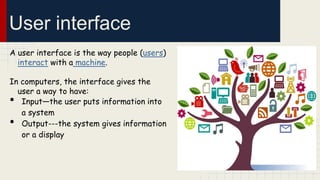
A user interface is the way people (users)
interact with a machine.
In computers, the interface gives the
user a way to have:
Input—the user puts information into
a system
Output---the system gives information
or a display

•
•
Graphical User Interface
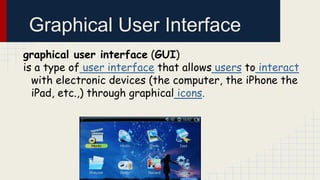
graphical user interface (GUI)
is a type of user interface that allows users to interact
with electronic devices (the computer, the iPhone the
iPad, etc.,) through graphical icons.
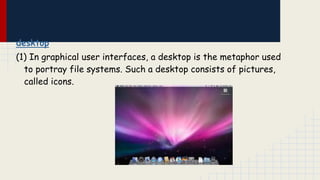
desktop
(1) In graphical user interfaces, a desktop is the metaphor used
to portray file systems. Such a desktop consists of pictures,
called icons.
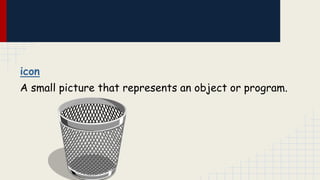
icon
A small picture that represents an object or program.
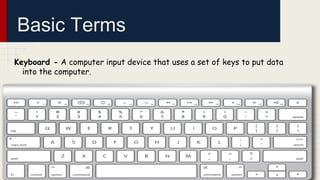
Basic Terms
Keyboard - A computer input device that uses a set of keys to put data
into the computer.
Terms, continued
Peripherals- Extra attachments and capabilities. Examples - modem,
microphone, camera.
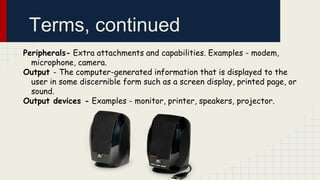
Output - The computer-generated information that is displayed to the
user in some discernible form such as a screen display, printed page, or
sound.
Output devices - Examples - monitor, printer, speakers, projector.
e.
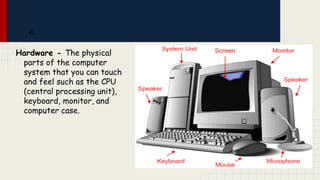
Hardware - The physical
parts of the computer
system that you can touch
and feel such as the CPU
(central processing unit),
keyboard, monitor, and
computer case.
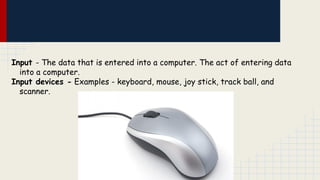
Input - The data that is entered into a computer. The act of entering data
into a computer.
Input devices - Examples - keyboard, mouse, joy stick, track ball, and
scanner.
Basic Terms, continued
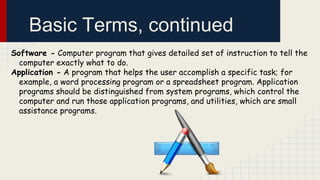
Software - Computer program that gives detailed set of instruction to tell the
computer exactly what to do.
Application - A program that helps the user accomplish a specific task; for
example, a word processing program or a spreadsheet program. Application
programs should be distinguished from system programs, which control the
computer and run those application programs, and utilities, which are small
assistance programs.
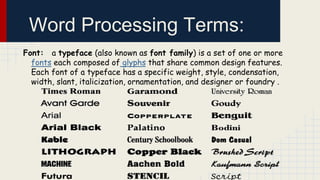
Word Processing Terms:
Font: a typeface (also known as font family) is a set of one or more
fonts each composed of glyphs that share common design features.
Each font of a typeface has a specific weight, style, condensation,
width, slant, italicization, ornamentation, and designer or foundry .
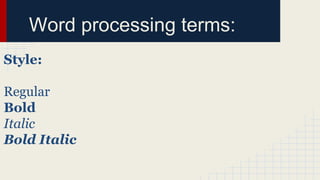
Word processing terms:
Style:
Regular
Bold
Italic
Bold Italic
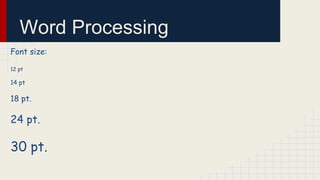
Word Processing
Font size:
12 pt

14 pt

18 pt.

24 pt.

30 pt.
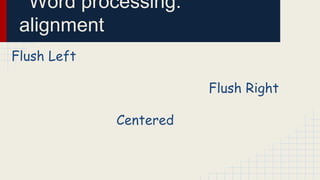
Word processing:
alignment
Flush Left
Flush Right
Centered
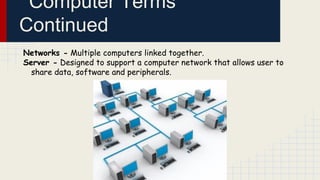
Computer Terms
Continued
Networks - Multiple computers linked together.
Server - Designed to support a computer network that allows user to
share data, software and peripherals.
Terms, continued
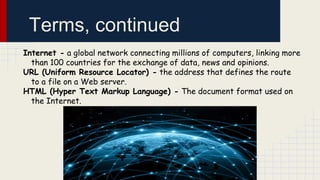
Internet - a global network connecting millions of computers, linking more
than 100 countries for the exchange of data, news and opinions.
URL (Uniform Resource Locator) - the address that defines the route
to a file on a Web server.
HTML (Hyper Text Markup Language) - The document format used on
the Internet.
Browser: Short for Web browser, a software application used to locate,
retrieve and also display content on the World Wide Web, including Web pages,
images, video and other files. As a client/server model, the browser is the client
run on a computer that contacts the Web server and requests information. The
Web server sends the information back to the Web browser which displays the
results on the computer or other Internet-enabled device that supports a
browser.
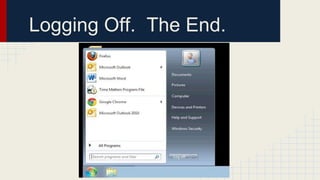
Logging Off. The End.

Computer skills vocabulary

  • 1.
    Computer Skills Vocabulary Know howto communicate about technology
  • 2.
    User interface A userinterface is the way people (users) interact with a machine. In computers, the interface gives the user a way to have: Input—the user puts information into a system Output---the system gives information or a display • •
  • 3.
    Graphical User Interface graphicaluser interface (GUI) is a type of user interface that allows users to interact with electronic devices (the computer, the iPhone the iPad, etc.,) through graphical icons.
  • 4.
    desktop (1) In graphicaluser interfaces, a desktop is the metaphor used to portray file systems. Such a desktop consists of pictures, called icons.
  • 5.
    icon A small picturethat represents an object or program.
  • 6.
    Basic Terms Keyboard -A computer input device that uses a set of keys to put data into the computer.
  • 7.
    Terms, continued Peripherals- Extraattachments and capabilities. Examples - modem, microphone, camera. Output - The computer-generated information that is displayed to the user in some discernible form such as a screen display, printed page, or sound. Output devices - Examples - monitor, printer, speakers, projector.
  • 8.
    e. Hardware - Thephysical parts of the computer system that you can touch and feel such as the CPU (central processing unit), keyboard, monitor, and computer case.
  • 9.
    Input - Thedata that is entered into a computer. The act of entering data into a computer. Input devices - Examples - keyboard, mouse, joy stick, track ball, and scanner.
  • 10.
    Basic Terms, continued Software- Computer program that gives detailed set of instruction to tell the computer exactly what to do. Application - A program that helps the user accomplish a specific task; for example, a word processing program or a spreadsheet program. Application programs should be distinguished from system programs, which control the computer and run those application programs, and utilities, which are small assistance programs.
  • 11.
    Word Processing Terms: Font:a typeface (also known as font family) is a set of one or more fonts each composed of glyphs that share common design features. Each font of a typeface has a specific weight, style, condensation, width, slant, italicization, ornamentation, and designer or foundry .
  • 12.
  • 13.
    Word Processing Font size: 12pt 14 pt 18 pt. 24 pt. 30 pt.
  • 14.
  • 15.
    Computer Terms Continued Networks -Multiple computers linked together. Server - Designed to support a computer network that allows user to share data, software and peripherals.
  • 16.
    Terms, continued Internet -a global network connecting millions of computers, linking more than 100 countries for the exchange of data, news and opinions. URL (Uniform Resource Locator) - the address that defines the route to a file on a Web server. HTML (Hyper Text Markup Language) - The document format used on the Internet.
  • 17.
    Browser: Short forWeb browser, a software application used to locate, retrieve and also display content on the World Wide Web, including Web pages, images, video and other files. As a client/server model, the browser is the client run on a computer that contacts the Web server and requests information. The Web server sends the information back to the Web browser which displays the results on the computer or other Internet-enabled device that supports a browser.
  • 18.