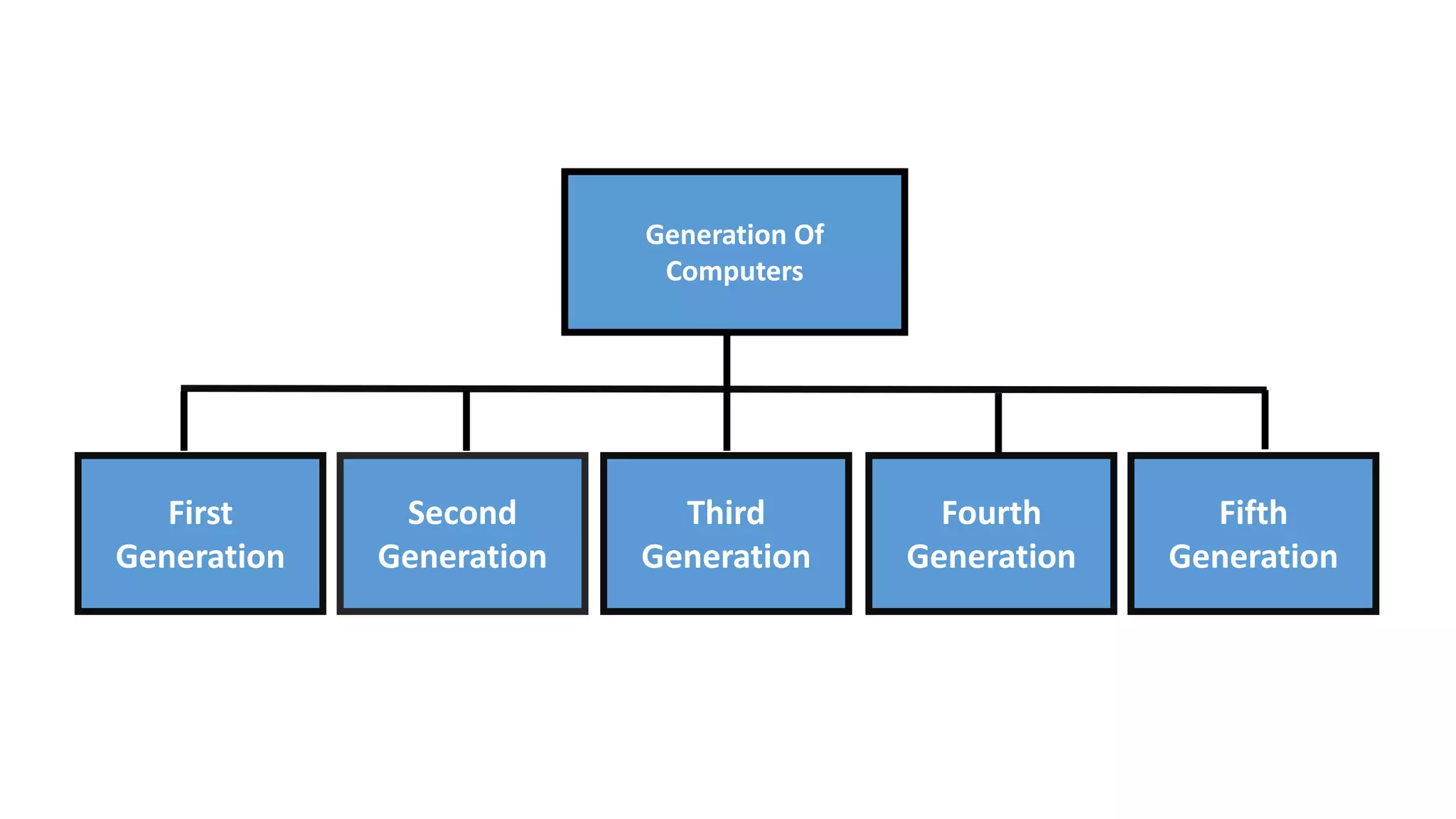
The document summarizes the generations of computers from the first to fifth generation. The first generation used vacuum tubes, were very large in size, and had slow processing speeds. The second generation used transistors and were smaller with faster processing. The third generation used integrated circuits, were smaller than the second generation with faster processing speeds. The fourth generation used microprocessors, were small enough to fit in the palm of the hand with very fast processing speeds. The fifth generation uses technologies like VLSI, ULSI, and nanotechnology, are very small in size with very fast processing speeds and capabilities like artificial intelligence.
GENERATION OF
COMPUTERSGeneration ofcomputer is characterized by a major
technological development that fundamentally
changed the way computers operate, resulting in
increasingly smaller, cheaper, more powerful and
more efficient and reliable devices.
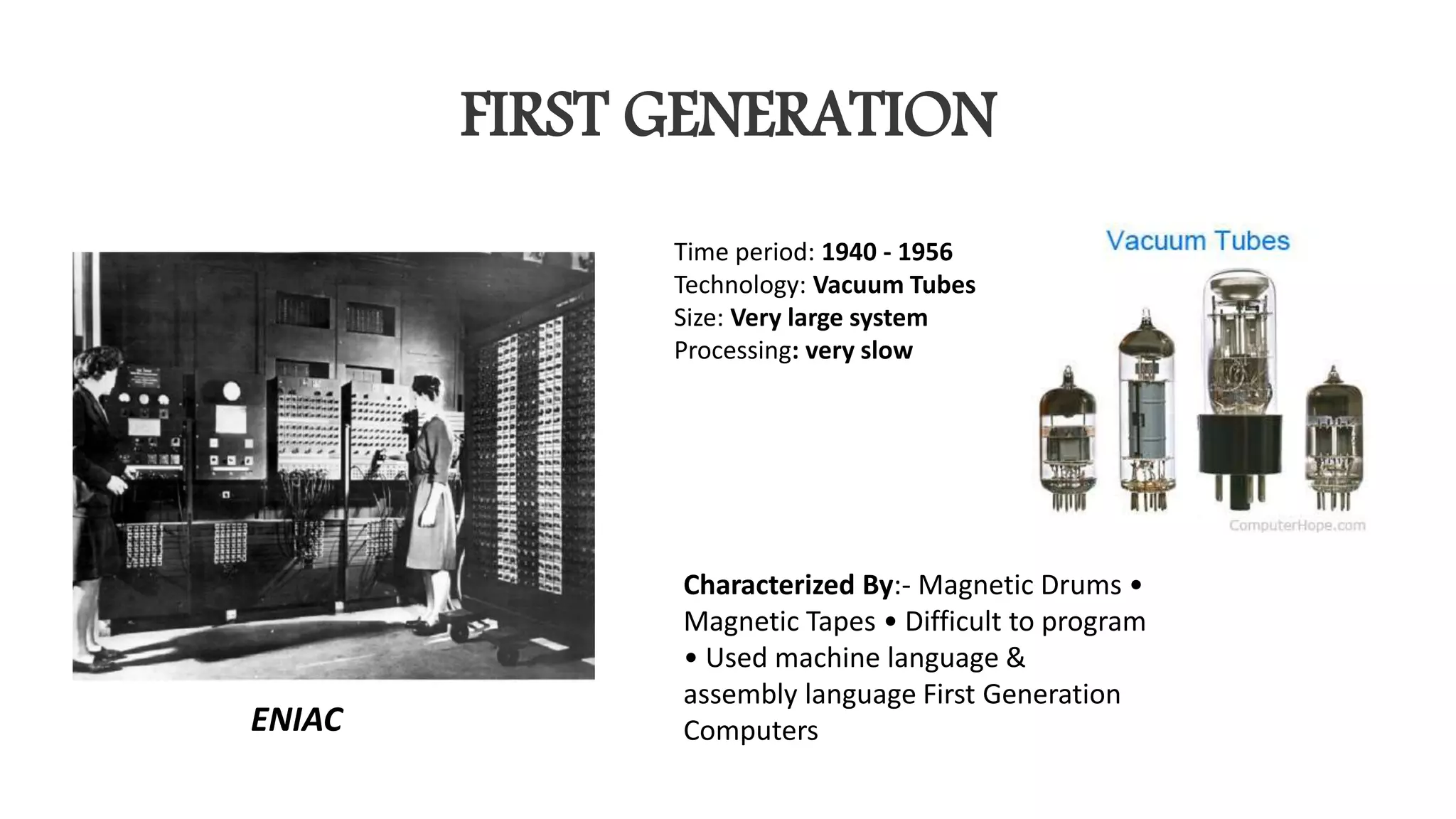
FIRST GENERATION
Time period:1940 - 1956
Technology: Vacuum Tubes
Size: Very large system
Processing: very slow
Characterized By:- Magnetic Drums •
Magnetic Tapes • Difficult to program
• Used machine language &
assembly language First Generation
ComputersENIAC
5.
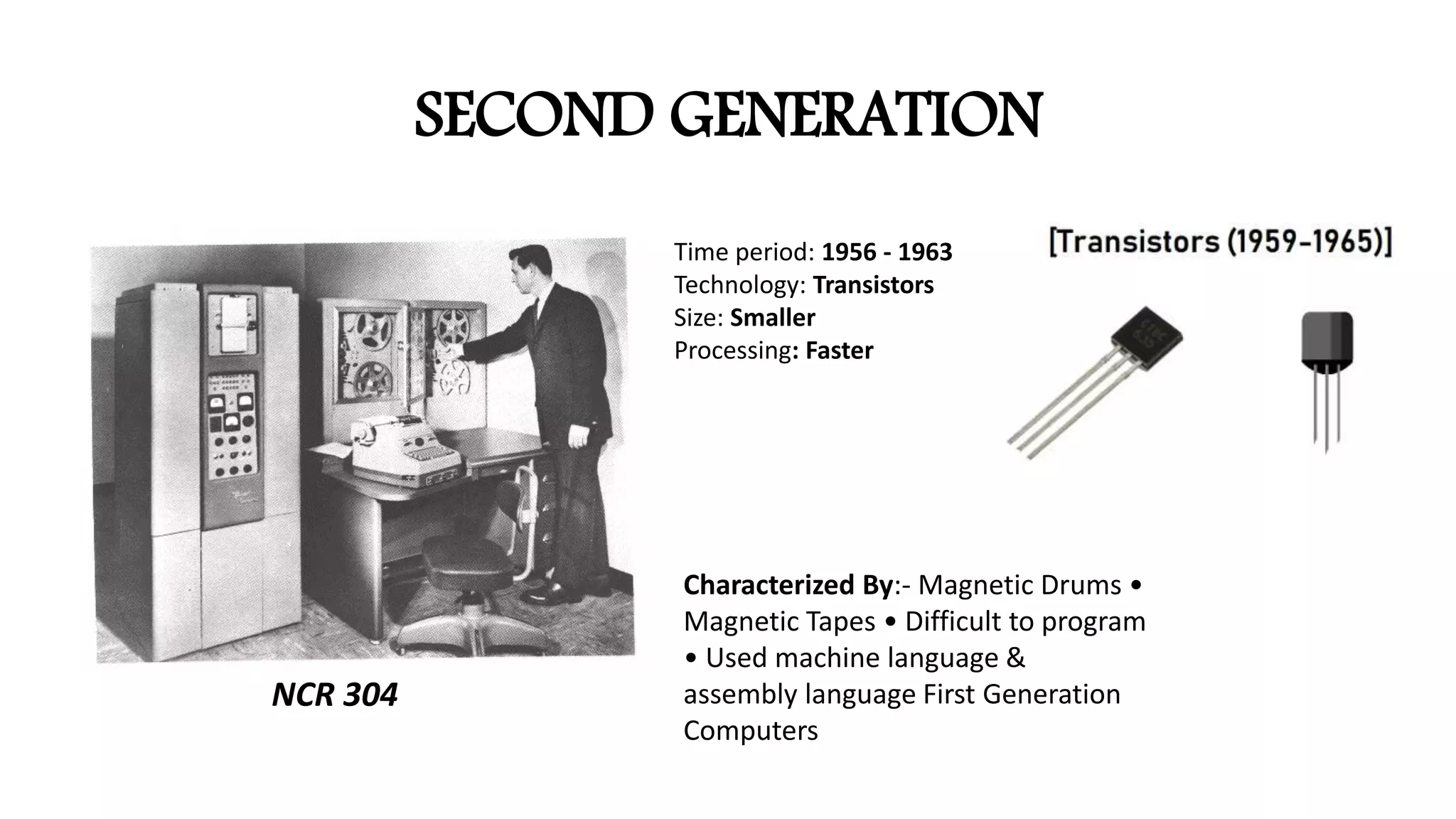
SECOND GENERATION
Time period:1956 - 1963
Technology: Transistors
Size: Smaller
Processing: Faster
Characterized By:- Magnetic Drums •
Magnetic Tapes • Difficult to program
• Used machine language &
assembly language First Generation
Computers
NCR 304
6.
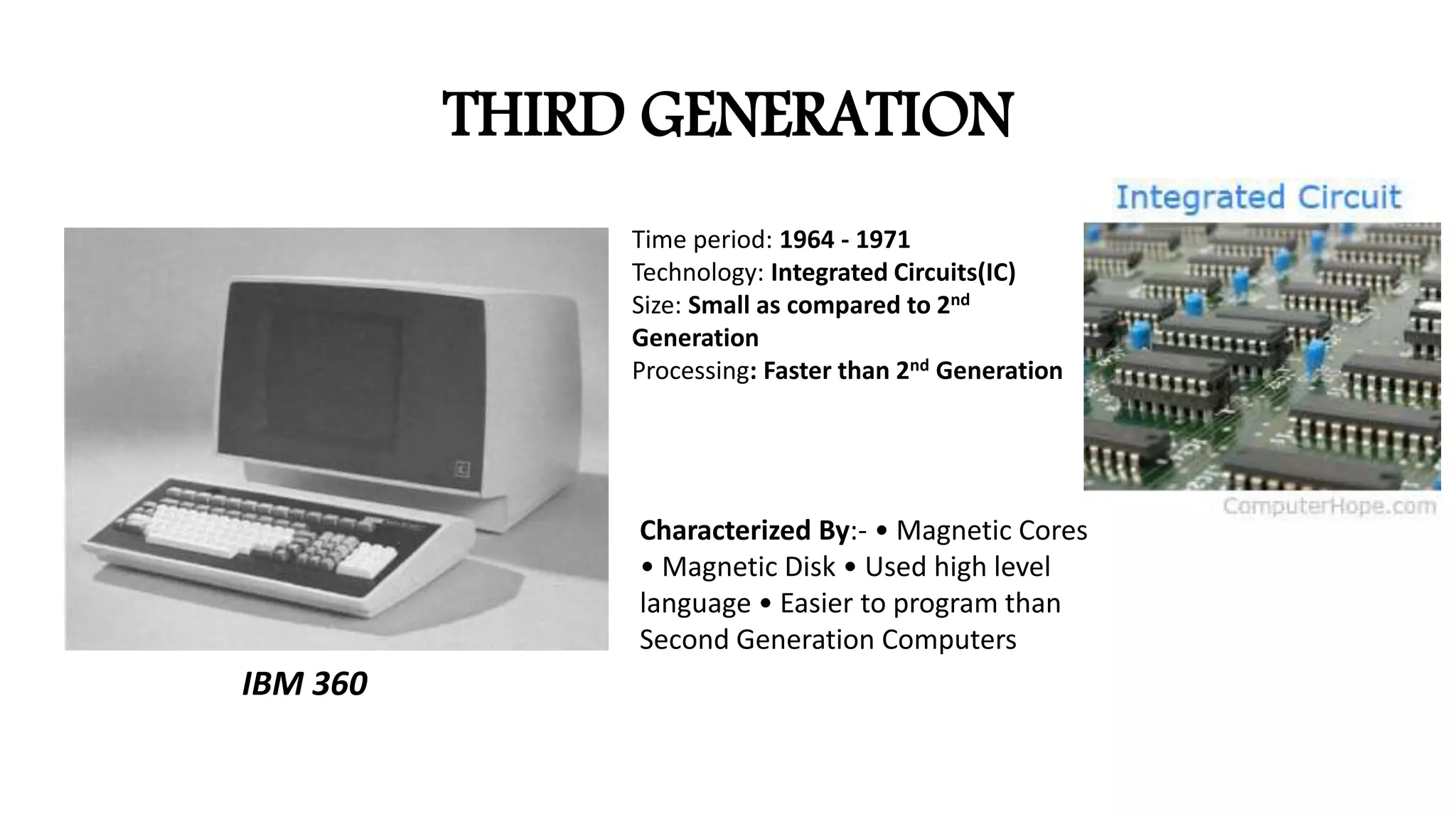
THIRD GENERATION
Time period:1964 - 1971
Technology: Integrated Circuits(IC)
Size: Small as compared to 2nd
Generation
Processing: Faster than 2nd Generation
Characterized By:- • Magnetic Cores
• Magnetic Disk • Used high level
language • Easier to program than
Second Generation Computers
IBM 360
7.
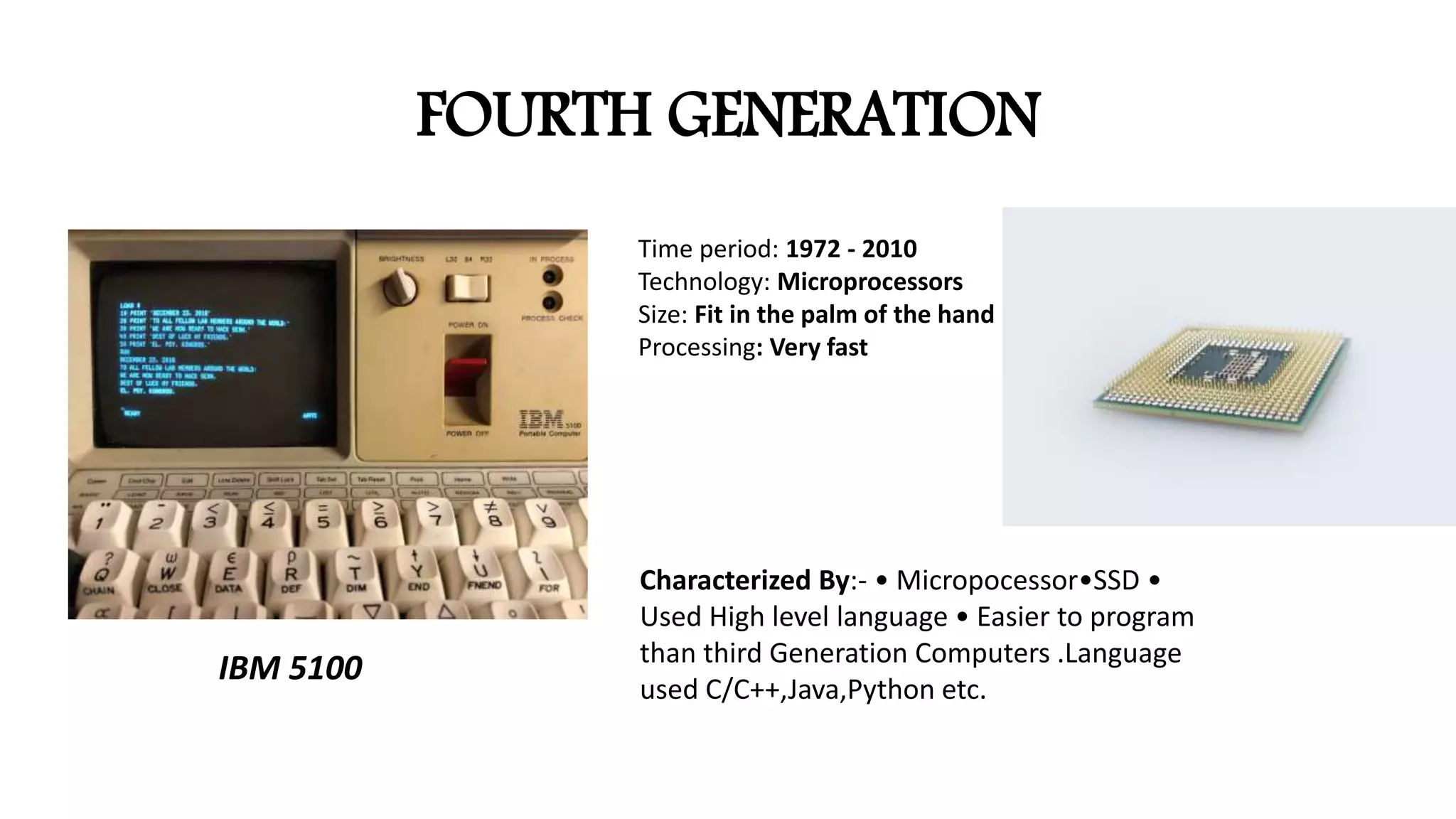
FOURTH GENERATION
Time period:1972 - 2010
Technology: Microprocessors
Size: Fit in the palm of the hand
Processing: Very fast
Characterized By:- • Micropocessor•SSD •
Used High level language • Easier to program
than third Generation Computers .Language
used C/C++,Java,Python etc.
IBM 5100
8.
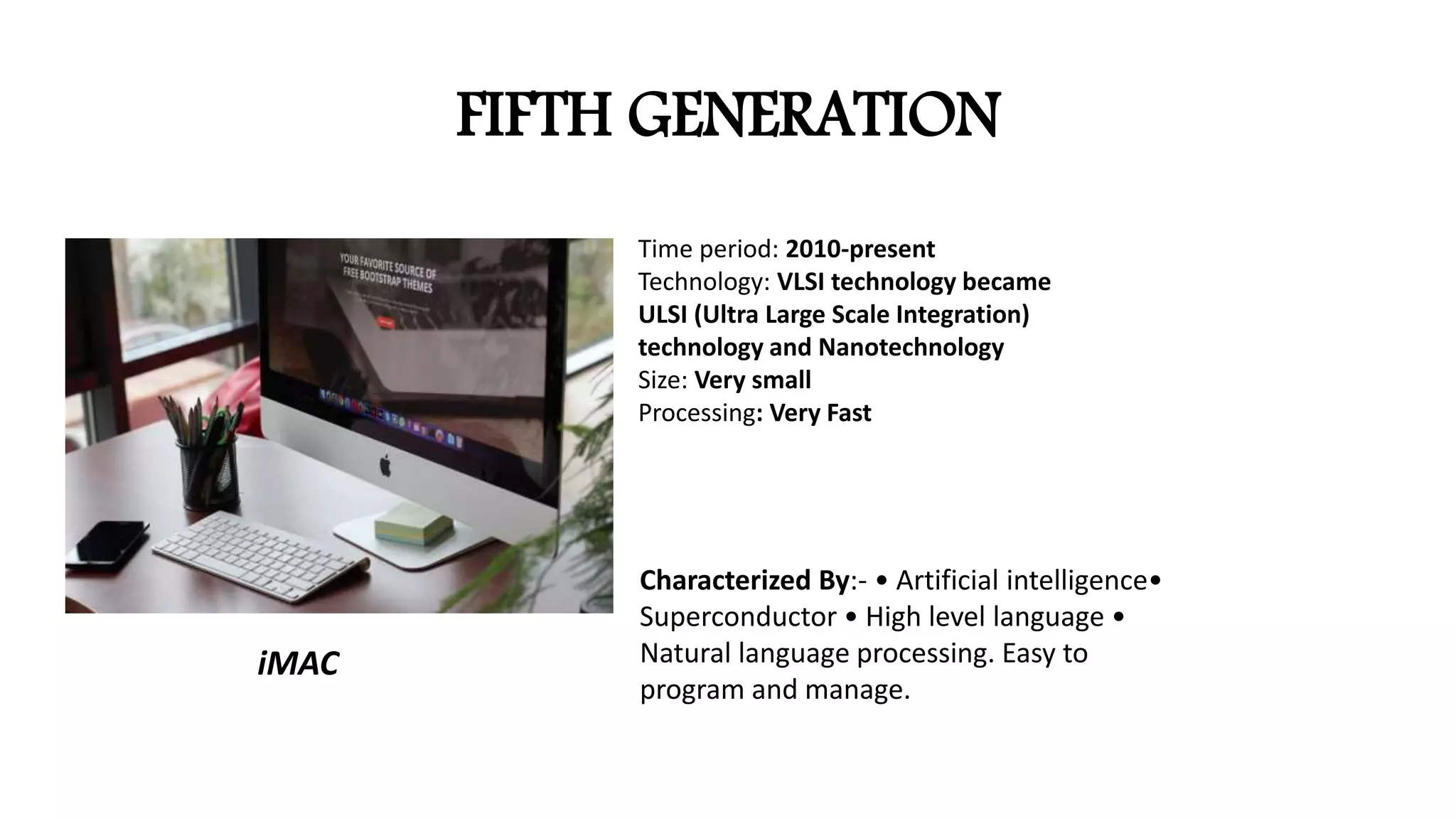
FIFTH GENERATION
Time period:2010-present
Technology: VLSI technology became
ULSI (Ultra Large Scale Integration)
technology and Nanotechnology
Size: Very small
Processing: Very Fast
Characterized By:- • Artificial intelligence•
Superconductor • High level language •
Natural language processing. Easy to
program and manage.
iMAC