Components of EIS
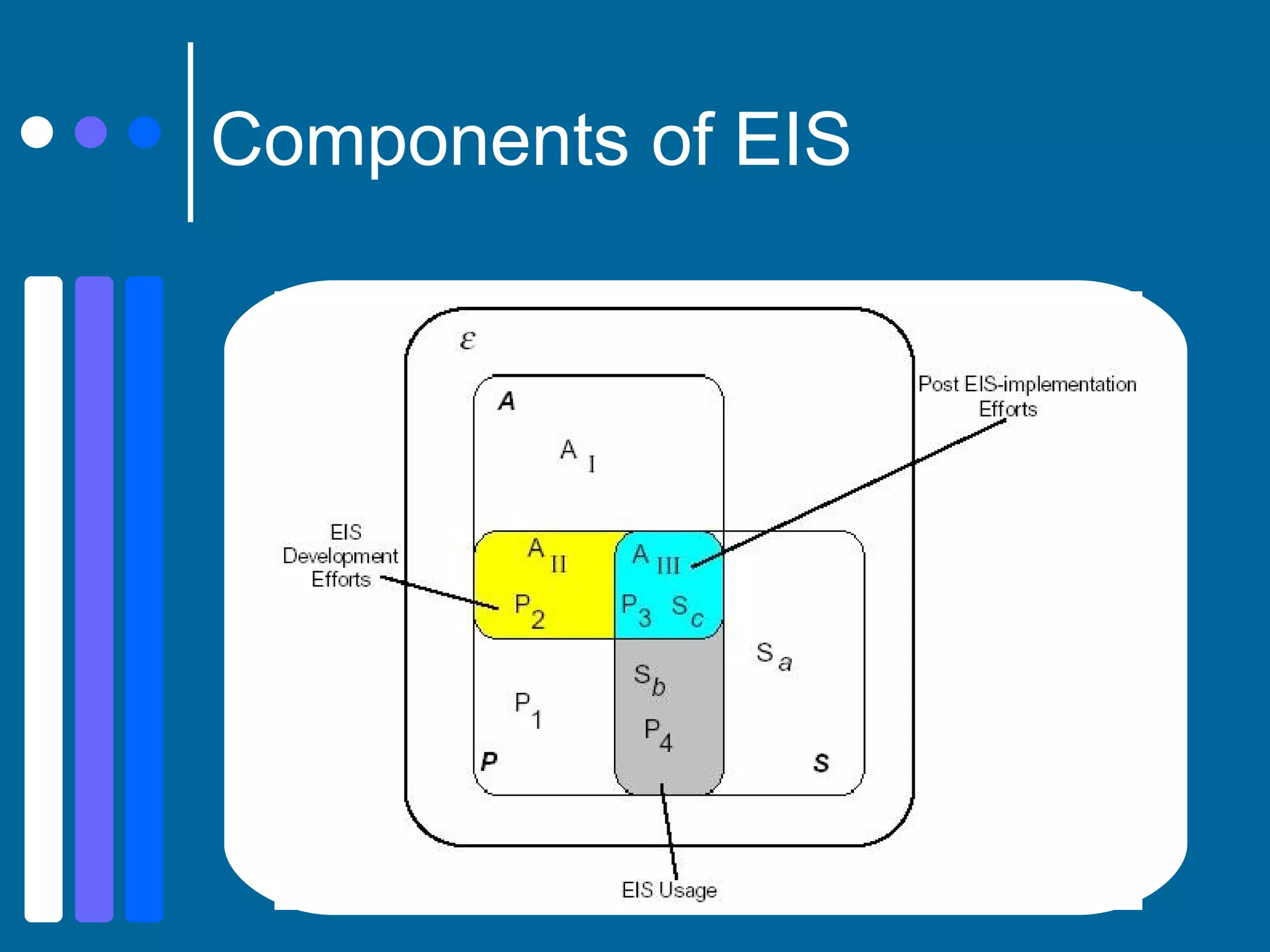
Components of EIS P = Set of People in an organization. A = Set of Activities taking place. S = Set of Systems present in the organization. In addition, the universal set represents the environment the organization has to operate in.   = Organizational Environment (  )
Components of EIS
Components of EIS a. People. During an EISs development project and the system’s subsequent usage, people are the main element that determines the success of the system.
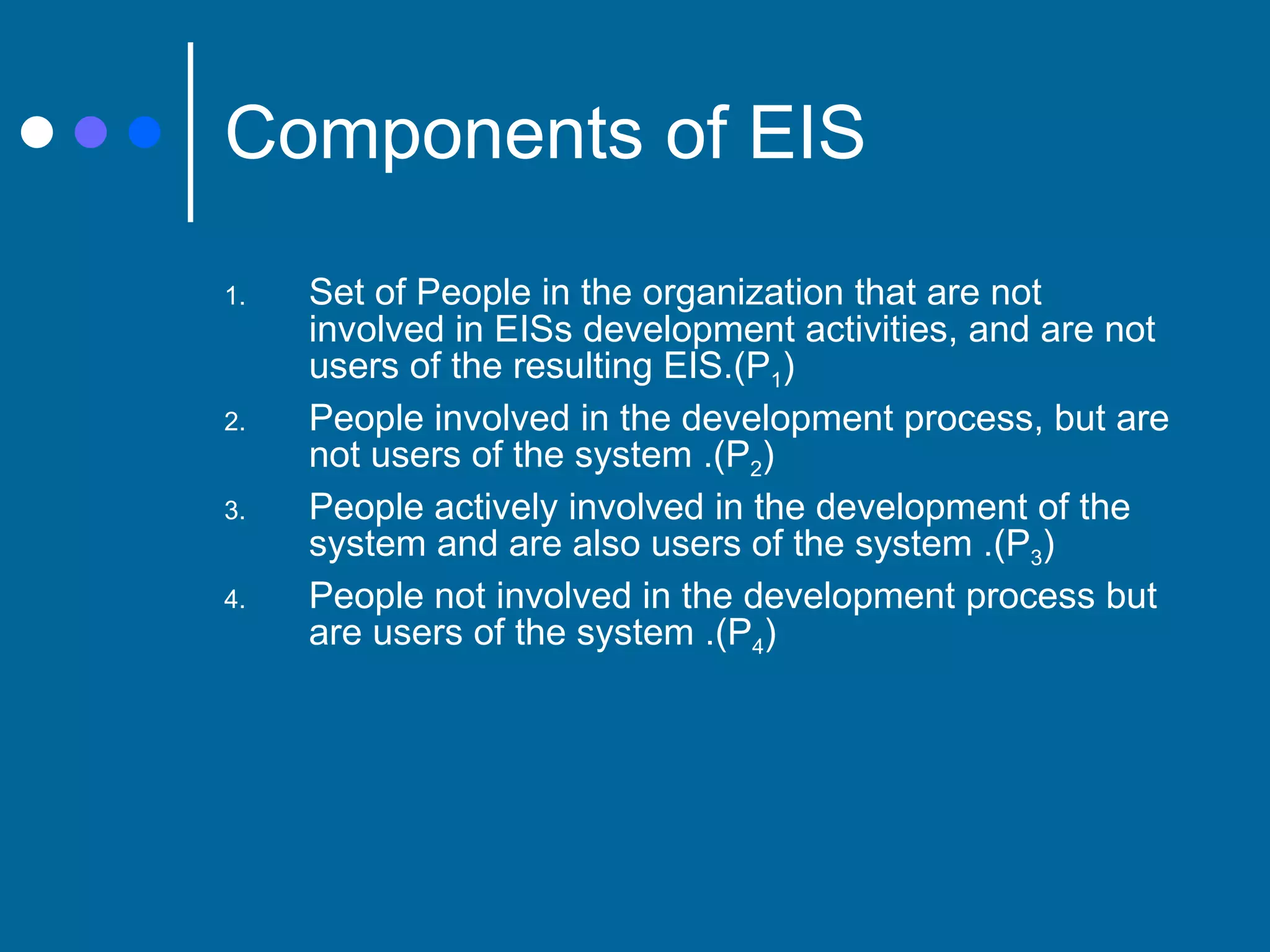
Components of EIS Set of People in the organization that are not involved in EISs development activities, and are not users of the resulting EIS.(P 1 ) People involved in the development process, but are not users of the system .(P 2 ) People actively involved in the development of the system and are also users of the system .(P 3 ) People not involved in the development process but are users of the system .(P 4 )
Components of EIS b. Activities. The second part of the framework includes  activities  or procedures that typically take place in an organization.
Components of EIS c. Systems. This comprises any information systems that the organization utilizes to carry out its operations. The existing infrastructure can place limitations and constraints on EISs and influence the success by which these systems are employed.
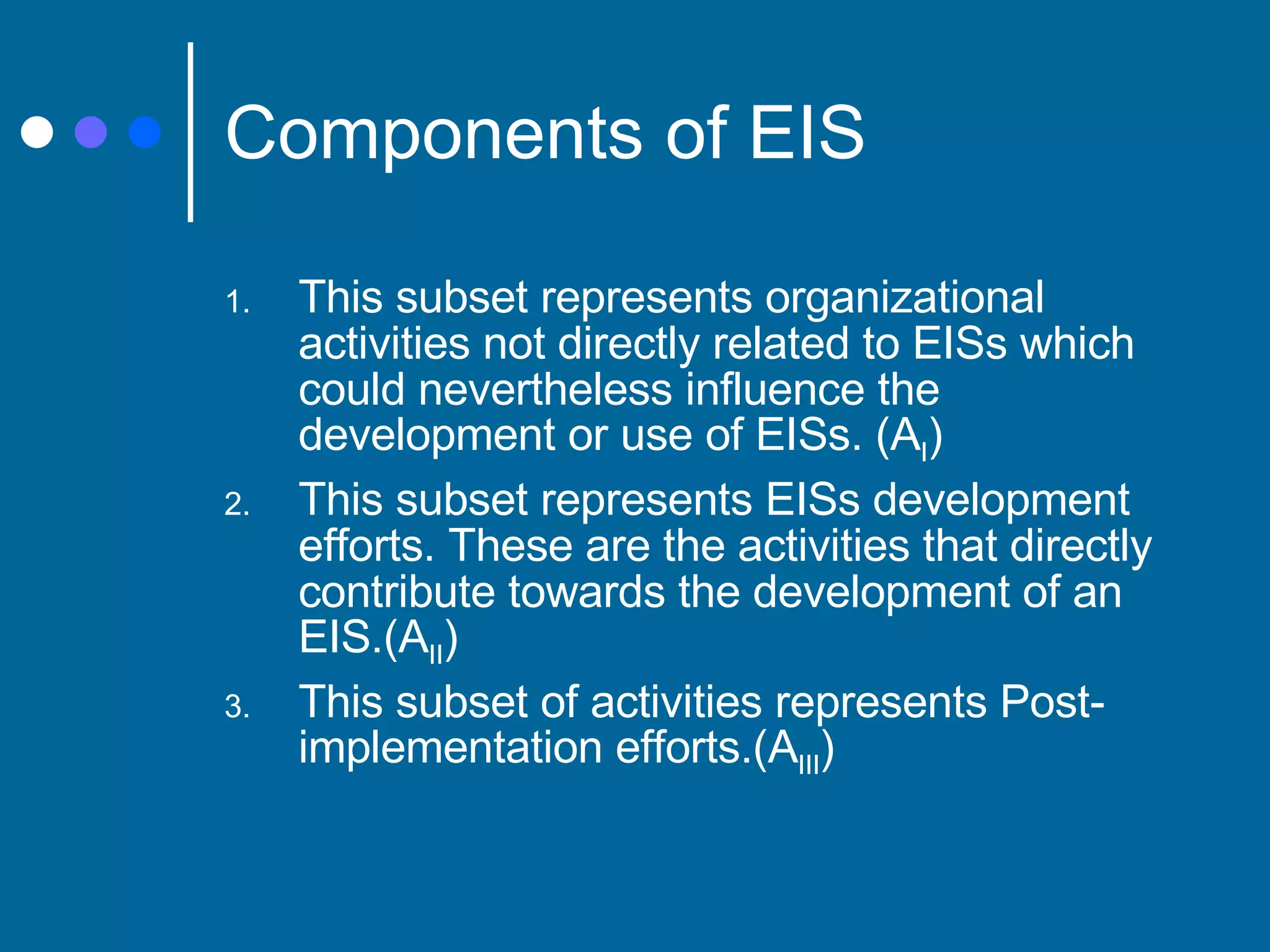
Components of EIS This subset represents organizational activities not directly related to EISs which could nevertheless influence the development or use of EISs. (A I ) This subset represents EISs development efforts. These are the activities that directly contribute towards the development of an EIS.(A II ) This subset of activities represents Post-implementation efforts.(A III )
Components of EIS S a  = Various other systems operational in the organization. S b  = This subset of the systems in the organization represents Executive Information Systems applications operational in the organization. S c  = This subset of systems includes enhancements on, or expansions to the initial EIS implementation.

Components Of Executive Information System

  • 1.
  • 2.
    Components of EISP = Set of People in an organization. A = Set of Activities taking place. S = Set of Systems present in the organization. In addition, the universal set represents the environment the organization has to operate in. = Organizational Environment (  )
  • 3.
  • 4.
    Components of EISa. People. During an EISs development project and the system’s subsequent usage, people are the main element that determines the success of the system.
  • 5.
    Components of EISSet of People in the organization that are not involved in EISs development activities, and are not users of the resulting EIS.(P 1 ) People involved in the development process, but are not users of the system .(P 2 ) People actively involved in the development of the system and are also users of the system .(P 3 ) People not involved in the development process but are users of the system .(P 4 )
  • 6.
    Components of EISb. Activities. The second part of the framework includes activities or procedures that typically take place in an organization.
  • 7.
    Components of EISc. Systems. This comprises any information systems that the organization utilizes to carry out its operations. The existing infrastructure can place limitations and constraints on EISs and influence the success by which these systems are employed.
  • 8.
    Components of EISThis subset represents organizational activities not directly related to EISs which could nevertheless influence the development or use of EISs. (A I ) This subset represents EISs development efforts. These are the activities that directly contribute towards the development of an EIS.(A II ) This subset of activities represents Post-implementation efforts.(A III )
  • 9.
    Components of EISS a = Various other systems operational in the organization. S b = This subset of the systems in the organization represents Executive Information Systems applications operational in the organization. S c = This subset of systems includes enhancements on, or expansions to the initial EIS implementation.