Data Warehouse Architectures
Data warehouses and their architectures vary depending upon the specifics of an organization's situation. Three common architectures are:   Data Warehouse Architecture (Basic) Data Warehouse Architecture (with a Staging Area) Data Warehouse Architecture (with a Staging Area and Data Marts) Types
End users directly access data derived from several source systems through the data warehouse.  Data Warehouse Architecture (Basic)
 
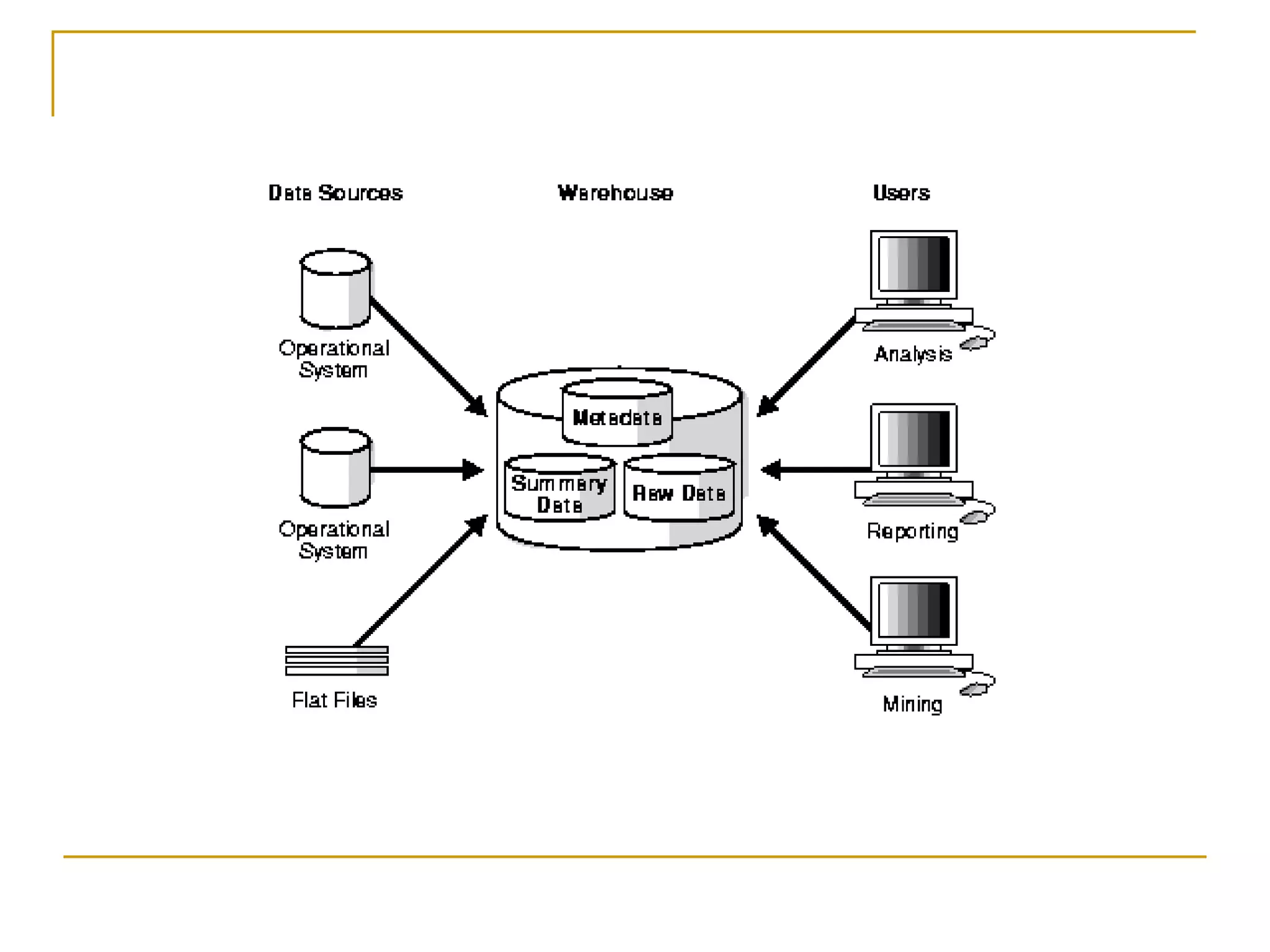
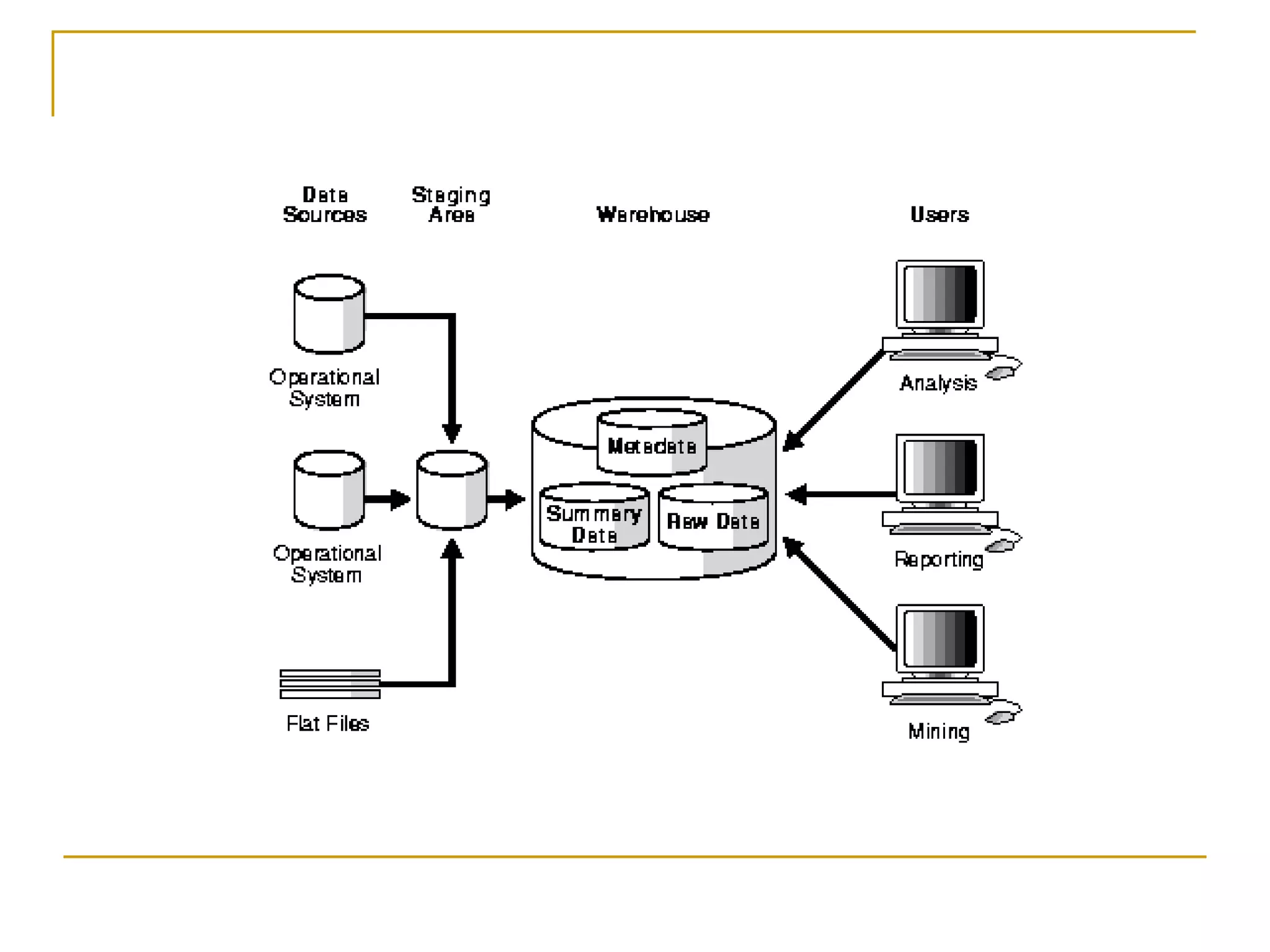
The figure illustrates three things: Data Sources (operational systems and files)  Warehouse (metadata, summary data, and raw data)  Users (analysis, reporting, and mining) Data Warehouse Architecture (Basic)
You need to clean and process your operational data before putting it into the warehouse. You can do this programmatically, although most data warehouses use a  staging area  instead. A staging area simplifies building summaries and general warehouse management.   Staging area -  A place where data is processed before entering the warehouse. Data Warehouse Architecture  (with a Staging Area)
 
This illustrates four things: Data Sources (operational systems and files)  Staging Area (where data sources go before the warehouse)  Warehouse (metadata, summary data, and raw data)  Users (analysis, reporting, and mining) Data Warehouse Architecture  (with a Staging Area)
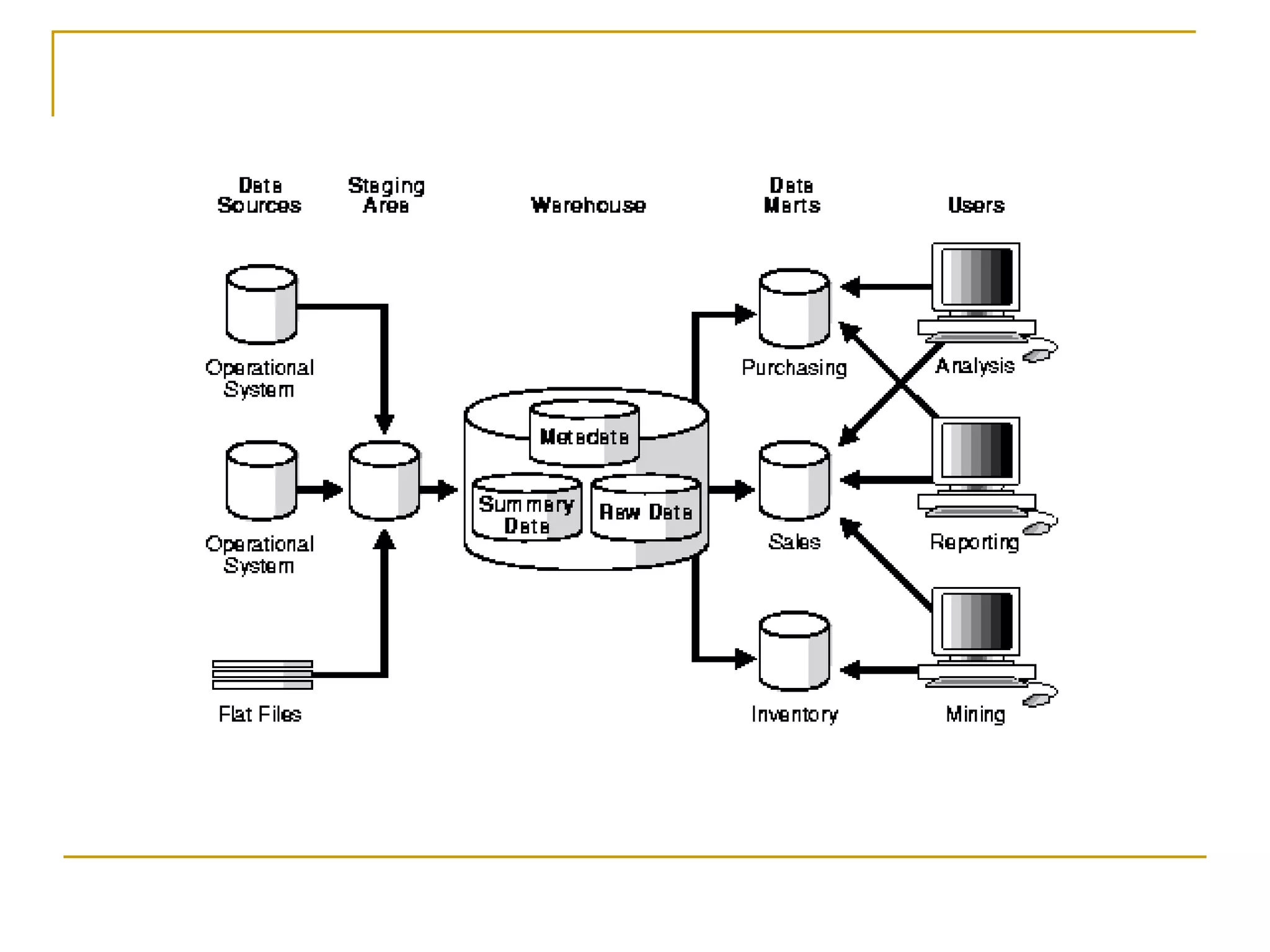
To customize your warehouse's architecture for different groups within your organization.  This by adding  data   marts , which are systems designed for a particular line of business.  The following example illustrates an example where purchasing, sales, and inventories are separated. In this example, a financial analyst might want to analyze historical data for purchases and sales.  Data Warehouse Architecture  (with a Staging Area and Data Marts)
 
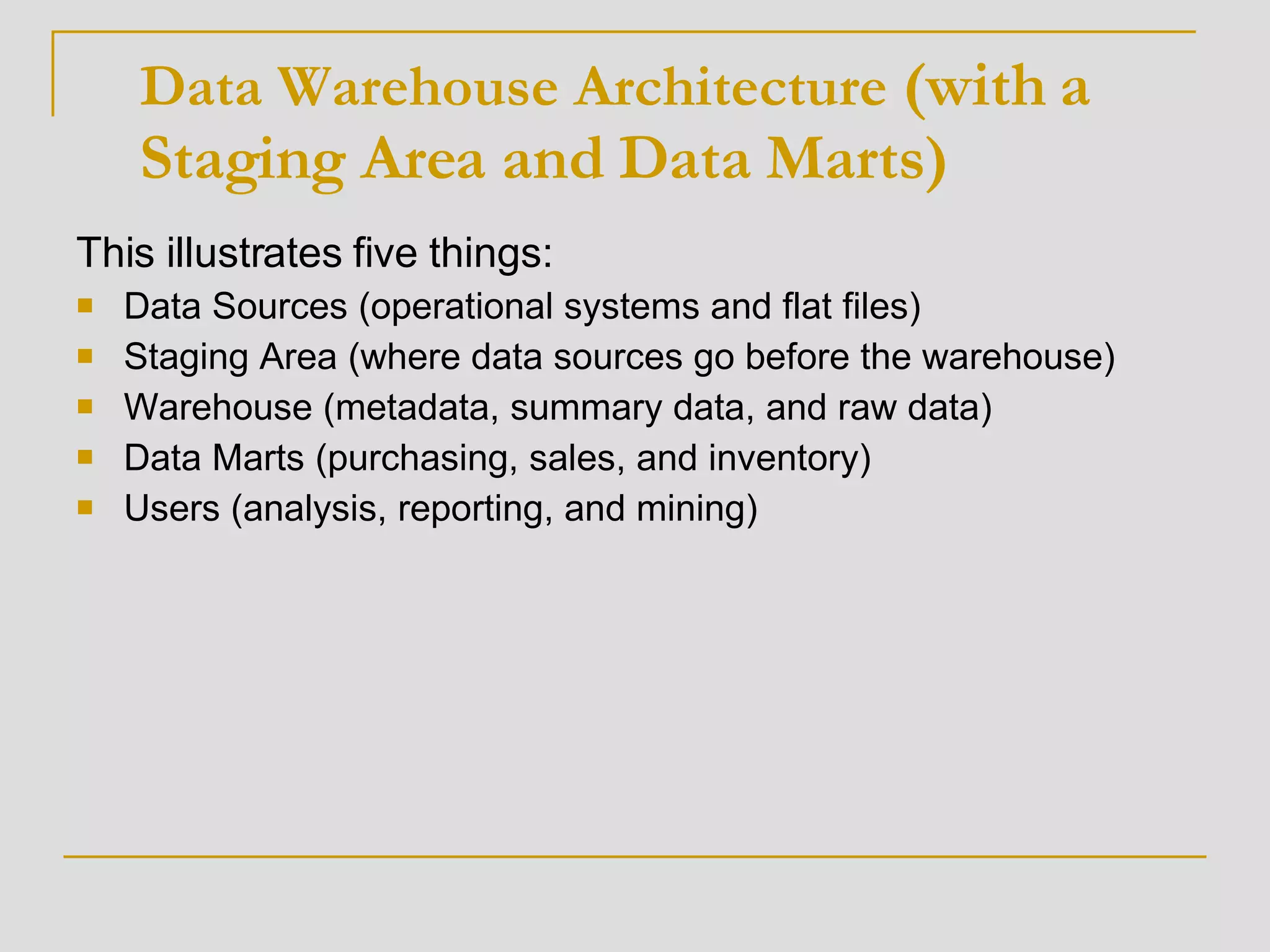
This illustrates five things: Data Sources (operational systems and flat files)  Staging Area (where data sources go before the warehouse)  Warehouse (metadata, summary data, and raw data)  Data Marts (purchasing, sales, and inventory)  Users (analysis, reporting, and mining) Data Warehouse Architecture  (with a Staging Area and Data Marts)
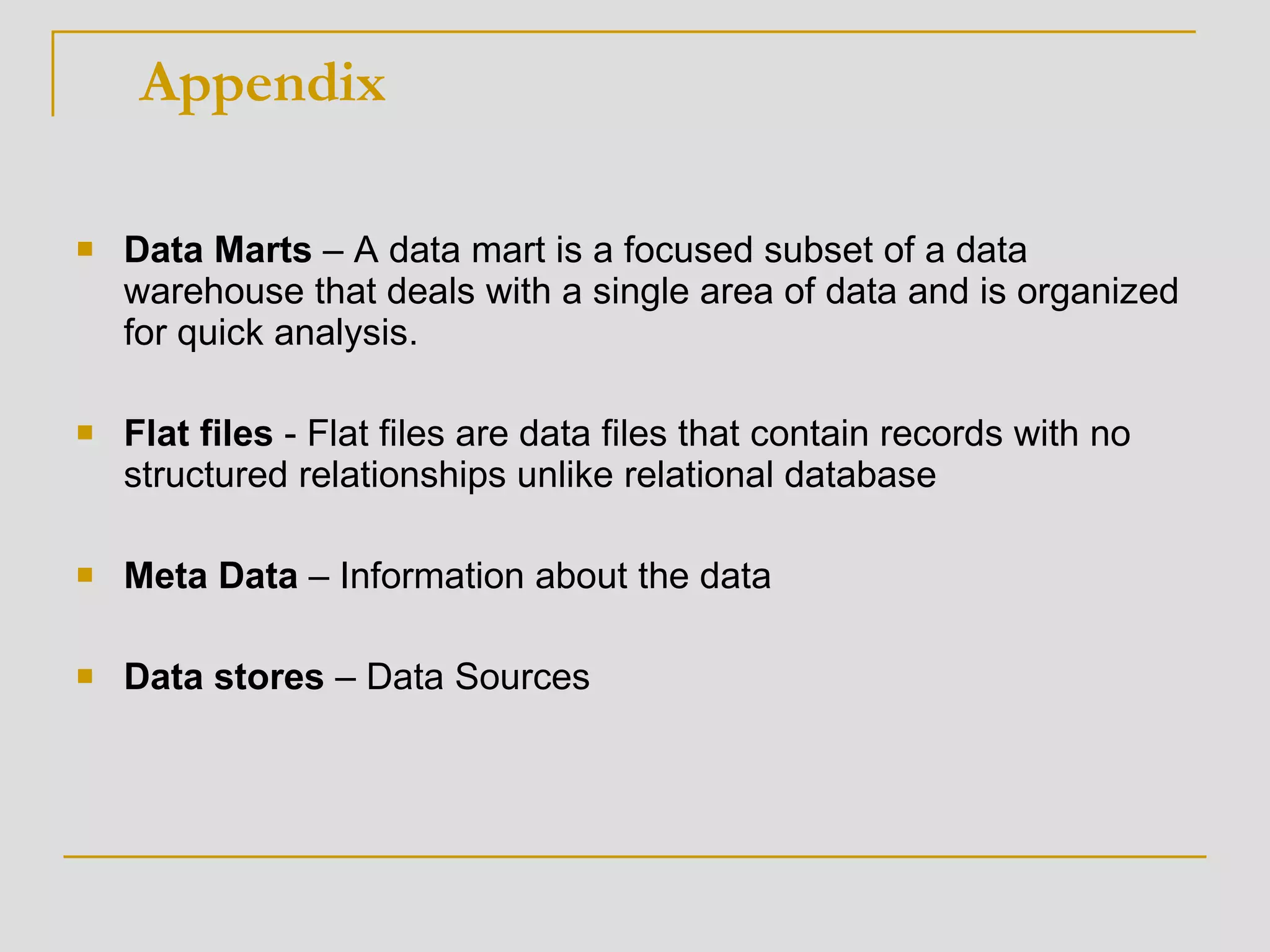
Data Marts  – A data mart is a focused subset of a data warehouse that deals with a single area of data and is organized for quick analysis.  Flat files  - Flat files are data files that contain records with no structured relationships unlike relational database Meta Data  – Information about the data Data stores  – Data Sources Appendix

Data Warehouse Architectures

  • 1.
  • 2.
    Data warehouses andtheir architectures vary depending upon the specifics of an organization's situation. Three common architectures are: Data Warehouse Architecture (Basic) Data Warehouse Architecture (with a Staging Area) Data Warehouse Architecture (with a Staging Area and Data Marts) Types
  • 3.
    End users directlyaccess data derived from several source systems through the data warehouse. Data Warehouse Architecture (Basic)
  • 4.
  • 5.
    The figure illustratesthree things: Data Sources (operational systems and files) Warehouse (metadata, summary data, and raw data) Users (analysis, reporting, and mining) Data Warehouse Architecture (Basic)
  • 6.
    You need toclean and process your operational data before putting it into the warehouse. You can do this programmatically, although most data warehouses use a staging area instead. A staging area simplifies building summaries and general warehouse management. Staging area - A place where data is processed before entering the warehouse. Data Warehouse Architecture (with a Staging Area)
  • 7.
  • 8.
    This illustrates fourthings: Data Sources (operational systems and files) Staging Area (where data sources go before the warehouse) Warehouse (metadata, summary data, and raw data) Users (analysis, reporting, and mining) Data Warehouse Architecture (with a Staging Area)
  • 9.
    To customize yourwarehouse's architecture for different groups within your organization. This by adding data marts , which are systems designed for a particular line of business. The following example illustrates an example where purchasing, sales, and inventories are separated. In this example, a financial analyst might want to analyze historical data for purchases and sales. Data Warehouse Architecture (with a Staging Area and Data Marts)
  • 10.
  • 11.
    This illustrates fivethings: Data Sources (operational systems and flat files) Staging Area (where data sources go before the warehouse) Warehouse (metadata, summary data, and raw data) Data Marts (purchasing, sales, and inventory) Users (analysis, reporting, and mining) Data Warehouse Architecture (with a Staging Area and Data Marts)
  • 12.
    Data Marts – A data mart is a focused subset of a data warehouse that deals with a single area of data and is organized for quick analysis. Flat files - Flat files are data files that contain records with no structured relationships unlike relational database Meta Data – Information about the data Data stores – Data Sources Appendix