EXTERNAL ANALYSISAbhishekSrivastav
LearningOutcomesAfter studying this topic you should be able to:Understand the role of external analysis in strategy formulation.Use a range of tools to analyse an organisation’s external environment.Explain the limitations of these analytical tools and the role of more subjective analytical approaches.
Link to overall strategic management“Strategic management includes understanding the strategic position of an organisation, strategic choices for the future and managing strategy in action (Johnson et al., 2008:12).”Strategic position identifies the impact ofExternal environmentStrategic capabilityExpectation and influence of stakeholders on strategy
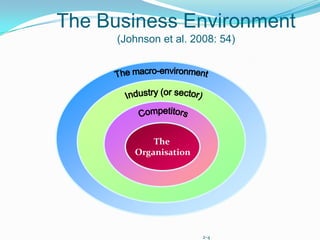
The Business Environment (Johnson et al. 2008: 54)The macro-environmentIndustry (or sector)CompetitorsThe Organisation2-4
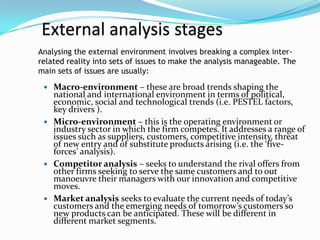
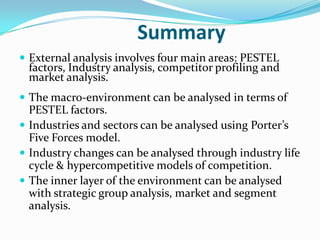
External analysis stagesAnalysing the external environment involves breaking a complex inter-related reality into sets of issues to make the analysis manageable. The main sets of issues are usually:Macro-environment – these are broad trends shaping the national and international environment in terms of political, economic, social and technological trends (i.e. PESTEL factors, key drivers ).
Micro-environment – this is the operating environment or industry sector in which the firm competes. It addresses a range of issues such as suppliers, customers, competitive intensity, threat of new entry and of substitute products arising (i.e. the ‘five-forces’ analysis).
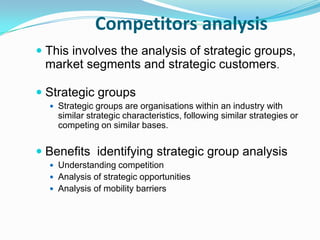
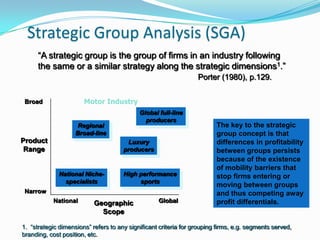
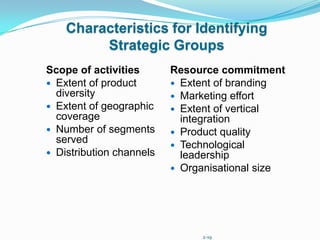
Competitor analysis – seeks to understand the rival offers from other firms seeking to serve the same customers and to out manoeuvre their managers with our innovation and competitive moves.
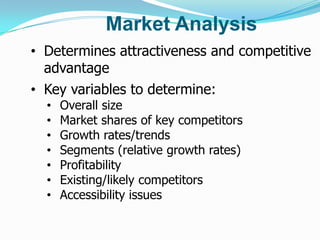
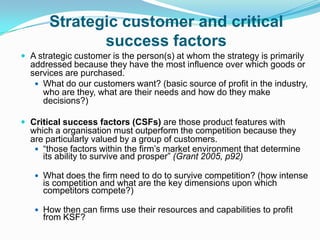
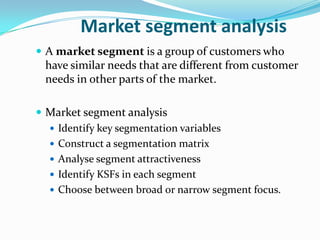
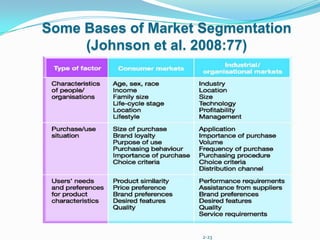
Market analysisseeks to evaluate the current needs of today’s customers and the emerging needs of tomorrow’s customers so new products can be anticipated. These will be different in different market segments. The  Macro-EnvironmentDifficult for the firm to influenceChanges can be far-reachingThe media: rich source of both information and speculationTools for analysing the macro-environmentThe PESTEL (Variants PEST/DEEPLIST) frameworkKey driversScenarios
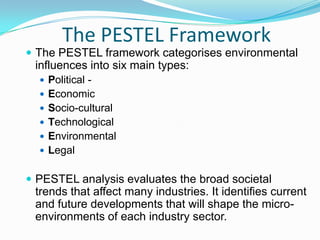
The PESTEL FrameworkThe PESTEL framework categorises environmental influences into six main types:Political - EconomicSocio-culturalTechnologicalEnvironmentalLegalPESTEL analysis evaluates the broad societal trends that affect many industries. It identifies current and future developments that will shape the micro-environments of each industry sector.
 Good PESTEL AnalysisFocuses on society wide.Based on sound research of actual issues. Provides evidence from the research to validate points made.Future oriented.Interpretive and not descriptive
Major Risk Like the old-fashioned SWOT technique, PESTEL helps us make listsLists can help us think, but…A list should be the beginning, not the end of thinkingHarrison (2003: Ch 2) integrates this with industry and company analysisJohnson et al. (2008:55-59) look at the way PESTEL factors combine…then at key drivers and trends of business change
Key Drivers and Scenarios PlanningKey drivers for change are environmental factors that are likely to have a high impact on the success or failure of strategy.Scenarios are detailed and plausible views of how the business environment of an organisation might develop in the future based on key drivers for change about which there is a high level of uncertainty.
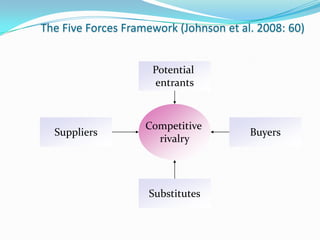
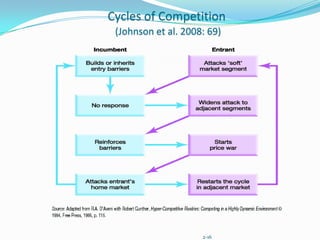
Industries and Sectors AnalysisAn industry is a group of firms producing the same principal product or service. The industry analysis involves identifyingCompetitive forces Industry life cyclesCompetitive cyclesPorters five forces framework has two main aims:To understand the drivers of competitive behaviour in the sector and;To evaluate the long-run profit potential of the sector
 The Five Forces Framework (Johnson et al. 2008: 60)Potential entrantsCompetitive rivalryBuyersSuppliersSubstitutes
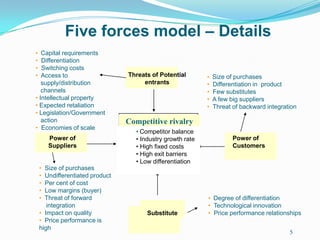
Five forces model – DetailsCapital requirements
  Differentiation
  Switching costs
  Access to    supply/distribution     channels Intellectual property
Expected retaliation
Legislation/Government     action  Economies of scaleThreats of Potential entrantsSize of purchases
  Differentiation in  product
  Few substitutes
  A few big suppliers
  Threat of backward integrationCompetitive rivalryCompetitor balance
 Industry growth rate
 High fixed costs

External Analysis Strategic Management Ljmu

  • 1.
  • 2.
    LearningOutcomesAfter studying thistopic you should be able to:Understand the role of external analysis in strategy formulation.Use a range of tools to analyse an organisation’s external environment.Explain the limitations of these analytical tools and the role of more subjective analytical approaches.
  • 3.
    Link to overallstrategic management“Strategic management includes understanding the strategic position of an organisation, strategic choices for the future and managing strategy in action (Johnson et al., 2008:12).”Strategic position identifies the impact ofExternal environmentStrategic capabilityExpectation and influence of stakeholders on strategy
  • 4.
    The Business Environment(Johnson et al. 2008: 54)The macro-environmentIndustry (or sector)CompetitorsThe Organisation2-4
  • 5.
    External analysis stagesAnalysingthe external environment involves breaking a complex inter-related reality into sets of issues to make the analysis manageable. The main sets of issues are usually:Macro-environment – these are broad trends shaping the national and international environment in terms of political, economic, social and technological trends (i.e. PESTEL factors, key drivers ).
  • 6.
    Micro-environment – thisis the operating environment or industry sector in which the firm competes. It addresses a range of issues such as suppliers, customers, competitive intensity, threat of new entry and of substitute products arising (i.e. the ‘five-forces’ analysis).
  • 7.
    Competitor analysis –seeks to understand the rival offers from other firms seeking to serve the same customers and to out manoeuvre their managers with our innovation and competitive moves.
  • 8.
    Market analysisseeks toevaluate the current needs of today’s customers and the emerging needs of tomorrow’s customers so new products can be anticipated. These will be different in different market segments. The Macro-EnvironmentDifficult for the firm to influenceChanges can be far-reachingThe media: rich source of both information and speculationTools for analysing the macro-environmentThe PESTEL (Variants PEST/DEEPLIST) frameworkKey driversScenarios
  • 9.
    The PESTEL FrameworkThePESTEL framework categorises environmental influences into six main types:Political - EconomicSocio-culturalTechnologicalEnvironmentalLegalPESTEL analysis evaluates the broad societal trends that affect many industries. It identifies current and future developments that will shape the micro-environments of each industry sector.
  • 10.
    Good PESTELAnalysisFocuses on society wide.Based on sound research of actual issues. Provides evidence from the research to validate points made.Future oriented.Interpretive and not descriptive
  • 11.
    Major Risk Likethe old-fashioned SWOT technique, PESTEL helps us make listsLists can help us think, but…A list should be the beginning, not the end of thinkingHarrison (2003: Ch 2) integrates this with industry and company analysisJohnson et al. (2008:55-59) look at the way PESTEL factors combine…then at key drivers and trends of business change
  • 12.
    Key Drivers andScenarios PlanningKey drivers for change are environmental factors that are likely to have a high impact on the success or failure of strategy.Scenarios are detailed and plausible views of how the business environment of an organisation might develop in the future based on key drivers for change about which there is a high level of uncertainty.
  • 13.
    Industries and SectorsAnalysisAn industry is a group of firms producing the same principal product or service. The industry analysis involves identifyingCompetitive forces Industry life cyclesCompetitive cyclesPorters five forces framework has two main aims:To understand the drivers of competitive behaviour in the sector and;To evaluate the long-run profit potential of the sector
  • 14.
    The FiveForces Framework (Johnson et al. 2008: 60)Potential entrantsCompetitive rivalryBuyersSuppliersSubstitutes
  • 15.
    Five forces model– DetailsCapital requirements
  • 16.
  • 17.
  • 18.
    Accessto supply/distribution channels Intellectual property
  • 19.
  • 20.
    Legislation/Government action Economies of scaleThreats of Potential entrantsSize of purchases
  • 21.
  • 22.
    Fewsubstitutes
  • 23.
    Afew big suppliers
  • 24.
    Threatof backward integrationCompetitive rivalryCompetitor balance
  • 25.
  • 26.

Editor's Notes

  • #3 Understand the role of external analysis in enabling managers to develop meaningful value proposition’s for customers and credible competitive positions;
  • #4 Strategic management includes understanding the strategic position of an organisation, strategic choices for the future and managing strategy in action (Johnson et al., 2008: 12).”Strategic position is concerned with identifying the impact on strategy of:External environmentStrategic resources (resources and competences)Expectation and influence of stakeholders