
1
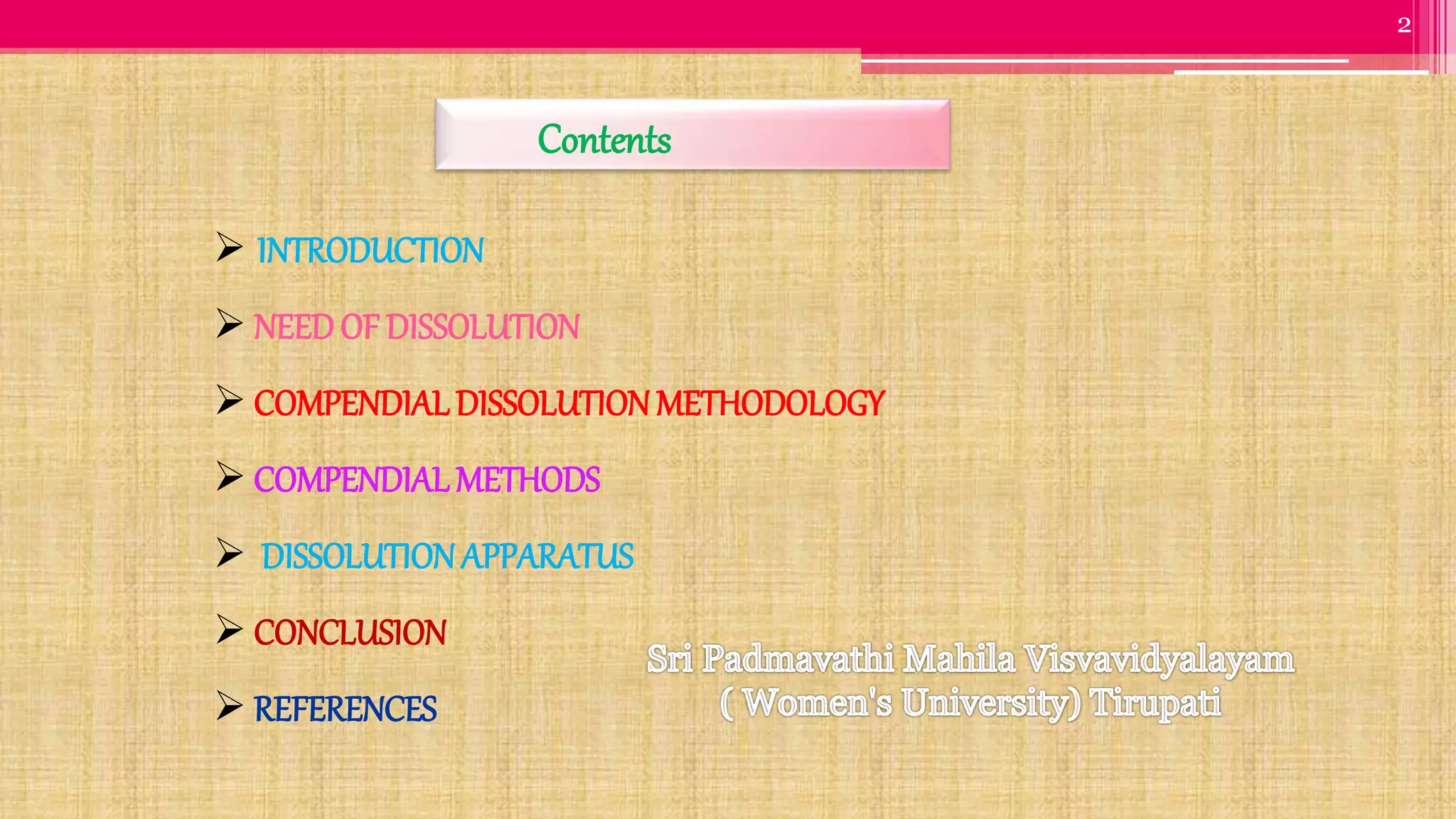
Compendial methods of dissolution testing
Under The Guidance Of:
Prof. R. Nagaraju
Institute of Pharmaceutical Technology
Sri Padmavathi Mahila Visvavidyalayam
( Women's University)
Tirupati Andhra Pradesh, India
u
Submitted By:
P.Reddyswetha
2018MPH40A025
M.Pharmacy
1st Year
(Pharmaceutics)
2
Contents
 INTRODUCTION
 NEEDOF DISSOLUTION
 COMPENDIAL DISSOLUTIONMETHODOLOGY
 COMPENDIAL METHODS
 DISSOLUTIONAPPARATUS
 CONCLUSION
 REFERENCES
3
Introduction
4
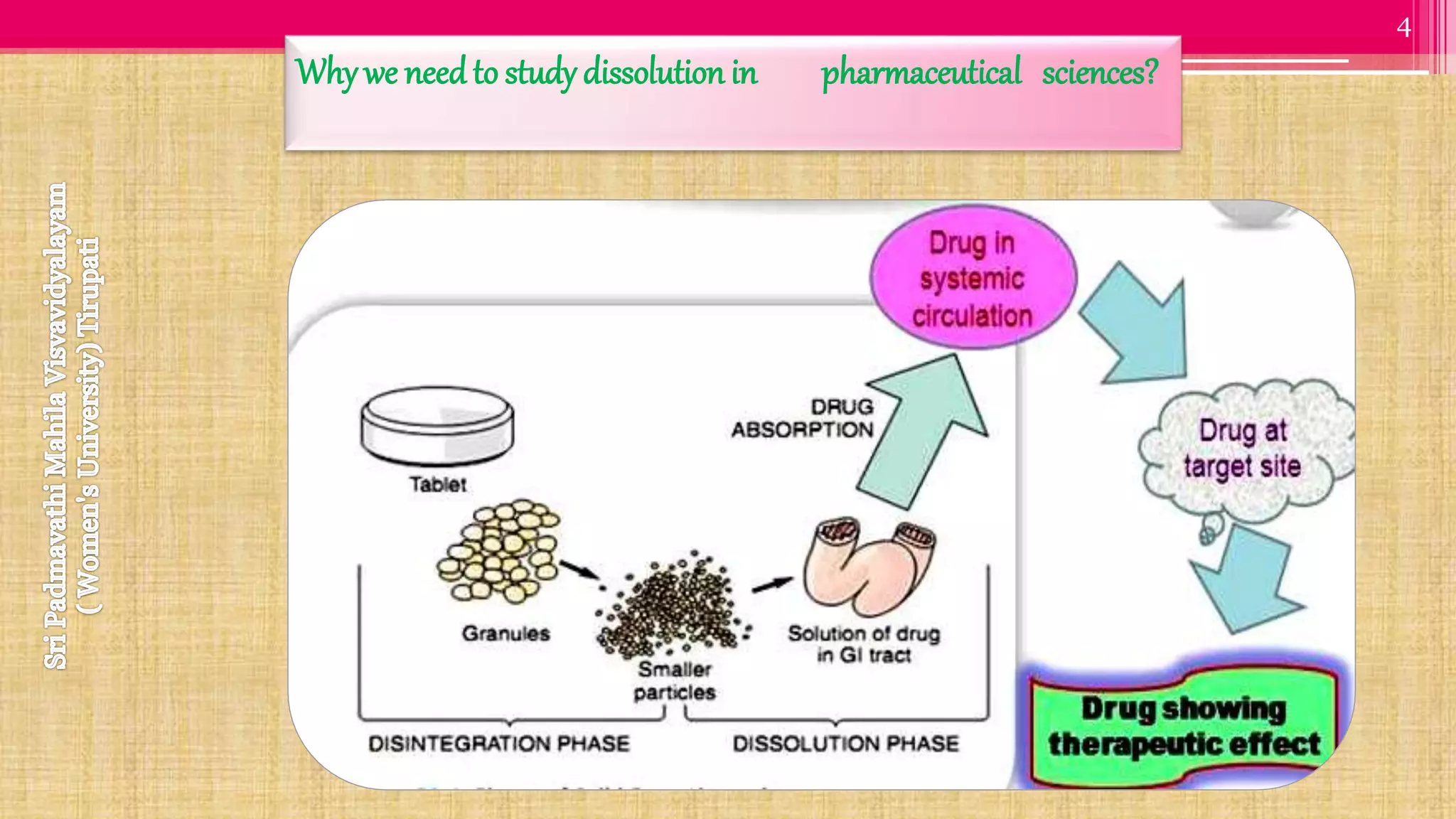
Why we needto study dissolution in pharmaceutical sciences?
5
Needof dissolutiontesting
• solid drugs absorbed only from the solution .
• Invitro test – estimate amount of drug released per unit
time.
• Invitro dissolution test most reliable, predictors of in vivo
performance.
• Dissolution –rate limiting factor.
6
Compendial dissolution methodology
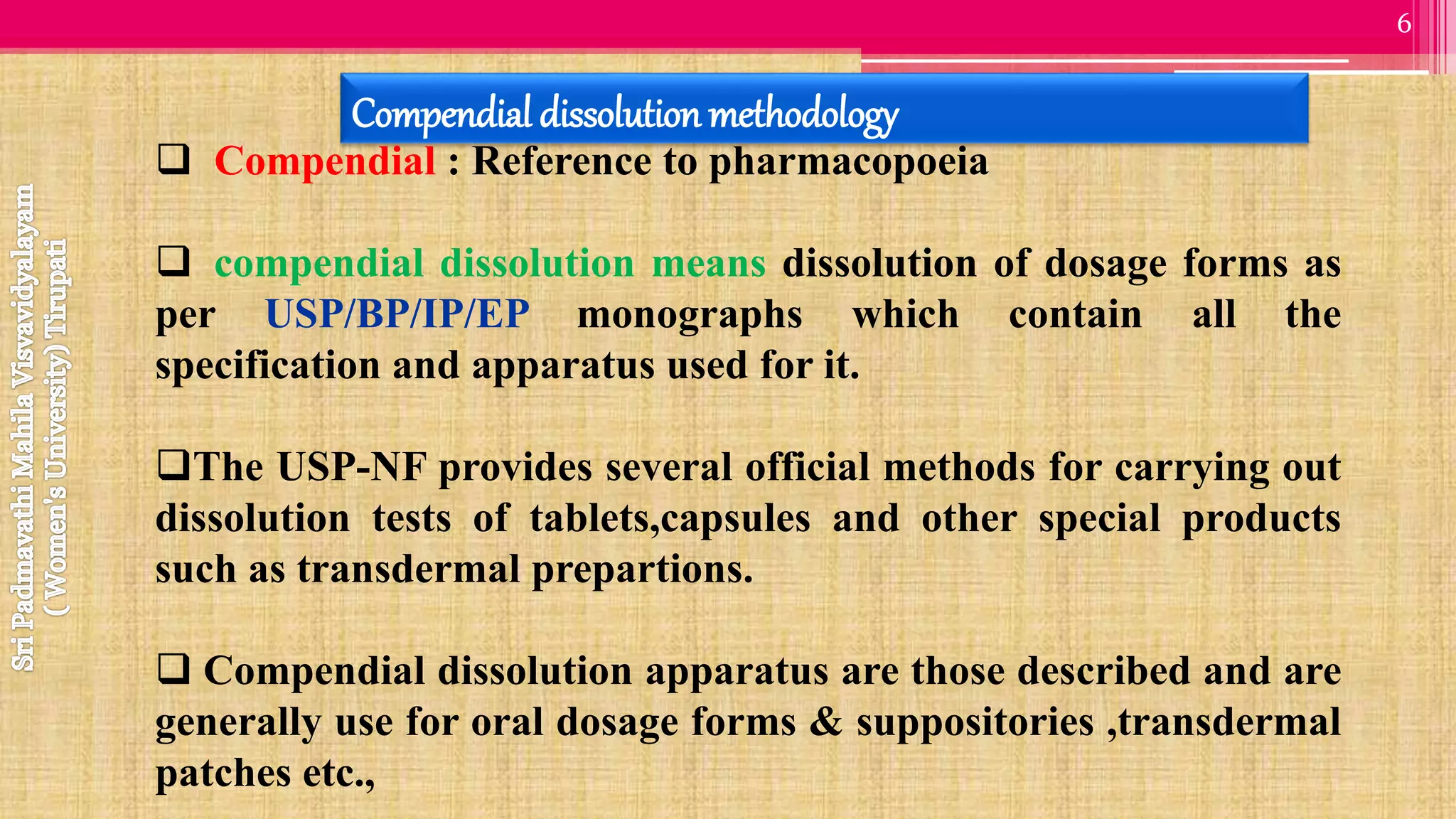
 Compendial : Reference to pharmacopoeia
 compendial dissolution means dissolution of dosage forms as
per USP/BP/IP/EP monographs which contain all the
specification and apparatus used for it.
The USP-NF provides several official methods for carrying out
dissolution tests of tablets,capsules and other special products
such as transdermal prepartions.
 Compendial dissolution apparatus are those described and are
generally use for oral dosage forms & suppositories ,transdermal
patches etc.,
7
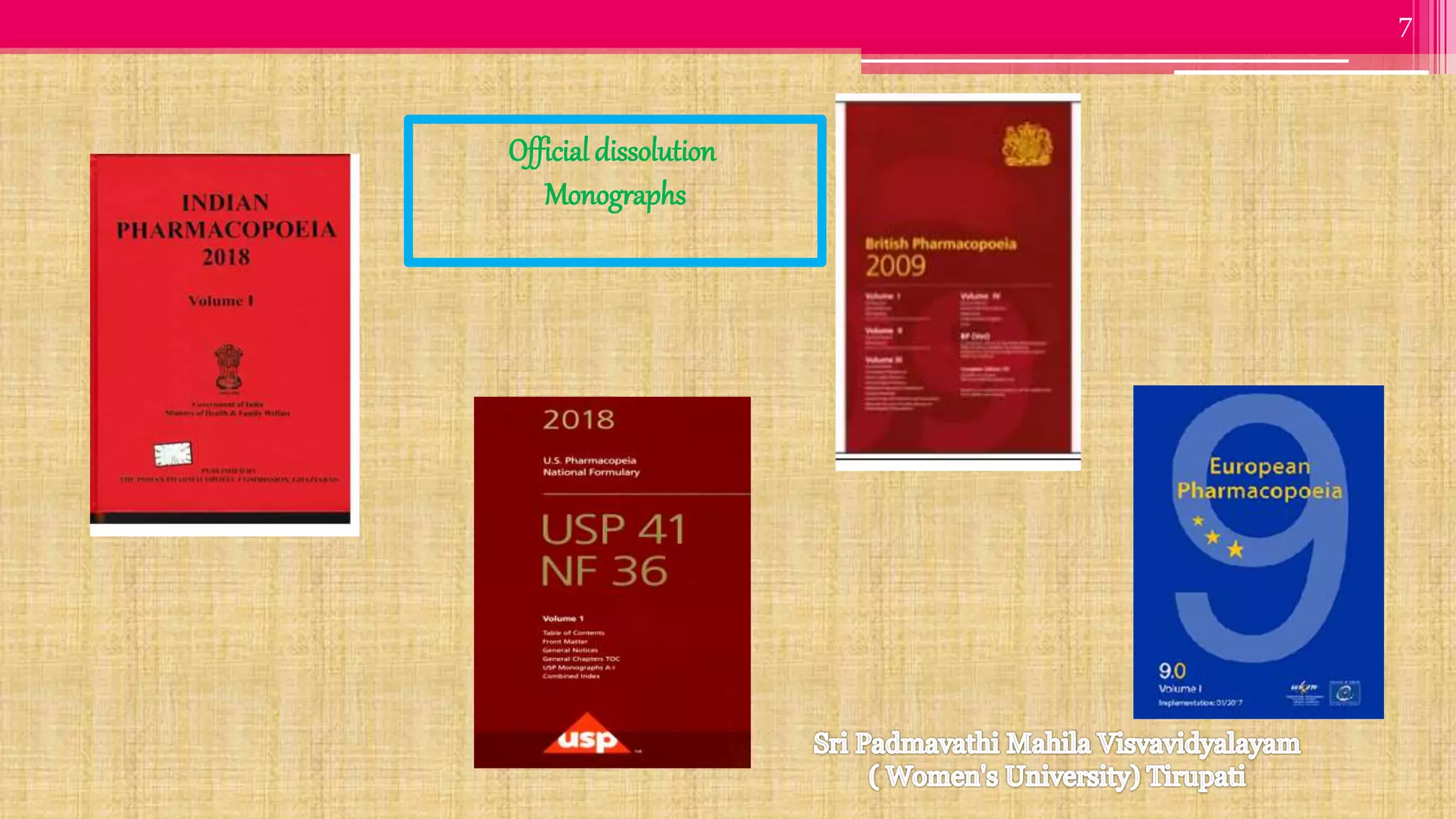
Official dissolution
Monographs
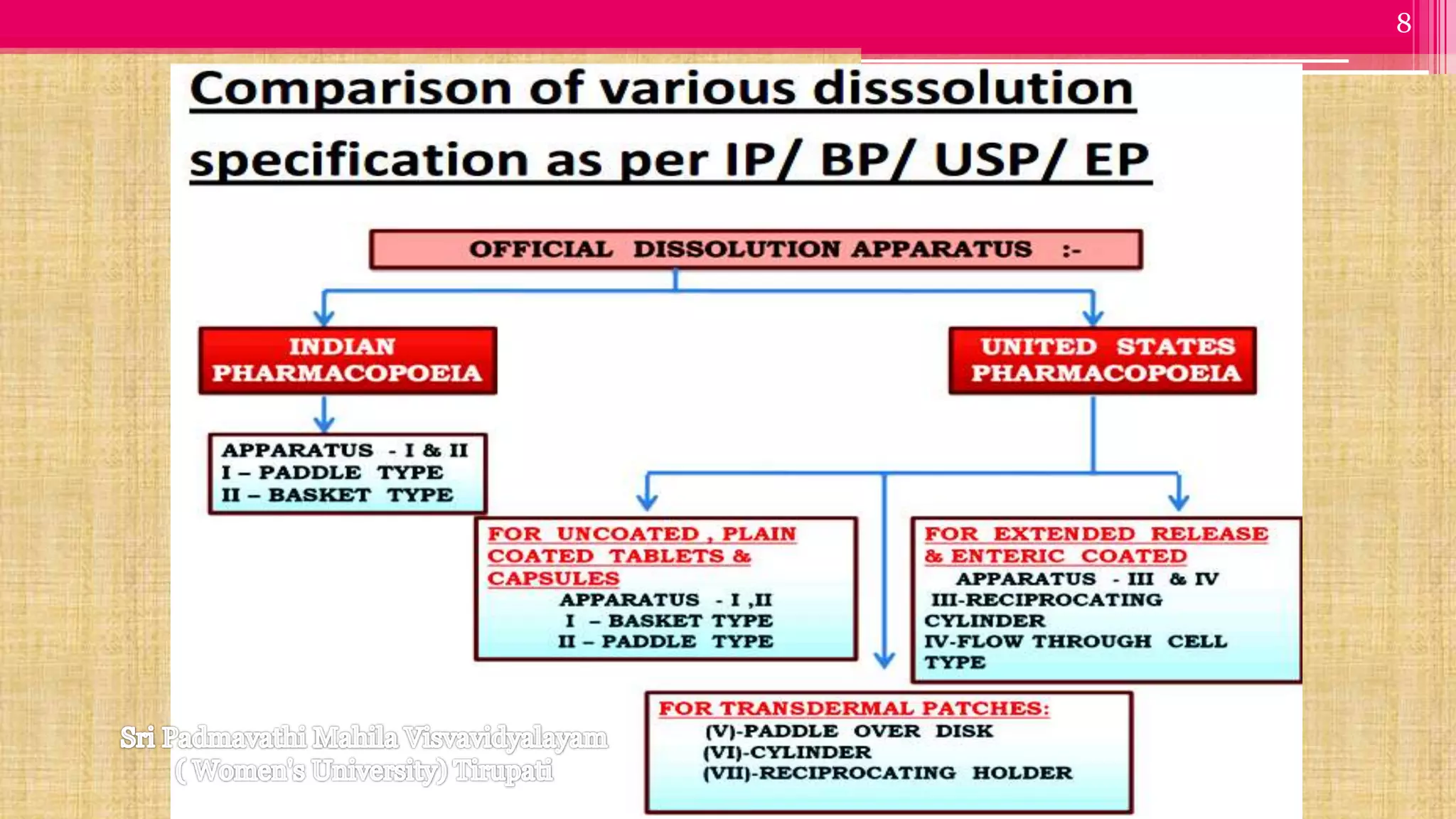
8
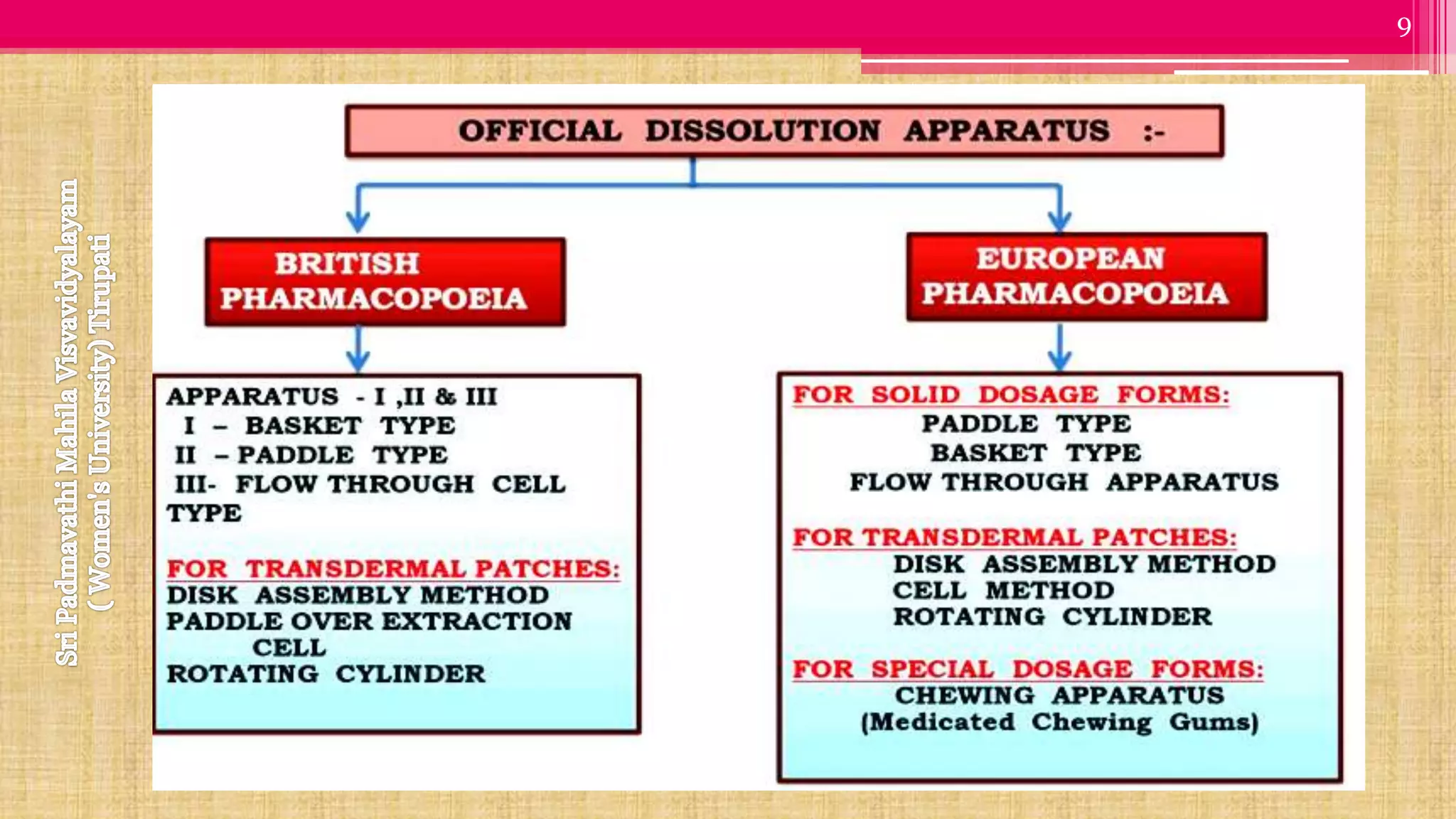
9
10
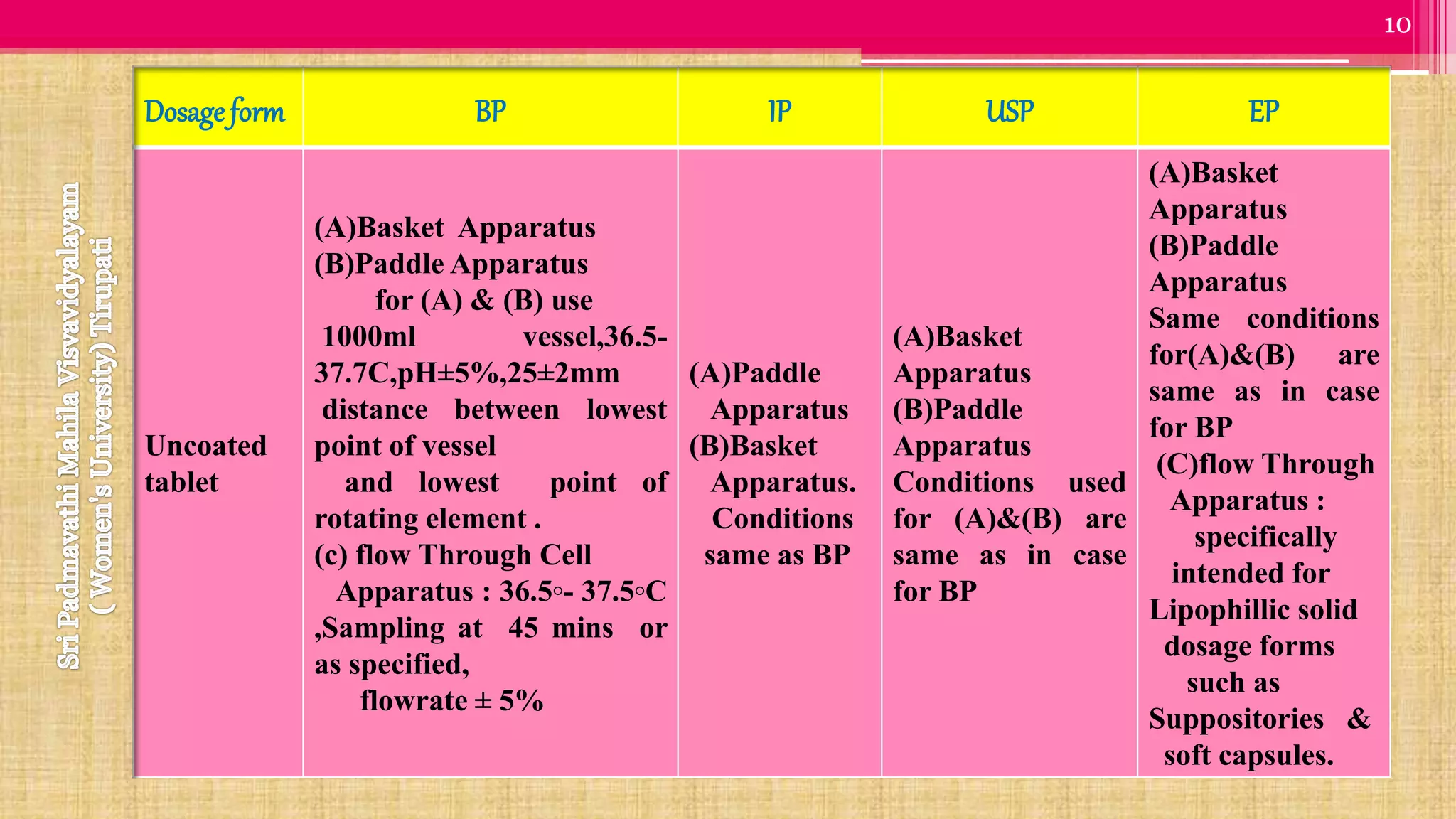
Dosage form BP IP USP EP
Uncoated
tablet
(A)Basket Apparatus
(B)Paddle Apparatus
for (A) & (B) use
1000ml vessel,36.5-
37.7C,pH±5%,25±2mm
distance between lowest
point of vessel
and lowest point of
rotating element .
(c) flow Through Cell
Apparatus : 36.5◦- 37.5◦C
,Sampling at 45 mins or
as specified,
flowrate ± 5%
(A)Paddle
Apparatus
(B)Basket
Apparatus.
Conditions
same as BP
(A)Basket
Apparatus
(B)Paddle
Apparatus
Conditions used
for (A)&(B) are
same as in case
for BP
(A)Basket
Apparatus
(B)Paddle
Apparatus
Same conditions
for(A)&(B) are
same as in case
for BP
(C)flow Through
Apparatus :
specifically
intended for
Lipophillic solid
dosage forms
such as
Suppositories &
soft capsules.
11
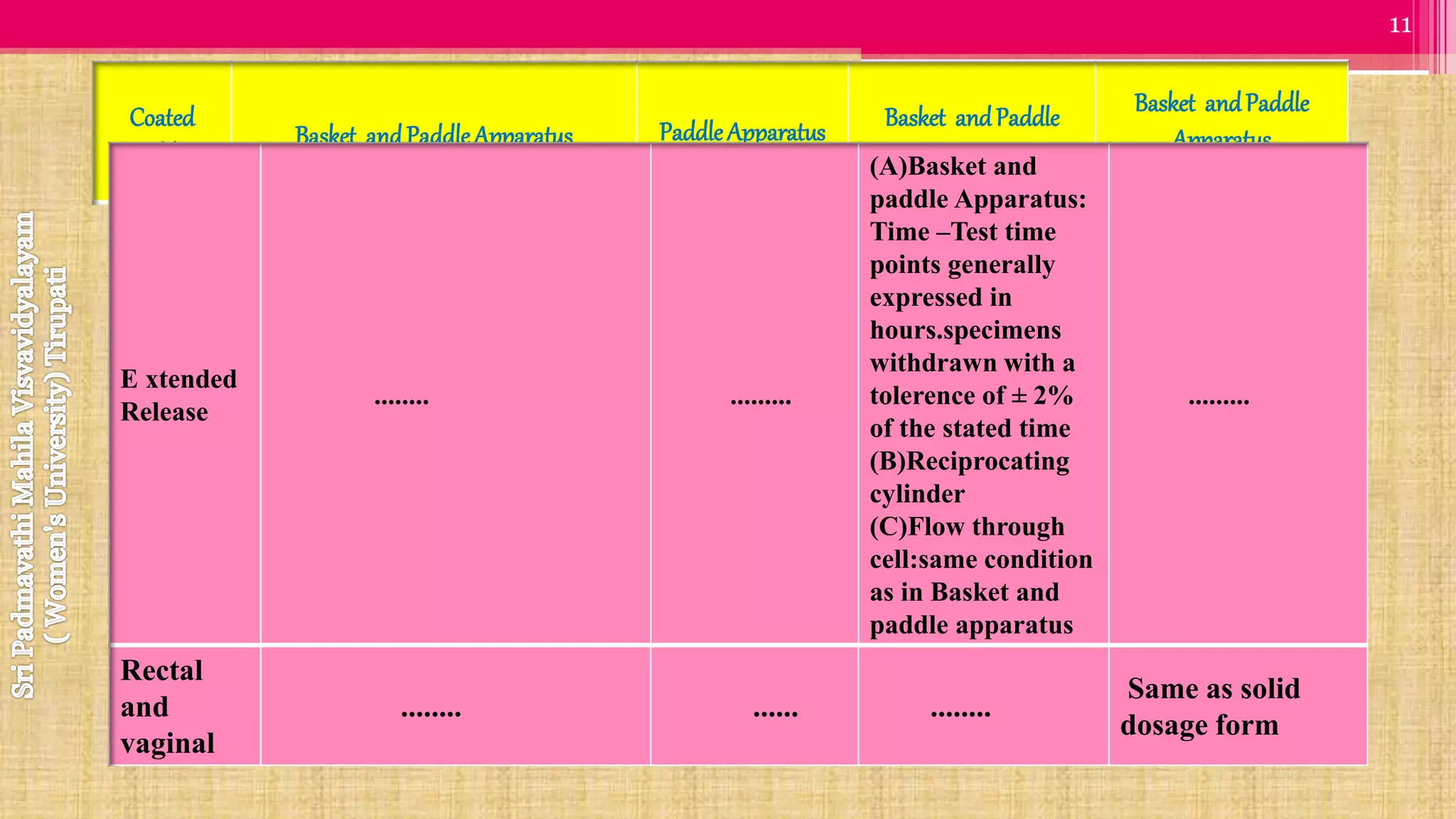
Coated
tablet
Basket andPaddleApparatus PaddleApparatus
andBasket Apparatus
Basket andPaddle
Apparatus
Basket andPaddle
Apparatus
E xtended
Release
........ .........
(A)Basket and
paddle Apparatus:
Time –Test time
points generally
expressed in
hours.specimens
withdrawn with a
tolerence of ± 2%
of the stated time
(B)Reciprocating
cylinder
(C)Flow through
cell:same condition
as in Basket and
paddle apparatus
.........
Rectal
and
vaginal
........ ...... ........
Same as solid
dosage form
12
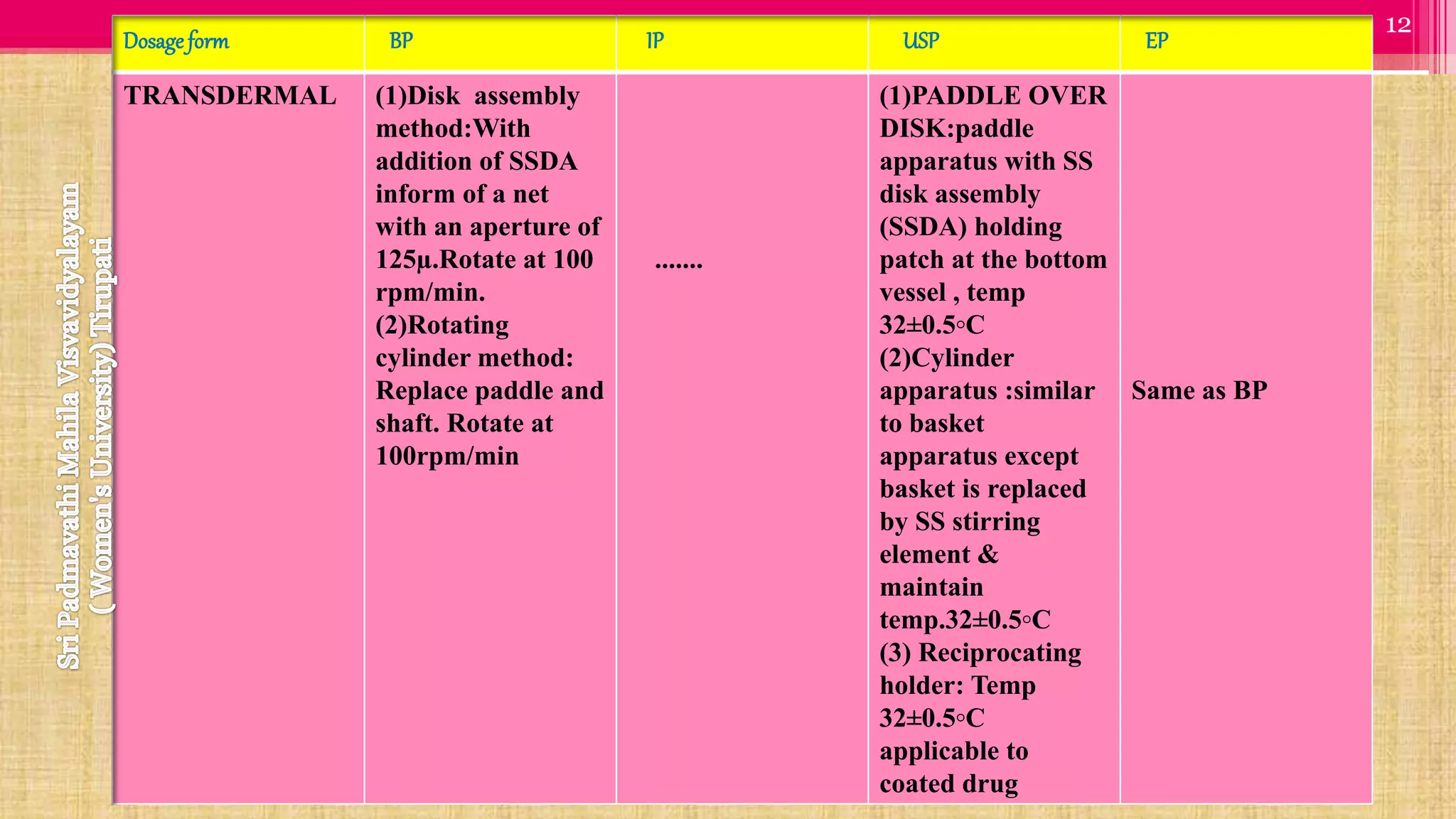
Dosage form BP IP USP EP
TRANSDERMAL (1)Disk assembly
method:With
addition of SSDA
inform of a net
with an aperture of
125µ.Rotate at 100
rpm/min.
(2)Rotating
cylinder method:
Replace paddle and
shaft. Rotate at
100rpm/min
.......
(1)PADDLE OVER
DISK:paddle
apparatus with SS
disk assembly
(SSDA) holding
patch at the bottom
vessel , temp
32±0.5◦C
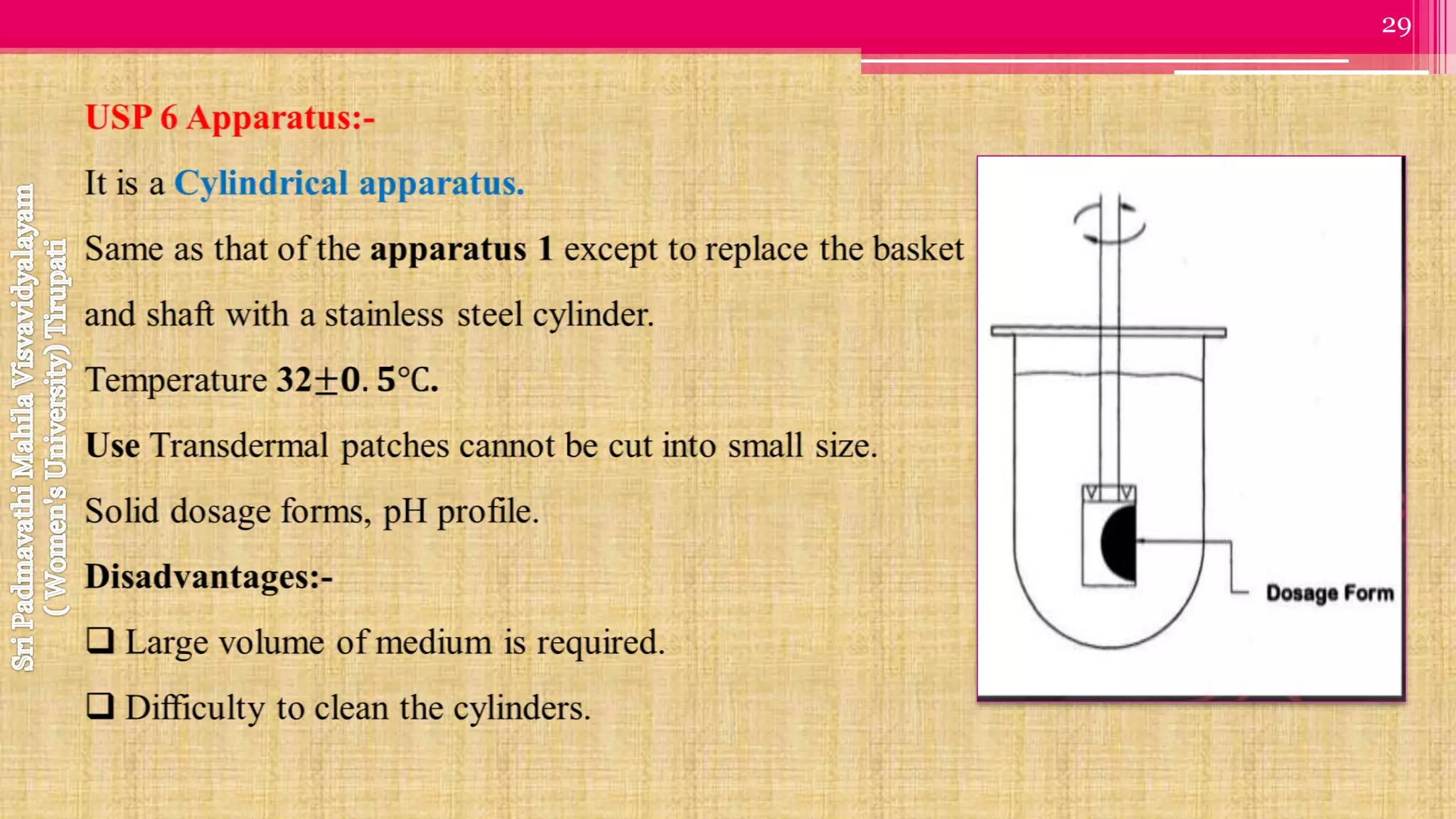
(2)Cylinder
apparatus :similar
to basket
apparatus except
basket is replaced
by SS stirring
element &
maintain
temp.32±0.5◦C
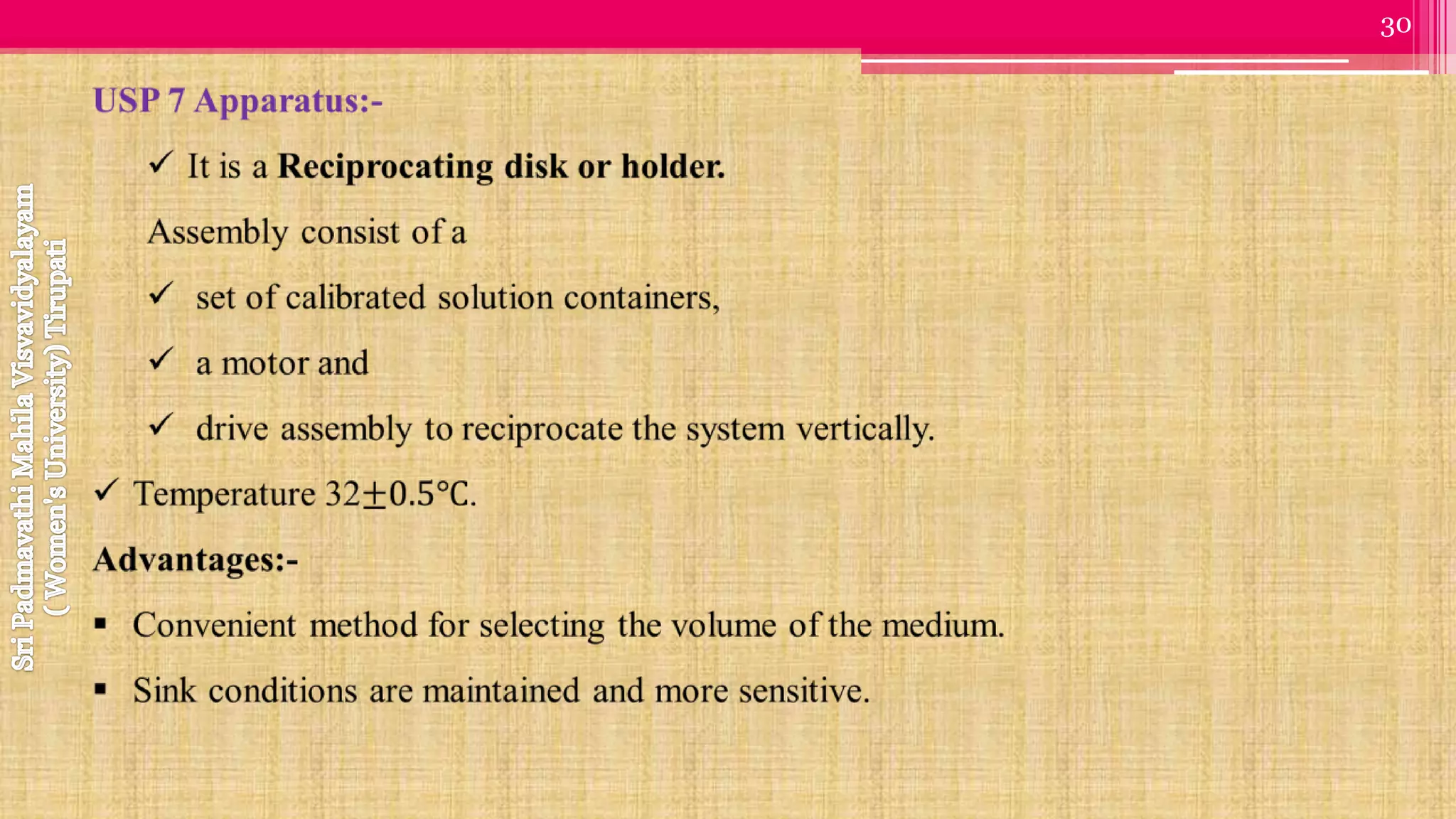
(3) Reciprocating
holder: Temp
32±0.5◦C
applicable to
coated drug
Same as BP
13
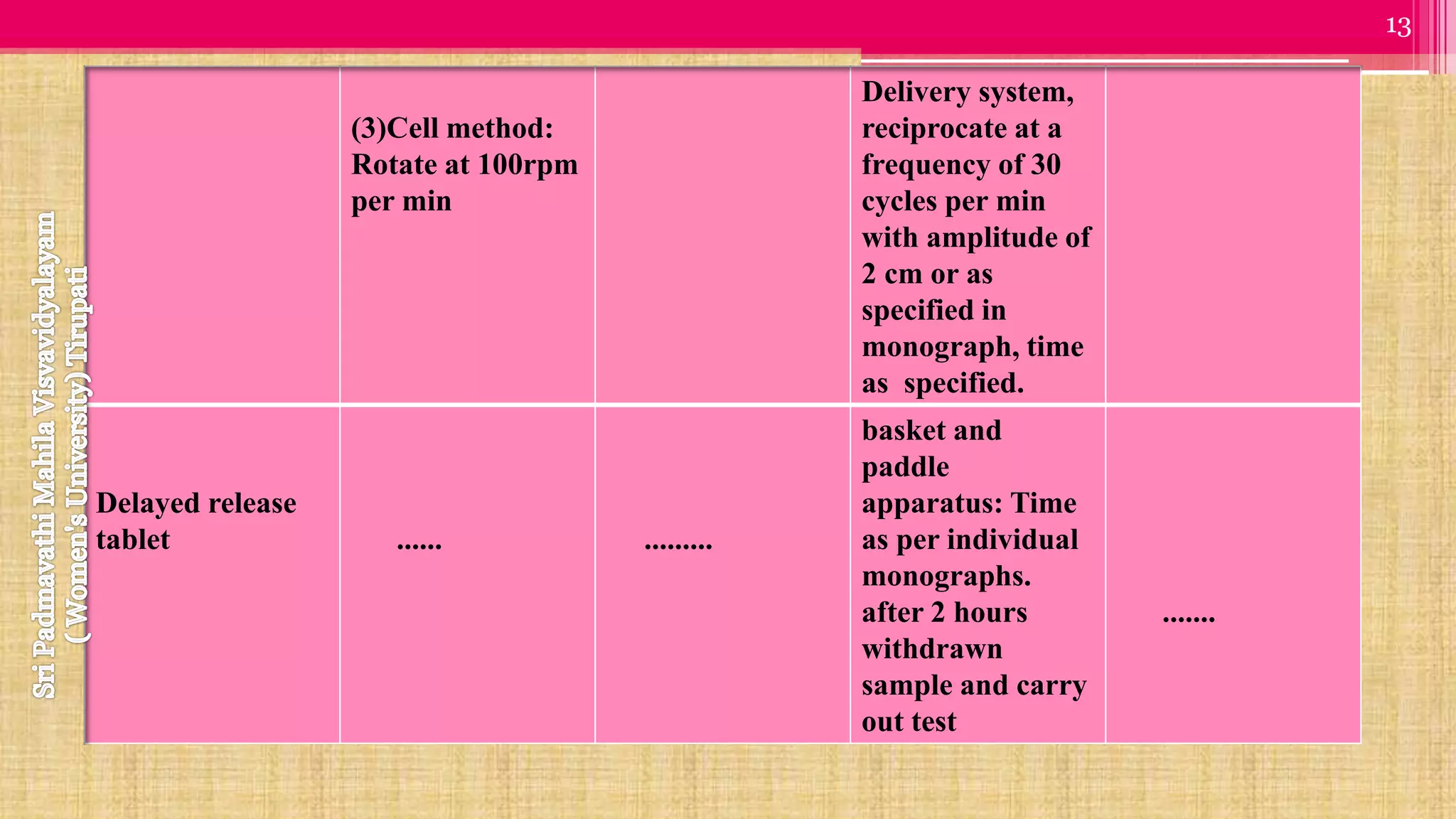
(3)Cell method:
Rotate at 100rpm
per min
Delivery system,
reciprocate at a
frequency of 30
cycles per min
with amplitude of
2 cm or as
specified in
monograph, time
as specified.
Delayed release
tablet ...... .........
basket and
paddle
apparatus: Time
as per individual
monographs.
after 2 hours
withdrawn
sample and carry
out test
.......
14
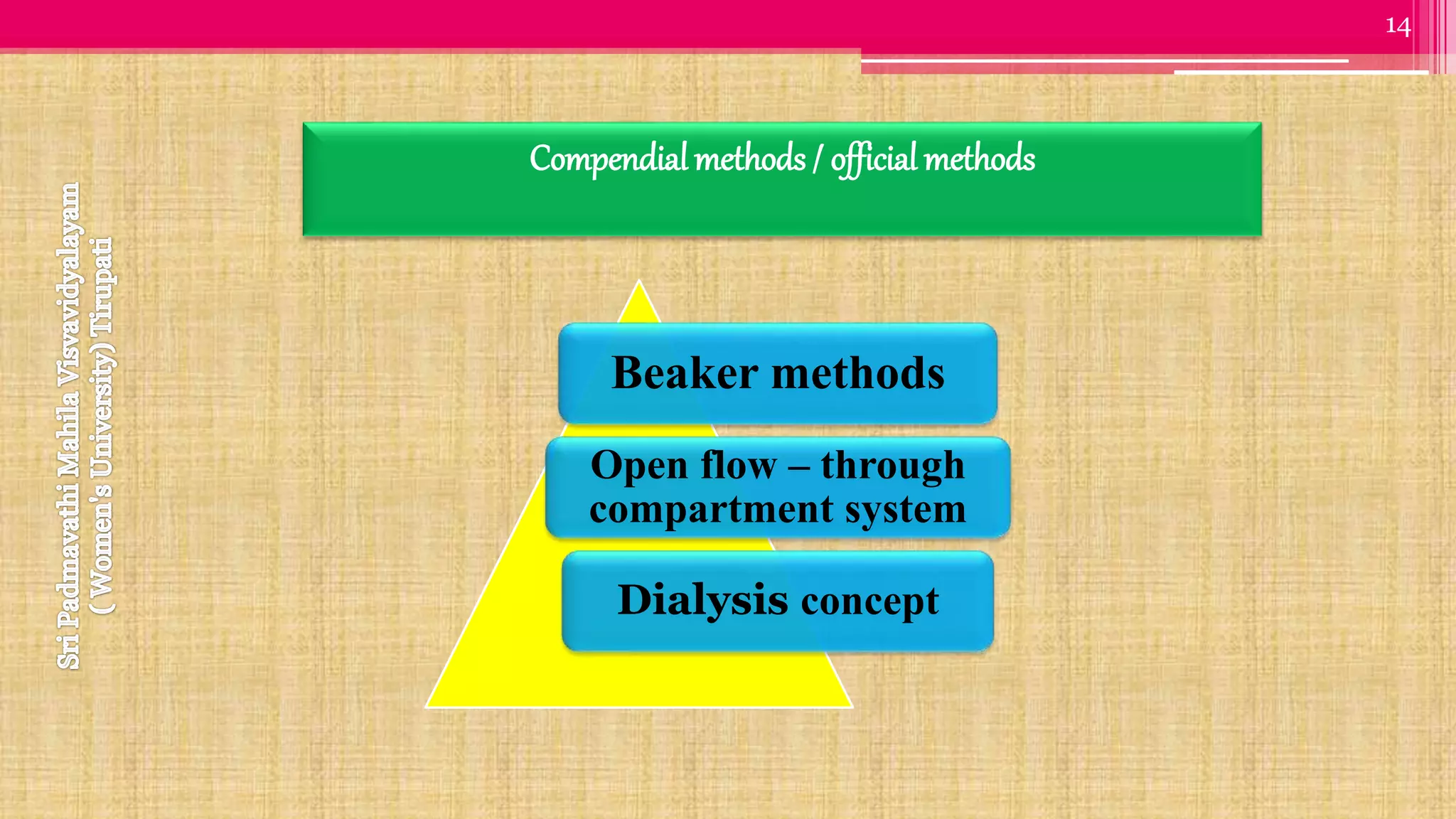
Compendial methods / official methods
Beaker methods
Open flow – through
compartment system
Dialysis concept
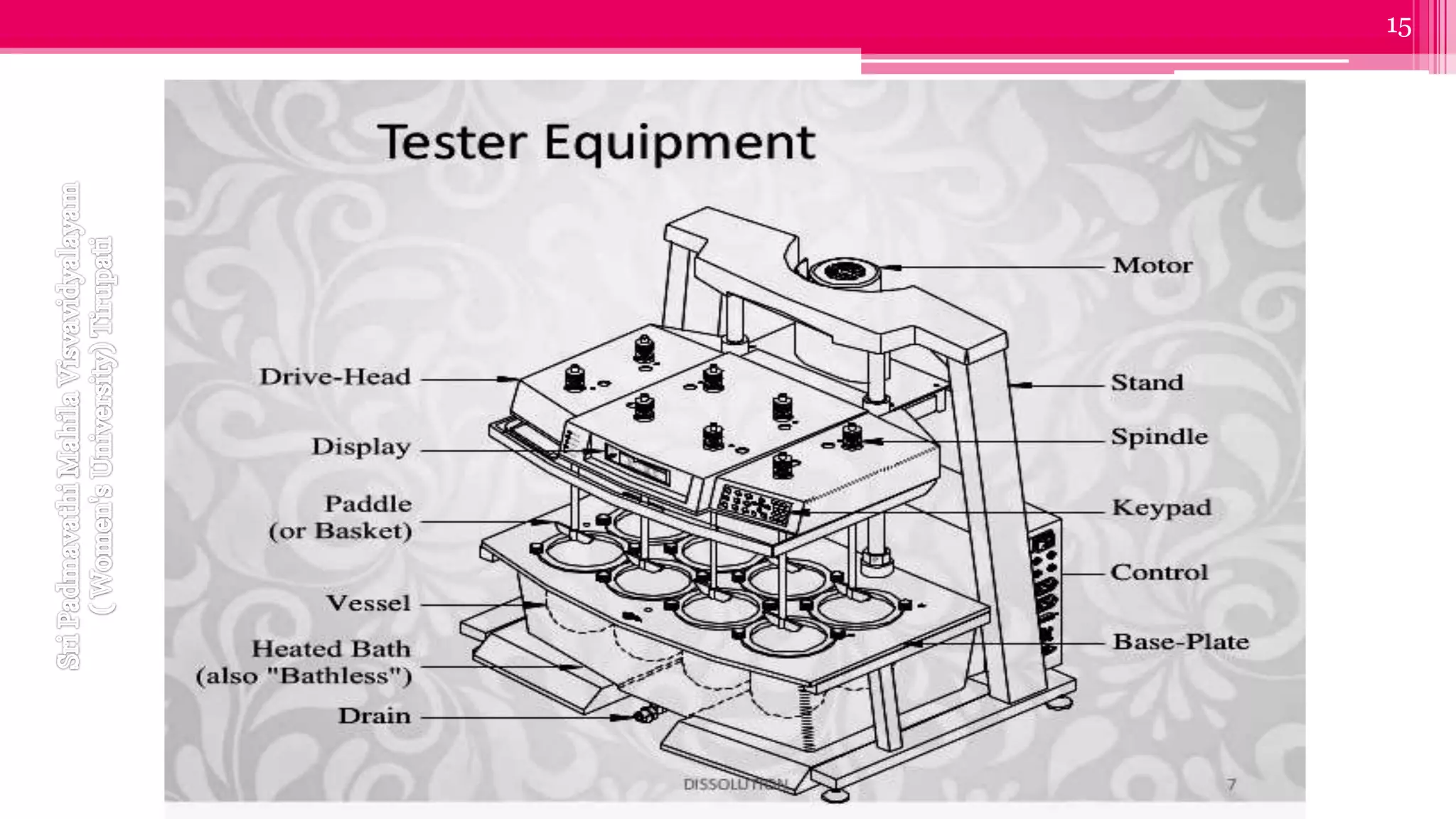
15
16
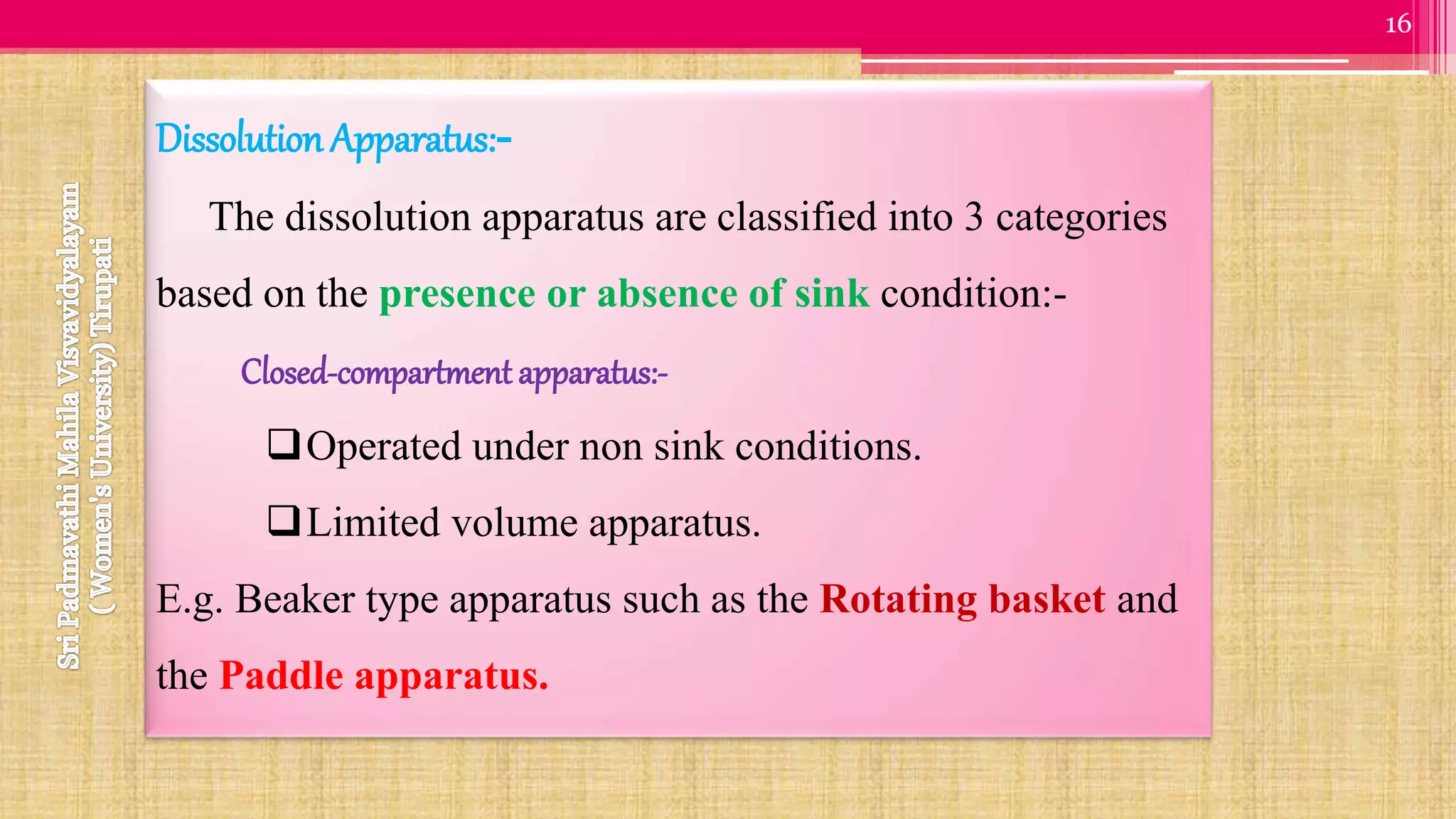
Dissolution Apparatus:-
The dissolution apparatus are classified into 3 categories
based on the presence or absence of sink condition:-
Closed-compartment apparatus:-
Operated under non sink conditions.
Limited volume apparatus.
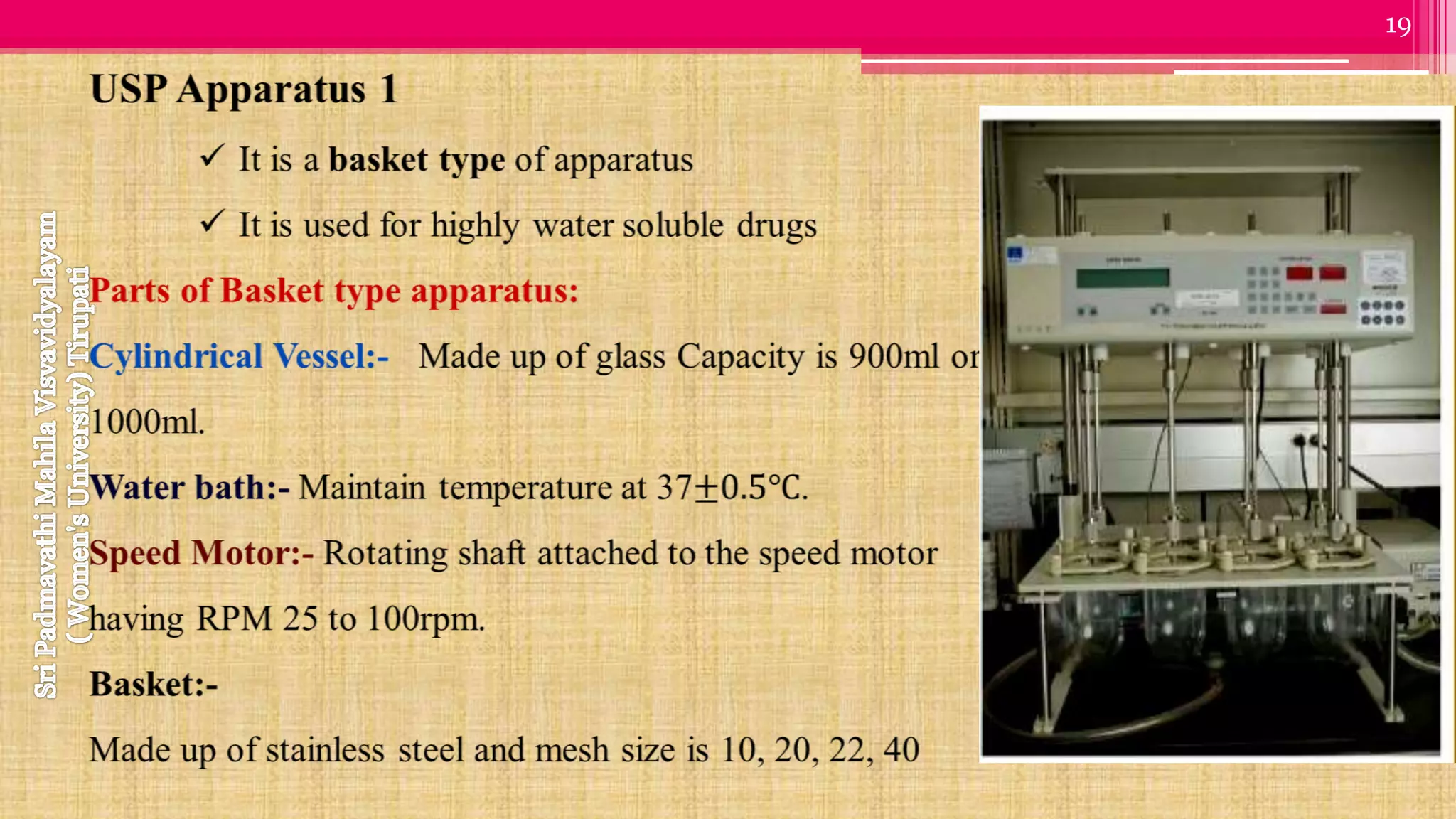
E.g. Beaker type apparatus such as the Rotating basket and
the Paddle apparatus.
17
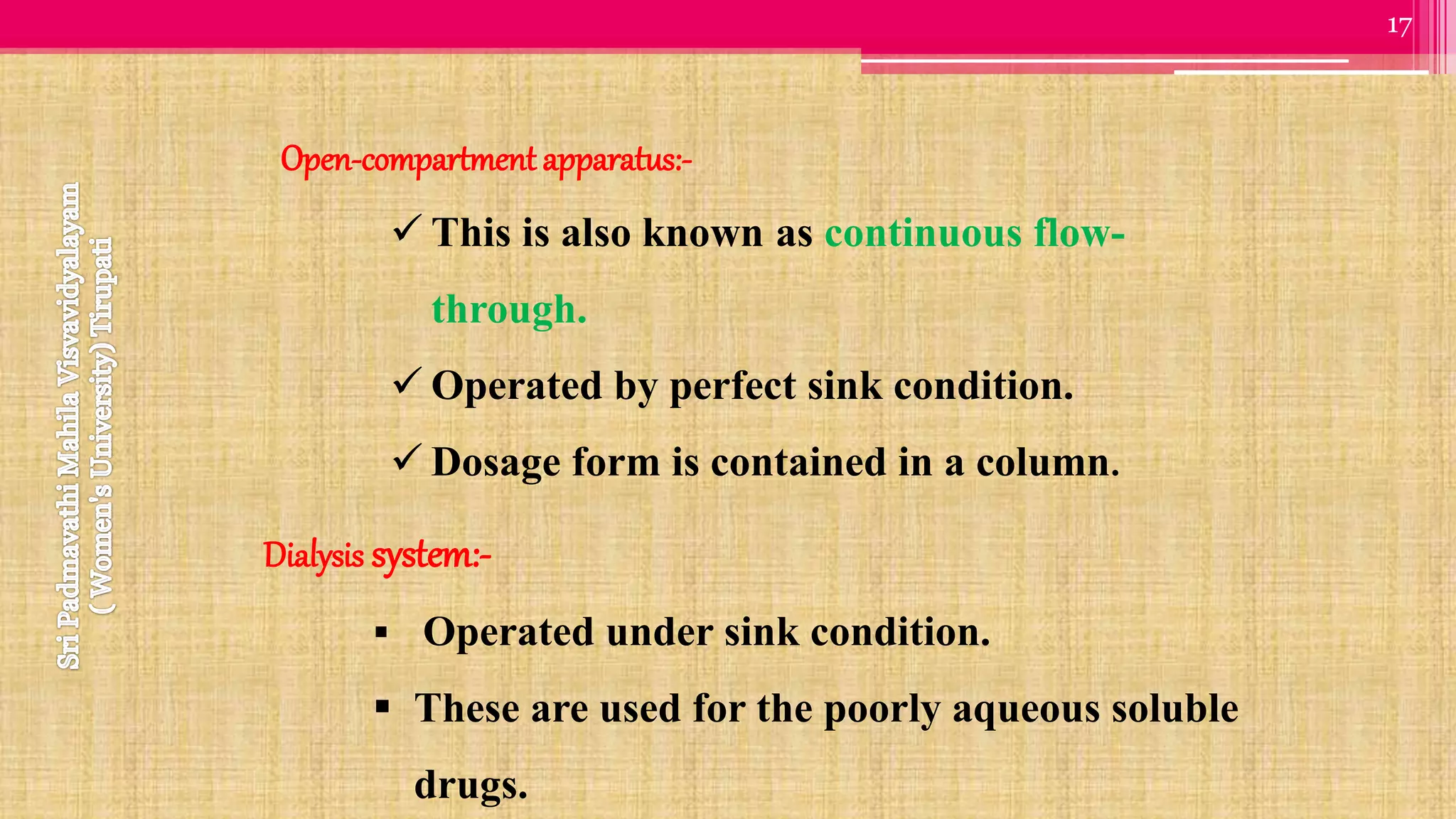
Open-compartment apparatus:-
 This is also known as continuous flow-
through.
 Operated by perfect sink condition.
 Dosage form is contained in a column.
Dialysis system:-
 Operated under sink condition.
 These are used for the poorly aqueous soluble
drugs.
18
19
20
Size 20 is more accepted to determine the rate of dissolution.
Used for Capsule, Delayed release, Beads.
Advantages:-
 Full pH change during the test
 Easily automated.
Disadvantages:-
 Basket screen is clogged with gummy
particles.
 Degassing is particularly important.
 Mesh gets corroded by HCl solution.
21
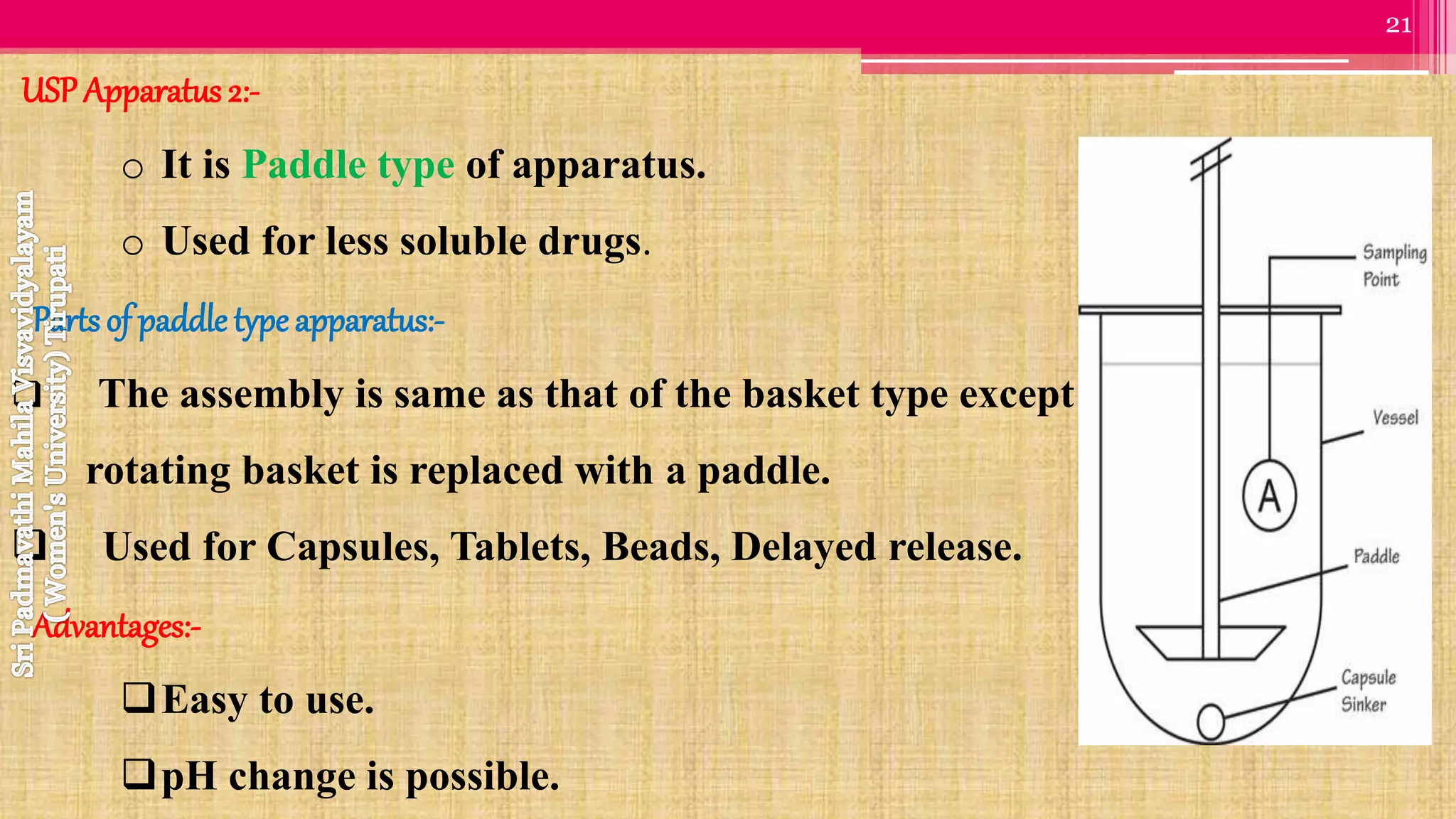
USP Apparatus 2:-
o It is Paddle type of apparatus.
o Used for less soluble drugs.
Parts of paddle type apparatus:-
 The assembly is same as that of the basket type except the
rotating basket is replaced with a paddle.
 Used for Capsules, Tablets, Beads, Delayed release.
Advantages:-
Easy to use.
pH change is possible.
22
Disadvantages:-
 pH media change is often difficult.
 Apparatus 2 is generally preferred for tablets.
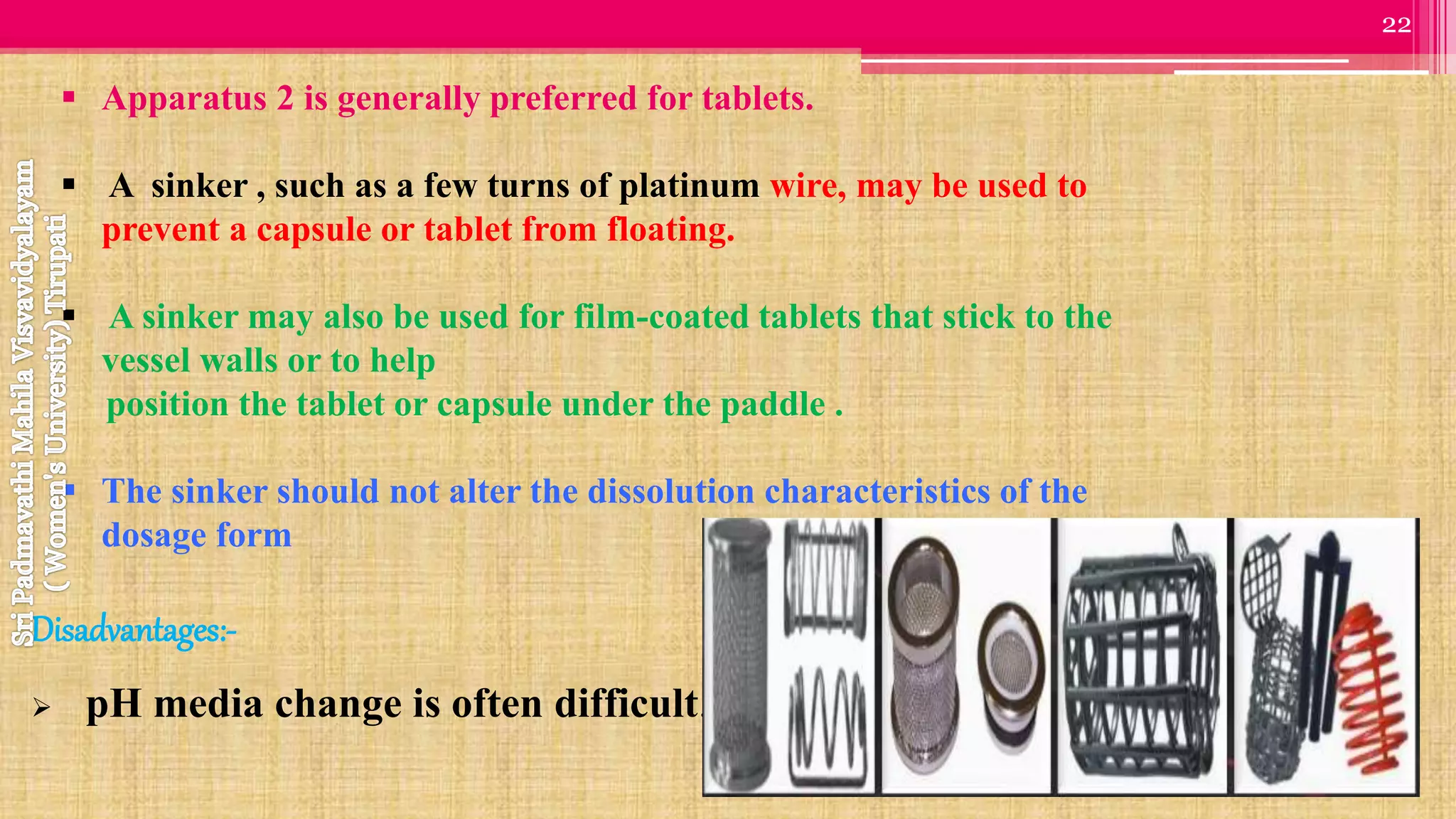
 A sinker , such as a few turns of platinum wire, may be used to
prevent a capsule or tablet from floating.
 A sinker may also be used for film-coated tablets that stick to the
vessel walls or to help
position the tablet or capsule under the paddle .
 The sinker should not alter the dissolution characteristics of the
dosage form
23
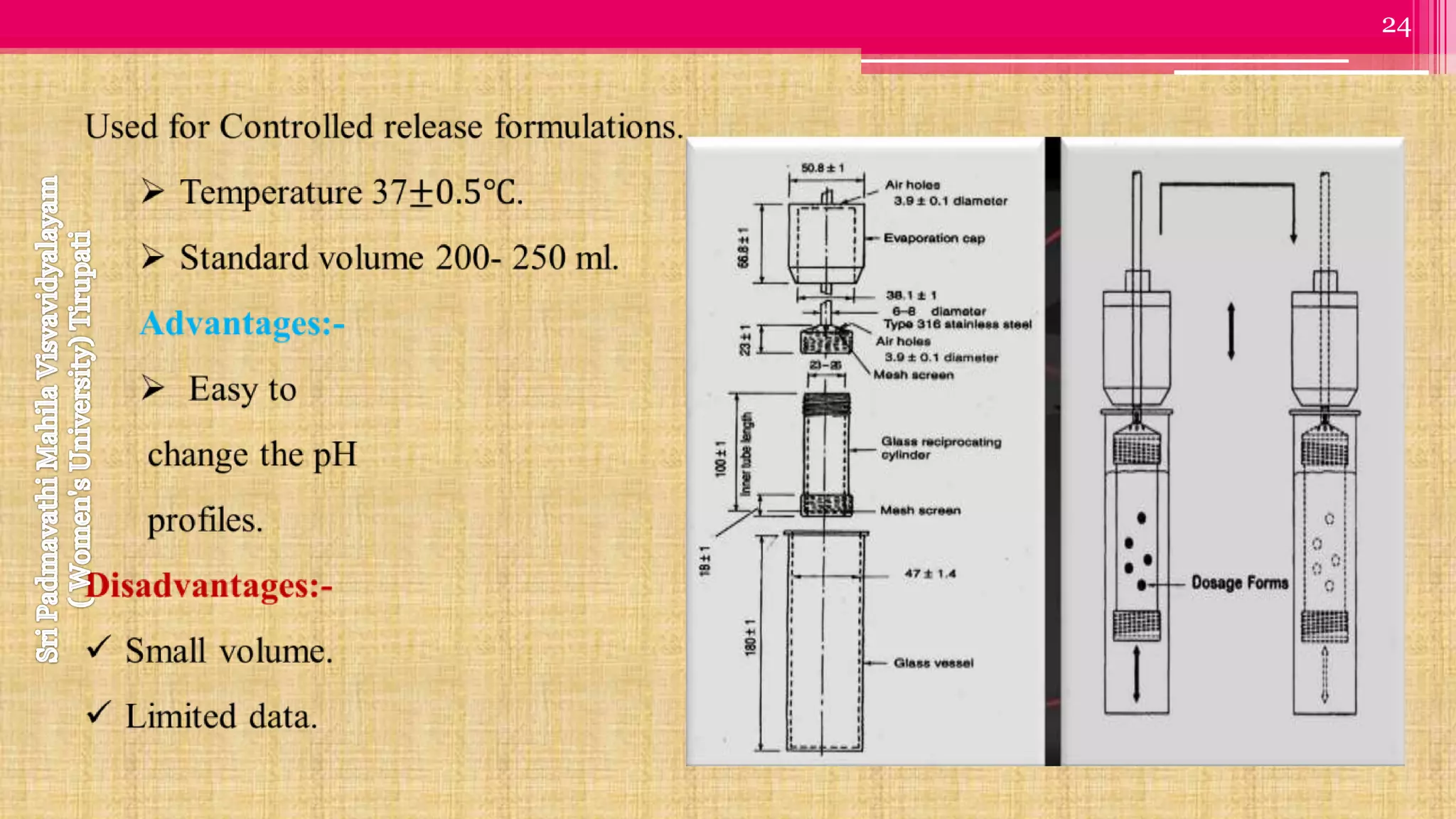
USP Apparatus 3:-
 It is a Reciprocating Cylindrical apparatus.
 This method is less suitable for precise dissolution testing
due to the amount of agitation and vibration involved.
The assembly consists of
 A set of cylindrical flat bottomed glass vessels.
 A set of glass reciprocating cylinders screens.
 Screens made up of non-absorbing or non-reactive
materials.
 Speed 5-35 rpm.
24
25
26
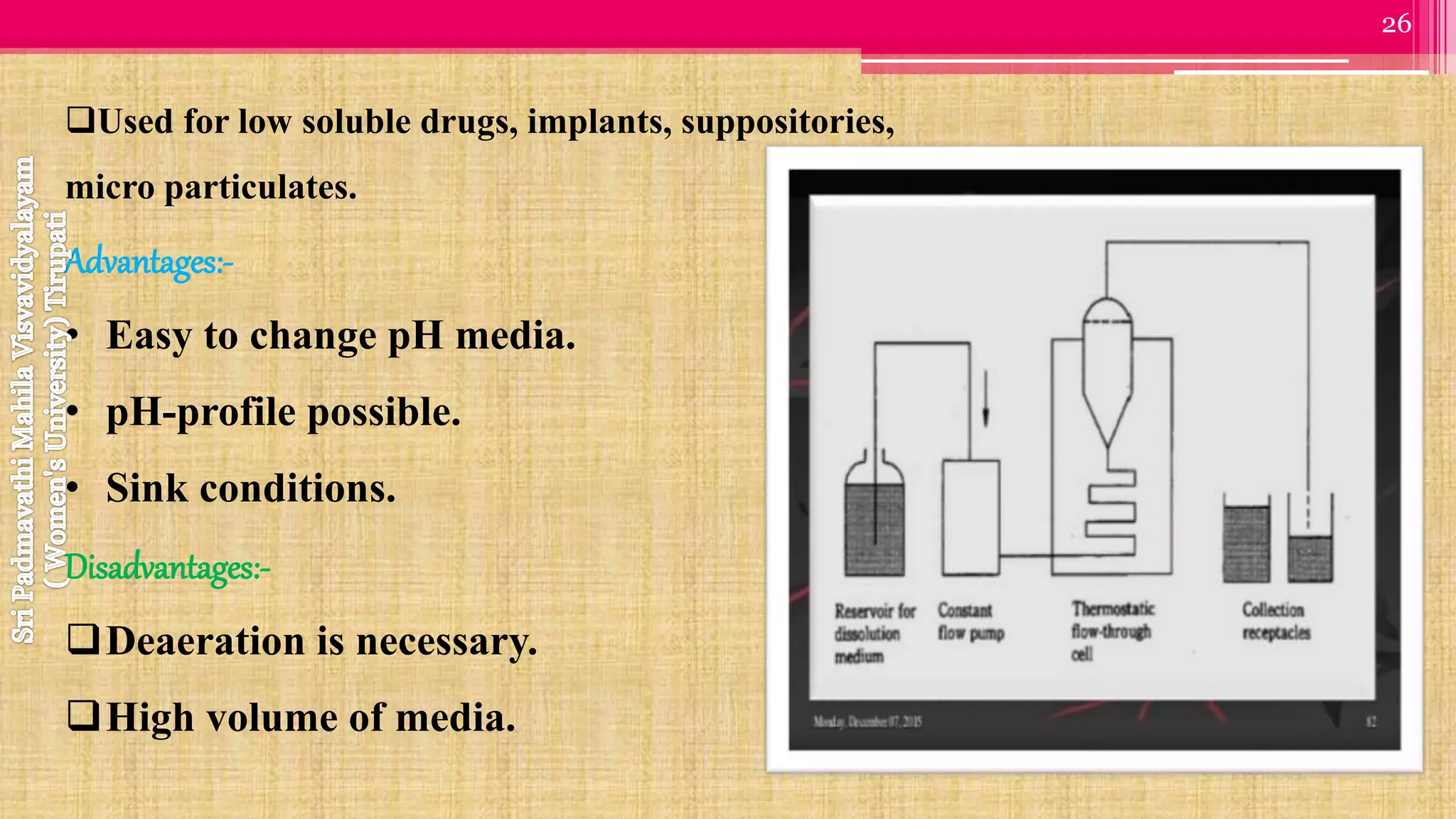
Used for low soluble drugs, implants, suppositories,
micro particulates.
Advantages:-
• Easy to change pH media.
• pH-profile possible.
• Sink conditions.
Disadvantages:-
Deaeration is necessary.
High volume of media.
27
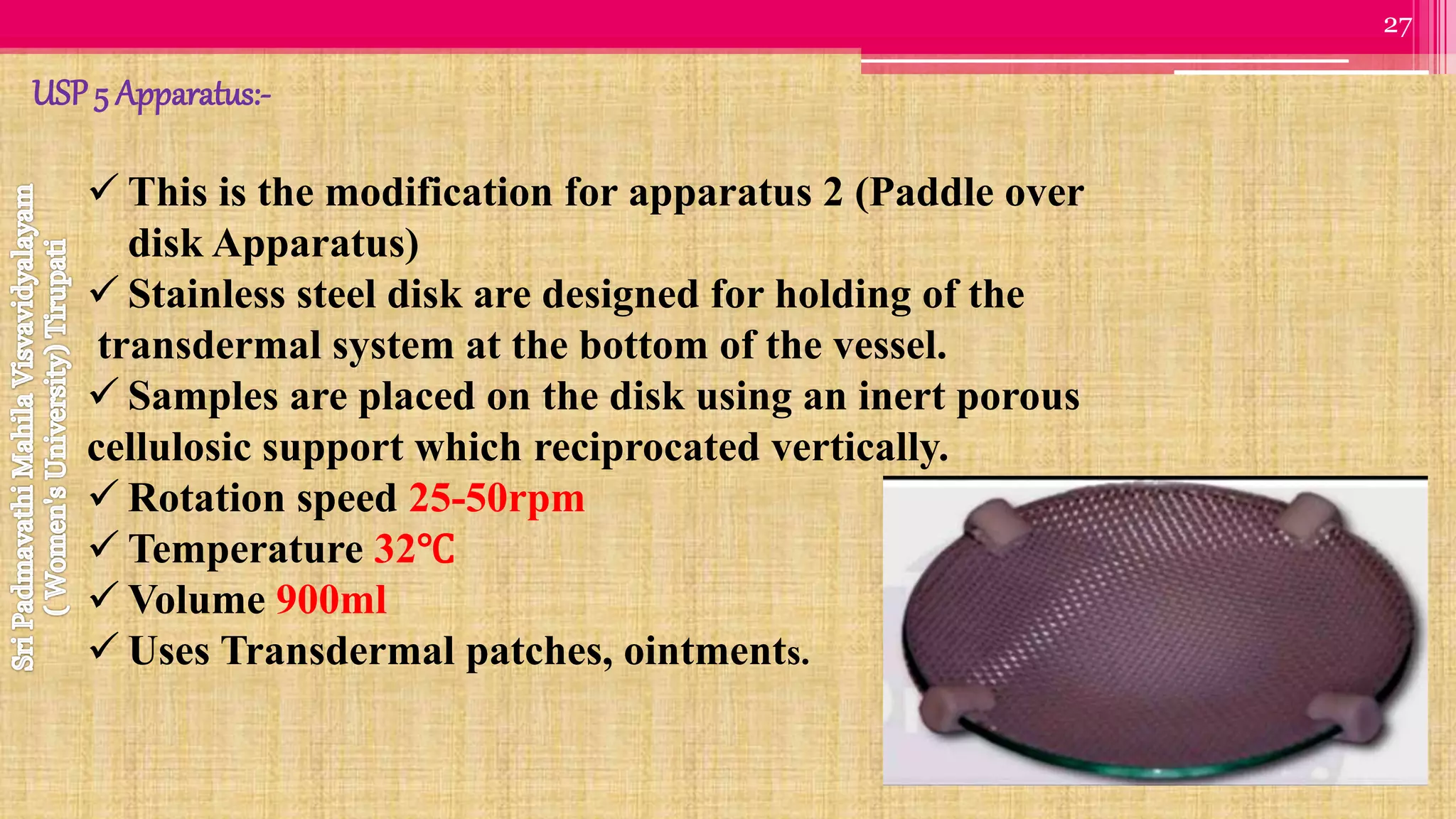
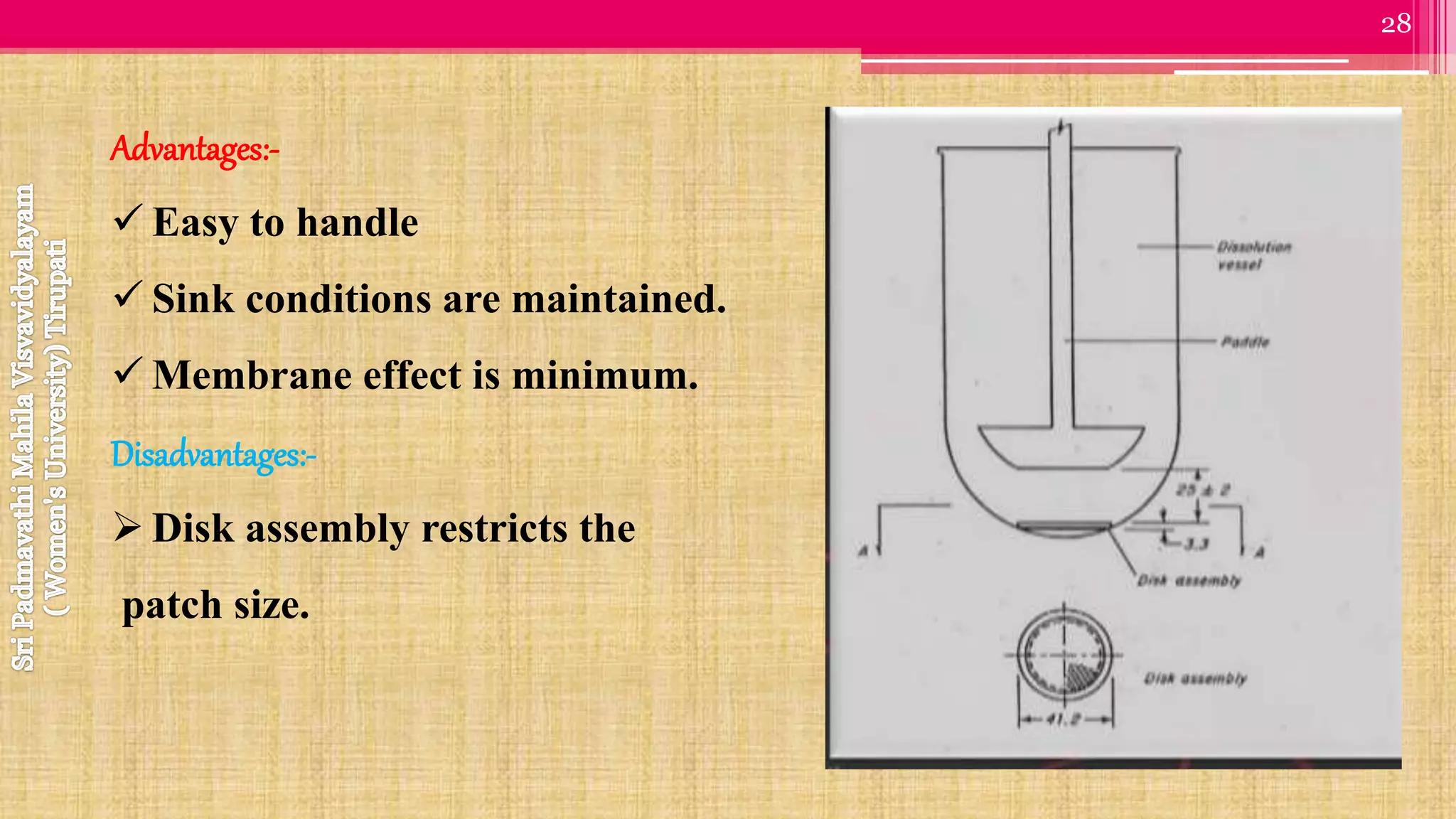
USP 5 Apparatus:-
 This is the modification for apparatus 2 (Paddle over
disk Apparatus)
 Stainless steel disk are designed for holding of the
transdermal system at the bottom of the vessel.
 Samples are placed on the disk using an inert porous
cellulosic support which reciprocated vertically.
 Rotation speed 25-50rpm
 Temperature 32℃
 Volume 900ml
 Uses Transdermal patches, ointments.
28
Advantages:-
 Easy to handle
 Sink conditions are maintained.
 Membrane effect is minimum.
Disadvantages:-
 Disk assembly restricts the
patch size.
29
30
31
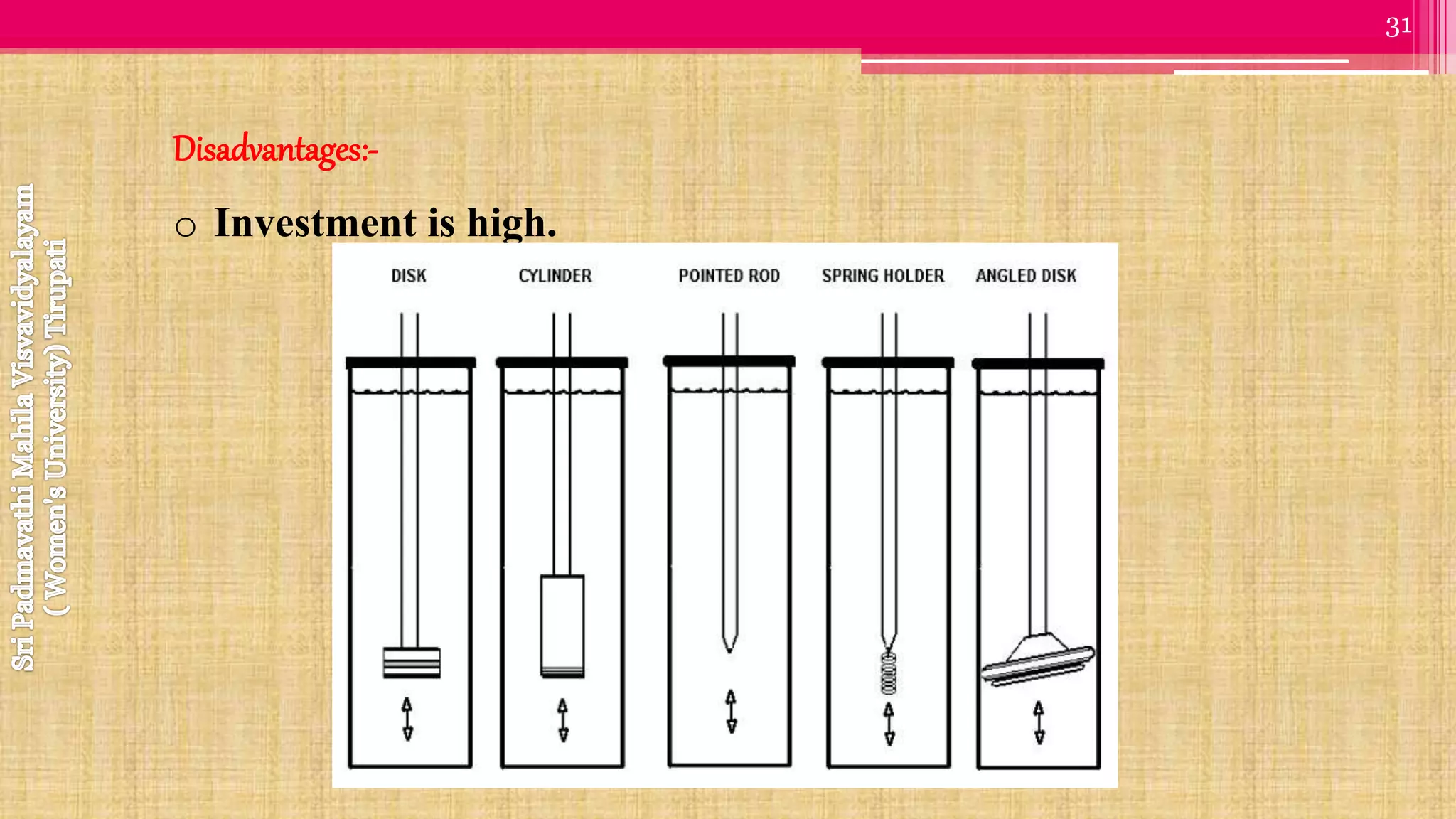
Disadvantages:-
o Investment is high.
32
conclusion
 The ultimate objective of dissolution testing is to ensure adequate
& reproducible bioavailability , prescribed in the monographs of
IP/BP/USP/EP is to obtain about the drug release characteristics
under standardized conditions.
 compendial testing comprises all of the analytical testing required
to prove the identity, efficacy, & safety of drug products before they
are packaged/distributed .
33
References
Brahmankar DM, Jaiswal SB, Biopharmaceutics and
Pharmacokinetics.
Applied Biopharmaceutics and pharmacokinetics 5th
edition Leon Shargel susanna wu-pong Andrew
 Subramanyam CVS , Biopharmaceutics and
Pharmacokinetics.
 www.google.com.
34

Compendial methods of dissolution testing

  • 1.
    1 Compendial methods ofdissolution testing Under The Guidance Of: Prof. R. Nagaraju Institute of Pharmaceutical Technology Sri Padmavathi Mahila Visvavidyalayam ( Women's University) Tirupati Andhra Pradesh, India u Submitted By: P.Reddyswetha 2018MPH40A025 M.Pharmacy 1st Year (Pharmaceutics)
  • 2.
    2 Contents  INTRODUCTION  NEEDOFDISSOLUTION  COMPENDIAL DISSOLUTIONMETHODOLOGY  COMPENDIAL METHODS  DISSOLUTIONAPPARATUS  CONCLUSION  REFERENCES
  • 3.
  • 4.
    4 Why we needtostudy dissolution in pharmaceutical sciences?
  • 5.
    5 Needof dissolutiontesting • soliddrugs absorbed only from the solution . • Invitro test – estimate amount of drug released per unit time. • Invitro dissolution test most reliable, predictors of in vivo performance. • Dissolution –rate limiting factor.
  • 6.
    6 Compendial dissolution methodology Compendial : Reference to pharmacopoeia  compendial dissolution means dissolution of dosage forms as per USP/BP/IP/EP monographs which contain all the specification and apparatus used for it. The USP-NF provides several official methods for carrying out dissolution tests of tablets,capsules and other special products such as transdermal prepartions.  Compendial dissolution apparatus are those described and are generally use for oral dosage forms & suppositories ,transdermal patches etc.,
  • 7.
  • 8.
  • 9.
  • 10.
    10 Dosage form BPIP USP EP Uncoated tablet (A)Basket Apparatus (B)Paddle Apparatus for (A) & (B) use 1000ml vessel,36.5- 37.7C,pH±5%,25±2mm distance between lowest point of vessel and lowest point of rotating element . (c) flow Through Cell Apparatus : 36.5◦- 37.5◦C ,Sampling at 45 mins or as specified, flowrate ± 5% (A)Paddle Apparatus (B)Basket Apparatus. Conditions same as BP (A)Basket Apparatus (B)Paddle Apparatus Conditions used for (A)&(B) are same as in case for BP (A)Basket Apparatus (B)Paddle Apparatus Same conditions for(A)&(B) are same as in case for BP (C)flow Through Apparatus : specifically intended for Lipophillic solid dosage forms such as Suppositories & soft capsules.
  • 11.
    11 Coated tablet Basket andPaddleApparatus PaddleApparatus andBasketApparatus Basket andPaddle Apparatus Basket andPaddle Apparatus E xtended Release ........ ......... (A)Basket and paddle Apparatus: Time –Test time points generally expressed in hours.specimens withdrawn with a tolerence of ± 2% of the stated time (B)Reciprocating cylinder (C)Flow through cell:same condition as in Basket and paddle apparatus ......... Rectal and vaginal ........ ...... ........ Same as solid dosage form
  • 12.
    12 Dosage form BPIP USP EP TRANSDERMAL (1)Disk assembly method:With addition of SSDA inform of a net with an aperture of 125µ.Rotate at 100 rpm/min. (2)Rotating cylinder method: Replace paddle and shaft. Rotate at 100rpm/min ....... (1)PADDLE OVER DISK:paddle apparatus with SS disk assembly (SSDA) holding patch at the bottom vessel , temp 32±0.5◦C (2)Cylinder apparatus :similar to basket apparatus except basket is replaced by SS stirring element & maintain temp.32±0.5◦C (3) Reciprocating holder: Temp 32±0.5◦C applicable to coated drug Same as BP
  • 13.
    13 (3)Cell method: Rotate at100rpm per min Delivery system, reciprocate at a frequency of 30 cycles per min with amplitude of 2 cm or as specified in monograph, time as specified. Delayed release tablet ...... ......... basket and paddle apparatus: Time as per individual monographs. after 2 hours withdrawn sample and carry out test .......
  • 14.
    14 Compendial methods /official methods Beaker methods Open flow – through compartment system Dialysis concept
  • 15.
  • 16.
    16 Dissolution Apparatus:- The dissolutionapparatus are classified into 3 categories based on the presence or absence of sink condition:- Closed-compartment apparatus:- Operated under non sink conditions. Limited volume apparatus. E.g. Beaker type apparatus such as the Rotating basket and the Paddle apparatus.
  • 17.
    17 Open-compartment apparatus:-  Thisis also known as continuous flow- through.  Operated by perfect sink condition.  Dosage form is contained in a column. Dialysis system:-  Operated under sink condition.  These are used for the poorly aqueous soluble drugs.
  • 18.
  • 19.
  • 20.
    20 Size 20 ismore accepted to determine the rate of dissolution. Used for Capsule, Delayed release, Beads. Advantages:-  Full pH change during the test  Easily automated. Disadvantages:-  Basket screen is clogged with gummy particles.  Degassing is particularly important.  Mesh gets corroded by HCl solution.
  • 21.
    21 USP Apparatus 2:- oIt is Paddle type of apparatus. o Used for less soluble drugs. Parts of paddle type apparatus:-  The assembly is same as that of the basket type except the rotating basket is replaced with a paddle.  Used for Capsules, Tablets, Beads, Delayed release. Advantages:- Easy to use. pH change is possible.
  • 22.
    22 Disadvantages:-  pH mediachange is often difficult.  Apparatus 2 is generally preferred for tablets.  A sinker , such as a few turns of platinum wire, may be used to prevent a capsule or tablet from floating.  A sinker may also be used for film-coated tablets that stick to the vessel walls or to help position the tablet or capsule under the paddle .  The sinker should not alter the dissolution characteristics of the dosage form
  • 23.
    23 USP Apparatus 3:- It is a Reciprocating Cylindrical apparatus.  This method is less suitable for precise dissolution testing due to the amount of agitation and vibration involved. The assembly consists of  A set of cylindrical flat bottomed glass vessels.  A set of glass reciprocating cylinders screens.  Screens made up of non-absorbing or non-reactive materials.  Speed 5-35 rpm.
  • 24.
  • 25.
  • 26.
    26 Used for lowsoluble drugs, implants, suppositories, micro particulates. Advantages:- • Easy to change pH media. • pH-profile possible. • Sink conditions. Disadvantages:- Deaeration is necessary. High volume of media.
  • 27.
    27 USP 5 Apparatus:- This is the modification for apparatus 2 (Paddle over disk Apparatus)  Stainless steel disk are designed for holding of the transdermal system at the bottom of the vessel.  Samples are placed on the disk using an inert porous cellulosic support which reciprocated vertically.  Rotation speed 25-50rpm  Temperature 32℃  Volume 900ml  Uses Transdermal patches, ointments.
  • 28.
    28 Advantages:-  Easy tohandle  Sink conditions are maintained.  Membrane effect is minimum. Disadvantages:-  Disk assembly restricts the patch size.
  • 29.
  • 30.
  • 31.
  • 32.
    32 conclusion  The ultimateobjective of dissolution testing is to ensure adequate & reproducible bioavailability , prescribed in the monographs of IP/BP/USP/EP is to obtain about the drug release characteristics under standardized conditions.  compendial testing comprises all of the analytical testing required to prove the identity, efficacy, & safety of drug products before they are packaged/distributed .
  • 33.
    33 References Brahmankar DM, JaiswalSB, Biopharmaceutics and Pharmacokinetics. Applied Biopharmaceutics and pharmacokinetics 5th edition Leon Shargel susanna wu-pong Andrew  Subramanyam CVS , Biopharmaceutics and Pharmacokinetics.  www.google.com.
  • 34.