INTRA NASAL ROUTE
DELIVERY SYSTEMS
Presented by:
Ms. Bhandari Kartiki M.
M. Pharm- Pharmaceutics
(1st year)
1
2
CONTENT
 Introduction
 Anatomy of Nasal Cavity
 Mechanism of Drug Absorption
 Factors Affecting Drug Absorption
 Advantages & Limitations
 Preparation / Formulation Consideration
 Types / Dosage Forms
 Evaluation
 Applications
 References
3
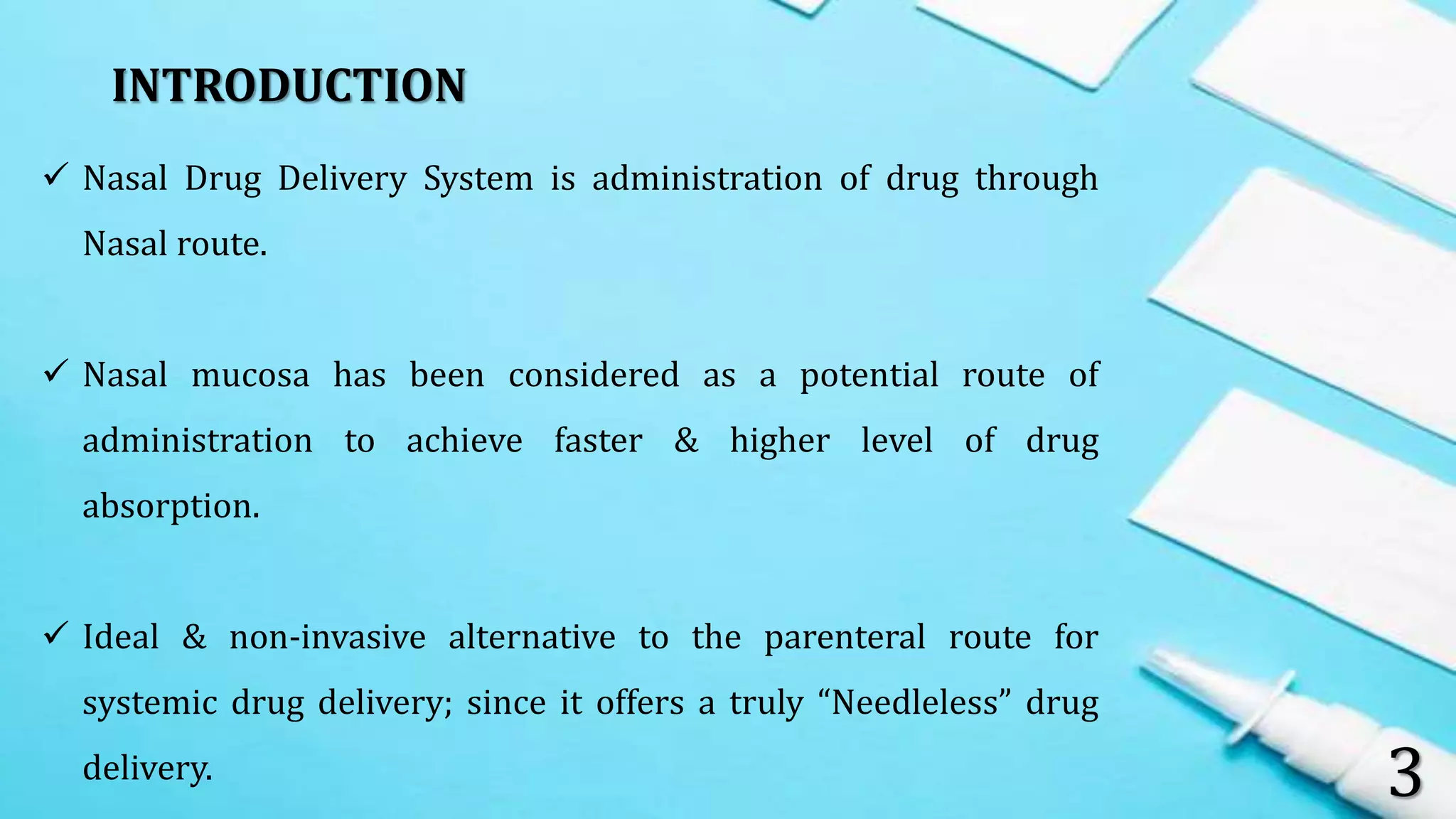
 Nasal Drug Delivery System is administration of drug through
Nasal route.
 Nasal mucosa has been considered as a potential route of
administration to achieve faster & higher level of drug
absorption.
 Ideal & non-invasive alternative to the parenteral route for
systemic drug delivery; since it offers a truly “Needleless” drug
delivery.
INTRODUCTION
ANATOMY OF NASAL CAVITY
4
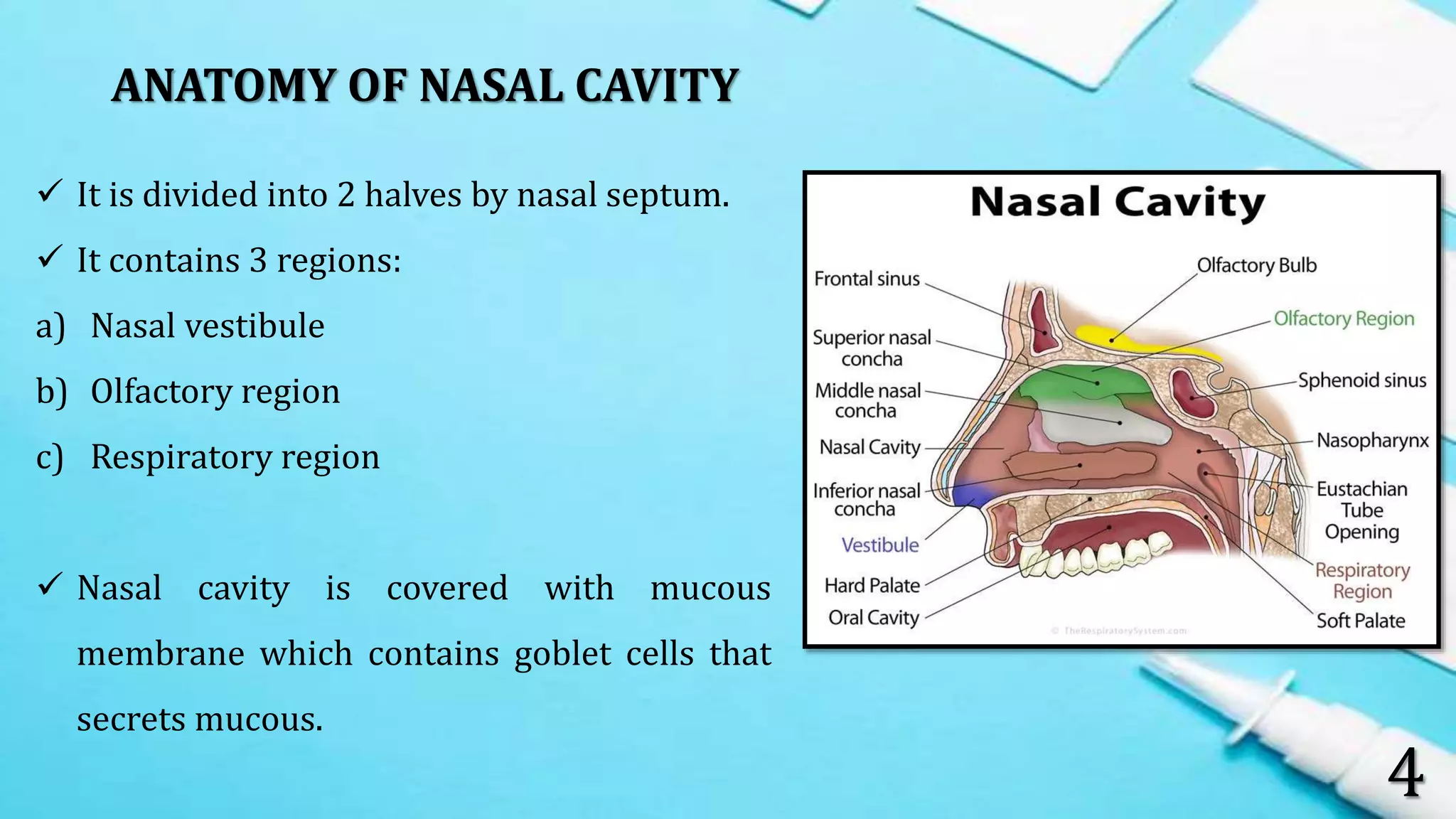
 It is divided into 2 halves by nasal septum.
 It contains 3 regions:
a) Nasal vestibule
b) Olfactory region
c) Respiratory region
 Nasal cavity is covered with mucous
membrane which contains goblet cells that
secrets mucous.
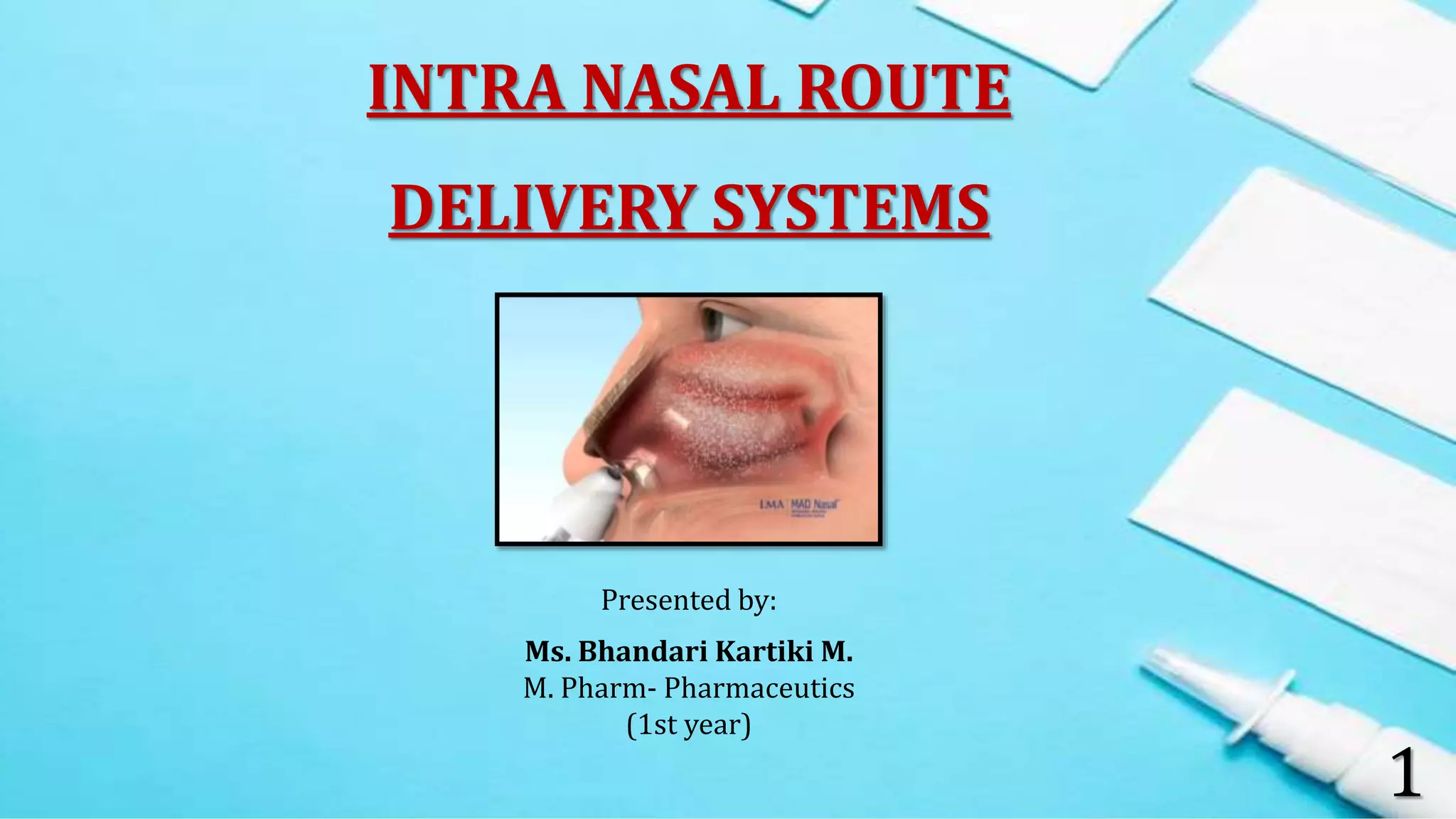
NOSE BRAIN PATHWAY
5
 The olfactory mucosa (smelling area in
nose) is in direct contact with the brain &
CSF.
 Medications absorbed across the olfactory
mucosa directly enter the brain.
 This is termed as nose brain pathway which
offers a rapid, direct route for drug delivery
to the brain.
NOSE BRAIN PATHWAY
6
7
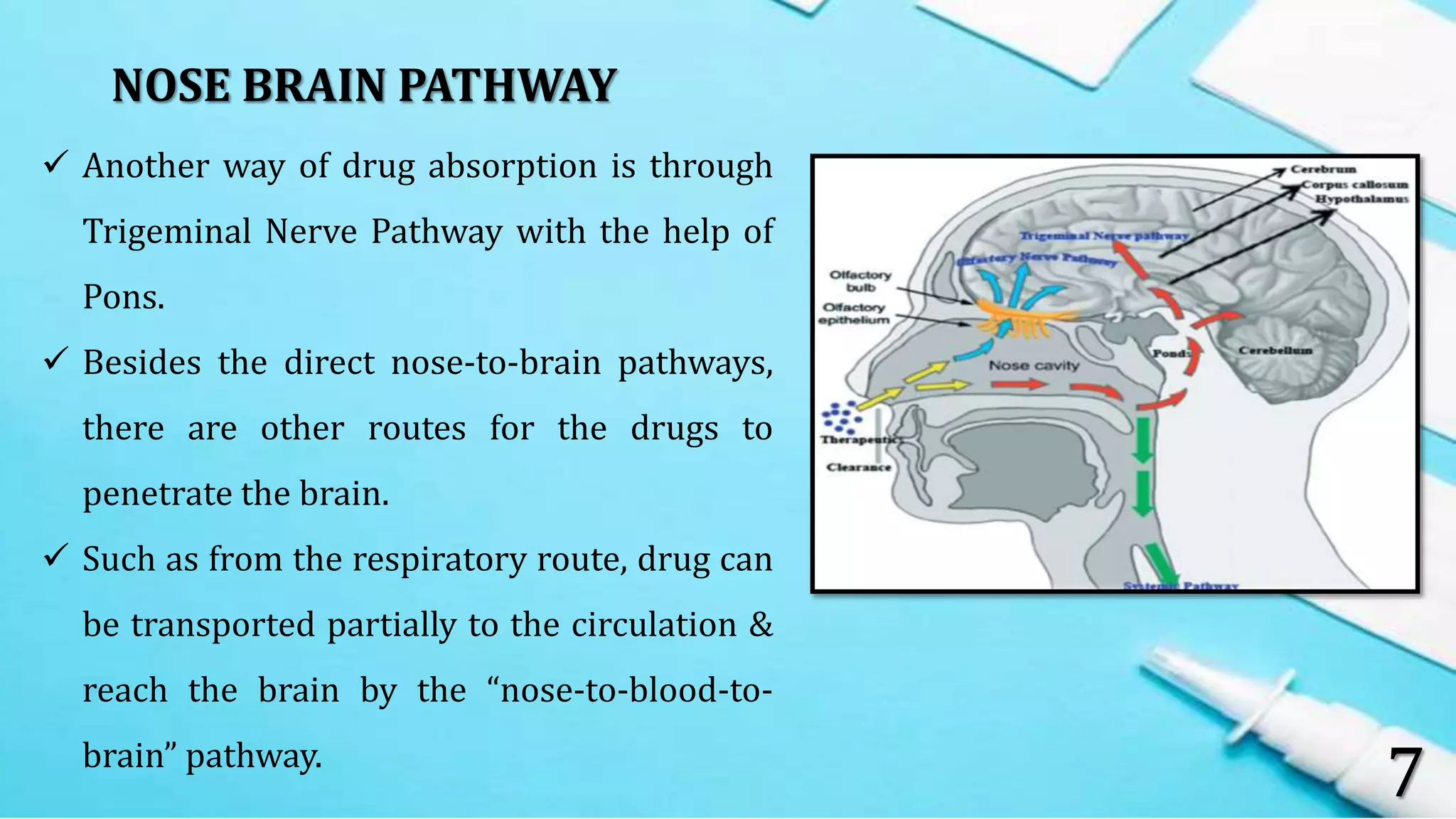
 Another way of drug absorption is through
Trigeminal Nerve Pathway with the help of
Pons.
 Besides the direct nose-to-brain pathways,
there are other routes for the drugs to
penetrate the brain.
 Such as from the respiratory route, drug can
be transported partially to the circulation &
reach the brain by the “nose-to-blood-to-
brain” pathway.
NOSE BRAIN PATHWAY
MECHANISM OF DRUG ABSORPTION
8
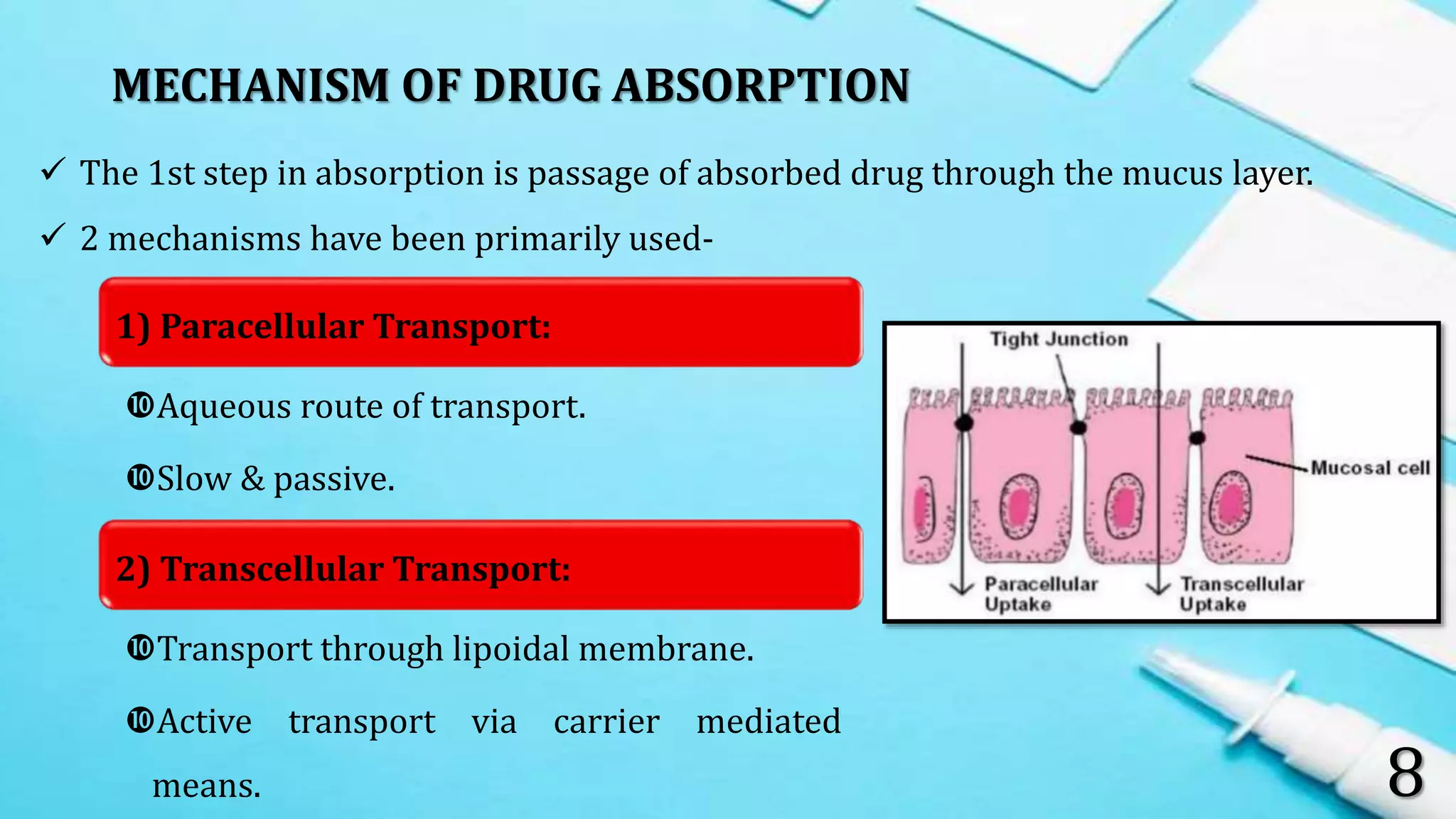
 The 1st step in absorption is passage of absorbed drug through the mucus layer.
 2 mechanisms have been primarily used-
1) Paracellular Transport:
Aqueous route of transport.
Slow & passive.
2) Transcellular Transport:
Transport through lipoidal membrane.
Active transport via carrier mediated
means.
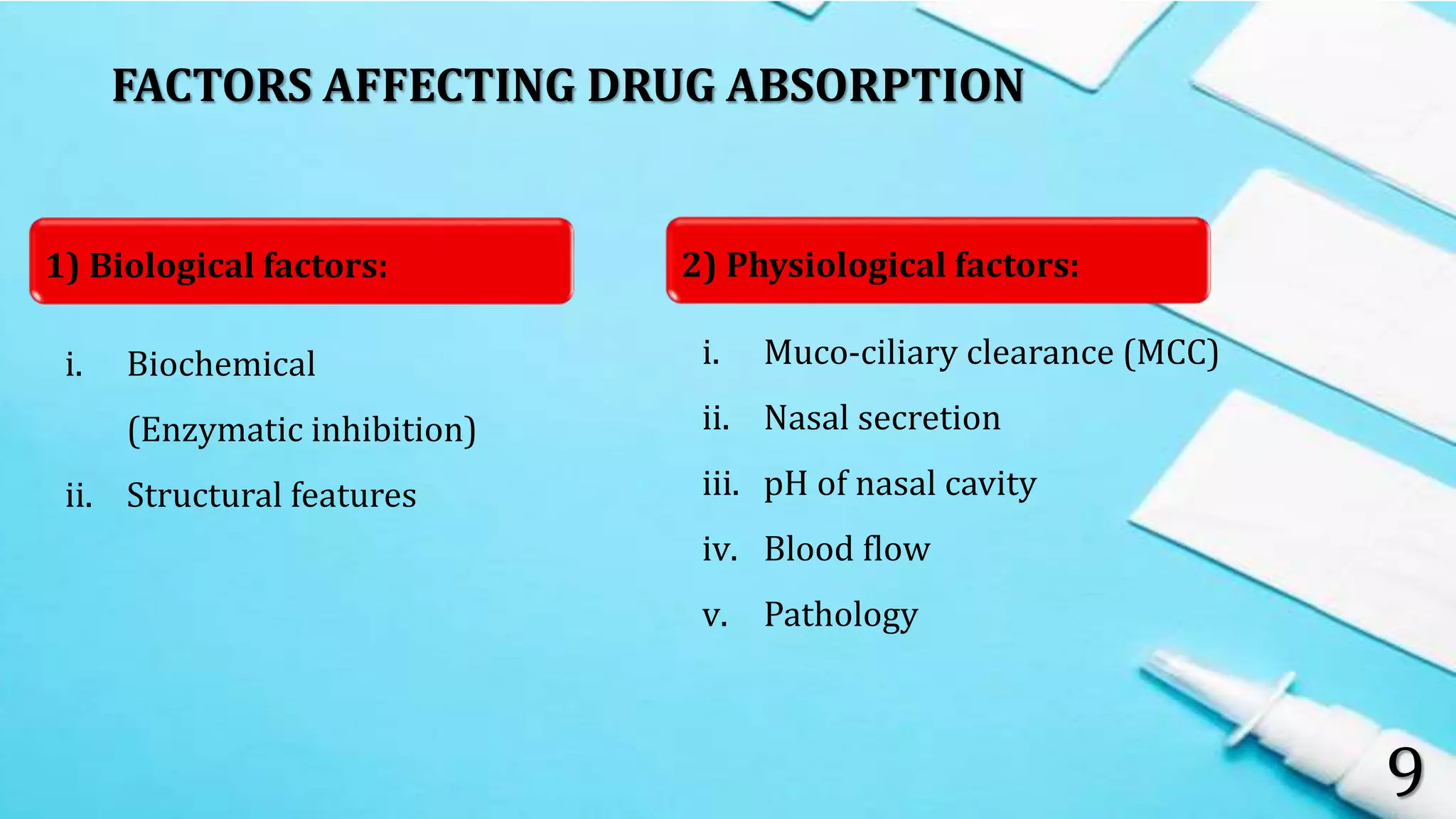
FACTORS AFFECTING DRUG ABSORPTION
9
i. Biochemical
(Enzymatic inhibition)
ii. Structural features
i. Muco-ciliary clearance (MCC)
ii. Nasal secretion
iii. pH of nasal cavity
iv. Blood flow
v. Pathology
2) Physiological factors:
1) Biological factors:
FACTORS AFFECTING DRUG ABSORPTION
10
i. Molecular weight
ii. Particle size
iii. pKa & partition coefficient
iv. Solubility
v. Lipophilicity
i. Dosage form
ii. Contact time & drug concentration
iii. Osmolarity
iv. Viscosity
4) Formulation related factors:
3) Drug related factors:
ADVANTAGES & LIMITATIONS
11
ADVANTAGES LIMITATIONS
Non-invasive, Rapid drug
absorption with quick onset of
action.
Risk of local side effects &
irreversible damage of the cilia on
the nasal mucosa.
Hepatic 1st pass metabolism is
absent.
Absorption surface area is less as
compared to GIT.
Better nasal bioavailability for
smaller drug molecules.
Once the drug administered can not
be removed.
Convenient route for long term
Nasal irritation.
12
ADVANTAGES LIMITATIONS
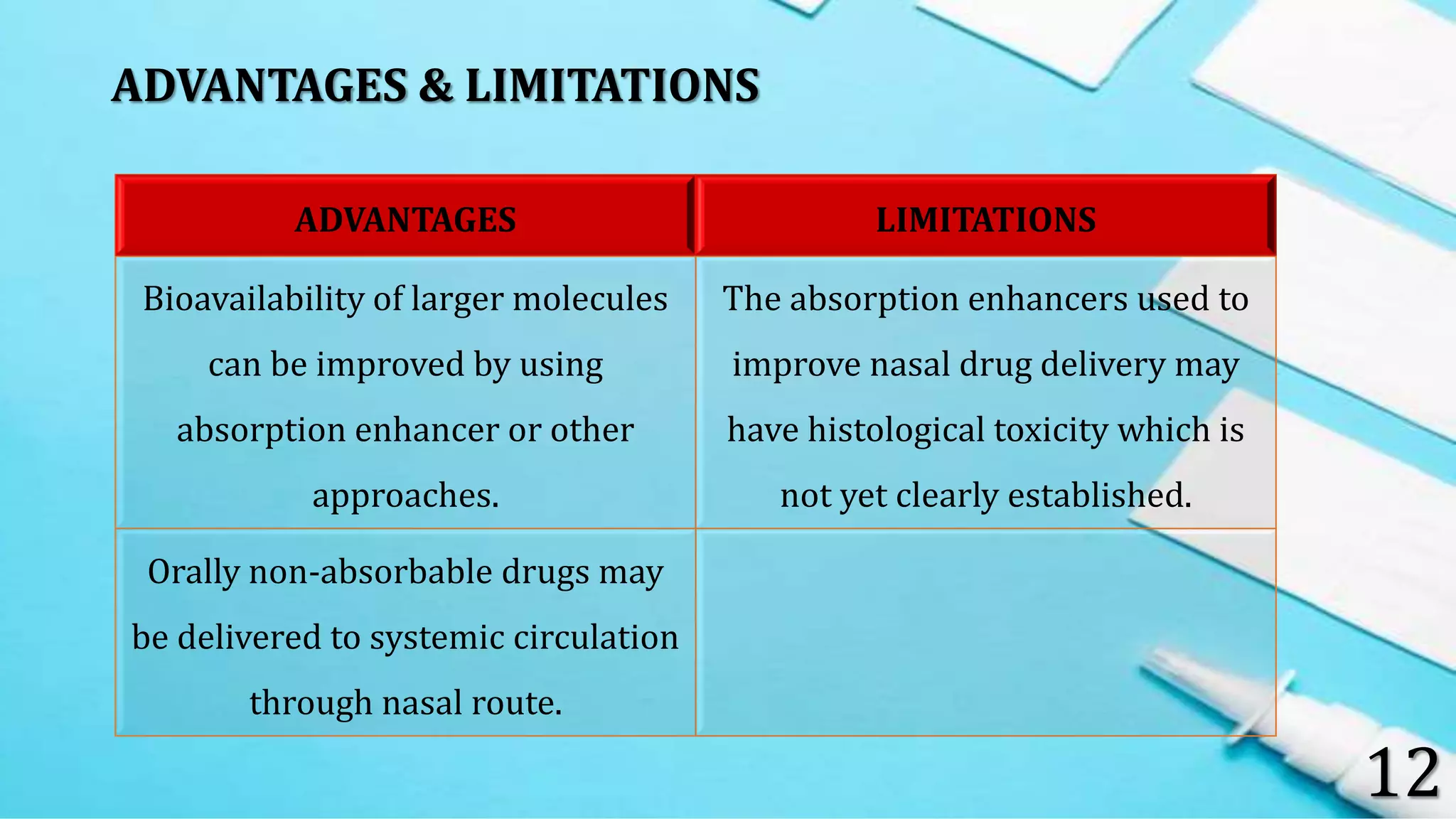
Bioavailability of larger molecules
can be improved by using
absorption enhancer or other
approaches.
The absorption enhancers used to
improve nasal drug delivery may
have histological toxicity which is
not yet clearly established.
Orally non-absorbable drugs may
be delivered to systemic circulation
through nasal route.
ADVANTAGES & LIMITATIONS
PREPARATION / FORMULATION CONSIDERATION
13
 Drugs:
Commonly used drugs are-
i. β2-adrenergic agonist: terbutaline sulphate.
ii. Corticosteroids : budesonide.
iii. Anti cholinergic: ipratropium bromide.
iv. Mast cell stabilizer : sod. cromoglycate.
 Viscosity Modifier:
Increases the viscosity of the solution prolonging the therapeutic
activity of preparation. e.g.: hydroxypropyl cellulose, starch.
14
 Solubilizers:
Aqueous solubility of drug always a limitation for nasal drug delivery.
e.g.: glycol, alcohol, labrasol, transcutol.
In such cases surfactants or cyclodextrins (HP-β-cyclodextrin) are
used, these serve as a biocompatible solubilizer & stabilizer in
combination with lipophilic absorption enhancers.
 Surfactants:
Modify the permeability of nasal mucosa & facilitate the nasal
absorption of drugs. e.g.: SLS, Poly acrylic acid, sod. glycocholate.
PREPARATION / FORMULATION CONSIDERATION
15
 Buffers:
To maintain pH of the formulation between 4.5-7. e.g.: acetate buffer,
citrate buffer, pot. phosphate buffer.
 Tonicity modifier:
Hypertonic solution causes shrinkage of the cell & inhibit loss of drug via
muco ciliary clearance (MCC). E.g.: NaCl, sod. sulfite, sod. acid phosphate.
 Humectant:
To prevent drying of nasal cavity & irritation by antioxidants or
permeation enhancers. e.g.: glycerin, sorbitol, mannitol.
PREPARATION / FORMULATION CONSIDERATION
16
 Bio-Adhesive Polymers:
Increases residence time & maintain higher local concentration of drug.
e.g.: Methylcellulose, CMC, Hydroxyl propyl cellulose.
 Preservatives:
Prevent microbial growth. e.g.: parabens, benzalkonium chloride, phenyl
ethyl alcohol, EDTA.
 Antioxidants:
Prevent drug oxidation. e.g.: sod. meta bisulphite, sod. bisulphite, butylated
hydroxy toluene, tocopherol.
PREPARATION / FORMULATION CONSIDERATION
17
TYPES / DOSAGE FORMS
 Nasal Drops:
Simplest & convenient
systems.
Disadvantage- lack of
dose precision.
 Nasal Spray:
Solution / suspension
forms.
Deliver an exact dose
from 25 - 200 μm.
 Nasal Gel:
High viscosity solution
/ suspension.
Reduce post-nasal drip,
irritation, taste impact.
18
TYPES / DOSAGE FORMS
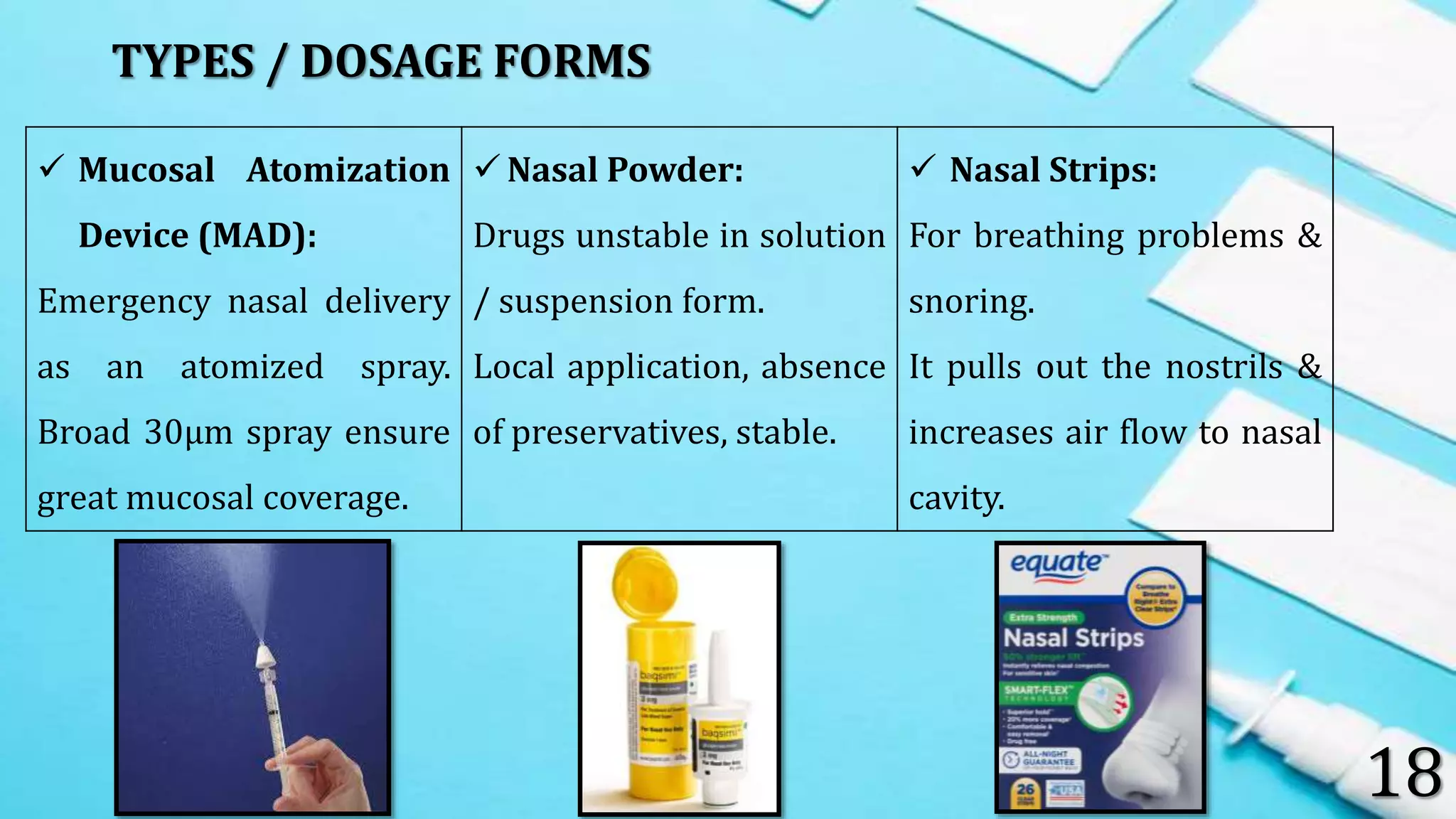
 Mucosal Atomization
Device (MAD):
Emergency nasal delivery
as an atomized spray.
Broad 30μm spray ensure
great mucosal coverage.
 Nasal Powder:
Drugs unstable in solution
/ suspension form.
Local application, absence
of preservatives, stable.
 Nasal Strips:
For breathing problems &
snoring.
It pulls out the nostrils &
increases air flow to nasal
cavity.
TYPES / DOSAGE FORMS (RECENT ADVANCES)
19
 Desmopressin
Nasal Insulin
Spray (Sun
Pharma)
 Anti-
vomiting
Nasal Spray
(Lincoln
Pharma)
 Nasal Spray Flu Vaccines for
Influenza
 Another recent e.g.: SaNOtize’s
Nasal Spray for Covid-19.
EVALUTION
20
Glass
fabricate
d nasal
diffusion
cell with
3
openings:
sampling,
thermom
eter, & a
donor
tube
chamber
Nasal
mucosa
of sheep:
stoned in
distilled
water +
sample
drug
Mucosal
surface
attached
to donor
chamber
tube that
touches
the
diffusion
medium
in
recipient
chamber
At
specific
intervals,
samples
withdraw
n from
recipient
chamber
&
transferr
ed to
amber
colored
ampoules
Drug
content is
estimate
d by
suitable
analytical
techniqu
e.
 In-Vitro Nasal Permeation Studies (Diffusion):
21
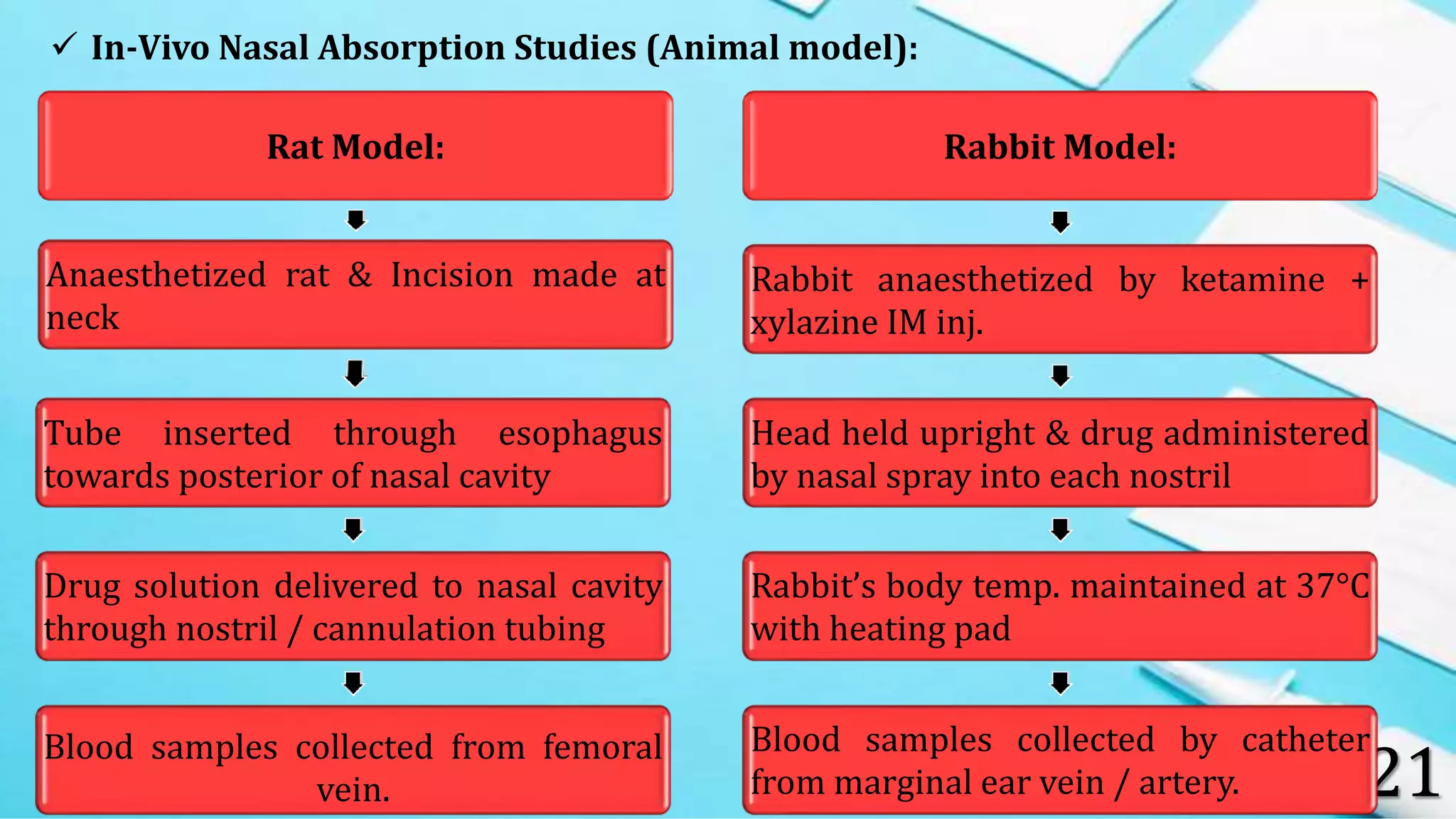
 In-Vivo Nasal Absorption Studies (Animal model):
Rat Model:
Anaesthetized rat & Incision made at
neck
Tube inserted through esophagus
towards posterior of nasal cavity
Drug solution delivered to nasal cavity
through nostril / cannulation tubing
Blood samples collected from femoral
vein.
Rabbit Model:
Rabbit anaesthetized by ketamine +
xylazine IM inj.
Head held upright & drug administered
by nasal spray into each nostril
Rabbit’s body temp. maintained at 37°C
with heating pad
Blood samples collected by catheter
from marginal ear vein / artery.
APPLICATIONS
22
 Delivery of peptide-based & non-peptide pharmaceuticals:
Peptide-based pharmaceuticals E.g.: Insulin, Calcitonin, Pituitary hormones.
Non-peptide pharmaceuticals E.g.: Adrenal corticosteroids, Sex hormone, Vit B.
 Delivery of diagnostic drugs:
E.g.: Secretin, Pentagastrin.
 CNS delivery through nasal route: (Nose-Brain Pathway)
E.g.: Parkinson’s disease, Alzheimer's disease or Pain associated to brain injury.
 Nasal vaccination:
E.g.: FluMist (LAIV) Influenza vaccine.
23
REFERENCES
1. Vyas TK, Shahiwala A, Marathe S, Misra A. Intranasal drug delivery for brain
targeting. Current drug delivery. 2005 Apr 1;2(2):165-75.
2. Appasaheb PS, Manohar SD, Bhanudas SR, Anjaneri N. A review on intranasal
drug delivery system. Journal of Advanced Pharmacy Education & Research
Oct-Dec. 2013 Oct;3(4).
3. Chien Y W. Nasal Drug Delivery & Delivery System. In James Swarbrick. Novel
Drug Delivery System. 2nd ed. New York, Informa Healthcare, 2009; 229-266.
4. Baviskar DT, Jain D. Nasal Drug Delivery System. In Novel drug delivery
systems, Niraliprakashan. 2018; 4th ed: pp. 8.1-8.20.
5. MAD NasalTM - YouTube. Available from:
https://www.youtube.com/watch?v=7sJMaSOoH88
24
THANK YOU!
ANY
QUESTIONS?

INTRANASAL ROUTE DELIVERY SYSTEM

  • 1.
    INTRA NASAL ROUTE DELIVERYSYSTEMS Presented by: Ms. Bhandari Kartiki M. M. Pharm- Pharmaceutics (1st year) 1
  • 2.
    2 CONTENT  Introduction  Anatomyof Nasal Cavity  Mechanism of Drug Absorption  Factors Affecting Drug Absorption  Advantages & Limitations  Preparation / Formulation Consideration  Types / Dosage Forms  Evaluation  Applications  References
  • 3.
    3  Nasal DrugDelivery System is administration of drug through Nasal route.  Nasal mucosa has been considered as a potential route of administration to achieve faster & higher level of drug absorption.  Ideal & non-invasive alternative to the parenteral route for systemic drug delivery; since it offers a truly “Needleless” drug delivery. INTRODUCTION
  • 4.
    ANATOMY OF NASALCAVITY 4  It is divided into 2 halves by nasal septum.  It contains 3 regions: a) Nasal vestibule b) Olfactory region c) Respiratory region  Nasal cavity is covered with mucous membrane which contains goblet cells that secrets mucous.
  • 5.
    NOSE BRAIN PATHWAY 5 The olfactory mucosa (smelling area in nose) is in direct contact with the brain & CSF.  Medications absorbed across the olfactory mucosa directly enter the brain.  This is termed as nose brain pathway which offers a rapid, direct route for drug delivery to the brain.
  • 6.
  • 7.
    7  Another wayof drug absorption is through Trigeminal Nerve Pathway with the help of Pons.  Besides the direct nose-to-brain pathways, there are other routes for the drugs to penetrate the brain.  Such as from the respiratory route, drug can be transported partially to the circulation & reach the brain by the “nose-to-blood-to- brain” pathway. NOSE BRAIN PATHWAY
  • 8.
    MECHANISM OF DRUGABSORPTION 8  The 1st step in absorption is passage of absorbed drug through the mucus layer.  2 mechanisms have been primarily used- 1) Paracellular Transport: Aqueous route of transport. Slow & passive. 2) Transcellular Transport: Transport through lipoidal membrane. Active transport via carrier mediated means.
  • 9.
    FACTORS AFFECTING DRUGABSORPTION 9 i. Biochemical (Enzymatic inhibition) ii. Structural features i. Muco-ciliary clearance (MCC) ii. Nasal secretion iii. pH of nasal cavity iv. Blood flow v. Pathology 2) Physiological factors: 1) Biological factors:
  • 10.
    FACTORS AFFECTING DRUGABSORPTION 10 i. Molecular weight ii. Particle size iii. pKa & partition coefficient iv. Solubility v. Lipophilicity i. Dosage form ii. Contact time & drug concentration iii. Osmolarity iv. Viscosity 4) Formulation related factors: 3) Drug related factors:
  • 11.
    ADVANTAGES & LIMITATIONS 11 ADVANTAGESLIMITATIONS Non-invasive, Rapid drug absorption with quick onset of action. Risk of local side effects & irreversible damage of the cilia on the nasal mucosa. Hepatic 1st pass metabolism is absent. Absorption surface area is less as compared to GIT. Better nasal bioavailability for smaller drug molecules. Once the drug administered can not be removed. Convenient route for long term Nasal irritation.
  • 12.
    12 ADVANTAGES LIMITATIONS Bioavailability oflarger molecules can be improved by using absorption enhancer or other approaches. The absorption enhancers used to improve nasal drug delivery may have histological toxicity which is not yet clearly established. Orally non-absorbable drugs may be delivered to systemic circulation through nasal route. ADVANTAGES & LIMITATIONS
  • 13.
    PREPARATION / FORMULATIONCONSIDERATION 13  Drugs: Commonly used drugs are- i. β2-adrenergic agonist: terbutaline sulphate. ii. Corticosteroids : budesonide. iii. Anti cholinergic: ipratropium bromide. iv. Mast cell stabilizer : sod. cromoglycate.  Viscosity Modifier: Increases the viscosity of the solution prolonging the therapeutic activity of preparation. e.g.: hydroxypropyl cellulose, starch.
  • 14.
    14  Solubilizers: Aqueous solubilityof drug always a limitation for nasal drug delivery. e.g.: glycol, alcohol, labrasol, transcutol. In such cases surfactants or cyclodextrins (HP-β-cyclodextrin) are used, these serve as a biocompatible solubilizer & stabilizer in combination with lipophilic absorption enhancers.  Surfactants: Modify the permeability of nasal mucosa & facilitate the nasal absorption of drugs. e.g.: SLS, Poly acrylic acid, sod. glycocholate. PREPARATION / FORMULATION CONSIDERATION
  • 15.
    15  Buffers: To maintainpH of the formulation between 4.5-7. e.g.: acetate buffer, citrate buffer, pot. phosphate buffer.  Tonicity modifier: Hypertonic solution causes shrinkage of the cell & inhibit loss of drug via muco ciliary clearance (MCC). E.g.: NaCl, sod. sulfite, sod. acid phosphate.  Humectant: To prevent drying of nasal cavity & irritation by antioxidants or permeation enhancers. e.g.: glycerin, sorbitol, mannitol. PREPARATION / FORMULATION CONSIDERATION
  • 16.
    16  Bio-Adhesive Polymers: Increasesresidence time & maintain higher local concentration of drug. e.g.: Methylcellulose, CMC, Hydroxyl propyl cellulose.  Preservatives: Prevent microbial growth. e.g.: parabens, benzalkonium chloride, phenyl ethyl alcohol, EDTA.  Antioxidants: Prevent drug oxidation. e.g.: sod. meta bisulphite, sod. bisulphite, butylated hydroxy toluene, tocopherol. PREPARATION / FORMULATION CONSIDERATION
  • 17.
    17 TYPES / DOSAGEFORMS  Nasal Drops: Simplest & convenient systems. Disadvantage- lack of dose precision.  Nasal Spray: Solution / suspension forms. Deliver an exact dose from 25 - 200 μm.  Nasal Gel: High viscosity solution / suspension. Reduce post-nasal drip, irritation, taste impact.
  • 18.
    18 TYPES / DOSAGEFORMS  Mucosal Atomization Device (MAD): Emergency nasal delivery as an atomized spray. Broad 30μm spray ensure great mucosal coverage.  Nasal Powder: Drugs unstable in solution / suspension form. Local application, absence of preservatives, stable.  Nasal Strips: For breathing problems & snoring. It pulls out the nostrils & increases air flow to nasal cavity.
  • 19.
    TYPES / DOSAGEFORMS (RECENT ADVANCES) 19  Desmopressin Nasal Insulin Spray (Sun Pharma)  Anti- vomiting Nasal Spray (Lincoln Pharma)  Nasal Spray Flu Vaccines for Influenza  Another recent e.g.: SaNOtize’s Nasal Spray for Covid-19.
  • 20.
    EVALUTION 20 Glass fabricate d nasal diffusion cell with 3 openings: sampling, thermom eter,& a donor tube chamber Nasal mucosa of sheep: stoned in distilled water + sample drug Mucosal surface attached to donor chamber tube that touches the diffusion medium in recipient chamber At specific intervals, samples withdraw n from recipient chamber & transferr ed to amber colored ampoules Drug content is estimate d by suitable analytical techniqu e.  In-Vitro Nasal Permeation Studies (Diffusion):
  • 21.
    21  In-Vivo NasalAbsorption Studies (Animal model): Rat Model: Anaesthetized rat & Incision made at neck Tube inserted through esophagus towards posterior of nasal cavity Drug solution delivered to nasal cavity through nostril / cannulation tubing Blood samples collected from femoral vein. Rabbit Model: Rabbit anaesthetized by ketamine + xylazine IM inj. Head held upright & drug administered by nasal spray into each nostril Rabbit’s body temp. maintained at 37°C with heating pad Blood samples collected by catheter from marginal ear vein / artery.
  • 22.
    APPLICATIONS 22  Delivery ofpeptide-based & non-peptide pharmaceuticals: Peptide-based pharmaceuticals E.g.: Insulin, Calcitonin, Pituitary hormones. Non-peptide pharmaceuticals E.g.: Adrenal corticosteroids, Sex hormone, Vit B.  Delivery of diagnostic drugs: E.g.: Secretin, Pentagastrin.  CNS delivery through nasal route: (Nose-Brain Pathway) E.g.: Parkinson’s disease, Alzheimer's disease or Pain associated to brain injury.  Nasal vaccination: E.g.: FluMist (LAIV) Influenza vaccine.
  • 23.
    23 REFERENCES 1. Vyas TK,Shahiwala A, Marathe S, Misra A. Intranasal drug delivery for brain targeting. Current drug delivery. 2005 Apr 1;2(2):165-75. 2. Appasaheb PS, Manohar SD, Bhanudas SR, Anjaneri N. A review on intranasal drug delivery system. Journal of Advanced Pharmacy Education & Research Oct-Dec. 2013 Oct;3(4). 3. Chien Y W. Nasal Drug Delivery & Delivery System. In James Swarbrick. Novel Drug Delivery System. 2nd ed. New York, Informa Healthcare, 2009; 229-266. 4. Baviskar DT, Jain D. Nasal Drug Delivery System. In Novel drug delivery systems, Niraliprakashan. 2018; 4th ed: pp. 8.1-8.20. 5. MAD NasalTM - YouTube. Available from: https://www.youtube.com/watch?v=7sJMaSOoH88
  • 24.