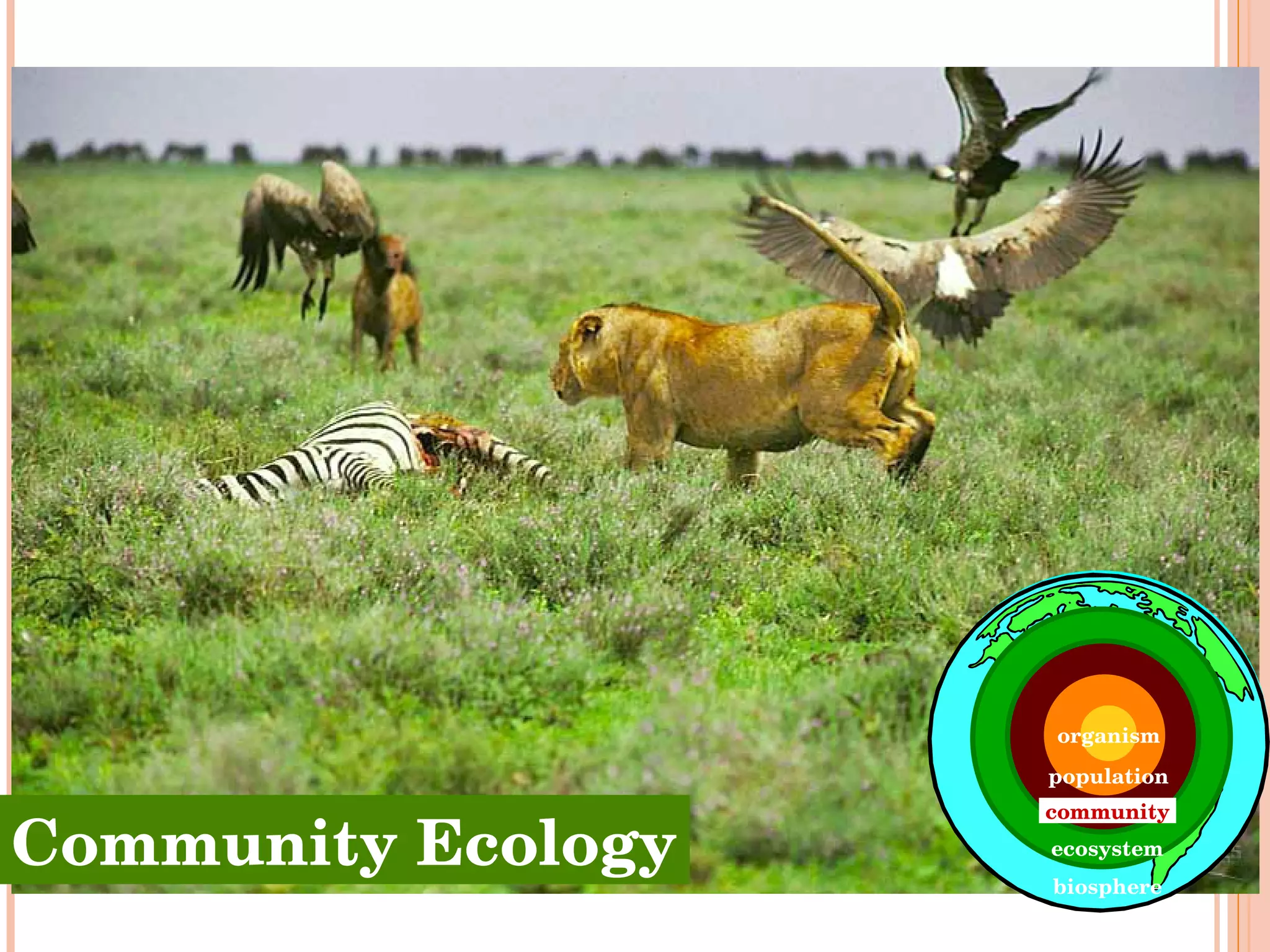
Community Ecology population ecosystem community biosphere organism
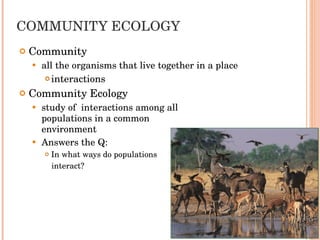
COMMUNITY ECOLOGY Community all the organisms that live together in a place interactions Community Ecology study of  interactions among all  populations in a common  environment Answers the Q: In what ways do populations interact?
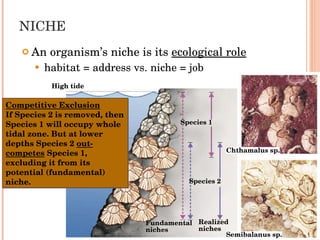
NICHE  An organism’s niche is its  ecological role habitat = address vs. niche = job Fundamental niches Realized niches High tide Low tide Species 1 Species 2 Competitive Exclusion If Species 2 is removed, then Species 1 will occupy whole tidal zone. But at lower depths Species 2  out-competes  Species 1, excluding it from its potential (fundamental) niche. Chthamalus sp. Semibalanus sp.
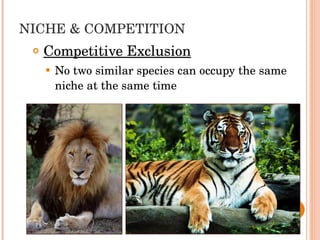
NICHE & COMPETITION Competitive Exclusion No two similar species can occupy the same niche at the same time
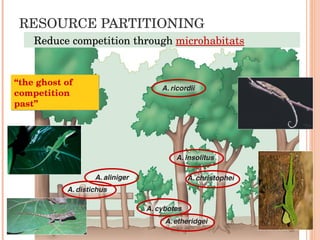
RESOURCE PARTITIONING Reduce competition through  microhabitats “ the ghost of competition past”
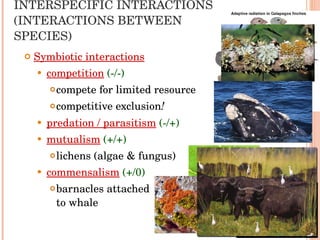
INTERSPECIFIC INTERACTIONS (INTERACTIONS BETWEEN SPECIES)  Symbiotic interactions competition   (-/-) compete for limited resource competitive exclusion ! predation / parasitism   (-/+) mutualism   (+/+) lichens (algae & fungus) commensalism   (+/0) barnacles attached  to whale
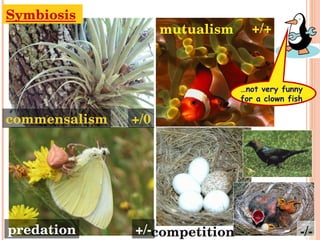
commensalism predation competition Symbiosis mutualism … not very funny for a clown fish  +/0 +/+ +/- -/-
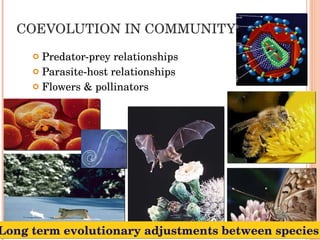
COEVOLUTION IN COMMUNITY Predator-prey relationships Parasite-host relationships Flowers & pollinators Long term evolutionary adjustments between species
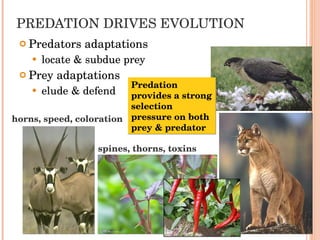
PREDATION DRIVES EVOLUTION Predators adaptations locate & subdue prey Prey adaptations elude & defend spines, thorns, toxins horns, speed, coloration Predation provides a strong selection pressure on both prey & predator
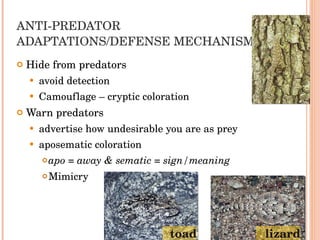
ANTI-PREDATOR ADAPTATIONS/DEFENSE MECHANISMS Hide from predators avoid detection Camouflage – cryptic coloration Warn predators advertise how undesirable you are as prey aposematic coloration apo = away & sematic = sign/meaning Mimicry lizard toad
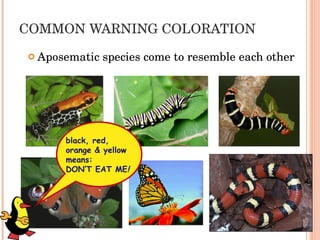
COMMON WARNING COLORATION Aposematic species come to resemble each other black, red,  orange & yellow means: DON’T EAT ME !
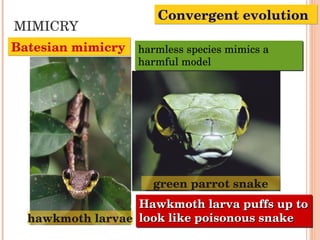
MIMICRY harmless species mimics a harmful model Hawkmoth larva puffs up to look like poisonous snake Batesian mimicry hawkmoth larvae green parrot snake Convergent evolution
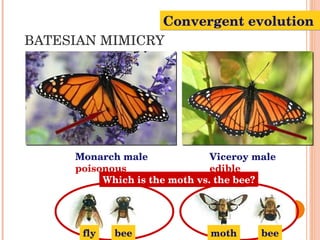
BATESIAN MIMICRY Monarch male poisonous Convergent evolution fly bee moth bee Which is the fly vs. the bee? Which is the moth vs. the bee? Viceroy male edible
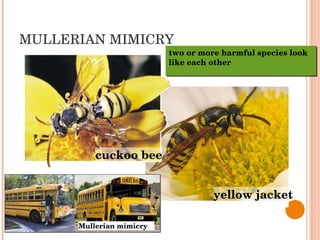
MULLERIAN MIMICRY yellow jacket cuckoo bee two or more harmful species look like each other Mullerian mimicry
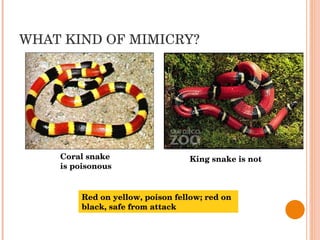
WHAT KIND OF MIMICRY? Coral snake  is poisonous King snake is not Red on yellow, poison fellow; red on black, safe from attack
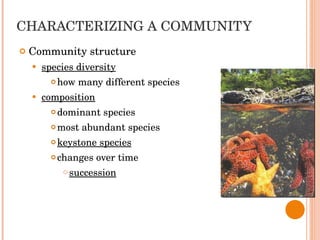
CHARACTERIZING A COMMUNITY Community structure species diversity how many different species composition dominant species most abundant species  keystone species changes over time succession
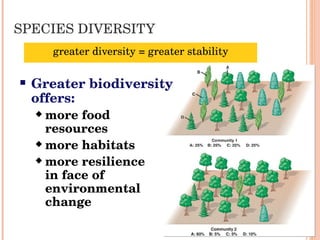
SPECIES DIVERSITY greater diversity = greater stability Greater biodiversity offers: more food  resources more habitats more resilience  in face of environmental change
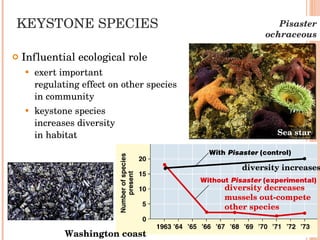
KEYSTONE SPECIES Influential ecological role exert important  regulating effect on other species  in community  keystone species  increases diversity  in habitat Pisaster ochraceous Sea star diversity decreases mussels out-compete other species diversity increases Washington coast
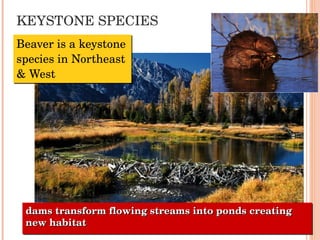
KEYSTONE SPECIES Beaver is a keystone species in Northeast & West dams transform flowing streams into ponds creating new habitat
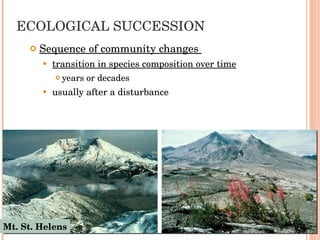
ECOLOGICAL SUCCESSION Sequence of community changes  transition in species composition over time   years or decades usually after a disturbance Mt. St. Helens
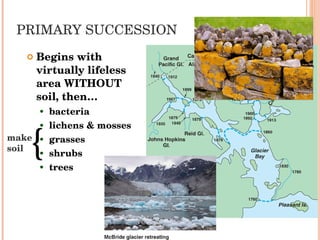
PRIMARY SUCCESSION Begins with virtually lifeless area WITHOUT soil, then… bacteria lichens & mosses grasses shrubs trees make soil {
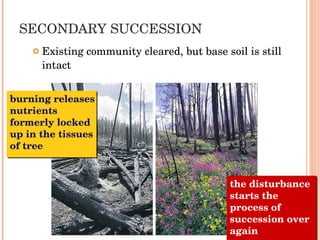
SECONDARY SUCCESSION Existing community cleared, but base soil is still intact burning releases nutrients formerly locked up in the tissues of tree the disturbance starts the process of succession over again
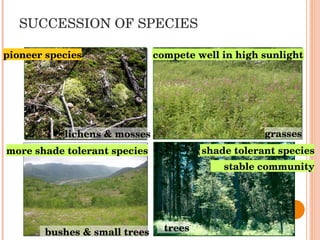
SUCCESSION OF SPECIES lichens & mosses grasses trees bushes & small trees pioneer species compete well in high sunlight more shade tolerant species shade tolerant species stable community
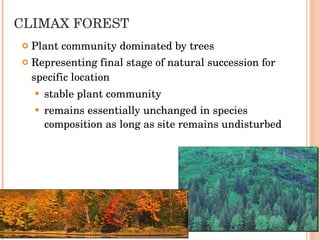
CLIMAX FOREST Plant community dominated by trees  Representing final stage of natural succession for specific location   stable plant community remains essentially unchanged in species composition as long as site remains undisturbed
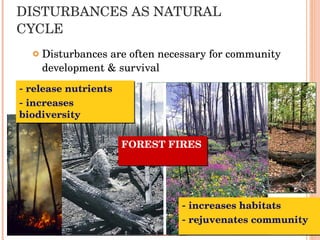
DISTURBANCES AS NATURAL CYCLE  Disturbances are often necessary for community development & survival release nutrients increases biodiversity increases habitats rejuvenates community FOREST FIRES
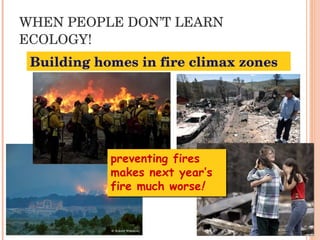
WHEN PEOPLE DON’T LEARN ECOLOGY! Building homes in fire climax zones preventing fires makes next year’s fire much worse !
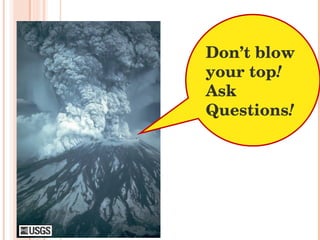
2007-2008 Don’t blow  your top ! Ask Questions !

Community Ecology

  • 1.
    Community Ecology populationecosystem community biosphere organism
  • 2.
    COMMUNITY ECOLOGY Communityall the organisms that live together in a place interactions Community Ecology study of interactions among all populations in a common environment Answers the Q: In what ways do populations interact?
  • 3.
    NICHE Anorganism’s niche is its ecological role habitat = address vs. niche = job Fundamental niches Realized niches High tide Low tide Species 1 Species 2 Competitive Exclusion If Species 2 is removed, then Species 1 will occupy whole tidal zone. But at lower depths Species 2 out-competes Species 1, excluding it from its potential (fundamental) niche. Chthamalus sp. Semibalanus sp.
  • 4.
    NICHE & COMPETITIONCompetitive Exclusion No two similar species can occupy the same niche at the same time
  • 5.
    RESOURCE PARTITIONING Reducecompetition through microhabitats “ the ghost of competition past”
  • 6.
    INTERSPECIFIC INTERACTIONS (INTERACTIONSBETWEEN SPECIES) Symbiotic interactions competition (-/-) compete for limited resource competitive exclusion ! predation / parasitism (-/+) mutualism (+/+) lichens (algae & fungus) commensalism (+/0) barnacles attached to whale
  • 7.
    commensalism predation competitionSymbiosis mutualism … not very funny for a clown fish +/0 +/+ +/- -/-
  • 8.
    COEVOLUTION IN COMMUNITYPredator-prey relationships Parasite-host relationships Flowers & pollinators Long term evolutionary adjustments between species
  • 9.
    PREDATION DRIVES EVOLUTIONPredators adaptations locate & subdue prey Prey adaptations elude & defend spines, thorns, toxins horns, speed, coloration Predation provides a strong selection pressure on both prey & predator
  • 10.
    ANTI-PREDATOR ADAPTATIONS/DEFENSE MECHANISMSHide from predators avoid detection Camouflage – cryptic coloration Warn predators advertise how undesirable you are as prey aposematic coloration apo = away & sematic = sign/meaning Mimicry lizard toad
  • 11.
    COMMON WARNING COLORATIONAposematic species come to resemble each other black, red, orange & yellow means: DON’T EAT ME !
  • 12.
    MIMICRY harmless speciesmimics a harmful model Hawkmoth larva puffs up to look like poisonous snake Batesian mimicry hawkmoth larvae green parrot snake Convergent evolution
  • 13.
    BATESIAN MIMICRY Monarchmale poisonous Convergent evolution fly bee moth bee Which is the fly vs. the bee? Which is the moth vs. the bee? Viceroy male edible
  • 14.
    MULLERIAN MIMICRY yellowjacket cuckoo bee two or more harmful species look like each other Mullerian mimicry
  • 15.
    WHAT KIND OFMIMICRY? Coral snake is poisonous King snake is not Red on yellow, poison fellow; red on black, safe from attack
  • 16.
    CHARACTERIZING A COMMUNITYCommunity structure species diversity how many different species composition dominant species most abundant species keystone species changes over time succession
  • 17.
    SPECIES DIVERSITY greaterdiversity = greater stability Greater biodiversity offers: more food resources more habitats more resilience in face of environmental change
  • 18.
    KEYSTONE SPECIES Influentialecological role exert important regulating effect on other species in community keystone species increases diversity in habitat Pisaster ochraceous Sea star diversity decreases mussels out-compete other species diversity increases Washington coast
  • 19.
    KEYSTONE SPECIES Beaveris a keystone species in Northeast & West dams transform flowing streams into ponds creating new habitat
  • 20.
    ECOLOGICAL SUCCESSION Sequenceof community changes transition in species composition over time years or decades usually after a disturbance Mt. St. Helens
  • 21.
    PRIMARY SUCCESSION Beginswith virtually lifeless area WITHOUT soil, then… bacteria lichens & mosses grasses shrubs trees make soil {
  • 22.
    SECONDARY SUCCESSION Existingcommunity cleared, but base soil is still intact burning releases nutrients formerly locked up in the tissues of tree the disturbance starts the process of succession over again
  • 23.
    SUCCESSION OF SPECIESlichens & mosses grasses trees bushes & small trees pioneer species compete well in high sunlight more shade tolerant species shade tolerant species stable community
  • 24.
    CLIMAX FOREST Plantcommunity dominated by trees Representing final stage of natural succession for specific location stable plant community remains essentially unchanged in species composition as long as site remains undisturbed
  • 25.
    DISTURBANCES AS NATURALCYCLE Disturbances are often necessary for community development & survival release nutrients increases biodiversity increases habitats rejuvenates community FOREST FIRES
  • 26.
    WHEN PEOPLE DON’TLEARN ECOLOGY! Building homes in fire climax zones preventing fires makes next year’s fire much worse !
  • 27.
    2007-2008 Don’t blow your top ! Ask Questions !

Editor's Notes

  • #6 Resource partitioning among Dominican Republic lizards. Seven species of Anolis lizards live in close proximity, and all feed on insects and other small arthropods. However, competition for food is reduced because each lizard species has a different perch, thus occupying a distinct niche. Sympatric species often partition available resources, reducing competition between them.
  • #10 Predation provides a strong selective pressure on prey populations. Ay feature that would decrease the probability of capture should be strongly favored.