Communities,
Biomes, &
Ecosystems
CH3
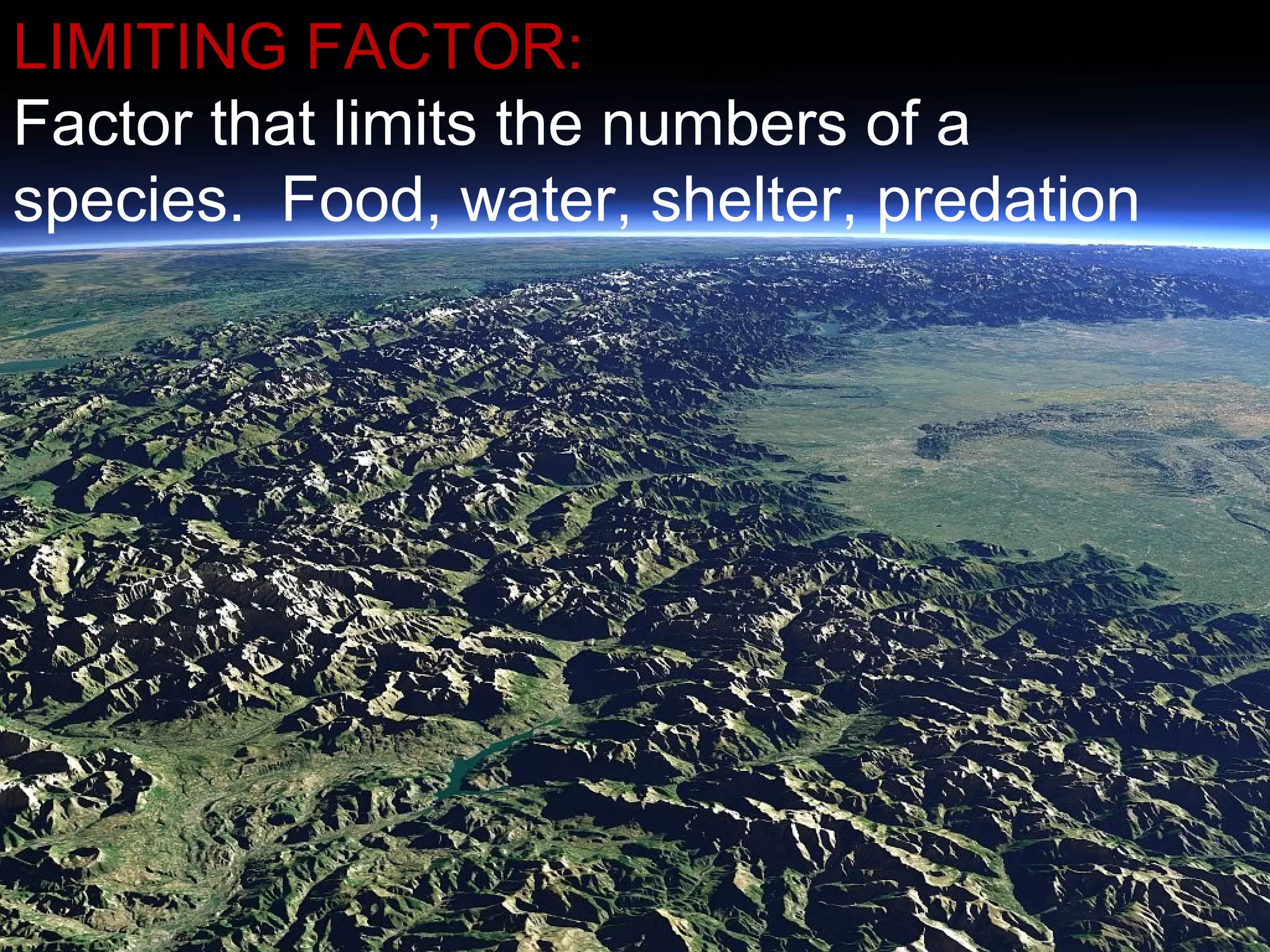
LIMITING FACTOR: Any biotic or abiotic
Factor that limits the numbers of a
species. Food, water, shelter, predation
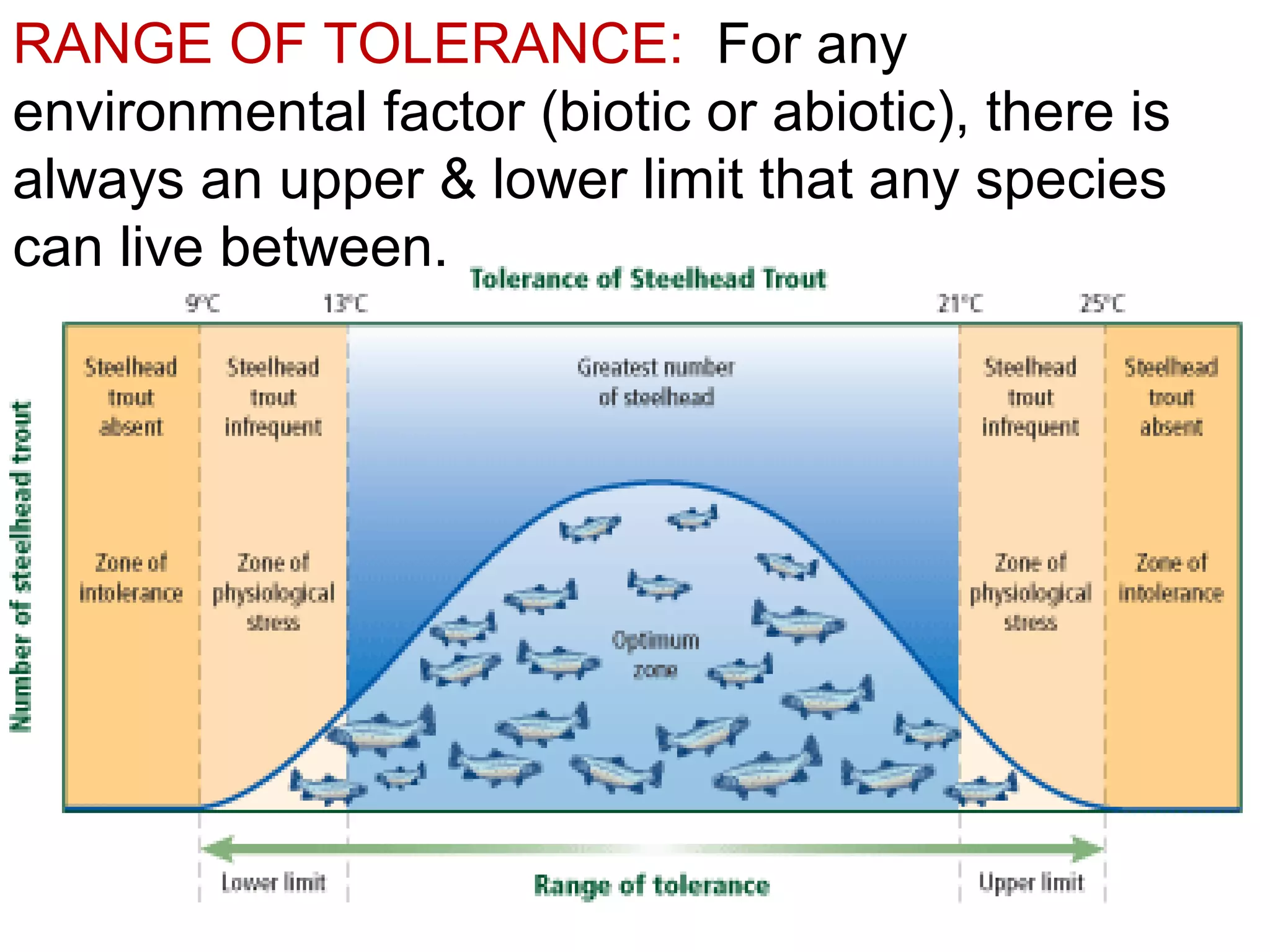
RANGE OF TOLERANCE: For any
environmental factor (biotic or abiotic), there is
always an upper & lower limit that any species
can live between.
ECOLOGICAL SUCCESSION
Ecosystems may change, so that one
community may replace another because of
changes in biotic and abiotic factors.
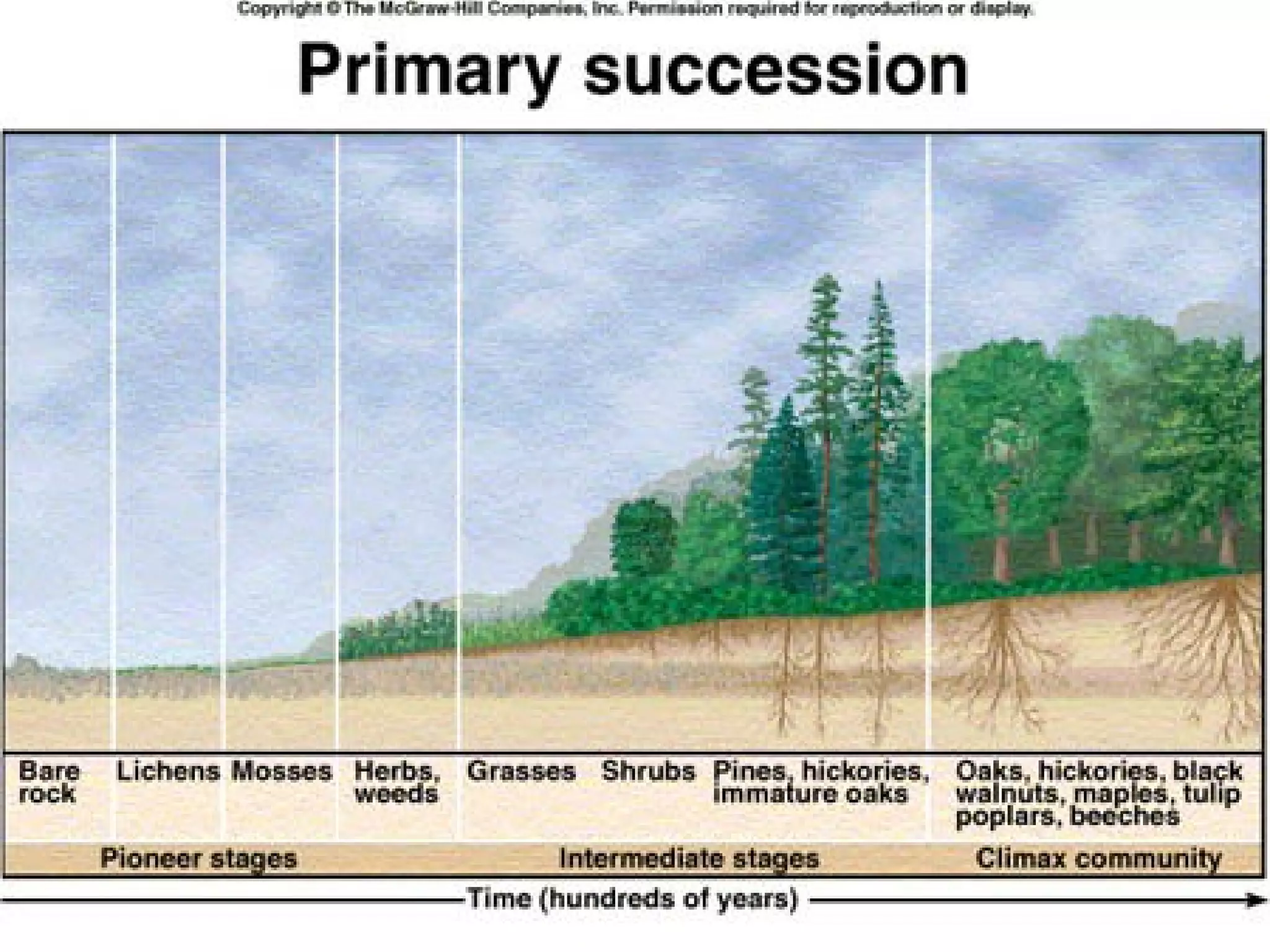
Primary Succession: A community is established
on exposed rock that does not have any soil.
Pioneer species break down rock, make soil.
Other species then move in, until a stable,
mature Climax Community is established.
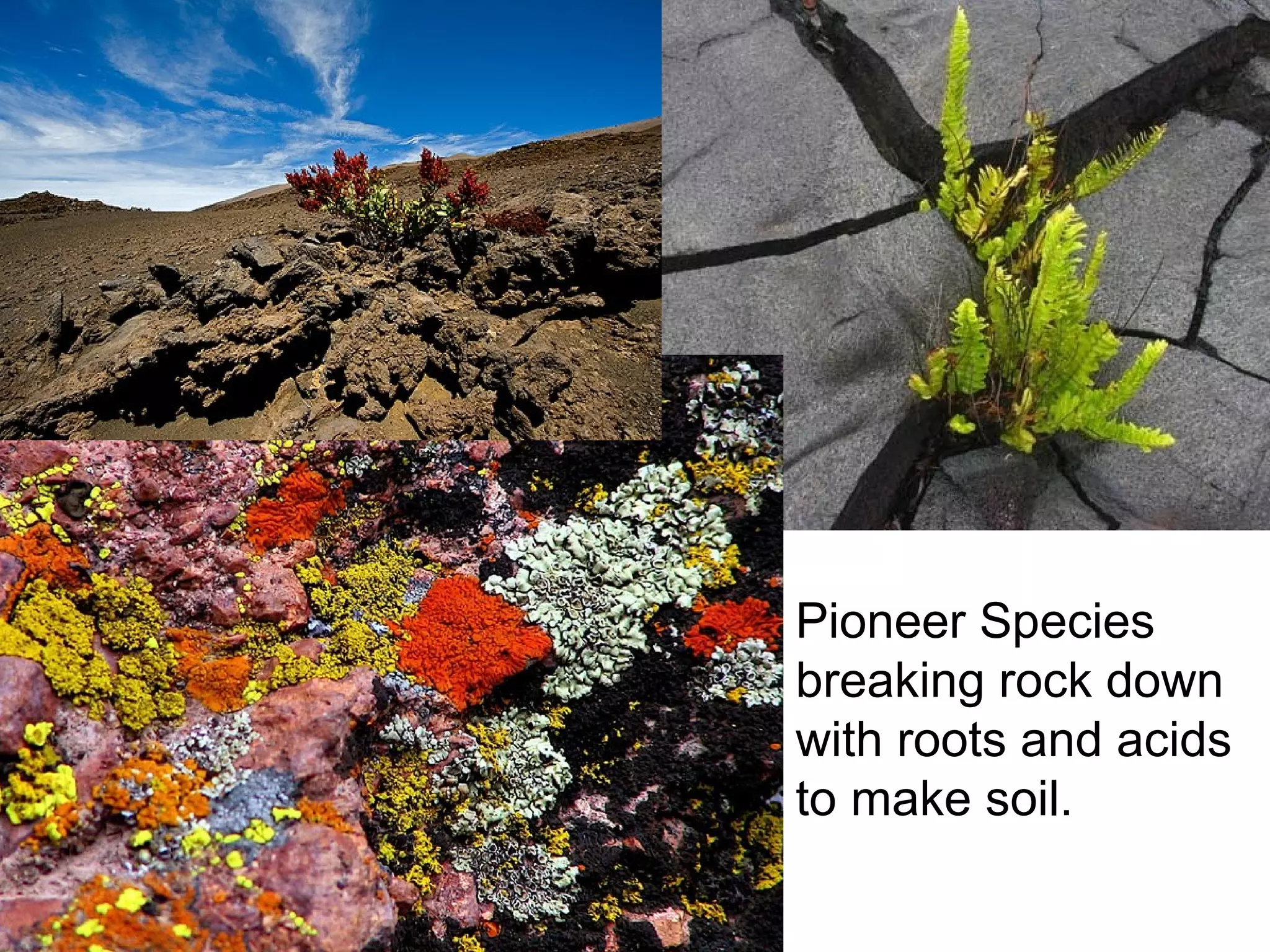
Pioneer Species
breaking rock down
with roots and acids
to make soil.
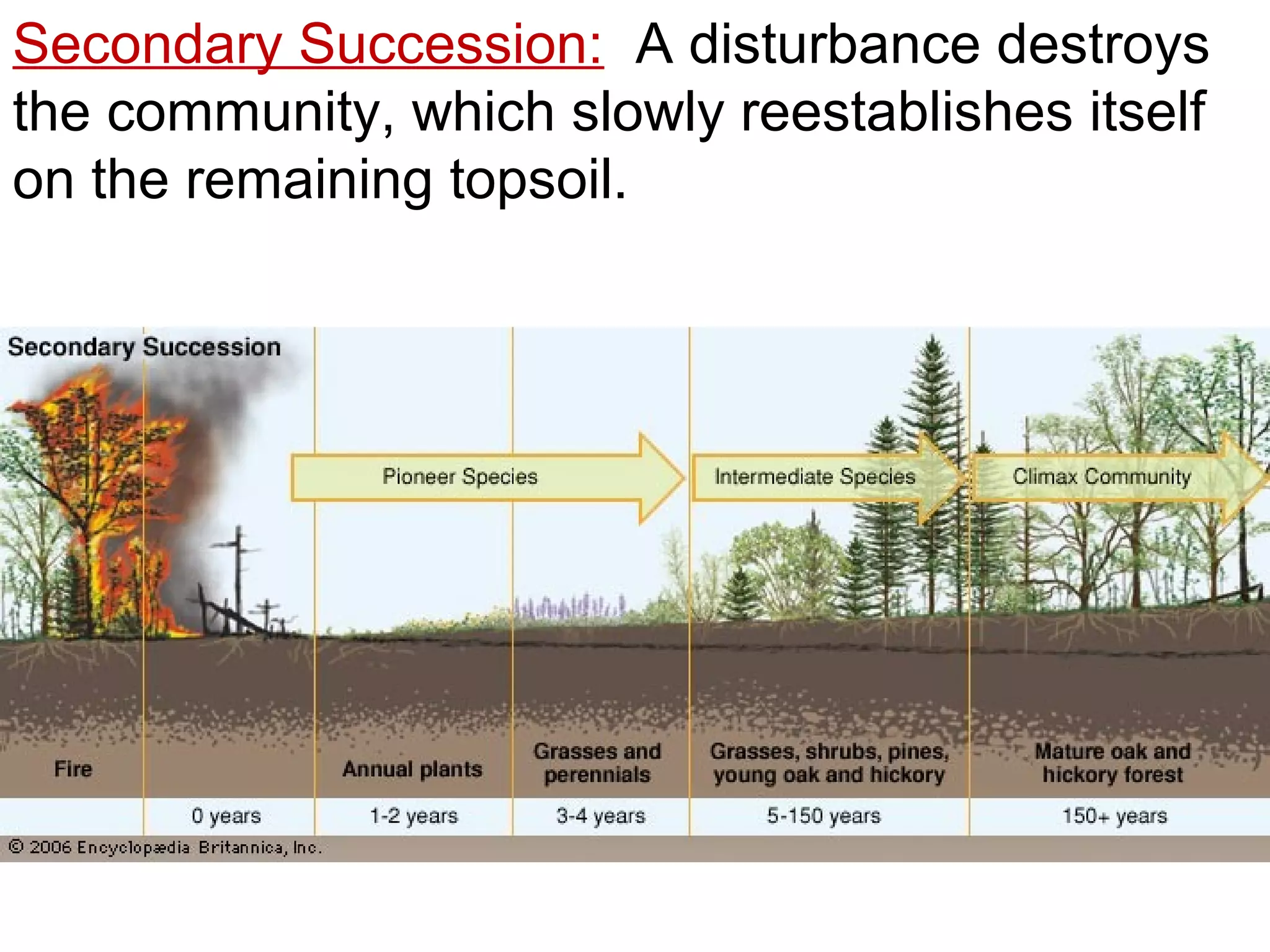
Secondary Succession: A disturbance destroys
the community, which slowly reestablishes itself
on the remaining topsoil.
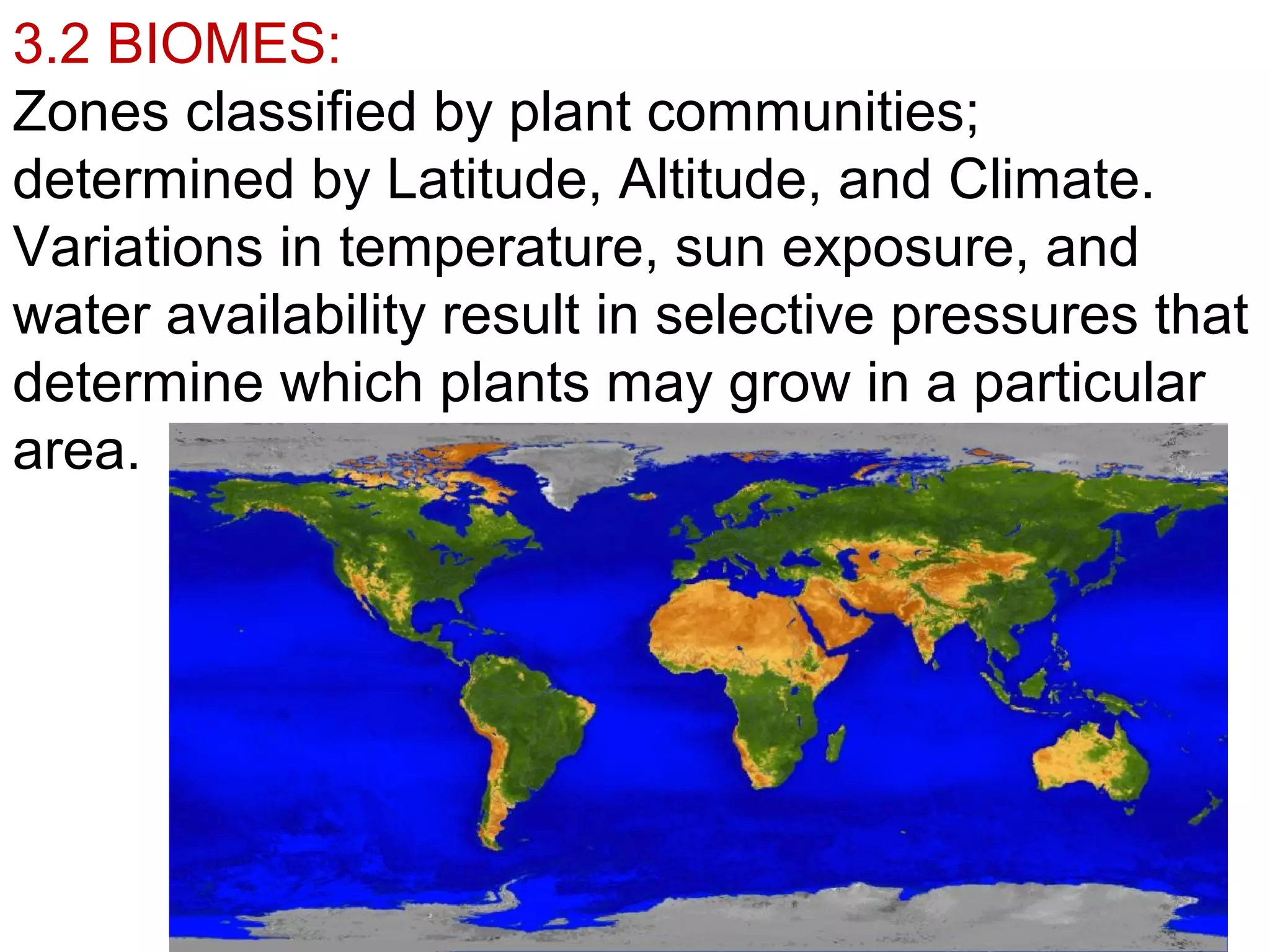
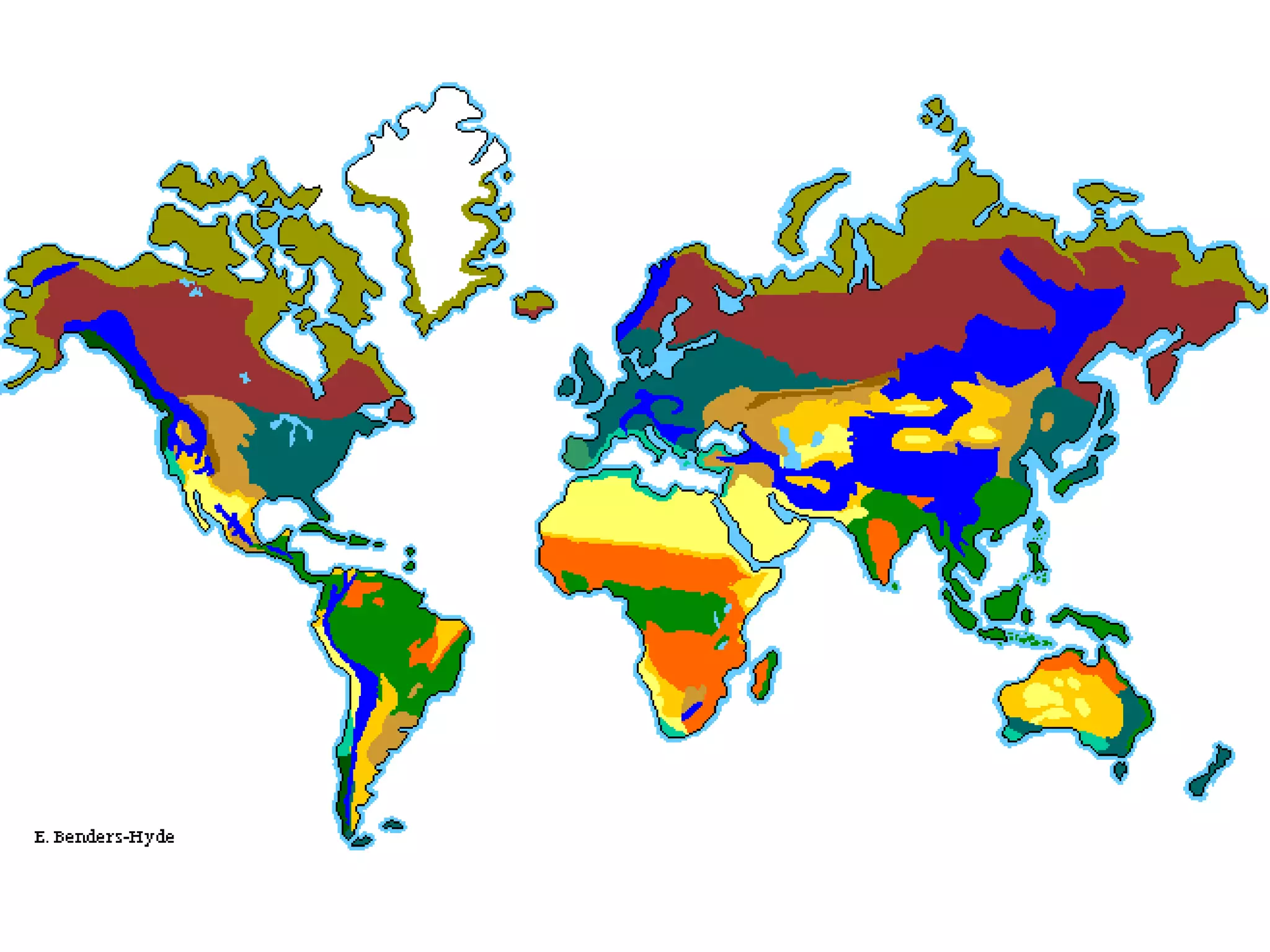
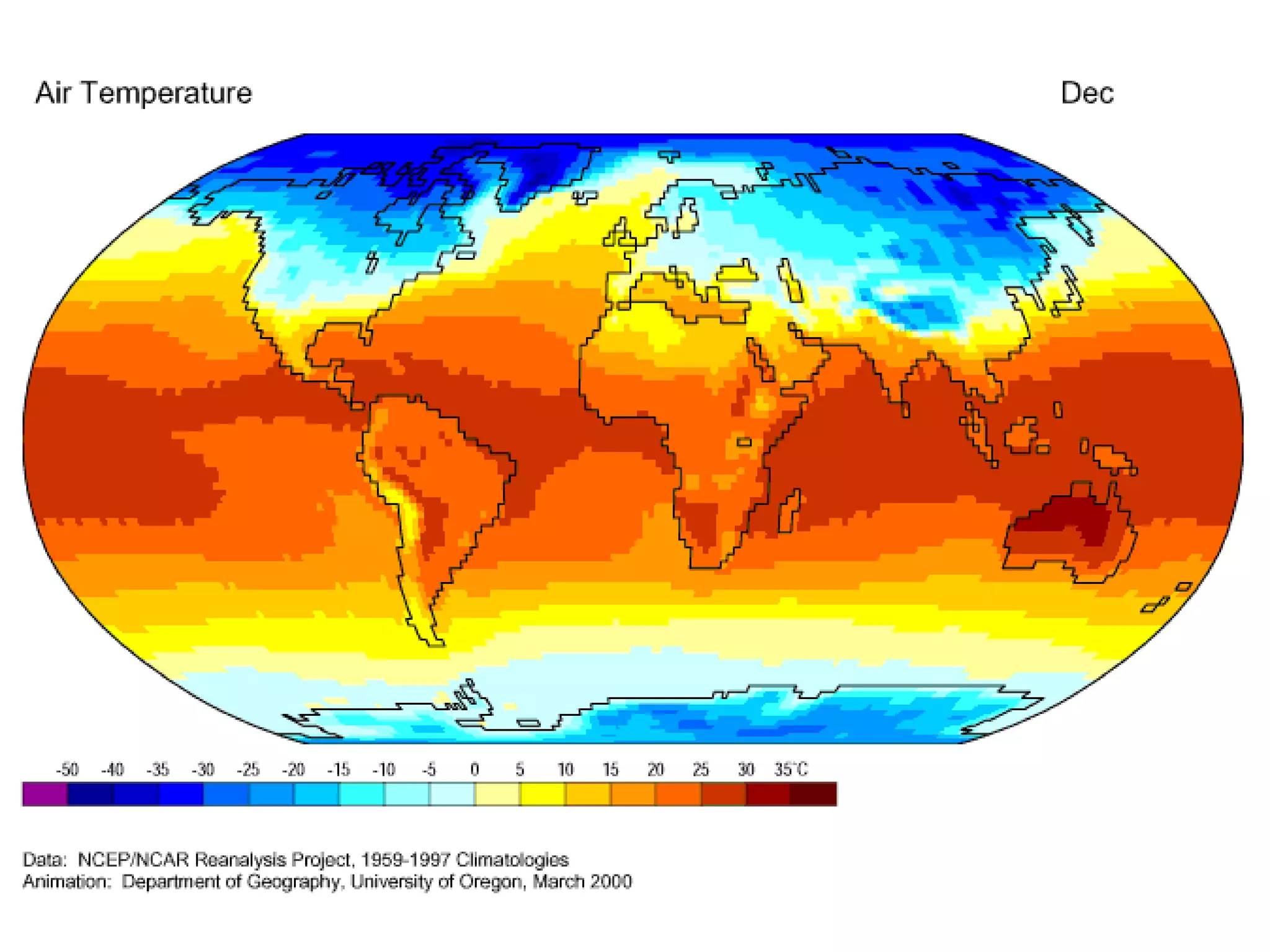
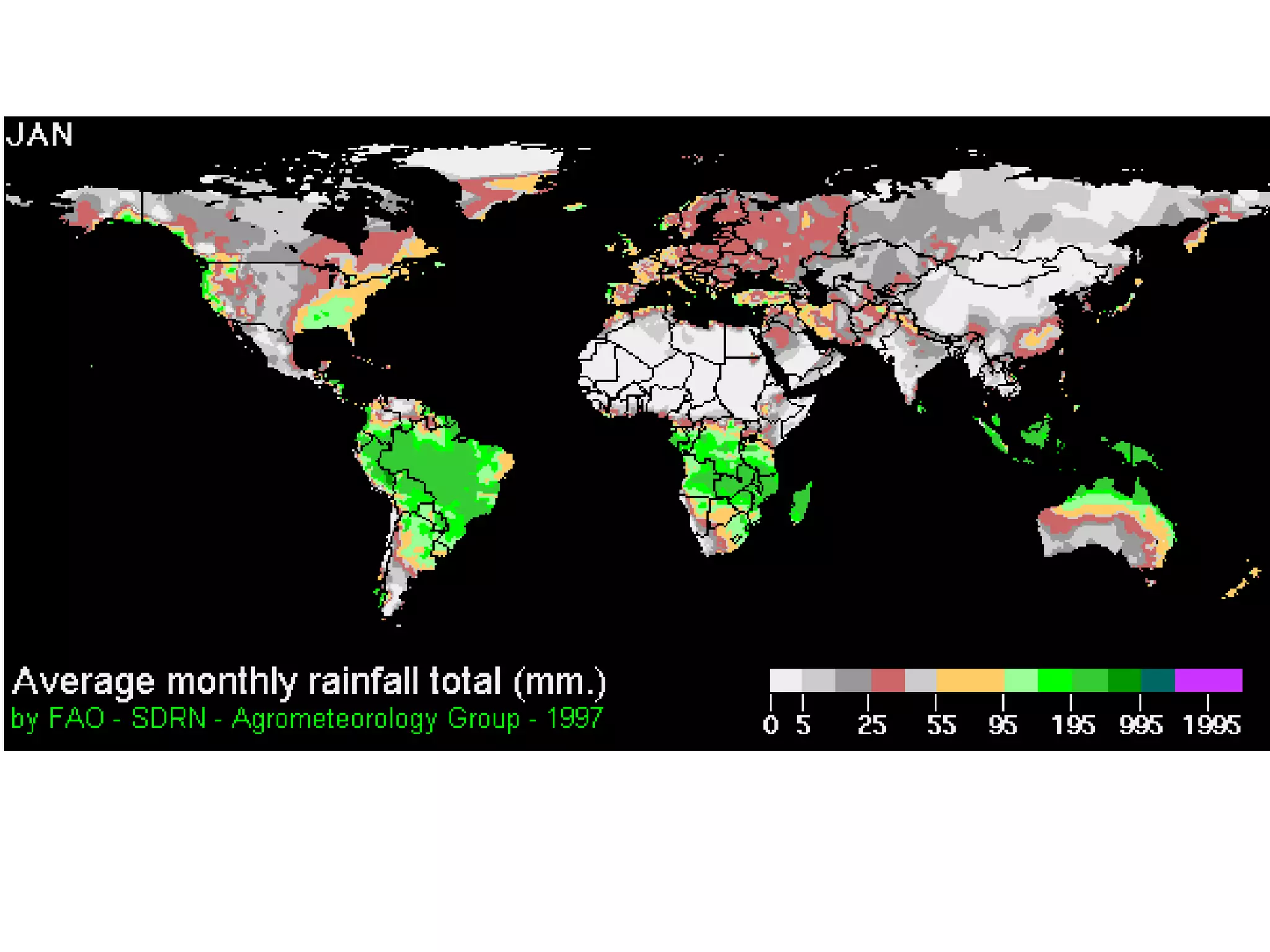
3.2 BIOMES:
Zones classified by plant communities;
determined by Latitude, Altitude, and Climate.
Variations in temperature, sun exposure, and
water availability result in selective pressures that
determine which plants may grow in a particular
area.
PROPERTIES OF COMMUNITIES
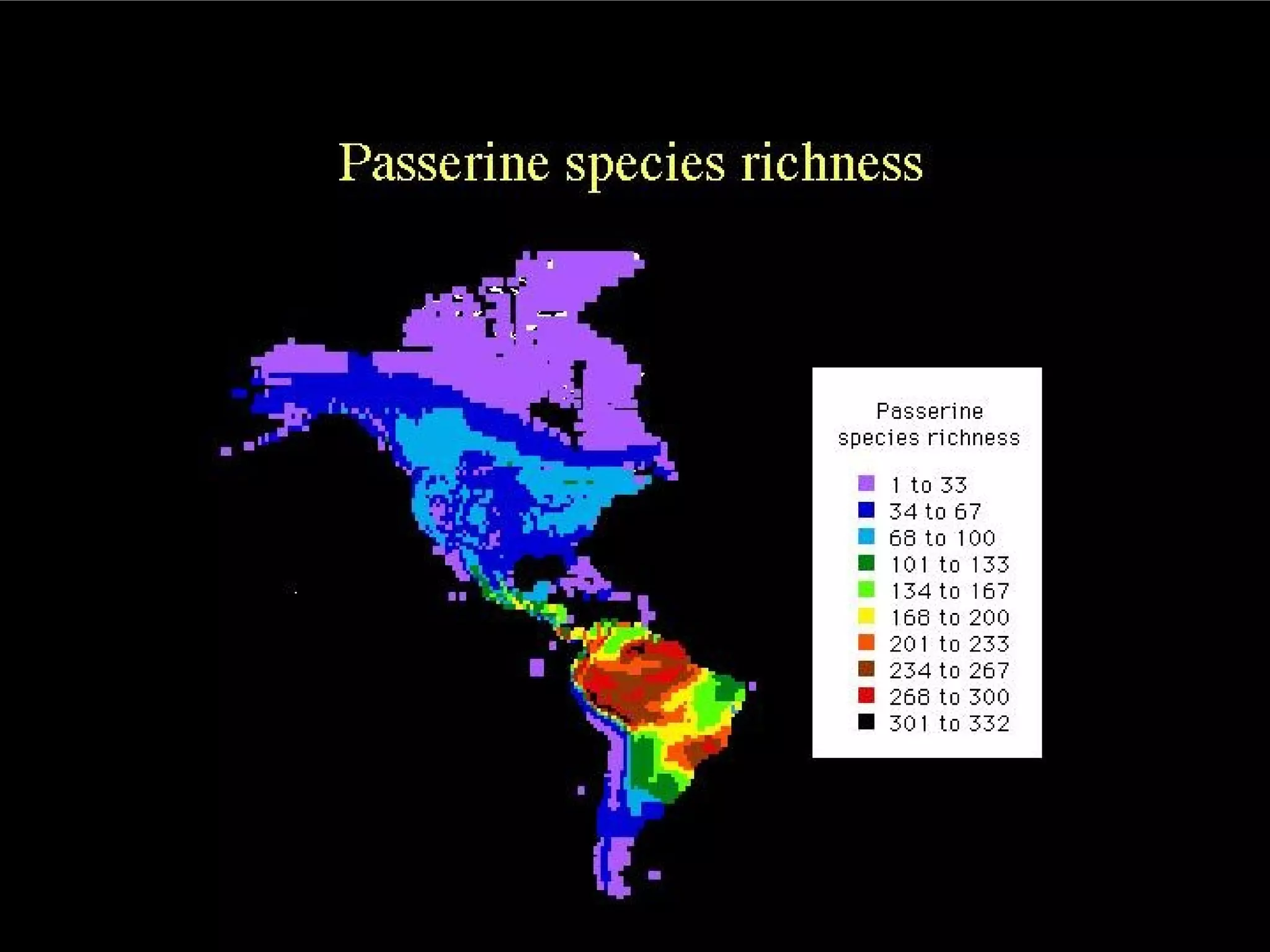
Species richness: The number of species a
community contains. Varies with latitude.
Generally, equatorial regions have more species,
with numbers reducing as you approach the
poles.
Species-Area effect: Larger areas generally
contain more species than smaller ones. Greater
diversity of habitats can support more species.
Reducing size of habitat will reduce number of
species, and number of individuals within
surviving species.
PROPERTIES OF COMMUNITIES
Species interactions & richness: Predators
prevent competitive exclusion among their prey.
Superior competitors cannot become dominant if
subject to predation.
Community Stability: Species rich areas are
more resistant to change; in a disturbance, less
species are lost, and recovery time is faster.
Ch3 communities, biomes, ecosystems

Ch3 communities, biomes, ecosystems

  • 1.
  • 2.
    LIMITING FACTOR: Anybiotic or abiotic Factor that limits the numbers of a species. Food, water, shelter, predation
  • 3.
    RANGE OF TOLERANCE:For any environmental factor (biotic or abiotic), there is always an upper & lower limit that any species can live between.
  • 4.
    ECOLOGICAL SUCCESSION Ecosystems maychange, so that one community may replace another because of changes in biotic and abiotic factors. Primary Succession: A community is established on exposed rock that does not have any soil. Pioneer species break down rock, make soil. Other species then move in, until a stable, mature Climax Community is established.
  • 5.
    Pioneer Species breaking rockdown with roots and acids to make soil.
  • 7.
    Secondary Succession: Adisturbance destroys the community, which slowly reestablishes itself on the remaining topsoil.
  • 8.
    3.2 BIOMES: Zones classifiedby plant communities; determined by Latitude, Altitude, and Climate. Variations in temperature, sun exposure, and water availability result in selective pressures that determine which plants may grow in a particular area.
  • 12.
    PROPERTIES OF COMMUNITIES Speciesrichness: The number of species a community contains. Varies with latitude. Generally, equatorial regions have more species, with numbers reducing as you approach the poles. Species-Area effect: Larger areas generally contain more species than smaller ones. Greater diversity of habitats can support more species. Reducing size of habitat will reduce number of species, and number of individuals within surviving species.
  • 14.
    PROPERTIES OF COMMUNITIES Speciesinteractions & richness: Predators prevent competitive exclusion among their prey. Superior competitors cannot become dominant if subject to predation. Community Stability: Species rich areas are more resistant to change; in a disturbance, less species are lost, and recovery time is faster.