The document outlines the principles and assumptions of communicative language teaching, emphasizing the importance of communicative competence over traditional grammatical competence. Key aspects include engaging students in meaningful communication, collaboration in learning, and fostering a classroom environment where learners can experiment and make mistakes. It highlights modern roles of teachers as facilitators and the importance of diverse, interactive classroom activities to promote language acquisition.
Principles of theCommunicative
Approach
• How Learners Learn a Language
Meaningful and Purposeful Interaction
Collaborative creation of meaning
Attention to Feedback
Attention to Input
3.
Principles of theCommunicative
Approach
Krashin’s Theory of Language Acquisition
A- Comprehensible ( Interesting &
Relevant) input
B- Zero Affective Filter Level
4.
Principles of theCommunicative
Approach
• Classroom Activities that best Facilitate
Learning
Practical Grammatical Competence
Communicative Competence
5.
Linguistic Competence
• Rolesof Learners in the Classroom
Participate in Cooperative Activities
Comfortable with their Peers and Group
Responsible for Learning
6.
Roles of Learnersin the
Classroom
• Traditional Roles
Lecturer
Knowledge Giver
• Modern Roles
• Facilitator & monitor
• communicator
7.
• Traditional Approachesto Language Teaching
(up to the late 1960s)
• Priority given to grammatical competence
• Accurate Pronunciation and Mastery
• Grammar Learned Through:
– Direct Instruction
– Repetitive Practice
– Drilling
– Memorization of Dialogs
– Question and Answer Practice
– Substitution Drills
– Guided Speaking and Writing Practice
8.
Communicative Language Teaching
(1970sto 1990s)
• Alternative Model of a Syllabuses to
Replace Grammar Syllabuses
– Functional Syllabus
– Skills Syllabus
– ESP Approach
• • Alternative Classroom Procedures
9.
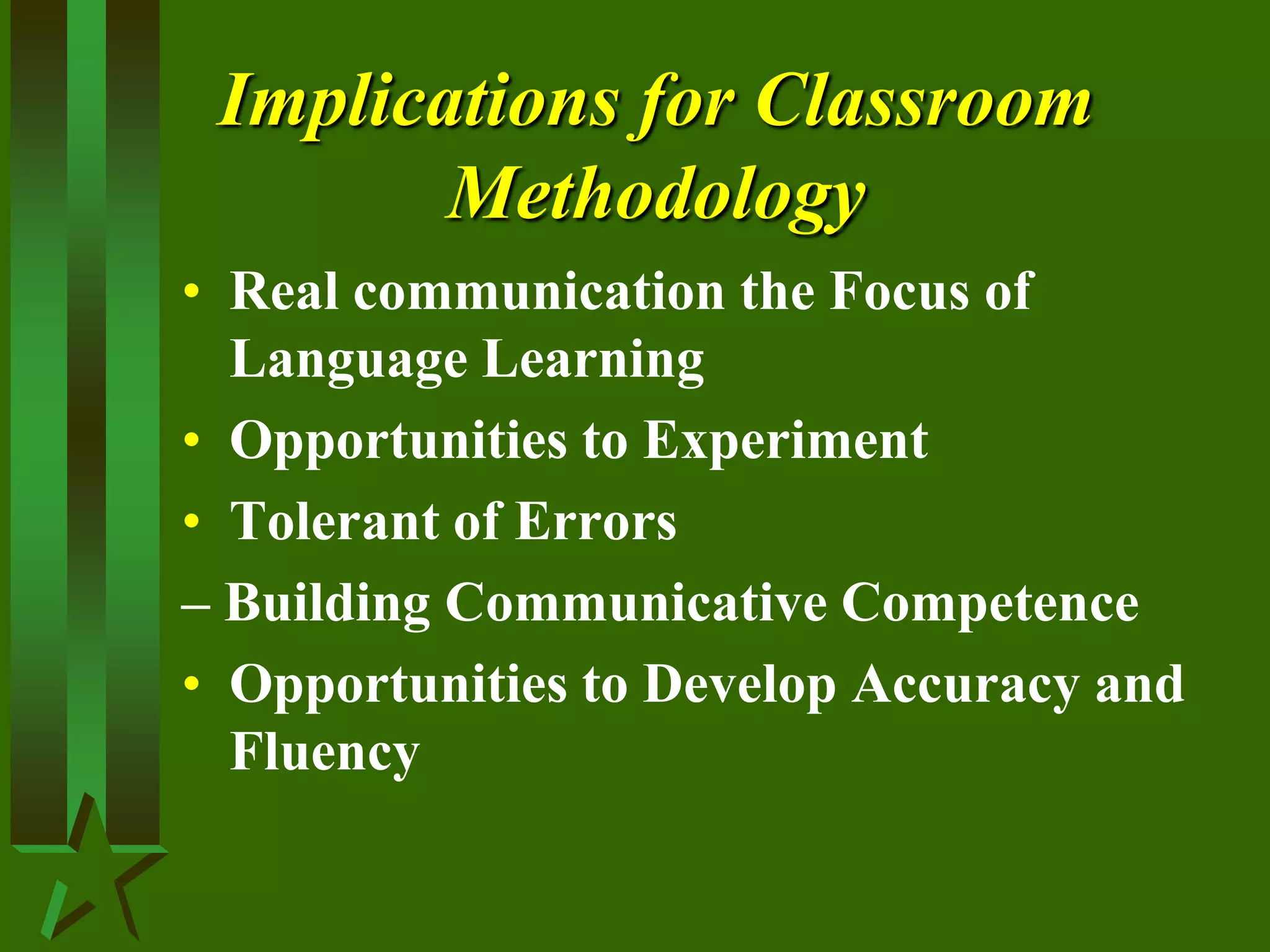
Implications for Classroom
Methodology
•Real communication the Focus of
Language Learning
• Opportunities to Experiment
• Tolerant of Errors
– Building Communicative Competence
• Opportunities to Develop Accuracy and
Fluency
10.
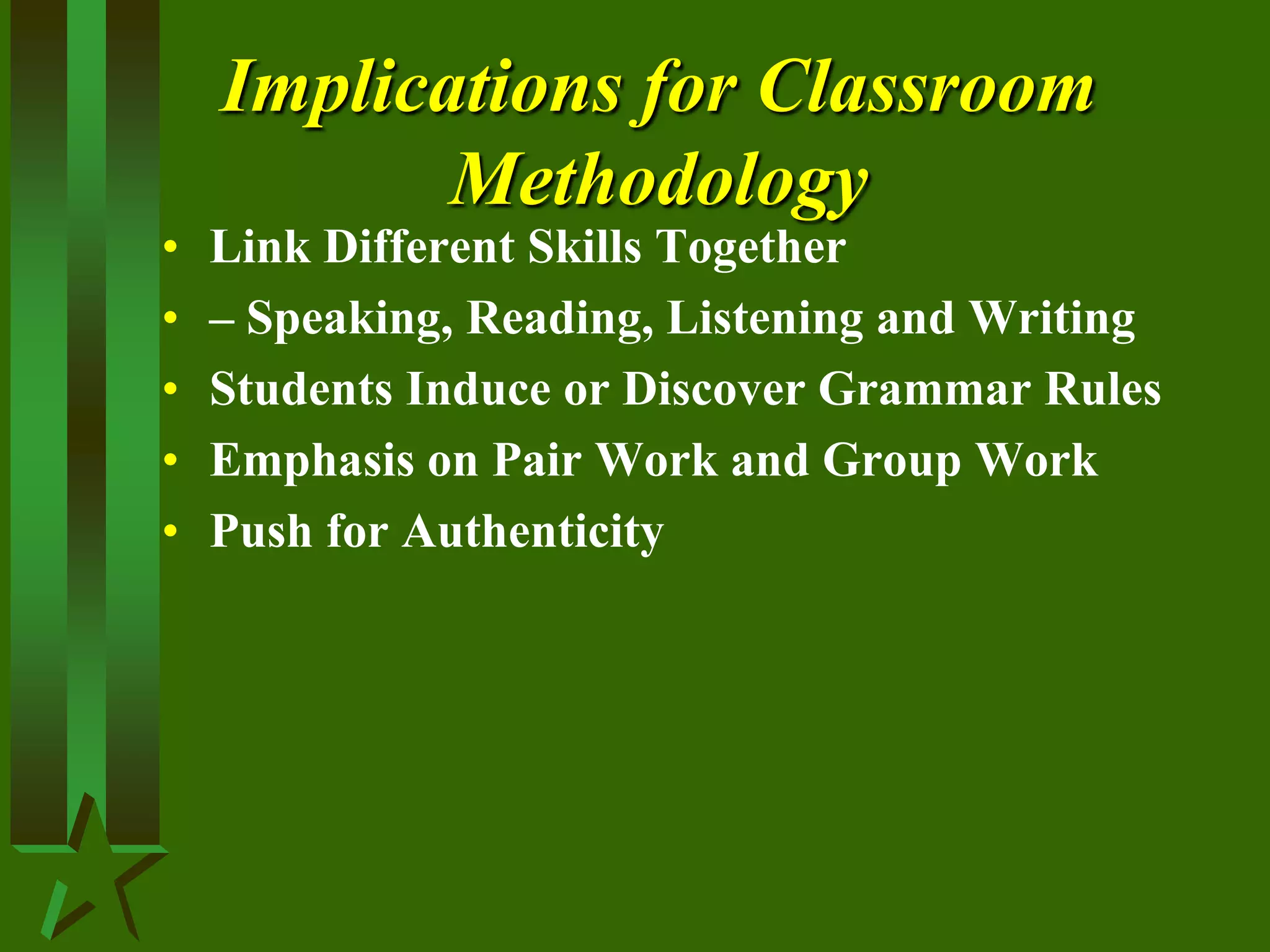
Implications for Classroom
Methodology
•Link Different Skills Together
• – Speaking, Reading, Listening and Writing
• Students Induce or Discover Grammar Rules
• Emphasis on Pair Work and Group Work
• Push for Authenticity
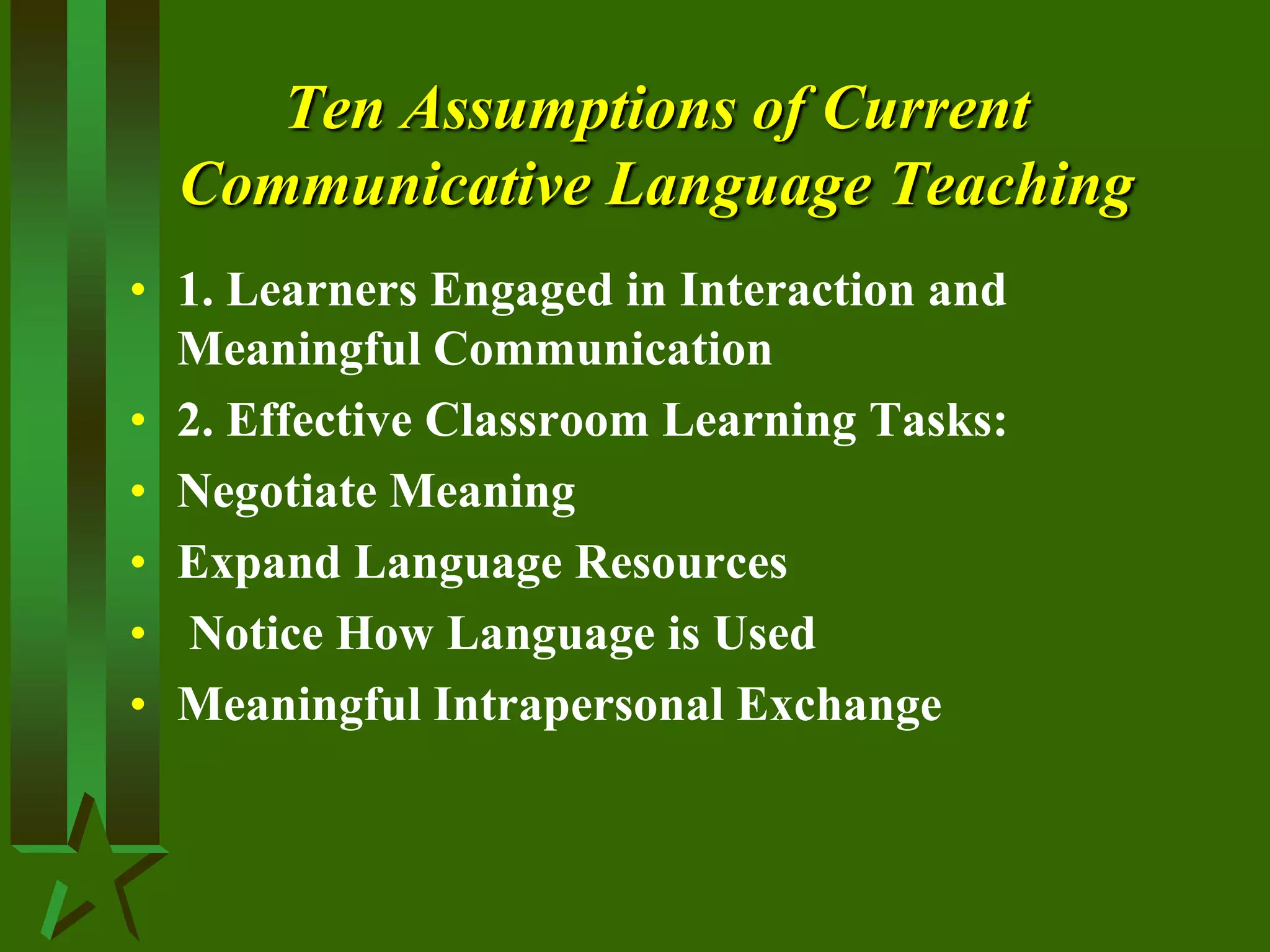
Ten Assumptions ofCurrent
Communicative Language Teaching
• 1. Learners Engaged in Interaction and
Meaningful Communication
• 2. Effective Classroom Learning Tasks:
• Negotiate Meaning
• Expand Language Resources
• Notice How Language is Used
• Meaningful Intrapersonal Exchange
13.
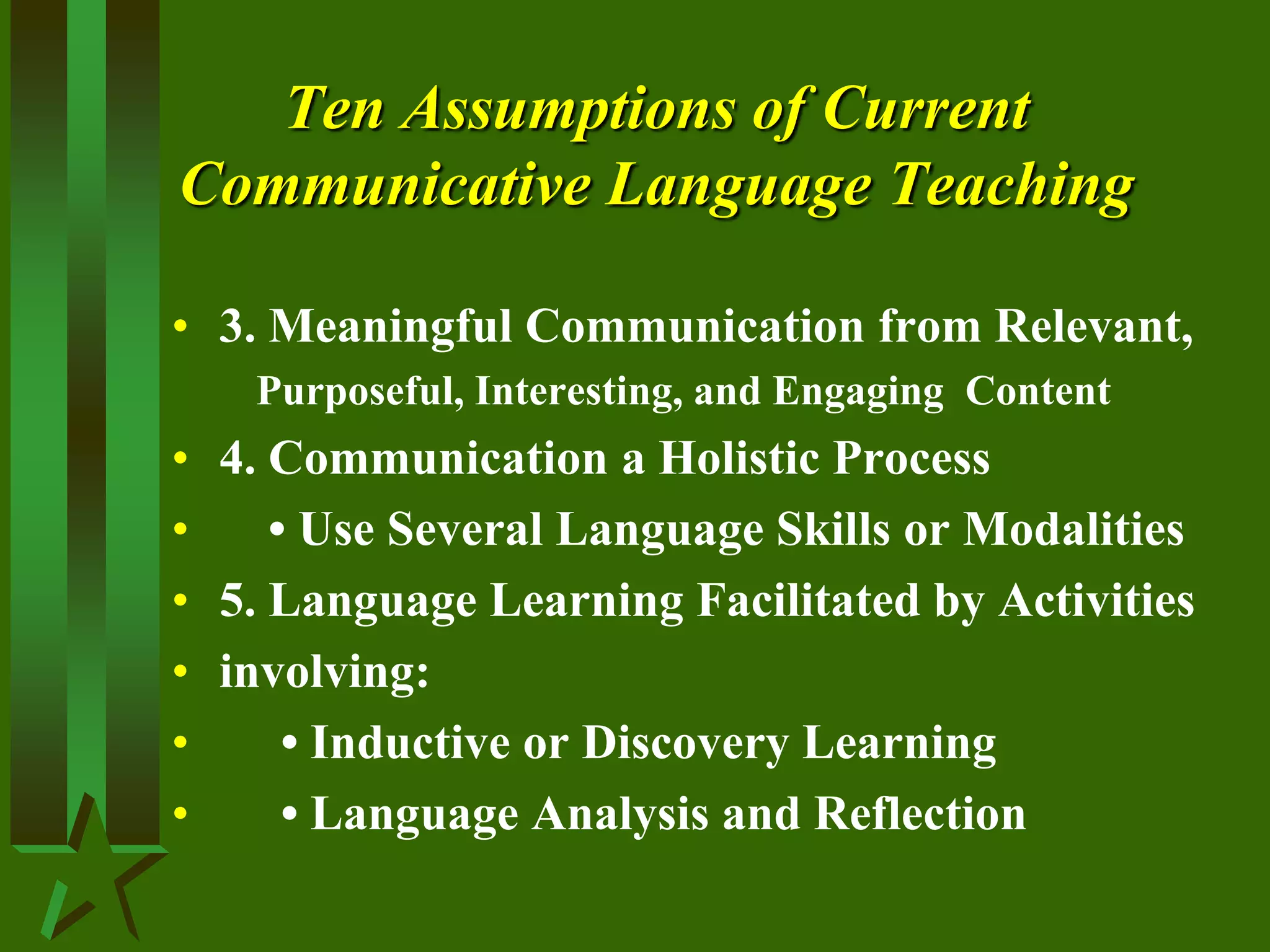
Ten Assumptions ofCurrent
Communicative Language Teaching
• 3. Meaningful Communication from Relevant,
Purposeful, Interesting, and Engaging Content
• 4. Communication a Holistic Process
• • Use Several Language Skills or Modalities
• 5. Language Learning Facilitated by Activities
• involving:
• • Inductive or Discovery Learning
• • Language Analysis and Reflection
14.
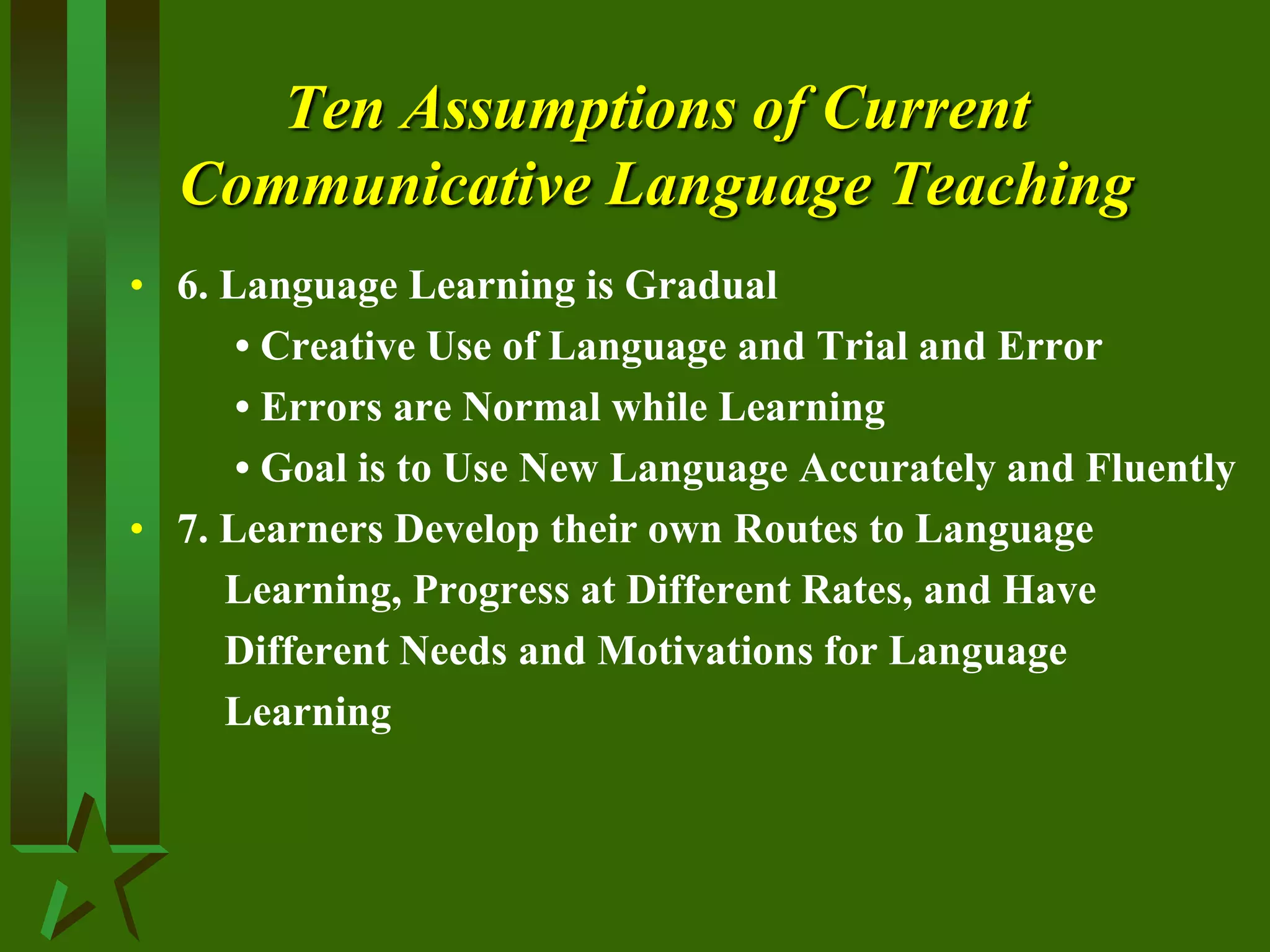
Ten Assumptions ofCurrent
Communicative Language Teaching
• 6. Language Learning is Gradual
• Creative Use of Language and Trial and Error
• Errors are Normal while Learning
• Goal is to Use New Language Accurately and Fluently
• 7. Learners Develop their own Routes to Language
Learning, Progress at Different Rates, and Have
Different Needs and Motivations for Language
Learning
15.
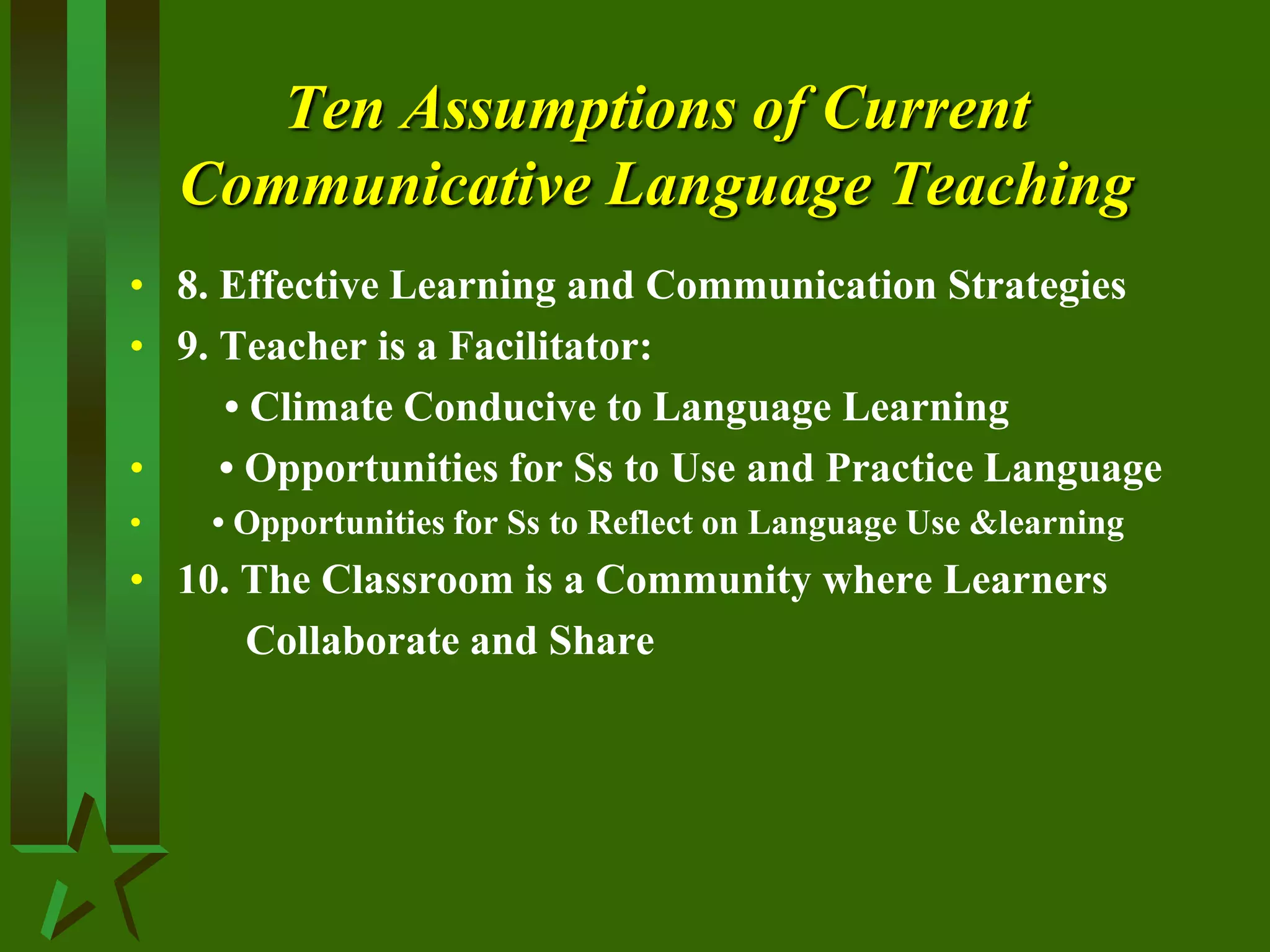
Ten Assumptions ofCurrent
Communicative Language Teaching
• 8. Effective Learning and Communication Strategies
• 9. Teacher is a Facilitator:
• Climate Conducive to Language Learning
• • Opportunities for Ss to Use and Practice Language
• • Opportunities for Ss to Reflect on Language Use &learning
• 10. The Classroom is a Community where Learners
Collaborate and Share