COMMUNICATION PROCESS
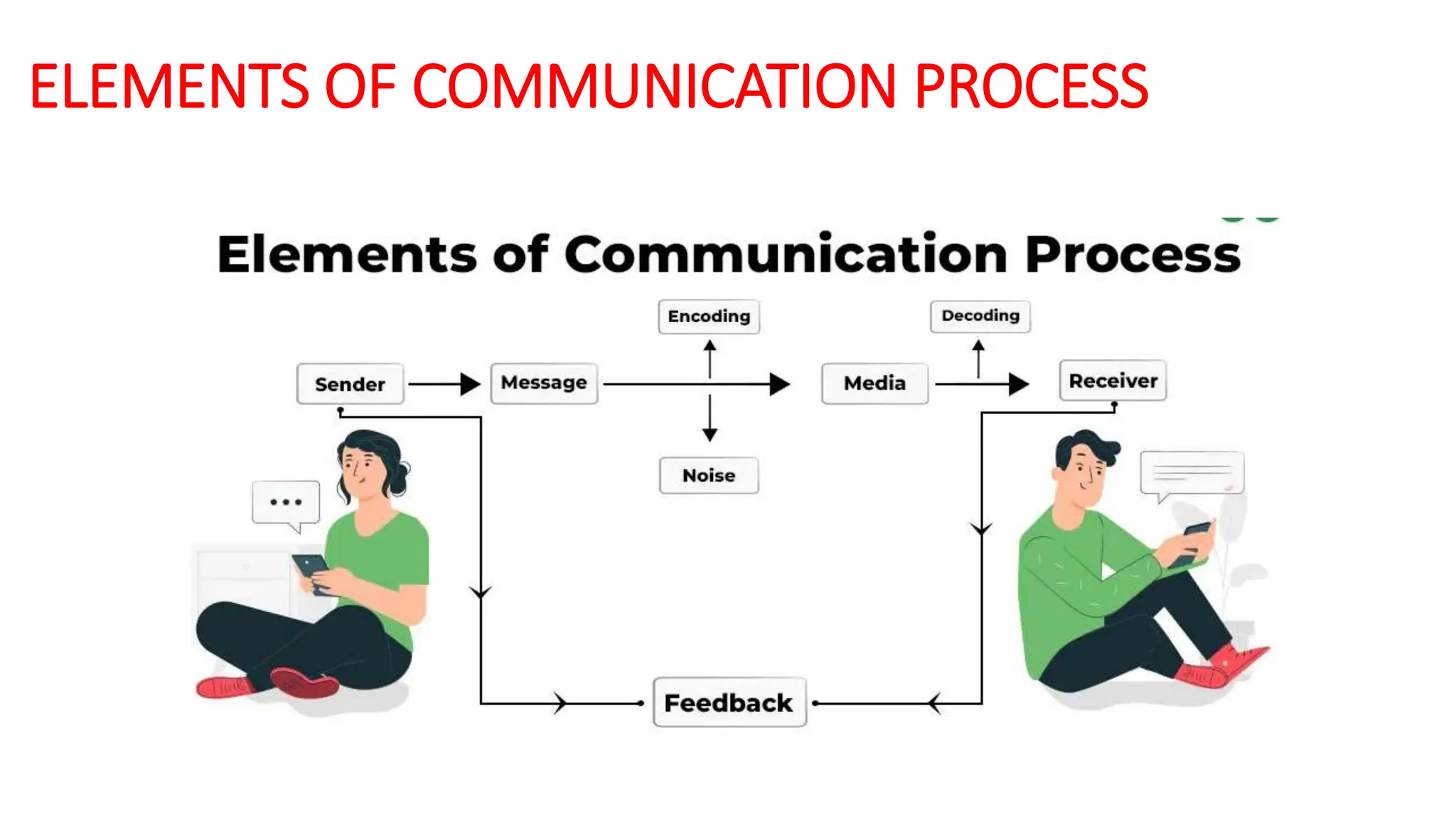
ELEMENTS OF COMMUNICATION PROCESS
1. Sender: The person who conveys his thoughts, message or ideas to the receiver
is known as the sender. He is at the starting point of the communication system
and represents the source of communication.
E.g., In a classroom, a teacher is a sender.
2. Message: The subject matter of communication is termed as messages. It
includes ideas, feelings, suggestions, order, etc., which a sender wants to convey to
the receiver.
3. Encoding: The process of converting messages into communication symbols,
which may be understood by the receiver. It includes words, pictures, gestures,
symbols, etc. Encoding translates the internal thought of the sender into a
language which can be understandable.
4. Media: The path, channel or medium through which encoded message is
transmitted to the receiver is known as media. It is the carrier of the message. It
can be in written form, face to face, through telephone, letter, internet, etc.
5. Decoding: The process of translating the encoded message into an effective
language, which can be understood by the receiver is known as decoding. In this,
the encoded symbols of the sender are converted.
6. Receiver: The person who receives the message of the sender is known as the
receiver.
E.g., Students are receivers in the classroom.
7. Feedback: In order to complete the process of communication, feedback is
essential. The process of reversal of communication in which the receiver
expresses his reaction to the sender of the message is known as feedback.
Feedback ensures that the receiver has received and understood the message.
8. Noise: Any construction or hindrance which hampers the communication
process is known as noise. The hindrance may be caused to the sender, message or
receiver. It acts as a barrier to effective communication and because of this
message is interpreted differently by the receiver. Disturbance in the telephone
line, inattentive receiver, faulty decoding, poor internet connection, improper
gestures and postures, etc., are some examples of noise.

COMMUNICATION PROCESS AND ELEMENTS .pptx

  • 1.
  • 2.
  • 3.
    1. Sender: Theperson who conveys his thoughts, message or ideas to the receiver is known as the sender. He is at the starting point of the communication system and represents the source of communication. E.g., In a classroom, a teacher is a sender. 2. Message: The subject matter of communication is termed as messages. It includes ideas, feelings, suggestions, order, etc., which a sender wants to convey to the receiver. 3. Encoding: The process of converting messages into communication symbols, which may be understood by the receiver. It includes words, pictures, gestures, symbols, etc. Encoding translates the internal thought of the sender into a language which can be understandable. 4. Media: The path, channel or medium through which encoded message is transmitted to the receiver is known as media. It is the carrier of the message. It can be in written form, face to face, through telephone, letter, internet, etc.
  • 4.
    5. Decoding: Theprocess of translating the encoded message into an effective language, which can be understood by the receiver is known as decoding. In this, the encoded symbols of the sender are converted. 6. Receiver: The person who receives the message of the sender is known as the receiver. E.g., Students are receivers in the classroom. 7. Feedback: In order to complete the process of communication, feedback is essential. The process of reversal of communication in which the receiver expresses his reaction to the sender of the message is known as feedback. Feedback ensures that the receiver has received and understood the message. 8. Noise: Any construction or hindrance which hampers the communication process is known as noise. The hindrance may be caused to the sender, message or receiver. It acts as a barrier to effective communication and because of this message is interpreted differently by the receiver. Disturbance in the telephone line, inattentive receiver, faulty decoding, poor internet connection, improper gestures and postures, etc., are some examples of noise.