MEDICAL ENTOMOLOGY
Parasitism
• A relationship between species, where one organism, the parasite,
lives on or in another organism, the host, causing it some harm, and
is adapted structurally to this way of life.
Parasite
• is an organism which lives either within (endoparasite) or upon
(ectoparasite) another organism.
Parasite may be
• Accidental parasite: is an organism that establishes itself occasionally in an unusual host
(hosts that they do not normally parasitize) e.g. dog roundworm.
• Facultative parasite: is an organism which can live either free or depending on the host for
breeding. e.g. Callophorida larva
• Obligatory parasite: is an organism which is completely and permanently adapted for the
parasitic life. e.g. Plasmodium
• Incidental parasite: normally lives on a definitive host but may be found on other hosts
sometimes.
• Specific parasite: which occurs in a particular definite host. i.e. there is specifity in the host
parasite relationship. e.g. Taenia solium.
The obligatory parasite may be
• Temporary parasite: parasite which only visits its host for blood meals
e.g. Mosquitoes
• Periodic parasite: parasite which passes a definite part of its life
cycle in a host. e.g. sheep bot fly Oestrus ovis.
• Permanent parasite: which passes all its life in a host. e.g. Adult
Shistosoma sp.
Ectoparasites
• Live on the surface of the host.
• They can be temporary, or
permanent.
• Respiration is aerobic.
• Specialization has led to loss of
fewer structures, e.g., wings in

fleas, bedbugs and lice.
Endoparasites
• Live in the body of the host.
• They are generally permanent
parasites.
• Respiration is often anaerobic.
• Specialisation has led to the
loss of several structures, e.g.,
digestive organs in Taenia.
Host:
is an animal that harbors a parasite
The host may be:
• Intermediate host: which harbors the larva or asexual stage of
parasite.
e.g. Man in malaria life cycle
• Definitive host: which harbors the mature stages or the sexual
stages of the parasite. e.g. Mosquitoes in malaria life cycle.
• reservoir host: is any host other than man which harbors the
parasite.
Pathogen: is the parasite responsible of the disease condition or the
causative organism.
Vector: is an arthropod carrier of a pathogen.
Enteric disease: is an intestinal pathogen.
Endemic disease: is a pathogenic disease found in a definite locality in a
permanent way.
Epidemic disease: is the sudden appearance of a pathogenic disease in
any locality.
Methods of disease transmission
• Mechanical disease transmission
• Biological disease transmission
• Propagative
• Cyclo-developmental
• Cyclo-propagative
• Trans ovarian transmission
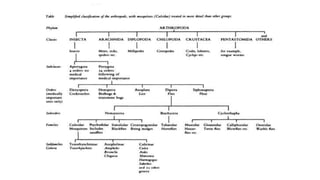
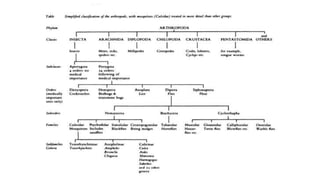
Class: Insecta (Hexapoda)
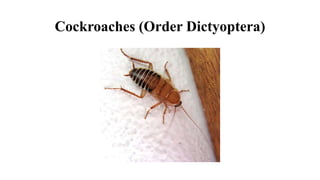
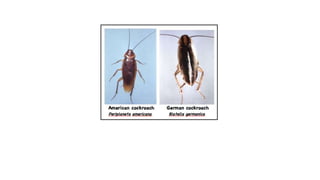
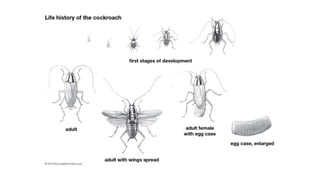
Cockroaches (Order Dictyoptera)
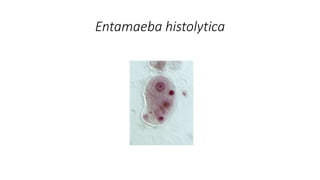
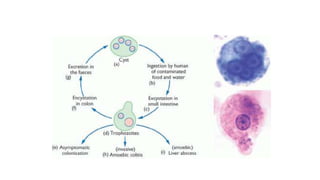
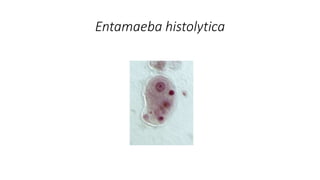
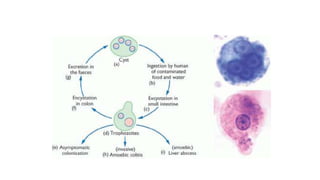
Entamaeba histolytica
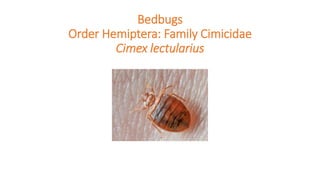
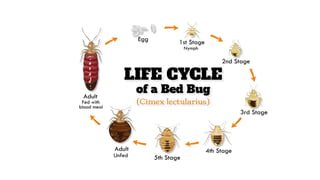
Bedbugs
Order Hemiptera: Family Cimicidae
Cimex lectularius
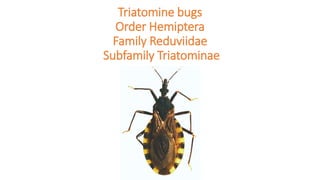
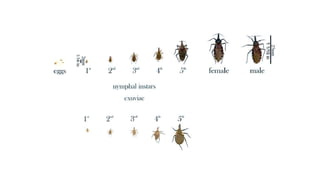
Triatomine bugs
Order Hemiptera
Family Reduviidae
Subfamily Triatominae
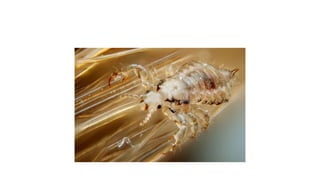
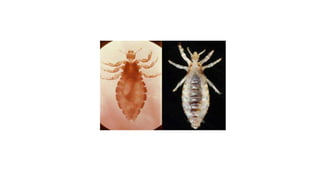
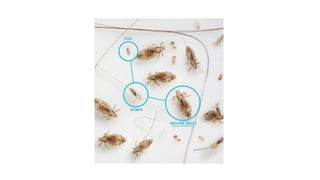
Lice
Order Anoplura
Families Pediculidae and Phthiridae
• Body louce Pediculus humanus corporis
• Head louse Pediculus humanus capitis
Louse-borne Typhus
Epidemic Typhus
Causative Organism:
Rickettsia prowazekii var. prowazekii
Human infection may be acquired from an infected
louse by:
• Deposition of the louse’s faeces on the brocken skin.
• Transfer of infective faeces on soiled fingers to the conjunctive.
• Crushing the louse on the broken skin.
• Injection of the louse’s saliva into the skin.
• Contaminating mucous membranes with dried louse’s faeces in which the
Rickettsias can survive for months.
• Inhaling air-borne rickettsias.
• Transferring the rickettsias liberated from a crushed louse into the mouth
(i.e. infection through the mucous membrane of the mouth).
There is no reservoir host in this type of typhus.
Symptoms
• Fever
• Severe headache
• Pain in the backs and legs
• Lack of feeling
• Tremors
• Insomnia
• Rash
• In severe cases: death may occur
Relapsing fever
Causative Organism:
Borrelia recurrentis
Pathology and symptoms
• Sudden rise of temperature (40-41◦ C)
• Severe headache
• pain in the back, joints, liver and spleen
• Haemorrhage from the skin and mucous membranes are common
• The conjunctive has a jaundice appearance. The temperature lasts 4-5
days, and then drops suddenly with abundant sweating and weakness
but relief from pain.
• After an interval of 5-14 days, a second febrile attack develops, usually
slightly less severe and shorter than the first one. In untreated patients,
as many as ten attacks and remissions may occur before there is
cessation of symptoms.
Human infection takes place only when the
louse is crushed on the skin.
Pediculosis
Vagabond’s disease
Order Diptera
Family Culicidae
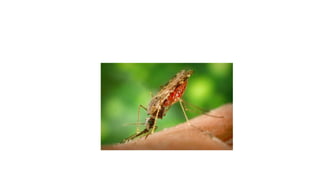
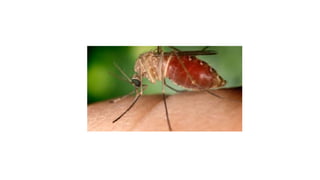
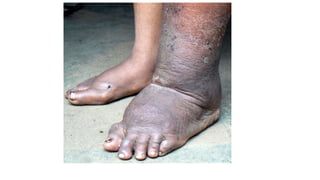
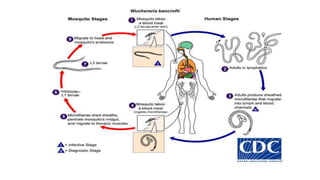
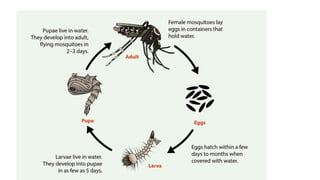
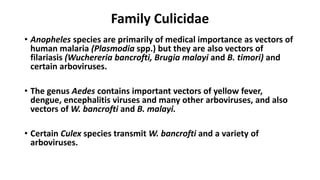
• Anopheles species are primarily of medical importance as vectors of
human malaria (Plasmodia spp.) but they are also vectors of
filariasis (Wuchereria bancrofti, Brugia malayi and B. timori) and
certain arboviruses.
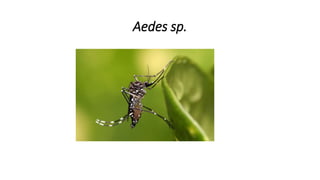
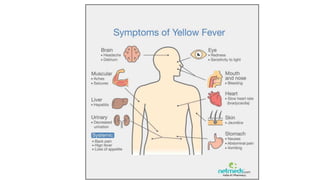
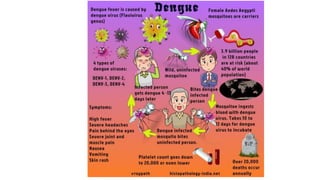
• The genus Aedes contains important vectors of yellow fever,
dengue, encephalitis viruses and many other arboviruses, and also
vectors of W. bancrofti and B. malayi.
• Certain Culex species transmit W. bancrofti and a variety of
arboviruses.
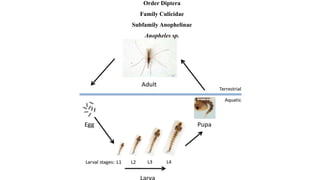
Order Diptera
Family Culicidae
Subfamily Anophelinae
Anopheles sp.
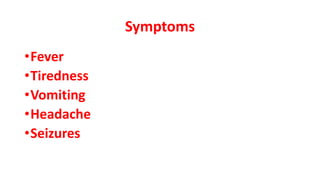
Symptoms
•Fever
•Tiredness
•Vomiting
•Headache
•Seizures
Order Diptera
Family Culicidae
Subfamily Culicinae
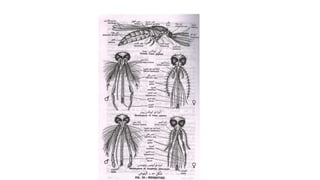
Culicine mosquitoes
• The subfamily Culicinae contains 30 genera of mosquitoes, of which the
medically important ones are:
• Culex
• Aedes
• Mansonia
• Sabethes
• Haemagogus
• Psorophora
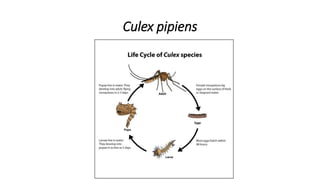
Culex pipiens
Aedes sp.
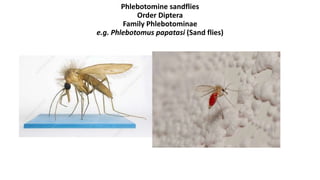
Phlebotomine sandflies
Order Diptera
Family Phlebotominae
e.g. Phlebotomus papatasi (Sand flies)
Leishmaniasis
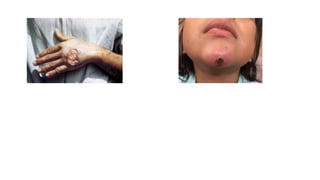
• Cutaneous leishmaniasis is the most common form. It causes an
open sore at the bite sites, which heals in a few months to a year
and half, leaving an unpleasant-looking scar.
• Mucocutaneous leishmaniasis causes both skin and mucosal ulcers
with damage primarily of the nose and mouth.
• Visceral leishmaniasis or kala-azar ('black fever') is the most serious
form, and is potentially fatal if untreated.
Symptoms include fever, damage to the spleen and liver, and anemia
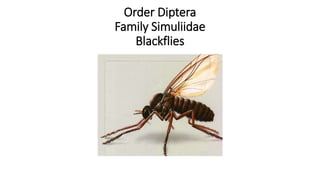
Order Diptera
Family Simuliidae
Blackflies
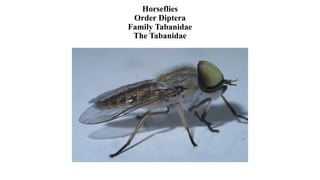
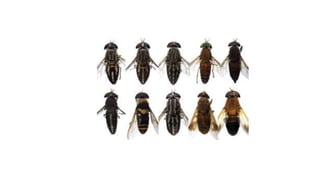
Horseflies
Order Diptera
Family Tabanidae
The Tabanidae
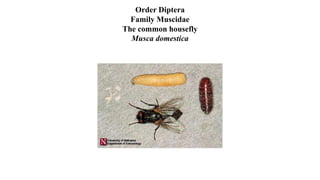
Order Diptera
Family Muscidae
The common housefly
Musca domestica
• By flies’ contaminated feet, body hairs and mouthparts.
• By flies vomiting on food during feeding, which they do
frequently.
• By defecation, which often occurs on food. This is
probably the most important method of transmission.
Entamaeba histolytica
Order Diptera
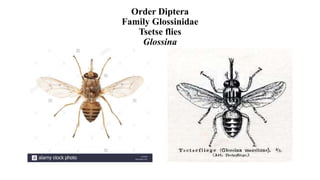
Family Glossinidae
Tsetse flies
Glossina
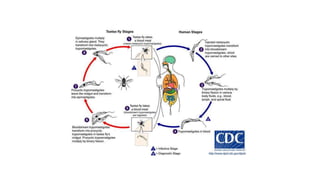
There are 3 methods of transmission of trypanosomes in
Glossina:
1. Mechanical transmission
2. Contaminative
3. Cyclical
Myiasis
The invasion of organs and tissues of man or vertebrate animals
with dipterous larvae
• Cutaneous, dermal or subdermal myiasis
• Urinogenital myiasis
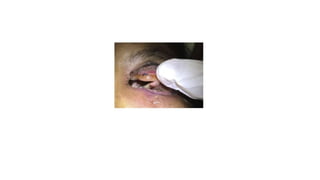
• Ophthalmic myiasis
• Nasopharyngeal myiasis
• Intestinal or enteric myiasis.
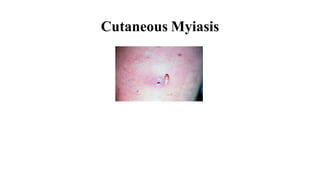
Cutaneous Myiasis
Types of Myiasis
• Accidental
• Obligatory
• Facultative
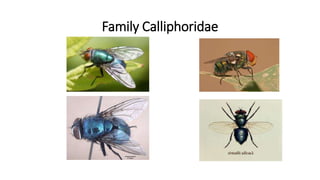
Family Calliphoridae
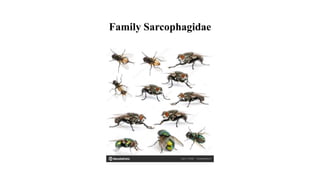
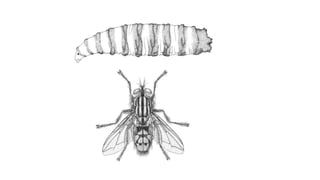
Family Sarcophagidae
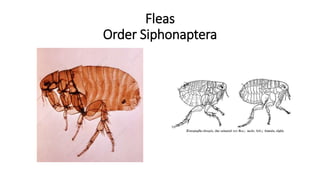
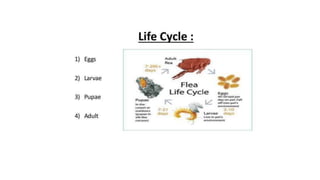
Fleas
Order Siphonaptera
1. Plague caused by Pasteurella pestis. It is transmitted by Xenopsylla
cheopis. The flea transmits the bacillus from rat to rat or from rat to man.
On cutaneous inoculations, the bacilli produce inflammation to the
lymphatic giving bubonic plague.
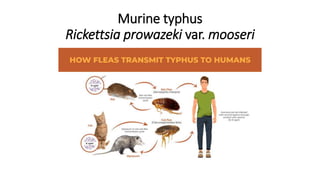
2. Murine typhus produced by Rickettsia prowazeki var. moseri.
3. Flea dermatitis.
4. Chigger’s disease is caused by invasion of the skin by fleas. The gravid
female burrows in the skin and engorges itself. This leads to the formation
of an ulcer.
Fleas may cause and transmit the following
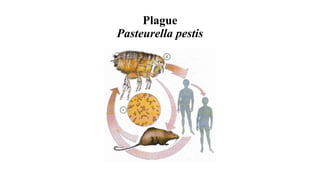
Plague
Pasteurella pestis
Symptoms
• Fever
• Headache
• Chills
• Weakness
• One or more swollen, painful lymph nodes
• Extensive dark red spots of the skin and mucous
membrane in fatal cases.
Male and female flea may transfer the bacilli to a
healthy host in one of the following ways
• Following an interrupted feeding the flea may regurgitate blood
and bacilli into the puncture wound of the next host.
• Bacilli multiply in the intestine of the flea and may be deposited
in faeces in or near wound caused by the flea.
• Multiplication of the bacilli in the flea mid gut may produce a
block of blood rendering the flea unable to obtain blood into its
mid gut. Consequently, the flea wanders from one host to another
trying to feed and inoculating the new hosts with the bacilli.
Murine typhus
Rickettsia prowazeki var. mooseri
Symptoms
• Fever
• Chills
• Body aches
• Muscle pain
• Loss of appetite
• Nausea
• Vomiting
• Stomach pain
• Cough
• Rash
Infection takes place:
• Through the flea faeces
• By crushing the flea into a puncture wound
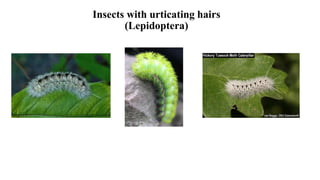
Insects with urticating hairs
(Lepidoptera)
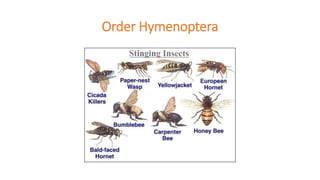
Order Hymenoptera
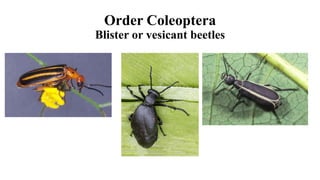
Order Coleoptera
Blister or vesicant beetles
Symptoms
• Fever
• Headache
• Rash
• Nausea
• Vomiting
• Stomach pain
• Muscle pain
• Lack of appetite
Transmission
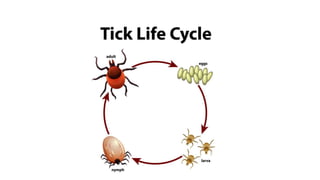
• By tick bites
• Exposure to crushed tick tissues, fluids, or tick faeces
• Transovarian transmission
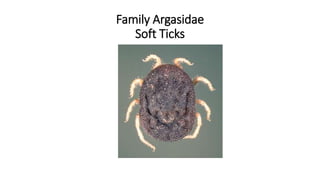
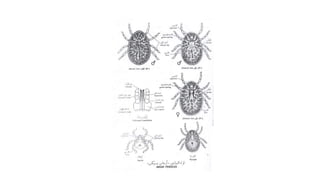
Family Argasidae
Soft Ticks
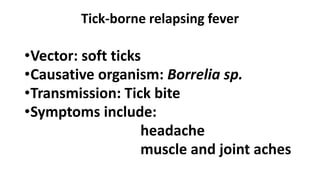
Tick-borne relapsing fever
•Vector: soft ticks
•Causative organism: Borrelia sp.
•Transmission: Tick bite
•Symptoms include:
headache
muscle and joint aches
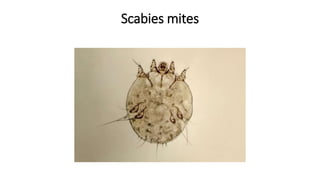
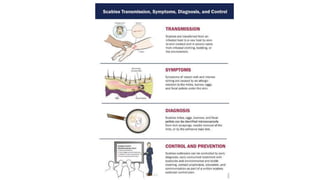
Scabies mites
Medical Entomology Presentation.pptx

Medical Entomology Presentation.pptx

  • 1.
  • 2.
    Parasitism • A relationshipbetween species, where one organism, the parasite, lives on or in another organism, the host, causing it some harm, and is adapted structurally to this way of life.
  • 3.
    Parasite • is anorganism which lives either within (endoparasite) or upon (ectoparasite) another organism.
  • 4.
    Parasite may be •Accidental parasite: is an organism that establishes itself occasionally in an unusual host (hosts that they do not normally parasitize) e.g. dog roundworm. • Facultative parasite: is an organism which can live either free or depending on the host for breeding. e.g. Callophorida larva • Obligatory parasite: is an organism which is completely and permanently adapted for the parasitic life. e.g. Plasmodium • Incidental parasite: normally lives on a definitive host but may be found on other hosts sometimes. • Specific parasite: which occurs in a particular definite host. i.e. there is specifity in the host parasite relationship. e.g. Taenia solium.
  • 5.
    The obligatory parasitemay be • Temporary parasite: parasite which only visits its host for blood meals e.g. Mosquitoes • Periodic parasite: parasite which passes a definite part of its life cycle in a host. e.g. sheep bot fly Oestrus ovis. • Permanent parasite: which passes all its life in a host. e.g. Adult Shistosoma sp.
  • 6.
    Ectoparasites • Live onthe surface of the host. • They can be temporary, or permanent. • Respiration is aerobic. • Specialization has led to loss of fewer structures, e.g., wings in fleas, bedbugs and lice. Endoparasites • Live in the body of the host. • They are generally permanent parasites. • Respiration is often anaerobic. • Specialisation has led to the loss of several structures, e.g., digestive organs in Taenia.
  • 7.
    Host: is an animalthat harbors a parasite The host may be: • Intermediate host: which harbors the larva or asexual stage of parasite. e.g. Man in malaria life cycle • Definitive host: which harbors the mature stages or the sexual stages of the parasite. e.g. Mosquitoes in malaria life cycle. • reservoir host: is any host other than man which harbors the parasite.
  • 8.
    Pathogen: is theparasite responsible of the disease condition or the causative organism. Vector: is an arthropod carrier of a pathogen. Enteric disease: is an intestinal pathogen. Endemic disease: is a pathogenic disease found in a definite locality in a permanent way. Epidemic disease: is the sudden appearance of a pathogenic disease in any locality.
  • 9.
    Methods of diseasetransmission • Mechanical disease transmission • Biological disease transmission • Propagative • Cyclo-developmental • Cyclo-propagative • Trans ovarian transmission
  • 10.
  • 12.
  • 15.
  • 17.
    Bedbugs Order Hemiptera: FamilyCimicidae Cimex lectularius
  • 19.
    Triatomine bugs Order Hemiptera FamilyReduviidae Subfamily Triatominae
  • 24.
    Lice Order Anoplura Families Pediculidaeand Phthiridae • Body louce Pediculus humanus corporis • Head louse Pediculus humanus capitis
  • 28.
    Louse-borne Typhus Epidemic Typhus CausativeOrganism: Rickettsia prowazekii var. prowazekii
  • 29.
    Human infection maybe acquired from an infected louse by: • Deposition of the louse’s faeces on the brocken skin. • Transfer of infective faeces on soiled fingers to the conjunctive. • Crushing the louse on the broken skin. • Injection of the louse’s saliva into the skin. • Contaminating mucous membranes with dried louse’s faeces in which the Rickettsias can survive for months. • Inhaling air-borne rickettsias. • Transferring the rickettsias liberated from a crushed louse into the mouth (i.e. infection through the mucous membrane of the mouth). There is no reservoir host in this type of typhus.
  • 30.
    Symptoms • Fever • Severeheadache • Pain in the backs and legs • Lack of feeling • Tremors • Insomnia • Rash • In severe cases: death may occur
  • 31.
  • 32.
    Pathology and symptoms •Sudden rise of temperature (40-41◦ C) • Severe headache • pain in the back, joints, liver and spleen • Haemorrhage from the skin and mucous membranes are common • The conjunctive has a jaundice appearance. The temperature lasts 4-5 days, and then drops suddenly with abundant sweating and weakness but relief from pain. • After an interval of 5-14 days, a second febrile attack develops, usually slightly less severe and shorter than the first one. In untreated patients, as many as ten attacks and remissions may occur before there is cessation of symptoms.
  • 33.
    Human infection takesplace only when the louse is crushed on the skin.
  • 34.
  • 36.
  • 37.
    Family Culicidae • Anophelesspecies are primarily of medical importance as vectors of human malaria (Plasmodia spp.) but they are also vectors of filariasis (Wuchereria bancrofti, Brugia malayi and B. timori) and certain arboviruses. • The genus Aedes contains important vectors of yellow fever, dengue, encephalitis viruses and many other arboviruses, and also vectors of W. bancrofti and B. malayi. • Certain Culex species transmit W. bancrofti and a variety of arboviruses.
  • 39.
  • 42.
  • 43.
    Order Diptera Family Culicidae SubfamilyCulicinae Culicine mosquitoes • The subfamily Culicinae contains 30 genera of mosquitoes, of which the medically important ones are: • Culex • Aedes • Mansonia • Sabethes • Haemagogus • Psorophora
  • 44.
  • 48.
  • 52.
    Phlebotomine sandflies Order Diptera FamilyPhlebotominae e.g. Phlebotomus papatasi (Sand flies)
  • 53.
    Leishmaniasis • Cutaneous leishmaniasisis the most common form. It causes an open sore at the bite sites, which heals in a few months to a year and half, leaving an unpleasant-looking scar. • Mucocutaneous leishmaniasis causes both skin and mucosal ulcers with damage primarily of the nose and mouth. • Visceral leishmaniasis or kala-azar ('black fever') is the most serious form, and is potentially fatal if untreated. Symptoms include fever, damage to the spleen and liver, and anemia
  • 56.
  • 59.
  • 62.
    Order Diptera Family Muscidae Thecommon housefly Musca domestica
  • 63.
    • By flies’contaminated feet, body hairs and mouthparts. • By flies vomiting on food during feeding, which they do frequently. • By defecation, which often occurs on food. This is probably the most important method of transmission.
  • 64.
  • 66.
  • 67.
    There are 3methods of transmission of trypanosomes in Glossina: 1. Mechanical transmission 2. Contaminative 3. Cyclical
  • 69.
    Myiasis The invasion oforgans and tissues of man or vertebrate animals with dipterous larvae • Cutaneous, dermal or subdermal myiasis • Urinogenital myiasis • Ophthalmic myiasis • Nasopharyngeal myiasis • Intestinal or enteric myiasis.
  • 70.
  • 72.
    Types of Myiasis •Accidental • Obligatory • Facultative
  • 73.
  • 74.
  • 76.
  • 78.
    1. Plague causedby Pasteurella pestis. It is transmitted by Xenopsylla cheopis. The flea transmits the bacillus from rat to rat or from rat to man. On cutaneous inoculations, the bacilli produce inflammation to the lymphatic giving bubonic plague. 2. Murine typhus produced by Rickettsia prowazeki var. moseri. 3. Flea dermatitis. 4. Chigger’s disease is caused by invasion of the skin by fleas. The gravid female burrows in the skin and engorges itself. This leads to the formation of an ulcer. Fleas may cause and transmit the following
  • 79.
  • 80.
    Symptoms • Fever • Headache •Chills • Weakness • One or more swollen, painful lymph nodes • Extensive dark red spots of the skin and mucous membrane in fatal cases.
  • 81.
    Male and femaleflea may transfer the bacilli to a healthy host in one of the following ways • Following an interrupted feeding the flea may regurgitate blood and bacilli into the puncture wound of the next host. • Bacilli multiply in the intestine of the flea and may be deposited in faeces in or near wound caused by the flea. • Multiplication of the bacilli in the flea mid gut may produce a block of blood rendering the flea unable to obtain blood into its mid gut. Consequently, the flea wanders from one host to another trying to feed and inoculating the new hosts with the bacilli.
  • 82.
  • 83.
    Symptoms • Fever • Chills •Body aches • Muscle pain • Loss of appetite • Nausea • Vomiting • Stomach pain • Cough • Rash
  • 84.
    Infection takes place: •Through the flea faeces • By crushing the flea into a puncture wound
  • 85.
    Insects with urticatinghairs (Lepidoptera)
  • 86.
  • 87.
  • 91.
    Symptoms • Fever • Headache •Rash • Nausea • Vomiting • Stomach pain • Muscle pain • Lack of appetite
  • 92.
    Transmission • By tickbites • Exposure to crushed tick tissues, fluids, or tick faeces • Transovarian transmission
  • 93.
  • 95.
    Tick-borne relapsing fever •Vector:soft ticks •Causative organism: Borrelia sp. •Transmission: Tick bite •Symptoms include: headache muscle and joint aches
  • 96.