C L I N I C A L M A N I F E S TAT I O N
VECTOR BORNE DISEASE
OBJECTIVE
• Discuss clinical manifestation of important vector borne
diseases
VECTOR BORNE DISEASE
• It’s a disease that results from an infection transmitted to
humans and other animals by blood-feeding arthropods,
such as mosquitoes, ticks, and fleas
• Leishmaniasis, dengue, yellow fever, filariasis and zika
virus.
LEISHMANIASIS
•Leishmaniasis is a parasitic
disease. It is spread by the bite of
an insect called a sand fly.
LEISHMANIASIS CONT..
•There are three types of the
disease :
• 1- Cutaneous leishmanias
• 2- Visceral leishmaniasis (systemic
leishmaniasis)
• 3- Mucocutaneous Leishmaniasis
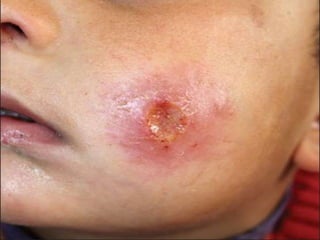
1- CUTANEOUS LEISHMANIAS
• The main symptom of this condition is painless skin
ulcers.
• Cutaneous symptoms may appear only one to two
weeks after the sandfly bite.
• However, sometimes symptoms will not appear for
months or years
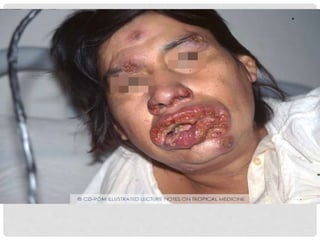
2- MUCOCUTANEOUS LEISHMANIASIS
• symptoms usually appear one to five years after skin
lesions have healed.
• These are primarily ulcers in the mouth and nose or on
the lips. Other symptoms may include:
• stuffy or runny nose
• nose bleeds
• difficulty breathing
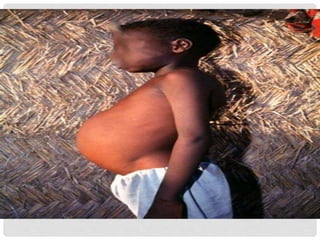
3- VISCERAL LEISHMANIASIS
• Symptoms often do not appear for
months after the bite. Most cases are
detected two to six months after
infection. Symptoms include:
• weight loss
• weakness
• cough
enlarged spleen
• enlarged liver
• decreased production of red blood cells (RBCs)
• bleeding
• thinning hair
• scaly skin or dark ashen skin
DENGUE
•Dengue fever is a disease
caused by an RNA virus of the
family (Flaviviridae)transmitted
by mosquitoes(Aedes).
•The Aedes aegypti mosquito is
the primary vector of dengue
DENGUE CONT…
• Many people, especially children and
teens, may experience no signs or
symptoms during a mild case of dengue
fever. When symptoms do occur, they
usually begin four to 10 days after you
are bitten by an infected mosquito.
CONT…
• Signs and symptoms of dengue fever most commonly
include:
• Fever, as high as 106 F (41 C)
• Headaches
• Muscle, bone and joint pain
• Pain behind your eyes
YELLOW FEVER
• Yellow fever is caused by flavivirus and
transmmited by mosquito(Aedes aegypti) and most
commonly found in parts of South America and Africa.
• the yellow fever virus incubates in the body for 3 to 6
days . In most cases, symptoms disappear after 3 to 4
days. More than Half of the patients who enter the toxic
phase die within 7 - 10 days.
• Yellow fever gets its name from two of its most obvious
symptoms: fever and yellowing of the skin.
YELLOW FEVER
Yellow fever include two phases :
• Acute phase
• Toxic phase
YELLOW FEVER CONT…
•acute phase, signs and
symptoms including:
• Fever
• Headache
• Muscle aches, particularly in your back and knees
• Sensitivity to light
• Nausea, vomiting or both
• Loss of appetite
• Dizziness
• Red eyes, face or tongue
YELLOW FEVER CONT…
• Toxic phase , signs and symptoms
including :
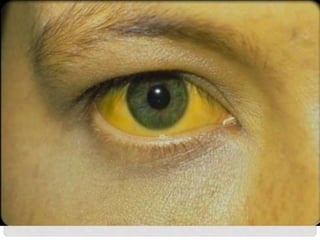
• Yellowing of the skin and the whites of the eyes (jaundice)
• Abdominal pain and vomiting
• Decreased urination
• Bleeding from the nose, mouth and eyes
• Slow heart rate (Bradycardia)
• Liver and kidney failure
• Brain dysfunction, including delirium, seizures and coma
• The toxic phase of yellow fever can be fatal.
FILARIASIS
• Filariasis is a parasitic infection caused by thread-like nematodes (filariae) .
• Filariasis causes no symptoms in the initial stages; the problems start after the
adult worms die.
• Types:
1-lymphatic filariasis (Elephantiasis) -
Edema with thickening of the skin and underlying tissues is the classical
symptom of elephantiasis. It usually affects the lower extremities.
• the lymphatic system is infected by the following types of worm: There are 3
types of these thread-like filarial worms:
• Wuchereria bancrofti, which is responsible for 90% of the cases
• Brugia malayi, which causes most of the remainder of the cases
• Brugia timori, which also causes the disease.
FILARIASIS CONT..
• 2- subcutaneous filariasis: This infection involves the
subcutaneous tissue and is caused by the worms Loa
loa, Onchocerca volvulus, Mansonella streptocerca,
and Dracunculus medinensis (guinea worm).
Symptoms of subcutaneous filariasis include:
• Skin rashes
• Hyper or hypo pigmented macules
• River blindness
FILARIASIS CONT..
• 3- serous filariasis: the infection occurs in the serous
cavity of the abdomen and is caused by Mansonella
perstans and Mansonella ozzardi.
Symptoms of serous filariasis include:
• Abdominal pain
• Skin rashes
• Arthritis
• Hyper or hypo pigmented macules
ZIKA VIRUS
• Zika is spread mostly by the bite of an
infected Aedes species mosquito (Ae.
aegypti (mainly)and Ae. albopictus). These
mosquitoes bite during the day and night.
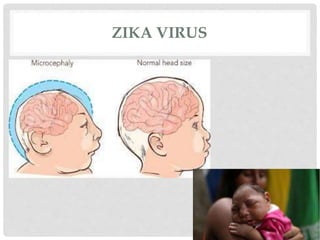
• Zika can be passed from a pregnant woman to her
fetus(through sexual contact). Infection during pregnancy
can cause certain birth defects.
• There is no vaccine or medicine for Zika.
• The incubation period (the time from exposure to
symptoms) of Zika virus disease is estimated to be 3–
14 days and usually last for 2–7 days
ZIKA VIRUS
• Many people infected with Zika virus won’t have
symptoms or will only have mild symptoms. The most
common symptoms of Zika are
• Fever
• Rash
• Headache
• Joint pain
• Conjunctivitis (red eyes)
• Muscle pain
ZIKA VIRUS
SUMMARY
• Leishmaniasis :
1-Cutaneous: painless skin alcers .. ect
2-Mucocutaneous: stuffy or runny nose nose bleeds
3-vasceral: weight loss, Weakness, cough .. ect
Dengue :
Headaches, Muscle, bone and joint pain
Yellow fever:
Acute phase: Fever, Headache
Toxic phase: Abdominal pain and vomiting, sometimes
of blood Decreased urination
SUMMARY CONT ..
• lymphatic filariasis (Elephantiasis) :
Edema with thickening of the skin and underlying tissues .. ect
• subcutaneous filariasis :
Skin rashes, Hyper or hypo pigmented macules
• serous filariasis :
Abdominal pain, Skin rashes and Arthritis.
• Zika is spread mostly by the bite of an infected Aedes species mosquito .
• The most common symptoms of Zika are:
• Fever , Rash , and Headache.
REFERENCES :

Vector Borne Disease

  • 1.
    C L IN I C A L M A N I F E S TAT I O N VECTOR BORNE DISEASE
  • 2.
    OBJECTIVE • Discuss clinicalmanifestation of important vector borne diseases
  • 3.
    VECTOR BORNE DISEASE •It’s a disease that results from an infection transmitted to humans and other animals by blood-feeding arthropods, such as mosquitoes, ticks, and fleas • Leishmaniasis, dengue, yellow fever, filariasis and zika virus.
  • 4.
    LEISHMANIASIS •Leishmaniasis is aparasitic disease. It is spread by the bite of an insect called a sand fly.
  • 5.
    LEISHMANIASIS CONT.. •There arethree types of the disease : • 1- Cutaneous leishmanias • 2- Visceral leishmaniasis (systemic leishmaniasis) • 3- Mucocutaneous Leishmaniasis
  • 6.
    1- CUTANEOUS LEISHMANIAS •The main symptom of this condition is painless skin ulcers. • Cutaneous symptoms may appear only one to two weeks after the sandfly bite. • However, sometimes symptoms will not appear for months or years
  • 8.
    2- MUCOCUTANEOUS LEISHMANIASIS •symptoms usually appear one to five years after skin lesions have healed. • These are primarily ulcers in the mouth and nose or on the lips. Other symptoms may include: • stuffy or runny nose • nose bleeds • difficulty breathing
  • 10.
    3- VISCERAL LEISHMANIASIS •Symptoms often do not appear for months after the bite. Most cases are detected two to six months after infection. Symptoms include: • weight loss • weakness • cough enlarged spleen • enlarged liver • decreased production of red blood cells (RBCs) • bleeding • thinning hair • scaly skin or dark ashen skin
  • 12.
    DENGUE •Dengue fever isa disease caused by an RNA virus of the family (Flaviviridae)transmitted by mosquitoes(Aedes). •The Aedes aegypti mosquito is the primary vector of dengue
  • 13.
    DENGUE CONT… • Manypeople, especially children and teens, may experience no signs or symptoms during a mild case of dengue fever. When symptoms do occur, they usually begin four to 10 days after you are bitten by an infected mosquito.
  • 14.
    CONT… • Signs andsymptoms of dengue fever most commonly include: • Fever, as high as 106 F (41 C) • Headaches • Muscle, bone and joint pain • Pain behind your eyes
  • 15.
    YELLOW FEVER • Yellowfever is caused by flavivirus and transmmited by mosquito(Aedes aegypti) and most commonly found in parts of South America and Africa. • the yellow fever virus incubates in the body for 3 to 6 days . In most cases, symptoms disappear after 3 to 4 days. More than Half of the patients who enter the toxic phase die within 7 - 10 days. • Yellow fever gets its name from two of its most obvious symptoms: fever and yellowing of the skin.
  • 16.
    YELLOW FEVER Yellow feverinclude two phases : • Acute phase • Toxic phase
  • 17.
    YELLOW FEVER CONT… •acutephase, signs and symptoms including: • Fever • Headache • Muscle aches, particularly in your back and knees • Sensitivity to light • Nausea, vomiting or both • Loss of appetite • Dizziness • Red eyes, face or tongue
  • 18.
    YELLOW FEVER CONT… •Toxic phase , signs and symptoms including : • Yellowing of the skin and the whites of the eyes (jaundice) • Abdominal pain and vomiting • Decreased urination • Bleeding from the nose, mouth and eyes • Slow heart rate (Bradycardia) • Liver and kidney failure • Brain dysfunction, including delirium, seizures and coma • The toxic phase of yellow fever can be fatal.
  • 20.
    FILARIASIS • Filariasis isa parasitic infection caused by thread-like nematodes (filariae) . • Filariasis causes no symptoms in the initial stages; the problems start after the adult worms die. • Types: 1-lymphatic filariasis (Elephantiasis) - Edema with thickening of the skin and underlying tissues is the classical symptom of elephantiasis. It usually affects the lower extremities. • the lymphatic system is infected by the following types of worm: There are 3 types of these thread-like filarial worms: • Wuchereria bancrofti, which is responsible for 90% of the cases • Brugia malayi, which causes most of the remainder of the cases • Brugia timori, which also causes the disease.
  • 21.
    FILARIASIS CONT.. • 2-subcutaneous filariasis: This infection involves the subcutaneous tissue and is caused by the worms Loa loa, Onchocerca volvulus, Mansonella streptocerca, and Dracunculus medinensis (guinea worm). Symptoms of subcutaneous filariasis include: • Skin rashes • Hyper or hypo pigmented macules • River blindness
  • 22.
    FILARIASIS CONT.. • 3-serous filariasis: the infection occurs in the serous cavity of the abdomen and is caused by Mansonella perstans and Mansonella ozzardi. Symptoms of serous filariasis include: • Abdominal pain • Skin rashes • Arthritis • Hyper or hypo pigmented macules
  • 24.
    ZIKA VIRUS • Zikais spread mostly by the bite of an infected Aedes species mosquito (Ae. aegypti (mainly)and Ae. albopictus). These mosquitoes bite during the day and night. • Zika can be passed from a pregnant woman to her fetus(through sexual contact). Infection during pregnancy can cause certain birth defects. • There is no vaccine or medicine for Zika. • The incubation period (the time from exposure to symptoms) of Zika virus disease is estimated to be 3– 14 days and usually last for 2–7 days
  • 25.
    ZIKA VIRUS • Manypeople infected with Zika virus won’t have symptoms or will only have mild symptoms. The most common symptoms of Zika are • Fever • Rash • Headache • Joint pain • Conjunctivitis (red eyes) • Muscle pain
  • 26.
  • 27.
    SUMMARY • Leishmaniasis : 1-Cutaneous:painless skin alcers .. ect 2-Mucocutaneous: stuffy or runny nose nose bleeds 3-vasceral: weight loss, Weakness, cough .. ect Dengue : Headaches, Muscle, bone and joint pain Yellow fever: Acute phase: Fever, Headache Toxic phase: Abdominal pain and vomiting, sometimes of blood Decreased urination
  • 28.
    SUMMARY CONT .. •lymphatic filariasis (Elephantiasis) : Edema with thickening of the skin and underlying tissues .. ect • subcutaneous filariasis : Skin rashes, Hyper or hypo pigmented macules • serous filariasis : Abdominal pain, Skin rashes and Arthritis. • Zika is spread mostly by the bite of an infected Aedes species mosquito . • The most common symptoms of Zika are: • Fever , Rash , and Headache.
  • 30.