Croup syndrome
Prepared by:
Shadhana Regmi
Introduction
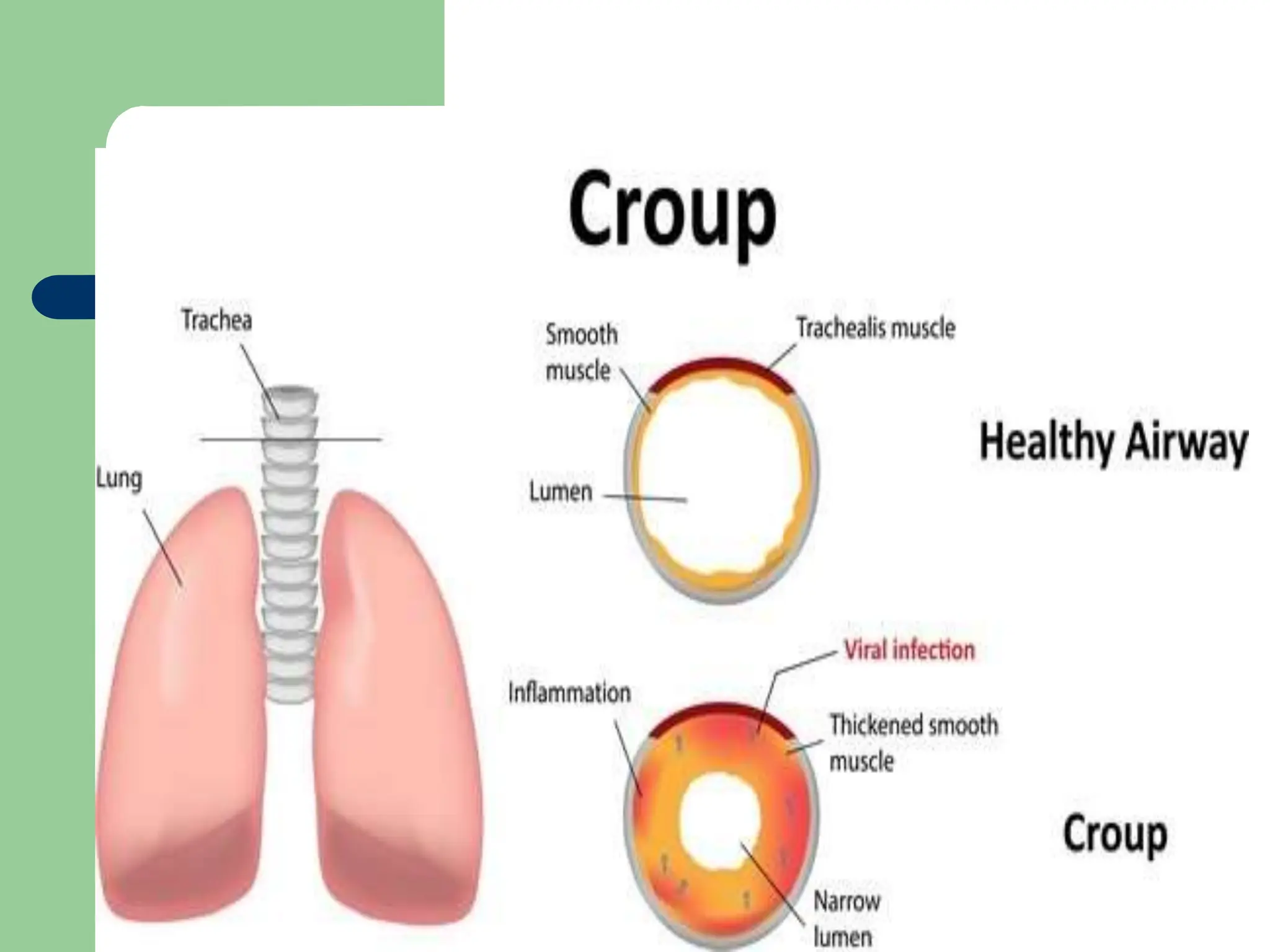
 Croup syndrome is a respiratory illness
characterized by inspiratory stridor cough
and hoarseness.
 It is the inflammation and obstruction of
larynx, trachea and major bronchi.
Contd…
 It is used to describe a variety of upper
respiratory conditions in children including
laryngitis, laryngotrachitis,
laryngotracheobronchitis or spasmodic
croup.
Incidence
 It is more common among children age 3- 36
months of age.
 It affects children between the ages of 3 months
to 6 years.
 It is more common in boys than girls.
Etiology
Viral
 Parainfluenza virus
 Measles
 Adenovirus
 Respiratory synctical virus
Bacterial
 Corynebacterium diptheriae
 Staphylococcus aureus
 Streptococcus pneumoniae
 Hemophilus influenzae
 Moraxella catarrhalis
Includes
 Acute epiglottitis
 Acute laryngitis
 Acute laryngotracheaobronchitis
 Acute spasmodic croup
Acute epiglottitis
 Epiglottitis is an acute, severe inflammation of the
epiglottis adjacent tissues usually caused by bacteria.
 The local inflammation and edema may lead to
severe airway obstruction resulting in severe hypoxia
needing tracheostomy.
 It is commonly seen in children between 3-6 years of
age.
Clinical manifestation
 Sudden onset of high fever( 38- 40 degree
celcius)
 Dysphagia
 Lethargy and dyspnea
 Restlessness and anxiety
 Hyperextension of neck, drooling and severe
sore throat.
Contd..
 Rapid thready pulse
 Characteristic tripod position
 Stridor or hoarseness may be present
 Hypoxia
Diagnostic evaluation
 History taking
 Physical examination: red and inflammed
throat with a large, cherry red, edematous
epiglottal enlargement which confirms a
diagnosis.
Contd..
 Complete blood count with differential
count reveals elevated white blood cells
count and neutrophils
 Blood culture may identify causative agent
Management
 Monitor for respiratory fatigue visually and with
continuous pulse oximetry.
 Administer humidified oxygen according to pulse
oximetry.
 Prepare equipment and expertise for immediate
intubation required in the event of respiratory failure.
Contd..
 Administer IV antibiotics.
 Administer anti- inflammatory drugs.
 Avoid sedatives that may suppress the
respiratory drive.
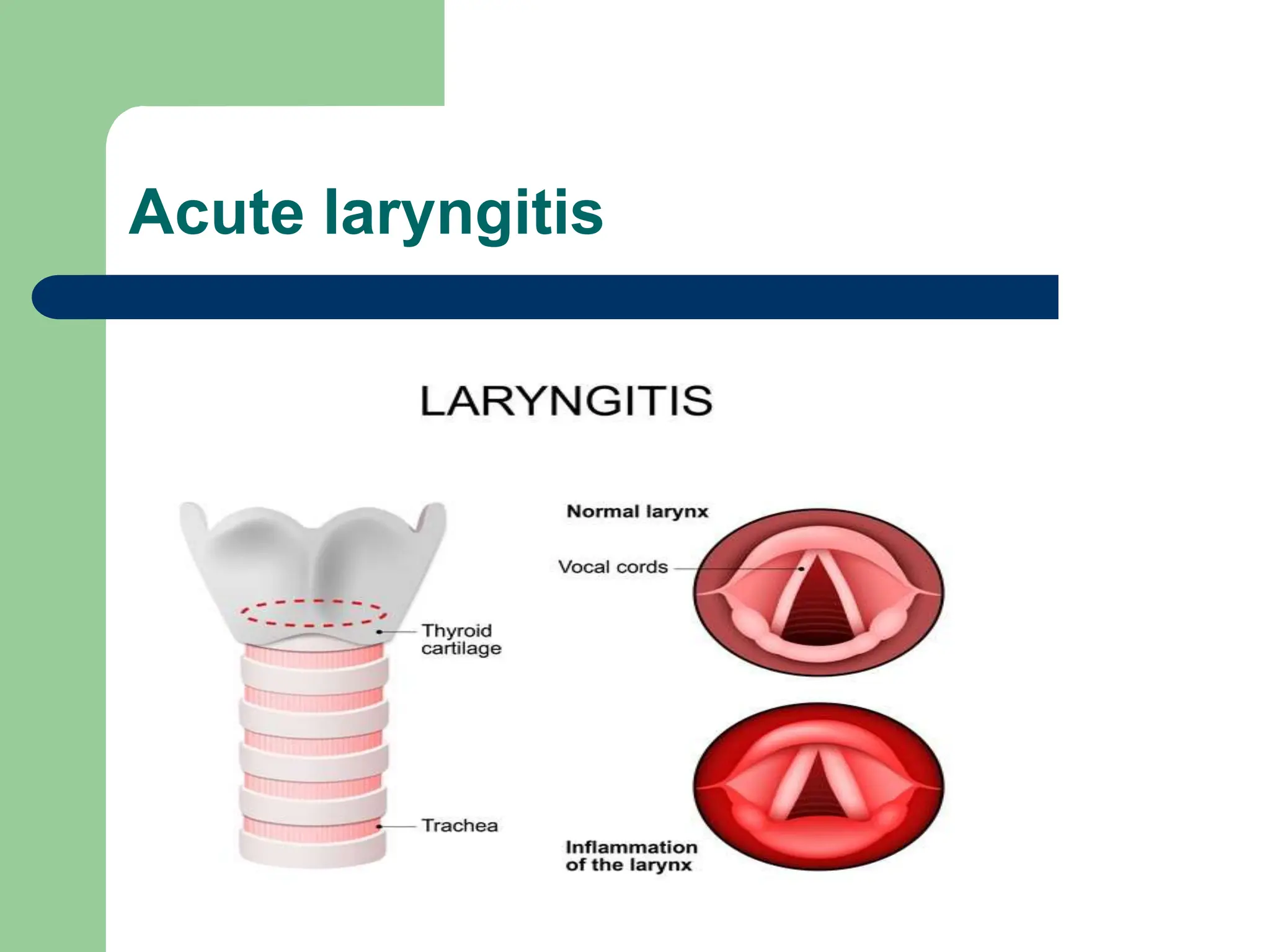
Acute laryngitis
Introduction
 Acute laryngitis is a common illness in
older children and adolescents.
 Viruses are the usual causative agents.
Clinical manifestations
 Hoarseness
 Coryza
 Sore throat
 Nasal congestion
 Fever, headache, myalgia and malaise
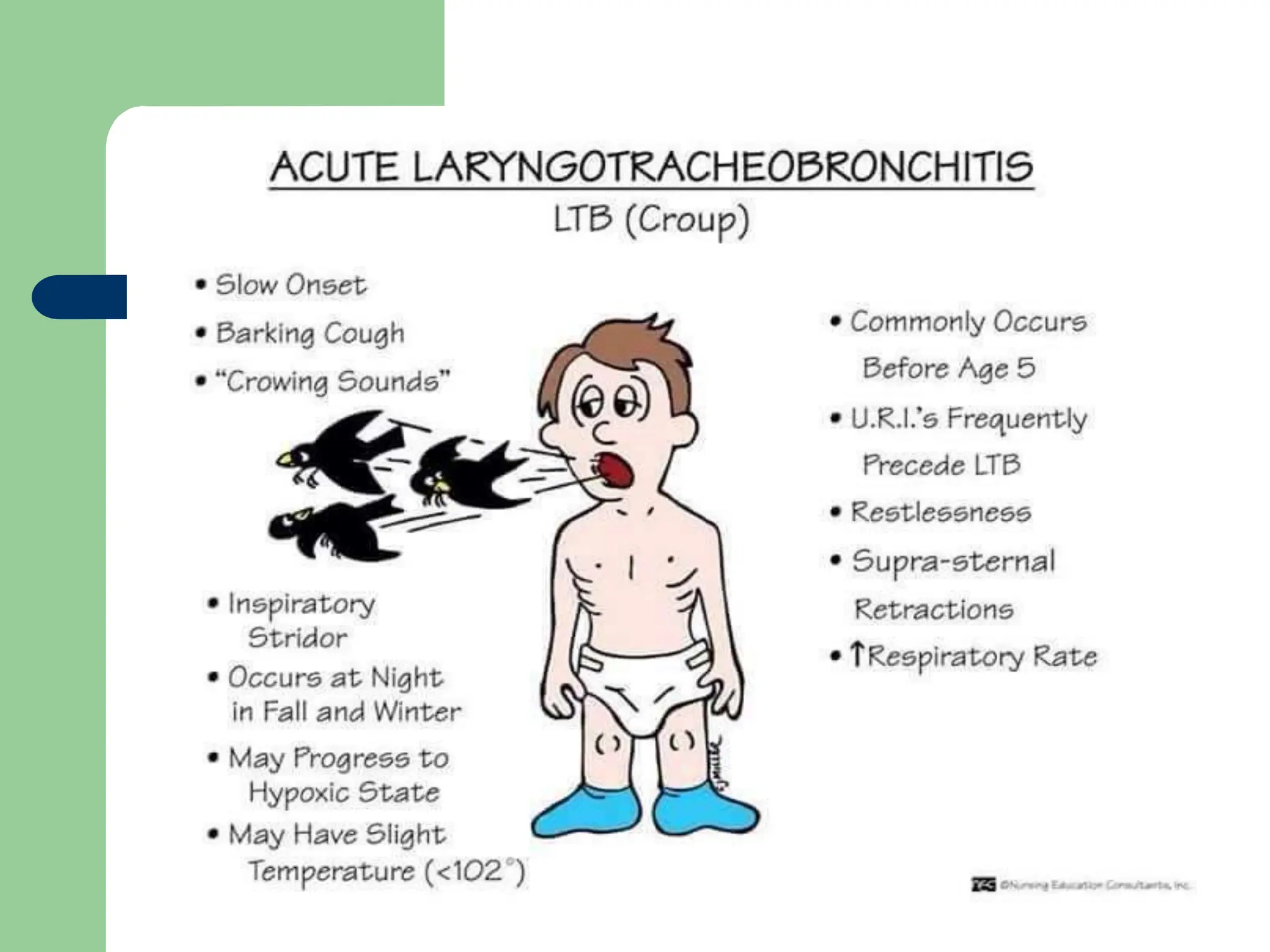
Acute laryngotracheaobronchitis
 Acute laryngotracheaobronchitis is
characterized by inflammation and
narrowing of the larynx and tracheal areas.
 It is the most common croup and usually
children younger than 5 years old.
Clinical manifestation
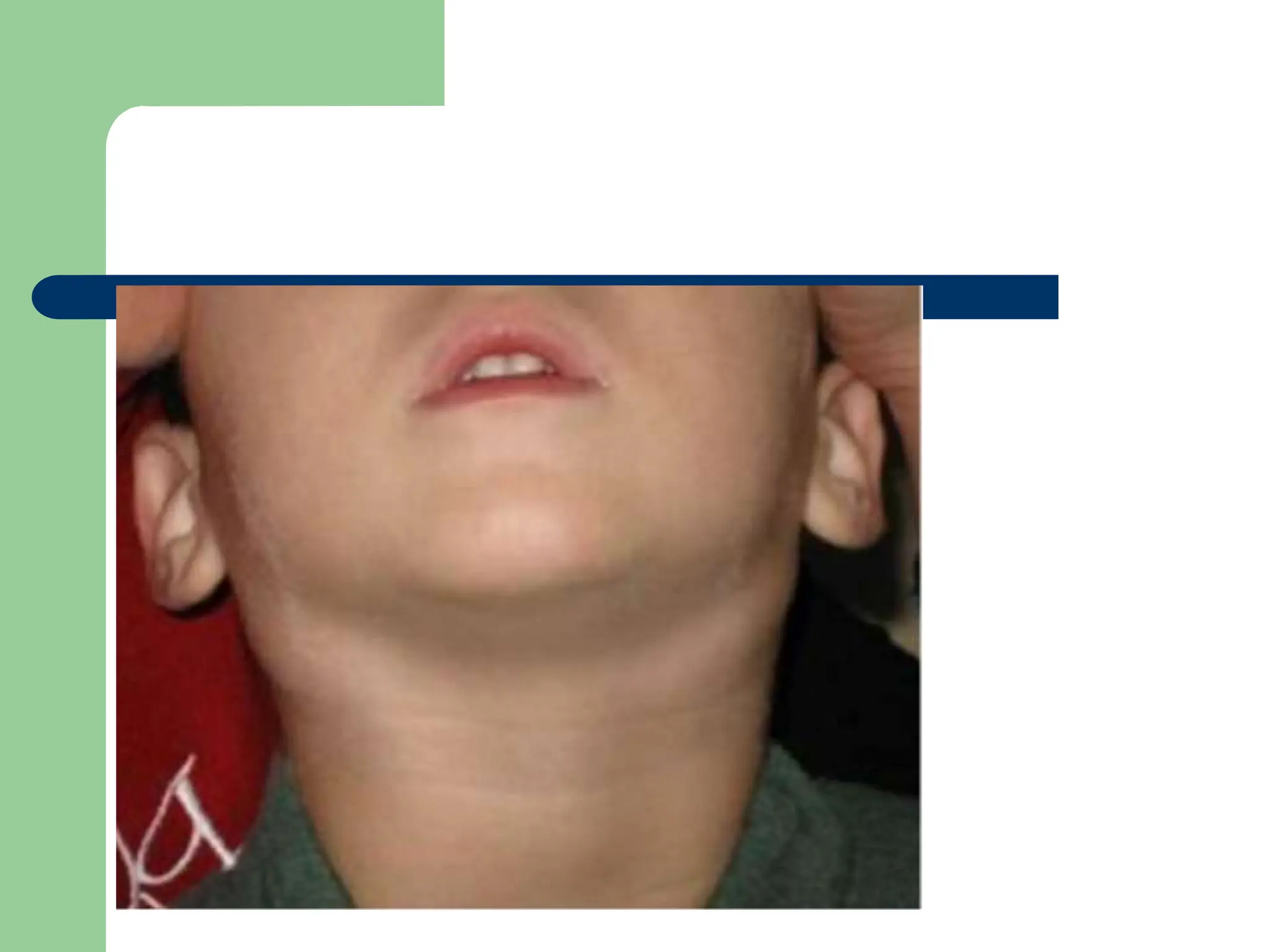
 Lowered pitch, hoarseness and loss of voice.
 A dry cough characterized by brassy, seal like
barking cough.
 Inspiratory stridor may be audible with the
stethoscope placed on anterior aspect of trachea.
Contd..
 Lymphadenopathy
 Tachypnea, tachycardia, and use of
accessory muscles
 Lower rib retraction, retraction of soft
tissues of neck.
 Restlessness, pallor, sweating.
 Fever
Acute spasmodic croup
 Acute spasmodic croup is characterized by
paroxysmal attack of laryngeal obstruction that
occurs mainly at night.
 It is similar to acute LTB, but it tends to occur at
night and reoccurs with respiratory tract infections.
 It is common among 1-3 years child.
Sign and symptoms
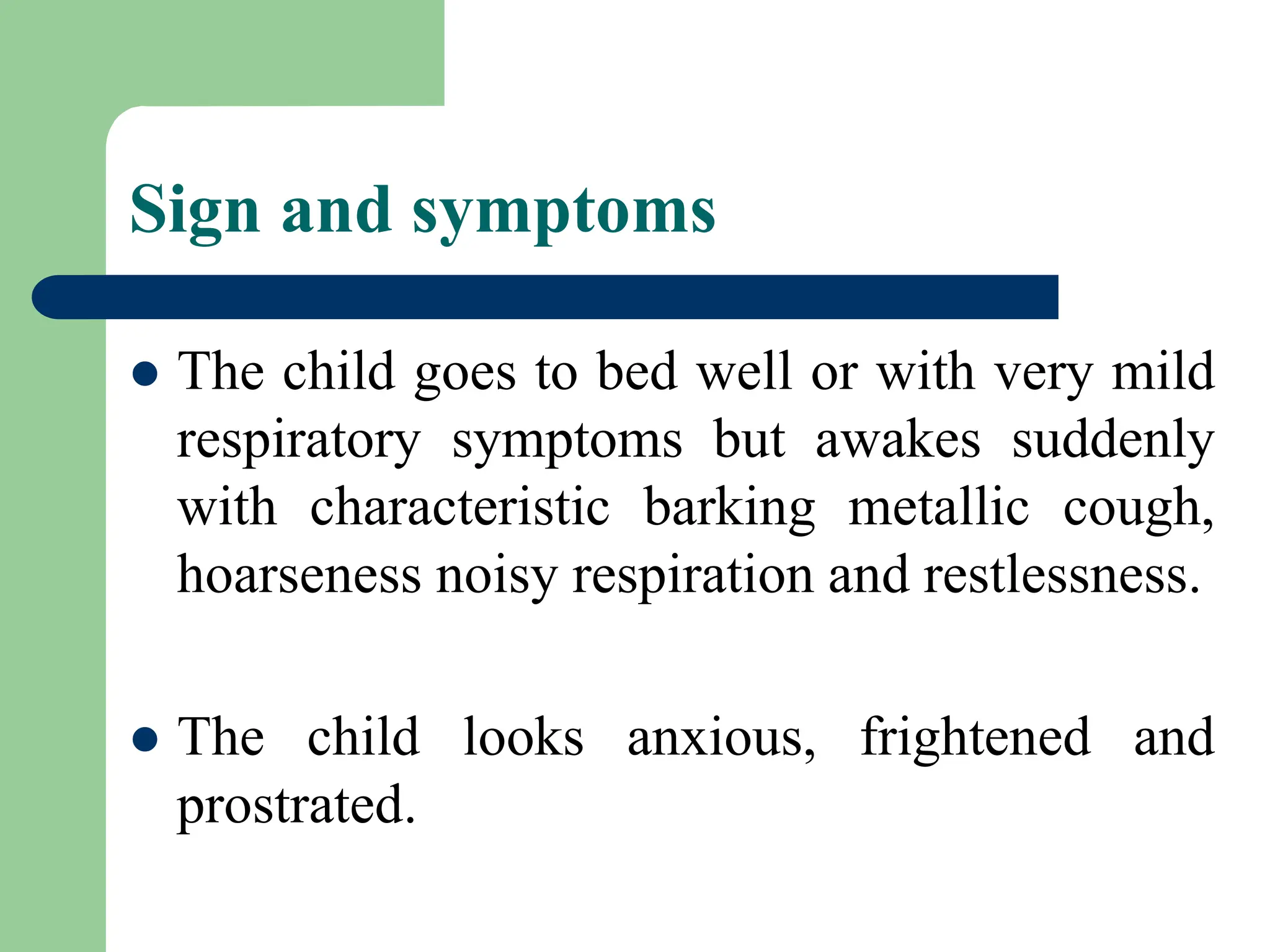
 The child goes to bed well or with very mild
respiratory symptoms but awakes suddenly
with characteristic barking metallic cough,
hoarseness noisy respiration and restlessness.
 The child looks anxious, frightened and
prostrated.
Management
 Patient may require hospitalization, especially infant
and young children who have hypoxemia.
 Keep the child on rest to conserve energy, keep in
upright position.
 IV or oral glucocorticosteroids are commonly used.
Contd..
 Antibiotics are appropriate for whooping
cough(pertusis) and prevent secondary
infection.
 Epinephrine inhalation may temporarily
dilate the airways by relaxing bronchial
smooth muscles and causing vasoconstriction
reducing mucosal inflammation.
Nursing management
 Monitor the pulse oximetry, and monitor the patient
for airway obstruction, which requires endotracheal
intubation.
 Monitor for respiratory fatigue visually and with
continuous pulse oximetry.
 Administer humidified oxygen. Plain nebulizer may
be used.
Contd..
 Carefully monitor cough and breathe sounds,
hoarseness, severity of retractions,
inspiratory stridor, cyanosis.
 Monitor and support respiration and control
fever.
Contd..
 Keep the child as quiet as possible, position
him propped up position.
 Provide small amounts regularly meals,
rather than large meals.
 Isolate the patient
Pleurisy
Contd..
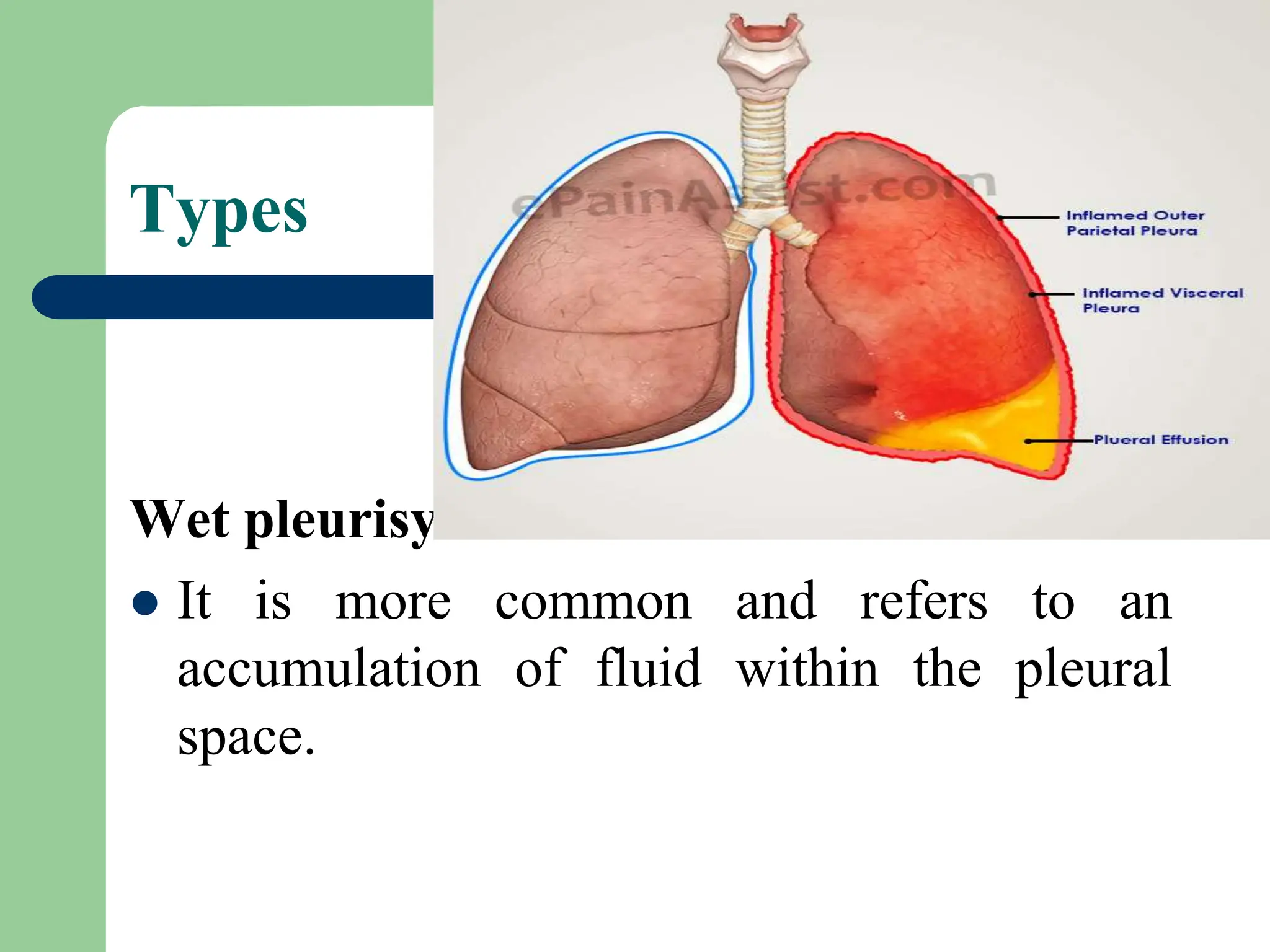
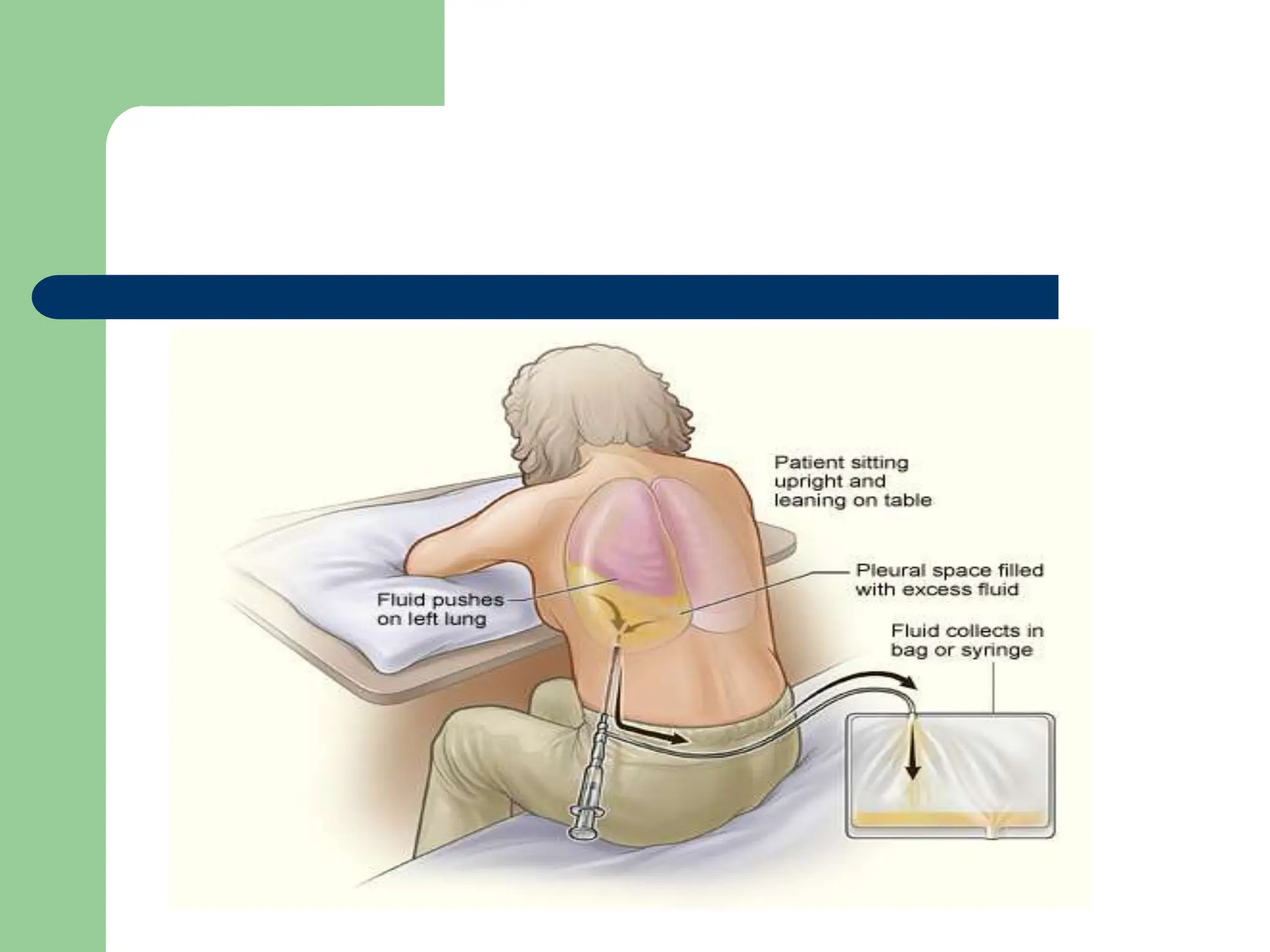
 Pleurisy is defined as the inflammation of
the pleura.
 It is also called pleuritis, is a condition that
generally stems from an existing
respiratory infection disease or injury.
Types
Wet pleurisy
 It is more common and refers to an
accumulation of fluid within the pleural
space.
Contd..
pleurisy
 It is an inflammation of the pleural space
without fluid.
Causes
 Infection, including pneumonia, tuberculosis and
other bacterial or viral respiratory infections.
 Immune disorder including systemic lupus
erythematous, rheumatoid arthritis
 Disease including cancer, pancreatitis, liver
cirrhosis
Contd..
 Drug reaction such as isoniazid,
methotrexate,procarbazine, hydralazine,
phenytion and quinidine etc.
 Injury in the chest such as rib fracture,
collapsed lungs
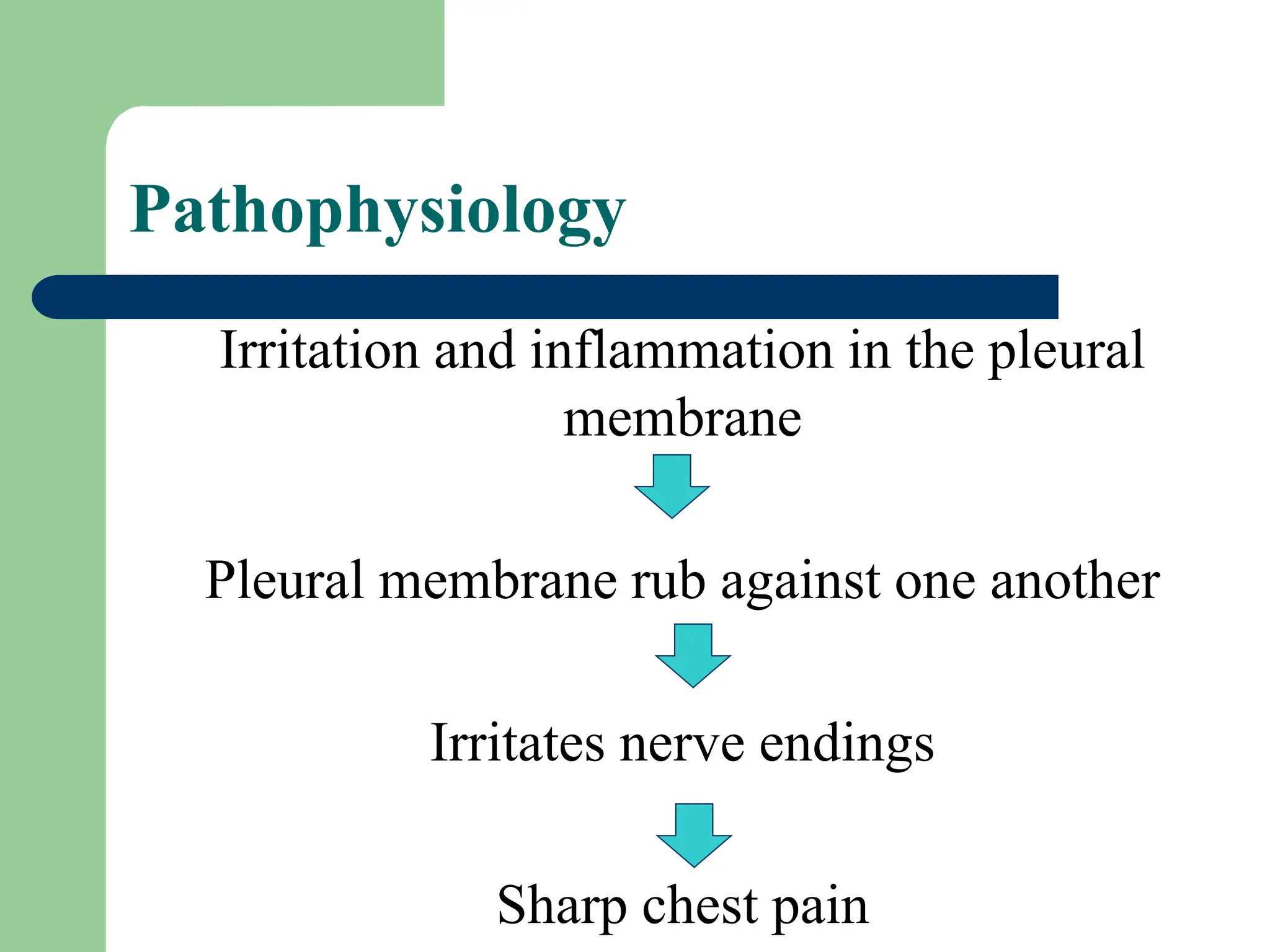
Pathophysiology
Irritation and inflammation in the pleural
membrane
Pleural membrane rub against one another
Irritates nerve endings
Sharp chest pain
Clinical features
 Chest pain: sharp pain caused by the pleura
rubbing against one another
 Cough
 Fever and general discomfort
 Rapid, shallow breathing
 Decreased breath sound
Diagnosis
 History taking
 Physical examination
 Chest X- ray: pleural thickening
 CT- scan and ultrasound
 Thoracocentesis and fluid alanysis
Treatment
 Treatment of primary cause
 Pain management: analgesic and anti-
inflammatory drugs such as acetaminophen,
ibuprofen and indomethasone.
 Codeine based cough syrup
 Antibiotics
 Thoracocentesis or chest tube insertion to
drain fluid
Nursing management
 Reassure the patient and explain about the
nature of pain.
 Keep the patient in comfortable position, turn
frequently in affected side.
 Encourage to do deep breathing and coughing
exercise.
 Give prescribed medication.
 Apply pressure in affected side.
References
 Shrestha T. “Essential Child Health Nursing”
2nd edition(2016), Medhavi Publication Jamal,
Kathmandu.
 Adhikari T. “Essentials of Pediatric Nursing”
2nd edition(2015), Vidayarthi Pustak Bhandar,
Bhotahity Kathmandu.
 https://www.healthline.com
Assignment
Define
 Croup syndrome
 Pleurisy
 Explain the causes of pleurisy.
Croup syndrome.pptx

Croup syndrome.pptx

  • 1.
  • 2.
    Introduction  Croup syndromeis a respiratory illness characterized by inspiratory stridor cough and hoarseness.  It is the inflammation and obstruction of larynx, trachea and major bronchi.
  • 3.
    Contd…  It isused to describe a variety of upper respiratory conditions in children including laryngitis, laryngotrachitis, laryngotracheobronchitis or spasmodic croup.
  • 4.
    Incidence  It ismore common among children age 3- 36 months of age.  It affects children between the ages of 3 months to 6 years.  It is more common in boys than girls.
  • 5.
    Etiology Viral  Parainfluenza virus Measles  Adenovirus  Respiratory synctical virus
  • 6.
    Bacterial  Corynebacterium diptheriae Staphylococcus aureus  Streptococcus pneumoniae  Hemophilus influenzae  Moraxella catarrhalis
  • 7.
    Includes  Acute epiglottitis Acute laryngitis  Acute laryngotracheaobronchitis  Acute spasmodic croup
  • 8.
    Acute epiglottitis  Epiglottitisis an acute, severe inflammation of the epiglottis adjacent tissues usually caused by bacteria.  The local inflammation and edema may lead to severe airway obstruction resulting in severe hypoxia needing tracheostomy.  It is commonly seen in children between 3-6 years of age.
  • 10.
    Clinical manifestation  Suddenonset of high fever( 38- 40 degree celcius)  Dysphagia  Lethargy and dyspnea  Restlessness and anxiety  Hyperextension of neck, drooling and severe sore throat.
  • 11.
    Contd..  Rapid threadypulse  Characteristic tripod position  Stridor or hoarseness may be present  Hypoxia
  • 12.
    Diagnostic evaluation  Historytaking  Physical examination: red and inflammed throat with a large, cherry red, edematous epiglottal enlargement which confirms a diagnosis.
  • 13.
    Contd..  Complete bloodcount with differential count reveals elevated white blood cells count and neutrophils  Blood culture may identify causative agent
  • 14.
    Management  Monitor forrespiratory fatigue visually and with continuous pulse oximetry.  Administer humidified oxygen according to pulse oximetry.  Prepare equipment and expertise for immediate intubation required in the event of respiratory failure.
  • 15.
    Contd..  Administer IVantibiotics.  Administer anti- inflammatory drugs.  Avoid sedatives that may suppress the respiratory drive.
  • 16.
  • 17.
    Introduction  Acute laryngitisis a common illness in older children and adolescents.  Viruses are the usual causative agents.
  • 18.
    Clinical manifestations  Hoarseness Coryza  Sore throat  Nasal congestion  Fever, headache, myalgia and malaise
  • 19.
    Acute laryngotracheaobronchitis  Acutelaryngotracheaobronchitis is characterized by inflammation and narrowing of the larynx and tracheal areas.  It is the most common croup and usually children younger than 5 years old.
  • 21.
    Clinical manifestation  Loweredpitch, hoarseness and loss of voice.  A dry cough characterized by brassy, seal like barking cough.  Inspiratory stridor may be audible with the stethoscope placed on anterior aspect of trachea.
  • 22.
    Contd..  Lymphadenopathy  Tachypnea,tachycardia, and use of accessory muscles  Lower rib retraction, retraction of soft tissues of neck.  Restlessness, pallor, sweating.  Fever
  • 25.
    Acute spasmodic croup Acute spasmodic croup is characterized by paroxysmal attack of laryngeal obstruction that occurs mainly at night.  It is similar to acute LTB, but it tends to occur at night and reoccurs with respiratory tract infections.  It is common among 1-3 years child.
  • 26.
    Sign and symptoms The child goes to bed well or with very mild respiratory symptoms but awakes suddenly with characteristic barking metallic cough, hoarseness noisy respiration and restlessness.  The child looks anxious, frightened and prostrated.
  • 27.
    Management  Patient mayrequire hospitalization, especially infant and young children who have hypoxemia.  Keep the child on rest to conserve energy, keep in upright position.  IV or oral glucocorticosteroids are commonly used.
  • 28.
    Contd..  Antibiotics areappropriate for whooping cough(pertusis) and prevent secondary infection.  Epinephrine inhalation may temporarily dilate the airways by relaxing bronchial smooth muscles and causing vasoconstriction reducing mucosal inflammation.
  • 29.
    Nursing management  Monitorthe pulse oximetry, and monitor the patient for airway obstruction, which requires endotracheal intubation.  Monitor for respiratory fatigue visually and with continuous pulse oximetry.  Administer humidified oxygen. Plain nebulizer may be used.
  • 30.
    Contd..  Carefully monitorcough and breathe sounds, hoarseness, severity of retractions, inspiratory stridor, cyanosis.  Monitor and support respiration and control fever.
  • 31.
    Contd..  Keep thechild as quiet as possible, position him propped up position.  Provide small amounts regularly meals, rather than large meals.  Isolate the patient
  • 32.
  • 33.
    Contd..  Pleurisy isdefined as the inflammation of the pleura.  It is also called pleuritis, is a condition that generally stems from an existing respiratory infection disease or injury.
  • 34.
    Types Wet pleurisy  Itis more common and refers to an accumulation of fluid within the pleural space.
  • 35.
    Contd.. pleurisy  It isan inflammation of the pleural space without fluid.
  • 36.
    Causes  Infection, includingpneumonia, tuberculosis and other bacterial or viral respiratory infections.  Immune disorder including systemic lupus erythematous, rheumatoid arthritis  Disease including cancer, pancreatitis, liver cirrhosis
  • 38.
    Contd..  Drug reactionsuch as isoniazid, methotrexate,procarbazine, hydralazine, phenytion and quinidine etc.  Injury in the chest such as rib fracture, collapsed lungs
  • 39.
    Pathophysiology Irritation and inflammationin the pleural membrane Pleural membrane rub against one another Irritates nerve endings Sharp chest pain
  • 40.
    Clinical features  Chestpain: sharp pain caused by the pleura rubbing against one another  Cough  Fever and general discomfort  Rapid, shallow breathing  Decreased breath sound
  • 41.
    Diagnosis  History taking Physical examination  Chest X- ray: pleural thickening  CT- scan and ultrasound  Thoracocentesis and fluid alanysis
  • 42.
    Treatment  Treatment ofprimary cause  Pain management: analgesic and anti- inflammatory drugs such as acetaminophen, ibuprofen and indomethasone.  Codeine based cough syrup  Antibiotics  Thoracocentesis or chest tube insertion to drain fluid
  • 44.
    Nursing management  Reassurethe patient and explain about the nature of pain.  Keep the patient in comfortable position, turn frequently in affected side.  Encourage to do deep breathing and coughing exercise.  Give prescribed medication.  Apply pressure in affected side.
  • 45.
    References  Shrestha T.“Essential Child Health Nursing” 2nd edition(2016), Medhavi Publication Jamal, Kathmandu.  Adhikari T. “Essentials of Pediatric Nursing” 2nd edition(2015), Vidayarthi Pustak Bhandar, Bhotahity Kathmandu.  https://www.healthline.com
  • 46.
    Assignment Define  Croup syndrome Pleurisy  Explain the causes of pleurisy.