Dr. Riyad Banayot
Neurofibroma axillary freckles and
café-au-lait spot
Café-au-lait spots
There are multiple café-au-lait spots and neurofibroma. There are also
multiple freckles at the axilla. The eyelid may show ptosis or has abnormal
shape due to the presence of plexiform neuroma.
Other features:
 Proptosis in patient with absent lesser
sphenoid wing or optic glioma or
meningioma
 Lisch's nodules in the iris
 Astrocytic hamartoma on the retina
 Neurofibromatosis type I or type II, both
are autosomal dominant.
 Type I is carried on chromosome 17q11.2
 Type II on chromosome 22.
The diagnosis is clinical, and requires the
presence of Two or more of the following:
 6 or more café-au-lait spots (diameter of 5 mm
in children and more than 15 mm in adults)
 Two or more neurofibromas or one plexiform
neurofibroma
 Freckles in t he axilla or the inguinal region
 Optic glioma
 Two or more Lisch's nodules
 A distinctive osseous lesion such as sphenoid
dysplasia or thinning of long bone cortex with or
without pseudoarthroses
 A parent, sibling or child with neurofibromatosis
according to the above criteria.
Right sided port-wine stain of the face
and ipsilateral tissue hypertrophy in
the distribution of the first and second
division of the trigeminal nerve
Left-sided port-wine stain with red eye due
to the presence of haemangioma of the
conjunctiva
The iris may be involved causing heterochromic iridis.
Examine the anterior segment for hemangioma and the presence of trabeculectomy
Examine the posterior segment for glaucomatous disc and choroidal haemangioma (this is diffuse
and may cause exudative retinal detachment).
 Unlike other Phakomatosis which has a
hereditary tendency, Sturge-Weber's
syndrome is a sporadic condition
 These are caused by abnormal ectatic
vessels in the dermis.
 Removal can be achieved with photo-
thermolysis using dye laser.
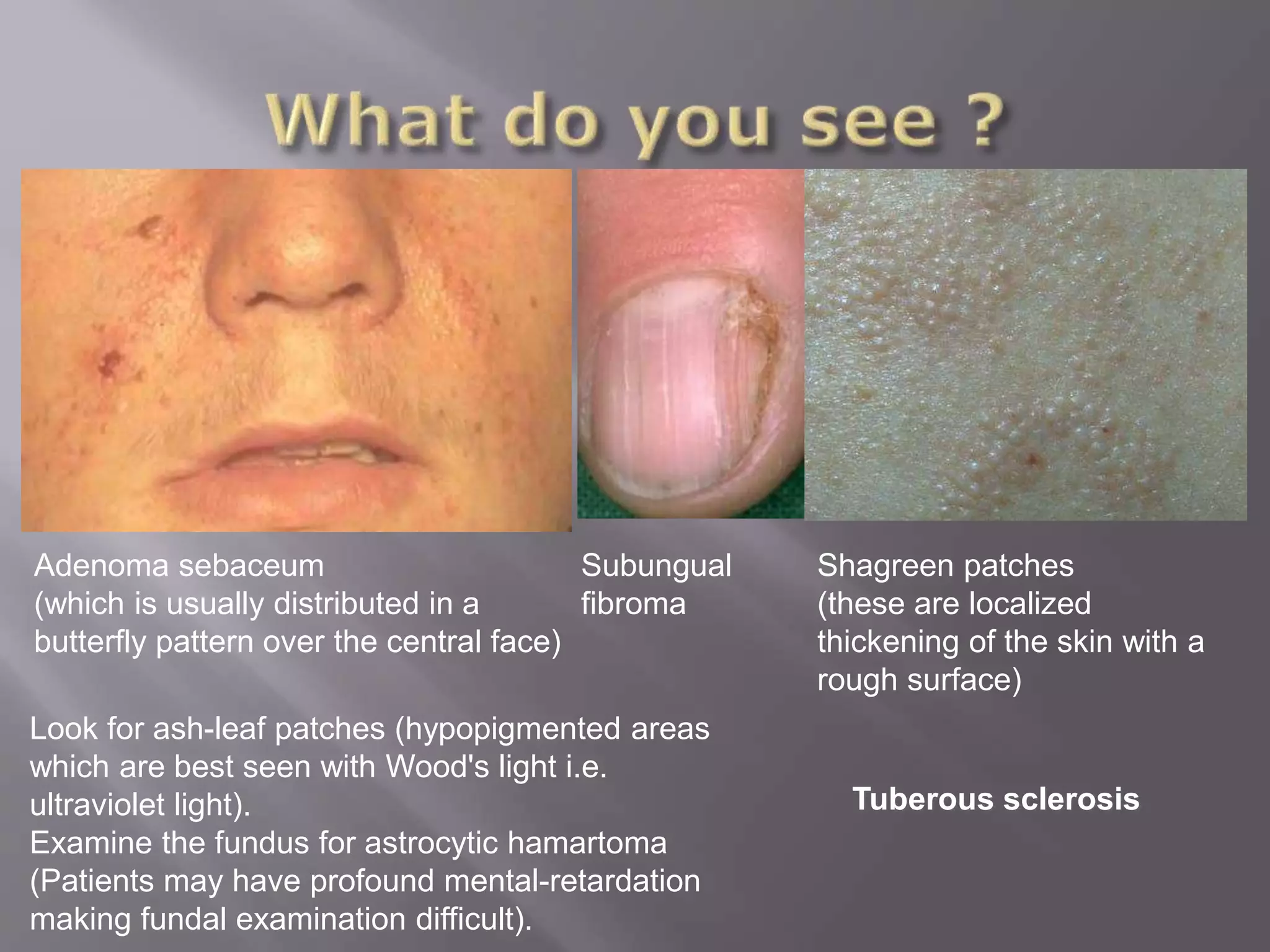
Look for ash-leaf patches (hypopigmented areas
which are best seen with Wood's light i.e.
ultraviolet light).
Examine the fundus for astrocytic hamartoma
(Patients may have profound mental-retardation
making fundal examination difficult).
Adenoma sebaceum
(which is usually distributed in a
butterfly pattern over the central face)
Subungual
fibroma
Shagreen patches
(these are localized
thickening of the skin with a
rough surface)
Tuberous sclerosis
 There are hypopigmented
patches which show
symmetrical distribution.
 Further examination:
(the condition is associated
with auto-immune disorders
and may be seen in a
variety of conditions which
can have ocular association)
 Vogt-Koyanagi-Harada's
disease (in patient with
uveitis, exudative retinal
detachment and poliosis)
 Sympathetic ophthalmitis
(in patients with unilateral
panuveitis and contralateral
traumatized eye)
 Thyroid eye disease
 Diabetes mellitus
Vitiligo
Typical facial feature in acne rosacea Cornea neovascularization in
rosacea keratitis
The face is red with telangiectasia, papules and pustules found mainly on the
nose, cheeks and chin. The nose may have irregular thickening of the skin with
large follicular orifices (rhinophyma).
Look for: Blepharitis, meibomian gland dysfunction, keratitis.
 Acne rosacea is a common skin condition of
unknown origin.
 Ocular involvement is common but most tend to
be mild.
 Ocular problems is more severe in males
 Eyelids show blepharo-conjunctivitis sometimes
with thick meibomian secretion (chalazion may
be present)
 There may be scars on the tarsal conjunctiva
suggesting previous recurrent chalazion.
 The cornea show pannus with or without
peripheral corneal thinning.
 There are subepithelial opacities especially
inferiorly
 The lid problems include blepharitis and chronic
meibomian inflammation.
 Lid hygiene and hot compresses are needed to keep the
lids comfortable.
 In severe cases, oral doxycycline is useful for a period
of 6 weeks but some patients may need the treatment
for much longer.
 The cornea problems are related to dry eyes,
neovascularization and peripheral ulceration.
 Dry eyes can be controlled with lid hygiene and artificial
tears.
 Neovascularization results from chronic corneal
inflammation, and low dose steroid is useful but should
be used with care due to the risk of perforation.
 Peripheral ulceration may result from Staphylococcal
hypersensitivity and the treatment involve lid hygiene
and low dose combination of steroid and antibiotic.
 Doxycycline/tetracycline
has the tendency for
binding to growing
structures that require
calcification (chiefly
teeth and bones). These
can result in unsightly
staining of the teeth,
dental hypoplasia and
bone mal-development.
 Doxycycline/tetracycline
should be avoided in
pregnant women and
young children. It is also
contraindicated in breast
feeding women as the
drug is secreted in
breast milk.
A 3-month pregnant
female develops
severe blepharitis and
keratitis secondary to
acne rosacea.
How would you treat
her ?

Common Cases: Skin conditions and the Eye

  • 1.
  • 3.
    Neurofibroma axillary frecklesand café-au-lait spot Café-au-lait spots There are multiple café-au-lait spots and neurofibroma. There are also multiple freckles at the axilla. The eyelid may show ptosis or has abnormal shape due to the presence of plexiform neuroma.
  • 4.
    Other features:  Proptosisin patient with absent lesser sphenoid wing or optic glioma or meningioma  Lisch's nodules in the iris  Astrocytic hamartoma on the retina
  • 5.
     Neurofibromatosis typeI or type II, both are autosomal dominant.  Type I is carried on chromosome 17q11.2  Type II on chromosome 22.
  • 6.
    The diagnosis isclinical, and requires the presence of Two or more of the following:  6 or more café-au-lait spots (diameter of 5 mm in children and more than 15 mm in adults)  Two or more neurofibromas or one plexiform neurofibroma  Freckles in t he axilla or the inguinal region  Optic glioma  Two or more Lisch's nodules  A distinctive osseous lesion such as sphenoid dysplasia or thinning of long bone cortex with or without pseudoarthroses  A parent, sibling or child with neurofibromatosis according to the above criteria.
  • 7.
    Right sided port-winestain of the face and ipsilateral tissue hypertrophy in the distribution of the first and second division of the trigeminal nerve Left-sided port-wine stain with red eye due to the presence of haemangioma of the conjunctiva
  • 8.
    The iris maybe involved causing heterochromic iridis. Examine the anterior segment for hemangioma and the presence of trabeculectomy Examine the posterior segment for glaucomatous disc and choroidal haemangioma (this is diffuse and may cause exudative retinal detachment).
  • 9.
     Unlike otherPhakomatosis which has a hereditary tendency, Sturge-Weber's syndrome is a sporadic condition
  • 10.
     These arecaused by abnormal ectatic vessels in the dermis.  Removal can be achieved with photo- thermolysis using dye laser.
  • 11.
    Look for ash-leafpatches (hypopigmented areas which are best seen with Wood's light i.e. ultraviolet light). Examine the fundus for astrocytic hamartoma (Patients may have profound mental-retardation making fundal examination difficult). Adenoma sebaceum (which is usually distributed in a butterfly pattern over the central face) Subungual fibroma Shagreen patches (these are localized thickening of the skin with a rough surface) Tuberous sclerosis
  • 12.
     There arehypopigmented patches which show symmetrical distribution.  Further examination: (the condition is associated with auto-immune disorders and may be seen in a variety of conditions which can have ocular association)  Vogt-Koyanagi-Harada's disease (in patient with uveitis, exudative retinal detachment and poliosis)  Sympathetic ophthalmitis (in patients with unilateral panuveitis and contralateral traumatized eye)  Thyroid eye disease  Diabetes mellitus Vitiligo
  • 13.
    Typical facial featurein acne rosacea Cornea neovascularization in rosacea keratitis
  • 14.
    The face isred with telangiectasia, papules and pustules found mainly on the nose, cheeks and chin. The nose may have irregular thickening of the skin with large follicular orifices (rhinophyma). Look for: Blepharitis, meibomian gland dysfunction, keratitis.
  • 15.
     Acne rosaceais a common skin condition of unknown origin.  Ocular involvement is common but most tend to be mild.  Ocular problems is more severe in males  Eyelids show blepharo-conjunctivitis sometimes with thick meibomian secretion (chalazion may be present)  There may be scars on the tarsal conjunctiva suggesting previous recurrent chalazion.  The cornea show pannus with or without peripheral corneal thinning.  There are subepithelial opacities especially inferiorly
  • 16.
     The lidproblems include blepharitis and chronic meibomian inflammation.  Lid hygiene and hot compresses are needed to keep the lids comfortable.  In severe cases, oral doxycycline is useful for a period of 6 weeks but some patients may need the treatment for much longer.  The cornea problems are related to dry eyes, neovascularization and peripheral ulceration.  Dry eyes can be controlled with lid hygiene and artificial tears.  Neovascularization results from chronic corneal inflammation, and low dose steroid is useful but should be used with care due to the risk of perforation.  Peripheral ulceration may result from Staphylococcal hypersensitivity and the treatment involve lid hygiene and low dose combination of steroid and antibiotic.
  • 17.
     Doxycycline/tetracycline has thetendency for binding to growing structures that require calcification (chiefly teeth and bones). These can result in unsightly staining of the teeth, dental hypoplasia and bone mal-development.  Doxycycline/tetracycline should be avoided in pregnant women and young children. It is also contraindicated in breast feeding women as the drug is secreted in breast milk. A 3-month pregnant female develops severe blepharitis and keratitis secondary to acne rosacea. How would you treat her ?