Department of Pathobiology
Faculty of Veterinary & Animal Sciences
PMAS Arid Agriculture University, Rawalpindi,
PAKISTAN
Conducted by: Dr. Rana Muhammad Imtiaz Ahmad Khan
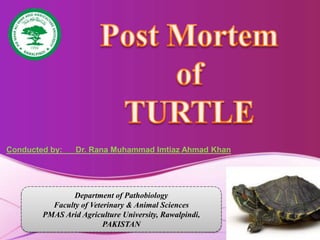
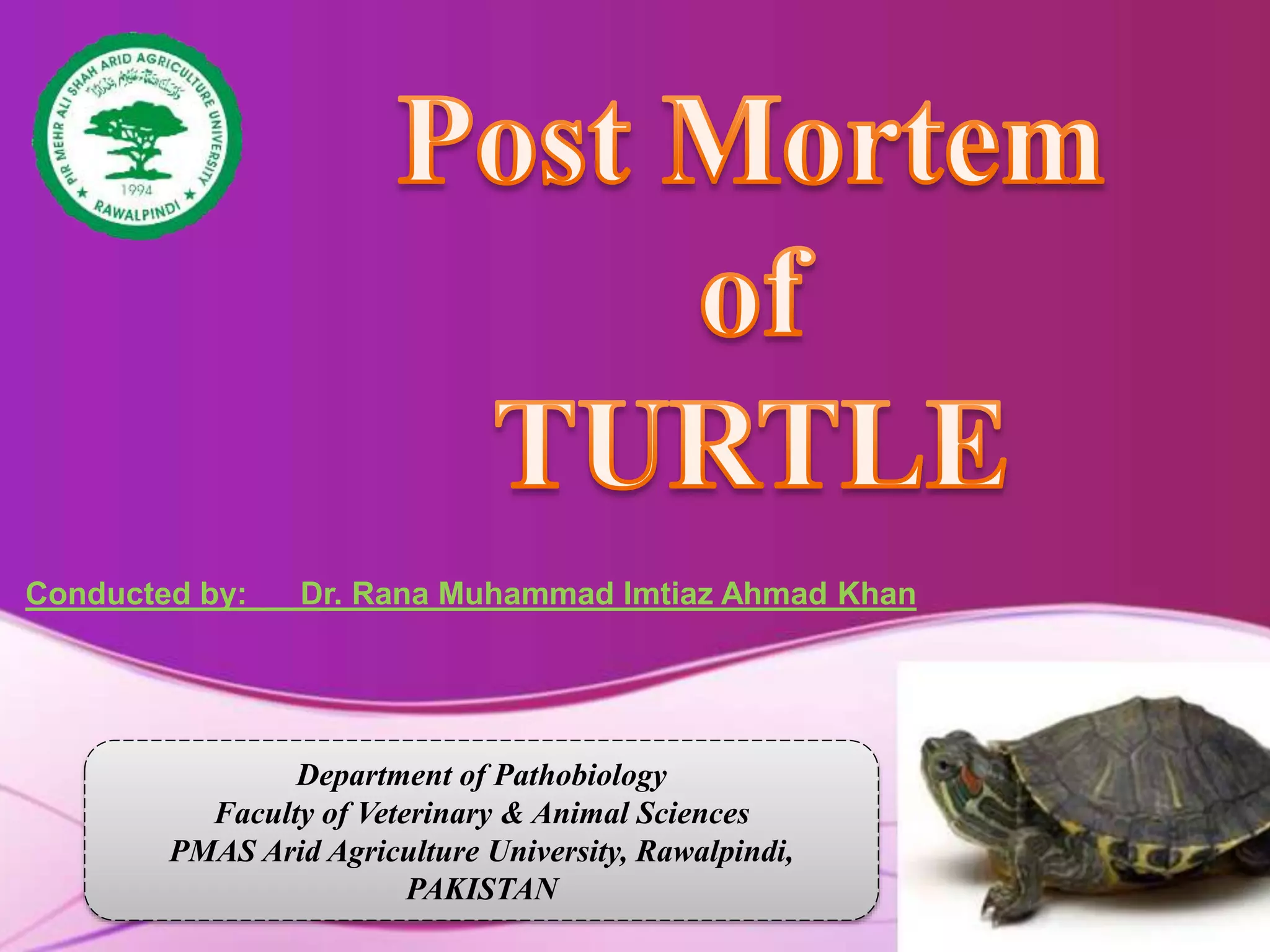
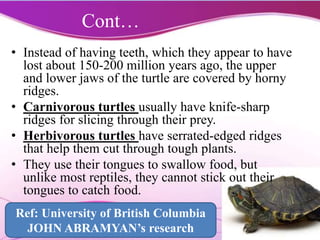
Turtle
Reptile
Enclosed in a double shield or shell , from
which the head, legs, and tail are protruded
Shell is an expansion of the vertebrae and ribs
Ocean swimmers, coming on shore only to lay
their eggs in the sands
Use their jaws to cut and chew food
No teeth, but have, horny jaws
Cont…
• Instead of having teeth, which they appear to have
lost about 150-200 million years ago, the upper
and lower jaws of the turtle are covered by horny
ridges.
• Carnivorous turtles usually have knife-sharp
ridges for slicing through their prey.
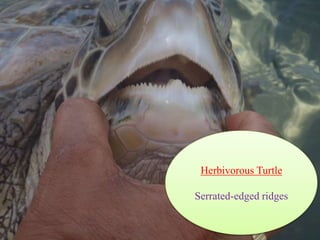
• Herbivorous turtles have serrated-edged ridges
that help them cut through tough plants.
• They use their tongues to swallow food, but
unlike most reptiles, they cannot stick out their
tongues to catch food.
Ref: University of British Columbia
JOHN ABRAMYAN’s research
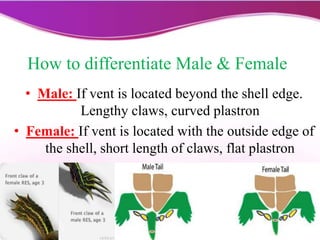
How to differentiate Male & Female
• Male: If vent is located beyond the shell edge.
Lengthy claws, curved plastron
• Female: If vent is located with the outside edge of
the shell, short length of claws, flat plastron
Herbivorous Turtle
Serrated-edged ridges
Post-Mortem Procedure
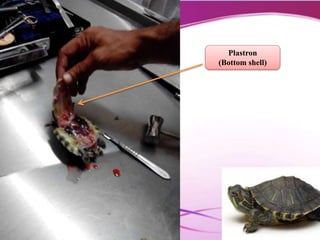
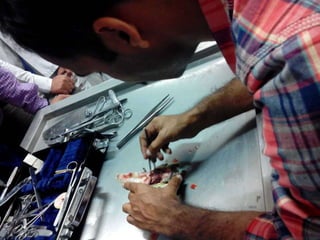
 From Ventral side the Plastron-shell was
dissected by using a Handsaw because the
shell was very hard
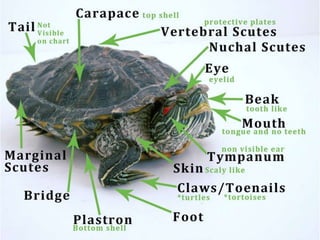
Plastron
(Bottom shell)
Post-Mortem Findings
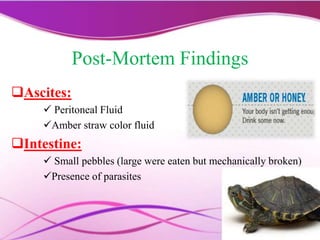
Ascites:
 Peritoneal Fluid
Amber straw color fluid
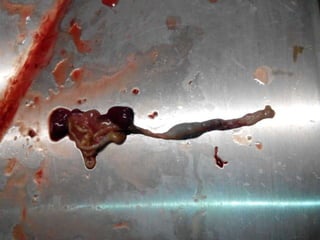
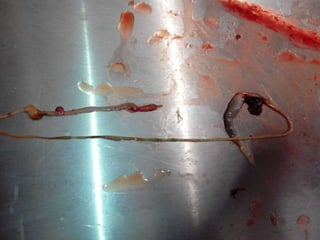
Intestine:
 Small pebbles (large were eaten but mechanically broken)
Presence of parasites
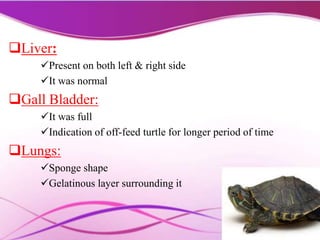
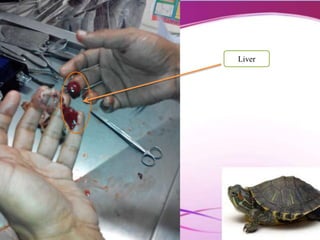
Liver:
Present on both left & right side
It was normal
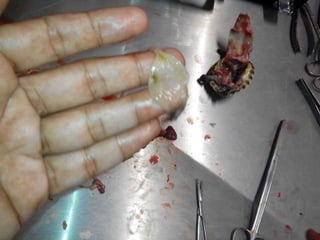
Gall Bladder:
It was full
Indication of off-feed turtle for longer period of time
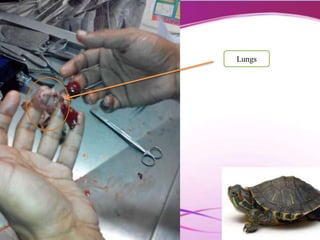
Lungs:
Sponge shape
Gelatinous layer surrounding it
Liver
Lungs
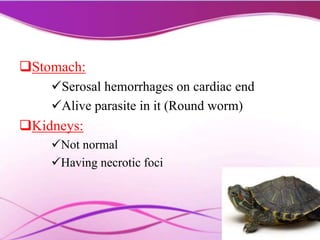
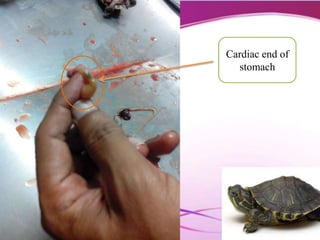
Stomach:
Serosal hemorrhages on cardiac end
Alive parasite in it (Round worm)
Kidneys:
Not normal
Having necrotic foci
Cardiac end of
stomach
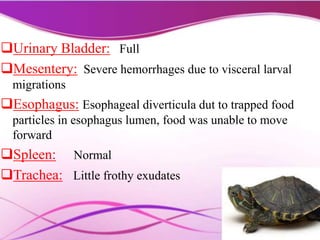
Urinary Bladder: Full
Mesentery: Severe hemorrhages due to visceral larval
migrations
Esophagus: Esophageal diverticula dut to trapped food
particles in esophagus lumen, food was unable to move
forward
Spleen: Normal
Trachea: Little frothy exudates
Sole cause of death was not single, that was multi-
factorial
i.e Parasitism, Choking of esophagus, Environmental
changes because that was house-hold turtle
Recommendations for rest of the
Turtles
Set the environment according to their desire
Check the feed & feed size
Keep the area clean i.e no larger pebbles
Deworming (only following dewormers are used for
Reptiles, not all)
Fenbendazole
Mebendazole
Praziquental
Postmortem of turtle

Postmortem of turtle

  • 1.
    Department of Pathobiology Facultyof Veterinary & Animal Sciences PMAS Arid Agriculture University, Rawalpindi, PAKISTAN Conducted by: Dr. Rana Muhammad Imtiaz Ahmad Khan
  • 2.
    Turtle Reptile Enclosed in adouble shield or shell , from which the head, legs, and tail are protruded Shell is an expansion of the vertebrae and ribs Ocean swimmers, coming on shore only to lay their eggs in the sands Use their jaws to cut and chew food No teeth, but have, horny jaws
  • 3.
    Cont… • Instead ofhaving teeth, which they appear to have lost about 150-200 million years ago, the upper and lower jaws of the turtle are covered by horny ridges. • Carnivorous turtles usually have knife-sharp ridges for slicing through their prey. • Herbivorous turtles have serrated-edged ridges that help them cut through tough plants. • They use their tongues to swallow food, but unlike most reptiles, they cannot stick out their tongues to catch food. Ref: University of British Columbia JOHN ABRAMYAN’s research
  • 5.
    How to differentiateMale & Female • Male: If vent is located beyond the shell edge. Lengthy claws, curved plastron • Female: If vent is located with the outside edge of the shell, short length of claws, flat plastron
  • 7.
  • 8.
    Post-Mortem Procedure  FromVentral side the Plastron-shell was dissected by using a Handsaw because the shell was very hard
  • 9.
  • 11.
    Post-Mortem Findings Ascites:  PeritonealFluid Amber straw color fluid Intestine:  Small pebbles (large were eaten but mechanically broken) Presence of parasites
  • 14.
    Liver: Present on bothleft & right side It was normal Gall Bladder: It was full Indication of off-feed turtle for longer period of time Lungs: Sponge shape Gelatinous layer surrounding it
  • 15.
  • 16.
  • 17.
    Stomach: Serosal hemorrhages oncardiac end Alive parasite in it (Round worm) Kidneys: Not normal Having necrotic foci
  • 18.
  • 20.
    Urinary Bladder: Full Mesentery:Severe hemorrhages due to visceral larval migrations Esophagus: Esophageal diverticula dut to trapped food particles in esophagus lumen, food was unable to move forward Spleen: Normal Trachea: Little frothy exudates
  • 21.
    Sole cause ofdeath was not single, that was multi- factorial i.e Parasitism, Choking of esophagus, Environmental changes because that was house-hold turtle
  • 22.
    Recommendations for restof the Turtles Set the environment according to their desire Check the feed & feed size Keep the area clean i.e no larger pebbles Deworming (only following dewormers are used for Reptiles, not all) Fenbendazole Mebendazole Praziquental