Submitted by:
Dr Gurram Srinivas
RVD/17-11
Dept of Poultry Science
Introduction
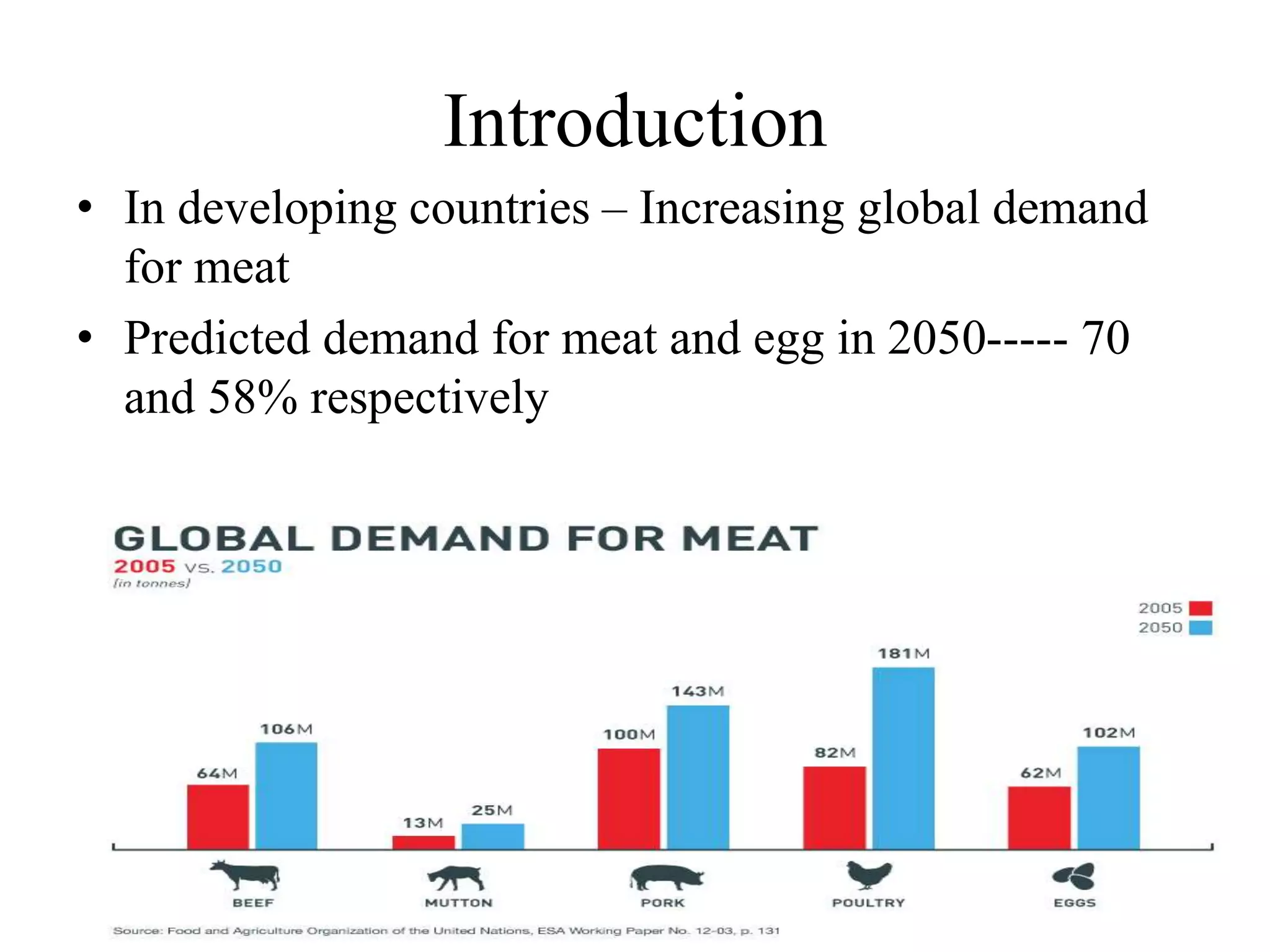
• In developing countries – Increasing global demand
for meat
• Predicted demand for meat and egg in 2050----- 70
and 58% respectively
Feed being the most challenging...
 Limited availability of natural resources
 Ongoing climatic changes and
 Food–feed–fuel competition
• High quality and quantity of
protein
• High digestibility
• High quality and quantity
of protein
• Best amino acid profile of
the vegetable protein
source
Protein ingredients
Fish meal Soybean meal
Need for alternative protein
• Cost of soybean meal and
fishmeal --- doubled
during the last five years -
--- 60-70% of production
costs
Reasons:
 Marine over exploitation
 Land availability for soya
cultivation is limited
So, alternative(animal)protein sources for livestockare
urgently needed.
One of the solution!
INSECTS!
Why Insects ?
(a) Large biodiversity and short life cycle
(b) Prevalent in most ecosystems and colonize a wide
range of habitats
(c) Large population and biomass
(d) Low breeding costs in general
(e) Breeding is simple and can be controlled easily
(f) Contain good quality of proteins
(g) High reproduction rate
Ramos-Elorduy (2005)
Contd...
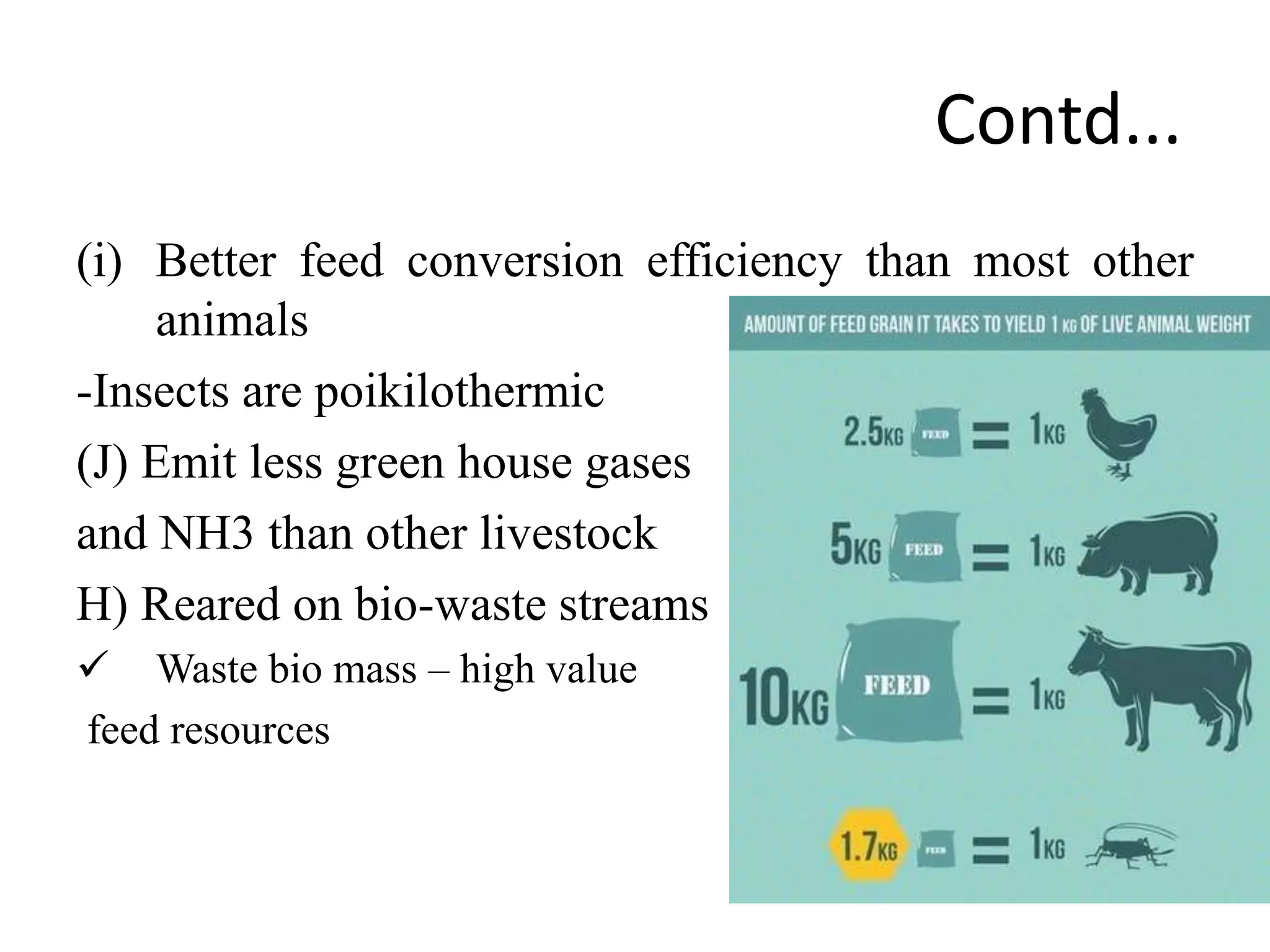
(i) Better feed conversion efficiency than most other
animals
-Insects are poikilothermic
(J) Emit less green house gases
and NH3 than other livestock
H) Reared on bio-waste streams
 Waste bio mass – high value
feed resources
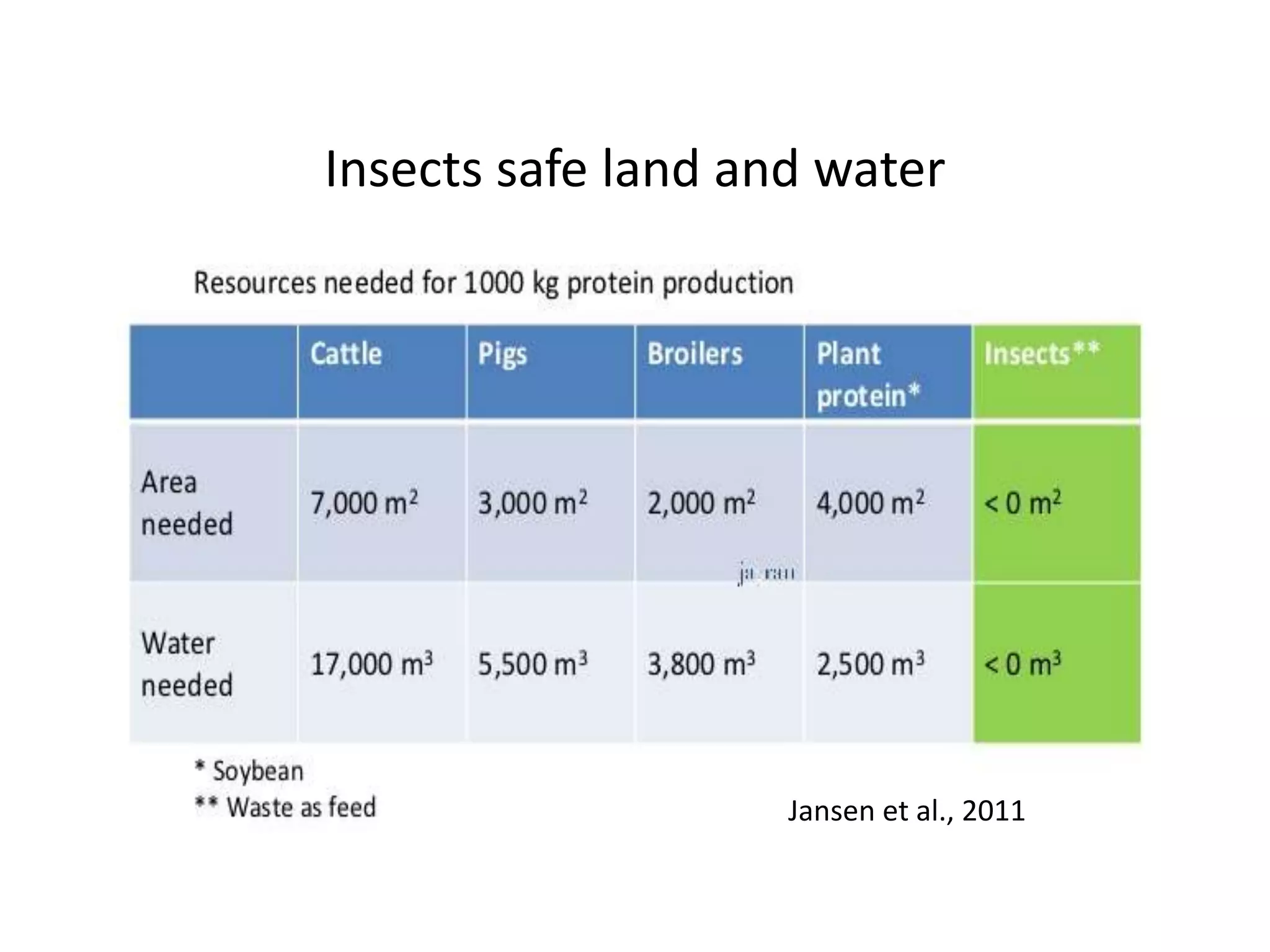
Insects safe land and water
Jansen et al., 2011
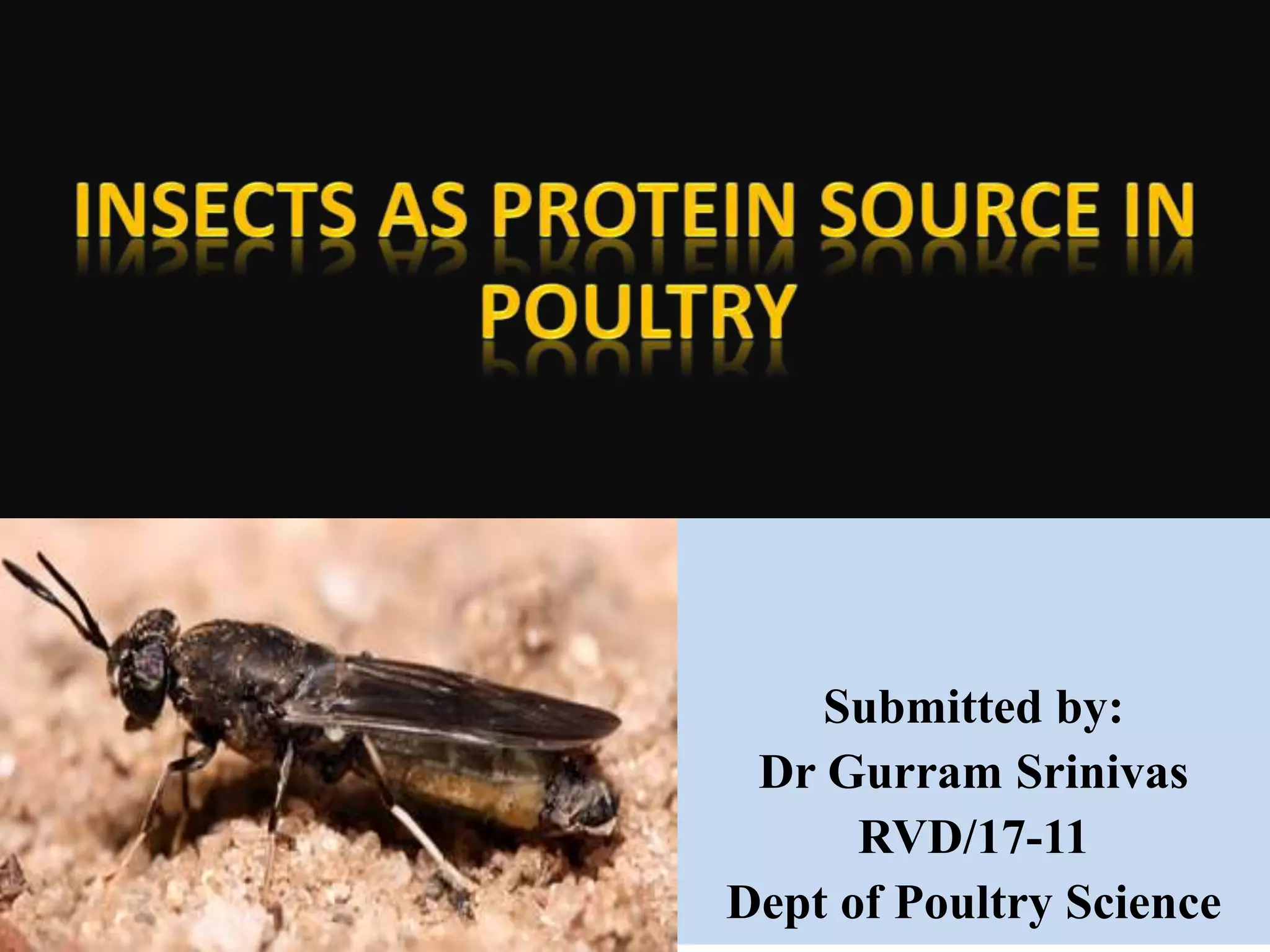
Insects -Novel Protein Source For
Animal Feeds
Protein 40-
60%
Essential
Amino acids
Minerals &
B-vitamins
MUFA
&PUFA
Insects could replace 25–100 % of soymeal or fishmeal depending on
the animal species
Rumpold & Schlüter,
2013)
Key insect species used as feed
• >2000 species
Black soldier flies
Common housefly larvae
Silkworms
Yellow mealworms
Grass hoppers and termites
Contd...
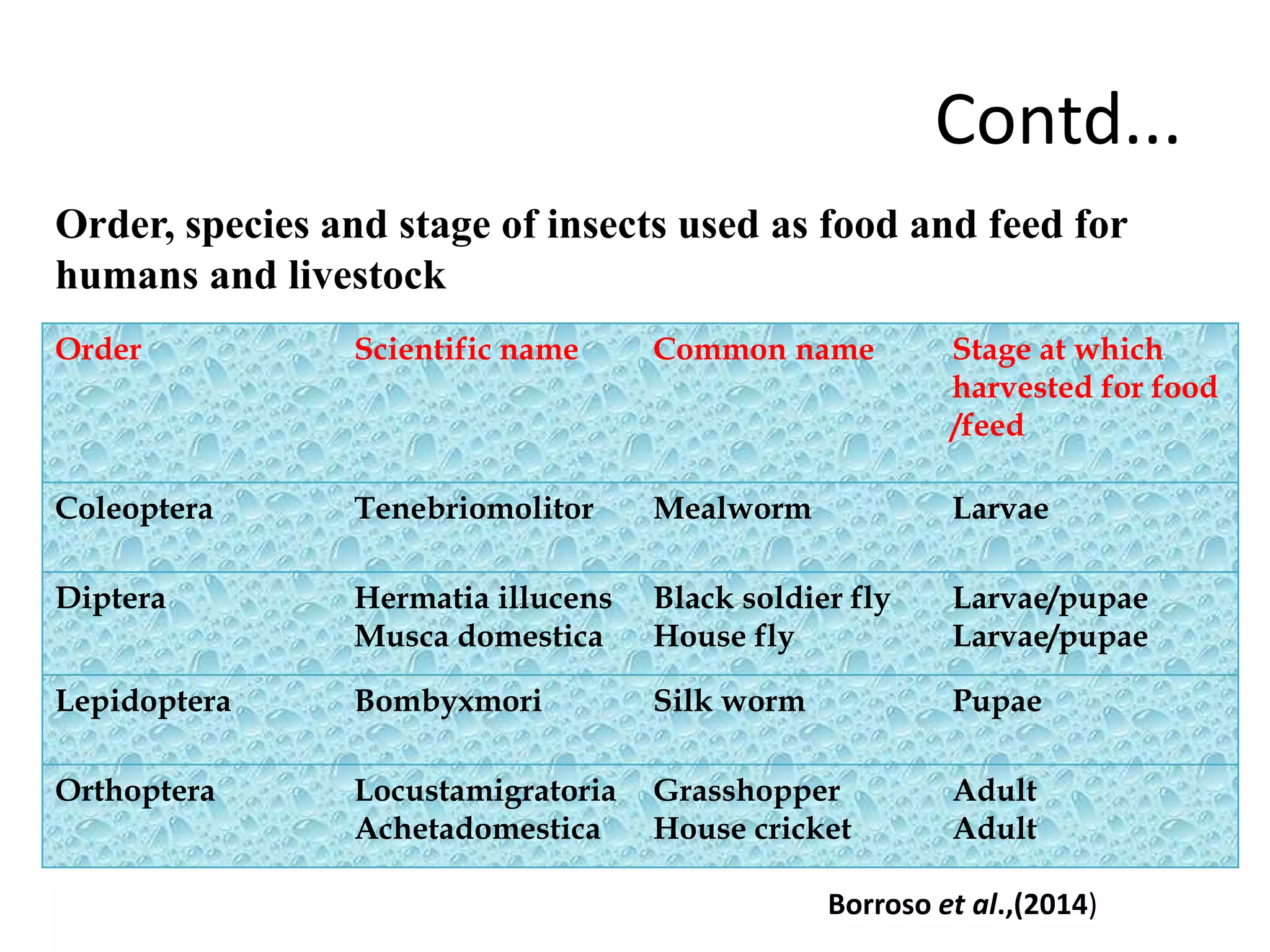
Order Scientific name Common name Stage at which
harvested for food
/feed
Coleoptera Tenebriomolitor Mealworm Larvae
Diptera Hermatia illucens
Musca domestica
Black soldier fly
House fly
Larvae/pupae
Larvae/pupae
Lepidoptera Bombyxmori Silk worm Pupae
Orthoptera Locustamigratoria
Achetadomestica
Grasshopper
House cricket
Adult
Adult
Order, species and stage of insects used as food and feed for
humans and livestock
Borroso et al.,(2014)
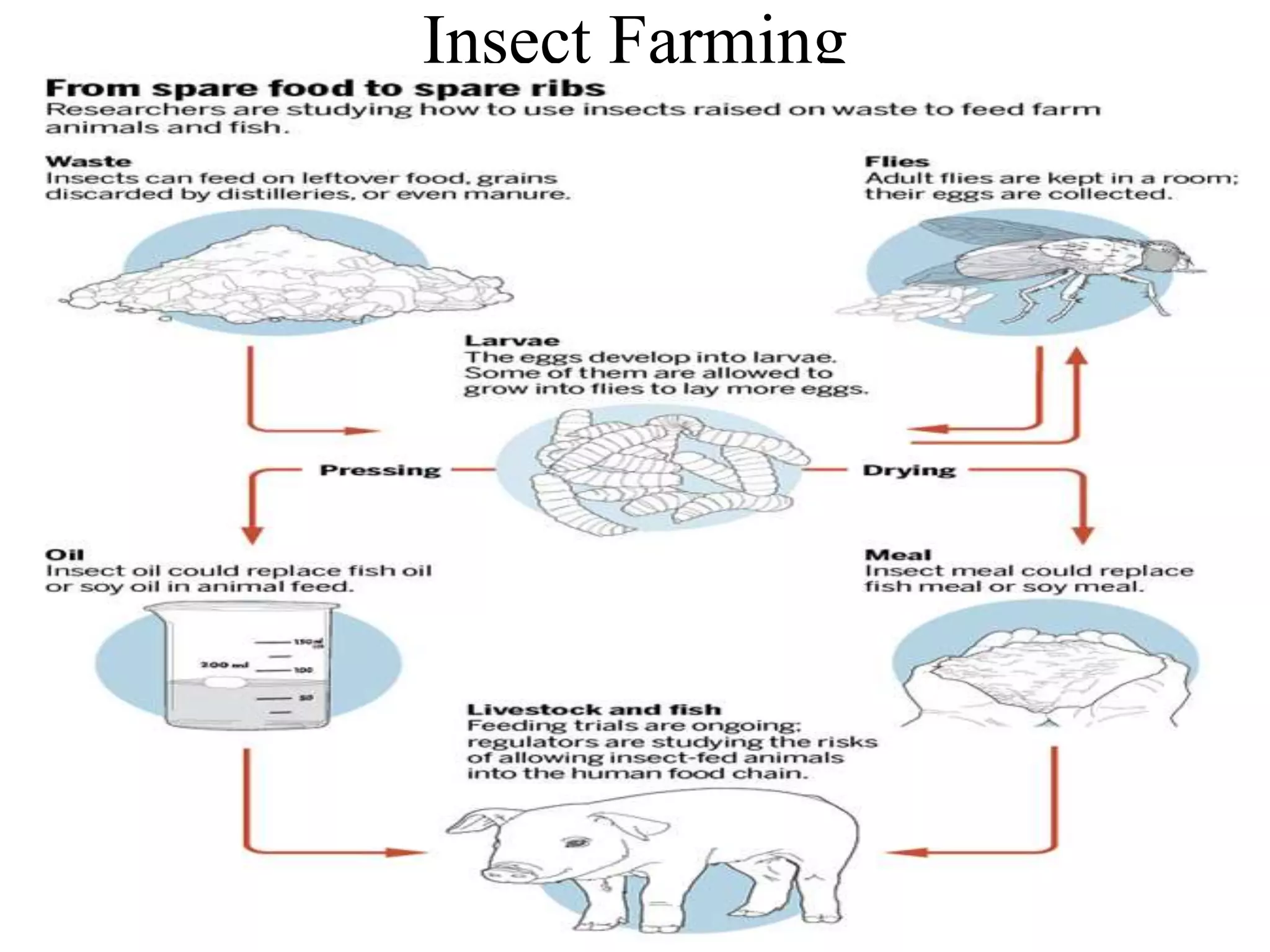
Insect Farming
• Provide with feed and water--- energy and nutrients --
-- maintenance, growth and production
• No hormones, antibiotics or chemicals except
biocides
Physical conditions
Time for hatching eggs
• Eggs – substrate –manually
mechanically
or by natural oviposition
species
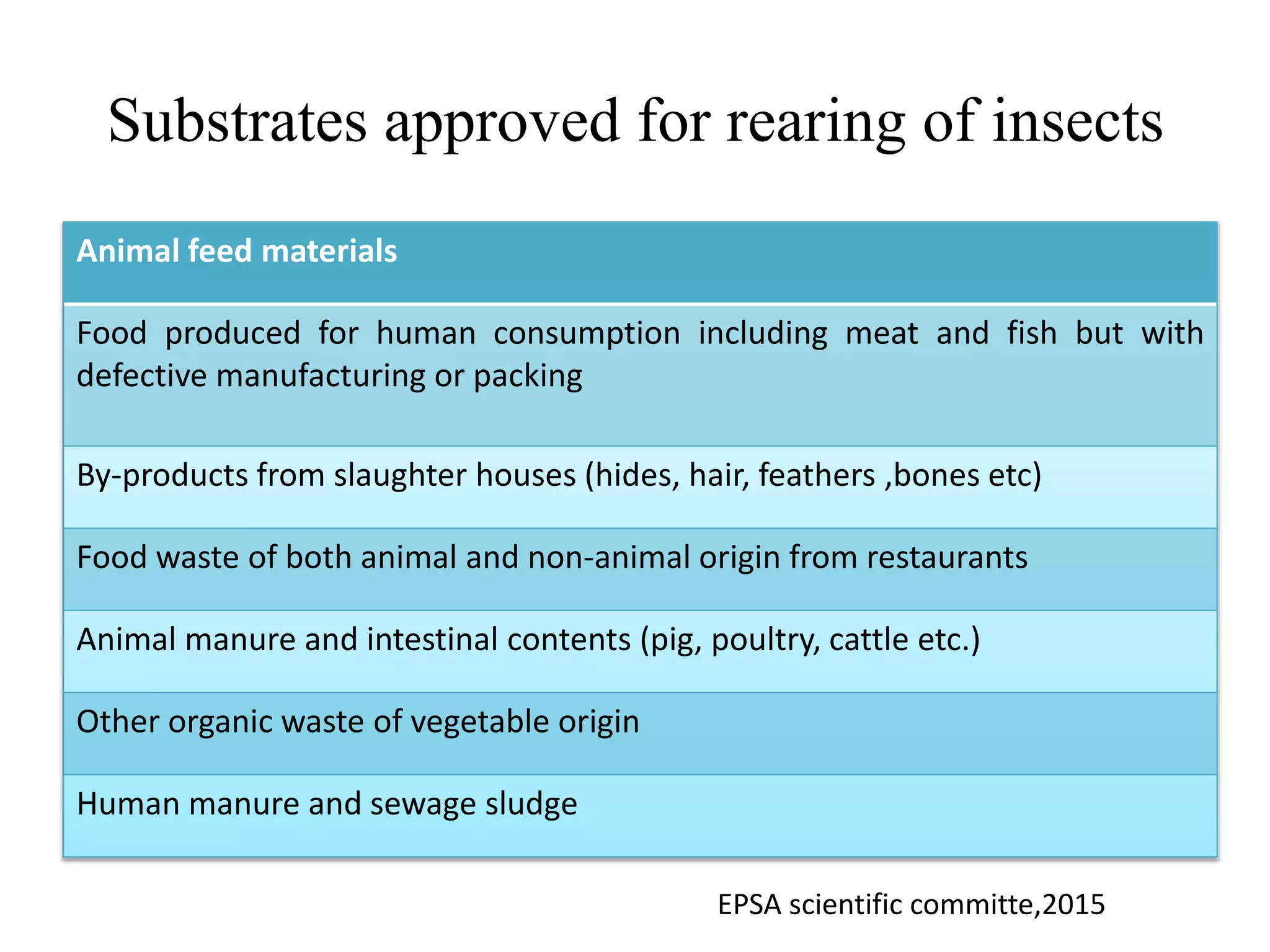
Substrates approved for rearing of insects
Animal feed materials
Food produced for human consumption including meat and fish but with
defective manufacturing or packing
By-products from slaughter houses (hides, hair, feathers ,bones etc)
Food waste of both animal and non-animal origin from restaurants
Animal manure and intestinal contents (pig, poultry, cattle etc.)
Other organic waste of vegetable origin
Human manure and sewage sludge
EPSA scientific committe,2015
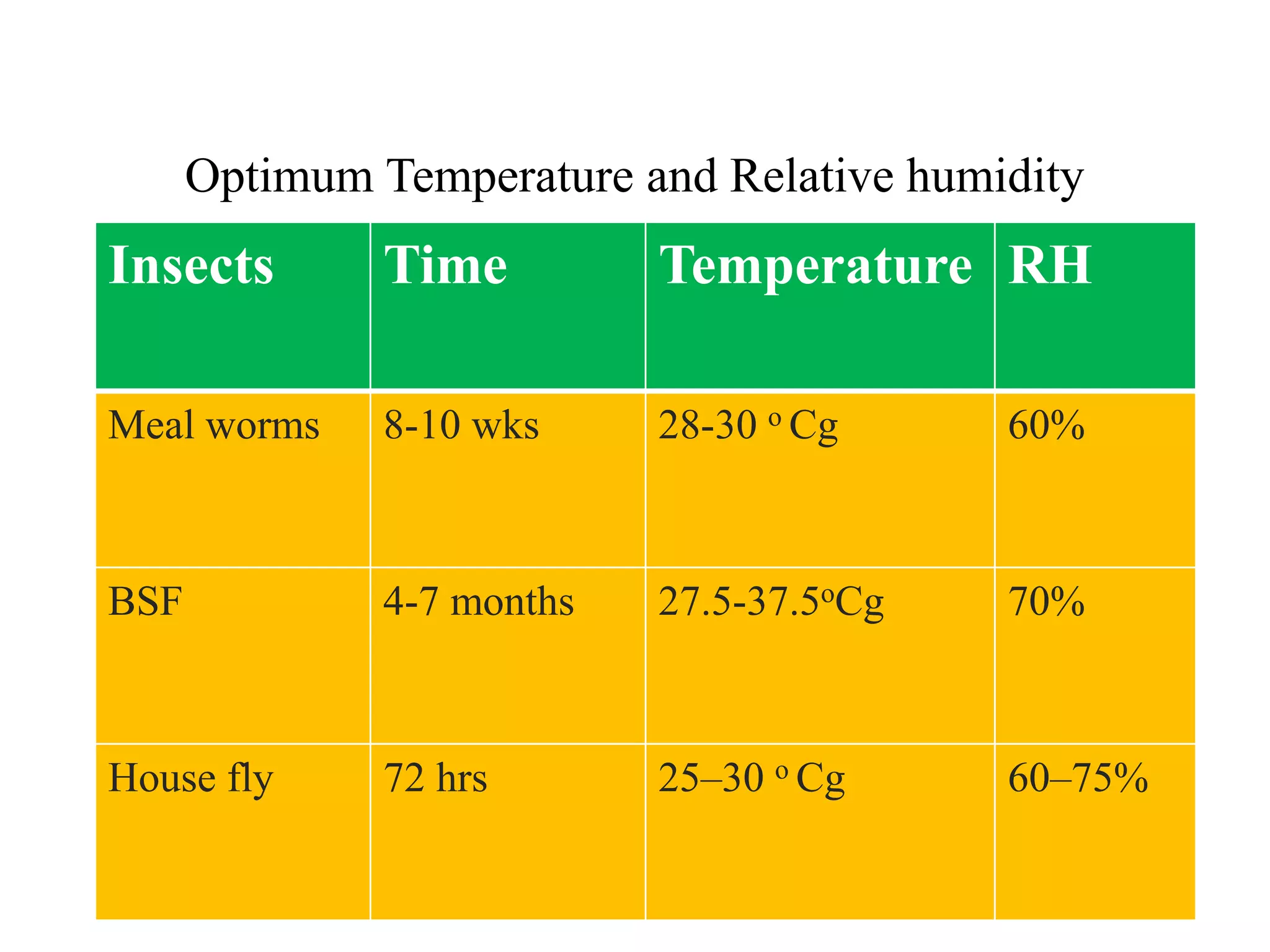
Optimum Temperature and Relative humidity
Insects Time Temperature RH
Meal worms 8-10 wks 28-30 o Cg 60%
BSF 4-7 months 27.5-37.5oCg 70%
House fly 72 hrs 25–30 o Cg 60–75%
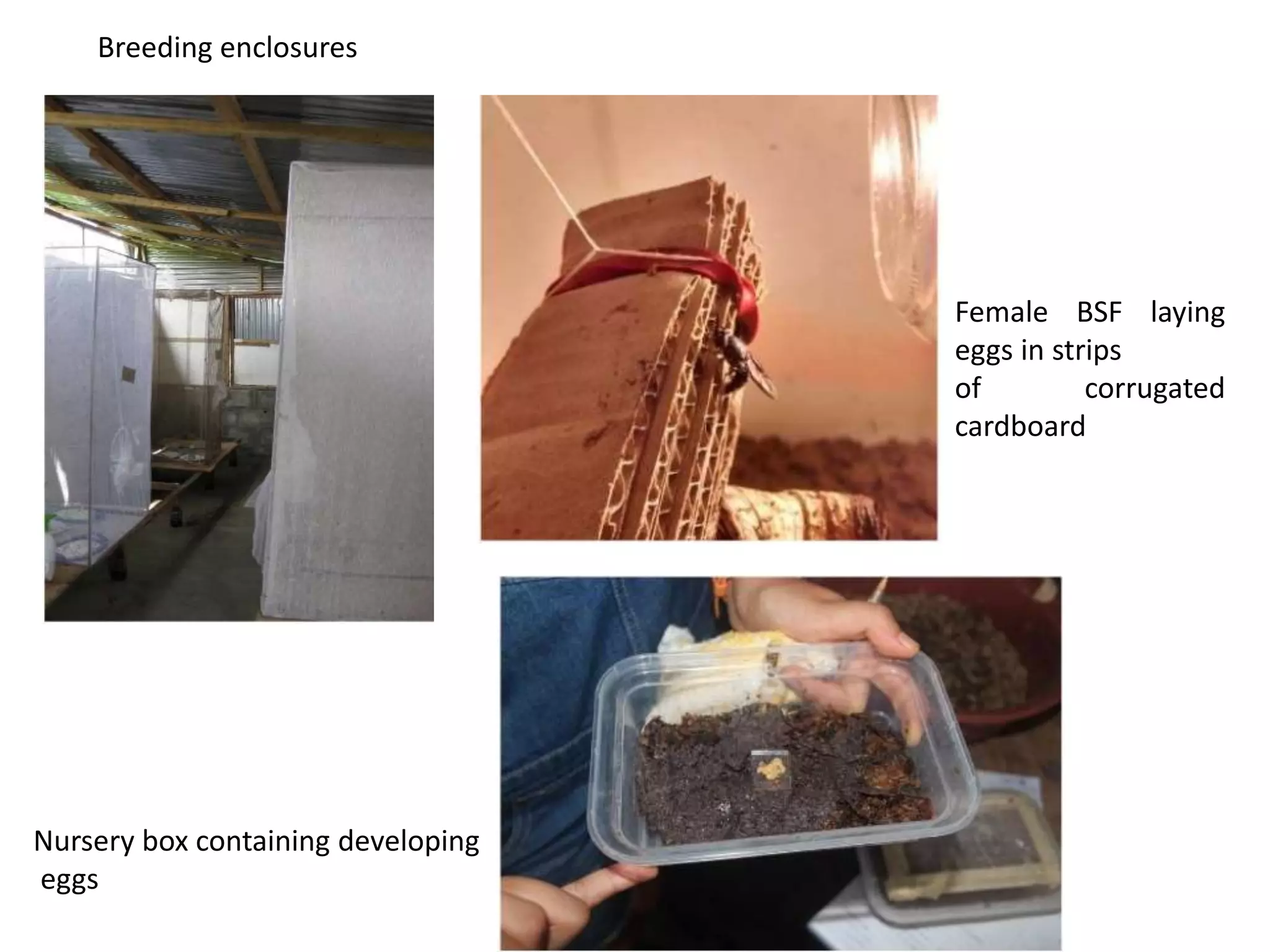
Breeding enclosures
Female BSF laying
eggs in strips
of corrugated
cardboard
Nursery box containing developing
eggs
House fly maggot meal
• Poultry manure – common substrate – housefly
rearing
• Main technique:
• Filling tanks or crates with manure sprinkled
with water regularly to keep the manure wet
and attract the flies
Harvesting : 2 methods
1.Flotation method
2.Screening method
• In the flotation method, the manure is mixed with
water and the larvae and pupae float out to be
collected with a sieve.
• In the screening method, the manure is spread in a
thin layer on a screen net (3 mm) placed over a basin:
the larvae try to escape the sunlight by passing
through the screen and fall into the basin
• The collected larvae are washed, killed in hot water
and then dried and milled.
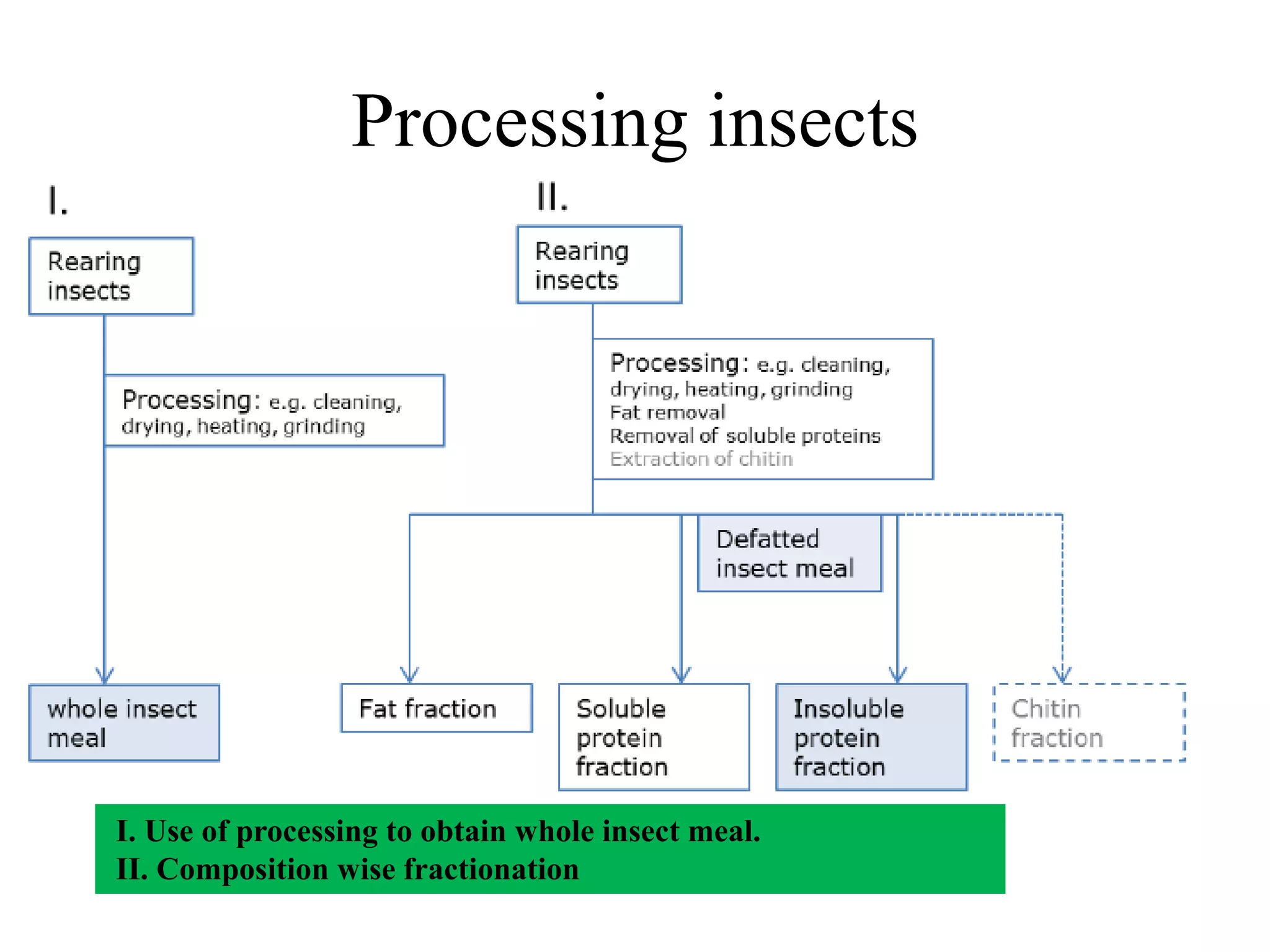
Processing insects
I. Use of processing to obtain whole insect meal.
II. Composition wise fractionation
Nutritional value and functional
Properties of insects
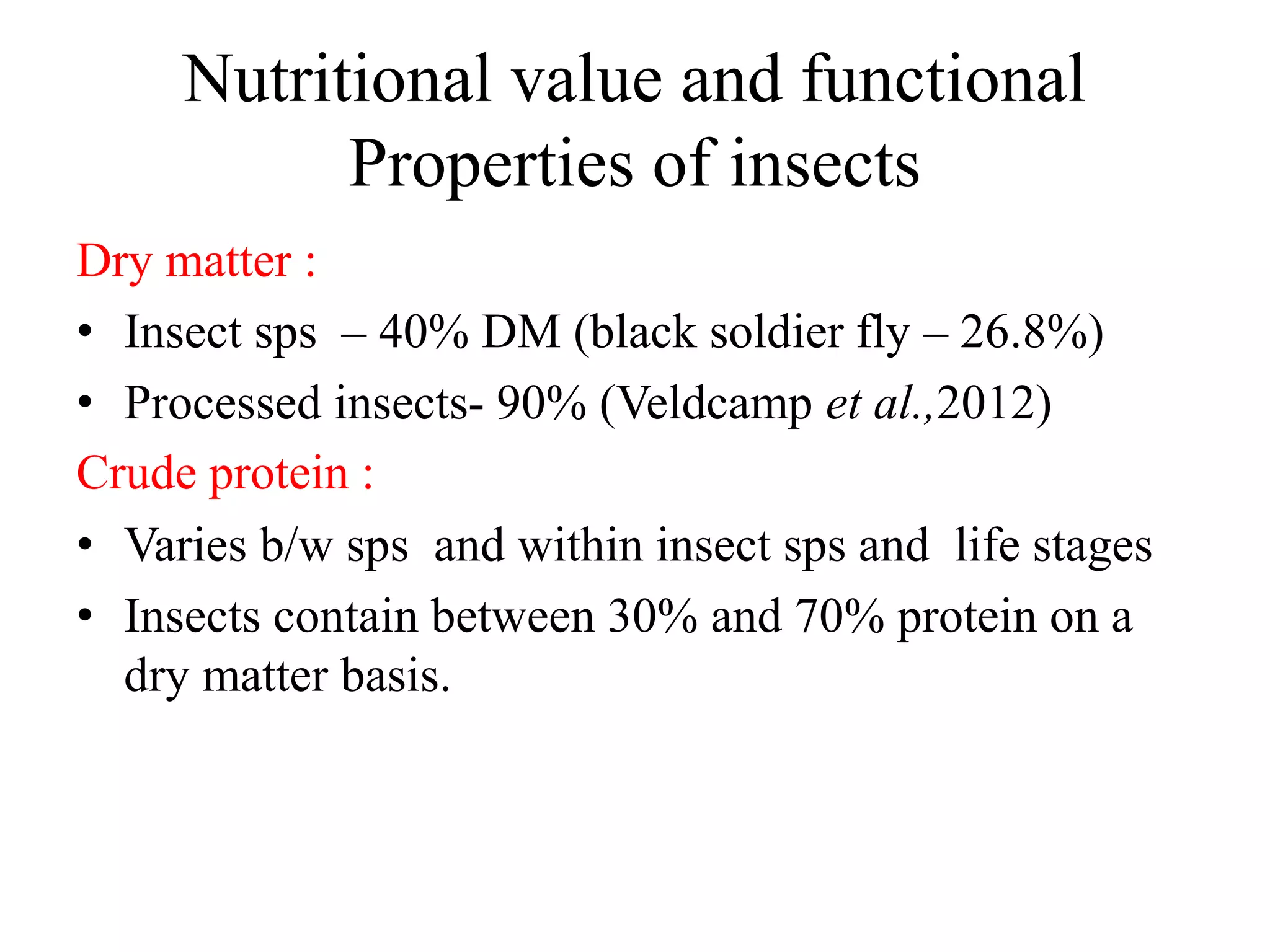
Dry matter :
• Insect sps – 40% DM (black soldier fly – 26.8%)
• Processed insects- 90% (Veldcamp et al.,2012)
Crude protein :
• Varies b/w sps and within insect sps and life stages
• Insects contain between 30% and 70% protein on a
dry matter basis.
Protein source Crude protein
(%)
Hermetia illucens (Black soldier
fly)
35-57
Musca domestica (Common
housefly)
43-68
Tenebrio molitor (Yellow
mealworm)
44-69
Fishmeal 61-77
Soybean meal 49-56
Crude protein content of larvae of three insect species
compared to fish meal and soybean meal
Veldkamp et al., 2012
• Crude fat: Considerable source of fat
Source Crude fat (%)
Hermetia illucens (Black soldier
fly)
35
Musca domestica (Common
housefly)
4-32
Tenebrio molitor (Yellow
mealworm)
23-47
Fishmeal 11-17
Soybean meal 3
Veldkamp et al., 2012
• Crude fiber: Ranged from 0-86% on DMB (Makkar
et al 2014, sanchez-muros et al 2014)
• Total ash: Ranged from 3.5-14% (Makkar et al 2014)
• Minerals: Good source of trace minerals(Fe, zn, cu,
mn and se)
• Low in Ca and contain high levels of P> ca
• Black solider fly --- highest Ca: p ratio (8.4)
• Other insect – lower ratios (0.29 -1.28) (Makkar et
al., 2014)
Non ruminants-- P availability from insects is
100%(Micek et al.,2014)
Mineral content of insect meals
Major minerals (g/kg) Range
Ca 0.4-24.8
P 1.2-14.3
Mg 0.3-27.4
Micro minerals (mg/kg)
Cu 9-265
Mn 3-39
Zn 21-390
Se 0.3-400
Finke 2005
Vitamins
Vit. of black soldier fly and common house fly ( Finke 2013)
Vitamin Concentration
Retinol < 300ug/kg
Vit –D2 <2 ug/kg
Vit-D3 2.5ug/kg
Alpha –tocopherol 6-30 mg/kg
B1 0.1-11 mg/kg
B2 16-77 mg/kg
B3 34-91 mg/kg
B6 1.7-6.1 mg/kg
B12 5-237ug/kg
Biotin 0.33-68 mg/kg
Most deficient --- A, D, E, B1 and B12
Gross energy:
 Ranges from 21-28 MJ/kg DM
 Soya and fish meal --- 19.7MJ/kg DM
Fatty acids:
• PUFA > SFA (BSF)
• W -3 FA – silkworm pupae meal
Fatty acid %
SFA 22.2-67.1
MUFA 16.9-52.7
PUFA 7.5-32.1
W3 Fatty acid 0.7-24.7
Makkar et al., 2014, barrosso et al., 2014
Amino acids
1 st
LAA
1 st
LAA
Veldkamp et al., 2015
Functional properties of insects – Anti
microbial peptides (AMP)
• Insects are a rich source of AMPs.
• Insect AMPs are small, cationic proteins which
exhibit activity against bacteria and/or fungi, as well
as certain parasites and viruses.
• The largest group of insect AMPs are defensins.
• Active against – gram + and gram – organism
Chitin
• A linear polymer of β-(1-4) N-acetyl-D-glucosamine
units with a chemical structure that is similar to that
of cellulose.
• The chitin content of black soldier fly larvae and
yellow mealworm larvae was estimated to be 5.4 and
2.8% of DM, respectively (Finke, 2013).
• Chitin has immune-system stimulating properties-
innate and adaptive immune responses
Black soldier fly larvae (Hermetia illucens)
Chemical composition
Crude protein (% in DM) 42.1
Crude fibre (% in DM) 7
Gross energy (MJ/kg DM) 22.1
Ca 5–8% DM
P 0.6–1.5% DM
Nutritional value
Experiment Remarks Reference
Poultry. • As a component of a complete
diet
• Chicks - black soldier fly larvae
(as a substitute for soymeal) gained
weight at a rate 96%
(non-significant) of that of chicks
fed the control diet containing
soymeal
--- Newton et al.,
2005
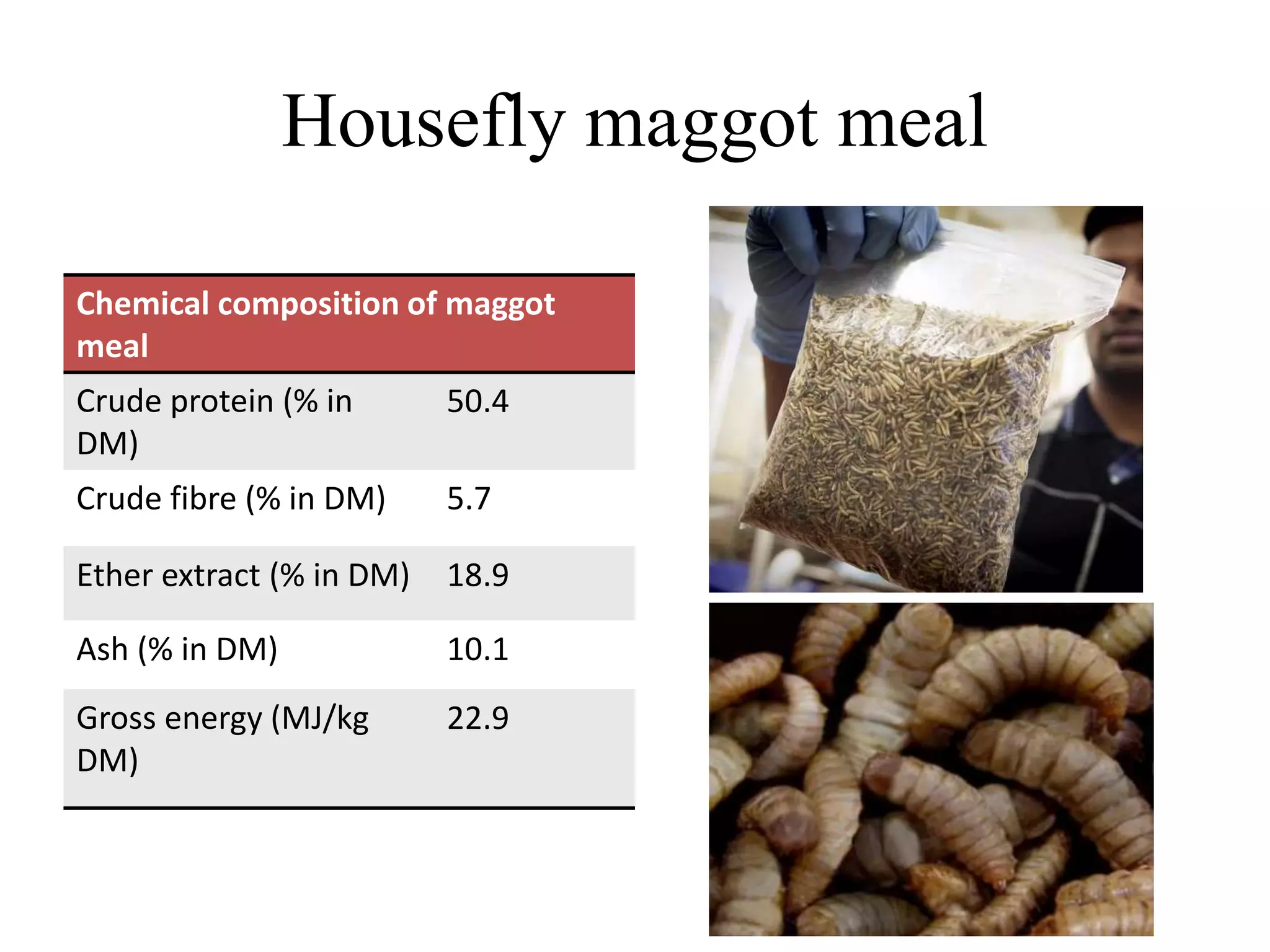
Housefly maggot meal
Chemical composition of maggot
meal
Crude protein (% in
DM)
50.4
Crude fibre (% in DM) 5.7
Ether extract (% in DM) 18.9
Ash (% in DM) 10.1
Gross energy (MJ/kg
DM)
22.9
House fly pupae meal
Chemical composition of house fly
pupae meal
Crude protein (% in DM) 70.8
Crude fibre (% in DM) 15.7
Gross energy (MJ/kg DM) 24.3
Nutritional value
Animal Experiment Results Reference
Rural poultry Supplementation of 30–
50 g/day/bird of live
maggots
Higher growth rate
(until the 5th
month) and in
higher clutch size,
egg weight, number
of eggs hatched,
and chick weight.
Dankwa et al., 2002
Broilers: Used to replace
fishmeal(conventional
protein sources)--<10%
-- Atteh and
Ologbenla, 1993;
Bamgbose, 1999).
Laying hens In 50-week laying hens,
maggot meal could
replace 50%
of fishmeal protein (5%
in diet)
No adverse effects
on egg production
and shell strength.
However, 100%
replacement
was deleterious to
hen-egg production
Agunbiade et al.,
2007
Intake and performance of broilers fed house fly larvae meal
(maggot meal).
Animal Experiment Results Reference
35-day
broilers
Maggot meal
replacing 0–50%
fishmeal
Could replace 50%
fishmeal (2% diet as fed)
with higher performance
and economic returns
Onwujiariri
(2012)
Experiment Results Reference
broilers 10–50% maggot meal
in the diet
The 25% maggot meal diet
yielded better live weights,
feed intake and daily
gain when compared to the
25% fishmeal diet in the
growth phases.
Pretorius (2011)
Broilers Maggot meal
replacing 0–100%
groundnut cake
Could replace 100%
groundnut cake (22% diet
as fed) without adverse
effect on performance.
Adeniji (2007)
broilers Maggot meal
replacing 0–50%
fishmeal
Could replace 50%
fishmeal (2% diet as fed)
with higher performance
and economic returns
Onwujiariri
(2012)
Mealworm (Tenebrio molitor)
Chemical composition of Meal
worm meal
Crude protein (% in DM) 52.8
NDF (% in DM) 12.0
ADF(% in DM) 6.5
Ether extract (% in DM) 36.1
Ash (% in DM) 3.1
Gross energy (MJ/kg DM) 26.8
Nutritional value for different animal
species
Animal Experiment Result Remarks Reference
Broilers Dried
mealworms
included up to
10% (on DM
basis) in a
broiler starter
diet based on
sorghum and
soybean meal
No negative
effects on
performance
low Ca content
is also an issue
in poultry diets
(8% Caco3 –
suitable)
Ramos-
Elorduy et al.,
2002
Grasshoppers(Acrida cinerea)
Chemical composition of
Grasshopper
Crude protein (% in
DM)
57.3
Crude fibre (% in DM) 8.5
Gross energy (MJ/kg
DM)
21.8
Nutritional value
Animal Experiment Results Reference
Broilers 50% fishmeal protein
was replaced with
locust meal (1.7% in
the diet)
Resulted in higher
body weight gain,
feed intake and
feed conversion
ratio
Adeyemo et al.,
2008
Silkworm pupae meal
Chemical composition of
silkworm pupae meal
Crude protein (% in
DM)
60.7
Crude fibre (% in
DM)
3.9
Ether extract (% in
DM)
25.7
Ash (% in DM) 5.8
Defatted meal CP >80%
Cost economics
• Currently, insects are more expensive compared to
other feed ingredients/protein supplements
Protein source Protein content
(%)
Netherlands India
Price/kg
product (€)
Price/kg
protein
(€)
Price/kg
product
(€)
Price/kg
product
(€)
Meal worm 50 15.8 31.7 ? ?
Soybean meal 48 0.57 1.19 39.0 81.3
Fish meal 65 1.24 1.91 85.0 130.8
Grain 12 0.14 1.17 16.1 161.0
Ramana reddy and blummel 2016
Table: Prices of various protein supplements in relation to
insects
Risk profile of insects
• Microbiological: Bacteria , virus , fungi
• Chemicals – Hormones, drugs ,toxins and heavy
metals
Biological
/chemical
contaminants
in insect
Production
methods
Processing
methods
Stage of
harvest
Substrates
used
Major concerns
1. More awareness and knowledge is required
2. Legislative and regulatory issues- whole insect meal
X – TSE(Transmissible spongiform
encephalopathy )
3. Scaling up - Qty of insects required to replace 5%
feed - 1.1 million ton 88% DMB– 3000 small scale
insect units are required
4. Expensive processing methods
5. Animal welfare of insects -- farmed with out pain,
injury, diseases and without discomfort
Future Research
• Feeding value in poultry
• Inclusion levels in poultry diets
• Cost economics
• Functional properties of the insects
• Substrate needs/unit biomass production
• Extraction of the nutrients to add value and shelf life
• Insects waste management
• Safety and sanitary measures when using bio-waste as
substrate
• There is a need to develop a regulatory framework and
legislations for use of insect meals as poultry feed, and to
improve risk assessment methodologies
Conclusions and Recommendations
• Use of insects as a sustainable protein rich feed
ingredient in poultry feed is technically feasible.
• Insects can be reared on low-grade bio-waste and can
turn low-grade bio-waste into high quality proteins.
• Insects therefore can be a promising interesting link
in the animal feed chain to fulfil the globally
increased demand for protein.
Contd..
• Bottlenecks --- law and regulation and cost of meal
• Processing techniques need to be developed further
• Legislative constraints need to be solved
• Cost price can and must be reduced
• large scale of production – provide continuous quantity
and quality
Insect feeding of poultry

Insect feeding of poultry

  • 1.
    Submitted by: Dr GurramSrinivas RVD/17-11 Dept of Poultry Science
  • 2.
    Introduction • In developingcountries – Increasing global demand for meat • Predicted demand for meat and egg in 2050----- 70 and 58% respectively
  • 3.
    Feed being themost challenging...  Limited availability of natural resources  Ongoing climatic changes and  Food–feed–fuel competition
  • 4.
    • High qualityand quantity of protein • High digestibility • High quality and quantity of protein • Best amino acid profile of the vegetable protein source Protein ingredients Fish meal Soybean meal
  • 5.
    Need for alternativeprotein • Cost of soybean meal and fishmeal --- doubled during the last five years - --- 60-70% of production costs Reasons:  Marine over exploitation  Land availability for soya cultivation is limited So, alternative(animal)protein sources for livestockare urgently needed.
  • 6.
    One of thesolution! INSECTS!
  • 7.
    Why Insects ? (a)Large biodiversity and short life cycle (b) Prevalent in most ecosystems and colonize a wide range of habitats (c) Large population and biomass (d) Low breeding costs in general (e) Breeding is simple and can be controlled easily (f) Contain good quality of proteins (g) High reproduction rate Ramos-Elorduy (2005)
  • 8.
    Contd... (i) Better feedconversion efficiency than most other animals -Insects are poikilothermic (J) Emit less green house gases and NH3 than other livestock H) Reared on bio-waste streams  Waste bio mass – high value feed resources
  • 9.
    Insects safe landand water Jansen et al., 2011
  • 10.
    Insects -Novel ProteinSource For Animal Feeds Protein 40- 60% Essential Amino acids Minerals & B-vitamins MUFA &PUFA Insects could replace 25–100 % of soymeal or fishmeal depending on the animal species Rumpold & Schlüter, 2013)
  • 11.
    Key insect speciesused as feed • >2000 species Black soldier flies Common housefly larvae Silkworms Yellow mealworms Grass hoppers and termites
  • 12.
    Contd... Order Scientific nameCommon name Stage at which harvested for food /feed Coleoptera Tenebriomolitor Mealworm Larvae Diptera Hermatia illucens Musca domestica Black soldier fly House fly Larvae/pupae Larvae/pupae Lepidoptera Bombyxmori Silk worm Pupae Orthoptera Locustamigratoria Achetadomestica Grasshopper House cricket Adult Adult Order, species and stage of insects used as food and feed for humans and livestock Borroso et al.,(2014)
  • 13.
    Insect Farming • Providewith feed and water--- energy and nutrients -- -- maintenance, growth and production • No hormones, antibiotics or chemicals except biocides Physical conditions Time for hatching eggs • Eggs – substrate –manually mechanically or by natural oviposition species
  • 14.
    Substrates approved forrearing of insects Animal feed materials Food produced for human consumption including meat and fish but with defective manufacturing or packing By-products from slaughter houses (hides, hair, feathers ,bones etc) Food waste of both animal and non-animal origin from restaurants Animal manure and intestinal contents (pig, poultry, cattle etc.) Other organic waste of vegetable origin Human manure and sewage sludge EPSA scientific committe,2015
  • 15.
    Optimum Temperature andRelative humidity Insects Time Temperature RH Meal worms 8-10 wks 28-30 o Cg 60% BSF 4-7 months 27.5-37.5oCg 70% House fly 72 hrs 25–30 o Cg 60–75%
  • 16.
    Breeding enclosures Female BSFlaying eggs in strips of corrugated cardboard Nursery box containing developing eggs
  • 17.
    House fly maggotmeal • Poultry manure – common substrate – housefly rearing • Main technique: • Filling tanks or crates with manure sprinkled with water regularly to keep the manure wet and attract the flies
  • 18.
    Harvesting : 2methods 1.Flotation method 2.Screening method • In the flotation method, the manure is mixed with water and the larvae and pupae float out to be collected with a sieve. • In the screening method, the manure is spread in a thin layer on a screen net (3 mm) placed over a basin: the larvae try to escape the sunlight by passing through the screen and fall into the basin • The collected larvae are washed, killed in hot water and then dried and milled.
  • 19.
    Processing insects I. Useof processing to obtain whole insect meal. II. Composition wise fractionation
  • 20.
    Nutritional value andfunctional Properties of insects Dry matter : • Insect sps – 40% DM (black soldier fly – 26.8%) • Processed insects- 90% (Veldcamp et al.,2012) Crude protein : • Varies b/w sps and within insect sps and life stages • Insects contain between 30% and 70% protein on a dry matter basis.
  • 21.
    Protein source Crudeprotein (%) Hermetia illucens (Black soldier fly) 35-57 Musca domestica (Common housefly) 43-68 Tenebrio molitor (Yellow mealworm) 44-69 Fishmeal 61-77 Soybean meal 49-56 Crude protein content of larvae of three insect species compared to fish meal and soybean meal Veldkamp et al., 2012
  • 22.
    • Crude fat:Considerable source of fat Source Crude fat (%) Hermetia illucens (Black soldier fly) 35 Musca domestica (Common housefly) 4-32 Tenebrio molitor (Yellow mealworm) 23-47 Fishmeal 11-17 Soybean meal 3 Veldkamp et al., 2012
  • 23.
    • Crude fiber:Ranged from 0-86% on DMB (Makkar et al 2014, sanchez-muros et al 2014) • Total ash: Ranged from 3.5-14% (Makkar et al 2014) • Minerals: Good source of trace minerals(Fe, zn, cu, mn and se) • Low in Ca and contain high levels of P> ca • Black solider fly --- highest Ca: p ratio (8.4) • Other insect – lower ratios (0.29 -1.28) (Makkar et al., 2014) Non ruminants-- P availability from insects is 100%(Micek et al.,2014)
  • 24.
    Mineral content ofinsect meals Major minerals (g/kg) Range Ca 0.4-24.8 P 1.2-14.3 Mg 0.3-27.4 Micro minerals (mg/kg) Cu 9-265 Mn 3-39 Zn 21-390 Se 0.3-400 Finke 2005
  • 25.
    Vitamins Vit. of blacksoldier fly and common house fly ( Finke 2013) Vitamin Concentration Retinol < 300ug/kg Vit –D2 <2 ug/kg Vit-D3 2.5ug/kg Alpha –tocopherol 6-30 mg/kg B1 0.1-11 mg/kg B2 16-77 mg/kg B3 34-91 mg/kg B6 1.7-6.1 mg/kg B12 5-237ug/kg Biotin 0.33-68 mg/kg Most deficient --- A, D, E, B1 and B12
  • 26.
    Gross energy:  Rangesfrom 21-28 MJ/kg DM  Soya and fish meal --- 19.7MJ/kg DM Fatty acids: • PUFA > SFA (BSF) • W -3 FA – silkworm pupae meal Fatty acid % SFA 22.2-67.1 MUFA 16.9-52.7 PUFA 7.5-32.1 W3 Fatty acid 0.7-24.7 Makkar et al., 2014, barrosso et al., 2014
  • 27.
    Amino acids 1 st LAA 1st LAA Veldkamp et al., 2015
  • 28.
    Functional properties ofinsects – Anti microbial peptides (AMP) • Insects are a rich source of AMPs. • Insect AMPs are small, cationic proteins which exhibit activity against bacteria and/or fungi, as well as certain parasites and viruses. • The largest group of insect AMPs are defensins. • Active against – gram + and gram – organism
  • 29.
    Chitin • A linearpolymer of β-(1-4) N-acetyl-D-glucosamine units with a chemical structure that is similar to that of cellulose. • The chitin content of black soldier fly larvae and yellow mealworm larvae was estimated to be 5.4 and 2.8% of DM, respectively (Finke, 2013). • Chitin has immune-system stimulating properties- innate and adaptive immune responses
  • 30.
    Black soldier flylarvae (Hermetia illucens) Chemical composition Crude protein (% in DM) 42.1 Crude fibre (% in DM) 7 Gross energy (MJ/kg DM) 22.1 Ca 5–8% DM P 0.6–1.5% DM
  • 31.
    Nutritional value Experiment RemarksReference Poultry. • As a component of a complete diet • Chicks - black soldier fly larvae (as a substitute for soymeal) gained weight at a rate 96% (non-significant) of that of chicks fed the control diet containing soymeal --- Newton et al., 2005
  • 33.
    Housefly maggot meal Chemicalcomposition of maggot meal Crude protein (% in DM) 50.4 Crude fibre (% in DM) 5.7 Ether extract (% in DM) 18.9 Ash (% in DM) 10.1 Gross energy (MJ/kg DM) 22.9
  • 34.
    House fly pupaemeal Chemical composition of house fly pupae meal Crude protein (% in DM) 70.8 Crude fibre (% in DM) 15.7 Gross energy (MJ/kg DM) 24.3
  • 35.
    Nutritional value Animal ExperimentResults Reference Rural poultry Supplementation of 30– 50 g/day/bird of live maggots Higher growth rate (until the 5th month) and in higher clutch size, egg weight, number of eggs hatched, and chick weight. Dankwa et al., 2002 Broilers: Used to replace fishmeal(conventional protein sources)--<10% -- Atteh and Ologbenla, 1993; Bamgbose, 1999). Laying hens In 50-week laying hens, maggot meal could replace 50% of fishmeal protein (5% in diet) No adverse effects on egg production and shell strength. However, 100% replacement was deleterious to hen-egg production Agunbiade et al., 2007
  • 36.
    Intake and performanceof broilers fed house fly larvae meal (maggot meal). Animal Experiment Results Reference 35-day broilers Maggot meal replacing 0–50% fishmeal Could replace 50% fishmeal (2% diet as fed) with higher performance and economic returns Onwujiariri (2012)
  • 37.
    Experiment Results Reference broilers10–50% maggot meal in the diet The 25% maggot meal diet yielded better live weights, feed intake and daily gain when compared to the 25% fishmeal diet in the growth phases. Pretorius (2011) Broilers Maggot meal replacing 0–100% groundnut cake Could replace 100% groundnut cake (22% diet as fed) without adverse effect on performance. Adeniji (2007) broilers Maggot meal replacing 0–50% fishmeal Could replace 50% fishmeal (2% diet as fed) with higher performance and economic returns Onwujiariri (2012)
  • 39.
    Mealworm (Tenebrio molitor) Chemicalcomposition of Meal worm meal Crude protein (% in DM) 52.8 NDF (% in DM) 12.0 ADF(% in DM) 6.5 Ether extract (% in DM) 36.1 Ash (% in DM) 3.1 Gross energy (MJ/kg DM) 26.8
  • 40.
    Nutritional value fordifferent animal species Animal Experiment Result Remarks Reference Broilers Dried mealworms included up to 10% (on DM basis) in a broiler starter diet based on sorghum and soybean meal No negative effects on performance low Ca content is also an issue in poultry diets (8% Caco3 – suitable) Ramos- Elorduy et al., 2002
  • 41.
    Grasshoppers(Acrida cinerea) Chemical compositionof Grasshopper Crude protein (% in DM) 57.3 Crude fibre (% in DM) 8.5 Gross energy (MJ/kg DM) 21.8
  • 42.
    Nutritional value Animal ExperimentResults Reference Broilers 50% fishmeal protein was replaced with locust meal (1.7% in the diet) Resulted in higher body weight gain, feed intake and feed conversion ratio Adeyemo et al., 2008
  • 44.
    Silkworm pupae meal Chemicalcomposition of silkworm pupae meal Crude protein (% in DM) 60.7 Crude fibre (% in DM) 3.9 Ether extract (% in DM) 25.7 Ash (% in DM) 5.8 Defatted meal CP >80%
  • 45.
    Cost economics • Currently,insects are more expensive compared to other feed ingredients/protein supplements Protein source Protein content (%) Netherlands India Price/kg product (€) Price/kg protein (€) Price/kg product (€) Price/kg product (€) Meal worm 50 15.8 31.7 ? ? Soybean meal 48 0.57 1.19 39.0 81.3 Fish meal 65 1.24 1.91 85.0 130.8 Grain 12 0.14 1.17 16.1 161.0 Ramana reddy and blummel 2016 Table: Prices of various protein supplements in relation to insects
  • 46.
    Risk profile ofinsects • Microbiological: Bacteria , virus , fungi • Chemicals – Hormones, drugs ,toxins and heavy metals Biological /chemical contaminants in insect Production methods Processing methods Stage of harvest Substrates used
  • 47.
    Major concerns 1. Moreawareness and knowledge is required 2. Legislative and regulatory issues- whole insect meal X – TSE(Transmissible spongiform encephalopathy ) 3. Scaling up - Qty of insects required to replace 5% feed - 1.1 million ton 88% DMB– 3000 small scale insect units are required 4. Expensive processing methods 5. Animal welfare of insects -- farmed with out pain, injury, diseases and without discomfort
  • 48.
    Future Research • Feedingvalue in poultry • Inclusion levels in poultry diets • Cost economics • Functional properties of the insects • Substrate needs/unit biomass production • Extraction of the nutrients to add value and shelf life • Insects waste management • Safety and sanitary measures when using bio-waste as substrate • There is a need to develop a regulatory framework and legislations for use of insect meals as poultry feed, and to improve risk assessment methodologies
  • 49.
    Conclusions and Recommendations •Use of insects as a sustainable protein rich feed ingredient in poultry feed is technically feasible. • Insects can be reared on low-grade bio-waste and can turn low-grade bio-waste into high quality proteins. • Insects therefore can be a promising interesting link in the animal feed chain to fulfil the globally increased demand for protein.
  • 50.
    Contd.. • Bottlenecks ---law and regulation and cost of meal • Processing techniques need to be developed further • Legislative constraints need to be solved • Cost price can and must be reduced • large scale of production – provide continuous quantity and quality

Editor's Notes

  • #5 Vegetable feedstuffs have several unfavourable characteristics, such as imbalances between essential and nonessential amino acids, antinutritional factors, low palatability and a high proportion of fibre and non-starch polysaccharides, which limit the percentage of inclusion in the diet
  • #9 insects are poikilothermic and their growth stages do not invest metabolic energy in maintaining a constant body temperature above ambient values.
  • #12 Promising species for industrial feed production are common housefly larvae, silkworms and yellow mealworms. Grasshoppers and termites are also viable, but to a lesser extent
  • #20 In blue fractions potentially suitable for the feed industry For harvesting, different options can be used, which are cold treatment (freezing), hot treatment (e.g. cooking), and possibly use of controlled atmosphere. Ist step in fractation process is fat removal which can be done by using organic solvents like hexane/cooking to coagulate protein followed by pressing Apart from (soluble) protein, insects can deliver another very valuable product that is chitin. Chitin is the main constituent of the insect exoskeleton. It is a non-toxic, biodegradable linear polymer. Recent studies demonstrated that chitin has complex and size-dependent effects on innate and adaptive immune responses--- Chitin extraction can be performed using two methods. A first option is demineralisation followed by deproteinisation using NaOH and HCl. Also biological extraction procedures are possible, being fermentation or enzyme assisted extraction.
  • #31 Black soldier flies (Hermetia illucens) (Diptera:Stratiomyidae) are found in abundance and naturally occur around the manure piles of large poultry, pigs and cattle
  • #34 The housefly (M. domestica Linnaeus) is the most common fly (Diptera) species.
  • #36 Inclusion rate --< 10% High level of inclusion– dec. Performance and feed intake – due to dark colour of meal and poor amino acid imbalance
  • #45 Silkworms are the caterpillars of moth species raised for the production of silk. Silkworm pupae, which are rich in protein, are available after the removal of silk cocoons through spinning or reeling as discarded waste in large quantities
  • #47 Insects can bio-accumulate heavy metals
  • #48 Hence for large scale production further scaling up is must
  • #50 Main bottlenecks were identified in the area of law and regulation and the possibilities to increase the scale of insect production at a low cost price.