013/B.ED/V.D.I.T/2016-2018
COMBUSTION
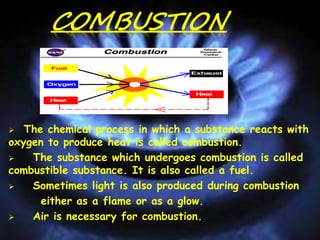
 The chemical process in which a substance reacts with
oxygen to produce heat is called combustion.
 The substance which undergoes combustion is called
combustible substance. It is also called a fuel.
 Sometimes light is also produced during combustion
either as a flame or as a glow.
 Air is necessary for combustion.
COMBUSTIBLE SUBSTANCE
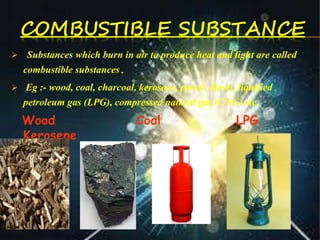
 Substances which burn in air to produce heat and light are called
combustible substances.
 Eg :- wood, coal, charcoal, kerosene, petrol, diesel, liquified
petroleum gas (LPG), compressed natural gas (CNG) etc.
Wood Coal LPG
Kerosene
CONDITIONS NECESSARY FOR
COMBUSTION :-
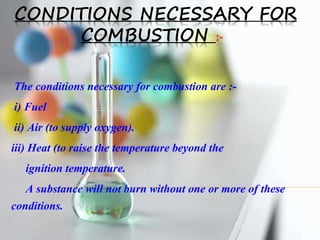
The conditions necessary for combustion are :-
i) Fuel
ii) Air (to supply oxygen).
iii) Heat (to raise the temperature beyond the
ignition temperature.
A substance will not burn without one or more of these
conditions.
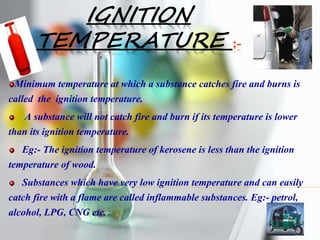
IGNITION
TEMPERATURE :-
Minimum temperature at which a substance catches fire and burns is
called the ignition temperature.
A substance will not catch fire and burn if its temperature is lower
than its ignition temperature.
Eg:- The ignition temperature of kerosene is less than the ignition
temperature of wood.
Substances which have very low ignition temperature and can easily
catch fire with a flame are called inflammable substances. Eg:- petrol,
alcohol, LPG, CNG etc.
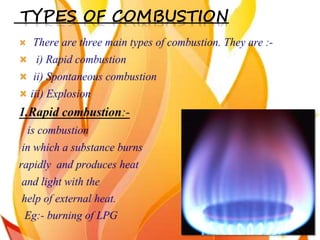
TYPES OF COMBUSTION
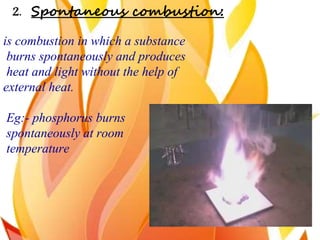
2. Spontaneous combustion:
is combustion in which a substance
burns spontaneously and produces
heat and light without the help of
external heat.
Eg:- phosphorus burns
spontaneously at room
temperature
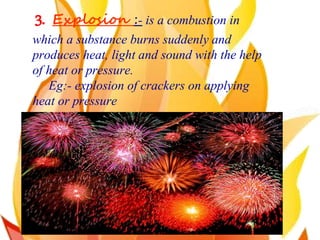
3. Explosion :- is a combustion in
which a substance burns suddenly and
produces heat, light and sound with the help
of heat or pressure.
Eg:- explosion of crackers on applying
heat or pressure
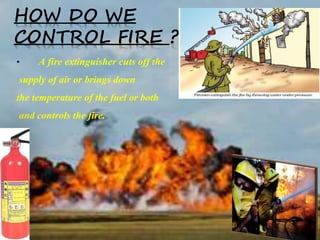
HOW DO WE
CONTROL FIRE ?
• A fire extinguisher cuts off the
supply of air or brings down
the temperature of the fuel or both
and controls the fire.
METHODS OF CONTROLLING FIRE
 i) By using water :-
Water is the most common fire extinguisher. It can be used only when
materials like wood , paper etc. are on fire.
Water cannot be used if electrical equipments are on fire because water
conducts electricity and can harm those trying to put out the fire.
 ii) By using carbon dioxide:-
 Carbon dioxide is the best fire extinguisher to put out fire caused by
inflammable materials like oil and petrol and electrical equipments.
Carbon dioxide is heavier than air and it covers the fire and cuts off
the supply of oxygen and puts out the fire.
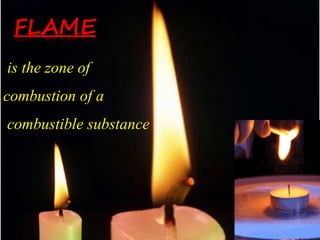
FLAMEE
is the zone of
combustion of a
combustible substance
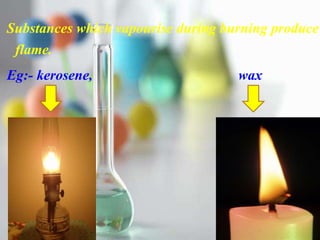
Substances which vapourise during burning produce
flame.
Eg:- kerosene, wax
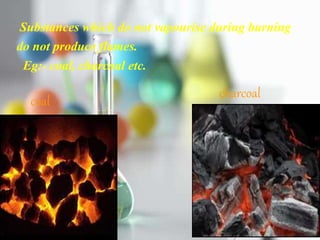
Substances which do not vapourise during burning
do not produce flames.
Eg:- coal, charcoal etc.
coal
charcoal
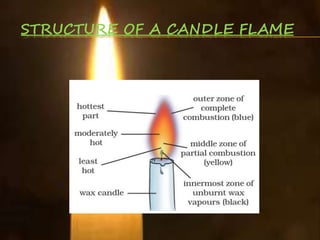
STRUCTURE OF A CANDLE FLAME
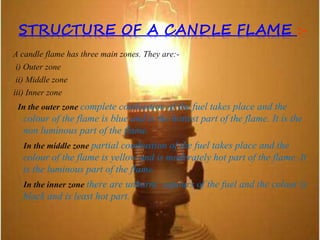
STRUCTURE OF A CANDLE FLAME :-
A candle flame has three main zones. They are:-
i) Outer zone
ii) Middle zone
iii) Inner zone
In the outer zone complete combustion of the fuel takes place and the
colour of the flame is blue and is the hottest part of the flame. It is the
non luminous part of the flame.
In the middle zone partial combustion of the fuel takes place and the
colour of the flame is yellow and is moderately hot part of the flame. It
is the luminous part of the flame.
In the inner zone there are unburnt vapours of the fuel and the colour is
black and is least hot part.
REFERENCE:
1. Science NCERT of class 8th
2. WIKIPEDIA
3. GIF image of combustion and flame from
GOOGLE images
Combustion and flame

Combustion and flame

  • 1.
  • 2.
    COMBUSTION  The chemicalprocess in which a substance reacts with oxygen to produce heat is called combustion.  The substance which undergoes combustion is called combustible substance. It is also called a fuel.  Sometimes light is also produced during combustion either as a flame or as a glow.  Air is necessary for combustion.
  • 3.
    COMBUSTIBLE SUBSTANCE  Substanceswhich burn in air to produce heat and light are called combustible substances.  Eg :- wood, coal, charcoal, kerosene, petrol, diesel, liquified petroleum gas (LPG), compressed natural gas (CNG) etc. Wood Coal LPG Kerosene
  • 4.
    CONDITIONS NECESSARY FOR COMBUSTION:- The conditions necessary for combustion are :- i) Fuel ii) Air (to supply oxygen). iii) Heat (to raise the temperature beyond the ignition temperature. A substance will not burn without one or more of these conditions.
  • 5.
    IGNITION TEMPERATURE :- Minimum temperatureat which a substance catches fire and burns is called the ignition temperature. A substance will not catch fire and burn if its temperature is lower than its ignition temperature. Eg:- The ignition temperature of kerosene is less than the ignition temperature of wood. Substances which have very low ignition temperature and can easily catch fire with a flame are called inflammable substances. Eg:- petrol, alcohol, LPG, CNG etc.
  • 6.
  • 7.
    2. Spontaneous combustion: iscombustion in which a substance burns spontaneously and produces heat and light without the help of external heat. Eg:- phosphorus burns spontaneously at room temperature
  • 8.
    3. Explosion :-is a combustion in which a substance burns suddenly and produces heat, light and sound with the help of heat or pressure. Eg:- explosion of crackers on applying heat or pressure
  • 9.
    HOW DO WE CONTROLFIRE ? • A fire extinguisher cuts off the supply of air or brings down the temperature of the fuel or both and controls the fire.
  • 10.
    METHODS OF CONTROLLINGFIRE  i) By using water :- Water is the most common fire extinguisher. It can be used only when materials like wood , paper etc. are on fire. Water cannot be used if electrical equipments are on fire because water conducts electricity and can harm those trying to put out the fire.  ii) By using carbon dioxide:-  Carbon dioxide is the best fire extinguisher to put out fire caused by inflammable materials like oil and petrol and electrical equipments. Carbon dioxide is heavier than air and it covers the fire and cuts off the supply of oxygen and puts out the fire.
  • 11.
    FLAMEE is the zoneof combustion of a combustible substance
  • 12.
    Substances which vapouriseduring burning produce flame. Eg:- kerosene, wax
  • 13.
    Substances which donot vapourise during burning do not produce flames. Eg:- coal, charcoal etc. coal charcoal
  • 14.
    STRUCTURE OF ACANDLE FLAME
  • 15.
    STRUCTURE OF ACANDLE FLAME :- A candle flame has three main zones. They are:- i) Outer zone ii) Middle zone iii) Inner zone In the outer zone complete combustion of the fuel takes place and the colour of the flame is blue and is the hottest part of the flame. It is the non luminous part of the flame. In the middle zone partial combustion of the fuel takes place and the colour of the flame is yellow and is moderately hot part of the flame. It is the luminous part of the flame. In the inner zone there are unburnt vapours of the fuel and the colour is black and is least hot part.
  • 16.
    REFERENCE: 1. Science NCERTof class 8th 2. WIKIPEDIA 3. GIF image of combustion and flame from GOOGLE images