ELSA SUSAN VARGHESE
8H- 07
COMBUSTION
TYPES OF
COMBUSTION
IGNITION
TEMPERATURE
CONTROLLING
FIRE
FLAME&
STRUCTURE
FUEL
FUEL EFFICIENCY
BURNING OF
FUELS LEADS TO
HARMFUL
PRODUCTS
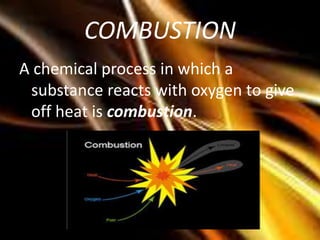
COMBUSTION
A chemical process in which a
substance reacts with oxygen to give
off heat is combustion.
COMBUSTIBLE SUBSTANCE
The substance that undergoes
combustion is said to be
combustible substance.
Combustible substance are
also known as fuel.
Example: Paper, plastic, wood
TYPES OF COMBUSTION
1. RAPID COMBUSTION
2. SPONTANEOUS COMBUSTION
3. EXPLOSIVE COMBUSTION
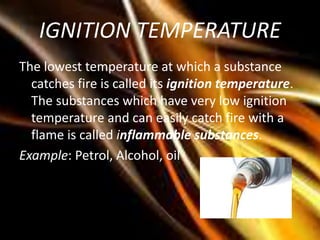
IGNITION TEMPERATURE
The lowest temperature at which a substance
catches fire is called its ignition temperature.
The substances which have very low ignition
temperature and can easily catch fire with a
flame is called inflammable substances.
Example: Petrol, Alcohol, oil
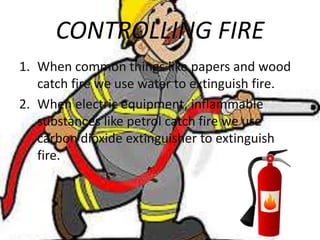
CONTROLLING FIRE
1. When common things like papers and wood
catch fire we use water to extinguish fire.
2. When electric equipment, inflammable
substances like petrol catch fire we use
carbon dioxide extinguisher to extinguish
fire.
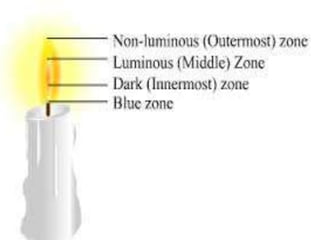
FLAME& STRUCTURE
Flame is a hot glowing body of ignited gas that is
generated by something on fire. The substances
which vaporize during burning give flames.
Example: Candle
Flames have 3 types of zones:
1. Outer Zone[blue]
2. Middle Zone[yellow]
3. Inner Zone[black]
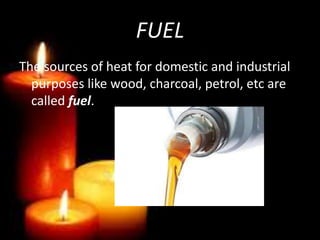
FUEL
The sources of heat for domestic and industrial
purposes like wood, charcoal, petrol, etc are
called fuel.
FUEL EFFICIENCY
The amount of heat energy produced on
complete combustion of 1kg of a fuel is called
its calorific value.
The calorific value of a fuel is expressed in a unit
called kilojoule per kg(kJ/kg).
Burning of fuels leads to harmful
products
Burning of fuels leads to harmful products like:
1. Unburnt carbon particles- lead to respiratory
problem.
2. Carbon monoxide- leads to death.
3. Increased concentration of carbon dioxide-
Global warming.
4. Sulphur dioxide gas(Acid rain)- harmful for
crops, buildings, soil.
Combustion and flame

Combustion and flame

  • 1.
  • 2.
  • 3.
    COMBUSTION A chemical processin which a substance reacts with oxygen to give off heat is combustion.
  • 4.
    COMBUSTIBLE SUBSTANCE The substancethat undergoes combustion is said to be combustible substance. Combustible substance are also known as fuel. Example: Paper, plastic, wood
  • 5.
    TYPES OF COMBUSTION 1.RAPID COMBUSTION 2. SPONTANEOUS COMBUSTION 3. EXPLOSIVE COMBUSTION
  • 6.
    IGNITION TEMPERATURE The lowesttemperature at which a substance catches fire is called its ignition temperature. The substances which have very low ignition temperature and can easily catch fire with a flame is called inflammable substances. Example: Petrol, Alcohol, oil
  • 7.
    CONTROLLING FIRE 1. Whencommon things like papers and wood catch fire we use water to extinguish fire. 2. When electric equipment, inflammable substances like petrol catch fire we use carbon dioxide extinguisher to extinguish fire.
  • 8.
    FLAME& STRUCTURE Flame isa hot glowing body of ignited gas that is generated by something on fire. The substances which vaporize during burning give flames. Example: Candle Flames have 3 types of zones: 1. Outer Zone[blue] 2. Middle Zone[yellow] 3. Inner Zone[black]
  • 10.
    FUEL The sources ofheat for domestic and industrial purposes like wood, charcoal, petrol, etc are called fuel.
  • 11.
    FUEL EFFICIENCY The amountof heat energy produced on complete combustion of 1kg of a fuel is called its calorific value. The calorific value of a fuel is expressed in a unit called kilojoule per kg(kJ/kg).
  • 12.
    Burning of fuelsleads to harmful products Burning of fuels leads to harmful products like: 1. Unburnt carbon particles- lead to respiratory problem. 2. Carbon monoxide- leads to death. 3. Increased concentration of carbon dioxide- Global warming. 4. Sulphur dioxide gas(Acid rain)- harmful for crops, buildings, soil.