Downloaded 55 times

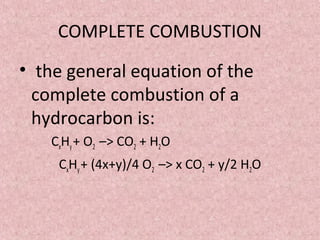
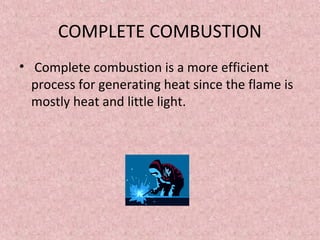
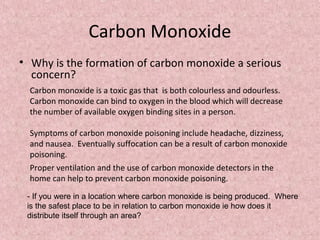
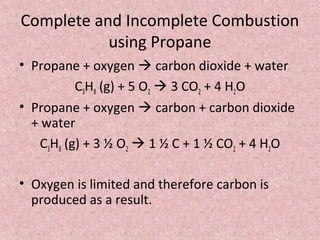

Complete combustion occurs when there is sufficient oxygen to fully oxidize hydrocarbons into carbon dioxide and water. Incomplete combustion occurs when there is insufficient oxygen, resulting in the production of carbon, carbon monoxide, or both. Carbon monoxide is toxic and can cause poisoning if inhaled. The document discusses complete and incomplete combustion reactions using propane as an example hydrocarbon, and outlines the differences between the two processes.


