
By Jayanarayan.J,
Mars House
WHAT IS COMBUSTION ?

Combustion is defined as the process of burning of a
 substance in the presence of air or oxygen with the
 liberation of light and heat.
                              Or
Combustion or burning is the sequence of exothermic
 chemical reactions between a fuel and an oxidant
 accompanied by the production of heat and conversion of
 chemical species.
LETS SEE SOME IMAGES.
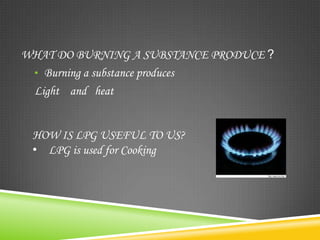
WHAT DO BURNING A SUBSTANCE PRODUCE ?
 • Burning a substance produces
 Light and heat


 HOW IS LPG USEFUL TO US?
 • LPG is used for Cooking
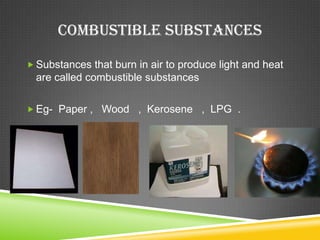
COMBUSTIBLE SUBSTANCES

 Substances that burn in air to produce light and heat
  are called combustible substances

 Eg- Paper , Wood , Kerosene , LPG .
NON-COMBUSTIBLE SUBSTANCES

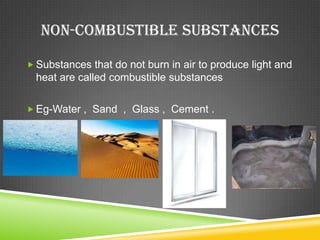
 Substances that do not burn in air to produce light and
  heat are called combustible substances

 Eg-Water , Sand , Glass , Cement .
SPONTANEOUS COMBUSTION
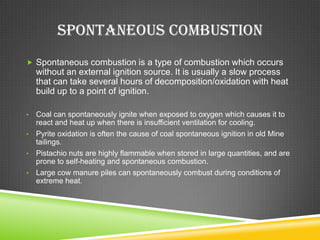
 Spontaneous combustion is a type of combustion which occurs
    without an external ignition source. It is usually a slow process
    that can take several hours of decomposition/oxidation with heat
    build up to a point of ignition.

• Coal can spontaneously ignite when exposed to oxygen which causes it to
  react and heat up when there is insufficient ventilation for cooling.
• Pyrite oxidation is often the cause of coal spontaneous ignition in old Mine
  tailings.
• Pistachio nuts are highly flammable when stored in large quantities, and are
  prone to self-heating and spontaneous combustion.
• Large cow manure piles can spontaneously combust during conditions of
  extreme heat.
RAPID COMBUSTION

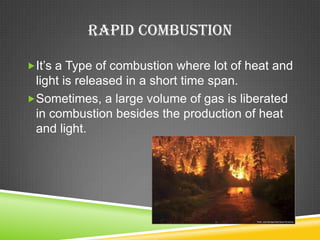
It’s a Type of combustion where lot of heat and
 light is released in a short time span.
Sometimes, a large volume of gas is liberated
 in combustion besides the production of heat
 and light.
COMPLETE COMBUSTION
 In complete combustion, the reactant burns in oxygen, producing
  a limited number of products. When a hydrocarbon burns in
  oxygen, the reaction will only yield carbon dioxide and water.
  When elements are burned, the products are primarily the most
  common oxides. Carbon will yield carbon dioxide, nitrogen will
  yield nitrogen dioxide, sulfur will yield sulfur dioxide, and iron will
  yield iron(III) oxide.
INCOMPLETE COMBUSTION
 Incomplete combustion occurs when there isn't enough oxygen to
  allow the fuel to react completely to produce carbon dioxide and
  water. It also happens when the combustion is quenched by a
  heat sink such as a solid surface or flame trap.
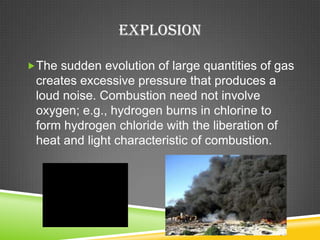
EXPLOSION

The sudden evolution of large quantities of gas
 creates excessive pressure that produces a
 loud noise. Combustion need not involve
 oxygen; e.g., hydrogen burns in chlorine to
 form hydrogen chloride with the liberation of
 heat and light characteristic of combustion.
Combustion and fossil fuels

Combustion and fossil fuels

  • 1.
  • 2.
    WHAT IS COMBUSTION? Combustion is defined as the process of burning of a substance in the presence of air or oxygen with the liberation of light and heat. Or Combustion or burning is the sequence of exothermic chemical reactions between a fuel and an oxidant accompanied by the production of heat and conversion of chemical species.
  • 3.
  • 4.
    WHAT DO BURNINGA SUBSTANCE PRODUCE ? • Burning a substance produces Light and heat HOW IS LPG USEFUL TO US? • LPG is used for Cooking
  • 5.
    COMBUSTIBLE SUBSTANCES  Substancesthat burn in air to produce light and heat are called combustible substances  Eg- Paper , Wood , Kerosene , LPG .
  • 6.
    NON-COMBUSTIBLE SUBSTANCES  Substancesthat do not burn in air to produce light and heat are called combustible substances  Eg-Water , Sand , Glass , Cement .
  • 7.
    SPONTANEOUS COMBUSTION  Spontaneouscombustion is a type of combustion which occurs without an external ignition source. It is usually a slow process that can take several hours of decomposition/oxidation with heat build up to a point of ignition. • Coal can spontaneously ignite when exposed to oxygen which causes it to react and heat up when there is insufficient ventilation for cooling. • Pyrite oxidation is often the cause of coal spontaneous ignition in old Mine tailings. • Pistachio nuts are highly flammable when stored in large quantities, and are prone to self-heating and spontaneous combustion. • Large cow manure piles can spontaneously combust during conditions of extreme heat.
  • 8.
    RAPID COMBUSTION It’s aType of combustion where lot of heat and light is released in a short time span. Sometimes, a large volume of gas is liberated in combustion besides the production of heat and light.
  • 9.
    COMPLETE COMBUSTION  Incomplete combustion, the reactant burns in oxygen, producing a limited number of products. When a hydrocarbon burns in oxygen, the reaction will only yield carbon dioxide and water. When elements are burned, the products are primarily the most common oxides. Carbon will yield carbon dioxide, nitrogen will yield nitrogen dioxide, sulfur will yield sulfur dioxide, and iron will yield iron(III) oxide.
  • 10.
    INCOMPLETE COMBUSTION  Incompletecombustion occurs when there isn't enough oxygen to allow the fuel to react completely to produce carbon dioxide and water. It also happens when the combustion is quenched by a heat sink such as a solid surface or flame trap.
  • 11.
    EXPLOSION The sudden evolutionof large quantities of gas creates excessive pressure that produces a loud noise. Combustion need not involve oxygen; e.g., hydrogen burns in chlorine to form hydrogen chloride with the liberation of heat and light characteristic of combustion.