COLOR ! 
Color is the element of art that is produced when 
light, striking an object, is reflected back to the eye.
THREE PROPERTIES OF COLOR 
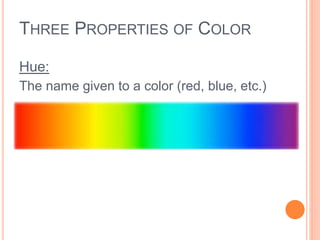
Hue: 
The name given to a color (red, blue, etc.)
THREE PROPERTIES OF COLOR 
Intensity: 
The strength and vividness of a color
THREE PROPERTIES OF COLOR 
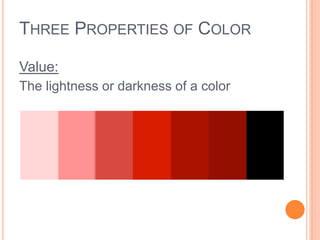
Value: 
The lightness or darkness of a color
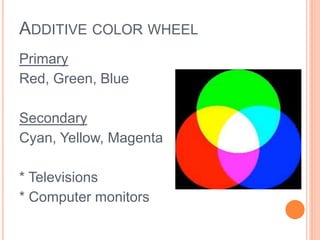
ADDITIVE COLOR WHEEL 
Primary 
Red, Green, Blue 
Secondary 
Cyan, Yellow, Magenta 
* Televisions 
* Computer monitors
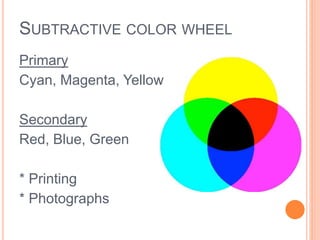
SUBTRACTIVE COLOR WHEEL 
Primary 
Cyan, Magenta, Yellow 
Secondary 
Red, Blue, Green 
* Printing 
* Photographs
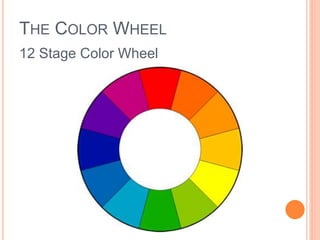
THE COLOR WHEEL 
12 Stage Color Wheel
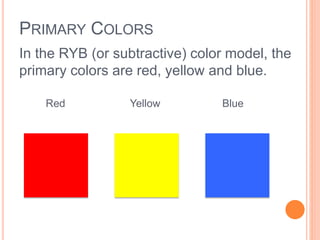
PRIMARY COLORS 
In the RYB (or subtractive) color model, the 
primary colors are red, yellow and blue. 
Red Yellow Blue
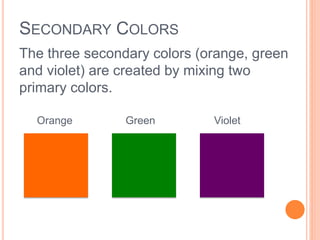
SECONDARY COLORS 
The three secondary colors (orange, green 
and violet) are created by mixing two 
primary colors. 
Orange Green Violet
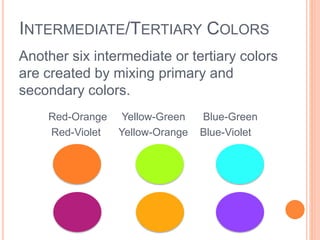
INTERMEDIATE/TERTIARY COLORS 
Another six intermediate or tertiary colors 
are created by mixing primary and 
secondary colors. 
Red-Orange Yellow-Green Blue-Green 
Red-Violet Yellow-Orange Blue-Violet
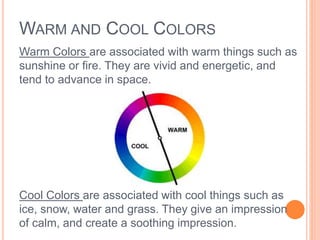
WARM AND COOL COLORS 
Warm Colors are associated with warm things such as 
sunshine or fire. They are vivid and energetic, and 
tend to advance in space. 
Cool Colors are associated with cool things such as 
ice, snow, water and grass. They give an impression 
of calm, and create a soothing impression.
TINTS, SHADES AND TONES 
Terms are often used incorrectly, although they describe 
fairly simple color concepts. 
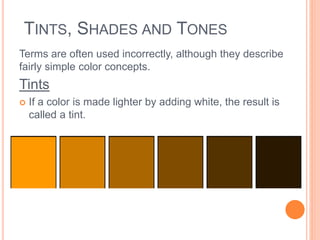
Tints 
 If a color is made lighter by adding white, the result is 
called a tint.
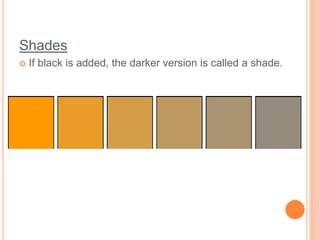
Shades 
 If black is added, the darker version is called a shade.
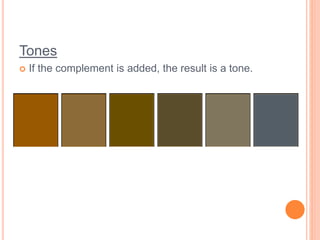
Tones 
 If the complement is added, the result is a tone.
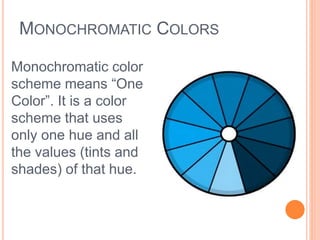
MONOCHROMATIC COLORS 
Monochromatic color 
scheme means “One 
Color”. It is a color 
scheme that uses 
only one hue and all 
the values (tints and 
shades) of that hue.
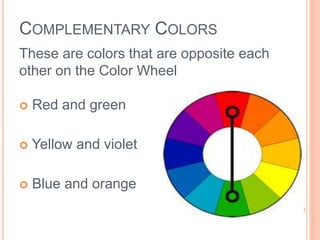
COMPLEMENTARY COLORS 
These are colors that are opposite each 
other on the Color Wheel 
 Red and green 
 Yellow and violet 
 Blue and orange
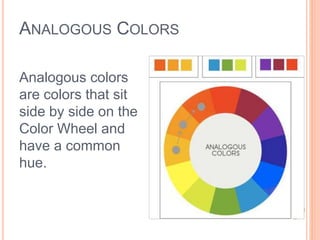
ANALOGOUS COLORS 
Analogous colors 
are colors that sit 
side by side on the 
Color Wheel and 
have a common 
hue.
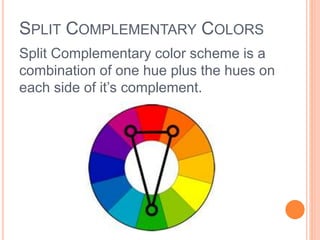
SPLIT COMPLEMENTARY COLORS 
Split Complementary color scheme is a 
combination of one hue plus the hues on 
each side of it’s complement.
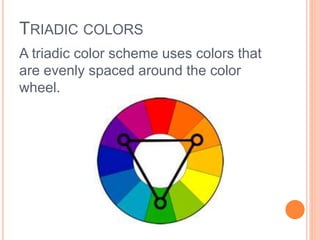
TRIADIC COLORS 
A triadic color scheme uses colors that 
are evenly spaced around the color 
wheel.
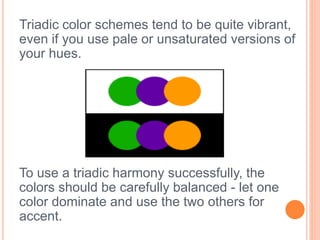
Triadic color schemes tend to be quite vibrant, 
even if you use pale or unsaturated versions of 
your hues. 
To use a triadic harmony successfully, the 
colors should be carefully balanced - let one 
color dominate and use the two others for 
accent.
COLOR ART CARDS 
You should have 8 Art Cards now with 
definitions… now is time to add color. 
1. COLOR: definition & color wheel 
2. Primary, Secondary, Tertiary, Warm & Cool 
3. Tints, Shades, Tones 
4. Monochromatic 
5. Complementary 
6. Split-Complementary 
7. Analogous 
8. Triadic
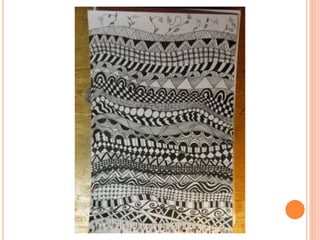
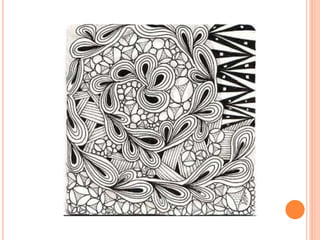
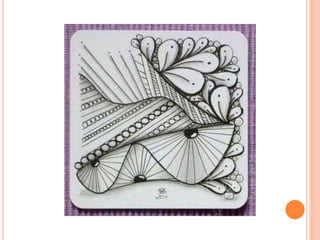
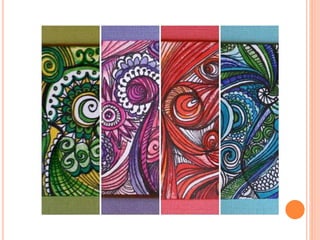
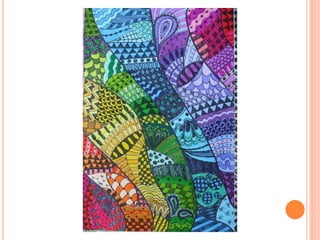
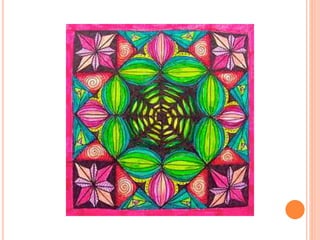
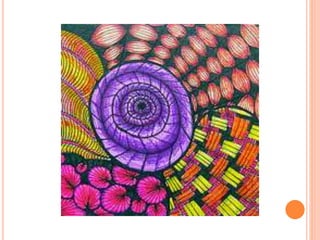
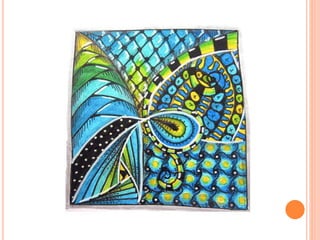
ZENTANGLE COLORS 
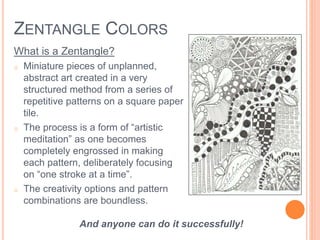
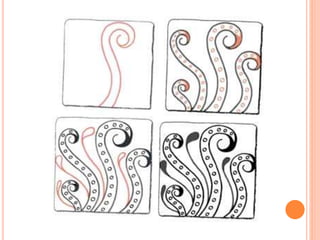
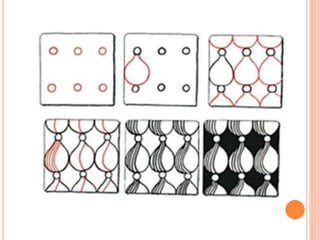
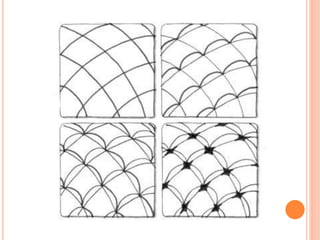
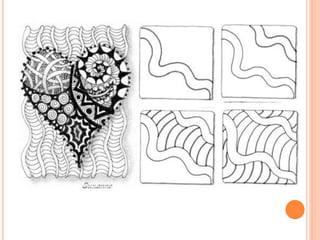
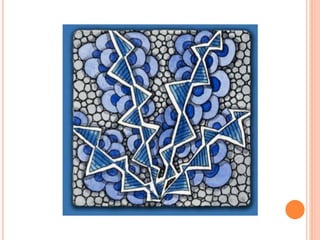
What is a Zentangle? 
o Miniature pieces of unplanned, 
abstract art created in a very 
structured method from a series of 
repetitive patterns on a square paper 
tile. 
o The process is a form of “artistic 
meditation” as one becomes 
completely engrossed in making 
each pattern, deliberately focusing 
on “one stroke at a time”. 
o The creativity options and pattern 
combinations are boundless. 
And anyone can do it successfully!
ZENTANGLE HOW TO 
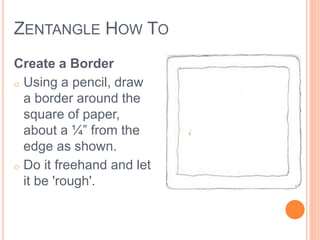
Create a Border 
o Using a pencil, draw 
a border around the 
square of paper, 
about a ¼” from the 
edge as shown. 
o Do it freehand and let 
it be 'rough'.
ZENTANGLE HOW TO 
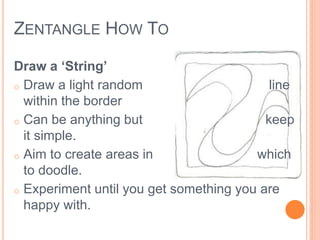
Draw a ‘String’ 
o Draw a light random line 
within the border 
o Can be anything but keep 
it simple. 
o Aim to create areas in which 
to doodle. 
o Experiment until you get something you are 
happy with.
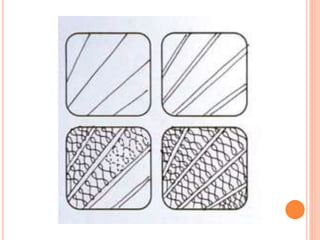
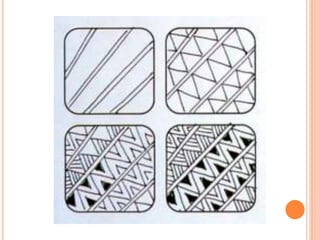
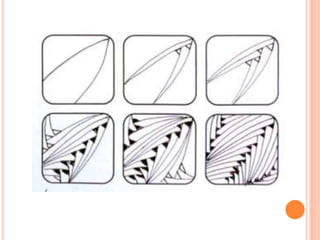
ZENTANGLE HOW TO 
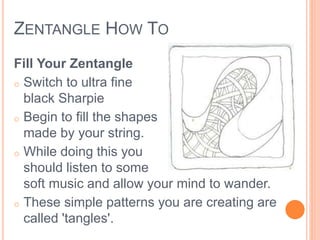
Fill Your Zentangle 
o Switch to ultra fine 
black Sharpie 
o Begin to fill the shapes 
made by your string. 
o While doing this you 
should listen to some 
soft music and allow your mind to wander. 
o These simple patterns you are creating are 
called 'tangles'.
ZENTANGLE HOW TO 
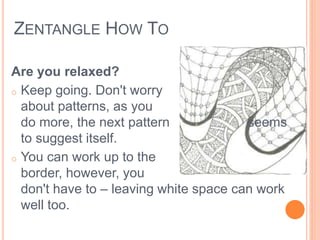
Are you relaxed? 
o Keep going. Don't worry 
about patterns, as you 
do more, the next pattern seems 
to suggest itself. 
o You can work up to the 
border, however, you 
don't have to – leaving white space can work 
well too.
Author: Kathleen Haffer-Sheeks 
Modified by Victor Central Schools

Colorwheel colorscheme

  • 1.
    COLOR ! Coloris the element of art that is produced when light, striking an object, is reflected back to the eye.
  • 2.
    THREE PROPERTIES OFCOLOR Hue: The name given to a color (red, blue, etc.)
  • 3.
    THREE PROPERTIES OFCOLOR Intensity: The strength and vividness of a color
  • 4.
    THREE PROPERTIES OFCOLOR Value: The lightness or darkness of a color
  • 5.
    ADDITIVE COLOR WHEEL Primary Red, Green, Blue Secondary Cyan, Yellow, Magenta * Televisions * Computer monitors
  • 6.
    SUBTRACTIVE COLOR WHEEL Primary Cyan, Magenta, Yellow Secondary Red, Blue, Green * Printing * Photographs
  • 7.
    THE COLOR WHEEL 12 Stage Color Wheel
  • 8.
    PRIMARY COLORS Inthe RYB (or subtractive) color model, the primary colors are red, yellow and blue. Red Yellow Blue
  • 9.
    SECONDARY COLORS Thethree secondary colors (orange, green and violet) are created by mixing two primary colors. Orange Green Violet
  • 10.
    INTERMEDIATE/TERTIARY COLORS Anothersix intermediate or tertiary colors are created by mixing primary and secondary colors. Red-Orange Yellow-Green Blue-Green Red-Violet Yellow-Orange Blue-Violet
  • 11.
    WARM AND COOLCOLORS Warm Colors are associated with warm things such as sunshine or fire. They are vivid and energetic, and tend to advance in space. Cool Colors are associated with cool things such as ice, snow, water and grass. They give an impression of calm, and create a soothing impression.
  • 12.
    TINTS, SHADES ANDTONES Terms are often used incorrectly, although they describe fairly simple color concepts. Tints  If a color is made lighter by adding white, the result is called a tint.
  • 13.
    Shades  Ifblack is added, the darker version is called a shade.
  • 14.
    Tones  Ifthe complement is added, the result is a tone.
  • 15.
    MONOCHROMATIC COLORS Monochromaticcolor scheme means “One Color”. It is a color scheme that uses only one hue and all the values (tints and shades) of that hue.
  • 16.
    COMPLEMENTARY COLORS Theseare colors that are opposite each other on the Color Wheel  Red and green  Yellow and violet  Blue and orange
  • 17.
    ANALOGOUS COLORS Analogouscolors are colors that sit side by side on the Color Wheel and have a common hue.
  • 18.
    SPLIT COMPLEMENTARY COLORS Split Complementary color scheme is a combination of one hue plus the hues on each side of it’s complement.
  • 19.
    TRIADIC COLORS Atriadic color scheme uses colors that are evenly spaced around the color wheel.
  • 20.
    Triadic color schemestend to be quite vibrant, even if you use pale or unsaturated versions of your hues. To use a triadic harmony successfully, the colors should be carefully balanced - let one color dominate and use the two others for accent.
  • 21.
    COLOR ART CARDS You should have 8 Art Cards now with definitions… now is time to add color. 1. COLOR: definition & color wheel 2. Primary, Secondary, Tertiary, Warm & Cool 3. Tints, Shades, Tones 4. Monochromatic 5. Complementary 6. Split-Complementary 7. Analogous 8. Triadic
  • 22.
    ZENTANGLE COLORS Whatis a Zentangle? o Miniature pieces of unplanned, abstract art created in a very structured method from a series of repetitive patterns on a square paper tile. o The process is a form of “artistic meditation” as one becomes completely engrossed in making each pattern, deliberately focusing on “one stroke at a time”. o The creativity options and pattern combinations are boundless. And anyone can do it successfully!
  • 23.
    ZENTANGLE HOW TO Create a Border o Using a pencil, draw a border around the square of paper, about a ¼” from the edge as shown. o Do it freehand and let it be 'rough'.
  • 24.
    ZENTANGLE HOW TO Draw a ‘String’ o Draw a light random line within the border o Can be anything but keep it simple. o Aim to create areas in which to doodle. o Experiment until you get something you are happy with.
  • 25.
    ZENTANGLE HOW TO Fill Your Zentangle o Switch to ultra fine black Sharpie o Begin to fill the shapes made by your string. o While doing this you should listen to some soft music and allow your mind to wander. o These simple patterns you are creating are called 'tangles'.
  • 26.
    ZENTANGLE HOW TO Are you relaxed? o Keep going. Don't worry about patterns, as you do more, the next pattern seems to suggest itself. o You can work up to the border, however, you don't have to – leaving white space can work well too.
  • 43.
    Author: Kathleen Haffer-Sheeks Modified by Victor Central Schools