COLOUR IS…
...a powerful tool
...tied to religious, cultural,
political and social influences
IT AFFECT ..MOOD
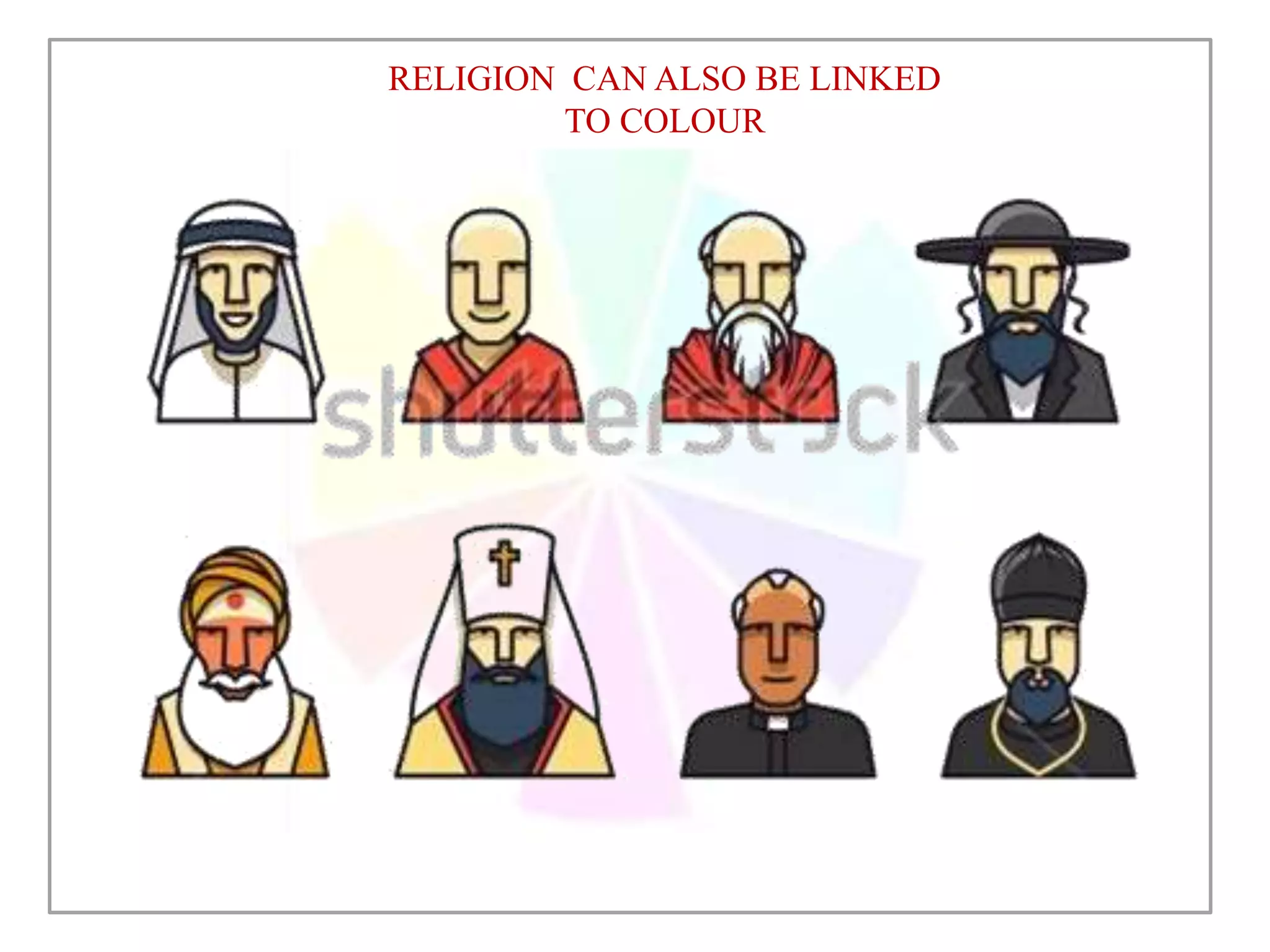
RELIGION CAN ALSO BE LINKED
TO COLOUR
IT CAN COMMUNICATE IT HAS CULTURAL
SIGNIFICANCE
IT HAS POLITICAL ASSOCIATIONS…..
.- What is Colour?
.- How do we perceive Colour?
.- How do we classify the Pigment Colours?
.- Color Terminology.
.- Colour Symbolism.
WHAT IS COLOUR?
• It is one of the elements of visual language (just as dot, line,

plane, shape, texture…)
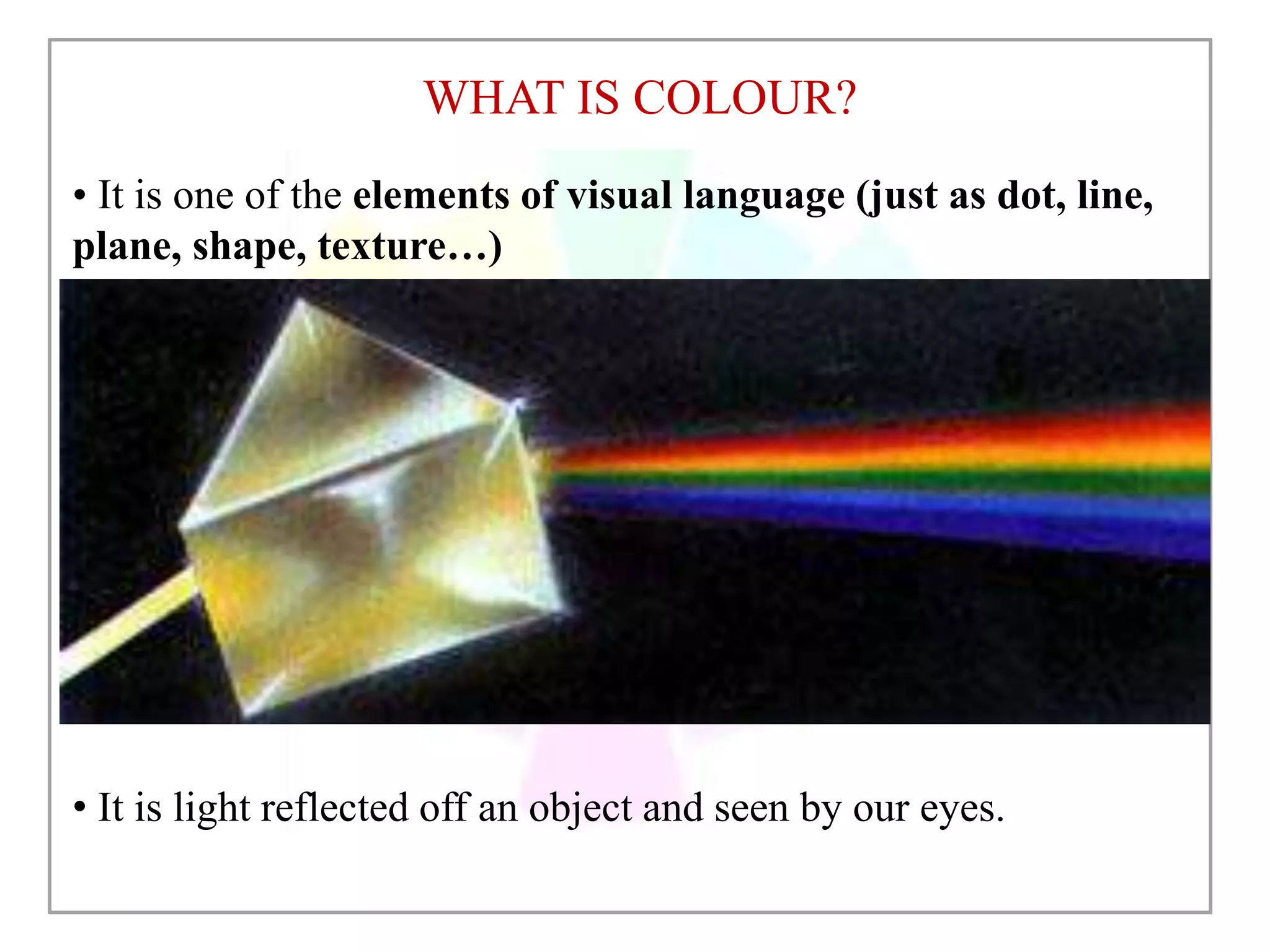
• It is light reflected off an object and seen by our eyes.
HOW DO WE PERCEIVE COLOUR?
Three elements are involved in this process: -
-The LIGHT that reaches an
object.
- The SURFACE of the object
and
- The SIGHT of the observer
When light comes in to contact with a
surface and reflects all wavelengths
equally, then we see white colour.
If the surface absorbs all the wavelength
then we see black colour.
e.g. if the surface does not absorb the blue rays but absorbs all the other colours, then
we see blue colour. Thus the colour is the name given to the reflections of wavelengths
from different surfaces.
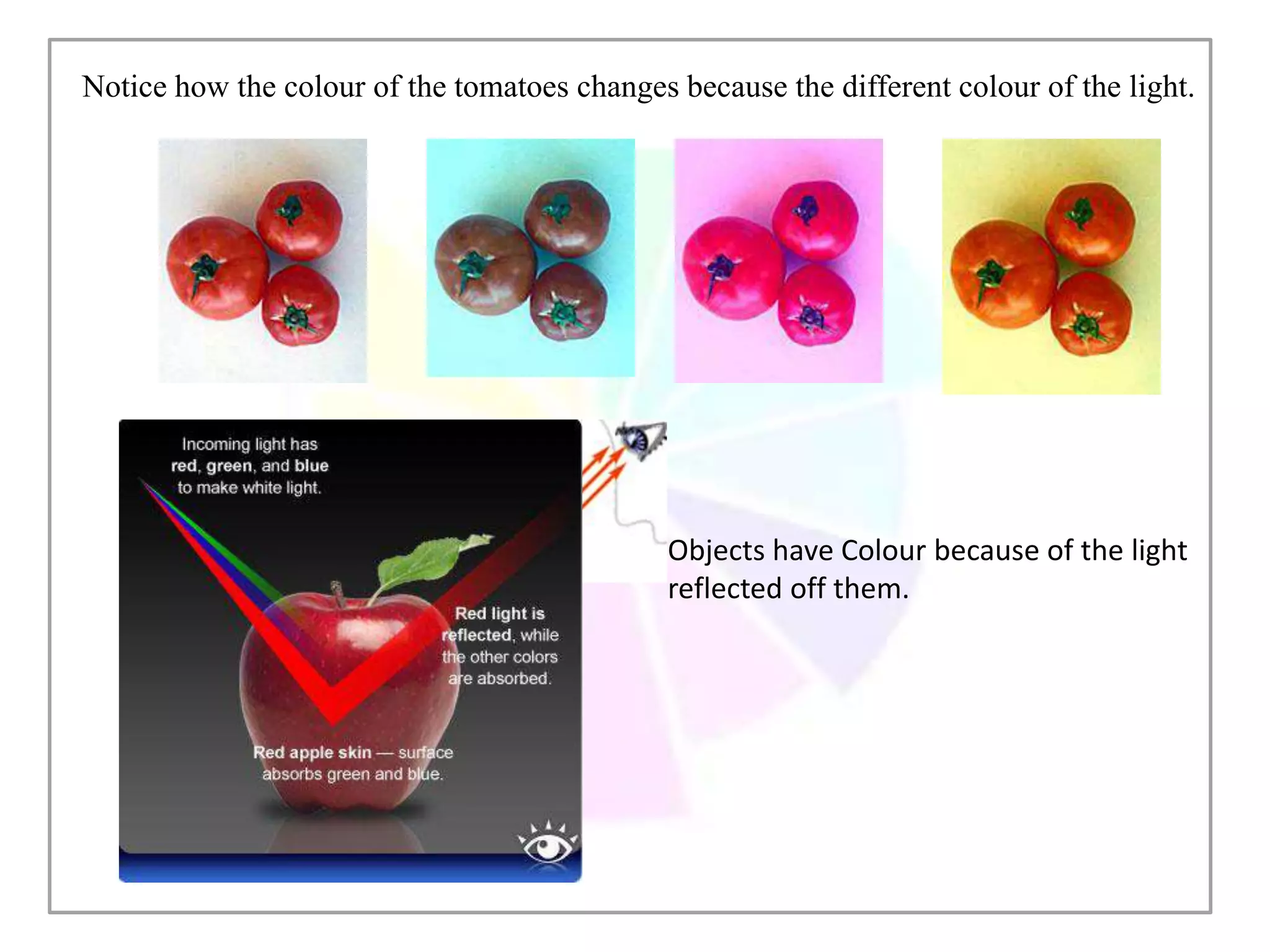
Notice how the colour of the tomatoes changes because the different colour of the light.
Objects have Colour because of the light
reflected off them.
How do we classify the Pigment Colours?
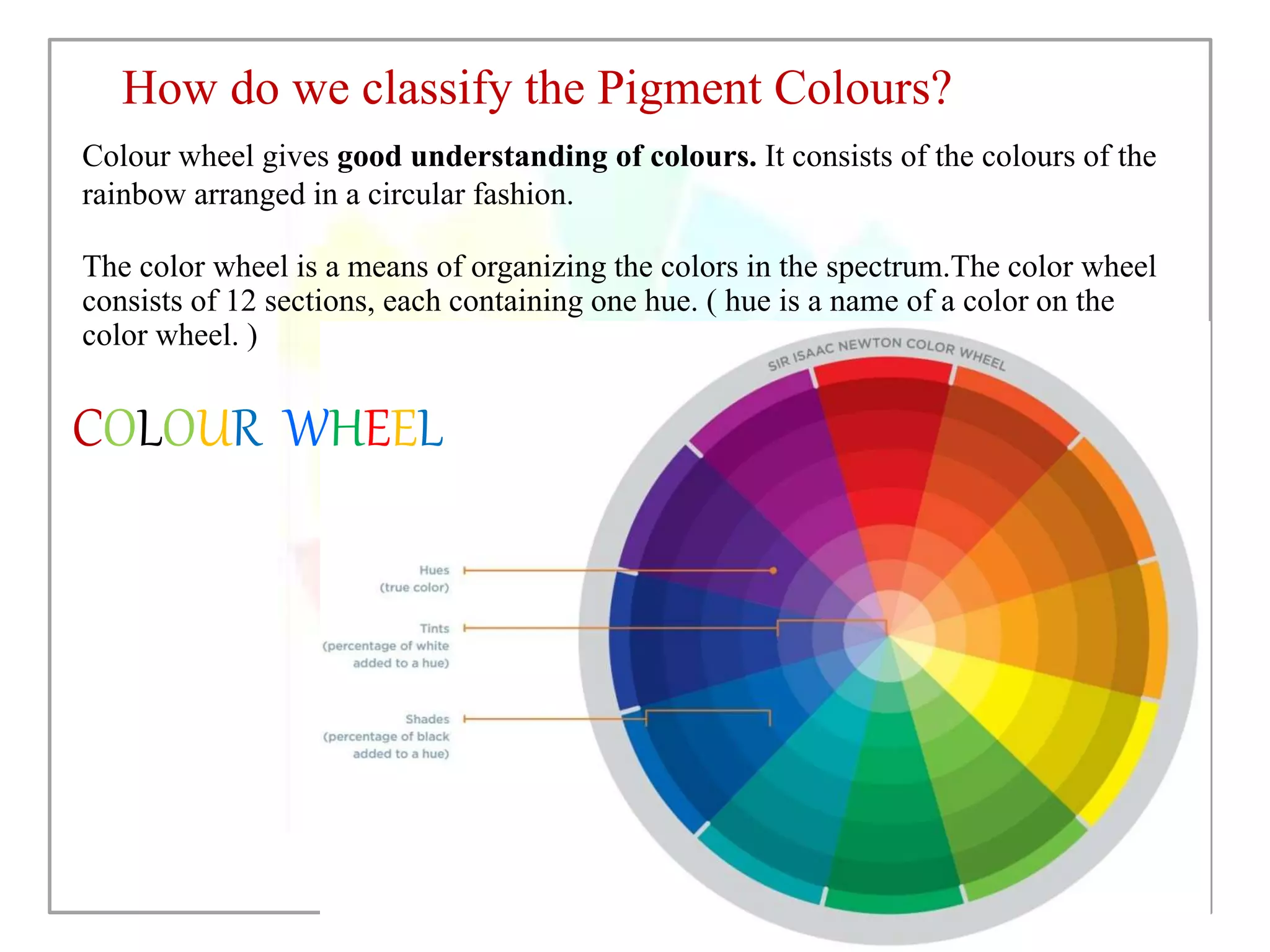
Colour wheel gives good understanding of colours. It consists of the colours of the
rainbow arranged in a circular fashion.
The color wheel is a means of organizing the colors in the spectrum.The color wheel
consists of 12 sections, each containing one hue. ( hue is a name of a color on the
color wheel. )
COLOUR WHEEL
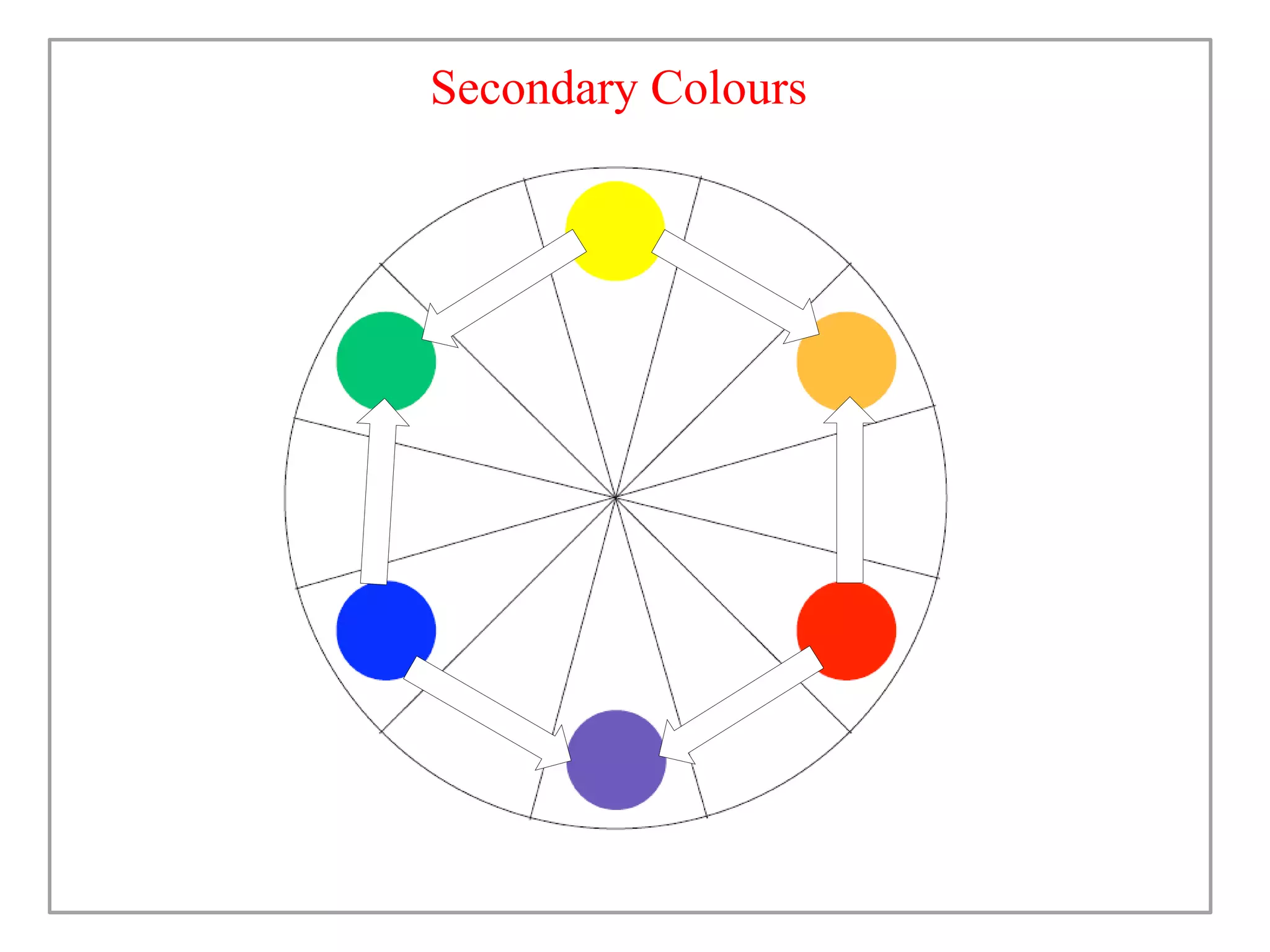
3 Primary Colours
Secondary Colours
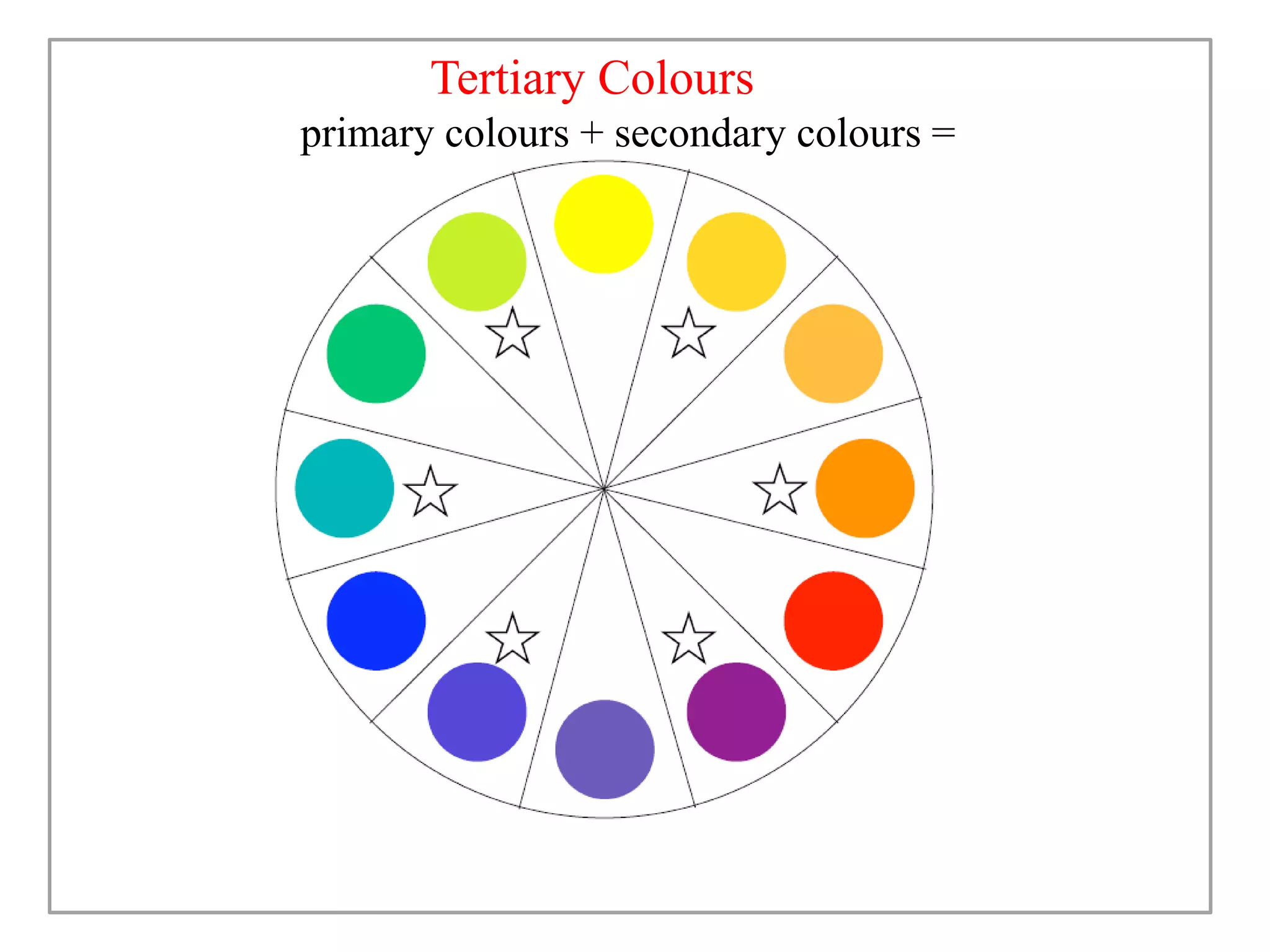
Tertiary Colours
primary colours + secondary colours =
• Tints are lightened colors. Always begin
with white and add a bit of color to the white
until the desired tint is obtained. This is an
example of a value scale for the tints of blue.
Tints
• Shades are darkened colors. Always
begin with the color and add just a bit of
black at a time to get the desired shade of
a color. This is an example of a value
scale for the shades of blue.
Shades
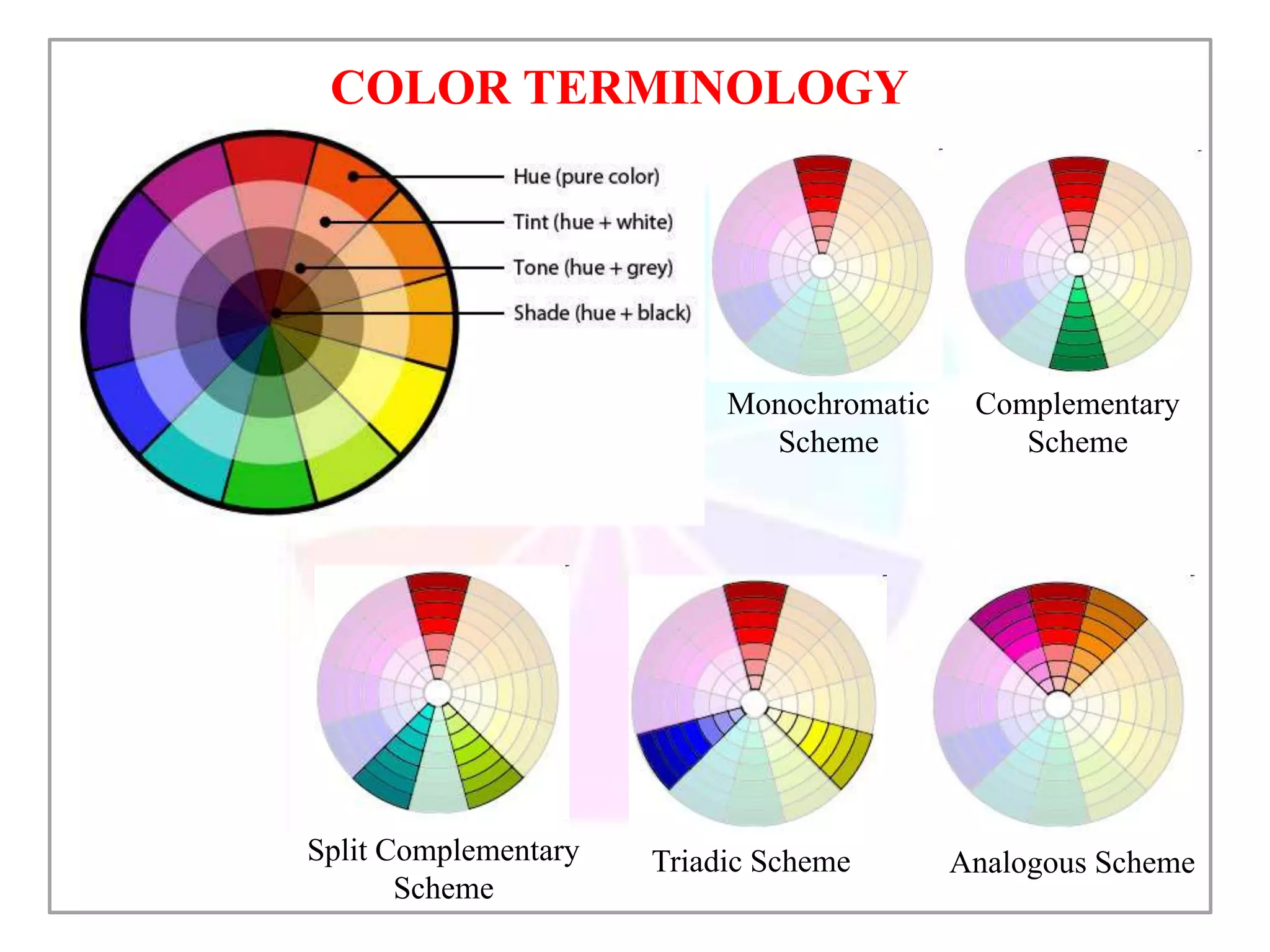
COLOR TERMINOLOGY
Monochromatic
Scheme
Complementary
Scheme
Split Complementary
Scheme
Triadic Scheme Analogous Scheme
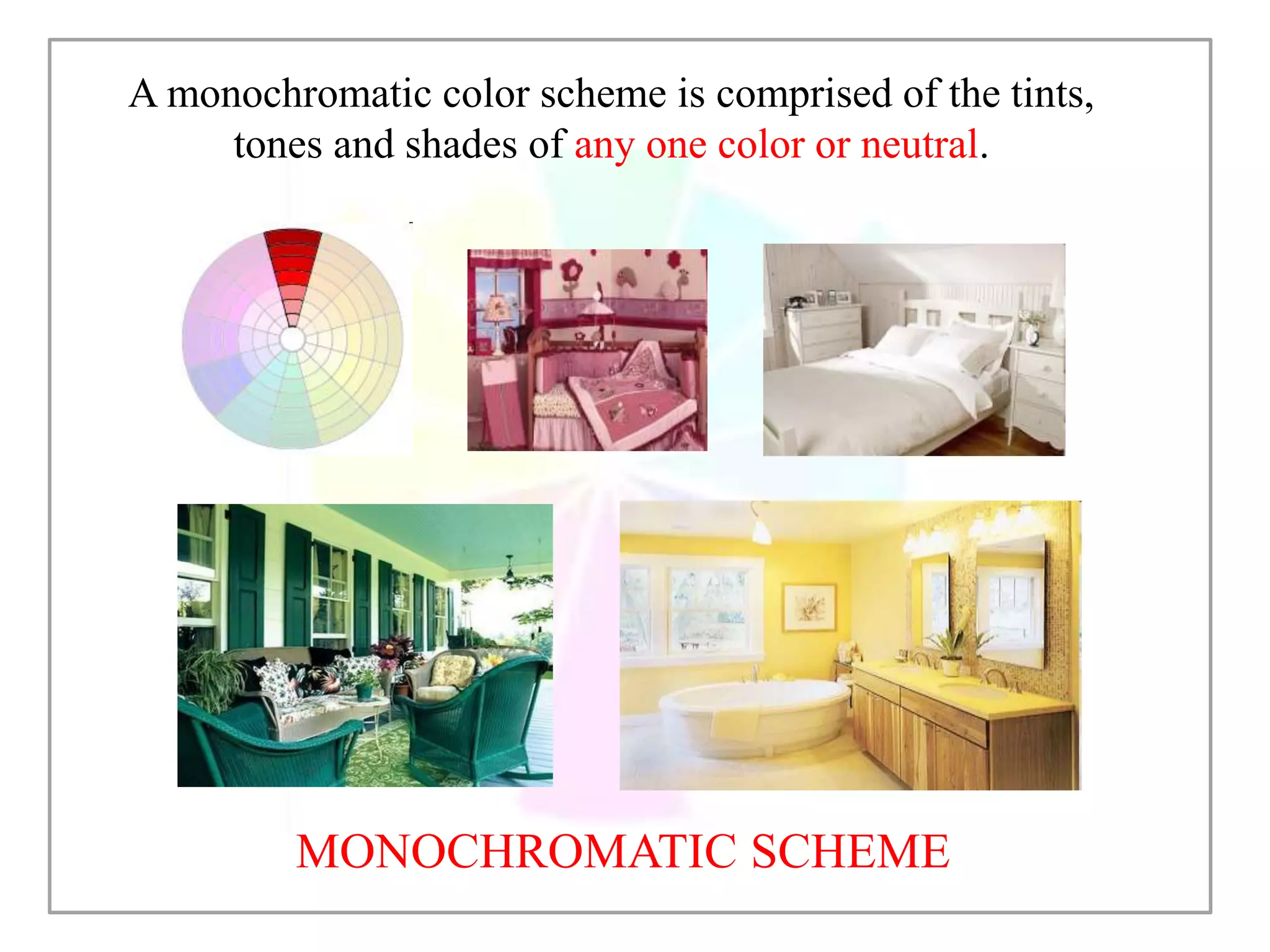
MONOCHROMATIC SCHEME
A monochromatic color scheme is comprised of the tints,
tones and shades of any one color or neutral.
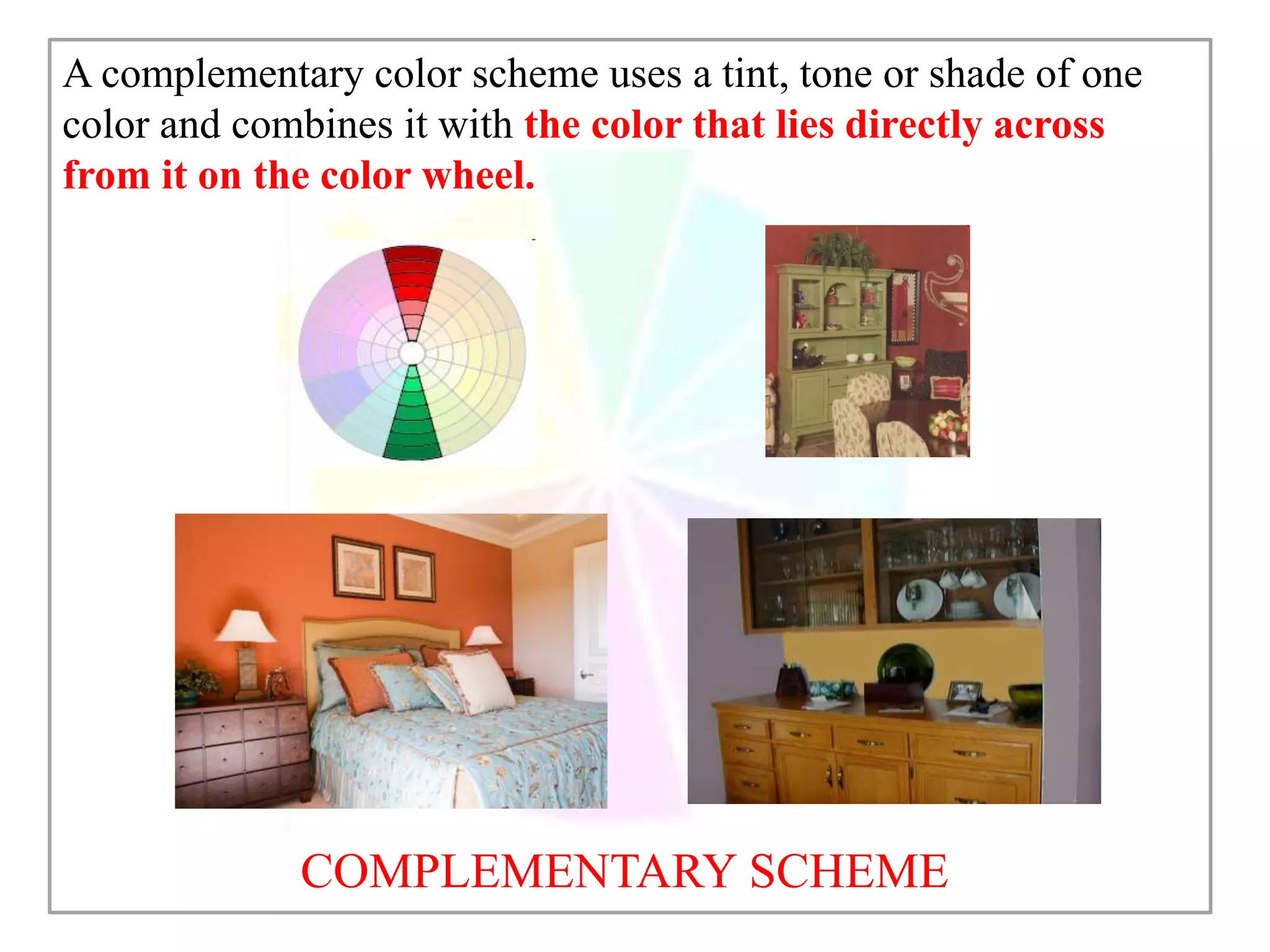
COMPLEMENTARY SCHEME
A complementary color scheme uses a tint, tone or shade of one
color and combines it with the color that lies directly across
from it on the color wheel.
SPLIT COMPLEMENTARY SCHEME
A split complementary color scheme uses a tint, tone or shade of
one color and combines it with the colors that lie adjacent to the
color directly across from it on the color wheel.
TRIADIC SCHEME
A triadic color scheme is comprised of 3 colors on the color
wheel which are equally spaced from each other.
ANALOGOUS SCHEME
An analogous color scheme uses any 3 shades, tints or tones of
colors that lie adjacent to each other on the color wheel.
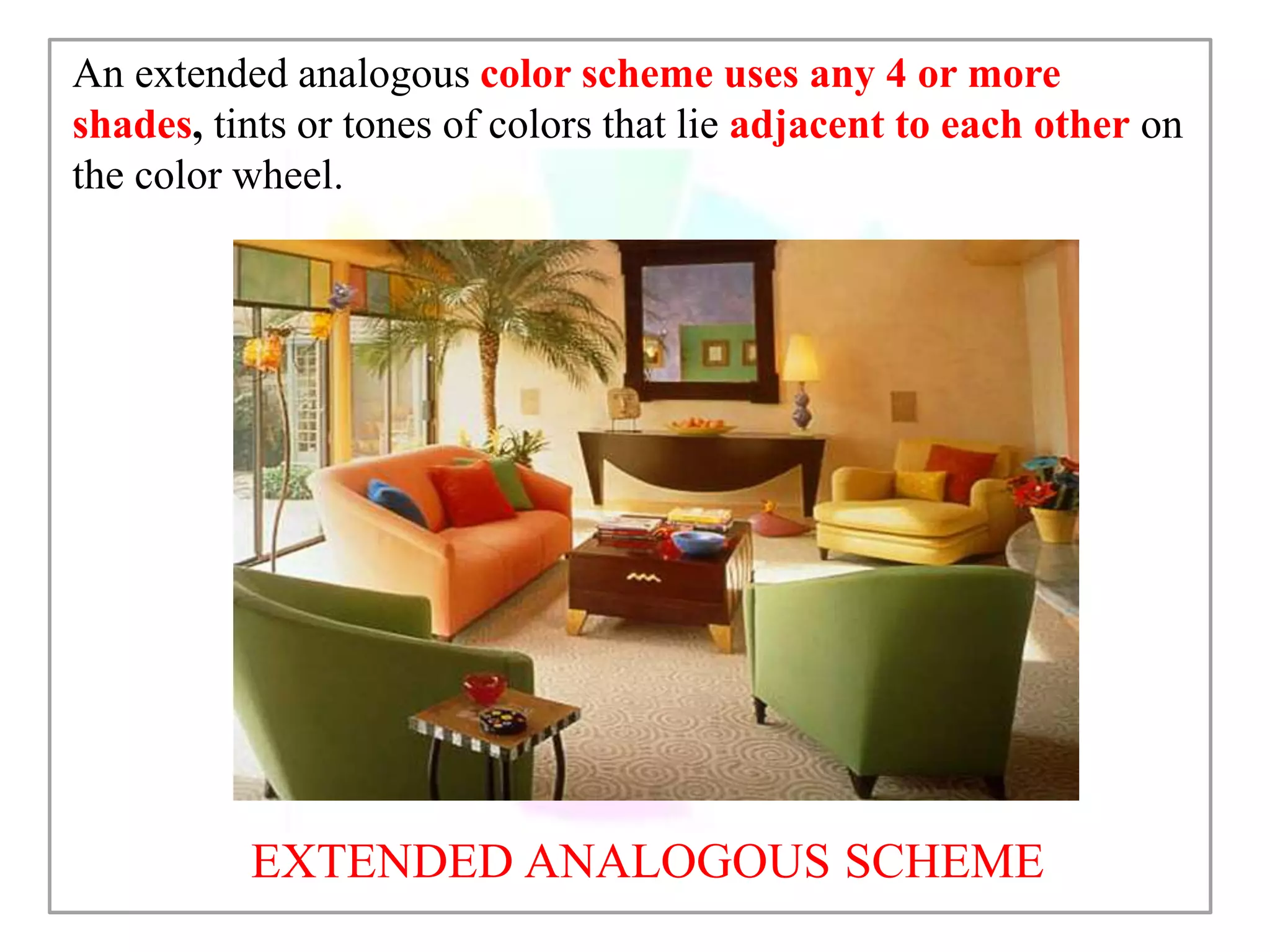
EXTENDED ANALOGOUS SCHEME
An extended analogous color scheme uses any 4 or more
shades, tints or tones of colors that lie adjacent to each other on
the color wheel.
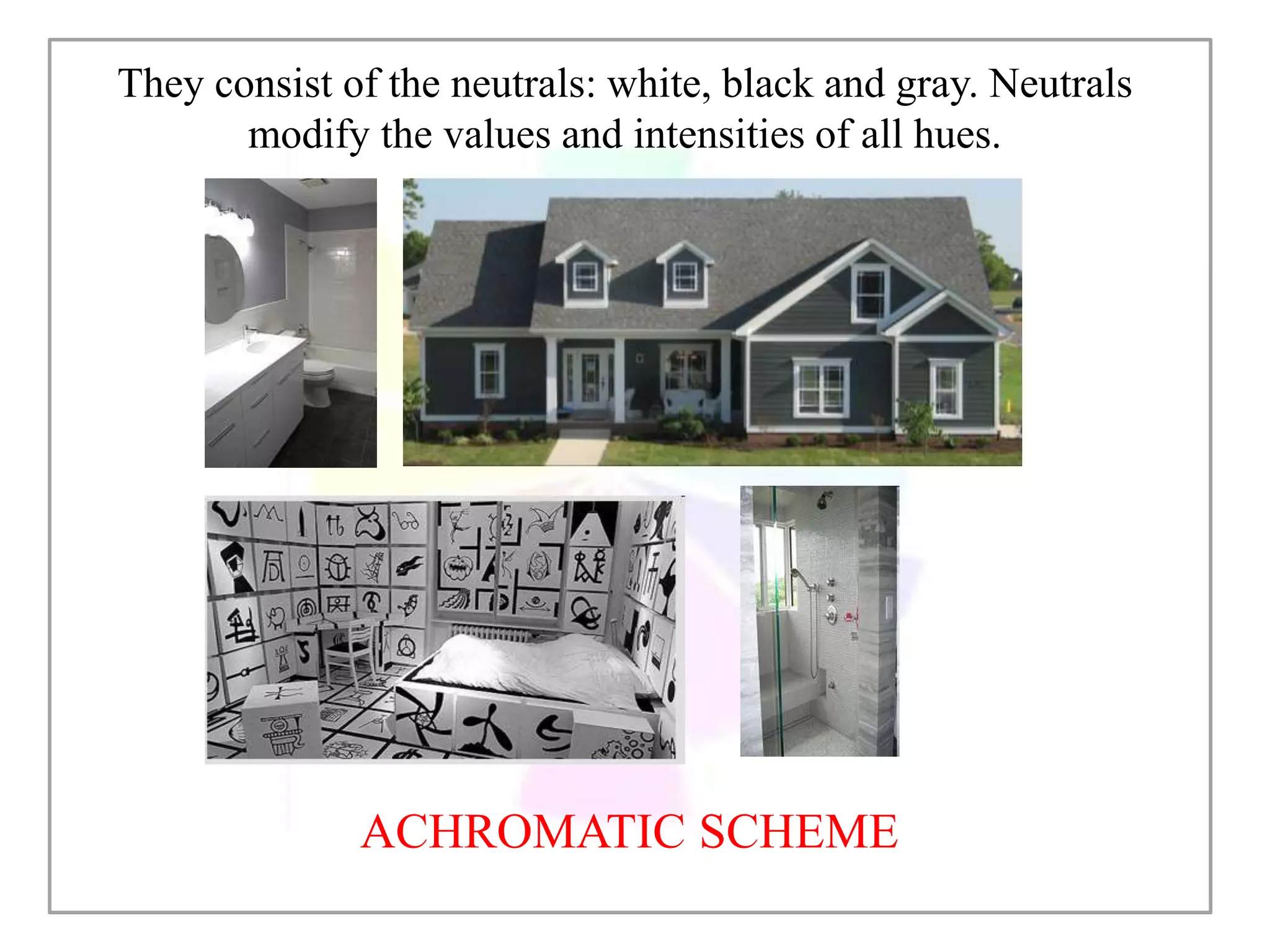
ACHROMATIC SCHEME
They consist of the neutrals: white, black and gray. Neutrals
modify the values and intensities of all hues.
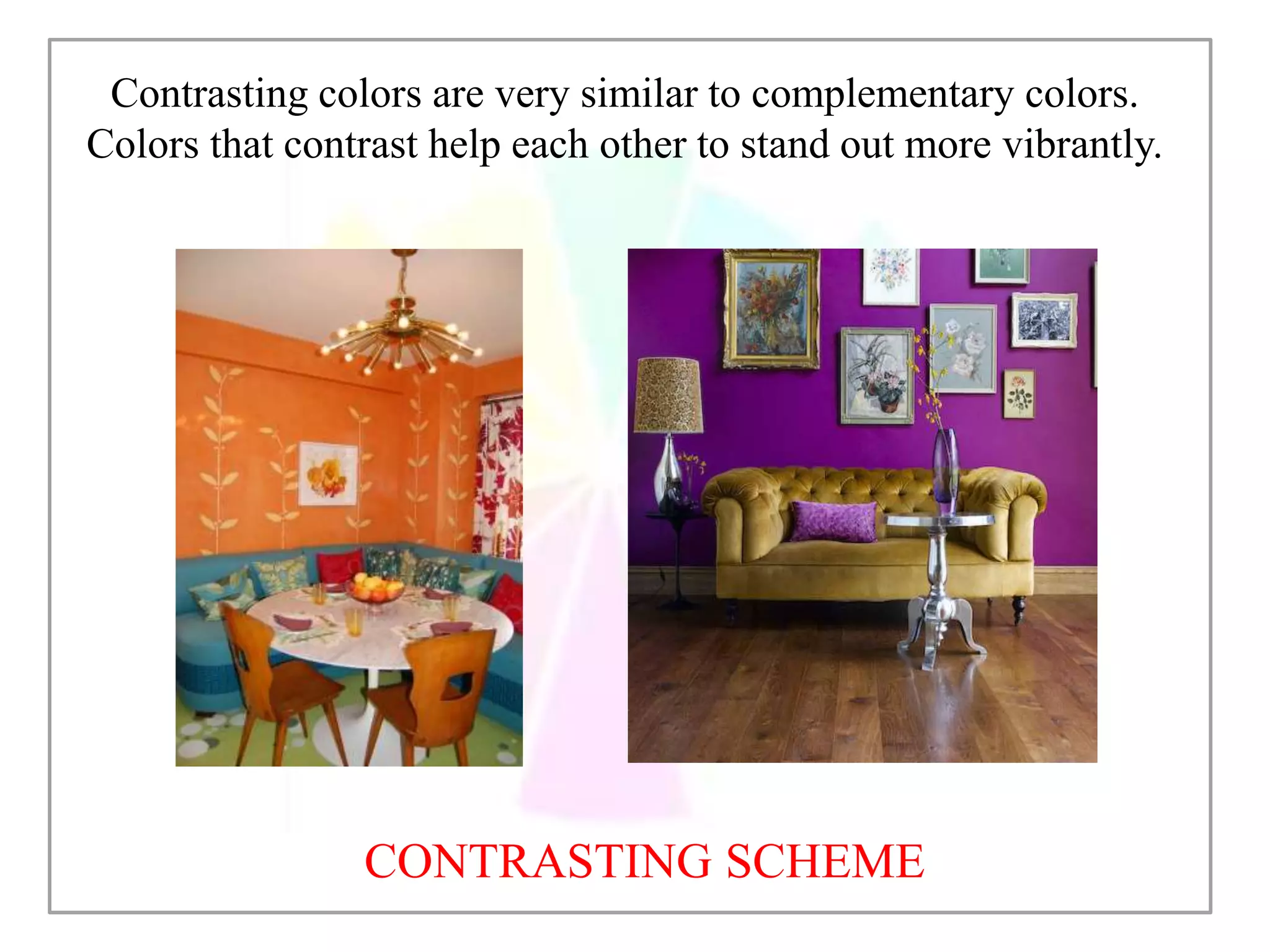
CONTRASTING SCHEME
Contrasting colors are very similar to complementary colors.
Colors that contrast help each other to stand out more vibrantly.
Complementary Colours
Are opposites on a colour wheel.
which can create harmony.
Analogous Colours
Are groups of 3 colours.
Choosing the Right Colours
Red is usually used to show:
• Warm
• Vibrant
• Exciting
• Active
• Festive
• Passion
• Danger
Yellow is usually used to show:
• Warm
• Sunny
• Happy
• Glowing
• Easily seen
• Cool
• Elegant
• Formal
• Classy
Blue is usually used to show:
• Cool
• restful
• natural calm
• soothing
• fresh
Green is usually used to show:
• Cool
• Peaceful
• Solitary(Alone , Isolated , Single)
Violet is usually used to show:
• Warm
• Happy
• Cheerful
• Energy
• Refreshing
Orange is usually used to show:
Greys
• Natural
• Restful
• Calm
Browns
• Natural
• Earthly
• Elegant
• Dignified
• Reliable
• Good
Neutral Colours is usually used to show:
Black & White
• Dramatic
• Elegant
• Opposing
• Contrasting
• Sophisticated
COLOUR SIMBOLISM
Warm Colours Cool Colours
• These colours are used to give a
feeling/sense energy and warmth
to a drawing.
• Warm colours remind you of sun,
fire etc.
• Use warm colours when you want
to get full attention to a layout
Design
• Warm colours are made up of
red
yellow
Orange
• These colours are used to give
a feeling of coolness, comfort,
calm & peace to a drawing.
• Cool colours are made up of.
blue
green
Violet
White & Gray
Generally there is not any formula how to
use colours but it is a sense to use particular
colour at particular time and space
CONCLUSION
Thank you

Final colour

  • 1.
    COLOUR IS… ...a powerfultool ...tied to religious, cultural, political and social influences
  • 2.
  • 3.
    RELIGION CAN ALSOBE LINKED TO COLOUR
  • 4.
    IT CAN COMMUNICATEIT HAS CULTURAL SIGNIFICANCE IT HAS POLITICAL ASSOCIATIONS…..
  • 5.
    .- What isColour? .- How do we perceive Colour? .- How do we classify the Pigment Colours? .- Color Terminology. .- Colour Symbolism.
  • 6.
    WHAT IS COLOUR? •It is one of the elements of visual language (just as dot, line, plane, shape, texture…) • It is light reflected off an object and seen by our eyes.
  • 7.
    HOW DO WEPERCEIVE COLOUR? Three elements are involved in this process: - -The LIGHT that reaches an object. - The SURFACE of the object and - The SIGHT of the observer
  • 8.
    When light comesin to contact with a surface and reflects all wavelengths equally, then we see white colour. If the surface absorbs all the wavelength then we see black colour. e.g. if the surface does not absorb the blue rays but absorbs all the other colours, then we see blue colour. Thus the colour is the name given to the reflections of wavelengths from different surfaces.
  • 9.
    Notice how thecolour of the tomatoes changes because the different colour of the light. Objects have Colour because of the light reflected off them.
  • 10.
    How do weclassify the Pigment Colours? Colour wheel gives good understanding of colours. It consists of the colours of the rainbow arranged in a circular fashion. The color wheel is a means of organizing the colors in the spectrum.The color wheel consists of 12 sections, each containing one hue. ( hue is a name of a color on the color wheel. ) COLOUR WHEEL
  • 11.
  • 12.
  • 13.
    Tertiary Colours primary colours+ secondary colours =
  • 14.
    • Tints arelightened colors. Always begin with white and add a bit of color to the white until the desired tint is obtained. This is an example of a value scale for the tints of blue. Tints • Shades are darkened colors. Always begin with the color and add just a bit of black at a time to get the desired shade of a color. This is an example of a value scale for the shades of blue. Shades
  • 15.
  • 16.
    MONOCHROMATIC SCHEME A monochromaticcolor scheme is comprised of the tints, tones and shades of any one color or neutral.
  • 17.
    COMPLEMENTARY SCHEME A complementarycolor scheme uses a tint, tone or shade of one color and combines it with the color that lies directly across from it on the color wheel.
  • 18.
    SPLIT COMPLEMENTARY SCHEME Asplit complementary color scheme uses a tint, tone or shade of one color and combines it with the colors that lie adjacent to the color directly across from it on the color wheel.
  • 19.
    TRIADIC SCHEME A triadiccolor scheme is comprised of 3 colors on the color wheel which are equally spaced from each other.
  • 20.
    ANALOGOUS SCHEME An analogouscolor scheme uses any 3 shades, tints or tones of colors that lie adjacent to each other on the color wheel.
  • 21.
    EXTENDED ANALOGOUS SCHEME Anextended analogous color scheme uses any 4 or more shades, tints or tones of colors that lie adjacent to each other on the color wheel.
  • 22.
    ACHROMATIC SCHEME They consistof the neutrals: white, black and gray. Neutrals modify the values and intensities of all hues.
  • 23.
    CONTRASTING SCHEME Contrasting colorsare very similar to complementary colors. Colors that contrast help each other to stand out more vibrantly.
  • 24.
    Complementary Colours Are oppositeson a colour wheel. which can create harmony. Analogous Colours Are groups of 3 colours.
  • 25.
    Choosing the RightColours Red is usually used to show: • Warm • Vibrant • Exciting • Active • Festive • Passion • Danger
  • 26.
    Yellow is usuallyused to show: • Warm • Sunny • Happy • Glowing • Easily seen
  • 27.
    • Cool • Elegant •Formal • Classy Blue is usually used to show:
  • 28.
    • Cool • restful •natural calm • soothing • fresh Green is usually used to show:
  • 29.
    • Cool • Peaceful •Solitary(Alone , Isolated , Single) Violet is usually used to show:
  • 30.
    • Warm • Happy •Cheerful • Energy • Refreshing Orange is usually used to show:
  • 31.
    Greys • Natural • Restful •Calm Browns • Natural • Earthly • Elegant • Dignified • Reliable • Good Neutral Colours is usually used to show:
  • 32.
    Black & White •Dramatic • Elegant • Opposing • Contrasting • Sophisticated
  • 33.
    COLOUR SIMBOLISM Warm ColoursCool Colours • These colours are used to give a feeling/sense energy and warmth to a drawing. • Warm colours remind you of sun, fire etc. • Use warm colours when you want to get full attention to a layout Design • Warm colours are made up of red yellow Orange • These colours are used to give a feeling of coolness, comfort, calm & peace to a drawing. • Cool colours are made up of. blue green Violet White & Gray
  • 37.
    Generally there isnot any formula how to use colours but it is a sense to use particular colour at particular time and space CONCLUSION
  • 39.