

Collateral Security
K AJAY KUMAR - 1603002
K AJAY SAI - 1603003
S NAVEEN KUMAR - 1603026
B RAHUL GUPTA - 1603034
PRESENTED BY
DEFINITION OF COLLATERAL SECURITY
ONLINE AND OFFLINE COLLATERAL
EXAMPLES FOR COLLATERAL SECURITY
INSTUMENTS ACCEPTED AS COLLATERAL
ONLINE COLLATERAL VALUATION
LAND & BUILDINGS AS SECURITY
RISKS OF ACCEPTING LAND & BUILDINGS AS SECURITY
ADVANTAGES & DISADVANTAGES OF LAND & BUILDINGS AS SECURITY
ADVANTAGES & DISADVANATGES OF COLLATERAL SECURITY
TYPES OF COLLATERAL SECURITIES FOR CREDIT FACILITIES
TOPICS COVERED:
What is Collateral Security
Collateral is a property or
other assets that a borrower
offers a lender to secure a
loan. If the borrower stops
making the promised loan
payments, the lender can
seize the collateral to recoup
its losses.
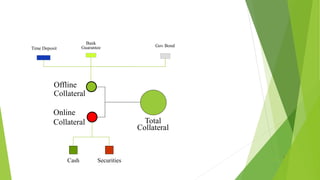
Time Deposit
Bank
Guarantee Gov Bond
Offline
Collateral
Online
Collateral Total
Collateral
Cash Securities
Let's assume you would like to borrow $100,000 to start a business. Even if you
have an excellent credit rating, a bank may be reluctant to lend you
the money because it may be left with nothing if you default on the loan. Thus, the
bank may require $100,000 of collateral in order to lend you the money. This
collateral might consist of financial instruments, houses, cash, or even objects such
as art, jewelry, or other items. You might also pledge your business receivables as
well.
If you do in fact default on the loan, the loan agreement gives the lender the right
to seize and then sell the collateral in order to recover any outstanding balance.
EXAMPLE FOR COLLATERAL SECURITY
Offline Collateral
Time Deposit
Bank Guarantee
Stock Exchange
Government Bonds
BI Treasury Bills
Online Collateral
Cash
Listed securities
- Stocks, Government Bonds, Corporate Bonds
Cash,
- valued 100 %
- get interest from participating banks
Acceptable Securities,
- marked to market, lowest price in last
three trading days.
Bankers were prejudiced against securities such
as land & buildings. Gilbert pointed out that “
the rule of a bank is never to make advances
directly, upon deeds or any other dead security.
The following are the risks for a banker in
accepting land & buildings as securities.
LAND AND BUILDINGS AS COLLATERAL SECURITY
Difficulty in ascertaining the title of borrower
Valuation is extremely difficult for a banker.
Advances for a longer period.
Difficult to realize the Security.
Legal formalities.
Creation of charge against the security is costly.
Risks for accepting Land & Buildings
as Security.
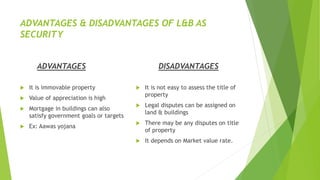
ADVANTAGES & DISADVANTAGES OF L&B AS
SECURITY
ADVANTAGES
 It is immovable property
 Value of appreciation is high
 Mortgage in buildings can also
satisfy government goals or targets
 Ex: Aawas yojana
DISADVANTAGES
 It is not easy to assess the title of
property
 Legal disputes can be assigned on
land & buildings
 There may be any disputes on title
of property
 It depends on Market value rate.
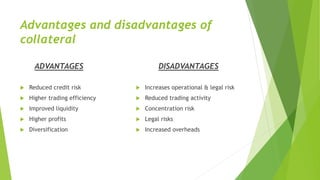
Advantages and disadvantages of
collateral
ADVANTAGES
 Reduced credit risk
 Higher trading efficiency
 Improved liquidity
 Higher profits
 Diversification
DISADVANTAGES
 Increases operational & legal risk
 Reduced trading activity
 Concentration risk
 Legal risks
 Increased overheads
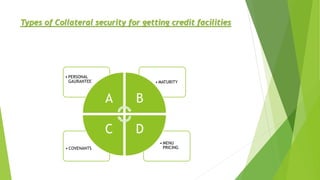
Types of Collateral security for getting credit facilities
• MENU
PRICING• COVENANTS
• MATURITY
• PERSONAL
GAURANTEE
A B
DC
In this case lender is free to use or dispose the entrepenuers assets
as the lender wishes.
So, lender is not sure if the guarantor will have any assets at all
when it is time to settle the claim.
An important distinction between outside collateral and personal
is that outside collateral signifies control over specific assets.
PERSONAL GAURANTEE
Debt contracts with very short maturities allow a bank to
limit the period of exposure and at the end of the period
the bank has an opportunity to reassess the credit
worthiness of the venture.
This can be very effectively used while issuing credit
limits.
MATURITY
Debt covenants are commitments from borrowers
regarding certain actions or activities . These can be
promises to meet the financial goals and performance
targets or to engage in certain activities.
A banker may prohibit a lender from engaging in
speculative activity by stocking up more than required
inventory when needed.
COVENANTS
Kantanas and Green Baum have suggested that lenders
can utilize menu pricing on loans by offering alternative
contacts that differ in terms of upfront fees, penalties ,
interest rates.
Many bankers realize its usefulness in dealing with
marginally riskier lending but find no rationale in using
this to justify extending very risky loans.
MENU PRICING
THANK YOU

Collateral security

  • 1.
    Collateral Security K AJAYKUMAR - 1603002 K AJAY SAI - 1603003 S NAVEEN KUMAR - 1603026 B RAHUL GUPTA - 1603034 PRESENTED BY
  • 2.
    DEFINITION OF COLLATERALSECURITY ONLINE AND OFFLINE COLLATERAL EXAMPLES FOR COLLATERAL SECURITY INSTUMENTS ACCEPTED AS COLLATERAL ONLINE COLLATERAL VALUATION LAND & BUILDINGS AS SECURITY RISKS OF ACCEPTING LAND & BUILDINGS AS SECURITY ADVANTAGES & DISADVANTAGES OF LAND & BUILDINGS AS SECURITY ADVANTAGES & DISADVANATGES OF COLLATERAL SECURITY TYPES OF COLLATERAL SECURITIES FOR CREDIT FACILITIES TOPICS COVERED:
  • 3.
    What is CollateralSecurity Collateral is a property or other assets that a borrower offers a lender to secure a loan. If the borrower stops making the promised loan payments, the lender can seize the collateral to recoup its losses.
  • 4.
    Time Deposit Bank Guarantee GovBond Offline Collateral Online Collateral Total Collateral Cash Securities
  • 5.
    Let's assume youwould like to borrow $100,000 to start a business. Even if you have an excellent credit rating, a bank may be reluctant to lend you the money because it may be left with nothing if you default on the loan. Thus, the bank may require $100,000 of collateral in order to lend you the money. This collateral might consist of financial instruments, houses, cash, or even objects such as art, jewelry, or other items. You might also pledge your business receivables as well. If you do in fact default on the loan, the loan agreement gives the lender the right to seize and then sell the collateral in order to recover any outstanding balance. EXAMPLE FOR COLLATERAL SECURITY
  • 6.
    Offline Collateral Time Deposit BankGuarantee Stock Exchange Government Bonds BI Treasury Bills Online Collateral Cash Listed securities - Stocks, Government Bonds, Corporate Bonds
  • 7.
    Cash, - valued 100% - get interest from participating banks Acceptable Securities, - marked to market, lowest price in last three trading days.
  • 8.
    Bankers were prejudicedagainst securities such as land & buildings. Gilbert pointed out that “ the rule of a bank is never to make advances directly, upon deeds or any other dead security. The following are the risks for a banker in accepting land & buildings as securities. LAND AND BUILDINGS AS COLLATERAL SECURITY
  • 9.
    Difficulty in ascertainingthe title of borrower Valuation is extremely difficult for a banker. Advances for a longer period. Difficult to realize the Security. Legal formalities. Creation of charge against the security is costly. Risks for accepting Land & Buildings as Security.
  • 10.
    ADVANTAGES & DISADVANTAGESOF L&B AS SECURITY ADVANTAGES  It is immovable property  Value of appreciation is high  Mortgage in buildings can also satisfy government goals or targets  Ex: Aawas yojana DISADVANTAGES  It is not easy to assess the title of property  Legal disputes can be assigned on land & buildings  There may be any disputes on title of property  It depends on Market value rate.
  • 11.
    Advantages and disadvantagesof collateral ADVANTAGES  Reduced credit risk  Higher trading efficiency  Improved liquidity  Higher profits  Diversification DISADVANTAGES  Increases operational & legal risk  Reduced trading activity  Concentration risk  Legal risks  Increased overheads
  • 12.
    Types of Collateralsecurity for getting credit facilities • MENU PRICING• COVENANTS • MATURITY • PERSONAL GAURANTEE A B DC
  • 13.
    In this caselender is free to use or dispose the entrepenuers assets as the lender wishes. So, lender is not sure if the guarantor will have any assets at all when it is time to settle the claim. An important distinction between outside collateral and personal is that outside collateral signifies control over specific assets. PERSONAL GAURANTEE
  • 14.
    Debt contracts withvery short maturities allow a bank to limit the period of exposure and at the end of the period the bank has an opportunity to reassess the credit worthiness of the venture. This can be very effectively used while issuing credit limits. MATURITY
  • 15.
    Debt covenants arecommitments from borrowers regarding certain actions or activities . These can be promises to meet the financial goals and performance targets or to engage in certain activities. A banker may prohibit a lender from engaging in speculative activity by stocking up more than required inventory when needed. COVENANTS
  • 16.
    Kantanas and GreenBaum have suggested that lenders can utilize menu pricing on loans by offering alternative contacts that differ in terms of upfront fees, penalties , interest rates. Many bankers realize its usefulness in dealing with marginally riskier lending but find no rationale in using this to justify extending very risky loans. MENU PRICING
  • 17.