UNIT 1
Introduction to Banking In India
Introduction
 Indian banking is the lifeline of the nation and its
people.
 Today, Indian banks can confidently compete with
modern banks of the world.
 Before the 20th century, usury, or lending money at
a high rate of interest, was widely prevalent in rural
India.
History of Indian Banking Industry
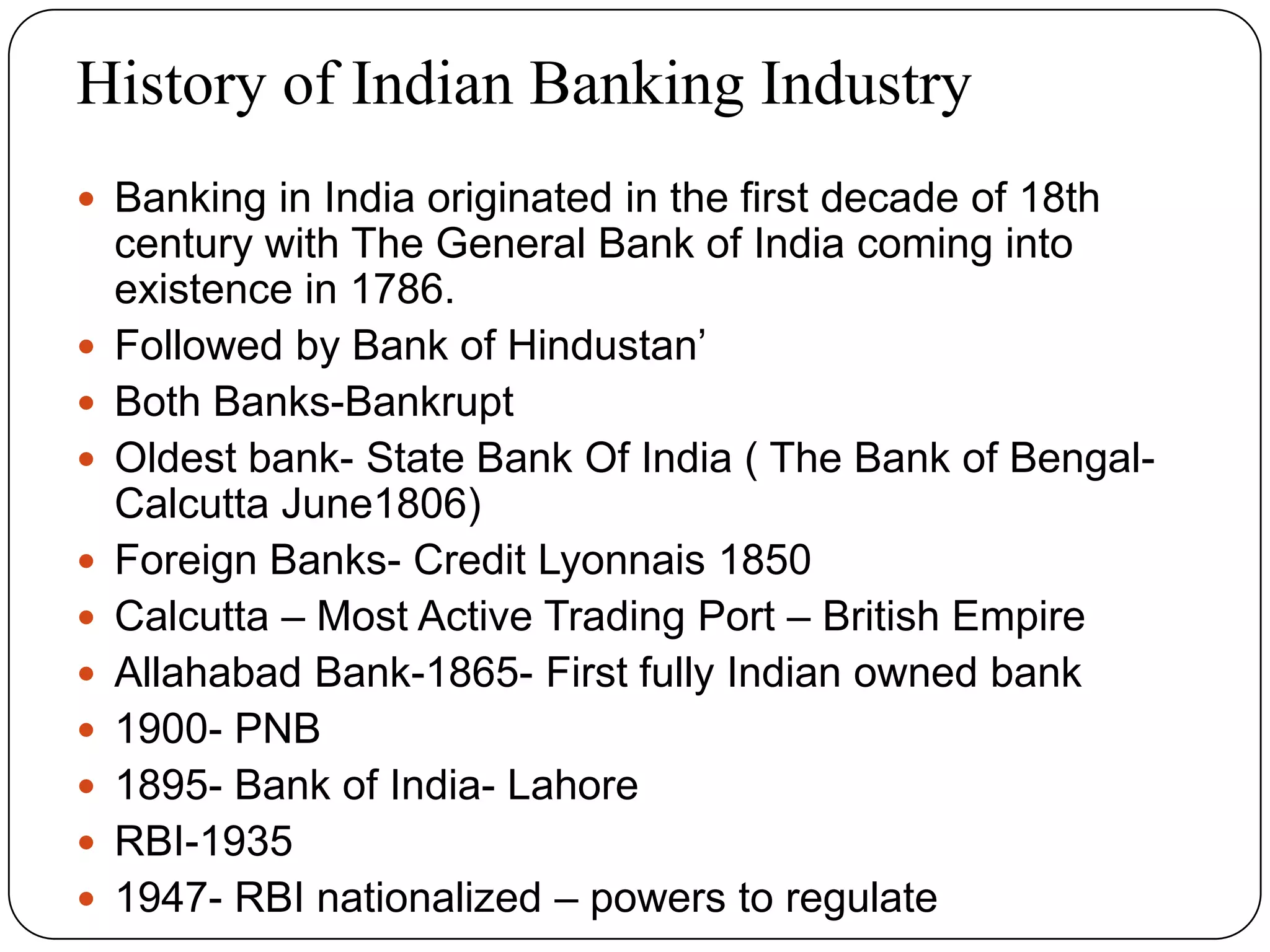
 Banking in India originated in the first decade of 18th
century with The General Bank of India coming into
existence in 1786.
 Followed by Bank of Hindustan’
 Both Banks-Bankrupt
 Oldest bank- State Bank Of India ( The Bank of Bengal-
Calcutta June1806)
 Foreign Banks- Credit Lyonnais 1850
 Calcutta – Most Active Trading Port – British Empire
 Allahabad Bank-1865- First fully Indian owned bank
 1900- PNB
 1895- Bank of India- Lahore
 RBI-1935
 1947- RBI nationalized – powers to regulate
The concept of Banking
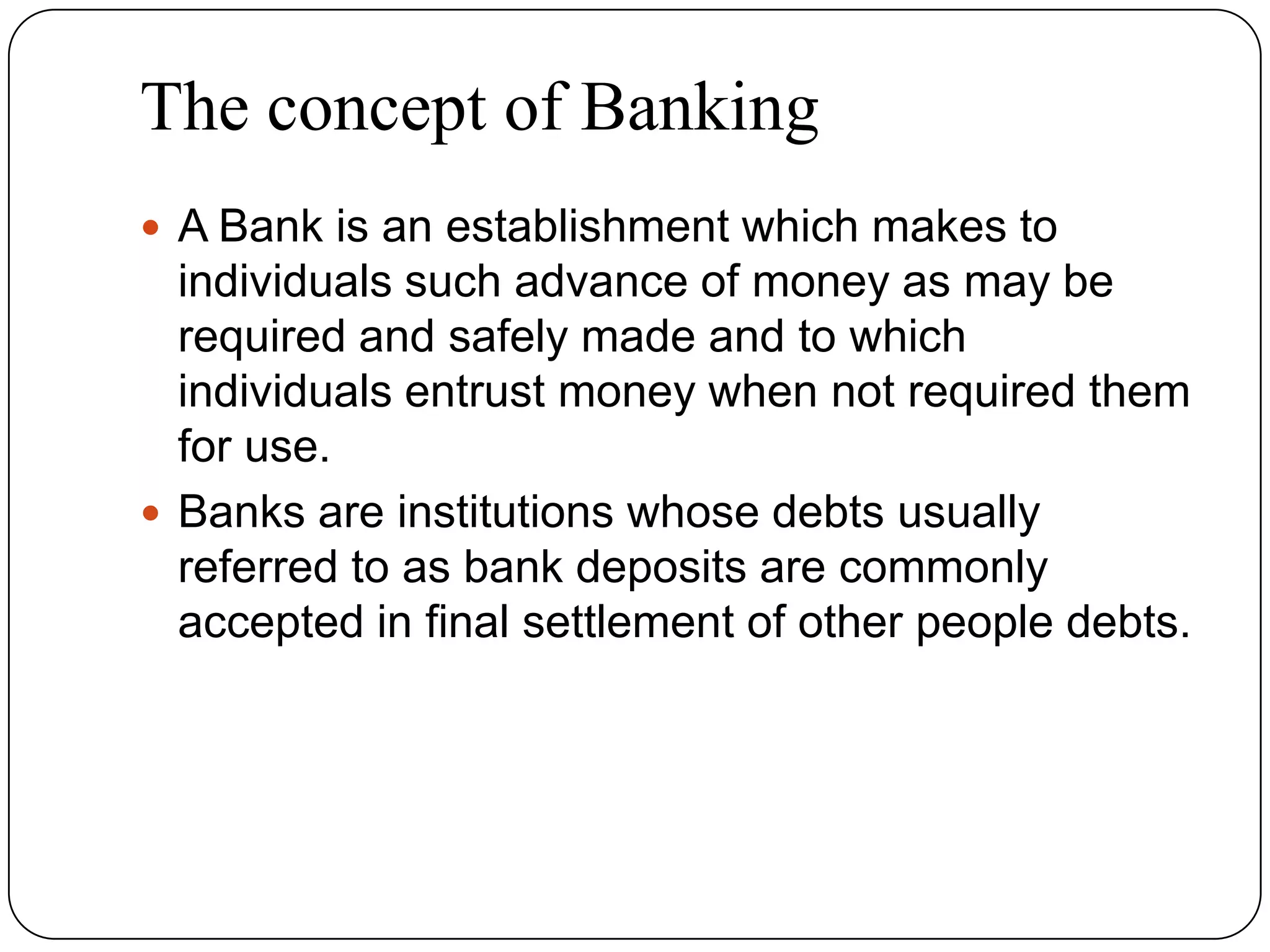
 A Bank is an establishment which makes to
individuals such advance of money as may be
required and safely made and to which
individuals entrust money when not required them
for use.
 Banks are institutions whose debts usually
referred to as bank deposits are commonly
accepted in final settlement of other people debts.
Origin of the Word ‘Bank’
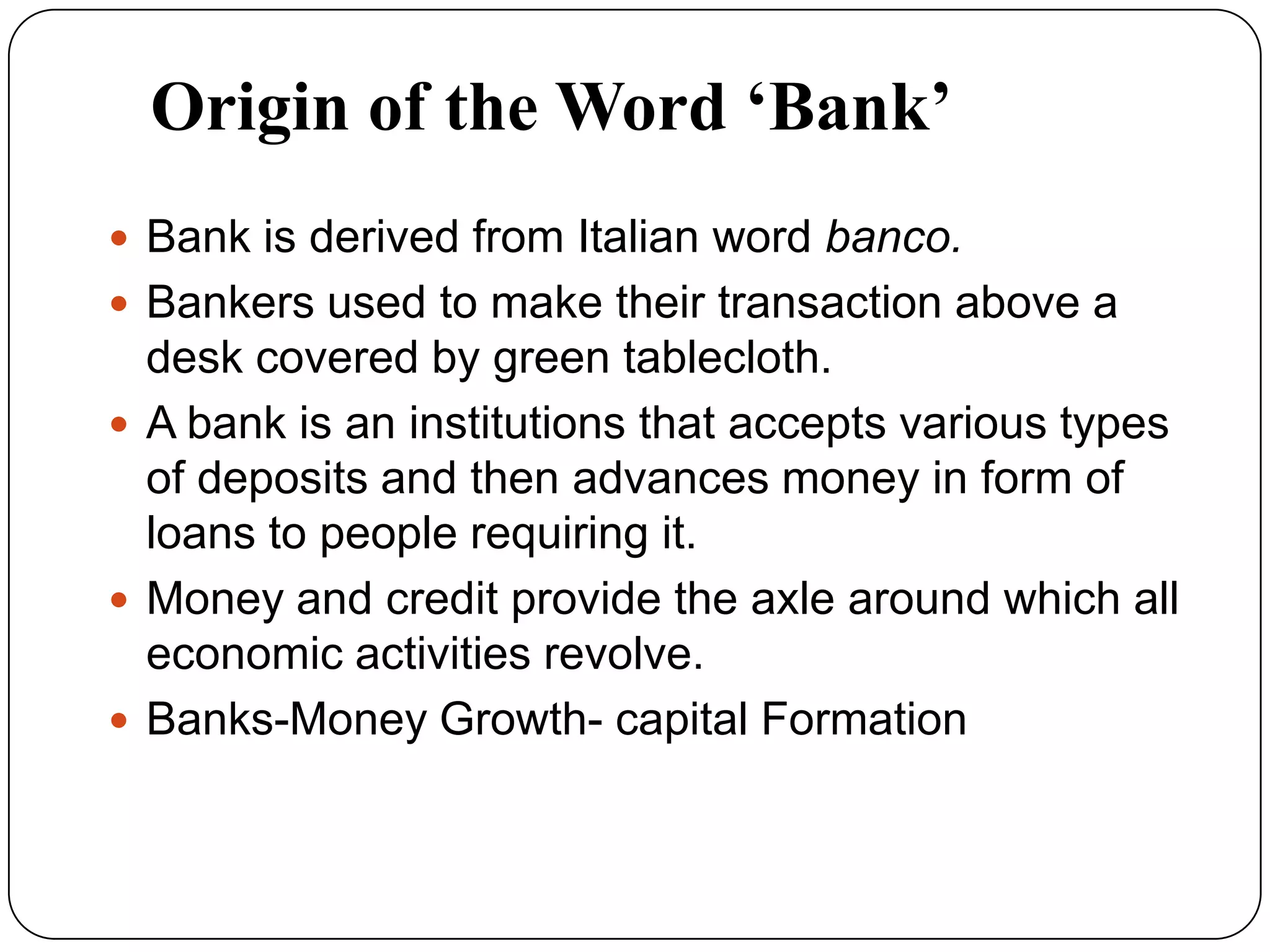
 Bank is derived from Italian word banco.
 Bankers used to make their transaction above a
desk covered by green tablecloth.
 A bank is an institutions that accepts various types
of deposits and then advances money in form of
loans to people requiring it.
 Money and credit provide the axle around which all
economic activities revolve.
 Banks-Money Growth- capital Formation
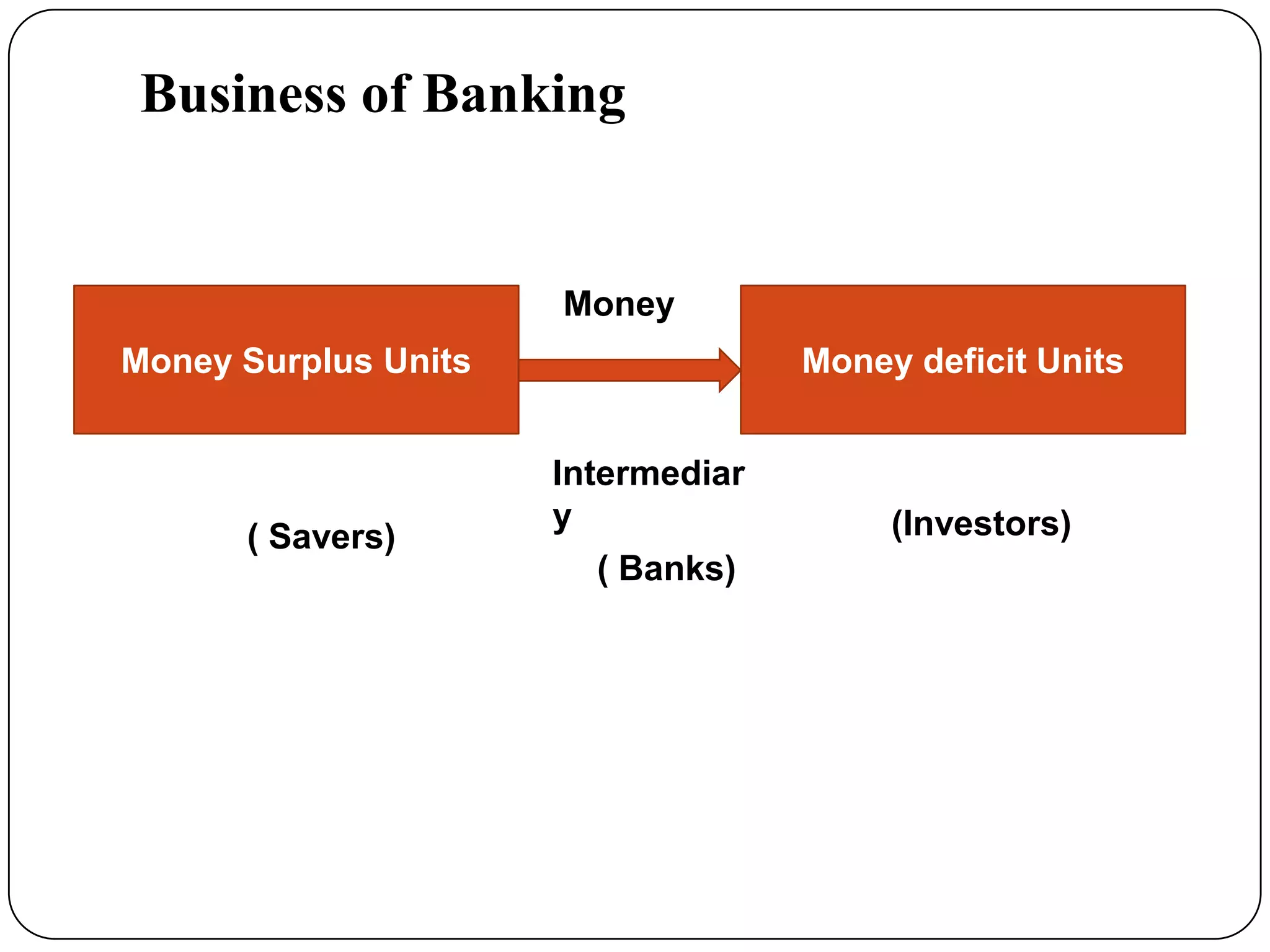
Business of Banking
Money Surplus Units Money deficit Units
( Savers) (Investors)
Money
Intermediar
y
( Banks)
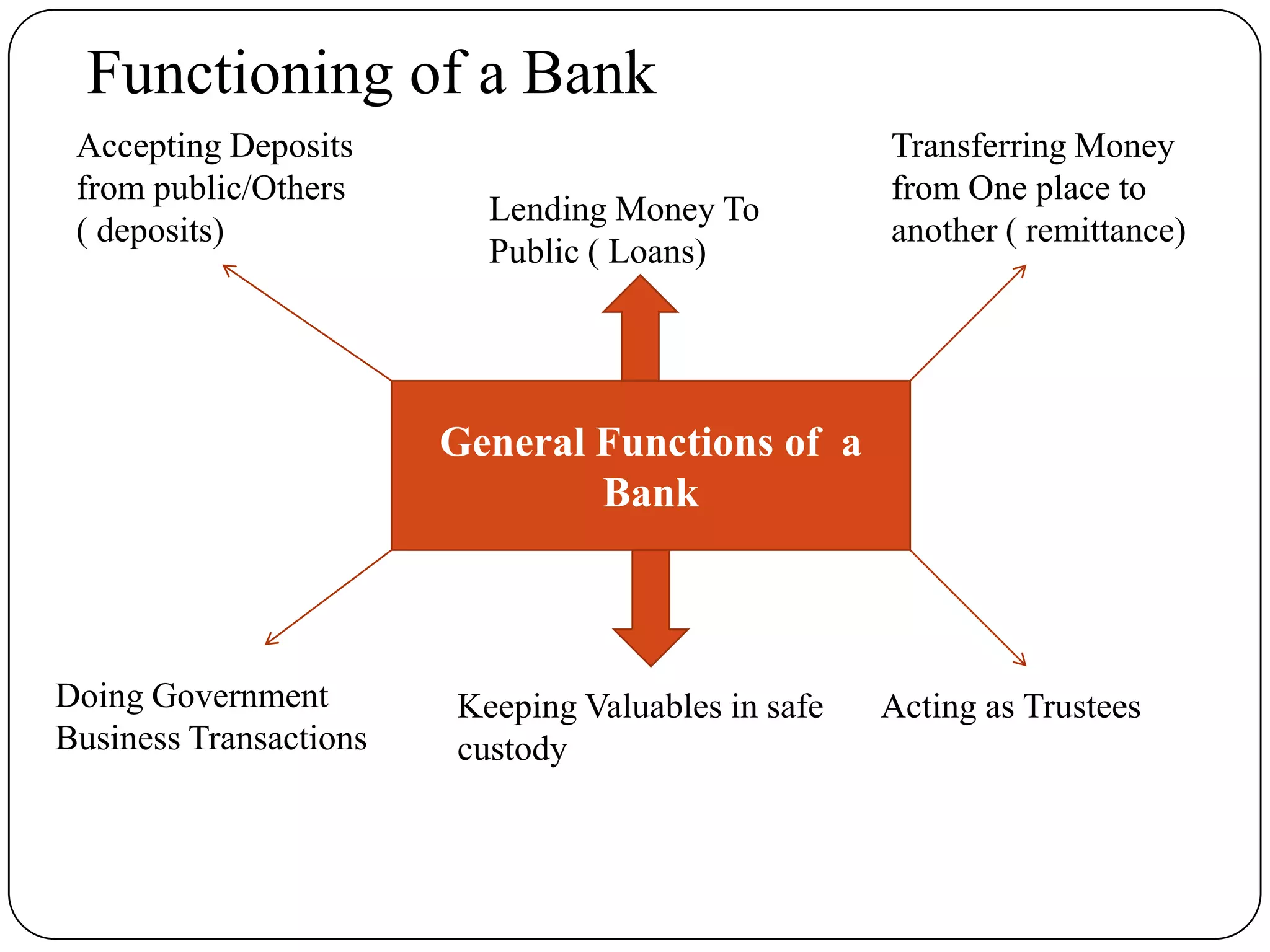
Functioning of a Bank
General Functions of a
Bank
Lending Money To
Public ( Loans)
Transferring Money
from One place to
another ( remittance)
Accepting Deposits
from public/Others
( deposits)
Doing Government
Business Transactions
Keeping Valuables in safe
custody
Acting as Trustees
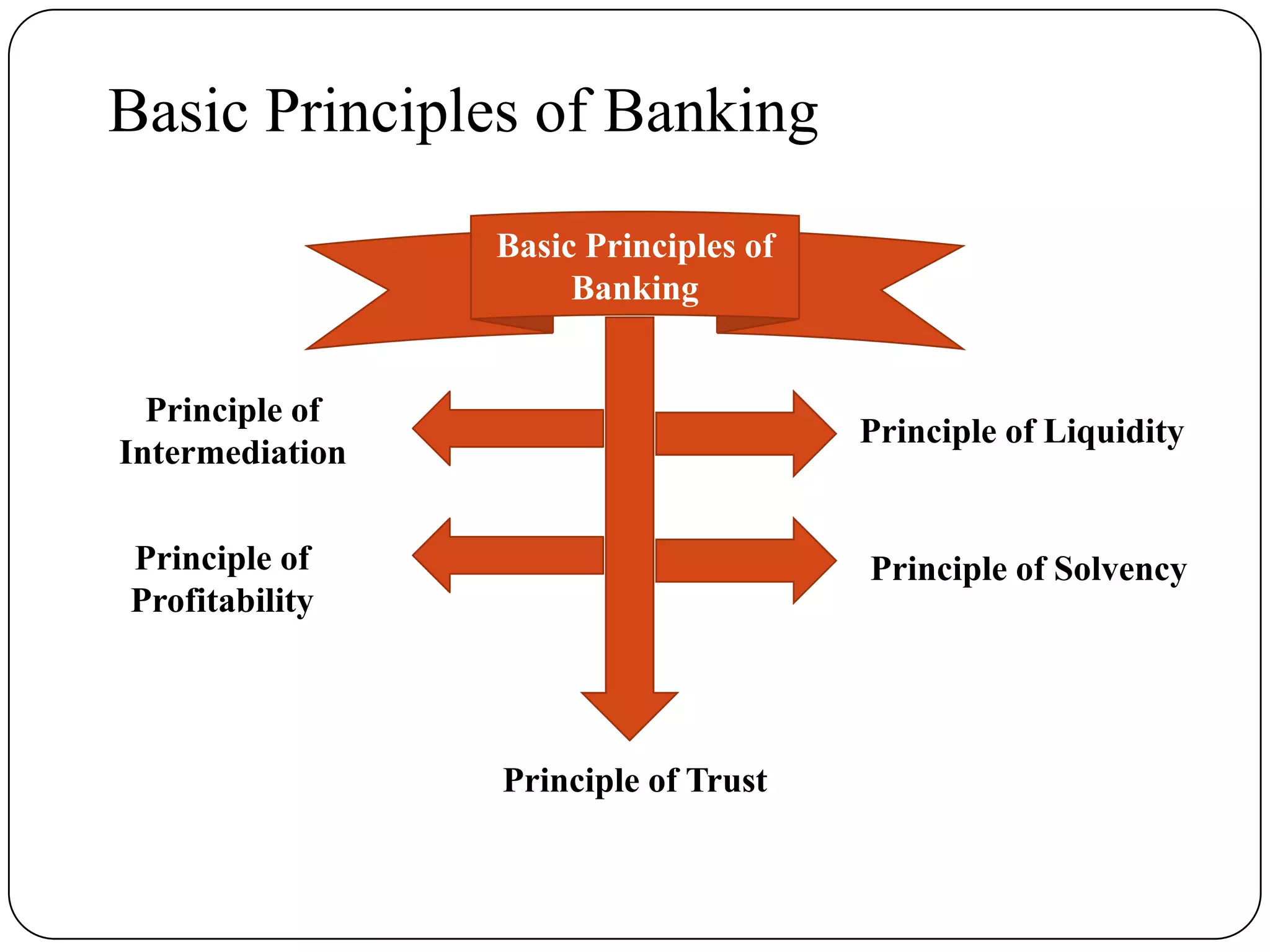
Basic Principles of Banking
Basic Principles of
Banking
Principle of Trust
Principle of Liquidity
Principle of SolvencyPrinciple of
Profitability
Principle of
Intermediation
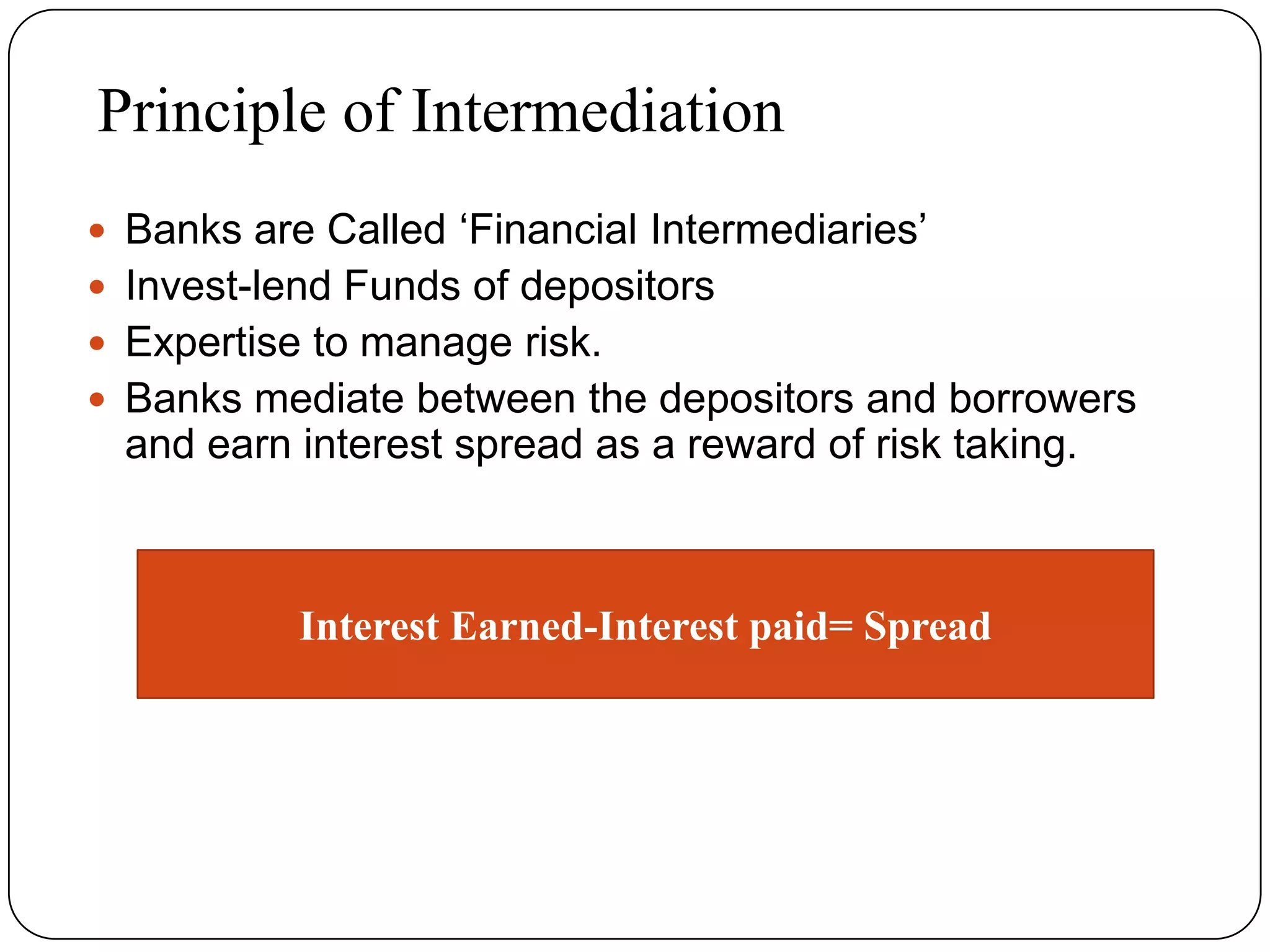
Principle of Intermediation
 Banks are Called ‘Financial Intermediaries’
 Invest-lend Funds of depositors
 Expertise to manage risk.
 Banks mediate between the depositors and borrowers
and earn interest spread as a reward of risk taking.
Interest Earned-Interest paid= Spread
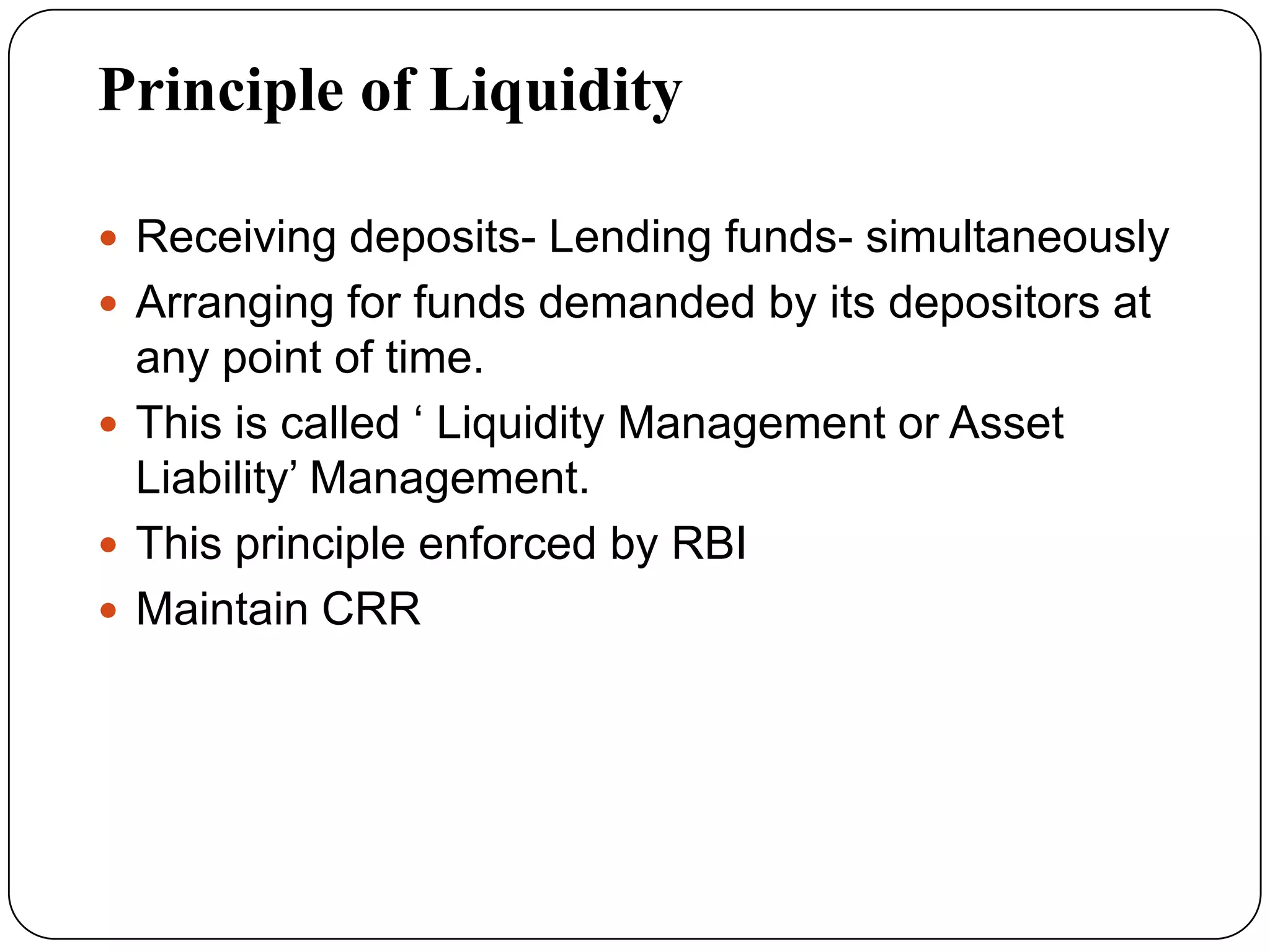
Principle of Liquidity
 Receiving deposits- Lending funds- simultaneously
 Arranging for funds demanded by its depositors at
any point of time.
 This is called ‘ Liquidity Management or Asset
Liability’ Management.
 This principle enforced by RBI
 Maintain CRR
Principle of Profitability
 Banking business has to be profitable to sustain.
A) Interest Income
B) Interest Spread
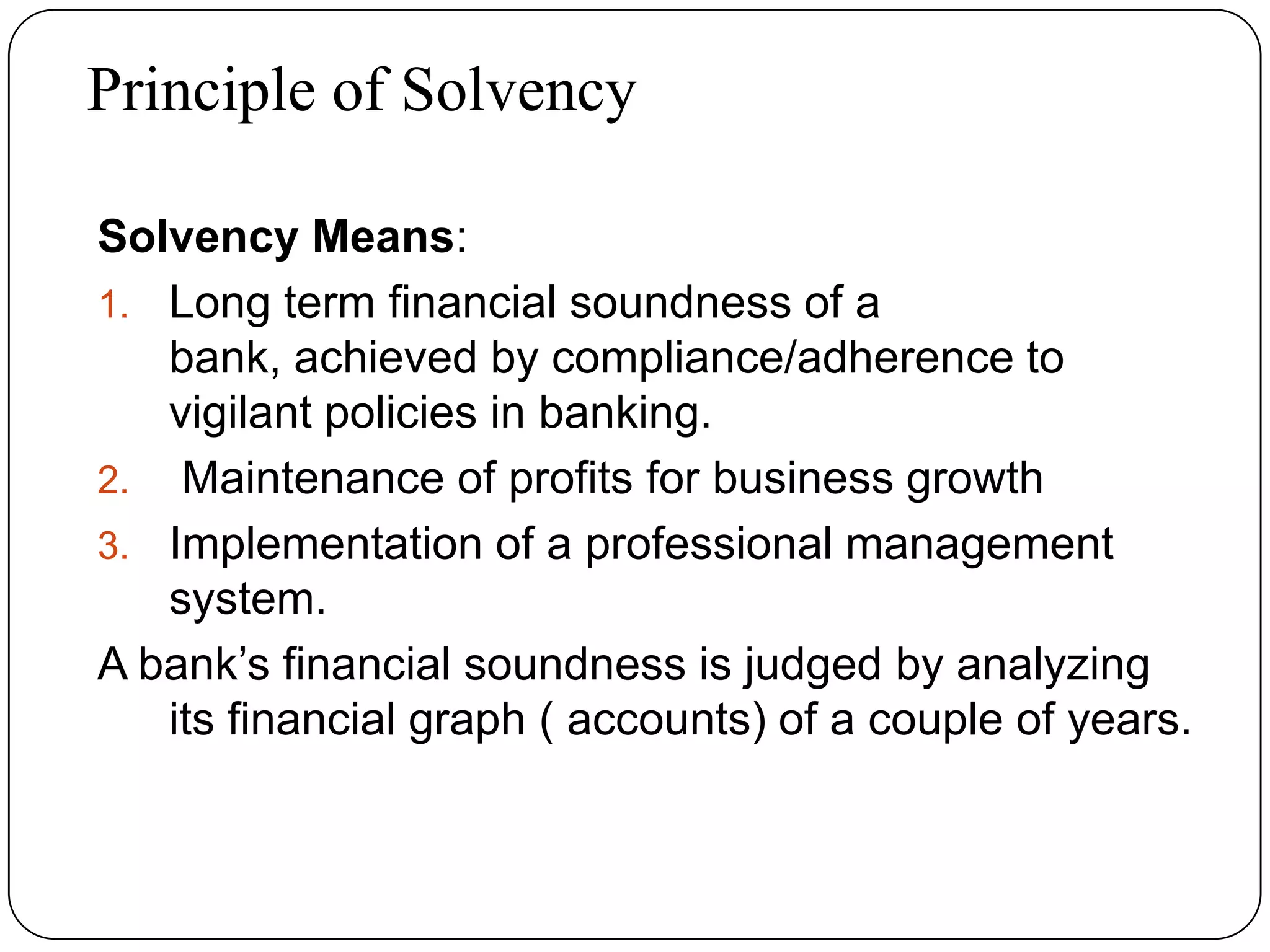
Principle of Solvency
Solvency Means:
1. Long term financial soundness of a
bank, achieved by compliance/adherence to
vigilant policies in banking.
2. Maintenance of profits for business growth
3. Implementation of a professional management
system.
A bank’s financial soundness is judged by analyzing
its financial graph ( accounts) of a couple of years.
Principle of Trust
 Trustworthiness is a function of bank’s good track
record over a fairly long period of time in terms of:
1. Liquidity
2. Profitability
3. Financial Soundness
4. Meeting Its commitments to all concerned
parties.
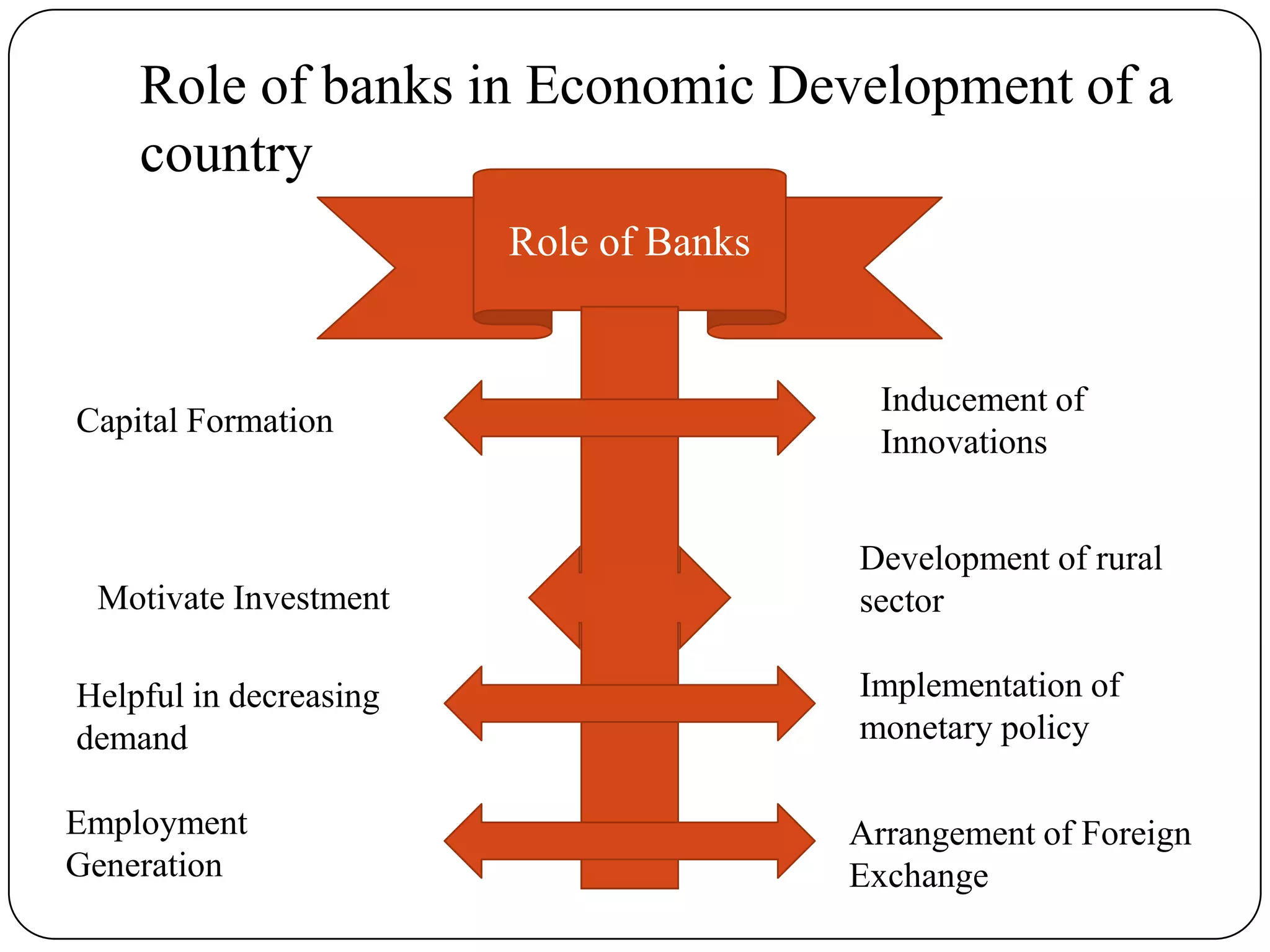
Role of banks in Economic Development of a
country
Role of Banks
Capital Formation
Motivate Investment
Helpful in decreasing
demand
Employment
Generation
Arrangement of Foreign
Exchange
Implementation of
monetary policy
Development of rural
sector
Inducement of
Innovations

Introduction to banking in india

  • 1.
    UNIT 1 Introduction toBanking In India
  • 2.
    Introduction  Indian bankingis the lifeline of the nation and its people.  Today, Indian banks can confidently compete with modern banks of the world.  Before the 20th century, usury, or lending money at a high rate of interest, was widely prevalent in rural India.
  • 3.
    History of IndianBanking Industry  Banking in India originated in the first decade of 18th century with The General Bank of India coming into existence in 1786.  Followed by Bank of Hindustan’  Both Banks-Bankrupt  Oldest bank- State Bank Of India ( The Bank of Bengal- Calcutta June1806)  Foreign Banks- Credit Lyonnais 1850  Calcutta – Most Active Trading Port – British Empire  Allahabad Bank-1865- First fully Indian owned bank  1900- PNB  1895- Bank of India- Lahore  RBI-1935  1947- RBI nationalized – powers to regulate
  • 4.
    The concept ofBanking  A Bank is an establishment which makes to individuals such advance of money as may be required and safely made and to which individuals entrust money when not required them for use.  Banks are institutions whose debts usually referred to as bank deposits are commonly accepted in final settlement of other people debts.
  • 5.
    Origin of theWord ‘Bank’  Bank is derived from Italian word banco.  Bankers used to make their transaction above a desk covered by green tablecloth.  A bank is an institutions that accepts various types of deposits and then advances money in form of loans to people requiring it.  Money and credit provide the axle around which all economic activities revolve.  Banks-Money Growth- capital Formation
  • 6.
    Business of Banking MoneySurplus Units Money deficit Units ( Savers) (Investors) Money Intermediar y ( Banks)
  • 7.
    Functioning of aBank General Functions of a Bank Lending Money To Public ( Loans) Transferring Money from One place to another ( remittance) Accepting Deposits from public/Others ( deposits) Doing Government Business Transactions Keeping Valuables in safe custody Acting as Trustees
  • 9.
    Basic Principles ofBanking Basic Principles of Banking Principle of Trust Principle of Liquidity Principle of SolvencyPrinciple of Profitability Principle of Intermediation
  • 10.
    Principle of Intermediation Banks are Called ‘Financial Intermediaries’  Invest-lend Funds of depositors  Expertise to manage risk.  Banks mediate between the depositors and borrowers and earn interest spread as a reward of risk taking. Interest Earned-Interest paid= Spread
  • 11.
    Principle of Liquidity Receiving deposits- Lending funds- simultaneously  Arranging for funds demanded by its depositors at any point of time.  This is called ‘ Liquidity Management or Asset Liability’ Management.  This principle enforced by RBI  Maintain CRR
  • 12.
    Principle of Profitability Banking business has to be profitable to sustain. A) Interest Income B) Interest Spread
  • 13.
    Principle of Solvency SolvencyMeans: 1. Long term financial soundness of a bank, achieved by compliance/adherence to vigilant policies in banking. 2. Maintenance of profits for business growth 3. Implementation of a professional management system. A bank’s financial soundness is judged by analyzing its financial graph ( accounts) of a couple of years.
  • 14.
    Principle of Trust Trustworthiness is a function of bank’s good track record over a fairly long period of time in terms of: 1. Liquidity 2. Profitability 3. Financial Soundness 4. Meeting Its commitments to all concerned parties.
  • 15.
    Role of banksin Economic Development of a country Role of Banks Capital Formation Motivate Investment Helpful in decreasing demand Employment Generation Arrangement of Foreign Exchange Implementation of monetary policy Development of rural sector Inducement of Innovations