2014 International Reflective–Reflexive 
Practice Education Conference
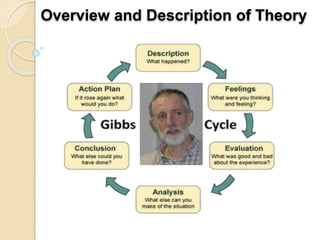
Overview and Description of Theory
Overview and Description of Theory 
Continued 
Generally, adhering to the guidelines of the 
theory will ultimately evoke in a learner the 
autonomous reflexes to : 
 challenge suppositions 
 explore novel approaches and ideas 
 connect practice and theory 
 utilize critical thinking and analytical skills, 
that are all encompassed in the amelioration of 
the learner profile. (Lia, P. (n.d.))
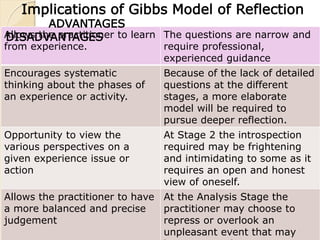
Implications of Gibbs Model of Reflection 
Allows the practitioner to learn 
from experience. 
The questions are narrow and 
require professional, 
experienced guidance 
Encourages systematic 
thinking about the phases of 
an experience or activity. 
Because of the lack of detailed 
questions at the different 
stages, a more elaborate 
model will be required to 
pursue deeper reflection. 
Opportunity to view the 
various perspectives on a 
given experience issue or 
action 
At Stage 2 the introspection 
required may be frightening 
and intimidating to some as it 
requires an open and honest 
view of oneself. 
Allows the practitioner to have 
a more balanced and precise 
judgement 
At the Analysis Stage the 
practitioner may choose to 
repress or overlook an 
unpleasant event that may 
have occurred. 
ADVANTAGES 
DISADVANTAGES
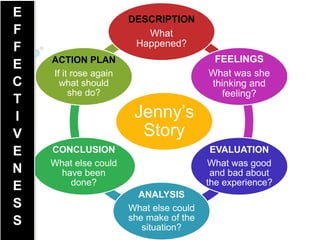
DESCRIPTION 
What 
Happened? 
Jenny’s 
Story 
FEELINGS 
What was she 
thinking and 
feeling? 
EVALUATION 
What was good 
and bad about 
the experience? 
ANALYSIS 
What else could 
she make of the 
situation? 
ACTION PLAN 
If it rose again 
what should 
she do? 
CONCLUSION 
What else could 
have been 
done? 
E 
F 
F 
E 
C 
T 
I 
V 
E 
N 
E 
S 
S
Reasons why the theory was 
chosen 
Collectively, the model was chosen because: 
• It allows us to be more articulate in our 
approaches to life scenarios, to look at cases 
from a number of perspectives as well as to 
take action in handling those cases if they 
were to recur in the future. 
• It makes it easier to practice reflection both in 
our academic and professional lives due to 
the simplicity and straight forward points of 
analysis.
CONCLUSION 
To recap, this evening we looked at Gibbs Model of 
Reflection. We not only introduced you to this amazing model 
but we touched on both the Advantages and Disadvantages. 
We also spoke on the effectiveness of such a model in the 
Educational Forum. We, the Gibbs Models, implore you as 
reflective/reflexive practitioners to employ this model in other 
parts of your lives. 
Just a closing quote from Mr. Gibbs himself. ‘It is not 
sufficient simply to have an experience in order to learn. 
Without reflecting upon this experience it may quickly be 
forgotten, or its learning potential lost. It is from the feelings 
and thoughts emerging from this reflection that 
generalisations or concepts can be generated. And it is 
generalisations that allow new situations to be tackled 
effectively.’ (Gibbs 1988)
References 
• Accessibility navigation. (n.d.). Retrieved November 4, 2014, from 
http://www.reading.ac.uk/internal/studyadvice/StudyResources/Practicebasedlearning/sta-reflectivethinking. 
aspx 
• Bluff, R., & Raynar, M. D. (2005). Decision Making in Midwifery Practice – Elsevier Limited 
• Finlay, L. (2008). Reflecting on ‘reflexive practice’. Practice Based Professional Learning 
Centre, 52, 1 – 27. 
• Lia, P. (n.d.). Using Gibbs Reflective Cycle. Retrieved November 4, 2014, from 
http://www.kcl.ac.uk/campuslife/services/disability/service/Using-Gibbs-Reflective-Cycle-in- 
Coursework.pdf 
• Pearson, J. (2012). HCAs: Developing Skills in Reflecting Writing. British Journal of Healthcare 
Assistants, 06 (03), 140-142. 
• Reflection. (n.d.). Retrieved November 2, 2014, from

Collaborative Task - Gibbs Model of Reflection

  • 1.
    2014 International Reflective–Reflexive Practice Education Conference
  • 2.
  • 3.
    Overview and Descriptionof Theory Continued Generally, adhering to the guidelines of the theory will ultimately evoke in a learner the autonomous reflexes to :  challenge suppositions  explore novel approaches and ideas  connect practice and theory  utilize critical thinking and analytical skills, that are all encompassed in the amelioration of the learner profile. (Lia, P. (n.d.))
  • 4.
    Implications of GibbsModel of Reflection Allows the practitioner to learn from experience. The questions are narrow and require professional, experienced guidance Encourages systematic thinking about the phases of an experience or activity. Because of the lack of detailed questions at the different stages, a more elaborate model will be required to pursue deeper reflection. Opportunity to view the various perspectives on a given experience issue or action At Stage 2 the introspection required may be frightening and intimidating to some as it requires an open and honest view of oneself. Allows the practitioner to have a more balanced and precise judgement At the Analysis Stage the practitioner may choose to repress or overlook an unpleasant event that may have occurred. ADVANTAGES DISADVANTAGES
  • 5.
    DESCRIPTION What Happened? Jenny’s Story FEELINGS What was she thinking and feeling? EVALUATION What was good and bad about the experience? ANALYSIS What else could she make of the situation? ACTION PLAN If it rose again what should she do? CONCLUSION What else could have been done? E F F E C T I V E N E S S
  • 7.
    Reasons why thetheory was chosen Collectively, the model was chosen because: • It allows us to be more articulate in our approaches to life scenarios, to look at cases from a number of perspectives as well as to take action in handling those cases if they were to recur in the future. • It makes it easier to practice reflection both in our academic and professional lives due to the simplicity and straight forward points of analysis.
  • 8.
    CONCLUSION To recap,this evening we looked at Gibbs Model of Reflection. We not only introduced you to this amazing model but we touched on both the Advantages and Disadvantages. We also spoke on the effectiveness of such a model in the Educational Forum. We, the Gibbs Models, implore you as reflective/reflexive practitioners to employ this model in other parts of your lives. Just a closing quote from Mr. Gibbs himself. ‘It is not sufficient simply to have an experience in order to learn. Without reflecting upon this experience it may quickly be forgotten, or its learning potential lost. It is from the feelings and thoughts emerging from this reflection that generalisations or concepts can be generated. And it is generalisations that allow new situations to be tackled effectively.’ (Gibbs 1988)
  • 9.
    References • Accessibilitynavigation. (n.d.). Retrieved November 4, 2014, from http://www.reading.ac.uk/internal/studyadvice/StudyResources/Practicebasedlearning/sta-reflectivethinking. aspx • Bluff, R., & Raynar, M. D. (2005). Decision Making in Midwifery Practice – Elsevier Limited • Finlay, L. (2008). Reflecting on ‘reflexive practice’. Practice Based Professional Learning Centre, 52, 1 – 27. • Lia, P. (n.d.). Using Gibbs Reflective Cycle. Retrieved November 4, 2014, from http://www.kcl.ac.uk/campuslife/services/disability/service/Using-Gibbs-Reflective-Cycle-in- Coursework.pdf • Pearson, J. (2012). HCAs: Developing Skills in Reflecting Writing. British Journal of Healthcare Assistants, 06 (03), 140-142. • Reflection. (n.d.). Retrieved November 2, 2014, from