Learning & Research
Junior Camp Internship Programme | 16th June 2015
Gameli Adzaho | Webster University | Accra, GAR
Yesterday, we missed…
 JCIP is the brainchild of Thelma Boamah
 Education specialist
 GT member (GT Diaspora)
 SIT Graduate Institute alumnus
 Won $10,000 grant from World Learning with support from GT Diaspora
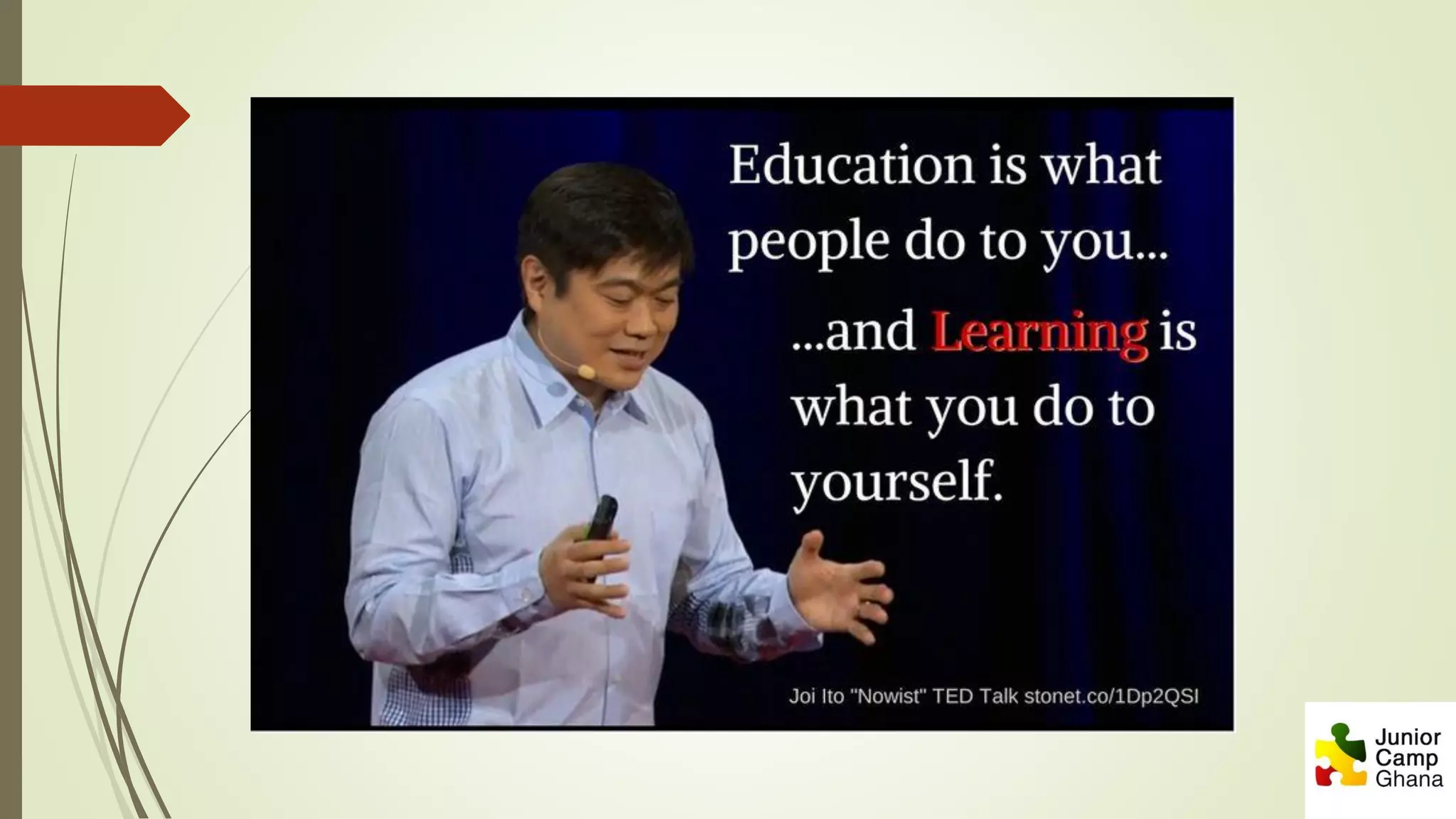
Viewpoints on Learning
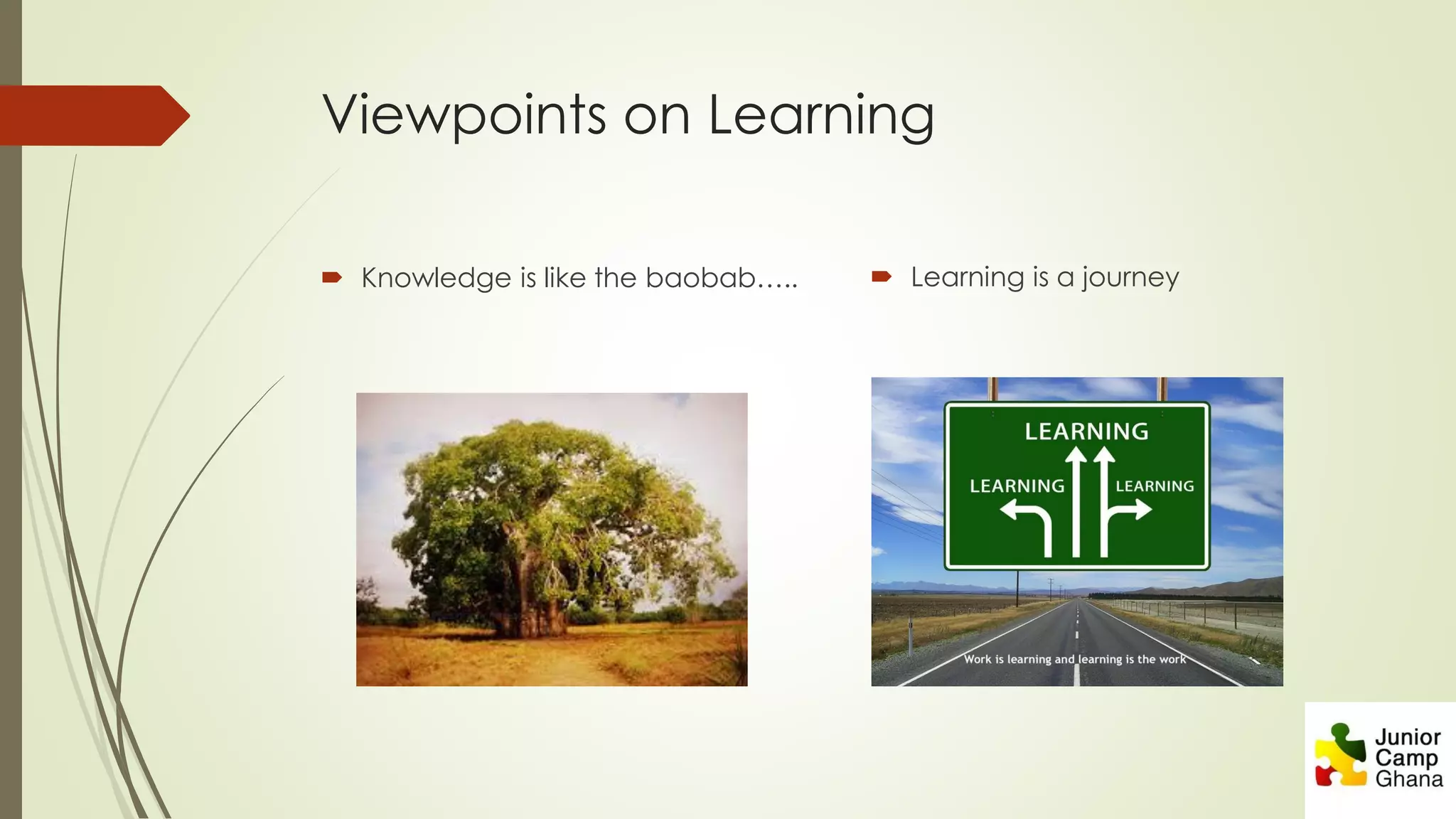
 Knowledge is like the baobab…..  Learning is a journey
Why Do We Learn?
 To know and understand things
 To gain new skills
 To solve problems
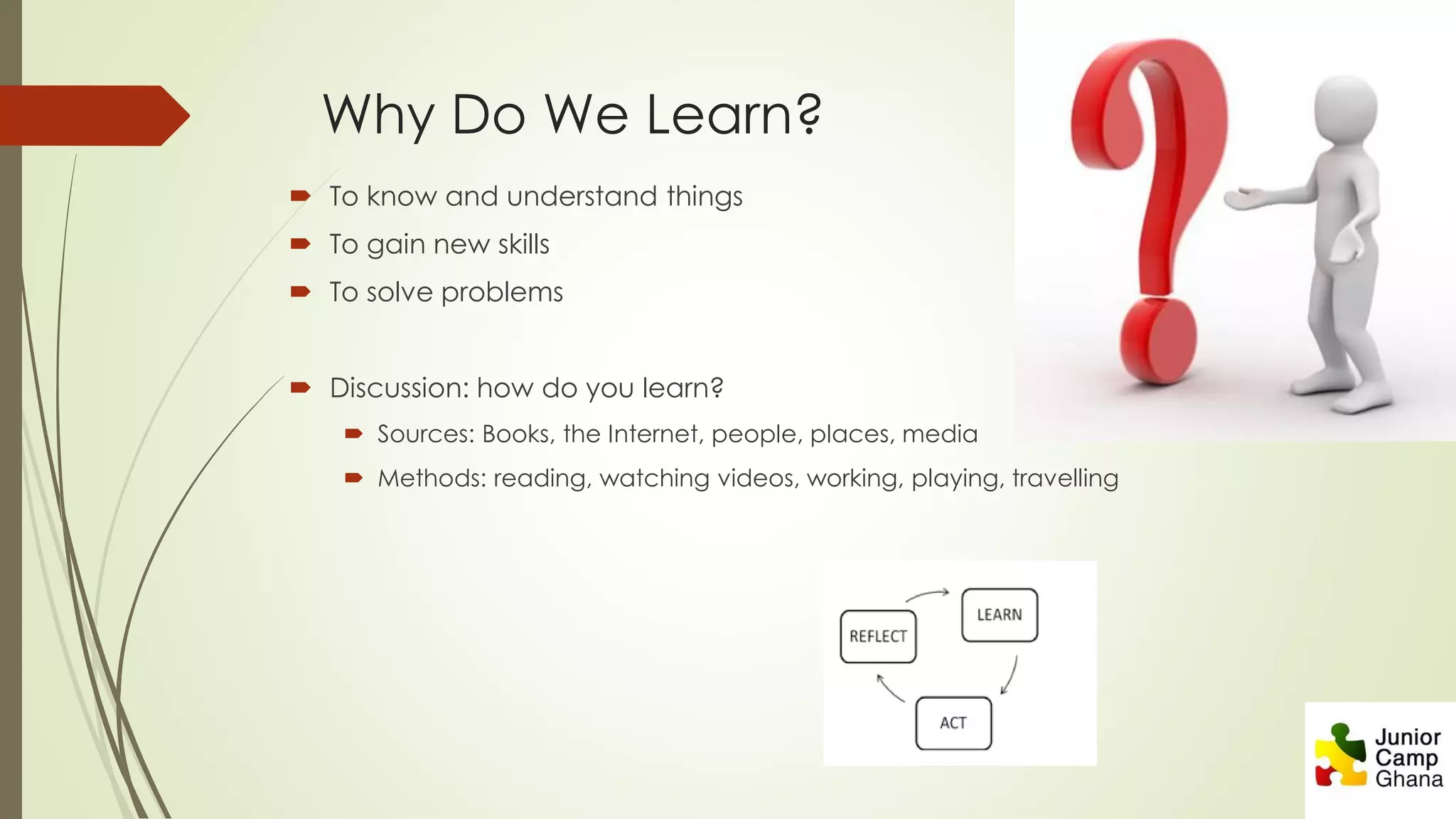
 Discussion: how do you learn?
 Sources: Books, the Internet, people, places, media
 Methods: reading, watching videos, working, playing, travelling
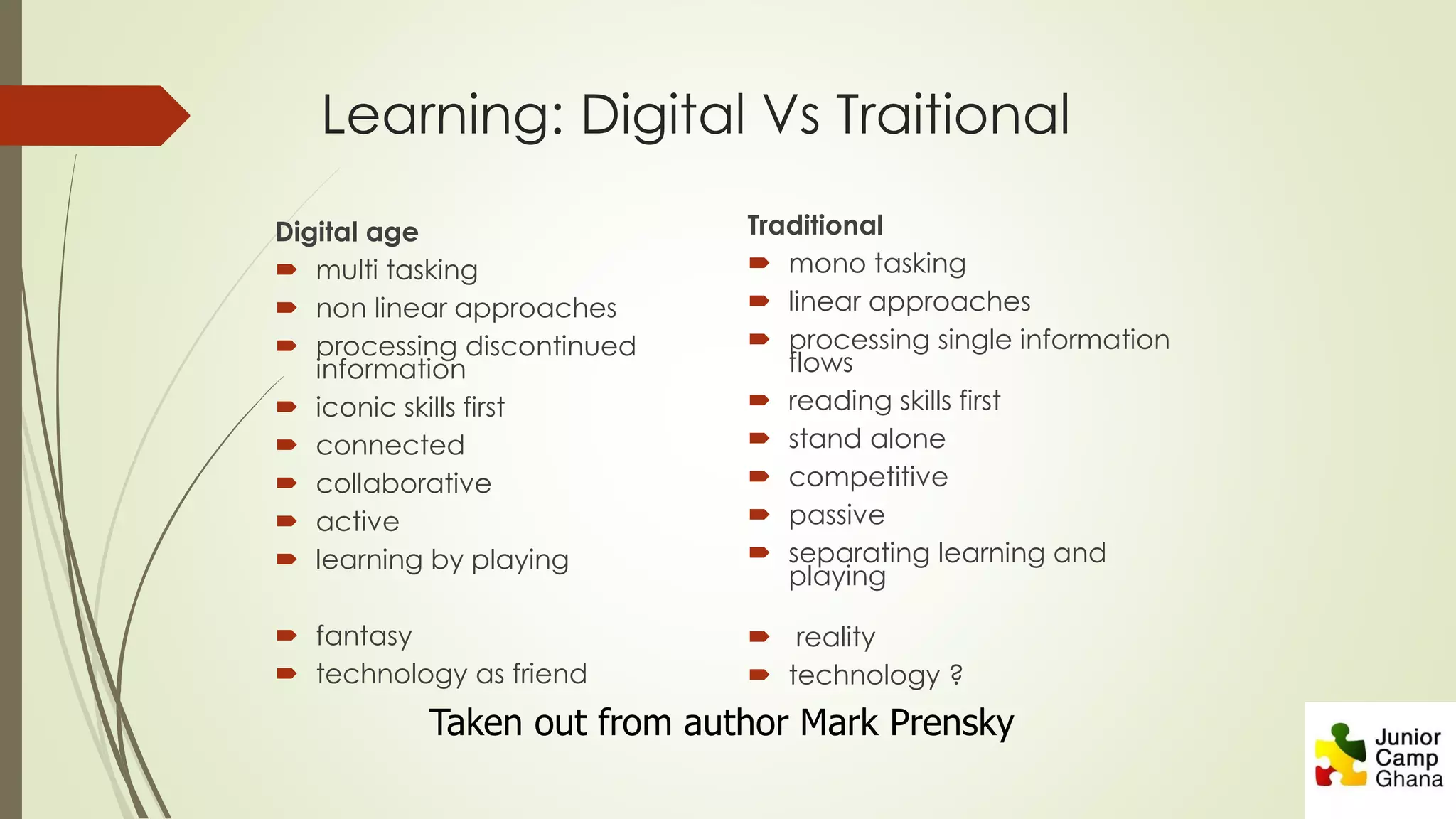
Learning: Digital Vs Traitional
Digital age
 multi tasking
 non linear approaches
 processing discontinued
information
 iconic skills first
 connected
 collaborative
 active
 learning by playing
 fantasy
 technology as friend
Traditional
 mono tasking
 linear approaches
 processing single information
flows
 reading skills first
 stand alone
 competitive
 passive
 separating learning and
playing
 reality
 technology ?
Taken out from author Mark Prensky
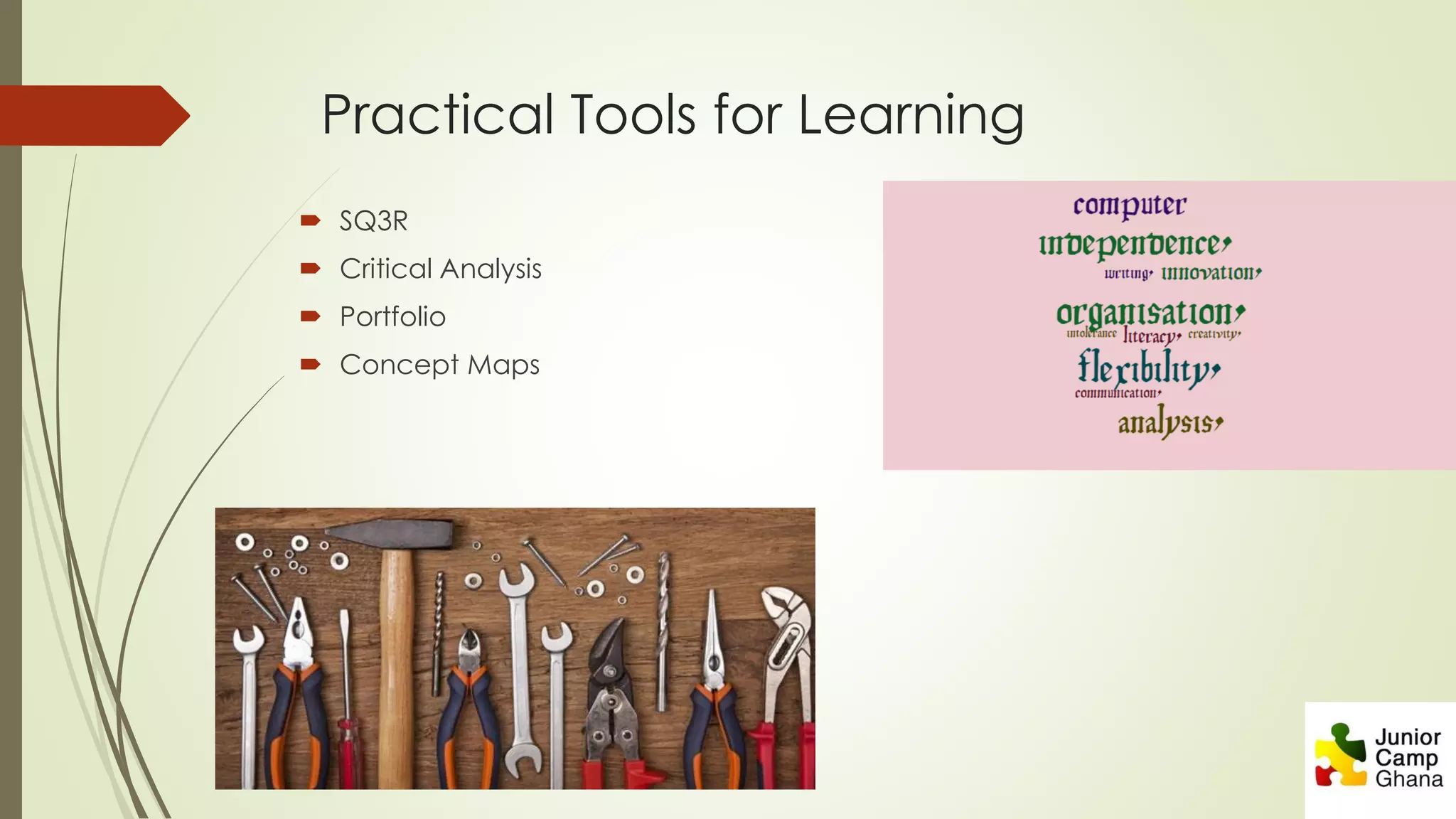
Practical Tools for Learning
 SQ3R
 Critical Analysis
 Portfolio
 Concept Maps
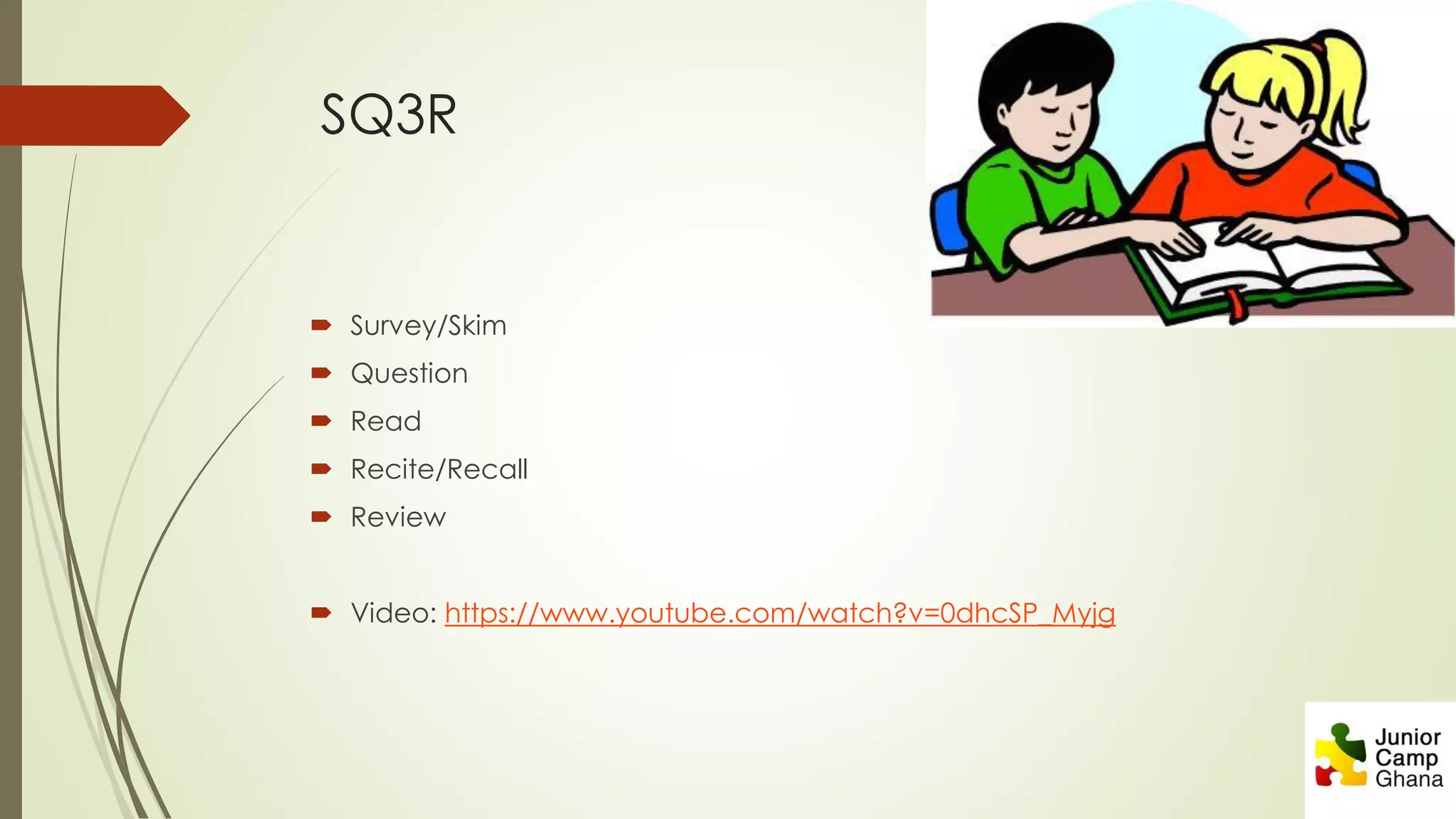
SQ3R
 Survey/Skim
 Question
 Read
 Recite/Recall
 Review
 Video: https://www.youtube.com/watch?v=0dhcSP_Myjg
Critical Analysis
 It involves thinking deeply about different parts of the material and how it all
ties in together
 Ask yourself: “what does it mean to me and others”?
Model Analytical Framework
 Reflect – be aware of your own reaction to the information
 Question – the purpose, assumptions, implications of the text.
 Identify – the line of argument in the text, the stance of the author
 Evaluate – the strength/value of the argument – e.g. what evidence is used
to support the argument? Is it reliable/valid?
 Compare – with other arguments, stances
 What, How, Why, Where?
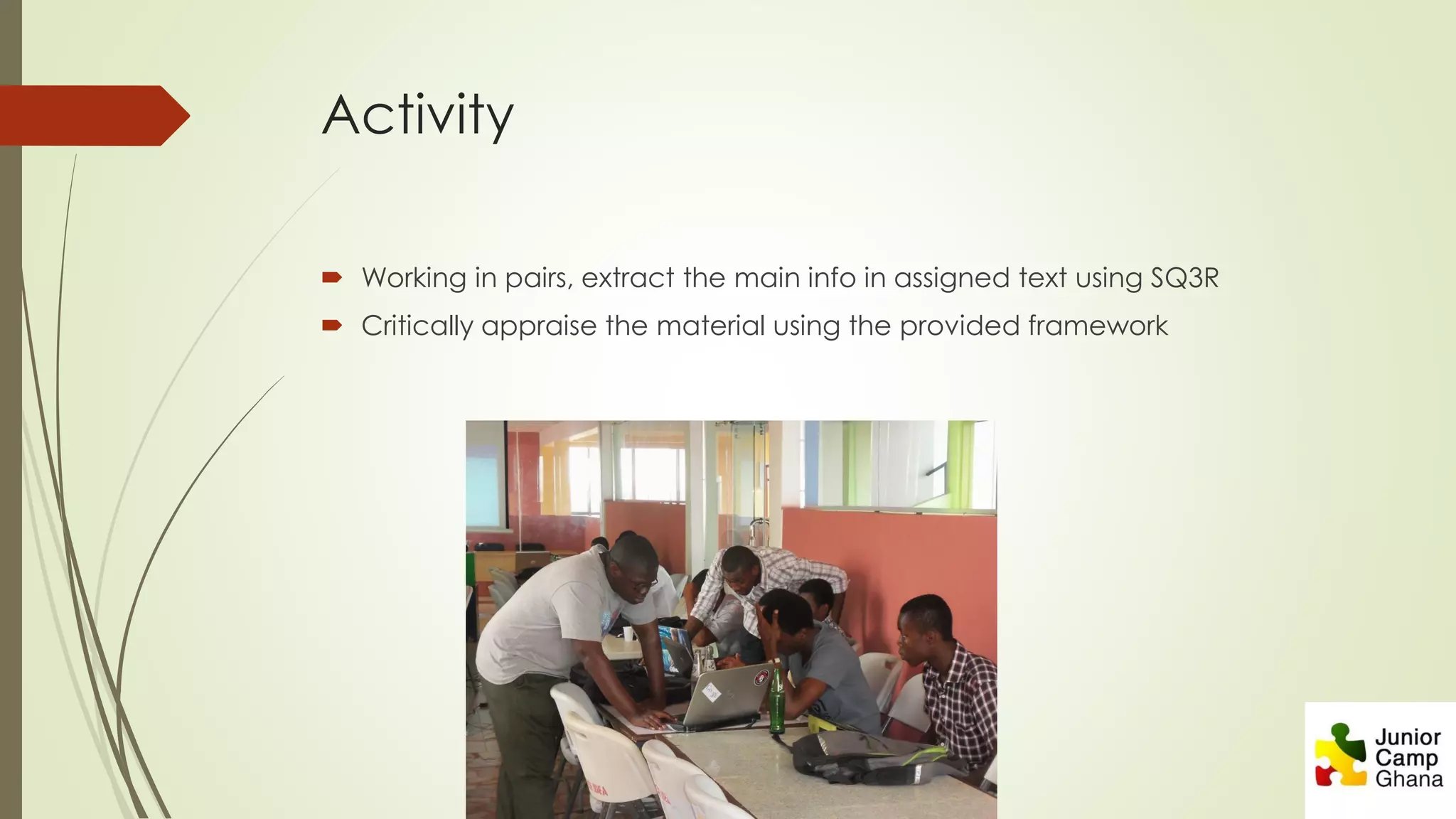
Activity
 Working in pairs, extract the main info in assigned text using SQ3R
 Critically appraise the material using the provided framework
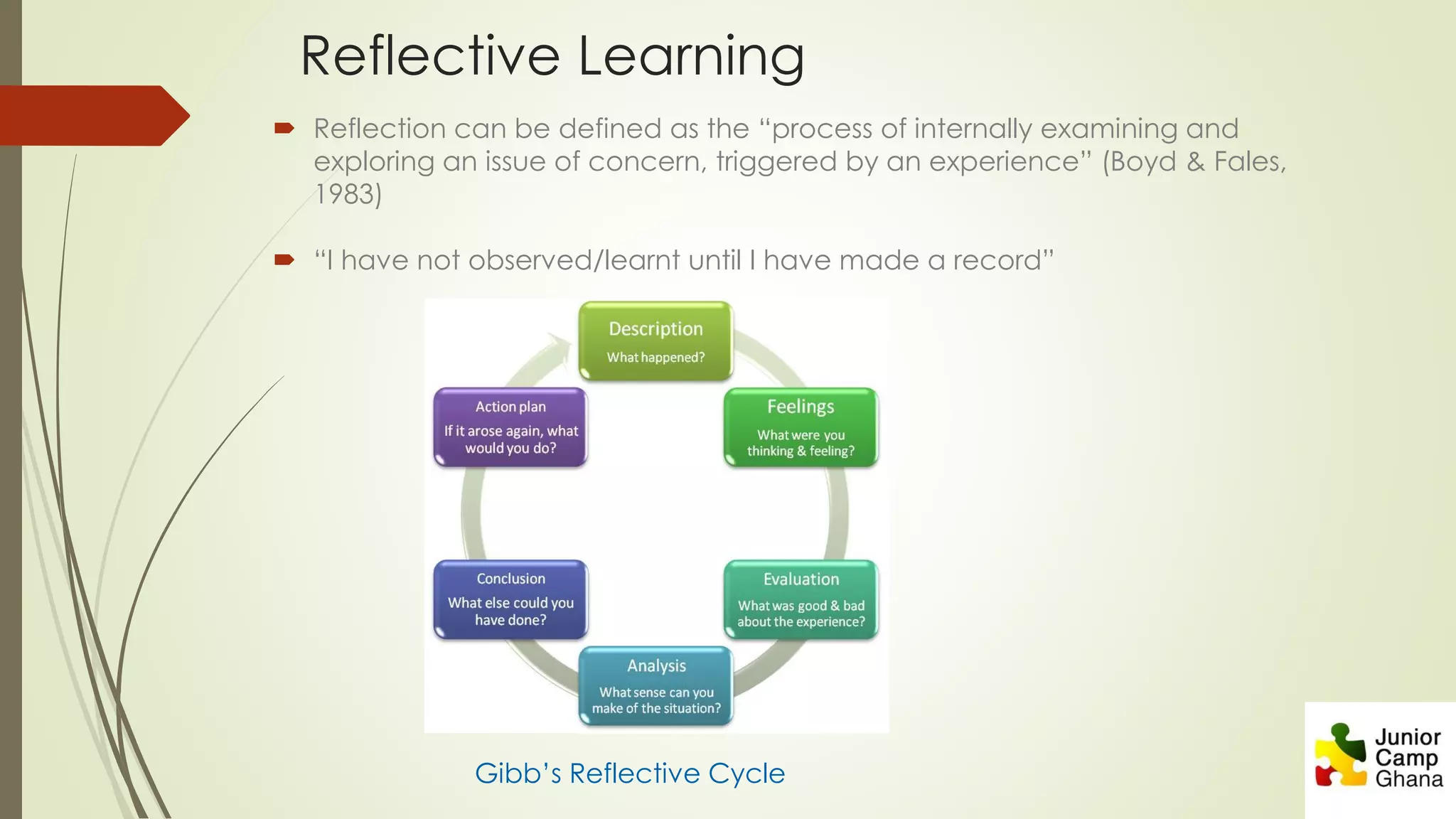
Reflective Learning
 Reflection can be defined as the “process of internally examining and
exploring an issue of concern, triggered by an experience” (Boyd & Fales,
1983)
 “I have not observed/learnt until I have made a record”
Gibb’s Reflective Cycle
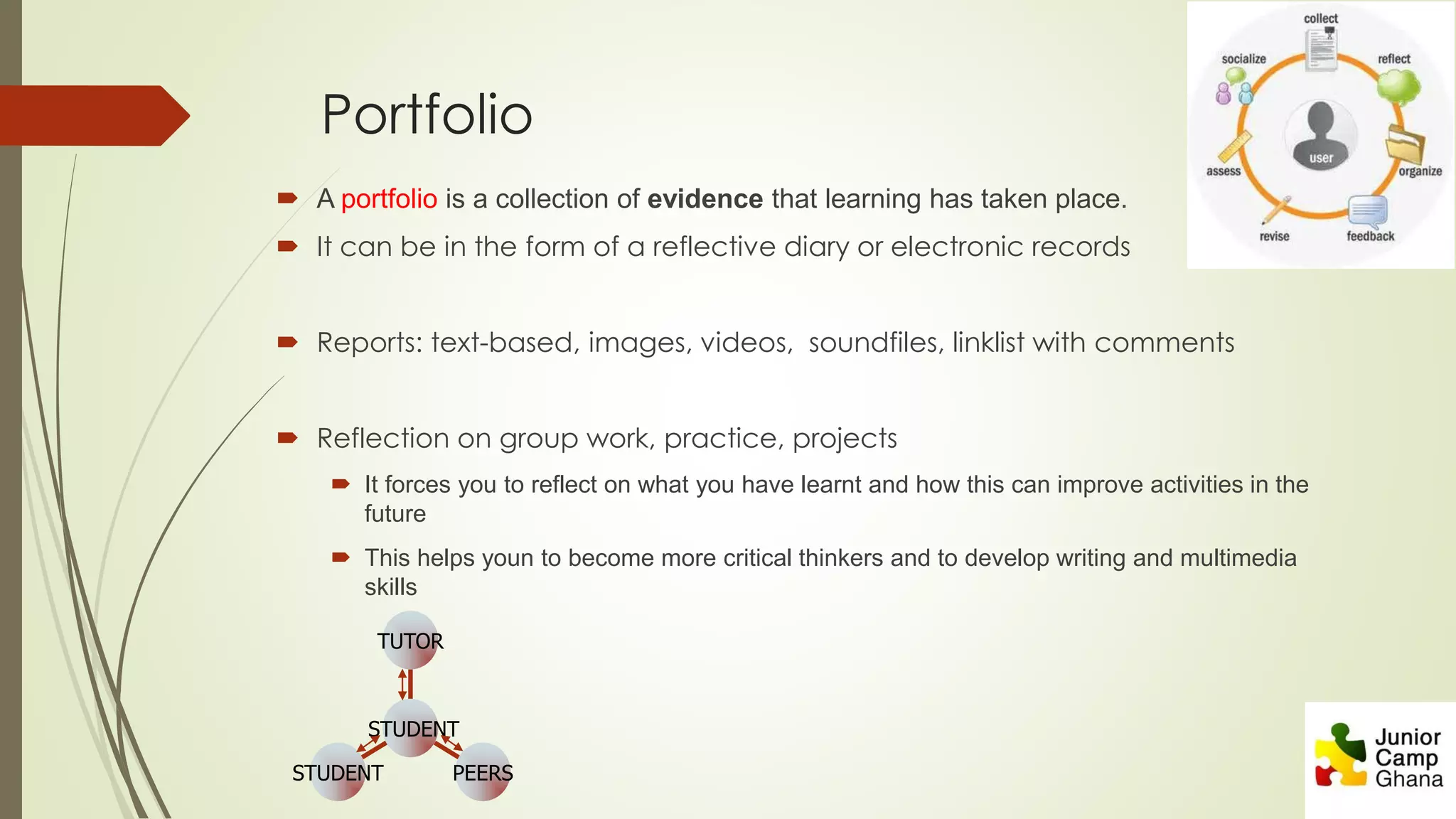
Portfolio
 A portfolio is a collection of evidence that learning has taken place.
 It can be in the form of a reflective diary or electronic records
 Reports: text-based, images, videos, soundfiles, linklist with comments
 Reflection on group work, practice, projects
 It forces you to reflect on what you have learnt and how this can improve activities in the
future
 This helps youn to become more critical thinkers and to develop writing and multimedia
skills
TUTOR
PEERSSTUDENT
STUDENT
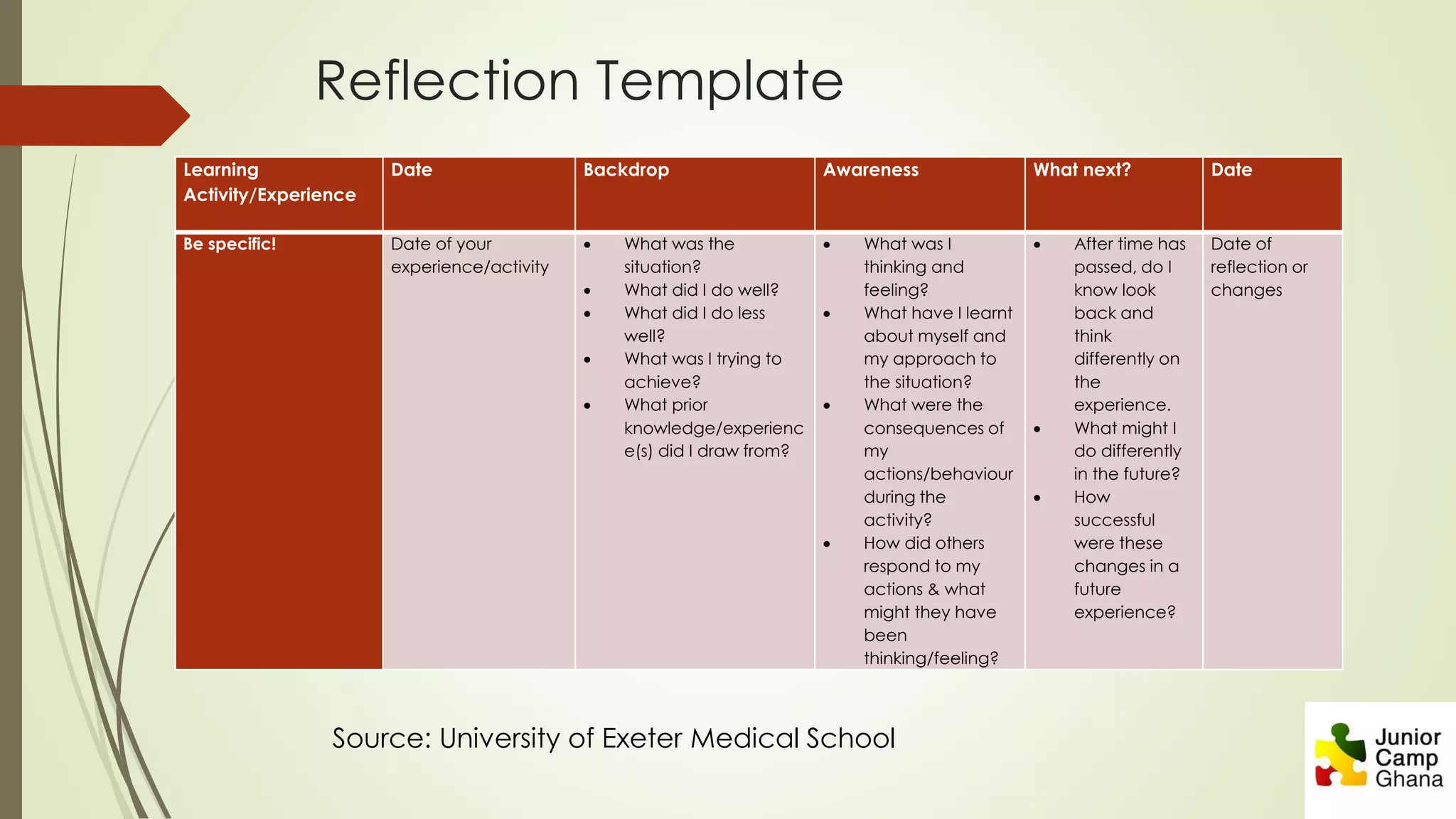
Reflection Template
Learning
Activity/Experience
Date Backdrop Awareness What next? Date
Be specific! Date of your
experience/activity
 What was the
situation?
 What did I do well?
 What did I do less
well?
 What was I trying to
achieve?
 What prior
knowledge/experienc
e(s) did I draw from?
 What was I
thinking and
feeling?
 What have I learnt
about myself and
my approach to
the situation?
 What were the
consequences of
my
actions/behaviour
during the
activity?
 How did others
respond to my
actions & what
might they have
been
thinking/feeling?
 After time has
passed, do I
know look
back and
think
differently on
the
experience.
 What might I
do differently
in the future?
 How
successful
were these
changes in a
future
experience?
Date of
reflection or
changes
Source: University of Exeter Medical School
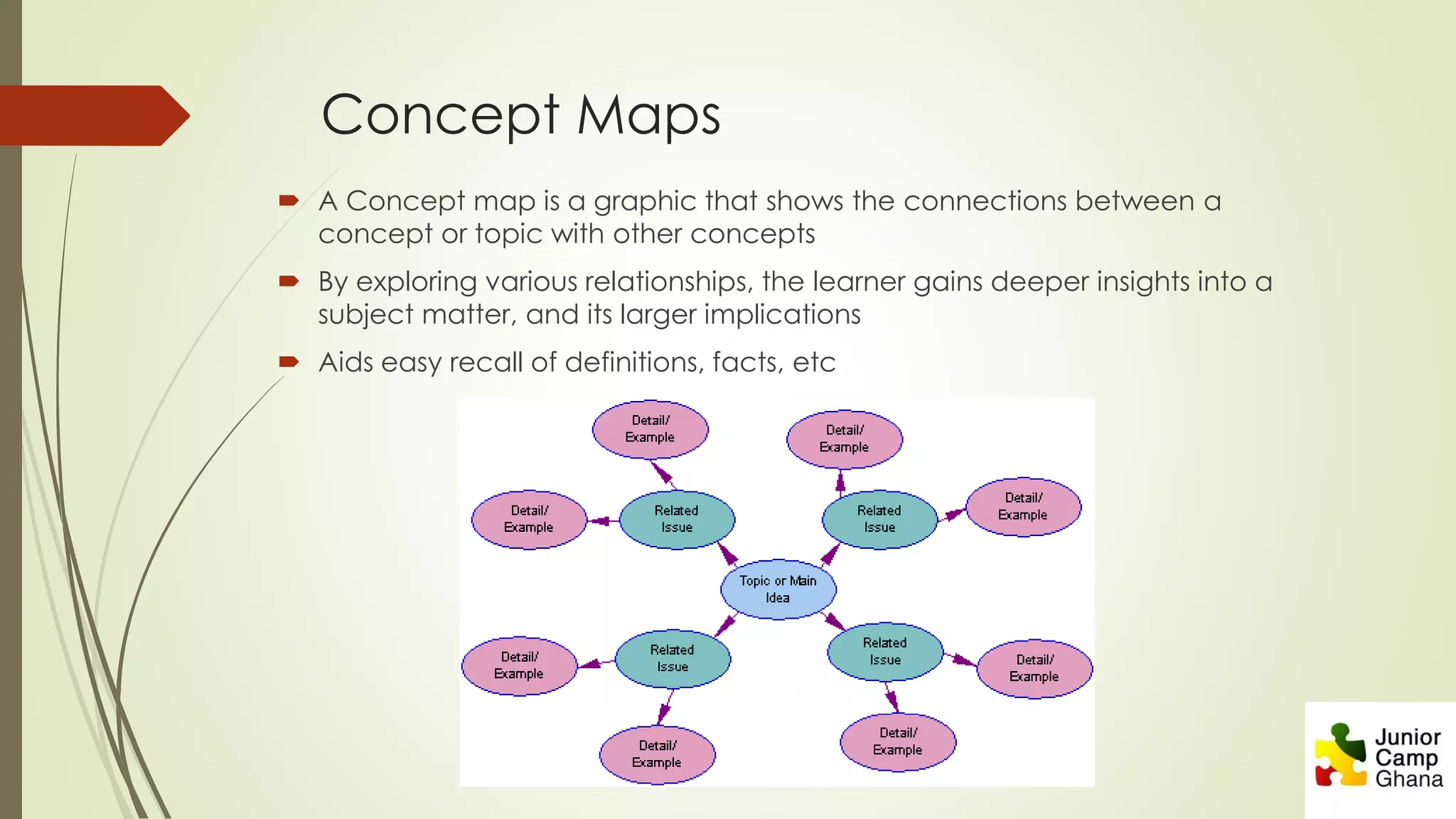
Concept Maps
 A Concept map is a graphic that shows the connections between a
concept or topic with other concepts
 By exploring various relationships, the learner gains deeper insights into a
subject matter, and its larger implications
 Aids easy recall of definitions, facts, etc
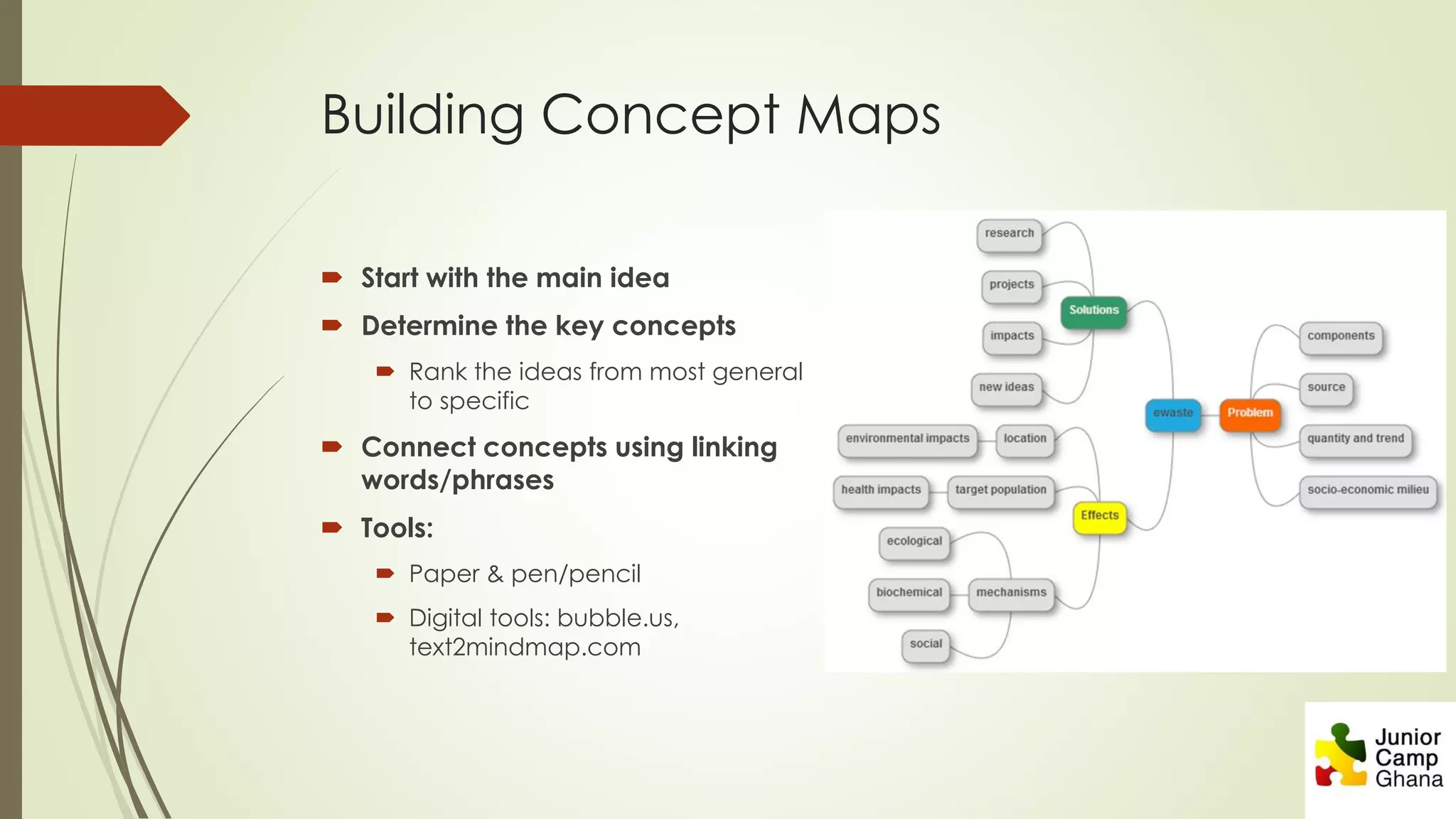
Building Concept Maps
 Start with the main idea
 Determine the key concepts
 Rank the ideas from most general
to specific
 Connect concepts using linking
words/phrases
 Tools:
 Paper & pen/pencil
 Digital tools: bubble.us,
text2mindmap.com
In Summary
 Reflection aids learning, and this can be done with the aid of various tools
 SQ3R is an effective way to extract information from text
 Critical analysis enables learners to get to the facts behind information
received
 Concept maps makes it easier to recall facts, link topics together, and
brainstorm ideas
 A portfolio or reflective diary helps one to take stock of progress of learning
Thanks. Questions?

Learning and Research - Junior Camp Internship Programme

  • 1.
    Learning & Research JuniorCamp Internship Programme | 16th June 2015 Gameli Adzaho | Webster University | Accra, GAR
  • 2.
    Yesterday, we missed… JCIP is the brainchild of Thelma Boamah  Education specialist  GT member (GT Diaspora)  SIT Graduate Institute alumnus  Won $10,000 grant from World Learning with support from GT Diaspora
  • 3.
    Viewpoints on Learning Knowledge is like the baobab…..  Learning is a journey
  • 4.
    Why Do WeLearn?  To know and understand things  To gain new skills  To solve problems  Discussion: how do you learn?  Sources: Books, the Internet, people, places, media  Methods: reading, watching videos, working, playing, travelling
  • 5.
    Learning: Digital VsTraitional Digital age  multi tasking  non linear approaches  processing discontinued information  iconic skills first  connected  collaborative  active  learning by playing  fantasy  technology as friend Traditional  mono tasking  linear approaches  processing single information flows  reading skills first  stand alone  competitive  passive  separating learning and playing  reality  technology ? Taken out from author Mark Prensky
  • 6.
    Practical Tools forLearning  SQ3R  Critical Analysis  Portfolio  Concept Maps
  • 7.
    SQ3R  Survey/Skim  Question Read  Recite/Recall  Review  Video: https://www.youtube.com/watch?v=0dhcSP_Myjg
  • 8.
    Critical Analysis  Itinvolves thinking deeply about different parts of the material and how it all ties in together  Ask yourself: “what does it mean to me and others”?
  • 9.
    Model Analytical Framework Reflect – be aware of your own reaction to the information  Question – the purpose, assumptions, implications of the text.  Identify – the line of argument in the text, the stance of the author  Evaluate – the strength/value of the argument – e.g. what evidence is used to support the argument? Is it reliable/valid?  Compare – with other arguments, stances  What, How, Why, Where?
  • 10.
    Activity  Working inpairs, extract the main info in assigned text using SQ3R  Critically appraise the material using the provided framework
  • 11.
    Reflective Learning  Reflectioncan be defined as the “process of internally examining and exploring an issue of concern, triggered by an experience” (Boyd & Fales, 1983)  “I have not observed/learnt until I have made a record” Gibb’s Reflective Cycle
  • 12.
    Portfolio  A portfoliois a collection of evidence that learning has taken place.  It can be in the form of a reflective diary or electronic records  Reports: text-based, images, videos, soundfiles, linklist with comments  Reflection on group work, practice, projects  It forces you to reflect on what you have learnt and how this can improve activities in the future  This helps youn to become more critical thinkers and to develop writing and multimedia skills TUTOR PEERSSTUDENT STUDENT
  • 13.
    Reflection Template Learning Activity/Experience Date BackdropAwareness What next? Date Be specific! Date of your experience/activity  What was the situation?  What did I do well?  What did I do less well?  What was I trying to achieve?  What prior knowledge/experienc e(s) did I draw from?  What was I thinking and feeling?  What have I learnt about myself and my approach to the situation?  What were the consequences of my actions/behaviour during the activity?  How did others respond to my actions & what might they have been thinking/feeling?  After time has passed, do I know look back and think differently on the experience.  What might I do differently in the future?  How successful were these changes in a future experience? Date of reflection or changes Source: University of Exeter Medical School
  • 14.
    Concept Maps  AConcept map is a graphic that shows the connections between a concept or topic with other concepts  By exploring various relationships, the learner gains deeper insights into a subject matter, and its larger implications  Aids easy recall of definitions, facts, etc
  • 15.
    Building Concept Maps Start with the main idea  Determine the key concepts  Rank the ideas from most general to specific  Connect concepts using linking words/phrases  Tools:  Paper & pen/pencil  Digital tools: bubble.us, text2mindmap.com
  • 16.
    In Summary  Reflectionaids learning, and this can be done with the aid of various tools  SQ3R is an effective way to extract information from text  Critical analysis enables learners to get to the facts behind information received  Concept maps makes it easier to recall facts, link topics together, and brainstorm ideas  A portfolio or reflective diary helps one to take stock of progress of learning
  • 18.