The Common Cold
Created by B.DHANUSH IX –A
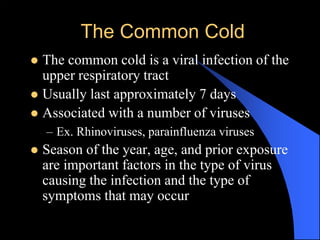
The Common Cold
 The common cold is a viral infection of the
upper respiratory tract
 Usually last approximately 7 days
 Associated with a number of viruses
– Ex. Rhinoviruses, parainfluenza viruses
 Season of the year, age, and prior exposure
are important factors in the type of virus
causing the infection and the type of
symptoms that may occur
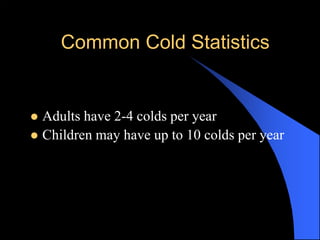
Common Cold Statistics
 Adults have 2-4 colds per year
 Children may have up to 10 colds per year
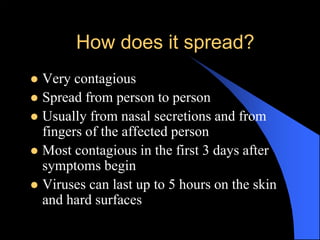
How does it spread?
 Very contagious
 Spread from person to person
 Usually from nasal secretions and from
fingers of the affected person
 Most contagious in the first 3 days after
symptoms begin
 Viruses can last up to 5 hours on the skin
and hard surfaces
Preventing spread of
 GOOD HANDWASHING!
 Cough and sneeze into arm or tissue, not
into your hand
 Aerosol sprays (ex. Lysol)
 Antibacterial sanitizers (ex. Purell)
Symptoms
 Begins with a feeling of dryness and
stuffiness in the nasopharynx (nose)
 Nasal secretions (usually clear and watery)
 Watery eyes
 Red and swollen nasal mucous membranes
 Headache
 Generalized tiredness
 Chills (in severe cases)
Symptoms cont..
 Fever (in severe cases)
 Exhaustion (in severe cases)
If the pharynx and larynx (throat) becomes
involved:
• Sore throat
• Hoarseness
Treatment of common cold
 Antihistamines
 Decongestants
 Pain Relievers
 Cough suppressants
 Nasal Strips
 Antibiotics are ineffective!!!
When do I see the doctor?
 See your doctor if you have:
 Temperature over 101 degrees for more
than 48 hours
 A cough with pain in the chest
 Shortness of breath
 Persistent sore throat, without a runny or
stuffy nose
See the doctor if…
 Your throat is very red and it hurts to
swallow
 No improvement within 7 days
 Severe headache with a fever
 Worsening pain in one or both ears
 Any chronic medical condition
– Ex. Asthma or diabetes
Thank you

cold ppt

  • 1.
    The Common Cold Createdby B.DHANUSH IX –A
  • 2.
    The Common Cold The common cold is a viral infection of the upper respiratory tract  Usually last approximately 7 days  Associated with a number of viruses – Ex. Rhinoviruses, parainfluenza viruses  Season of the year, age, and prior exposure are important factors in the type of virus causing the infection and the type of symptoms that may occur
  • 3.
    Common Cold Statistics Adults have 2-4 colds per year  Children may have up to 10 colds per year
  • 4.
    How does itspread?  Very contagious  Spread from person to person  Usually from nasal secretions and from fingers of the affected person  Most contagious in the first 3 days after symptoms begin  Viruses can last up to 5 hours on the skin and hard surfaces
  • 5.
    Preventing spread of GOOD HANDWASHING!  Cough and sneeze into arm or tissue, not into your hand  Aerosol sprays (ex. Lysol)  Antibacterial sanitizers (ex. Purell)
  • 6.
    Symptoms  Begins witha feeling of dryness and stuffiness in the nasopharynx (nose)  Nasal secretions (usually clear and watery)  Watery eyes  Red and swollen nasal mucous membranes  Headache  Generalized tiredness  Chills (in severe cases)
  • 7.
    Symptoms cont..  Fever(in severe cases)  Exhaustion (in severe cases) If the pharynx and larynx (throat) becomes involved: • Sore throat • Hoarseness
  • 8.
    Treatment of commoncold  Antihistamines  Decongestants  Pain Relievers  Cough suppressants  Nasal Strips  Antibiotics are ineffective!!!
  • 9.
    When do Isee the doctor?  See your doctor if you have:  Temperature over 101 degrees for more than 48 hours  A cough with pain in the chest  Shortness of breath  Persistent sore throat, without a runny or stuffy nose
  • 10.
    See the doctorif…  Your throat is very red and it hurts to swallow  No improvement within 7 days  Severe headache with a fever  Worsening pain in one or both ears  Any chronic medical condition – Ex. Asthma or diabetes
  • 11.