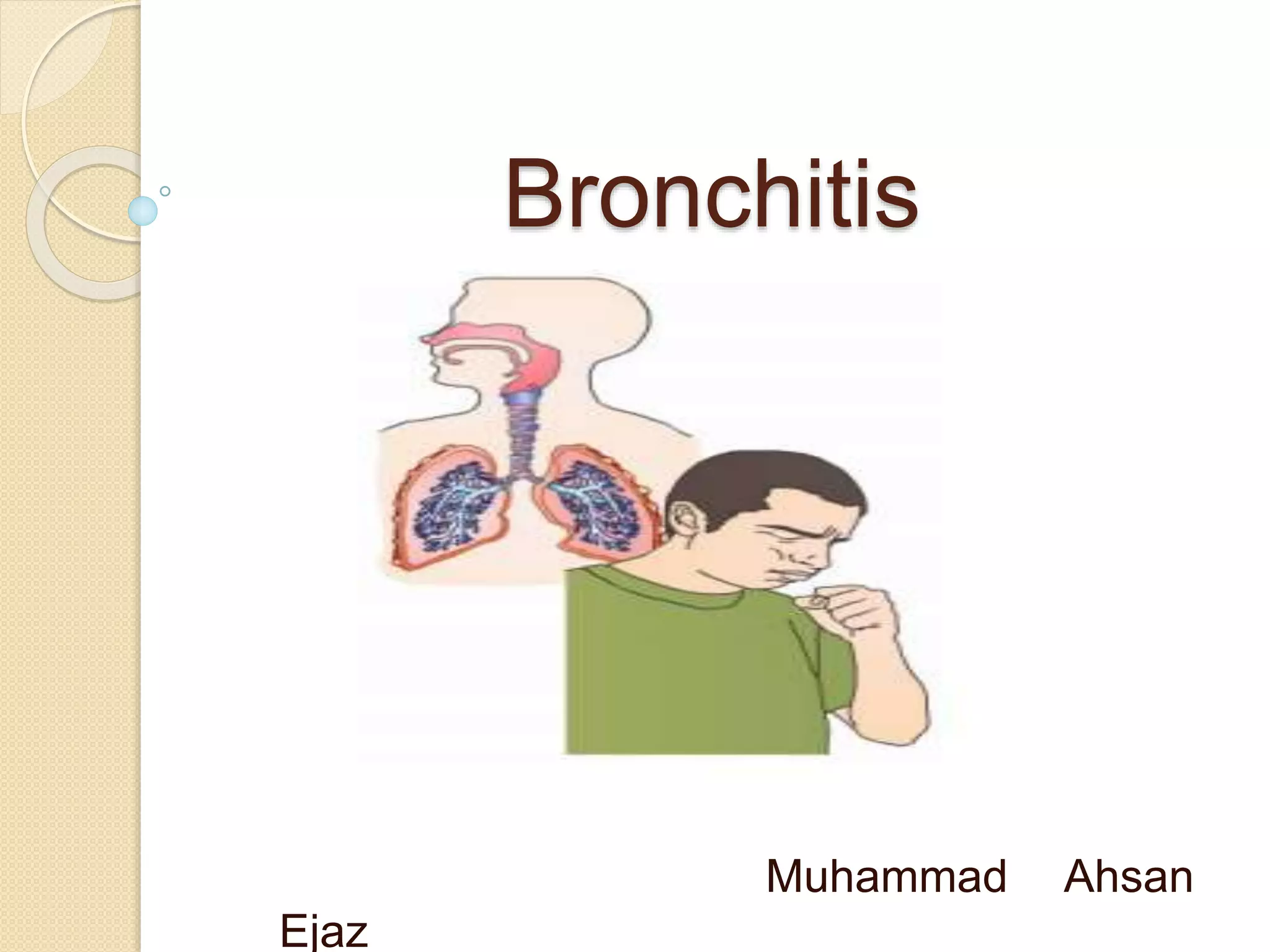
Bronchitis
Muhammad Ahsan
Ejaz
Introduction of Bronchitis
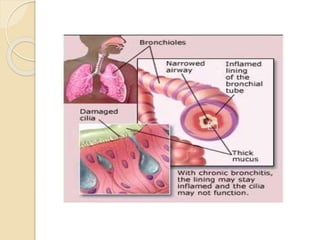
 Bronchitis is an inflammation of the air
passages between the nose and th
e lungs, including the windpipe or trac
hea and the
larger airtubes of the lung that bring ai
r in from the trachea (bronchi).
• Acute bronchitis is usually caused b
y a viral infection, but can also be cau
sed by a bacterial infection and can h
eal without complications.
• Chronic bronchitis is a sign of serio
us
lung disease that may be slowed but
cannot be cured.
Acute and chronic bronchitis
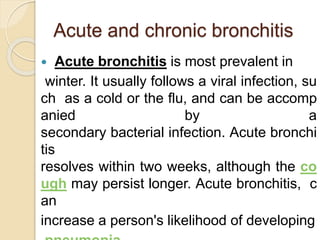
 Acute bronchitis is most prevalent in
winter. It usually follows a viral infection, su
ch as a cold or the flu, and can be accomp
anied by a
secondary bacterial infection. Acute bronchi
tis
resolves within two weeks, although the co
ugh may persist longer. Acute bronchitis, c
an
increase a person's likelihood of developing
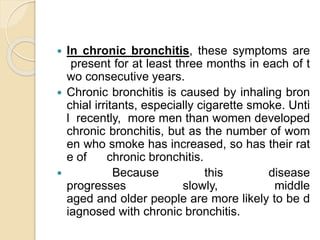
 In chronic bronchitis, these symptoms are
present for at least three months in each of t
wo consecutive years.
 Chronic bronchitis is caused by inhaling bron
chial irritants, especially cigarette smoke. Unti
l recently, more men than women developed
chronic bronchitis, but as the number of wom
en who smoke has increased, so has their rat
e of chronic bronchitis.
 Because this disease
progresses slowly, middle
aged and older people are more likely to be d
iagnosed with chronic bronchitis.
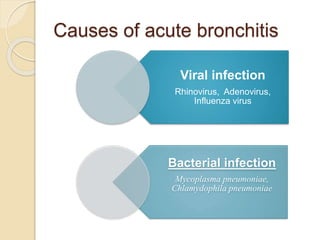
Causes of acute bronchitis
Viral infection
Rhinovirus, Adenovirus,
Influenza virus
Bacterial infection
Mycoplasma pneumoniae,
Chlamydophila pneumoniae
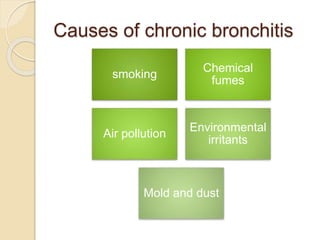
Causes of chronic bronchitis
smoking
Chemical
fumes
Air pollution
Environmental
irritants
Mold and dust
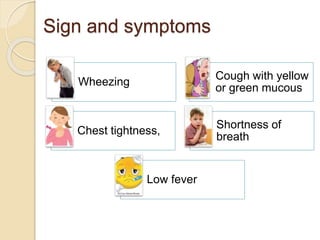
Sign and symptoms
Wheezing
Cough with yellow
or green mucous
Chest tightness,
Shortness of
breath
Low fever
Contd..
 Chronic bronchitis shows the same
sign and symptoms
 Additionally the cough and sputum
continue for more than three
consecutive months for more than two
years
 Mostly suspected above 40 years of
age
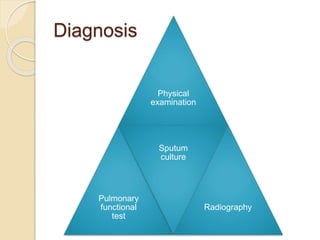
Diagnosis
Physical
examination
Pulmonary
functional
test
Sputum
culture
Radiography
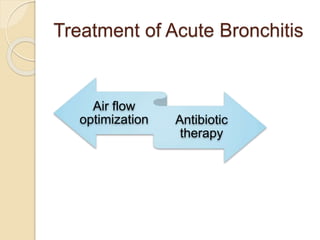
Treatment of Acute Bronchitis
Air flow
optimization Antibiotic
therapy
Air flow optimization
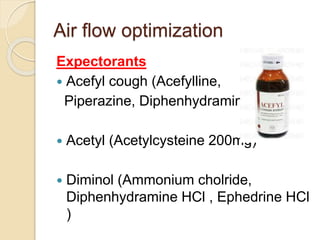
Expectorants
 Acefyl cough (Acefylline,
Piperazine, Diphenhydramine)
 Acetyl (Acetylcysteine 200mg)
 Diminol (Ammonium cholride,
Diphenhydramine HCl , Ephedrine HCl
)
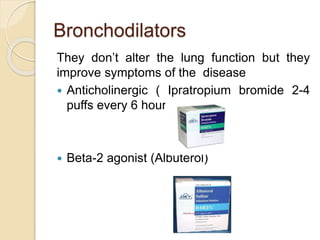
Bronchodilators
They don’t alter the lung function but they
improve symptoms of the disease
 Anticholinergic ( Ipratropium bromide 2-4
puffs every 6 hour)
 Beta-2 agonist (Albuterol)
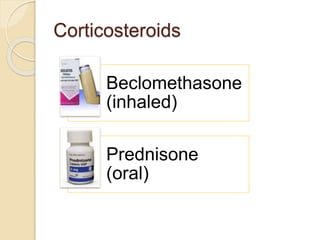
Corticosteroids
Beclomethasone
(inhaled)
Prednisone
(oral)
Antibiotics
First line agents
 Doxycycline
 Amoxicillin
2nd line agents
 Co-amoxicalv
 Clarithromycin
 Cefixime
Treatment of chronic
bronchitis
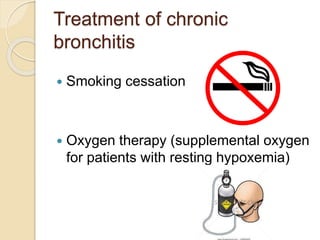
 Smoking cessation
 Oxygen therapy (supplemental oxygen
for patients with resting hypoxemia)
Bronchodilators
They don’t alter the lung function but
they improve symptoms of the disease
 Anticholinergic ( ipratropium bromide
2-4 puffs every 6 hour)
 Beta-2 agonist (albuterol)
Ipratropium bromide is preferred over
beta-2 angonists because of
Long duration of action
No sympathomimitic side effects
 Long acting Beta-agonists
(Formoterol, Salmeterol , Alformeterol
)
Equilent or superior to Ipratopium and
albuterol but superior effeicacy in
advanced disease.
Corticosterids
In combination with long acting beta-2
agonist
 Inhaled corticosteroids are preffered
because oral corticosteroids have
marked adverse effects.
Theophylline
Improve hemoglobin saturation in
patients with sleep related breathing
disorders.
It provides
 Bronchodilation
 Anti-inflammatory effect
 Diaphragm strength
Notes
Due to narrow therapeutic window ,it is
used in carefully selected patients.
Antibiotics
Antibiotic are prescribed to treat acute
exacerbations.
Option include
 Doxycycline 100mg every 12 hour
 Azithromycin 500mg followed by 250
mg for 5 days.
 Co-amoxiclav 1000mg every 12 hour
 Ciprofloxicin 500mg every 12 hour
Duration of therapy 3-7 days
Other measures
 Aerobic physical exercise
(walking 20 min. or bicycling )
 Adequate systemic hydration
increases the mobilization of
secretions.
REFERENCES
 Current Medical Diagnosis and Treatment (2014)
 Clinical Pharmacy and Therapeutics by Roger Walker and
Cate Whittlesea
 National Heart, Lung and Blood Institute. (USA)
http://www.nhlbi.nih.gov.
 Diagnosis and Treatment of Acute Bronchitis ROSS H.
ALBERT, MD, PhD, Hartford Hospital, Hartford, Connecticut
 Acute Bronchitis
Richard P. Wenzel, M.D., and Alpha A. Fowler III, M.D.
The New England Journal of Medicine

Introduction of bronchitis

  • 1.
  • 2.
    Introduction of Bronchitis Bronchitis is an inflammation of the air passages between the nose and th e lungs, including the windpipe or trac hea and the larger airtubes of the lung that bring ai r in from the trachea (bronchi).
  • 4.
    • Acute bronchitisis usually caused b y a viral infection, but can also be cau sed by a bacterial infection and can h eal without complications. • Chronic bronchitis is a sign of serio us lung disease that may be slowed but cannot be cured.
  • 5.
    Acute and chronicbronchitis  Acute bronchitis is most prevalent in winter. It usually follows a viral infection, su ch as a cold or the flu, and can be accomp anied by a secondary bacterial infection. Acute bronchi tis resolves within two weeks, although the co ugh may persist longer. Acute bronchitis, c an increase a person's likelihood of developing
  • 6.
     In chronicbronchitis, these symptoms are present for at least three months in each of t wo consecutive years.  Chronic bronchitis is caused by inhaling bron chial irritants, especially cigarette smoke. Unti l recently, more men than women developed chronic bronchitis, but as the number of wom en who smoke has increased, so has their rat e of chronic bronchitis.  Because this disease progresses slowly, middle aged and older people are more likely to be d iagnosed with chronic bronchitis.
  • 7.
    Causes of acutebronchitis Viral infection Rhinovirus, Adenovirus, Influenza virus Bacterial infection Mycoplasma pneumoniae, Chlamydophila pneumoniae
  • 8.
    Causes of chronicbronchitis smoking Chemical fumes Air pollution Environmental irritants Mold and dust
  • 9.
    Sign and symptoms Wheezing Coughwith yellow or green mucous Chest tightness, Shortness of breath Low fever
  • 10.
    Contd..  Chronic bronchitisshows the same sign and symptoms  Additionally the cough and sputum continue for more than three consecutive months for more than two years  Mostly suspected above 40 years of age
  • 11.
  • 12.
    Treatment of AcuteBronchitis Air flow optimization Antibiotic therapy
  • 13.
    Air flow optimization Expectorants Acefyl cough (Acefylline, Piperazine, Diphenhydramine)  Acetyl (Acetylcysteine 200mg)  Diminol (Ammonium cholride, Diphenhydramine HCl , Ephedrine HCl )
  • 14.
    Bronchodilators They don’t alterthe lung function but they improve symptoms of the disease  Anticholinergic ( Ipratropium bromide 2-4 puffs every 6 hour)  Beta-2 agonist (Albuterol)
  • 15.
  • 16.
    Antibiotics First line agents Doxycycline  Amoxicillin 2nd line agents  Co-amoxicalv  Clarithromycin  Cefixime
  • 17.
    Treatment of chronic bronchitis Smoking cessation  Oxygen therapy (supplemental oxygen for patients with resting hypoxemia)
  • 18.
    Bronchodilators They don’t alterthe lung function but they improve symptoms of the disease  Anticholinergic ( ipratropium bromide 2-4 puffs every 6 hour)  Beta-2 agonist (albuterol) Ipratropium bromide is preferred over beta-2 angonists because of Long duration of action No sympathomimitic side effects
  • 19.
     Long actingBeta-agonists (Formoterol, Salmeterol , Alformeterol ) Equilent or superior to Ipratopium and albuterol but superior effeicacy in advanced disease.
  • 20.
    Corticosterids In combination withlong acting beta-2 agonist  Inhaled corticosteroids are preffered because oral corticosteroids have marked adverse effects.
  • 21.
    Theophylline Improve hemoglobin saturationin patients with sleep related breathing disorders. It provides  Bronchodilation  Anti-inflammatory effect  Diaphragm strength Notes Due to narrow therapeutic window ,it is used in carefully selected patients.
  • 22.
    Antibiotics Antibiotic are prescribedto treat acute exacerbations. Option include  Doxycycline 100mg every 12 hour  Azithromycin 500mg followed by 250 mg for 5 days.  Co-amoxiclav 1000mg every 12 hour  Ciprofloxicin 500mg every 12 hour Duration of therapy 3-7 days
  • 23.
    Other measures  Aerobicphysical exercise (walking 20 min. or bicycling )  Adequate systemic hydration increases the mobilization of secretions.
  • 24.
    REFERENCES  Current MedicalDiagnosis and Treatment (2014)  Clinical Pharmacy and Therapeutics by Roger Walker and Cate Whittlesea  National Heart, Lung and Blood Institute. (USA) http://www.nhlbi.nih.gov.  Diagnosis and Treatment of Acute Bronchitis ROSS H. ALBERT, MD, PhD, Hartford Hospital, Hartford, Connecticut  Acute Bronchitis Richard P. Wenzel, M.D., and Alpha A. Fowler III, M.D. The New England Journal of Medicine