Cocci
Bsc Nursing 2020
Microbiology
Mss. Poonam kandari
Cocci
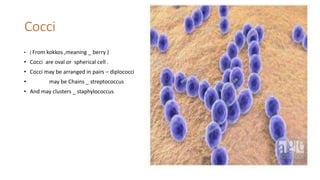
• ( From kokkos ,meaning _ berry )
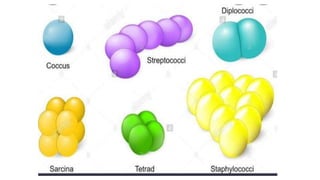
• Cocci are oval or spherical cell .
• Cocci may be arranged in pairs – diplococci
• may be Chains _ streptococcus
• And may clusters _ staphylococcus
Types of cocci :
Gran positive
• Staphylococcus
• Streptococcus
• pneumonia
Gram negative
• Meningococcal
• Gonorrhea
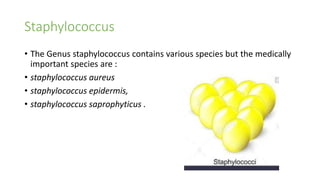
Staphylococcus
• The Genus staphylococcus contains various species but the medically
important species are :
• staphylococcus aureus
• staphylococcus epidermis,
• staphylococcus saprophyticus .
1. Staphylococcus aureus
• A. Morphology
They are gram positive cocci arranged in grape- like clusters,non
mobile, non sporting, approximately 1mm in diameter.
B. Culture
it grow on ordinary culture media within a temperature range of 10-42
Degree centigrade, the optimum temperature 37 degree centigrade
and pH 7.4- 7.6 .
.They are aerobes and facultative anaerobes.
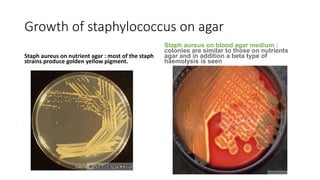
Growth of staphylococcus on agar
Staph aureus on nutrient agar : most of the staph
strains produce golden yellow pigment.
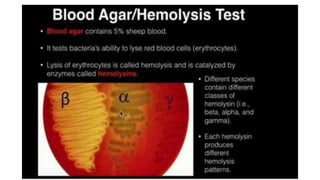
Staph aureus on blood agar medium :
colonies are similar to those on nutrients
agar and in addition a beta type of
haemolysis is seen
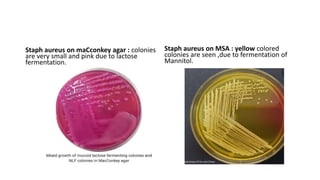
Staph aureus on MSA : yellow colored
colonies are seen ,due to fermentation of
Mannitol.
Staph aureus on maCconkey agar : colonies
are very small and pink due to lactose
fermentation.
Liquid medium
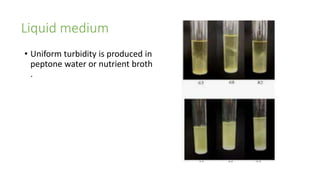
• Uniform turbidity is produced in
peptone water or nutrient broth
.
C. Biochemical reactions.
• Staph. aureus is catalase positive and oxidase negative. It ferments a
number of sugars producing acid without gas.
• The following characteristics help to distinguish a pathogenic stain of
staphylococcus ( staph. aureus ) from other non – pathogenic stains (
e.g. Staph. Epidermis ) .
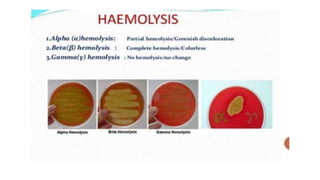
• 1. Beta type of haemolysis on blood agar
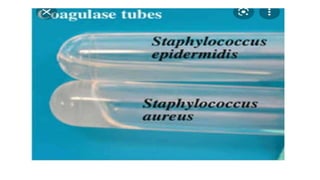
• 2. Coagulase production
• 3. Production of a golden yellow pigment
• 4. Mannitol fermentation.
Beta type of haemolysis on blood agar
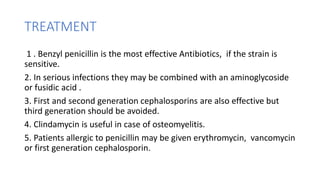
TREATMENT
1 . Benzyl penicillin is the most effective Antibiotics, if the strain is
sensitive.
2. In serious infections they may be combined with an aminoglycoside
or fusidic acid .
3. First and second generation cephalosporins are also effective but
third generation should be avoided.
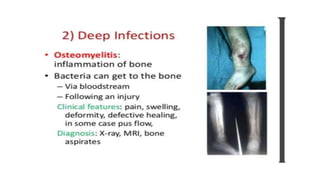
4. Clindamycin is useful in case of osteomyelitis.
5. Patients allergic to penicillin may be given erythromycin, vancomycin
or first generation cephalosporin.
Reference
• Microbiology for nursing & allied sciences. (Second edition, D.R.
Arora )
• Microbiology ( prof . C P BAVEJA)
• Google slideshare
https://www.slideshare.net/DrAbbasHayat/staphylococcus-33723289

Cocci , staphylococcus microbiology

  • 1.
  • 2.
    Cocci • ( Fromkokkos ,meaning _ berry ) • Cocci are oval or spherical cell . • Cocci may be arranged in pairs – diplococci • may be Chains _ streptococcus • And may clusters _ staphylococcus
  • 3.
    Types of cocci: Gran positive • Staphylococcus • Streptococcus • pneumonia Gram negative • Meningococcal • Gonorrhea
  • 5.
    Staphylococcus • The Genusstaphylococcus contains various species but the medically important species are : • staphylococcus aureus • staphylococcus epidermis, • staphylococcus saprophyticus .
  • 7.
    1. Staphylococcus aureus •A. Morphology They are gram positive cocci arranged in grape- like clusters,non mobile, non sporting, approximately 1mm in diameter. B. Culture it grow on ordinary culture media within a temperature range of 10-42 Degree centigrade, the optimum temperature 37 degree centigrade and pH 7.4- 7.6 . .They are aerobes and facultative anaerobes.
  • 8.
    Growth of staphylococcuson agar Staph aureus on nutrient agar : most of the staph strains produce golden yellow pigment. Staph aureus on blood agar medium : colonies are similar to those on nutrients agar and in addition a beta type of haemolysis is seen
  • 9.
    Staph aureus onMSA : yellow colored colonies are seen ,due to fermentation of Mannitol. Staph aureus on maCconkey agar : colonies are very small and pink due to lactose fermentation.
  • 10.
    Liquid medium • Uniformturbidity is produced in peptone water or nutrient broth .
  • 11.
    C. Biochemical reactions. •Staph. aureus is catalase positive and oxidase negative. It ferments a number of sugars producing acid without gas. • The following characteristics help to distinguish a pathogenic stain of staphylococcus ( staph. aureus ) from other non – pathogenic stains ( e.g. Staph. Epidermis ) . • 1. Beta type of haemolysis on blood agar • 2. Coagulase production • 3. Production of a golden yellow pigment • 4. Mannitol fermentation.
  • 14.
    Beta type ofhaemolysis on blood agar
  • 29.
    TREATMENT 1 . Benzylpenicillin is the most effective Antibiotics, if the strain is sensitive. 2. In serious infections they may be combined with an aminoglycoside or fusidic acid . 3. First and second generation cephalosporins are also effective but third generation should be avoided. 4. Clindamycin is useful in case of osteomyelitis. 5. Patients allergic to penicillin may be given erythromycin, vancomycin or first generation cephalosporin.
  • 30.
    Reference • Microbiology fornursing & allied sciences. (Second edition, D.R. Arora ) • Microbiology ( prof . C P BAVEJA) • Google slideshare https://www.slideshare.net/DrAbbasHayat/staphylococcus-33723289