GRAM POSITIVE
BACTERIA
PRESENTED BY SARA HUSSAM
M.PHILL MICROBIOLOGY 2ND SEMISTER
BACTERIA
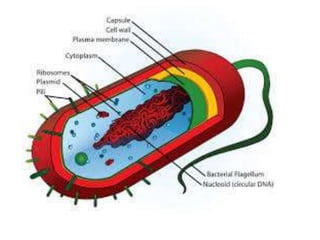
• Bacteria are single-cell organisms
that are neither plants nor animals.
They usually measure a few
micrometers in length and exist
together in communities of millions.
Bacteria are thought to have been
the first organisms to appear on
earth, about 4 billion years ago. The
oldest known fossils are of bacteria-
like organisms.
Some bacteria are harmful while
others are beneficial and can serve
for medicinal purpose.
CLASSIFICATION OF BACTERIA
• There are many bases of classification of
bacteria like
• Classification on the bases of shape.
• Classification on the bases of cell wall
composition and their staining.
ON THE BASIS OF STAINING OF
BACTERIAL CELL WALL
• Discovered by H.C. Gram in 1884.
• It allows a large proportion of clinically
important bacteria to be classified as either
Gram positive or negative based on their
morphology and differential staining
properties.
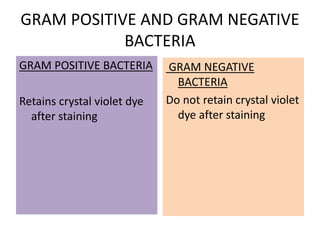
GRAM POSITIVE AND GRAM NEGATIVE
BACTERIA
GRAM POSITIVE BACTERIA
Retains crystal violet dye
after staining
GRAM NEGATIVE
BACTERIA
Do not retain crystal violet
dye after staining
GRAM POSITIVE BACTERIA:
The Gram positive bacteria have a
cell wall composed of a thick layer
of a particular substance (called
peptidologlycan).
Gram positive bacteria includes
1)cocci (round shaped)
2) bacilli (rod shaped)
Some of the common diseases causing
Gram positive bacteria are:
staphylococcus aureus, streptococcues
pneumoniae, bacillus anthrax,
clostiridium tetani, corynebacterium
diphtheria, enterococci
STAPHYLOCOCCUS AUREUS:
S. aureus can cause inflammatory
diseases including skin infections,
pneumonia, endocarditis, septic
arthritis, osteomyelitis, and
abscesses
STREPTOCOCCUS PNEUMONIAE:
Streptococcus pneumoniae is a
gram-positive, encapsulated,
lancet-shaped diplococci most
commonly causing otitis media,
pneumonia, sinusitis, and
meningitis
BACILLUS ANTHRACIS:
Bacillus anthracis is a gram-positive
spore-forming rod that produces
anthrax toxin resulting in an ulcer
with a black eschar.
CLOSTRIDIUM TETANI:
Clostridium tetani is a gram-positive
spore-forming rod that causes
tetanus, which is a medical
emergency and cause severe
tightening of muscles all over the
body and can cause locking of the
jaw making the mouth impossible
to open
CORYNEBACTERIUM DIPTHARIA
Corynebacterium diphtheria is a gram-
positive club-shaped rod which can
cause pseudomembranous pharyngitis,
myocarditis and neural tissue damage.
ENTERO COCCI:
Entero cocci is a gram
positive bacteria that cause biliary
tract infections and UTIs
SIGNS AND SYMPTOMS
• Draining sinus tracts
• Erythema
• Fever
• Superficial abscesses
• Warmth
LABORATRY TESTS
• Once a gram-positive organism infection is
suspected, these laboratory studies are useful:
• CBC
• Blood cultures
• Coagulase test
• Joint aspiration if a septic joint is suspected
TREATMENT
• Most infections due to Gram-
positive organisms can
be treated with quite a small
number of antibiotics. Penicillin,
cloxacillin, and erythromycin
should be enough to cover 90 per
cent of Gram-positive infections.

Gram positive bacteria

  • 1.
    GRAM POSITIVE BACTERIA PRESENTED BYSARA HUSSAM M.PHILL MICROBIOLOGY 2ND SEMISTER
  • 2.
    BACTERIA • Bacteria aresingle-cell organisms that are neither plants nor animals. They usually measure a few micrometers in length and exist together in communities of millions.
  • 3.
    Bacteria are thoughtto have been the first organisms to appear on earth, about 4 billion years ago. The oldest known fossils are of bacteria- like organisms. Some bacteria are harmful while others are beneficial and can serve for medicinal purpose.
  • 4.
    CLASSIFICATION OF BACTERIA •There are many bases of classification of bacteria like • Classification on the bases of shape. • Classification on the bases of cell wall composition and their staining.
  • 5.
    ON THE BASISOF STAINING OF BACTERIAL CELL WALL • Discovered by H.C. Gram in 1884. • It allows a large proportion of clinically important bacteria to be classified as either Gram positive or negative based on their morphology and differential staining properties.
  • 6.
    GRAM POSITIVE ANDGRAM NEGATIVE BACTERIA GRAM POSITIVE BACTERIA Retains crystal violet dye after staining GRAM NEGATIVE BACTERIA Do not retain crystal violet dye after staining
  • 8.
    GRAM POSITIVE BACTERIA: TheGram positive bacteria have a cell wall composed of a thick layer of a particular substance (called peptidologlycan).
  • 10.
    Gram positive bacteriaincludes 1)cocci (round shaped) 2) bacilli (rod shaped)
  • 11.
    Some of thecommon diseases causing Gram positive bacteria are: staphylococcus aureus, streptococcues pneumoniae, bacillus anthrax, clostiridium tetani, corynebacterium diphtheria, enterococci
  • 12.
    STAPHYLOCOCCUS AUREUS: S. aureuscan cause inflammatory diseases including skin infections, pneumonia, endocarditis, septic arthritis, osteomyelitis, and abscesses
  • 13.
    STREPTOCOCCUS PNEUMONIAE: Streptococcus pneumoniaeis a gram-positive, encapsulated, lancet-shaped diplococci most commonly causing otitis media, pneumonia, sinusitis, and meningitis
  • 14.
    BACILLUS ANTHRACIS: Bacillus anthracisis a gram-positive spore-forming rod that produces anthrax toxin resulting in an ulcer with a black eschar.
  • 15.
    CLOSTRIDIUM TETANI: Clostridium tetaniis a gram-positive spore-forming rod that causes tetanus, which is a medical emergency and cause severe tightening of muscles all over the body and can cause locking of the jaw making the mouth impossible to open
  • 16.
    CORYNEBACTERIUM DIPTHARIA Corynebacterium diphtheriais a gram- positive club-shaped rod which can cause pseudomembranous pharyngitis, myocarditis and neural tissue damage.
  • 17.
    ENTERO COCCI: Entero cocciis a gram positive bacteria that cause biliary tract infections and UTIs
  • 18.
    SIGNS AND SYMPTOMS •Draining sinus tracts • Erythema • Fever • Superficial abscesses • Warmth
  • 19.
    LABORATRY TESTS • Oncea gram-positive organism infection is suspected, these laboratory studies are useful: • CBC • Blood cultures • Coagulase test • Joint aspiration if a septic joint is suspected
  • 20.
    TREATMENT • Most infectionsdue to Gram- positive organisms can be treated with quite a small number of antibiotics. Penicillin, cloxacillin, and erythromycin should be enough to cover 90 per cent of Gram-positive infections.