Gram Negative Cocci
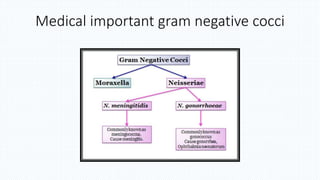
Medical important gram negative cocci
General characteristics
• Aerobic, gram-negative diplococci
• Oxidase and catalase positive
• Nonmotile
• Found inside (intracellular) and outside (extracellular) of pus cells.
• Human is the only known reservoir of these organisms
• Two species are pathogenic to humans:
• N. Gonorrhoeae (commonly called gonococcus)
• N. Meningitides (commonly called meningococcus)
• Other members of the Neisseria genus are commensals of the upper
respiratory tract.
Neisseria Gonorrhoeae
• Gonococci are unencapsulated .
• N. gonorrhoeae is usually transmitted during sexual contact or,
rarely, during the passage of a baby through an infected birth canal.
• It does not survive long outside the human body because it is highly
sensitive to dehydration.
• Virulence factors include:
1. Pili. (attachment)
2. Lipooligosaccharide
3. Porin Proteins. ( invasion of epithelial cells)
Clinical significance
1. Genitourinary tract infections:
• Gonococci most often colonize the mucous membrane of the genitourinary
tract.
• Disease in male:
• In men, N. gonorrhoeae infects the urethra and is usually symptomatic
• Symptoms include dysuria: (painful or difficult urination), urethral
discharge (yellow, purulent).
• The organism may spread to the prostate, bladder and epididymes, causing
inflammation and swelling. Epididymitis may lead to sterility
Clinical significance
• Disease in female:
• Infection occurs in the endocervix and extends to the urethra
and vagina.
• A greenish-yellow cervical discharge is most common, often
accompanied by bleeding.
• The disease may progress to the uterus, causing salpingitis
(inflammation of the fallopian tubes) and pelvic inflammatory
disease (PID).
Clinical significance
• Complications of PID include: Sterility and Ectopic pregnancy.
2. Rectal infections: characterized by constipation, painful defecation,
and purulent discharge.
3. Arthritis and bacteremia.
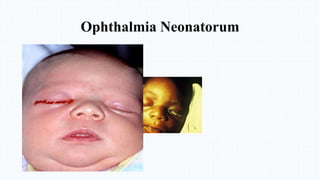
4. Neisseria gonorrhoeae can be transmitted from a pregnant woman to
her child during delivery, resulting in ophthalmia neonatorum.
This eye infection usually occurs on the first or second day of life
and can damage the cornea, causing blindness.
5. Disseminated infection (rarely).
Ophthalmia Neonatorum
Laboratory Diagnosis
• Specimens:
• Urethral and cervical exudate, urine (centrifuged) from male
patients, a rectal swab and an eye swab.
• Cultural characteristics:
• Gonococci are fastidious organisms do not grow on ordinary culture
media.
• They are aerobic but may grow anaerobically also.
• The optimum temperature for growth is 35-36°c & optimum ph is 7.2-
7.6.
• It is essential to provide 5-10% co2.
Laboratory Diagnosis
• Media used:
a) Non selective media: Chocolate agar.
b) Selective media: Thayer Martin medium (Vancomycin, Colistin &
Nystatin antibiotics)
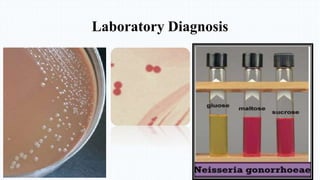
• Colony morphology: Colonies are small, round, gray.
• Gram stain: Gram negative diplococci (kidney shaped).
Biochemical reactions:
1) Oxidase test and Catalase test: Positive
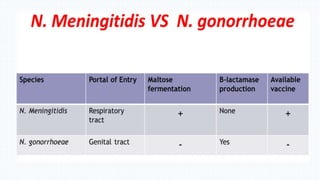
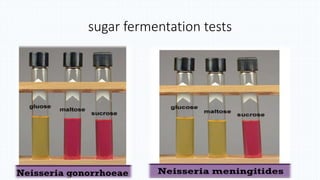
2) sugar fermentation tests: ferments only glucose but not maltose.
Laboratory Diagnosis
Treatment
The organism shows resistant to penicillin and tetracycline (PPNG
penicillinase producing N.gonorrhoeae).
Usually treatment is by third generation cephalosporin's (eg.
ceftriaxone).
Gonococcal ophthalmia neonatorum is prevented by local application of
0.5% erythromycin ophthalmic ointment or 1% tetracycline
ointment.
After cleansing of face of baby apply 1% silver nitrate solution
Neisseria meningitidis
• Virulence factors include:
• The capsular polysaccharide and endotoxin.
• Clinical Manifestations:
1. One of the most frequent causes of meningitis.
• Outbreaks of meningitis, most common in winter and early spring, are favoured
by close contact between individuals, such as occurs in schools, institutions, and
military barracks.
• Transmission occurs through inhalation of respiratory droplets from a carrier or
a patient in the early stages of the disease. In addition to contact with a carrier.
2. Septicemia. (life-threatening condition)
Laboratory Diagnosis
• Specimens:
• CSF or blood.
• Specimens should be cultured as soon as possible after collection
• Culture conditions:
• Meningococci are cultured on chocolate or blood agar with increased
co2
• Colony morphology:
• N. Meningitidis produces transparent or grey, shiny, small colonies
Laboratory Diagnosis and Treatment
• Gram stain: Gram negative diplococci (kidney shaped).
• Biochemical tests:
• Oxidase positive
• Sugar fermentation test: Ferments glucose and maltose
• The CSF shows elevated protein, decreased glucose and
many neutrophils.
• Treatment:
Penicillin remains the drug of choice
sugar fermentation tests
Thank you

gram negative cocci.pptx

  • 1.
  • 2.
    Medical important gramnegative cocci
  • 3.
    General characteristics • Aerobic,gram-negative diplococci • Oxidase and catalase positive • Nonmotile • Found inside (intracellular) and outside (extracellular) of pus cells. • Human is the only known reservoir of these organisms • Two species are pathogenic to humans: • N. Gonorrhoeae (commonly called gonococcus) • N. Meningitides (commonly called meningococcus) • Other members of the Neisseria genus are commensals of the upper respiratory tract.
  • 4.
    Neisseria Gonorrhoeae • Gonococciare unencapsulated . • N. gonorrhoeae is usually transmitted during sexual contact or, rarely, during the passage of a baby through an infected birth canal. • It does not survive long outside the human body because it is highly sensitive to dehydration. • Virulence factors include: 1. Pili. (attachment) 2. Lipooligosaccharide 3. Porin Proteins. ( invasion of epithelial cells)
  • 5.
    Clinical significance 1. Genitourinarytract infections: • Gonococci most often colonize the mucous membrane of the genitourinary tract. • Disease in male: • In men, N. gonorrhoeae infects the urethra and is usually symptomatic • Symptoms include dysuria: (painful or difficult urination), urethral discharge (yellow, purulent). • The organism may spread to the prostate, bladder and epididymes, causing inflammation and swelling. Epididymitis may lead to sterility
  • 6.
    Clinical significance • Diseasein female: • Infection occurs in the endocervix and extends to the urethra and vagina. • A greenish-yellow cervical discharge is most common, often accompanied by bleeding. • The disease may progress to the uterus, causing salpingitis (inflammation of the fallopian tubes) and pelvic inflammatory disease (PID).
  • 7.
    Clinical significance • Complicationsof PID include: Sterility and Ectopic pregnancy. 2. Rectal infections: characterized by constipation, painful defecation, and purulent discharge. 3. Arthritis and bacteremia. 4. Neisseria gonorrhoeae can be transmitted from a pregnant woman to her child during delivery, resulting in ophthalmia neonatorum. This eye infection usually occurs on the first or second day of life and can damage the cornea, causing blindness. 5. Disseminated infection (rarely).
  • 8.
  • 9.
    Laboratory Diagnosis • Specimens: •Urethral and cervical exudate, urine (centrifuged) from male patients, a rectal swab and an eye swab. • Cultural characteristics: • Gonococci are fastidious organisms do not grow on ordinary culture media. • They are aerobic but may grow anaerobically also. • The optimum temperature for growth is 35-36°c & optimum ph is 7.2- 7.6. • It is essential to provide 5-10% co2.
  • 10.
    Laboratory Diagnosis • Mediaused: a) Non selective media: Chocolate agar. b) Selective media: Thayer Martin medium (Vancomycin, Colistin & Nystatin antibiotics) • Colony morphology: Colonies are small, round, gray. • Gram stain: Gram negative diplococci (kidney shaped). Biochemical reactions: 1) Oxidase test and Catalase test: Positive 2) sugar fermentation tests: ferments only glucose but not maltose.
  • 11.
  • 12.
    Treatment The organism showsresistant to penicillin and tetracycline (PPNG penicillinase producing N.gonorrhoeae). Usually treatment is by third generation cephalosporin's (eg. ceftriaxone). Gonococcal ophthalmia neonatorum is prevented by local application of 0.5% erythromycin ophthalmic ointment or 1% tetracycline ointment. After cleansing of face of baby apply 1% silver nitrate solution
  • 13.
    Neisseria meningitidis • Virulencefactors include: • The capsular polysaccharide and endotoxin. • Clinical Manifestations: 1. One of the most frequent causes of meningitis. • Outbreaks of meningitis, most common in winter and early spring, are favoured by close contact between individuals, such as occurs in schools, institutions, and military barracks. • Transmission occurs through inhalation of respiratory droplets from a carrier or a patient in the early stages of the disease. In addition to contact with a carrier. 2. Septicemia. (life-threatening condition)
  • 14.
    Laboratory Diagnosis • Specimens: •CSF or blood. • Specimens should be cultured as soon as possible after collection • Culture conditions: • Meningococci are cultured on chocolate or blood agar with increased co2 • Colony morphology: • N. Meningitidis produces transparent or grey, shiny, small colonies
  • 15.
    Laboratory Diagnosis andTreatment • Gram stain: Gram negative diplococci (kidney shaped). • Biochemical tests: • Oxidase positive • Sugar fermentation test: Ferments glucose and maltose • The CSF shows elevated protein, decreased glucose and many neutrophils. • Treatment: Penicillin remains the drug of choice
  • 17.
  • 18.

Editor's Notes

  • #8 Sterility: usually refers to inability to produce a live child Ectopic pregnancy: a pregnancy in which the fetus develops outside the uterus
  • #13 MoŶitor the ďaďy’s eye iŶ the first week