DEPARTMENT OF MICROBIOLOGY
VIVEKANANDHA ARTS AND SCIENCE COLLEGE FOR WOMEN
SANKAGIRI
SUBJECT:MEDICAL BACTERIOLOGY
TOPIC:STAPHYLOCOCCUS
SUBJECT INCHARGE: SUBMITTED BY:
Dr.R.MYTHILI, USHA DEVI ARUMUGAM,
HEAD OF THE DEPARTMENT, III B.SC., Microbiology,
assistant professor, Department of Microbiology,
Department of Microbiology, Sankagiri,
Sankagiri,
Staphylococcus
SYNOPSIS
 INTROUCTION
 HISTORY
 MORPHOLOGICAL AND BIOCHEMICAL CHARACTERS
 CHARACTERISTIC AND FEATURES
 DISEASES
 LABORATORY DIAGNOSIS
 TREATMENT
 PREVENTION
 REFERENCE
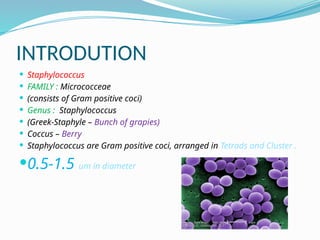
INTRODUTION
 Staphylococcus
 FAMILY : Micrococceae
 (consists of Gram positive coci)
 Genus : Staphylococcus
 (Greek-Staphyle – Bunch of grapies)
 Coccus – Berry
 Staphylococcus are Gram positive coci, arranged in Tetrads and Cluster .
0.5-1.5 um in diameter
HISTORY
 ROBERT KOCH-(1878)-First to see Staphylococci
in Pus specimen.
 LOUIS PASTER-(1880)-First to cultivation in
liquid medium.
 SIR ALEXANDER ONGSTON(1881)-Named the
bacteria as Staphylococcus.
MORPHOLOGICAL AND BIOCHEMICAL
CHARACTERS
 Gram- positive cocci
 Non-motile
 Non –spore-former
 Indole- negative
 Methyle-red positive
 VP- negative
 Urease- positive
 Nitrate- Positive
 Gelatin-Hydrolysis-positive
 Phosphatase- positive
 Coagulase- positive
 Fermentation of glucose- positive
 Mannitol- positive
CHARACTERISTIC AND FEATURES
 Few strain produce microcapsule or slime
 Optimum PH for growth is 7-7.5
 Optimum temperature is 30-37℃
 S.epidermidis produces white colonies on
nutrient agar and non-Beta-haemolytic colony
on blood agar.S.aureus utilizes potassium tellurite
and converts it into telluramine .
 It is a black-coloured compound.
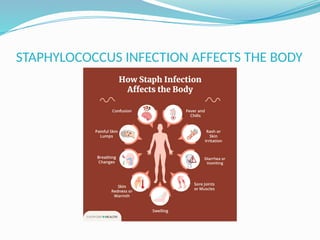
STAPHYLOCOCCUS INFECTION AFFECTS THE BODY
Staphylococcal Diseases
 Staphylococcal infections are among the most common of bacterial infections
and range from the trivial to the fatal.
 Staphylococcal infection are characterized by localized pyogenic lesions.
 Skin
Folliculitis
Furuncle abscess (Breast abscess)
wound infection
impetigo
cellulitis
carbunck
Musculoskeletal
Osteomyelitis
Arthritis
 Bursitis
 pyomyositis
 Respiratory tract infection
 Tonsillitis
 Pharyngitis
 Sinusitis
 otitis – affect ear
 Broncho pnenumonia
 Lung abscess
 Empyema
 CNS –Central Nerves System
 Abscess
 Meningitis
 Thrombophlebitis
 Endo vascular infections
 Bacteremia
 Septicemia
 Pyemia
 Endocarditis
 Urinary tract infection :
 Urinary isolates of staphylococci are to be
considered signification even with low colony
counts, as they may be related to bacteremia.
DISEASES
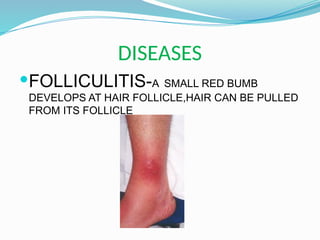
FOLLICULITIS-A SMALL RED BUMB
DEVELOPS AT HAIR FOLLICLE,HAIR CAN BE PULLED
FROM ITS FOLLICLE
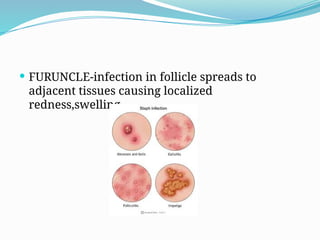
 FURUNCLE-infection in follicle spreads to
adjacent tissues causing localized
redness,swelling
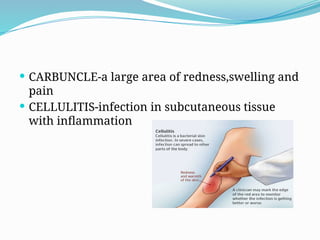
 CARBUNCLE-a large area of redness,swelling and
pain
 CELLULITIS-infection in subcutaneous tissue
with inflammation
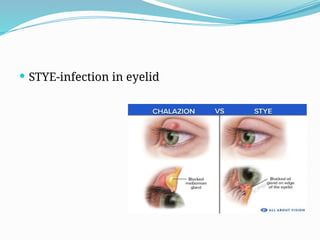
 STYE-infection in eyelid
OTHER INFECTIONS
 Sinusitis
 Pneumonia
 Impetigo
 Bacteraemia
 Endocarditis
 Osteomyelitis
 Scalded skin syndrome(SSS)
 Toxic shock syndrome(TSS)
 Cystitis
 Diarrhoea
LABORATORY DIAGNOSIS
 Specimens:
 Pus
 blood
 Sputum
 Urine
 Skin swab
 Microscopy
 Gram staining –appeared as gram positive
cocci.
Culture
 Aerobes and facultative anaerobes
 Opt. Temp. for growth=37 ℃
 Opt. PH for growth=7.5
 On Nutrient ager
 Golden yellow and opaque colonies with smooth
glistening surface,1-2 mm in diameter (max. pigment
production@22 ℃).
 On Blood agar,
 Golden yellow colonies, surrounded by a clear zone of
hemolysis (beta-hemolysis) ,esp. when incubated in sheep or
rabbit blood agar in atmosphere of 20%CO2.
 On MacConkey agae,
 - Smaller colonies than those on NA(0.1-0.5
mm) and are pink coloured due to lactose
fermentation
 On Mannitol salt agar,
 - S.aureus ferments mannitol and appear as
yellow colonies
 -MSA is a useful selective medium for
recovering S.aureus from faecal
specimens,when investigating food poisoning
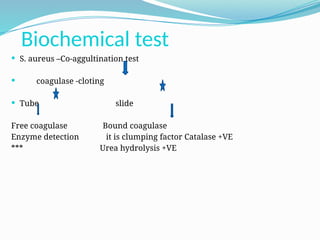
Biochemical test
 S. aureus –Co-aggultination test
 coagulase -cloting
 Tube slide
Free coagulase Bound coagulase
Enzyme detection it is clumping factor Catalase +VE
*** Urea hydrolysis +VE
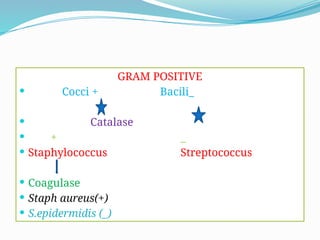
GRAM POSITIVE
 Cocci + Bacili_
 Catalase
 + _
 Staphylococcus Streptococcus
 Coagulase
 Staph aureus(+)
 S.epidermidis (_)
TREATMENT
 For Cutaneous infection,cloxacillin and
Dicloxacillin are highly effective,erythromycin
may also be used
 For serious systemic staphylococcus
infections,parenteral administration of nafcillin
or oxacillin is recommended.vancomycin or
cephalosporins are suitable for allergic patients
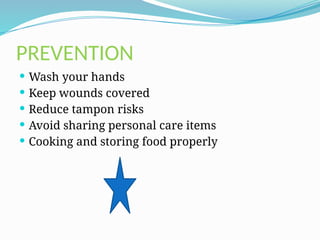
PREVENTION
 Wash your hands
 Keep wounds covered
 Reduce tampon risks
 Avoid sharing personal care items
 Cooking and storing food properly
REFERENCE
 MEDICAL MICROBIOLOGY
 S.RAJAN
THANK YOU

STAPHYLOCOCCUS,Introduction, history, morphology

  • 1.
    DEPARTMENT OF MICROBIOLOGY VIVEKANANDHAARTS AND SCIENCE COLLEGE FOR WOMEN SANKAGIRI SUBJECT:MEDICAL BACTERIOLOGY TOPIC:STAPHYLOCOCCUS SUBJECT INCHARGE: SUBMITTED BY: Dr.R.MYTHILI, USHA DEVI ARUMUGAM, HEAD OF THE DEPARTMENT, III B.SC., Microbiology, assistant professor, Department of Microbiology, Department of Microbiology, Sankagiri, Sankagiri,
  • 2.
  • 3.
    SYNOPSIS  INTROUCTION  HISTORY MORPHOLOGICAL AND BIOCHEMICAL CHARACTERS  CHARACTERISTIC AND FEATURES  DISEASES  LABORATORY DIAGNOSIS  TREATMENT  PREVENTION  REFERENCE
  • 4.
    INTRODUTION  Staphylococcus  FAMILY: Micrococceae  (consists of Gram positive coci)  Genus : Staphylococcus  (Greek-Staphyle – Bunch of grapies)  Coccus – Berry  Staphylococcus are Gram positive coci, arranged in Tetrads and Cluster . 0.5-1.5 um in diameter
  • 5.
    HISTORY  ROBERT KOCH-(1878)-Firstto see Staphylococci in Pus specimen.  LOUIS PASTER-(1880)-First to cultivation in liquid medium.  SIR ALEXANDER ONGSTON(1881)-Named the bacteria as Staphylococcus.
  • 6.
    MORPHOLOGICAL AND BIOCHEMICAL CHARACTERS Gram- positive cocci  Non-motile  Non –spore-former  Indole- negative  Methyle-red positive  VP- negative  Urease- positive  Nitrate- Positive  Gelatin-Hydrolysis-positive  Phosphatase- positive  Coagulase- positive  Fermentation of glucose- positive  Mannitol- positive
  • 7.
    CHARACTERISTIC AND FEATURES Few strain produce microcapsule or slime  Optimum PH for growth is 7-7.5  Optimum temperature is 30-37℃  S.epidermidis produces white colonies on nutrient agar and non-Beta-haemolytic colony on blood agar.S.aureus utilizes potassium tellurite and converts it into telluramine .  It is a black-coloured compound.
  • 8.
  • 9.
    Staphylococcal Diseases  Staphylococcalinfections are among the most common of bacterial infections and range from the trivial to the fatal.  Staphylococcal infection are characterized by localized pyogenic lesions.  Skin Folliculitis Furuncle abscess (Breast abscess) wound infection impetigo cellulitis carbunck Musculoskeletal Osteomyelitis Arthritis
  • 10.
     Bursitis  pyomyositis Respiratory tract infection  Tonsillitis  Pharyngitis  Sinusitis  otitis – affect ear  Broncho pnenumonia  Lung abscess  Empyema
  • 11.
     CNS –CentralNerves System  Abscess  Meningitis  Thrombophlebitis  Endo vascular infections  Bacteremia  Septicemia  Pyemia  Endocarditis
  • 12.
     Urinary tractinfection :  Urinary isolates of staphylococci are to be considered signification even with low colony counts, as they may be related to bacteremia.
  • 13.
    DISEASES FOLLICULITIS-A SMALL REDBUMB DEVELOPS AT HAIR FOLLICLE,HAIR CAN BE PULLED FROM ITS FOLLICLE
  • 14.
     FURUNCLE-infection infollicle spreads to adjacent tissues causing localized redness,swelling
  • 15.
     CARBUNCLE-a largearea of redness,swelling and pain  CELLULITIS-infection in subcutaneous tissue with inflammation
  • 16.
  • 17.
    OTHER INFECTIONS  Sinusitis Pneumonia  Impetigo  Bacteraemia  Endocarditis  Osteomyelitis  Scalded skin syndrome(SSS)  Toxic shock syndrome(TSS)  Cystitis  Diarrhoea
  • 18.
    LABORATORY DIAGNOSIS  Specimens: Pus  blood  Sputum  Urine  Skin swab  Microscopy  Gram staining –appeared as gram positive cocci.
  • 19.
    Culture  Aerobes andfacultative anaerobes  Opt. Temp. for growth=37 ℃  Opt. PH for growth=7.5  On Nutrient ager  Golden yellow and opaque colonies with smooth glistening surface,1-2 mm in diameter (max. pigment production@22 ℃).  On Blood agar,  Golden yellow colonies, surrounded by a clear zone of hemolysis (beta-hemolysis) ,esp. when incubated in sheep or rabbit blood agar in atmosphere of 20%CO2.
  • 20.
     On MacConkeyagae,  - Smaller colonies than those on NA(0.1-0.5 mm) and are pink coloured due to lactose fermentation  On Mannitol salt agar,  - S.aureus ferments mannitol and appear as yellow colonies  -MSA is a useful selective medium for recovering S.aureus from faecal specimens,when investigating food poisoning
  • 21.
    Biochemical test  S.aureus –Co-aggultination test  coagulase -cloting  Tube slide Free coagulase Bound coagulase Enzyme detection it is clumping factor Catalase +VE *** Urea hydrolysis +VE
  • 22.
    GRAM POSITIVE  Cocci+ Bacili_  Catalase  + _  Staphylococcus Streptococcus  Coagulase  Staph aureus(+)  S.epidermidis (_)
  • 23.
    TREATMENT  For Cutaneousinfection,cloxacillin and Dicloxacillin are highly effective,erythromycin may also be used  For serious systemic staphylococcus infections,parenteral administration of nafcillin or oxacillin is recommended.vancomycin or cephalosporins are suitable for allergic patients
  • 24.
    PREVENTION  Wash yourhands  Keep wounds covered  Reduce tampon risks  Avoid sharing personal care items  Cooking and storing food properly
  • 25.
  • 26.