PRESENTED BY
TAMILSELVAN. T
ID.NO : 10BB19J08001
SENSORY EVALUATION AND QUALITY CONTROL
CSIR – CENTRAL FOOD TECHNOLOGICAL
RESEARCH INSTITUTE
MYSORE -570020
Assignment on
Course - L-300-1611- Sensory Profiling of Foods
Sensory Evaluation
 In a simple sense - Judging the quality of food by a panel of judges.
“ A Scientific discipline used to invoke, measure, analyze and interpret
reactions to the characteristics of foods and materials as they are
perceived by the senses of sight, smell, taste, touch and hearing”
 It is the essential part of product development and quality control.
 It is a quantitative science
 Sensory evaluation applies the principles of experimental design and
statistical analysis to the use of human senses.
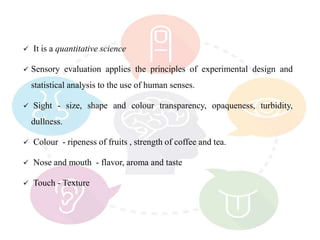
 Sight - size, shape and colour transparency, opaqueness, turbidity,
dullness.
 Colour - ripeness of fruits , strength of coffee and tea.
 Nose and mouth - flavor, aroma and taste
 Touch - Texture
Need for sensory evaluation
 To reflect common preference
 To maintain the quality of food at a given standard
 Assessment of process variation
 Cost reduction
 Product improvement
 New market development
 Market analysis
Types of Sensory tests
Difference tests – To determine difference among samples
 Paired-comparison test
 Duo-Trio test
 Triangle test
Rating test – Are difference test with a quantitative aspect
 Ranking test
 Single sample test
 Two sample difference test
 Multiple sample difference test
 Hedonic rating test
 Numerical scoring test
Sensitivity tests - These tests measure the ability of the individual to smell,
taste or feel specific characteristics in food or beverages.
Descriptive tests – It provides quantitative description of all the sensory
qualities of food or product
 Flavour profile test
 Textural profile test
Quality control
Quality Assurance (QA) and Quality Control (QC) programs are
established within an organization.
 To pursue and maintain the product’s quality
Quality Assurance (QA)
“The planned or systematic actions necessary to provide
adequate confidence that a product or a service will satisfy given needs”
 It sets the policies, systems, programs and procedures to be carried
out by QC
Quality Control (QC)
“ An operation closely aligned to the manufacturing
process, implements the quality specifications of raw materials,
intermediate and finished products as established by QA,
carries out operational techniques and the activities sustain
quality of a product or service” (ASTM, 1992)
Many companies have well defines and established QA and QC programs.
Do all companies have the QC/Sensory programs???
NO !!!
Important criteria defines the “quality” of QC/Sensory program are
 Training/ qualifications of panellists
 Type of established specifications
1. Representative sampling
2. Incorporation of product variability
3. Consideration of consumer inputs
 Use of controlled test conditions
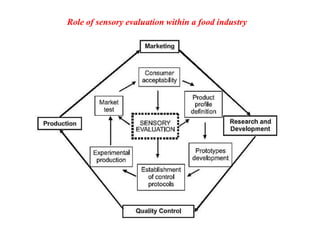
Role of sensory evaluation within a food industry
Minimum requirement for a QC program
 Selection and use of a sound sensory method
 Definition of critical attributes and limits/specifications
 Completion of an training program
 Use of sound product preparation and presentation protocols
 Implementation of a panel/ participants motivation and monitoring
system
 Management support
 Use of sensory results in the decision making process
New developments and Future opportunities within QC/Sensory system
 Awareness of the importance of and support for QC/Sensory programs
within an organization
 Increased involvement of sensory scientists in QC/Sensory programs
 Establishment of new or improved QC/sensory training programs
 Establishment of improved sensory specifications
 Evaluations focused on ingredients and in process products
 Understanding and use of the diverse applications of product variability
studies
 Use of new or improved sensory methods
Collaboration between R&D and QC functions to produce high and consistent
quality
 Continued use of instrumental measures: their establishment and validation
Assuring minimal requirements for a QC/sensory program
 Global QC
Development of QC/sensory programs in the personal care, pharmaceutical,
household and paper industries
Use of multivariate QC/sensory data analyses and control charts
Internet applications in the QC/sensory field
 The ultimate goal: a more effective approach to deliver consistent quality
products
Conclusion
The key to the growth of this field and the success of in-plant
QC/Sensory programs is the recognition that sensory evaluation has a vital
role in the quality control of consumer products
THANK YOU…

Sensory Evaluation and Quality Control

  • 1.
    PRESENTED BY TAMILSELVAN. T ID.NO: 10BB19J08001 SENSORY EVALUATION AND QUALITY CONTROL CSIR – CENTRAL FOOD TECHNOLOGICAL RESEARCH INSTITUTE MYSORE -570020 Assignment on Course - L-300-1611- Sensory Profiling of Foods
  • 2.
    Sensory Evaluation  Ina simple sense - Judging the quality of food by a panel of judges. “ A Scientific discipline used to invoke, measure, analyze and interpret reactions to the characteristics of foods and materials as they are perceived by the senses of sight, smell, taste, touch and hearing”  It is the essential part of product development and quality control.
  • 3.
     It isa quantitative science  Sensory evaluation applies the principles of experimental design and statistical analysis to the use of human senses.  Sight - size, shape and colour transparency, opaqueness, turbidity, dullness.  Colour - ripeness of fruits , strength of coffee and tea.  Nose and mouth - flavor, aroma and taste  Touch - Texture
  • 4.
    Need for sensoryevaluation  To reflect common preference  To maintain the quality of food at a given standard  Assessment of process variation  Cost reduction  Product improvement  New market development  Market analysis
  • 5.
    Types of Sensorytests Difference tests – To determine difference among samples  Paired-comparison test  Duo-Trio test  Triangle test Rating test – Are difference test with a quantitative aspect  Ranking test  Single sample test  Two sample difference test  Multiple sample difference test  Hedonic rating test  Numerical scoring test
  • 6.
    Sensitivity tests -These tests measure the ability of the individual to smell, taste or feel specific characteristics in food or beverages. Descriptive tests – It provides quantitative description of all the sensory qualities of food or product  Flavour profile test  Textural profile test
  • 7.
    Quality control Quality Assurance(QA) and Quality Control (QC) programs are established within an organization.  To pursue and maintain the product’s quality Quality Assurance (QA) “The planned or systematic actions necessary to provide adequate confidence that a product or a service will satisfy given needs”  It sets the policies, systems, programs and procedures to be carried out by QC
  • 8.
    Quality Control (QC) “An operation closely aligned to the manufacturing process, implements the quality specifications of raw materials, intermediate and finished products as established by QA, carries out operational techniques and the activities sustain quality of a product or service” (ASTM, 1992)
  • 12.
    Many companies havewell defines and established QA and QC programs. Do all companies have the QC/Sensory programs??? NO !!!
  • 13.
    Important criteria definesthe “quality” of QC/Sensory program are  Training/ qualifications of panellists  Type of established specifications 1. Representative sampling 2. Incorporation of product variability 3. Consideration of consumer inputs  Use of controlled test conditions
  • 14.
    Role of sensoryevaluation within a food industry
  • 15.
    Minimum requirement fora QC program  Selection and use of a sound sensory method  Definition of critical attributes and limits/specifications  Completion of an training program  Use of sound product preparation and presentation protocols  Implementation of a panel/ participants motivation and monitoring system  Management support  Use of sensory results in the decision making process
  • 16.
    New developments andFuture opportunities within QC/Sensory system  Awareness of the importance of and support for QC/Sensory programs within an organization  Increased involvement of sensory scientists in QC/Sensory programs  Establishment of new or improved QC/sensory training programs  Establishment of improved sensory specifications  Evaluations focused on ingredients and in process products  Understanding and use of the diverse applications of product variability studies  Use of new or improved sensory methods
  • 17.
    Collaboration between R&Dand QC functions to produce high and consistent quality  Continued use of instrumental measures: their establishment and validation Assuring minimal requirements for a QC/sensory program  Global QC Development of QC/sensory programs in the personal care, pharmaceutical, household and paper industries Use of multivariate QC/sensory data analyses and control charts Internet applications in the QC/sensory field  The ultimate goal: a more effective approach to deliver consistent quality products
  • 18.
    Conclusion The key tothe growth of this field and the success of in-plant QC/Sensory programs is the recognition that sensory evaluation has a vital role in the quality control of consumer products
  • 19.

Editor's Notes

  • #4 Quantitative science in which data collected to determine the specific relationship between product characters and human perception
  • #6 Quantitative aspect – using defined scales and scores
  • #9 ASTM – American society for testing and materials
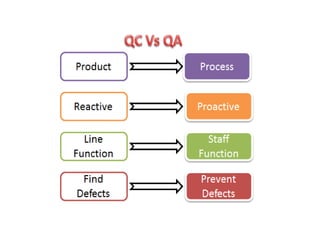
  • #10 Quality control involves testing of end products and determining if they are within the specifications for the final product. Quality assurance is to examine the processes and make changes to the processes which led to the end-product. Both qa and qc are interdependent to each other
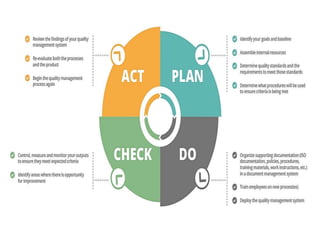
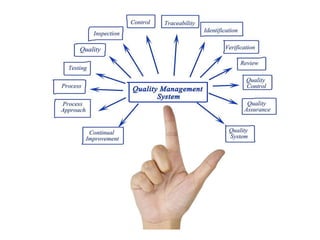
  • #11  Quality control management ensures that what your company delivers and the delivery processes it uses are cohesive and that every business phase of the organization focuses on the same goal. four key components to be effective: quality planning, quality control, quality assurance, and quality improvement. These four dependent on each other
  • #13 Certainly not all organization have qc/sensory programs, only few have it sound programs. Senory field has not matched the growth of the QC field compared to other disciplines supporting this function Some non food companies think that QC is instrumental which captures main dimensions and some times sensory assessment are difficult to complete compared to food. Ex: shampoo companies are reluctant to incorporate complex skinfeel and handfeel evaluation protocols. Food industries are well advanced in sensory science. Most of these companies do not believe in the use of sensory practices in Quality Control, and/or believe that the instrumental techniques adequately measure properties related to the products’ quality.
  • #14 Without a training program, panelists judge products based on their own criteria, and obviously provide different and unreliable results. Evaluations can be equally unreliable. it links all important elements in QC. Product variability - the determination of the variable sensory attributes and their variability ranges. Some companies not followed this because of lacking technical and management support, process is too costly
  • #17 4. (in techniques and the integration of consumer/management input)