 It is a unit operation .
 Temperature of food product is generally
below -18 °C or below.
 Change in state.
 Allows preservation of taste, texture and
nutritional values in food.
 Extended shelf life.
 Retards growth of microorganisms.
 Lower temperature inhibits growth of
microorganisms and limit enzyme activity.
 Formation of ice crystals draws available
water from foods preventing growth of
microorganisms.
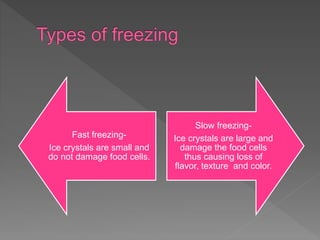
Fast freezing-
Ice crystals are small and
do not damage food cells.
Slow freezing-
Ice crystals are large and
damage the food cells
thus causing loss of
flavor, texture and color.
 Blowing a continuous stream of cold air over
the food products - air blast freezers.
 Immersion in or spraying with a refrigerated
liquid - immersion or spray freezers.
 Working mechanism: These freezers
generally have a conveyer belt which is
made up of perforated stainless steel. This
belt carries food to be frozen. There are
electric fans mounted over the conveyer
circulating chilled air through the perforations
over the products.
 Forced air is used.
 A blast freezer can chill food from cooking
temperatures which is around to +70oC to -
18oC within 240 minutes. As the temperature
in this freezer drops quickly, they can freeze
food with smaller ice crystals thus causing
lesser damage.
 Air is recirculated over food at between 30ºC
and 40ºC at a velocity of 1.5–6.0 m/s.
 The advantage of the blast freezer is its
versatility. It can cope with a variety of
irregularly shaped products and whenever
there is a wide range of shapes and sizes to
be frozen, the blast freezer is the best
choice.
 It is ideal for storing larger batches of
leftovers. Thus it reduces food wastage and
increase chef’s menu options for future use.
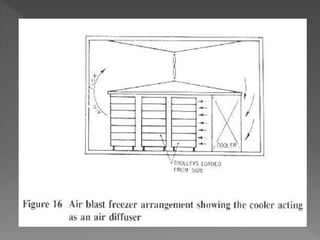
 Continuous air blast freezer- In this type of air blast
freezer, the food products are conveyed through the
freezer (on trucks or trolleys or they may be loaded
on a continuously moving belt or conveyor) usually
entering at one end and leaving at the other.
 Batch air blast freezer - The freezer is fully loaded,
and when freezing is complete, the freezer is
emptied and reloaded for a further batch freeze.
Apart from this difference in mode of operation, the
batch freezer gives rise to bigger fluctuations in the
refrigeration load than continuous or batch-
continuous freezers.
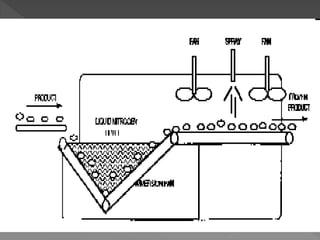
 Traditionally foods were immersed in solution of
salt and ice for hours , however this process is
rarely used liquid refrigerant is sprayed directly
on food product.
 The food products are kept in liquid refrigerant
(glycerol, sugar and salt solution) with time
varying from seconds to 1 minute depending on
size and requirement of food product.
 Efficient heat transfer.
 Refrigerant may enter the food products
causing adverse changes in its quality.
 Usually done with shrimps and fishes.
 It does not matter what type of freezer we
are using for refrigeration the main principle
should be focused on fast freezing.
 Cost of operation, available capital should be
focused.
 Size of food product is important factor.
 http://www.fao.org
 http://www.epack.in
 http://cshprotocols.cshlp.org
Air blast and immersion freezing

Air blast and immersion freezing

  • 2.
     It isa unit operation .  Temperature of food product is generally below -18 °C or below.  Change in state.  Allows preservation of taste, texture and nutritional values in food.  Extended shelf life.  Retards growth of microorganisms.
  • 3.
     Lower temperatureinhibits growth of microorganisms and limit enzyme activity.  Formation of ice crystals draws available water from foods preventing growth of microorganisms.
  • 4.
    Fast freezing- Ice crystalsare small and do not damage food cells. Slow freezing- Ice crystals are large and damage the food cells thus causing loss of flavor, texture and color.
  • 6.
     Blowing acontinuous stream of cold air over the food products - air blast freezers.  Immersion in or spraying with a refrigerated liquid - immersion or spray freezers.
  • 7.
     Working mechanism:These freezers generally have a conveyer belt which is made up of perforated stainless steel. This belt carries food to be frozen. There are electric fans mounted over the conveyer circulating chilled air through the perforations over the products.
  • 8.
     Forced airis used.  A blast freezer can chill food from cooking temperatures which is around to +70oC to - 18oC within 240 minutes. As the temperature in this freezer drops quickly, they can freeze food with smaller ice crystals thus causing lesser damage.  Air is recirculated over food at between 30ºC and 40ºC at a velocity of 1.5–6.0 m/s.
  • 9.
     The advantageof the blast freezer is its versatility. It can cope with a variety of irregularly shaped products and whenever there is a wide range of shapes and sizes to be frozen, the blast freezer is the best choice.  It is ideal for storing larger batches of leftovers. Thus it reduces food wastage and increase chef’s menu options for future use.
  • 10.
     Continuous airblast freezer- In this type of air blast freezer, the food products are conveyed through the freezer (on trucks or trolleys or they may be loaded on a continuously moving belt or conveyor) usually entering at one end and leaving at the other.  Batch air blast freezer - The freezer is fully loaded, and when freezing is complete, the freezer is emptied and reloaded for a further batch freeze. Apart from this difference in mode of operation, the batch freezer gives rise to bigger fluctuations in the refrigeration load than continuous or batch- continuous freezers.
  • 12.
     Traditionally foodswere immersed in solution of salt and ice for hours , however this process is rarely used liquid refrigerant is sprayed directly on food product.  The food products are kept in liquid refrigerant (glycerol, sugar and salt solution) with time varying from seconds to 1 minute depending on size and requirement of food product.  Efficient heat transfer.
  • 13.
     Refrigerant mayenter the food products causing adverse changes in its quality.  Usually done with shrimps and fishes.
  • 15.
     It doesnot matter what type of freezer we are using for refrigeration the main principle should be focused on fast freezing.  Cost of operation, available capital should be focused.  Size of food product is important factor.
  • 16.