Coastal
Protection
Coastal
Protection
Protection Methods
 Structural Methods
 Non structural Methods
Structural Methods
 Seawalls
 Bulkheads
 Revetments
 Dikes and Levees
 Breakwater
 Groins
 Jetties and Piers
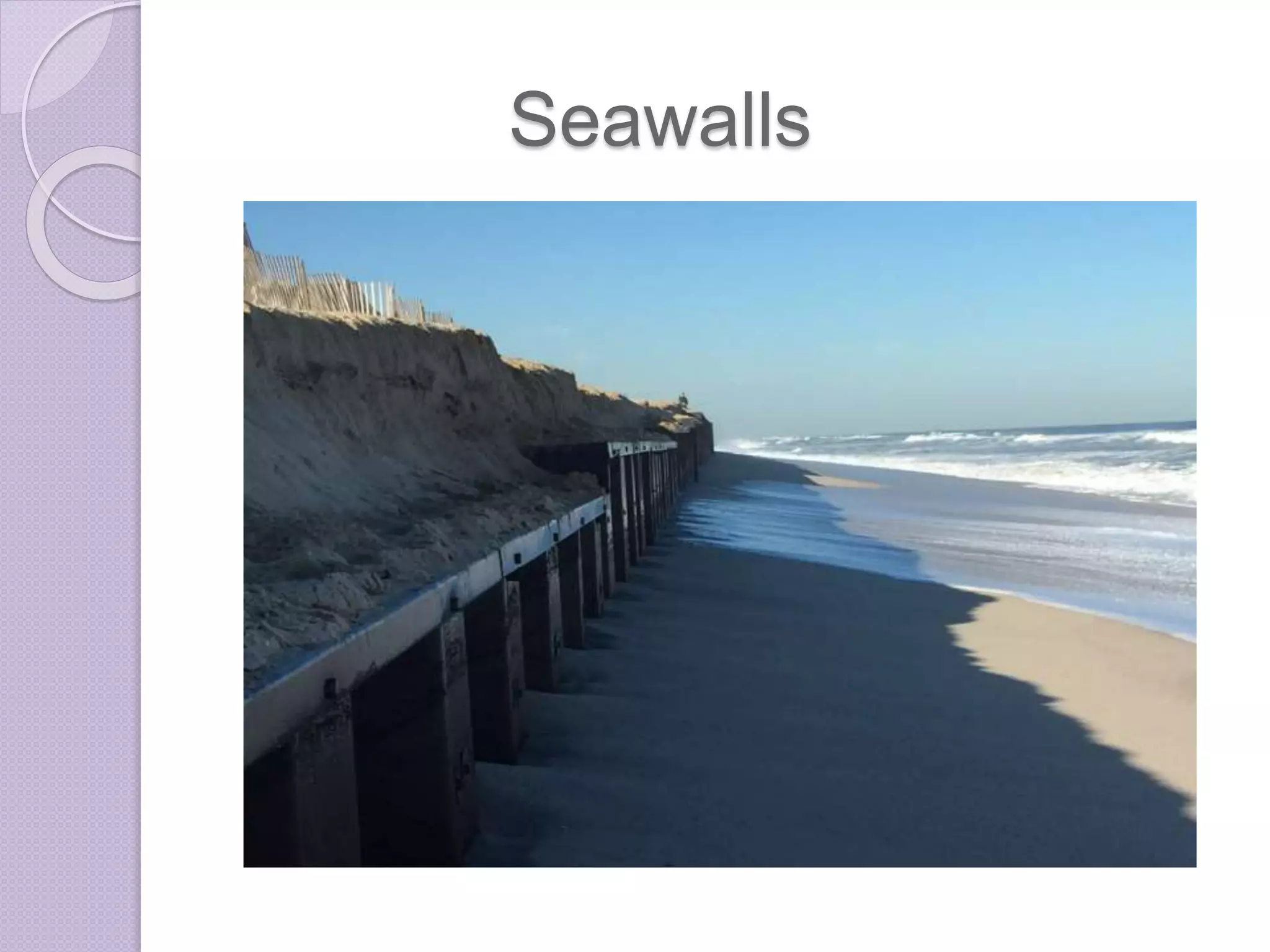
Seawalls
 separating land and water areas.
 massive structures.
 resisting the full force of waves.
 to prevent coastal erosion.
 to prevent demage due to wave
action and flood.
Seawalls
Bulkheads
 smaller than seawalls.
 not to resist coastal erosion.
 to prevent the sliding of land at the
transition between land and the sea.
 vertical wall build in
concrete,stone,steel,timper.
Bulkheads
Revetments
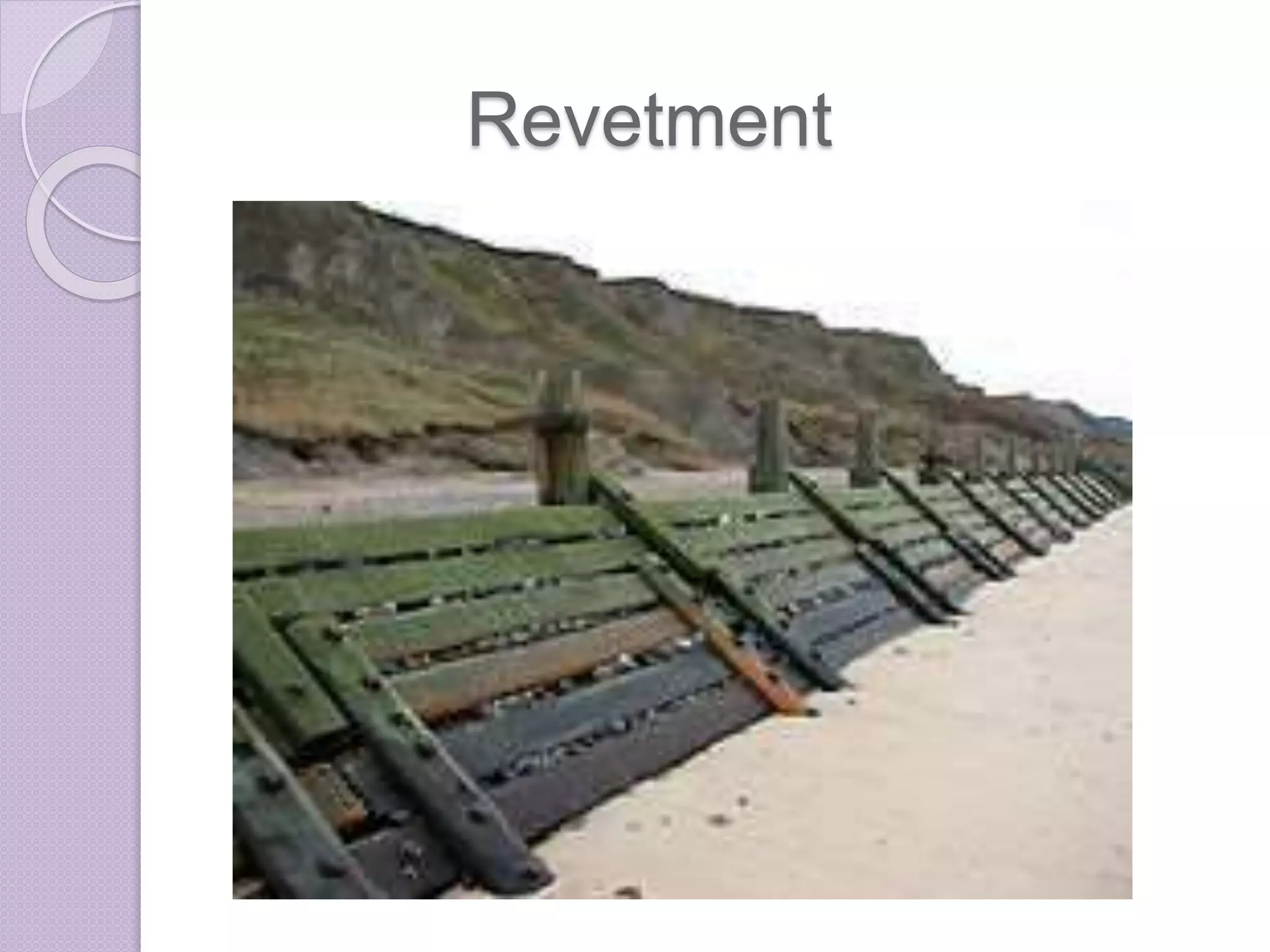
 sloping structure construct using
natural stones, concrete blocks.
 only protects again erosion, not flood.
 used at locations exposed to erosion.
 absorb the energy of water.
 negative impact on the sediment
budget along adjacent shorelines.
Revetment
Dikes and Levees
 embankment, flood bank or stop
bank.
 boundary line of the sea.
 build in dry stones.
 to prevent the soil erosion.
 to prevent land slide.
 regulates water levels.
 parallel to the course of a river.
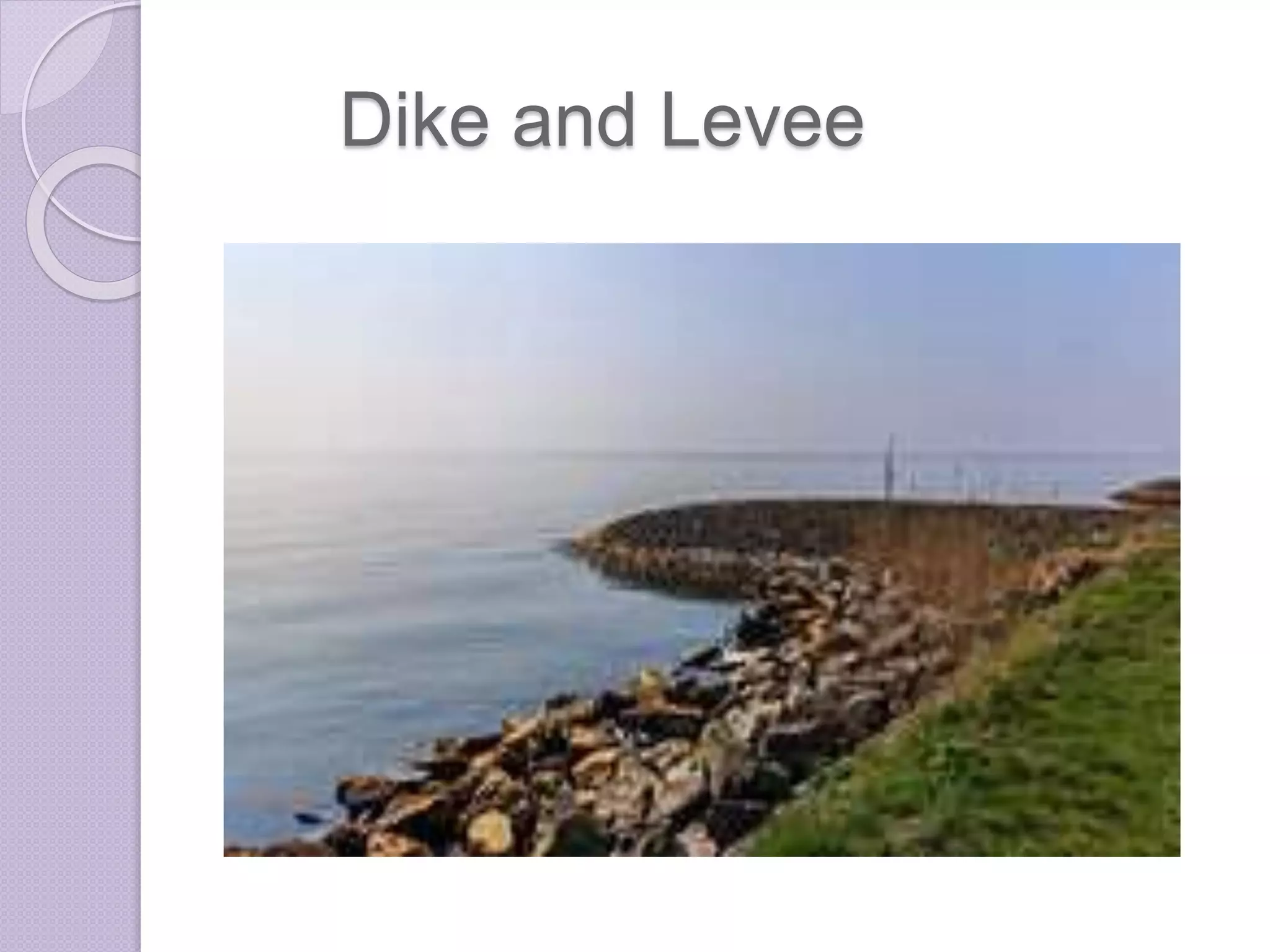
Dike and Levee
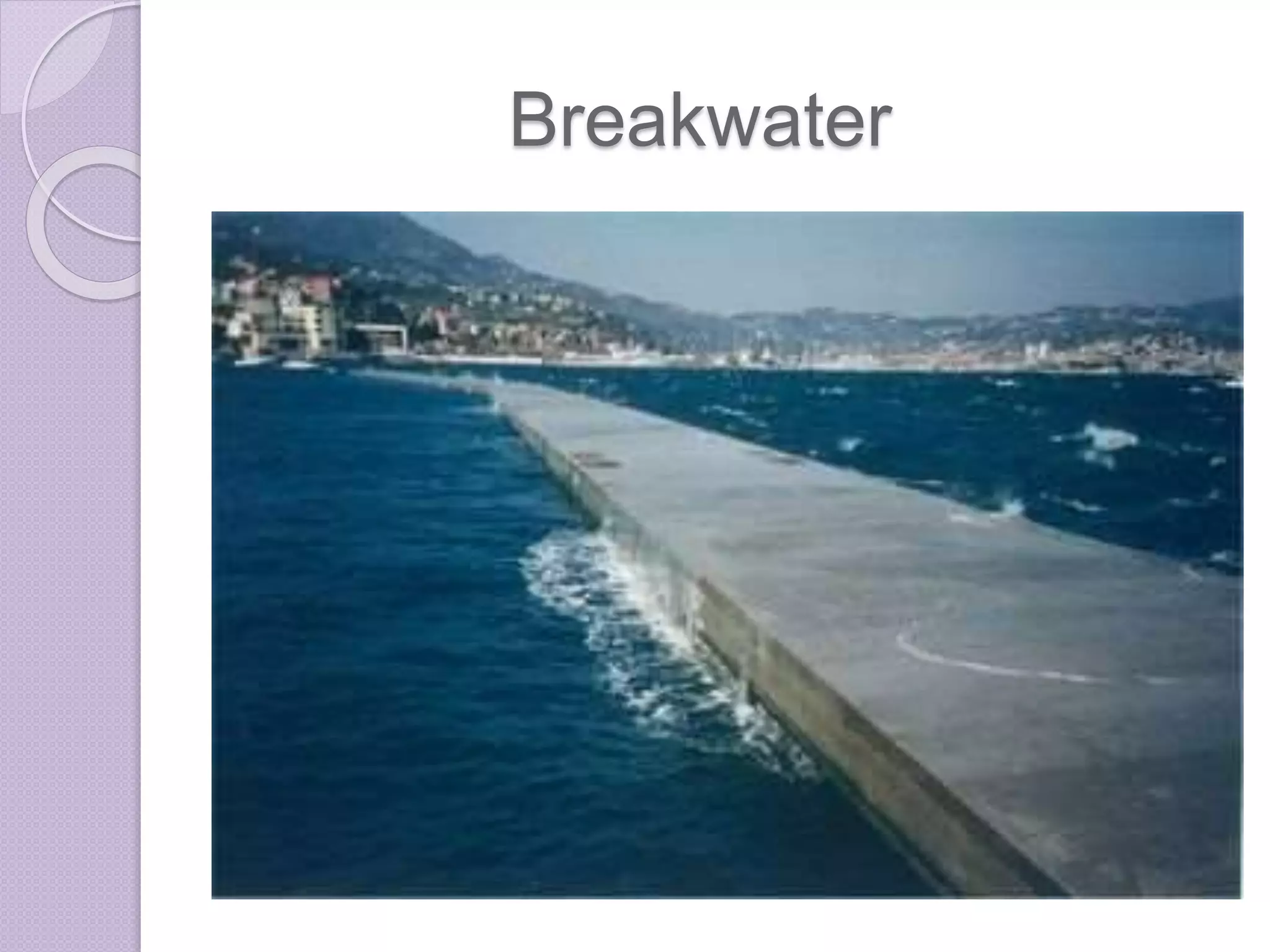
Breakwater
 small structures.
 fixed or floating, impermeable or
permeable to allow sediment transfer
shoreward of the structure.
 parallel or perpendicular to the coast.
 reduces the power of wave so wont
eroded the cliffs as much.
Breakwater
Groins
 fences that go along the beach at
angles to prevent long shore drift.
 absorb energy of coming water.
 catches and traps sediment to
prevent it from moving up the beach.
 replaced every 15-20 years.
 build in timber, steel, concrete,
stones.
Groins
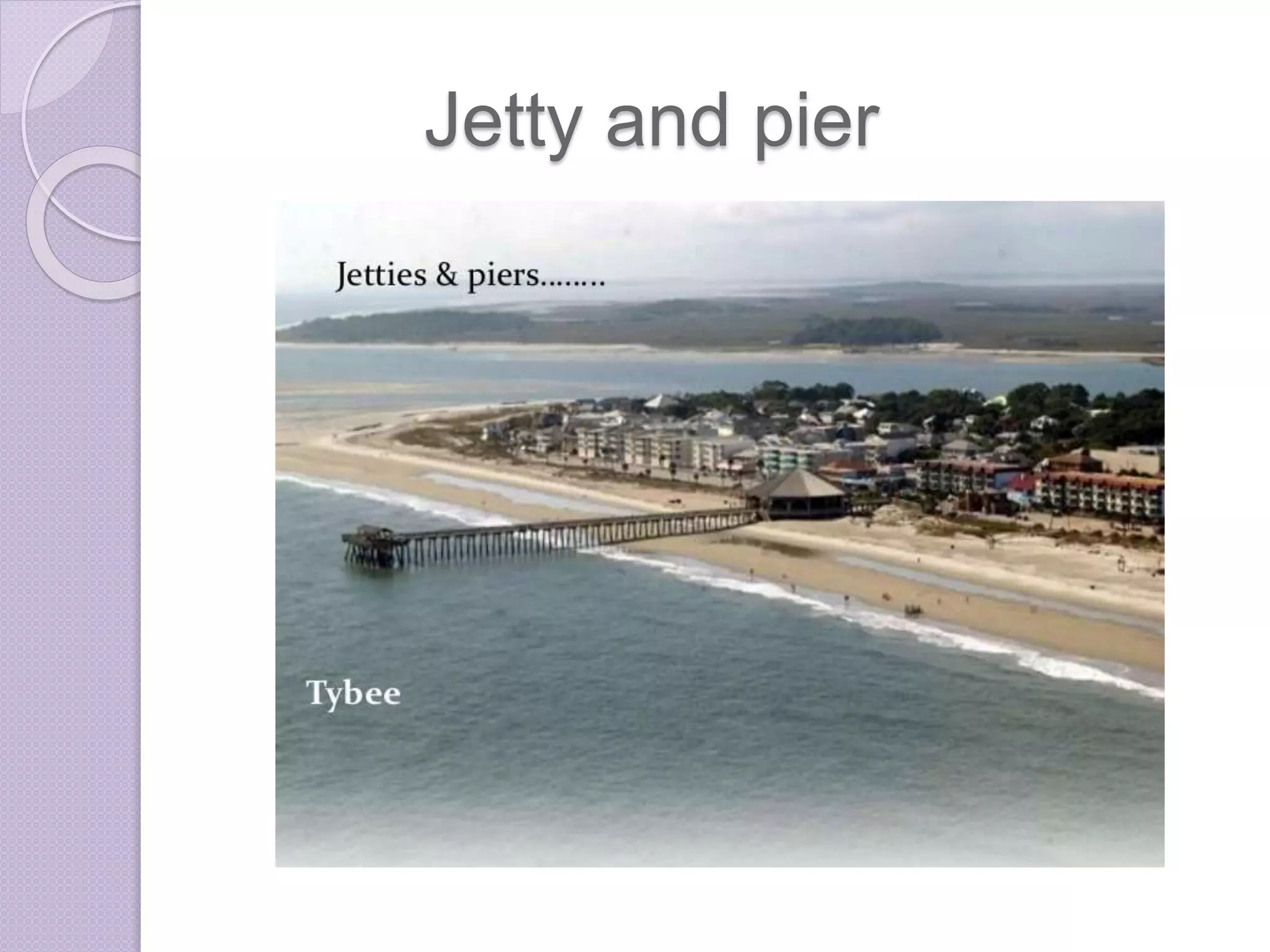
Jetty and Pier
 long, narrow structure.
 made of stone, concrete.
 protect the shoreline of the body of
water by acting as a barrier against
from currents, tides, waves.
 connect with deep water (docking
ships)
Jetty and pier
Non structural methods
 Vegetation planting.
 Beach nourishment.
Vegetation planting
 best natural protective measures
against coastal flooding.
 trap and hold the sand.
 important role in stabilizing the
surface against wind erosion and
provides habitat for wildlife.
 provides a source of sand to
replenish the beach during periods of
erosion.
Vegetation Planting
Beach Nourishment
 another name-Beach filling.
 adding large quantity of sand or
sediment to beaches.
 to resist erosion and increase the
beach width.
 not a long term solution to beach
erosion.
 the sudden input of massive amount
of sand can kill all the animals living
on the beach.
Beach Nourishment
THANK
YOU

Coastal protection

  • 1.
  • 2.
    Protection Methods  StructuralMethods  Non structural Methods
  • 3.
    Structural Methods  Seawalls Bulkheads  Revetments  Dikes and Levees  Breakwater  Groins  Jetties and Piers
  • 4.
    Seawalls  separating landand water areas.  massive structures.  resisting the full force of waves.  to prevent coastal erosion.  to prevent demage due to wave action and flood.
  • 5.
  • 6.
    Bulkheads  smaller thanseawalls.  not to resist coastal erosion.  to prevent the sliding of land at the transition between land and the sea.  vertical wall build in concrete,stone,steel,timper.
  • 7.
  • 8.
    Revetments  sloping structureconstruct using natural stones, concrete blocks.  only protects again erosion, not flood.  used at locations exposed to erosion.  absorb the energy of water.  negative impact on the sediment budget along adjacent shorelines.
  • 9.
  • 10.
    Dikes and Levees embankment, flood bank or stop bank.  boundary line of the sea.  build in dry stones.  to prevent the soil erosion.  to prevent land slide.  regulates water levels.  parallel to the course of a river.
  • 11.
  • 12.
    Breakwater  small structures. fixed or floating, impermeable or permeable to allow sediment transfer shoreward of the structure.  parallel or perpendicular to the coast.  reduces the power of wave so wont eroded the cliffs as much.
  • 13.
  • 14.
    Groins  fences thatgo along the beach at angles to prevent long shore drift.  absorb energy of coming water.  catches and traps sediment to prevent it from moving up the beach.  replaced every 15-20 years.  build in timber, steel, concrete, stones.
  • 15.
  • 16.
    Jetty and Pier long, narrow structure.  made of stone, concrete.  protect the shoreline of the body of water by acting as a barrier against from currents, tides, waves.  connect with deep water (docking ships)
  • 17.
  • 18.
  • 19.
    Non structural methods Vegetation planting.  Beach nourishment.
  • 20.
    Vegetation planting  bestnatural protective measures against coastal flooding.  trap and hold the sand.  important role in stabilizing the surface against wind erosion and provides habitat for wildlife.  provides a source of sand to replenish the beach during periods of erosion.
  • 21.
  • 22.
    Beach Nourishment  anothername-Beach filling.  adding large quantity of sand or sediment to beaches.  to resist erosion and increase the beach width.  not a long term solution to beach erosion.  the sudden input of massive amount of sand can kill all the animals living on the beach.
  • 23.
  • 24.