WEST BENGAL UNIVERSITY OF ANIMAL AND FISHERY SCIENCES
A SEMINAR ON : MARINE COASTAL STRUCTURES
SUBMITTED TO:
Dr. S.K.Rout
Dept. of AEM
SUBMITTED BY:
Shirsak Mondal
B.F.Sc 1st Year 2nd Sem
FS/2015/31
What ARE Marine Coastal
StructureS?
It can be anything human-made in
the coastal area. They are
constructed principally to protect the
coast line.
WHAT DO COASTAL STRUCTURES DO ?
1. Stop Water 2.Hold Soil
Protect Infrastructure from flooding due to high
water levels ,erosion and impact from waves and
currents
Protect boat traffic by reducing waves and wave
impact
Stabilize navigation channels by reducing
sedimentation, inlet migration
Reduce erosion by stabilizing shorelines/beaches
Enhance recreation, beauty
DIFFERENT TYPES OF COASTAL
STRUCTURES
On the basis of purposes there are different
types of coastal structures.
They are :-
Revetments
Bulkheads and Seawalls
Breakwaters
Groins and jetties
Coastal bridges and piers
Dikes and levees
Revetments
Revetments are shoreline structures constructed parallel to
the shoreline
 Revetments are structures placed on bank or cliffs in such a
way as to absorb the energy of incoming water or explosive
caused by water waves and current
A cheaper alternative to sea walls is the revetment ,usually
built for protection
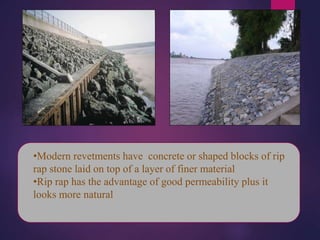
•Modern revetments have concrete or shaped blocks of rip
rap stone laid on top of a layer of finer material
•Rip rap has the advantage of good permeability plus it
looks more natural
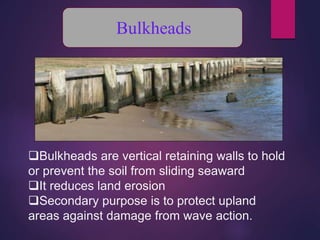
Bulkheads
Bulkheads are vertical retaining walls to hold
or prevent the soil from sliding seaward
It reduces land erosion
Secondary purpose is to protect upland
areas against damage from wave action.
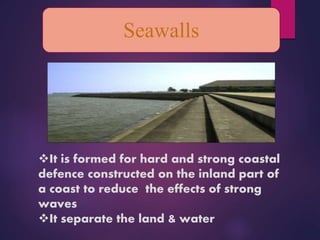
Seawalls
It is formed for hard and strong coastal
defence constructed on the inland part of
a coast to reduce the effects of strong
waves
It separate the land & water
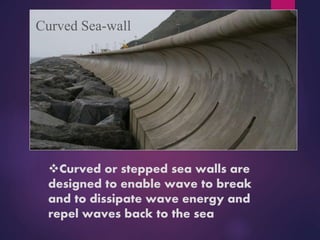
Curved Sea-wall
Curved or stepped sea walls are
designed to enable wave to break
and to dissipate wave energy and
repel waves back to the sea
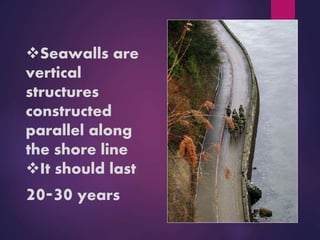
Seawalls are
vertical
structures
constructed
parallel along
the shore line
It should last
20-30 years
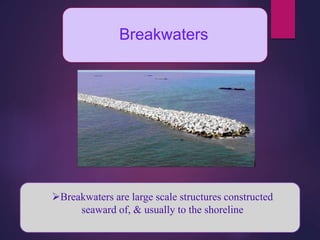
Breakwaters
Breakwaters are large scale structures constructed
seaward of, & usually to the shoreline
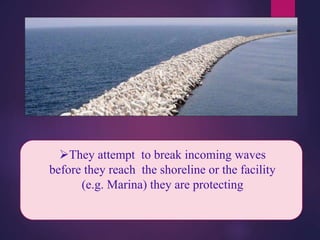
They attempt to break incoming waves
before they reach the shoreline or the facility
(e.g. Marina) they are protecting
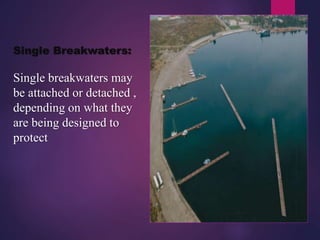
Single Breakwaters:
Single breakwaters may
be attached or detached ,
depending on what they
are being designed to
protect
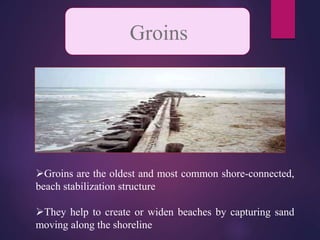
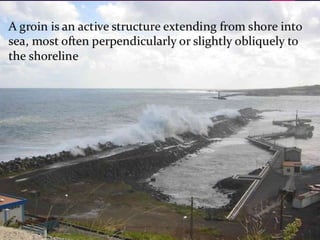
Groins
Groins are the oldest and most common shore-connected,
beach stabilization structure
They help to create or widen beaches by capturing sand
moving along the shoreline
Characteristics of Groins
 they are usually made of tropical hardwoods which are
more resistant to marine borers and erosion
 a few are made of concrete, steel or in more recent
times large rocks
 they are spaced about 50-100 metres apart
 may have a life of 15-20 years
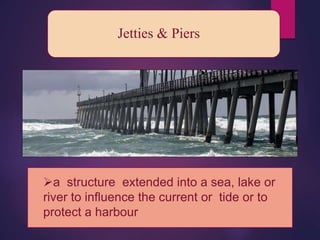
Jetties & Piers
a structure extended into a sea, lake or
river to influence the current or tide or to
protect a harbour
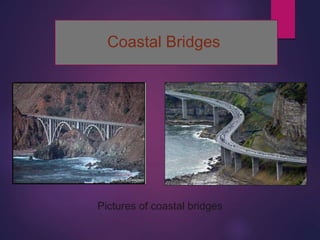
Coastal Bridges
Pictures of coastal bridges
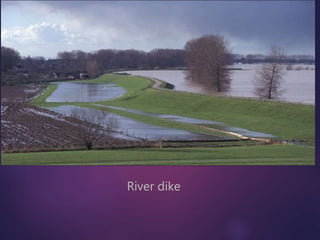
Dikes
dikes are typically earth
structures
 they keep elevated water
levels from flooding interior
lowlands
 sometimes they refer to as
dam
River dike
marine coastal structures

marine coastal structures

  • 1.
    WEST BENGAL UNIVERSITYOF ANIMAL AND FISHERY SCIENCES A SEMINAR ON : MARINE COASTAL STRUCTURES SUBMITTED TO: Dr. S.K.Rout Dept. of AEM SUBMITTED BY: Shirsak Mondal B.F.Sc 1st Year 2nd Sem FS/2015/31
  • 2.
    What ARE MarineCoastal StructureS? It can be anything human-made in the coastal area. They are constructed principally to protect the coast line.
  • 3.
    WHAT DO COASTALSTRUCTURES DO ? 1. Stop Water 2.Hold Soil Protect Infrastructure from flooding due to high water levels ,erosion and impact from waves and currents Protect boat traffic by reducing waves and wave impact Stabilize navigation channels by reducing sedimentation, inlet migration Reduce erosion by stabilizing shorelines/beaches Enhance recreation, beauty
  • 4.
    DIFFERENT TYPES OFCOASTAL STRUCTURES On the basis of purposes there are different types of coastal structures. They are :- Revetments Bulkheads and Seawalls Breakwaters Groins and jetties Coastal bridges and piers Dikes and levees
  • 5.
    Revetments Revetments are shorelinestructures constructed parallel to the shoreline  Revetments are structures placed on bank or cliffs in such a way as to absorb the energy of incoming water or explosive caused by water waves and current A cheaper alternative to sea walls is the revetment ,usually built for protection
  • 6.
    •Modern revetments haveconcrete or shaped blocks of rip rap stone laid on top of a layer of finer material •Rip rap has the advantage of good permeability plus it looks more natural
  • 7.
    Bulkheads Bulkheads are verticalretaining walls to hold or prevent the soil from sliding seaward It reduces land erosion Secondary purpose is to protect upland areas against damage from wave action.
  • 8.
    Seawalls It is formedfor hard and strong coastal defence constructed on the inland part of a coast to reduce the effects of strong waves It separate the land & water
  • 9.
    Curved Sea-wall Curved orstepped sea walls are designed to enable wave to break and to dissipate wave energy and repel waves back to the sea
  • 10.
  • 11.
    Breakwaters Breakwaters are largescale structures constructed seaward of, & usually to the shoreline
  • 12.
    They attempt tobreak incoming waves before they reach the shoreline or the facility (e.g. Marina) they are protecting
  • 13.
    Single Breakwaters: Single breakwatersmay be attached or detached , depending on what they are being designed to protect
  • 14.
    Groins Groins are theoldest and most common shore-connected, beach stabilization structure They help to create or widen beaches by capturing sand moving along the shoreline
  • 16.
    Characteristics of Groins they are usually made of tropical hardwoods which are more resistant to marine borers and erosion  a few are made of concrete, steel or in more recent times large rocks  they are spaced about 50-100 metres apart  may have a life of 15-20 years
  • 17.
    Jetties & Piers astructure extended into a sea, lake or river to influence the current or tide or to protect a harbour
  • 18.
  • 19.
    Dikes dikes are typicallyearth structures  they keep elevated water levels from flooding interior lowlands  sometimes they refer to as dam
  • 20.